Getting the transcript
Reading the captions from YouTube. A video nobody has opened here before takes 10 to 30 seconds; this page fills in on its own.
Getting the transcript
Reading the captions from YouTube. A video nobody has opened here before takes 10 to 30 seconds; this page fills in on its own.
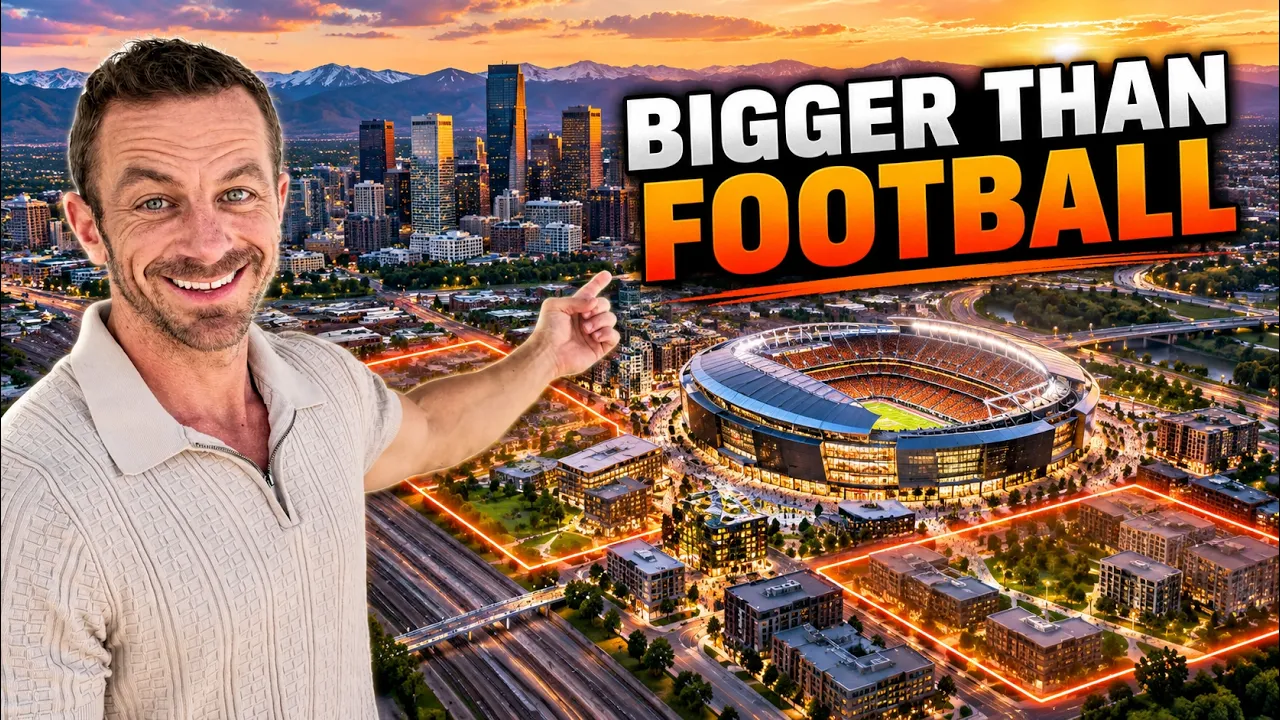
Living in Denver - The Mile High Property Brothers · @livingindenverpropertybros
Words
2,500
Runtime
13:16
Speaking pace
188wpm
Reading time
10min
188 words per minute, between the 181 median and the 201 75th percentile of 349 measured videos. That distribution comes from the 349-video hook study.
Opening (first 30 seconds)
Everybody has talked about the Broncos building a new stadium in Denver, but after really digging into these [music] plans, I think the stadium itself might actually be the least interesting part of the story. Not because I'm not a huge football fan, but the Broncos are essentially trying to build an entirely new neighborhood around this stadium. Then when they leave Empower Field, Denver gets another enormous piece of land to redevelop. And that part nobody is talking about. Once you zoom out and realize this all sits in the same [music] broader
94 words, the words spoken in the first 30 seconds at 188 words per minute.
Free, no signup. See how the first 30 seconds hold attention, with rewrites.
Sentence shape
| Measure | This transcript |
|---|---|
| Sentences | 131 |
| Average words per sentence | 19.1 |
| Longest sentence | 57 words |
| Questions asked | 1 |
| Sentences containing a number | 24 |
Most used terms
Filler phrases
20 in total: like 6 · you know 6 · actually 4 · basically 3 · kind of 1.
A literal whole-word count of the same phrase list the Prepublish browser extension uses, so a phrase inside another word is not counted and a phrase used in its ordinary sense still is. It is a count and not a judgement.
What this transcript is
Every word below is the caption track YouTube publishes for this video, pulled from the video itself and reproduced unchanged. It is not Prepublish's writing, not a summary, and not a re-transcription: it is the video's own published captions. English captions, generated automatically by YouTube, in the video’s original language. Source: the video on YouTube. A channel that would rather this page did not exist can ask for its removal through the contact page, and it is removed.
No Script X-ray for this video: YouTube shows a Most replayed graph only once a video has enough views.
Everybody has talked about the Broncos building a new stadium in Denver, but after really digging into these [music] plans, I think the stadium itself might actually be the least interesting part of the story. Not because I'm not a huge football fan, but the Broncos are essentially trying to build an entirely new neighborhood around this stadium. Then when they leave Empower Field, Denver gets another enormous piece of land to redevelop.
And that part nobody is talking about. Once you zoom out and realize this all sits in the same [music] broader part of central Denver as River Mile and the massive Baltina development, then you really start to see what could become one of Denver's biggest [music] transformations it's gone through in decades. So today I want to show you what the Broncos are [music] actually planning at Burnham Yard, why they want to move in the first place, and what could happen to Empower Field or Malh High Stadium after they leave.
And then we're gonna zoom out because that is where this just gets way bigger than football. Burnham Yard is the historic rail yard just southwest of downtown Denver [music] on the east side of I25. And this is where the Broncos want to build their new stadium. The current vision is a roughly $4 billion project centered [music] around a new natural grass stadium with a retractable roof with the goal of opening for the 2031 NFL season.
And geographically, this is actually pretty interesting because the Broncos are not moving out to Aurora. They're not moving out to the suburbs or out near the airport. They're staying right in central Denver. The current Empower Field site is northwest of Burnhamard on the opposite side of I25. We're still talking about a relatively short move here, but the reason for the move starts to make a lot more sense when you look at everything they want to build around the stadium.
The newest Burning Yard master plan breaks the property into four different districts called the North End, Village Center, Turntable, and South End. And instead of looking like a typical NFL stadium surrounded by endless parking lots like we have now at Empower Field, the long-term vision is housing, restaurants, [music] retail, hotels, offices, entertainment, parks, and public spaces all built around the stadium. Now, the latest plans show the equivalent of around 11 to 12 football fields worth of public open space, which gives you an idea of how different they're trying to make this feel from the current mile high setup.
Now, one of the coolest pieces that I'm most excited for is the village center. They're planning on preserving the old locomotive shop there and build a more pedestrian focused area around it with restaurants and ground floor retail. They've also talked about things like a Broncos team store. That of course makes sense. you know, a Broncos museum potentially or other entertainment uses that they have in the area. They're also preserving the historic railroad turntable, [music] too, and turning that into a gathering space called Turntable Green.
So, instead of wiping out all of the history of the Burnham Yard Railroad area, they're trying to build around some of the pieces that make the site historic in the first place. Then, you've got something called the Mile High Lane. And I think this is one of those details that sounds minor at first, but could end up being pretty important. These are the old railroad lines running through Burnham Yard that have acted pretty much as barriers kind of separating some neighborhoods from the rail yard for years.
This plan would convert some of the old infrastructure into a treelined trail for walking, biking, and running. And longer term, the city has talked about connecting that trail [snorts] north towards Ballerina and south towards Santa Fe. That starts to hint at something much bigger. Burnham Yard is not being planned as this isolated little stadium island there. The goal is really to make it feel connected to the surrounding city and bring all of these neighborhoods together.
Now, before anyone looks at these renderings and thinks this entire futuristic neighborhood is going to magically appear in just a few years here in 2031, I'm guessing that's probably not what's going to happen. The Broncos are planning this in phases. [music] The first phase is really about getting the stadium built, getting the roads and infrastructure in place, and making sure there's enough parking to actually host NFL games and major events.
So initially you're still going to see a pretty large amount of surface parking around the stadium. Then over time they can start filling in portions of those parking lots with housing, the commercial developments and structured parking. So if all of this moves forward, Bernhamard probably keeps evolving throughout the entire 2030s. And that brings us to the obvious question. Why did the Broncos even need a new stadium in the first place?
Now Empowerfield opened in 2001. By NFL standards, that's not really an old stadium. They've already put a bunch of money into improving it and I still think the stadium is in pretty good shape and it's a great place to go watch a game. But the retractable roof changes the equation quite a bit here. Now, if they get that, suddenly Denver can start competing for events that are much harder to host with the current setup.
We're talking about things like the Final Four, potentially a Super Bowl, huge concerts, international sporting events, major college football games, and more year-round events during the winter. Now, none of those are obviously [music] guaranteed, but this is the part where a new stadium sounds a lot more valuable than just replacing one old football venue with another one. And that also explains why the development around the stadium matters so much.
If you're going to build restaurants, hotels, retail, and entertainment around an NFL stadium, you can't survive on just eight or nine Bronco home games per year, you need people living there. You need people working there, and you need events happening year round. [music] The stadium is really just being positioned as the anchor of a neighborhood that is supposed to function every day, not just on game days. Now, here's what's also cool.
The Broncos are not the only people trying to completely reinvent this side of Denver. If you zoom out on a map, Burnham Yard sits south of downtown on the east side [music] of I25. The current Empower Field site is just northwest of Burnham Yard across the interstate. Then further north and northeast closer to downtown and the South Plat River, you've got Ballerina and River Mile. These are all separate projects. They're [music] different owners, different plans, and different timelines, but they're all clustered within a relatively very small part of Denver.
And when you start to look at them together, you start to realize just how much land in this area could change over the next couple of decades. Now, let's start with Rivermile. This is the redevelopment plan for the current Elich Gardens property along the South Plat River. We're talking roughly 62 acres and somewhere around 12 to 15 million square ft of development when it's eventually built out. Absolutely massive.
This vision includes housing for 15,000 residents along with offices, retail, hotels, parks, and an entirely re-imagined and more usable riverfront. Now, this is not some little project. This long-term vision is basically to expand downtown Denver towards the river and create an entirely new riverfront neighborhood that Denver has needed for so long. You know, you've got this beautiful South Pot River running right through downtown and it hardly gets utilized.
And Rivermile became even more interesting when Kroni Sports and Entertainment took full ownership of the property in 2025. Now, that's the same Kroni group that owns the Nuggets, Avalanche, and Ballerina, which matters because they're right next door. Now, they've also got another 55 acres planned around Ballerina that are set for redevelopment. Now, if you've ever been to a Nuggets game or an Avalanche game, you know how much that property is currently just a massive parking lot.
The long-term ballerina plan calls for somewhere around 10 to 12 million square feet of development, housing, restaurants, retail, offices, hotels, entertainments, parks, new streets, new pedestrian areas, basically an entire other neighborhood replacing just that asphalt parking lot that is out there right now. If you look at all this on a map, you've got River Mile and Ballerina transforming a huge area immediately west of downtown.
Just south of there, you've got the current Empower Field property on the west side of I25. And then across the interstate further south, you've got Burnham Yard and the new Broncos Stadium District. These projects are not laid out in one straight line, and I don't want to pretend like they're all, [music] you know, seamlessly connected into one massive neighborhood. You've got I25 that is a major barrier running right through the middle of this area.
Rail lines, roadways, and the river create other barriers. However, a huge amount of the planning around these projects is focused on creating better connections through an area that has historically been chopped up by highways, parking lots, and [music] railroads. Now, one other aspect of this conversation that nobody's talking about is what's going to happen with the current Empower Field property. This is probably my favorite part of the story cuz again, no one's really talking about it.
Everyone's focused on where the Broncos are going, but I'm more curious about what's going to happen with what they're leaving behind. When the Broncos leave and Powerfield after the current lease ends, the stadium property and surrounding parking lots eventually revert back to the city of Denver. We're talking about roughly 80 acres of centrally located land. And if you ever been to Empower Field, you know just how much space we're talking about because so much of that property is just a parking lot as well.
Let's think about the location. You're minutes from downtown. You've got the light rail nearby. You've got I25 running right beside the property. Ballerina and River Mile are not too far away. and the new Burnhamard Stadium would sit just southeast on I25. Now, this leaves Empowerfield as a unbelievably valuable piece of real estate. Now, we don't know exactly what Denver will eventually build there, and I don't know of any master plans that are out there or any ideas that are going around yet, but it's hard not to imagine more housing, more parks, more restaurants, more entertainment, and other mixeduse developments that we're seeing in all these other areas.
You know, ultimately you could end up with this entire section of central Denver feeling dramatically more connected and much more urban than it does today. Rivermile and Ballerina are pushing downtown towards the south plat. The current empower field site becomes a major redevelopment opportunity of its own. And then Burnhamard, the new Bronco stadium area, gives you another huge district here on the south side of town.
I genuinely think this is going to make Denver look completely different in the next 10 to 15 years. And if you're thinking about buying a home here or moving to Denver, that's something worth paying attention to. Looking at all of the surrounding neighborhoods that sit on that more south Denver side, pretty close to the highway, there's not a whole lot going on out there right now. And I think that is going to change quite a bit and open up some massive opportunity for the people who are getting in there early.
And there are some pretty obvious upsides. You're looking at more restaurants, more parks, better pedestrian connections, new housing, more entertainment. basically everything that people are looking for when they're looking at moving to a major city that honestly Denver has just been lacking up to now. It is not all sunshine and rainbows. There is definitely another side to this. Longtime residents around Burnham Yard are already raising concerns about traffic, parking, affordability, rising rents, and [music] displacement.
And those concerns are 100% fair. When you inject this much money into an area, it's for sure going to change a lot of things. Now, that's exciting if you're looking at new amenities and investment, but if you lived in one of these neighborhoods for 30 years, you might look at the same project and you're going to see it very differently. Traffic is probably going to be one of the biggest issues. [music] The Broncos have already revised parts of their plan based on community feedback.
They're looking at distributing game day traffic both north and south instead of funneling as much of it through existing residential streets. They're proposing changes around 8th and 11th Avenue, removing some of those freight rail crossings and improving connections to the light rail station and creating more ways to walk and bike into the district. But let's be realistic. If you're still trying to move tens of thousands of people in and out of one place on a Bronco Sunday, there is going to be traffic.
The bigger question is whether they can design this area in a way that makes it easier to arrive by transit, bike, or on foot and keep as much of the game day congestion as possible out of the surrounding neighborhoods. And all of this could start happening sooner than people realize. The Broncos are targeting the 2031 season for the new stadium, which is crazy to me. That seems like it's just around the corner. And that means they need to start moving pretty quickly if they want to stay on track.
From there, the surrounding Burnham Yard development could continue for years afterwards, while the River Mile, Ballerina, and eventually the old and Powerfield property are changing at the same time. So, when you hear people say the Broncos are getting a new stadium, I think that headline massively undersells what could be happening here in the greater real estate play. Yes, Denver is getting a $4 billion stadium, but the bigger story is what gets built around it.
And ultimately, that's what matters most for you. [music] And that is why I think this is going to be one of Denver's biggest stories and things to watch that we'll talk about multiple times on this channel over the next coming years. So, if you're thinking about moving to Denver or anywhere in Colorado, make sure you download our ultimate relocation guide where we put that together specifically for people trying to understand the different neighborhoods, suburbs, and everything you need to know before moving out here.
So, we appreciate you guys watching. As always, we'll see you next time. >> [music]
The words are the caption track's own and nothing is reworded or re-transcribed. Paragraph breaks are placed between sentences so the text reads as prose.
Free tools for your own script. No signup, no login.
Paste your draft and see where viewers are likely to drop off, with a rewrite for each weak line.
Paste the first 30 seconds of your own draft for a hook score and rewrites.
Check your draft against YouTube's advertiser-friendly guidelines before you record it.
Read this channel's public videos and transcripts, and download a writing brief for it.