Getting the transcript
Reading the captions from YouTube. A video nobody has opened here before takes 10 to 30 seconds; this page fills in on its own.
Getting the transcript
Reading the captions from YouTube. A video nobody has opened here before takes 10 to 30 seconds; this page fills in on its own.
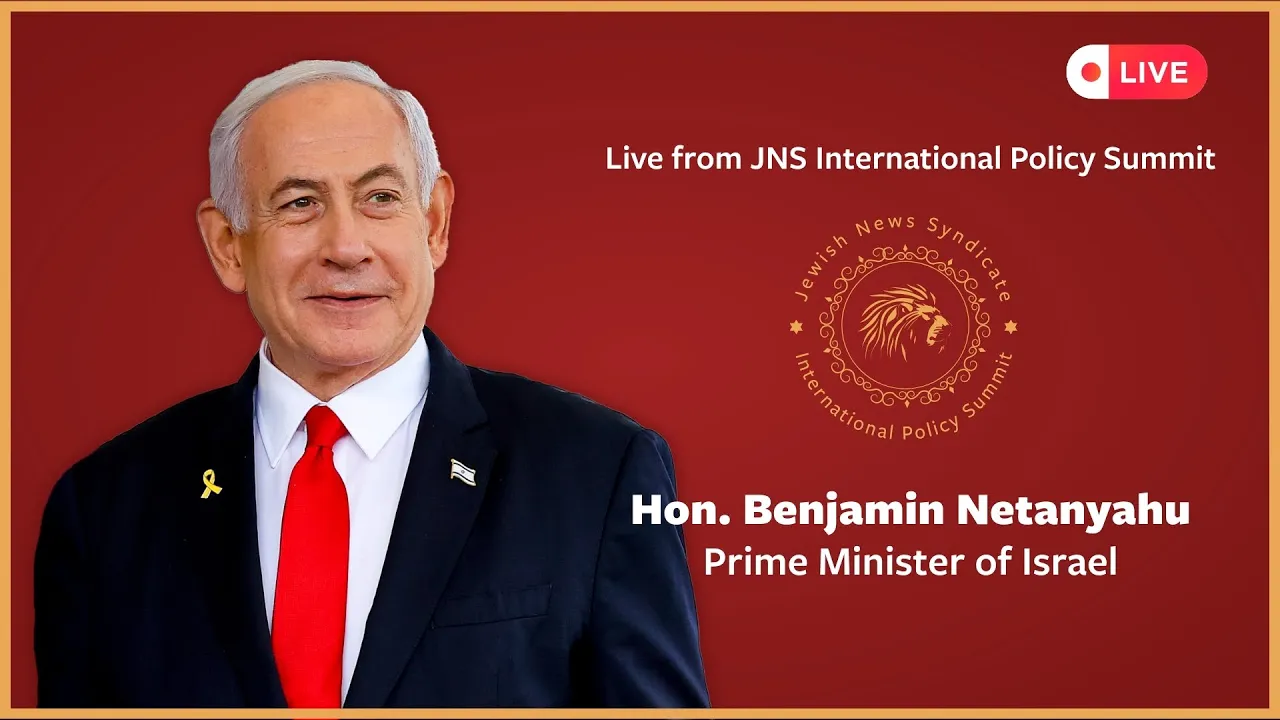
JNS TV · @JNS_TV
Where viewers went back to watch this video again, from YouTube's public Most replayed graph, lined up with what was said at that moment.
Most replayed moment #1
34:072.7x the video's typical replay level
very often. Uh and uh there's no point. And uh and uh my military secretary came in and gave me a note with one word. Bua done.
Said at 34:00
Most replayed moment #2
25:142.7x the video's typical replay level
October. Why October? Well, obviously because it's one month ahead of November. You'll figure you'll figure that out. Okay. Okay. But in late uh in
Said at 25:09
Most replayed moment #3
23:502.6x the video's typical replay level
no organized military structure. So having done that, having removed the threat of invasion from Gaza or the threat of serious rocketing from Gaza, having also done away with Sinir, remember him? Remember deaf?
Said at 23:43
The graph counts replays. It does not show where viewers stopped watching.
Words
6,999
Runtime
46:44
Speaking pace
150wpm
Reading time
29min
150 words per minute, below the 160 25th percentile of 349 measured videos. That distribution comes from the 349-video hook study.
Opening (first 30 seconds)
[Music] There are so many friends here that I don't see, some that I do. And u beginning first with you, Richard, you've been a wonderful friend over the years. you and your wife to me and my wife you've been as we say in Swedish mush I want to uh also acknowledge other friends that are here uh Pastor Hegy Pastor Hegy Ambassador Denon our UN ambassador who brought ambassadors and I know there
75 words, the words spoken in the first 30 seconds at 150 words per minute.
Free, no signup. See how the first 30 seconds hold attention, with rewrites.
Sentence shape
| Measure | This transcript |
|---|---|
| Sentences | 543 |
| Average words per sentence | 12.9 |
| Longest sentence | 110 words |
| Questions asked | 46 |
| Sentences containing a number | 26 |
Most used terms
Filler phrases
249 in total: uh 154 · um 24 · you know 23 · like 16 · I mean 11 · basically 7 · right? 7 · actually 4 · sort of 2 · kind of 1.
A literal whole-word count of the same phrase list the Prepublish browser extension uses, so a phrase inside another word is not counted and a phrase used in its ordinary sense still is. It is a count and not a judgement.
What this transcript is
Every word below is the caption track YouTube publishes for this video, pulled from the video itself and reproduced unchanged. It is not Prepublish's writing, not a summary, and not a re-transcription: it is the video's own published captions. English captions, generated automatically by YouTube, in the video’s original language. Source: the video on YouTube. A channel that would rather this page did not exist can ask for its removal through the contact page, and it is removed.
[Music] There are so many friends here that I don't see, some that I do. And u beginning first with you, Richard, you've been a wonderful friend over the years. you and your wife to me and my wife you've been as we say in Swedish mush I want to uh also acknowledge other friends that are here uh Pastor Hegy Pastor Hegy Ambassador Denon our UN ambassador who brought ambassadors and I know there are other ambassadors from the UN and from Israel welcome Well, equally I see many friends in the crowd.
Malcolm, I see you. And uh I see old friends. I asked you a question, my dear friend from Minnesota. How come there are so many liberals in Minnesota? And never got an answer. And of course I see here also uh well I don't see him but my good friend Mark Levin. Where where is Mark? Where is Mark? Where is Mark? Ah now here's a man who speaks the truth fearlessly in a straightforward and sort of subtle way. and he is uh he is u an example of what all of you are but especially what JNus does and I want to acknowledge Alex Germaine CEO for the work for the work that you do for the work you do to um he said to counter the concepts I said no it's not countering the conceptions just to speak the truth that's what we need Because there's a reason.
Because you cannot build peace and security on lies. If you do so, sooner or later, these lies will crash on the realities of Middle Eastern the Middle Eastern realities. You cannot do that. They crash. All these theories that are promoted over the years that are contrary to reality, they don't stand over time. they fall like a pieces of an iceberg into the ocean and very soon nothing is left. So you need a solid foundation and the only solid foundation is the truth.
So I want to encapsulate some truth for you tonight uh because I think they explain where we are today. In the founding of the state of Israel 77 years ago, we faced uh a fairly united Arab world. It was led by Gamal Abdaser. He promoted the idea of panarabism. He would unite the whole Arab realm under his leadership, under his rule. Uh and um the source of unity, one of the sources of unity was to drive Israel, that is to oppose the founding of the state of Israel.
That was done by the Egyptian regime before him. Uh to prevent the Jewish state from being established. But once established, it had to be removed. It had no place. right at the center of that great Arab domain. There couldn't be a western state. We were foreign interlopers. We were foreign interlopers, right? I mean, we're here uh in Jerusalem about a kilometer away from David's capital, which uh was established 3,000 years ago.
We are not foreign interlopers. We're not the Belgians in the Congo. We're not the Dutch in Indonesia. We're the Jews in the Jewish homeland, Judea. Right? That's one truth, an important truth. But equally, uh they tried uh to not only at first they didn't try to actually uh annihilate our history, they just tried to annihilate us. And it wasn't such a big task. We were very small, very small, really on a strip, uh tiny strip on the edge of the Mediterranean with Jerusalem.
We had Hebron few thousand years and uh very little else and the idea was you can cut to the sea and finish it off. So they didn't waste time on propaganda. They just organized themselves having uh uh from our point of view miraculously uh defeated them in the war of independence. They didn't think it was over and they arranged arranged themselves to choke us and drive us into the sea in the weeks and days before 1967.
And of course you know how that ended. Uh it ended even though they all said well Nasser put his troops into the Sinai put 100,000 troops in the Sinai. Syria would join him. Hussein despite our warnings joined him from right across the street here. and we were about to be finished. But in six days, we turned the tables on them. And of course, we came back to our ancestral homeland in full force. And by the way, we took the high ground.
And we will not leave it. It's ours. So they still didn't give up. They tried the war of attrition. And then in 1973, a combined attack this time by two Arab armies in the Yonkipur war. They surpris us. Within three weeks we were at the gates of Damascus and Cairo and that ended that. And so that began uh this whole situation where they attacked us again and again created a situation where the Arab world began to realize that Israel is here to stay and that they have to make their dues with it.
And so we began a process that began first with the uh peace at Camp David with uh between Bean and Sadat and later the peace with Jordan uh that was signed by Kabin and uh and King Hussein. And so what you had is that the Arab world was slowly coming to realize that Israel is a fact that cannot be removed. And they were beginning to make peace with us. We couldn't progress on that piece because one part of the Arab world resolutely remained against us and that's who's that class?
The Palestinians. The Palestinians clung to the original opposition to Israel that basically you do not recognize a Jewish state, the Jewish state in any boundary, in any form. Israel has to be annihilated. Israel has to be exised like a tumor. That was their position and that was and remains the principal obstacle to a Palestinian Israeli peace. The persistent Palestinian opposition to a Jewish state in any form, in any boundary.
That's a truth that somehow eludes fairly intelligent people. They said in the State Department, they said in the foreign chancellors of the world. That's a very difficult concept to absorb. How? I think it's so obvious. They keep saying it. They keep doing it. They keep saying, "We want a Palestinian state in our ancestral homeland in order to destroy the Jewish state." They say it. They say it in Ramallah. They say it in Gaza.
They teach it in Ramallah to their children. They teach it in Gaza. There's no difference in the textbooks. Exactly the same. One pays for slay in Ramallah. The other one says and operates the ICC and conducts warfare against us, lawfare. and you know all this uh by heart and the other says no we have to go straight out militarily and terror that's the difference between kamas and the PA the kamas says you'll destroy Israel by terror and military conquest right away and the PA says no you destroy it politically by driving it through propaganda and lawfare uh to the 67 boundaries and then you can do the military thrust because few few kilometers from the sea.
That's the difference between them. But the persistent refusal of the Arab of the Palestinian Arabs to recognize a Jewish state in any boundary is the source of this conflict for close to 100 years actually 100 years and more from uh the MUI in the 20s to today in the 20s a century later no difference one before the establishment of the state and it didn't change after the establishment of the state. So the idea that you'll create a Palestinian state and that will produce peace.
I'm saying this for the ambassadors who are here. All of you know this. The idea is folly, nothing more than folly. We just tried a Palestinian state in Gaza. You saw what that brought, right? So we are absolutely clear on that. But it's important to see what happened in the rest of the Arab world when after we had these two peace treaties, historic peace treaties with Egypt and with uh and with Jordan. Uh these are cold peace treaties because there wasn't really pacification uh of the population but between governments and that still holds and that's good because a cold peace is a lot better than a hot war.
Okay, that helped. It took us another quarter of a century to get the next peace treaty because everybody said the only way you're going to get it is you have to go uh through the Palestinians. That is first solve the Palestinian problem and then you'll get peace with the rest of the Arab world. Remember that. Yeah. Who said John Kerry Dang? Yeah, that's pretty good. That's right. He said it's not going to happen. No.
No. No. No, he said it four times in the Saban forum. I wish he said five, we might get five countries. But that's what he said and that was the renant assumption. And of course, uh I didn't think so because if we had to go through the Palestinians, aside from creating a state that will spell the end of Israel, uh we knew that the Palestinians uh would not make peace because they don't want a state next to Israel. They want a state instead of Israel. uh and so they'll never accept u the expansion of peace with other countries because we wouldn't succumb to their dictaps.
And so we decided to do I decided to do something different. I decided to go around the Palestinians and we went directly to the Arab capitals made four Arab four peace treaties with four Arab states in about two months. And so we expanded the circle of peace. But the main thing that you can see here is that the number of Arab states that attacked us. Five arguably seven states in 1948, three in 1967, two in uh the Yonipur war, then one in the Lebanon war in 1982, kept declining and basically the Arab world began to normalize its relations with Israel.
And that's the good news. The bad news is that the Arab world was being replaced by another much more potent force that appeared on the horizon. And that force is Iran. Beginning with the Islamic Revolution in Iran in 1979, Iran began to be the potent Islamist force in the Middle East and basically to replace the Arab world as the engine of attacks against Israel. They were committed to destroy Israel for a simple reason.
They're committed first of all to conquering the Middle East and they identified Israel correctly is the only real force that stands in their way locally in the region because no one else is fighting Iran. The only ones who are willing to fight Iran and are fighting Iran is us. The only ones who are keeping the Middle East in place as opposed to uh collapsing before Iranian aggression is us. If we're not here, the neighboring countries would collapse on the spot.
I won't give you details, but there are a lot of details that I could give you. But uh the ones who don't need the details are the Iranians. They know that very well. So they uh they proceeded to uh embark on a campaign right from the start that basically targeted Israel. Uh and it's not only to conquer the Middle East, it's for their larger ambition to subjugate all Muslims to their uh to their fanatic creed. but also and that's written in their constitution but also to export the revolution worldwide.
And so their chant right from the start right from the start was what? Death to Israel, death to America. Death to Israel, death to America. That's u almost a geographic truth. We stand in their way for their larger purposes. So they had to get rid of us. And in order to get rid of us, they designed basically two uh uh two uh forms of attack. The first attack was to try to develop over the last two decades. Nuclear weapons.
We'll talk about that in a minute. The second line of attack is something they developed piece by piece, step by step, which was to choke Israel by conquering pieces of the Middle East, both for their for their own reasons, but also as a noose of death around us. And you could see them moving from Iran to Iraq to Syria to the Mediterranean and Lebanon. They control Lebanon completely. They control Syria in many ways.
They control Iraq. So now they have a continuum right to the sea. And then in the south in Gaza, Hamas and Islamic Jihad. And then further south, the Houthis. And they have other plans. They would like to conquer the Arabian Peninsula. They would like to topple Jordan. They want to complete the conquest of the Middle East. But what stands in their way? Israel. So if you have this news of death, tighten the noose. And the plan that they hatched is something that uh uh became much clearer to us in the course of the the war we've just fought.
You know that we were attacked savagely, horribly in October 7th. I mean these people are indescribable, actually describable. I mean, uh, Chancellor Schultz, who visited me in the beginning of the war when he saw the film, the horrors and visited the sites, he said they're he said they're exactly like the Nazis. And I said, "No, they're different. Not in intent, not in savagery, but the Nazis tried to hide their crimes.
And these people carry GoPro cameras live. You know, they're ecstatic about the blood they shed, the people they butcher, the women they raped, the men they beheaded, the babies they burnt. They're ecstatic about it. So they um they took 250 and some hostages of which we recovered so far uh 197 uh and 100 uh and of these uh sorry 198 and of these uh 40 147 are alive and the remainder uh are dead. Uh but we intend to recover the rest.
There are up to 24 that are alive. The remainder are dead. We intend to take to bring back all of them. But the most important thing the most important thing that we had to do was to um stop the invasion which we did. And as we stopped the invasion and continued to take the fight into their territory and of course into Lebanon, which joined joined the day after, we learned basically one simple truth. We learned that Sinoir jumped the gun.
He jumped the gun. He deviated from the plan that the news of death had uh had planned in advance. And that plan was that there will be simultaneous invasions from Gaza and from Lebanon. The distances to the center of the country are very small. And simultaneous pelleting of Israel, barrage uh barges of ballistic missiles and rockets in a tiny country that was meant to basically erase Israel. That was the plan. And Hamas didn't wait. couldn't get over themselves.
They fired too quickly. In fact, Kuzbala was surprised. They said, "Why did they tell us? They were supposed to tell us, but they didn't tell them." And so, we had time to prevent a similar ground invasion that would have been much more potent because there's no comparison to the power of uh the Reddan force compared to the Nbas, the monsters who attacked us. Much more potent. But by that time, we could move our army to the north.
We stopped that invasion and we discovered that uh this was hatched out. There was a clock in Iran and it said here the end of Israel in such and such date and the clock is winding down. But this was the plan and in many ways what happened is that we we u we simply broke this on the second day of the war. I said we will change the face of the Middle East. We first had to go into Gaza. our American friends who came here and I appreciate the fact that President Biden came here at the beginning of the war and gave us support the beginning of the war and um but they said uh don't go in don't do the ground invasion do it from the air and I said uh Joe we tried that I myself uh as the head of the government authorized three attacks three major operations against kamas terrorists After they attacked us, we killed thousands of terrorists.
We killed their military commander, Jabry. It didn't didn't make a dent. It made a dent. It stayed them. They had to rearm again and so on. Uh but it didn't stop it. I said, "It's not going to work. We have to go in." So against their better advice, we went in. And then they said, "Well, very soon the propaganda war began to work against us." So as we were making our military thrust, the mil the diplomatic support that we had at the start of the war turned against us and now we were facing pressure to uh mitigate the fight and very soon to stop the fight.
We went into Gaza City, they didn't like it. We went into Shifa hospital, some hospital, right? They didn't like it. We went into Kununis and then we reached the outskirts of Rafa and there the Americans said don't go in. Don't go in and if you go in we'll put an arms embargo on you. And I said to uh President Biden, look, I respect you. You're the president of the United States. Please respect me. I'm the prime minister of the one and only Jewish state.
We are going in. [Applause] And um Secretary of State Blinken came in a few days later and he said, "The president is serious." I said, "I know he's serious. He's going to do it. I know he's already done it." And he said, "So what do you say?" I said, "Tony, we will fight with our fingernails if we have to." And we did. But we had we had more than fingernails. I said in the cabinet that we'll the weapons will will take care of themselves.
We'll fight with what we have. But we will not survive if Israel becomes a vassal state. We are not a vassal state. We're the impendent state of the Jewish people and we will do what we need to do to protect us. So we went into Rafa. Uh the Americans told us that uh we can't go into Rafa because there'll be uh there'll be thousands of casualties. Some said 20,000 casualties. Uh and anyway, they don't have a place to go.
Remember that one, right? Well, I said they do have a place to go. They can go 2 kilometers westward to the beach. There's a safe zone there. And uh and they did. Within six days, 1.4 four billion people who are congregating in Gaza moved to the beach because we kept moving them out of harm's way and um I visited the um I visited the uh extraordinary brigade commander uh there in Arafa saw our soldiers and I asked him so how many terrorists have you killed and this was in the middle of the fighting he said at this point3 three.
I said, "How do you know?" I said, "Body counts. We see them. They're, you know, we count them fighters." And I said, "How many civilians have you killed?" You know what he said? "None. None." Because they all left. They ended up they ended up killing uh 2,000 terrorists and practically no civilians. In fact, the only civilian deaths we were that are recorded are in the beginning of the fighting as far as I know because we dropped a stray bomb before we actually went in and it hit an ammunition dump that kamas had placed among civilians and 20 terrorists died and 20 civilians died.
But in the course of the fighting, the assumptions that were broadcast around the world untrue that we would create extraordinary civilian deaths or that they had no place to go. uh they were proved to be wrong and now we got the Philadelphia route and so we surround Gaza. We hold the perimeter inside Gaza in the Philadelphia corridor. The sea is on the other side. So they can't smuggle weapons now. They can't do anything about that.
Having done that, having destroyed uh most of the battalions, organized battalions of Hamas, they still have remnants. They still fight there and we can we still have a job to do. And the only reason we're not doing it in in such a short time is because of the hostages. Otherwise, it'll be over long ago. But uh in the course of doing that, what is a battalion? A battalion means there's a there's a Hamas uh chief and he says attack and 100 people come out of the tunnels and attack.
And when you destroy a battalion, u three people come out, two people come out. Unfortunately, a sharpshooter can come out, but there's no organized military structure. So having done that, having removed the threat of invasion from Gaza or the threat of serious rocketing from Gaza, having also done away with Sinir, remember him? Remember deaf? Remember Ana? Having gotten rid of them, we turned north. And having turned north, uh, we, um, we had to, we had this, uh, small thing, you know, the beepers.
You remember the beepers, the pagers. [Applause] Yeah. So, we had a little debate, you know, should we use the beepers? And u, um, some of the people said, we have to tell the Americans. I I said no. No. Uh and we didn't because I mean I I don't read the New York Times that often, but why give them the advance? I mean, it would be on their net. It would be, you know, doesn't make any sense. And after the beepers, uh we had to bring up the beepers a bit.
Um because we decided that we'd go into u uh into Lebanon in October. Why October? Well, obviously because it's one month ahead of November. You'll figure you'll figure that out. Okay. Okay. But in late uh in uh the third week I think of September uh we learned that kamas or rather that had sent three beepers to be scanned in Iran. We had previously bombed a scanner they were going to bring in. So we got rid of that and the guy who operates it.
But now they had these and you know they have this minuscule amount of TNT and I when the MSAD guy showed it to me a few months earlier he's giving me an update how many we've got inside and and I said well is that really going to do the job? I mean how much TNT you have there? And so he says I don't know nano nanogs something like that. I said what is that going to do? It's not going to do anything. He said oh no it'll do it.
Give me that. I take the the beeper and I throw it on the the wood paneling in my office and it dented it and I said, "Okay, go ahead." So, but so now we're we're all set to go. But now it turns out that they're scanning this. And uh I learned it and I was crazy. I said, "What? Why didn't you tell me this?" Well, it happened a few days ago. Well, how long does it take him to do this? Could take a day. I said, "Well, we have to do it right away." So, we did it.
And that meant that we brought up the shock and awe the beginning of the great campaign in Lebanon. We brought it up about 3 weeks while the army was preparing was supposed to prepare in those three weeks the war, right? Uh and they didn't have time. So now we said, "Okay, having done that, why don't you prepare a war?" And they did. And they came back a few days later and they gave me three options. one is do nothing, wait uh see what the peepers do.
Uh the second because we always wanted to take the out of the battle. I didn't think it was a good idea to just leave them intact, but that was option one, which they didn't really mean. Option two was conquer Bulgaria, something like that, you know, an impossible task. That's that's the way they do these things. And option three was sort of a mixture of command post here, command post there. And I said, "Well, let's let's have option four." And option four was targeted at the missile uh and ballistic missile uh storage uh main stuff, main stock that in Australia had built over the years in private homes because he was relying on the fact that we would not attack private homes.
Um and he was right. We didn't over the years, but we set a goal for the army. Attack these homes, but get the population out. And they came back 48 hours later with a brilliant plan. Brilliant, brilliant plan. They they commandeered uh Lebanese television and radio. Can you imagine? Um, if you're uh this is the idea of telling you if you're a resident of you know leave because they had a missile in every uh in every garage and a and u and a rocket in every kitchen and would open the roof out out it comes and so on and that was done.
So in six, seven hours we destroyed the bulk, not all but the bulk of the main weapons directed against us that NASA had built over 30 [Applause] years. Now in the course of those weeks we had uh we had uh targeted and and killed many of the commanders military commanders but there was still one person there and he was running the war independently he was doing it quite well I have to say and that was NRA himself. So we had u we knew where he was.
Um and the question was do we hit him or not? And that wasn't a simple answer because he was the number two in the Iranian axis. He was the second most admired Shiite leader in the Shiite world. He was the beloved son of of Kame. You know he treated him like a like his son. And what does that mean? Could it possibly drive uh a war? Could it possibly uh could it bring into the war? That's a legitimate question. So when we discussed and I had u received some information I had received a big ticket of intelligence report and I read it and I uh it was about Masala and I read it again 80 pages.
I read it first. read it again and I said he has to go. I was um particularly I was particularly impressed Wait, he he didn't go just yet. Wait. I was particularly impressed by the fact that um by the fact that not only was he a capable leader, but also that he his relationship with Iran was somewhat different from what I thought. He uh I would say he manipulated Iran much more than Iran manipulated him. He influenced Iran much more than Iran influenced him.
And when I I read this report, I came to the clear conclusion that he was the axis of the axis and if we remove him, the axis would break. And so uh we went into a debate in the cabinet. Do we take him out or not? And there were two things that were brought up. one, we have to tell the Americans that again. I said, "No, no, no. We're not going to do that." Uh, and the second was, well, you know, you have to really think seriously about the consequences.
I mean, Iran has a lot of ballistic missiles. A ballistic missile something from where I'm standing right up to that wall. It's like a bus full of tons of TNT and you have many hundreds of these and they would fall in Israel and they would do serious damage. So you couldn't quite dismiss that. Uh and then the question was do you do it or you don't do it? Well, I stopped the the cabinet meeting went on for quite some time.
Cabinet was split not half and half. Most wanted to do it but some didn't. And uh the senior echelon was hesitant. I could see that. So I called the um then uh minister of uh defense and then uh chief of staff to a separate room and I said look uh the American thing is out of the question. At best, we could tell them, you know, when the planes are on route, uh, give them the courtesy, but we're not going to tell them.
But I want to think about what you're saying and I'll come back to you. And there was a real sigh of relief there because, you know, I'm going to the States to give a speech at the UN. I was a few hours away from giving a speech. So, I'll stay in the UN. By that time we had intel that Australa would probably leave to another place which we didn't have access. So that would solve that dilemma. Uh what I think they didn't know is that I have what is called an air force one.
It's really air force minus one. U it's kind of dilapidated but it's very serviceable because it has a bed and it has a secure line. So, I slept for a couple of hours, two hours, got up, opened the the phone, and called the the chiefs in, and I said, "Okay, I've made a decision. We're going to take him out." And I asked that you convene the cabinet on a phone line when I get to New York. Got to New York, went to the Regency Hotel.
I mean, I'm sure there have been many important conversations in the Regency Hotel, but I don't think there was anything like this. And we had a cabinet meeting in the Regency Hotel. um and uh decided on the attack. Um I still had to write my speech, which I do. What a bore. So I spent the night writing the speech, but also taking two other phones to make sure that the planes take off, you know, that the logistics were okay.
And um went to give the speech and right after the speech uh I was meeting some Israeli journalists. I don't do that very often. Uh and uh there's no point. And uh and uh my military secretary came in and gave me a note with one word. Bua done. [Applause] Done. Now the collapse, the removal of Nasala really broke the axis. Uh it it was a terrific blow. Some people are irreplaceable. And so far he's been irreplaceable.
And so having delivered that blow to uh tobala, we also delivered a blow to Assad because Assad uh was relying heavily on Asal. He wasn't relying on his army. During the civil war, every time he got into real trouble, Nasallah would send thousands and thousands of fighters to help him. And now there was no one to send the fighters. So there was an opening obviously which uh Ashara uh used. They didn't understand how come they're coming every place there's no one to fight.
Um and they just kept moving from town to town with the uh full blessing that's a diplomatic word by Turkey. But uh Iran understanding that their total their amazing I mean unbelievable investment in the axis. This is the axis you have to have continuum to supply and that was going down the tubes. And so they had to rescue uh Assad. And what they did was they uh wanted to uh uh what they wanted to do was to u uh send one or two airborne divisions to help them.
And we stopped that. We sent some F-16s to some Iranian planes that were making some routes to uh uh to uh um Damascus. They turned back. So being shed of any support from the west and any support from the east, the Assad regime collapsed. And just to make sure we uh destroyed 90% of their armaments of the army and then uh improved a bit our positions like taking the summit of the kon it's a very beautiful [Applause] place that's what we did so in effect if you summarize everything that I said up to now what we did is we had peace going with the Arab Iran coming up, Iran putting a noose around our death and Israel turning the tables on them from a situation where on October 7th people were thought that Israel was doomed to making Israel the most powerful country in the region within a very short time.
We could do that because of the incredible courage of our soldiers and our commanders. Incredible. Just incredible. I mean, they're really they're really the lines of Judah. I mean, they really [Applause] fight. They're heroes. And those who are fallen are heroes. And those who are wounded, you should see the wounded, you know, they lose. There's a guy who lost his limb and two legs. and he has these uh uh you know these uh um artificial legs and an arm and he lifts another arm you know he says I want to go back and fight you know and he's not alone these are amazing heroes so having done that we've smashed the Iranian axis but we didn't finish the job remember there's still more to be done we have to finish the war in Gaza get our hostages back and destroy kamas kamas will not be there.
And we're not going to put we're not going to put uh uh the PA there. Why replace one one regime that is sworn to our destruction with another regime that is sworn to our destruction? We won't do that. Uh I can say that Israel in any case will control the area militarily. That's not we're not going to succumb to any pressure not to do that. And I very much welcome President Trump's plan to allow the voluntary relocation of Gazins who want to leave.
And believe me, many of them want to leave. So what's left? Well, quite a few things and many opportunities, but obviously they'll all go down the tube if Iran gets nuclear weapons. The reason Iran doesn't have nuclear weapons is because uh successive governments successive governments under my prime ministership have led successive actions which I won't u discuss here with the same forgive me with the same uh detail over the years and that set them back about 10 years from where they thought they'd be. 10 years ago they already thought they'd have a nuclear arsenal.
They don't but they we delayed them but we didn't stop them. So they moved very far on enrichment. They're trying to move on weaponry. Uh and the question is now what to do. Happily, uh we have a president in Washington who's committed as he says and as he said to me many times, including just recently, we can't allow Iran to have nuclear weapons. And I said, I absolutely I absolutely believe that. devoted a good chunk of my life to prevent that.
But there are two ways to do it. One is to get a deal that would u that would prevent them from doing that by dismantling their nuclear infrastructure. You have to dismantle their nuclear infrastructure. And that means not that they will not enrich uranium, but that they will not have the capacity to enrich uranium. which means you destroy the centrifuges, you remove of course the nuclear material that already enriched and there are a few other things that you have to do but that's the crux of it.
The real deal that works is a deal which removes Iran's capacity to enrich uh uranium for nuclear weapons. By the way, the only reasons you enrich uranium is to have nuclear weapons. There are dozens and dozens of countries who have civilian nuclear programs and they don't enrich uranium. So Iran is constantly thinking, well, we have to find a reason why we're putting these things in bunkers under mountains. Maybe for radioisotopes, right?
For medicine or for nuclear submarines. Give me a break. They enrich uranium for one reason and one reason only, and that's to make nuclear weapons, which they intend to use to destroy my country and threaten America. Once they have the weapons of delivery, ballistic missiles, ICBMs, intercontinental ballistic missiles, they will threaten every city in the United States. That is a palpable danger to Israel and to the free world, and it must be prevented.
The way to prevent it is to dismantle all the infrastructure of Iran's nuclear program. That is the deal we could live with. Anything short of that, anything short of that could bring you the opposite result because Iran will say, "All right, I won't enrich. Wait, run out the clock. Wait for another president. Do it again." That's unacceptable. Equally, I think we should bring in the ballistic missiles, the prevention of the development of ballistic missiles uh into the deal.
I think these are the two requirements. Uh I said to President Trump that I hope that this is what uh the negotiators will do when close contact with the United States. But I said one way or the other, Iran will not have nuclear weapons. So we have a sevenf frontont war which is really a one-front war with Iran and its proxies. We appreciate the fact that the United States is taking action against the Houthis. Very important.
We appreciate the help that we're getting from the United States. Arms are flowing in. It's important. We share the same goals. But we have to make sure that Iran does not get nuclear weapons. A bad deal is worse than no deal. We need a good deal. And the only good deal that works is a deal like the one that was made with Libya that removed all the infrastructure. I can tell you now you should applaud that. That's the main point.
[Applause] We have uh we have another front. It's called the deep state. You heard about that? No, you're talking about the deep state in America. It's very shallow. It's a puddle. Ours is ocean deep. Even though it's somebody said it's a deep stuttle, but it's a deep state. It's a deep state. It's very deep. It uh threatens democracy. uh it abrogates the rights of citizens to choose their government that will make its own decisions, its own appointments.
That has to be obviously resolved. But we have to understand that there is another threat on the horizon. And with this, I'll finish because I think it relates to what JNS is doing and doing so aly and that is puncture the lies. The lies are disseminated in America by a campaign, a systemic campaign that is funded, organized, by governments, by NOS's that are funded also by very wealthy individuals. There's a lot of tourists in America.
Yeah, a lot of tourists. There's a lot of tourists in Israel, too. So, what do they do? They pay influencers. They use the social media in a very systemic way to attack the supporters of Israel. And I'm not talking about only the supporters of Israel on the left. I'm talking about the supporters of Israel on the right. And that is a palpable threat to our future. We do not ask others to fight for us. Uh we don't ask for boots on the ground, but we ask for that support.
That support means that the UN Security Council does not make binding resolutions against Israel. It means that Israel is not sanctioned, is not choked by the international community. And that support is being threatened by the systemic public opinion campaign. And if there's one thing that has to be done is to fight back. That's what we do. We have to fight back. And you fight back. You fight back with the truth. So I ask you to continue to fight for the truth.
All of you do it in one way or the other. You should do it well. You should do more more and more because uh we've learned in the long history of our people that if somebody says that they want to kill you, believe them. And um these people who want to kill us enjoy the support now of young Americans who support our killers and our rapists and our wouldbe destroyers more than equally as much as they support us. That has to be reversed.
As fast as it came up, it can go down. But like in anything in anti-semitism, people respect you only if you stand up for yourself. And the main thing is not to cower. Not to cower before our enemies here. Not to cower before lies that are spread here and there. Not to cow. To stand up and fight back. That's my message to you. Thank you very much. Thank you all. Thank you. [Music]
The words are the caption track's own and nothing is reworded or re-transcribed. Paragraph breaks are placed between sentences so the text reads as prose.
Free tools for your own script. No signup, no login.
Paste your draft and see where viewers are likely to drop off, with a rewrite for each weak line.
Paste the first 30 seconds of your own draft for a hook score and rewrites.
Check your draft against YouTube's advertiser-friendly guidelines before you record it.
Read this channel's public videos and transcripts, and download a writing brief for it.