Getting the transcript
Reading the captions from YouTube. A video nobody has opened here before takes 10 to 30 seconds; this page fills in on its own.
Getting the transcript
Reading the captions from YouTube. A video nobody has opened here before takes 10 to 30 seconds; this page fills in on its own.
LITTLE BIT BETTER · @littlebitbetter7
Words
3,765
Runtime
24:35
Speaking pace
153wpm
Reading time
16min
153 words per minute, below the 160 25th percentile of 349 measured videos. That distribution comes from the 349-video hook study.
Opening (first 30 seconds)
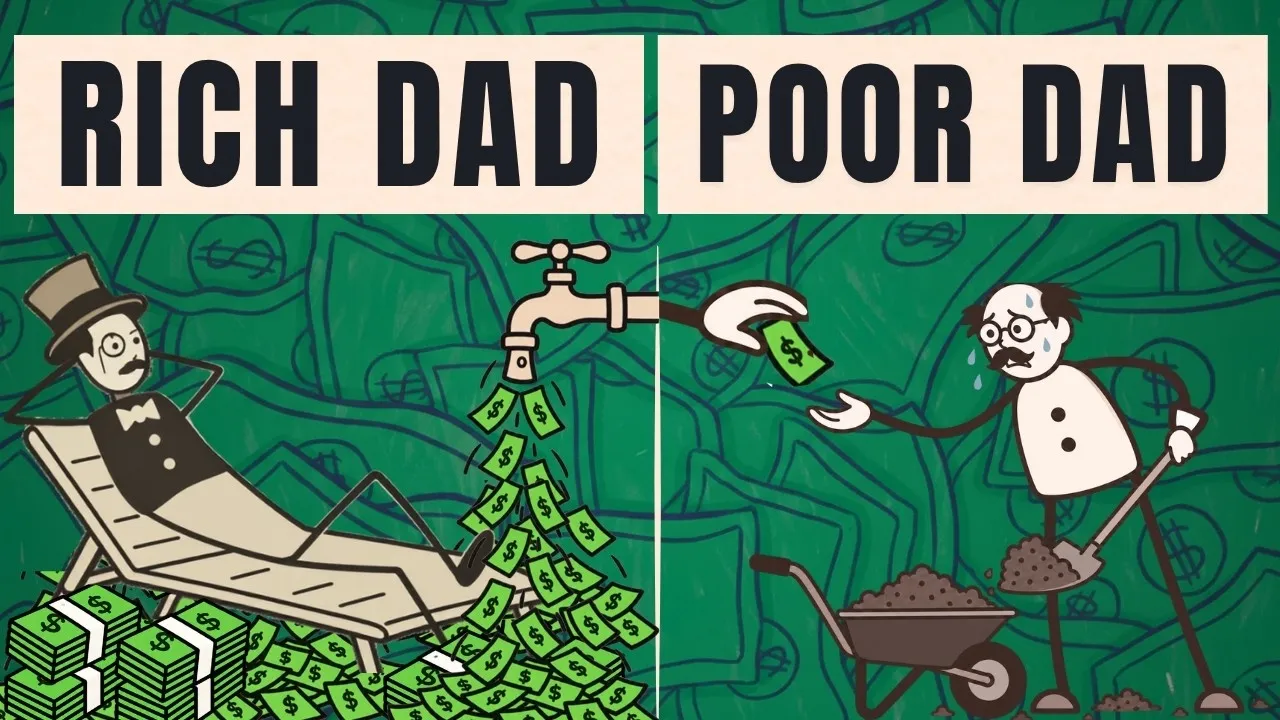
Most people think it takes money to make money. That belief is wrong and it can keep you broke. In Rich Dad Poor Dad, one of Rich Dad's first lessons is how to invent money. Here is how. A kid is walking around his neighborhood and he notices that almost every car parked on his street is dirty. Most people just walk past that. This kid sees an opportunity. So, he knocks on about 20 doors and
77 words, the words spoken in the first 30 seconds at 153 words per minute.
Free, no signup. See how the first 30 seconds hold attention, with rewrites.
Sentence shape
| Measure | This transcript |
|---|---|
| Sentences | 376 |
| Average words per sentence | 10.0 |
| Longest sentence | 37 words |
| Questions asked | 12 |
| Sentences containing a number | 33 |
Most used terms
Filler phrases
13 in total: like 7 · actually 3 · you know 2 · basically 1.
A literal whole-word count of the same phrase list the Prepublish browser extension uses, so a phrase inside another word is not counted and a phrase used in its ordinary sense still is. It is a count and not a judgement.
What this transcript is
Every word below is the caption track YouTube publishes for this video, pulled from the video itself and reproduced unchanged. It is not Prepublish's writing, not a summary, and not a re-transcription: it is the video's own published captions. English captions, generated automatically by YouTube, in the video’s original language. Source: the video on YouTube. A channel that would rather this page did not exist can ask for its removal through the contact page, and it is removed.
No Script X-ray for this video: YouTube shows a Most replayed graph only once a video has enough views.
Most people think it takes money to make money. That belief is wrong and it can keep you broke. In Rich Dad Poor Dad, one of Rich Dad's first lessons is how to invent money. Here is how. A kid is walking around his neighborhood and he notices that almost every car parked on his street is dirty. Most people just walk past that. This kid sees an opportunity. So, he knocks on about 20 doors and asks the owners one simple question.
Do you want your car washed? Seven out of 20 people say yes. >> But here's the catch. The kid doesn't even own a bucket. He has no money to buy one. So, he tells those seven car owners he needs half the money up front just to lock in their spot on his schedule. And they hand him the cash. He takes that money straight to the store, buys everything he needs, and hires a few friends from school to do the actual work. Think about what just happened there.
His customers paid for his equipment. His friends did the washing. And when the cars are clean, the second half of every payment lands in his pocket as pure profit. He built a cash flowing operation without spending a single dollar of his own. He invented money out of thin air. People constantly say it takes money to make money. That's a lie. It takes financial intelligence to make money. If you can't see money with your mind, you will never hold it with your hand.
The rich train their brains to spot problems, piece together solutions, and create money out of nothing. That is why rich dad believed the most dangerous words you can ever say are it is not possible or I can't afford it. The moment you say I can't do it, you're giving your brain permission to stop working, you freeze your brain and nothing grows on ice. But the second you ask, "How can I afford it?" or "How can I do this?" Your brain is forced to wake up.
It starts connecting dots and spotting angles you were blind to 5 minutes ago. That was the very first lesson I learned from this book. Poor people say, "I can't." Rich people ask, "How can I?" And that is how the rich invent money. When I was 9 years old, I did something that I'm not proud of. I cried for one whole week and forced my parents to buy me a bike. They were too proud to say we couldn't afford it, so they tried to talk me out of it, but of course it didn't work.
I finally got it. It was a secondhand bike, but to me, it was the best thing in the world. Here is the part I never planned. I was pretty much the only kid around with a bike. All the other kids wanted to learn how to ride, so they started offering me a few coins to practice. Kid after kid, coin after coin, that scratched up bike started putting money in my pocket. I was just a kid, so I didn't have a fancy word for it.
But looking back, I understand exactly what happened. I accidentally created an asset. An asset is simply something that puts money in your pocket. A liability takes money out of your pocket. That exact same bike could have been either one. If I had just kept it for myself, it was a liability. The moment I rented it out, it became an asset. Rich Dad said, "Getting rich is incredibly simple. You only need to do one thing.
Buy more assets. That's it. It's so simple that most adults completely miss it. They spend their entire lives buying liabilities. the nicer car, the bigger TV, thinking they are assets. Rich people do the exact opposite. They buy assets first and they let those assets buy the shiny stuff later. So before you spend money, just ask yourself one question. Is this going to put money in my pocket or take money out? If you answer that question correctly every time money leaves your hand, you will get rich.
And that was Rich Dad's second lesson. Know the difference between an asset and a liability. If you want to build wealth, buy more assets. One day, Pharaoh commands his 18-year-old twin nephews, Azer and Chuma, to build two pyramids. Whoever finishes first gets to be king and never work again. Azer starts immediately. He drags large, heavy stones one by one to make his base. After one year, his foundation takes shape.
Chuma, on the other hand, hasn't moved a single stone. Azer finds Chuma in his barn tinkering with a weird machine and yells at him to get to work. Chuma just smiles and says, "I am building a pyramid. Leave me alone." Another year passes. Moving stones to the second level is brutal. So Azer hires Egypt's strongest man to help him build bigger muscles. With his new strength, Azer figures he can finish in about 30 years.
Then after 3 years, Chuma finally shows up. He drags out a massive machine of ropes, wheels, and levers. Azer spent one entire year hauling stones just for his foundation. Chuma's machine builds the exact same thing in one week. And it just keeps going, faster and faster. Chuma finishes his entire pyramid in 8 years. 3 years to build the machine, 5 years to let it build for him. Azer refuses to change. He keeps lifting stones, trying to get stronger.
Just two levels from the top, he has a heart attack and dies. Azer gave his sweat and his life to the stones. Chuma gave his time to a system. It's easy to look at those first three years and think Azer was the hard worker and Chuma was lazy. But the finish line tells a different story. Most people are trapped playing Azer's game. They run on a loop of fear and greed. Fear of being broke pushes them to get a job and lift stones.
Then the paycheck hits and greed takes over. They want a bigger house or finer things. The money vanishes. The fear creeps back in and they return to the stones. Work, earn, spend, panic, repeat. The rich refuse to play that game. They don't trade muscle for a paycheck. They build systems, assets that earn money while they sleep. That three years of thinking bought Chuma 40 years of freedom. Azer worked for money. Chuma made money work for him.
And that right there was rich dad's third lesson. Stop being the machine and start building one. A while ago, I met with a few new families who had just moved to our city. And you know how it goes when people meet for the first time. Within 5 minutes, the question came out. So, what do you do? What is your business? I'm in banking. I'm in insurance. I'm in construction. The answers went around the room and at some point it hit me.
Nobody in that room owned a bank. Nobody owned an insurance company. Every single person was describing someone else's business. And before you smile at those people, be honest. If someone asked you tomorrow, you'd probably answer the same way. I did, too. But Rich Dad saw it completely differently. Your job and your business are two different things. Your job is what you do to survive. Your business is building your asset column because that is what sets you free.
The way I picture it is like this. Everyone walks around with two pockets. The left one is your survival wallet. Your paycheck lands there and your bills eat it every month. The right one is your freedom wallet. That's where your assets live, the things that pay you. Everyone in that room was living out of the left pocket and their right pocket was completely empty. So, every single month, your one job is the same. Take a piece of that survival cash and move it to the right pocket to build your asset column.
And an asset isn't just real estate or stocks. It's anything that puts money back in your pocket. a high value skill, a YouTube channel, a side project. I know some of you are thinking, "That's nice, but I'm broke. There's nothing to move at the end of the month." If that's you, listen carefully. You own something rich people would pay millions to get back. Time. Most people light it on fire. They scroll. They binge watch.
Invest those hours into your asset column instead. And as you saw in the first lesson, you don't need money to make money. That was Rich Dad's fourth lesson. Your day job feeds you, but it's not your business. Your business is building your asset column. So, mind your own business. This next lesson I'm about to share has made me more money than any other, but it's also the most dangerous one in this video. Let me explain.
In 2015, I had just finished reading Rich Dad Poor Dad. And like everybody else who reads it, I fell in love with the idea of using debt to build wealth. I had zero idea what the heck I was doing. But I managed to buy a three- room apartment just outside the city center. It cost $60,000. I took $18,000, which was everything I had, and put it as a down payment. The bank financed the rest. My hand was physically shaking when I signed the papers.
If it went wrong, it was right back to zero. But I didn't move in. I rented it out. At first, I just thought, "Cool. The rent covers the mortgage." But then I noticed something else. I had only put in $18,000, but I owned a $60,000 property. So when market prices climbed a few years later, I didn't just make a return on my 18,000. I made money on the entire 60,000. That is the true power of leverage. By 2019, that little apartment had doubled in value.
I wanted to buy a second one. My first instinct was to sell the first flat, take the cash, and buy the next place. That's when the bank showed me a loophole that changed everything. They looked at my first [music] property and basically said, "We'll give you 100% of the money for the new property. In return, we'll use the leftover value sitting inside your first flat as a guarantee." Let me say that again because it sounds too good to be true.
I didn't have to sell anything. I didn't have to save up a new down payment. I didn't put in a single dollar of my own cash. And because I was taking out a loan instead of selling, it wasn't a profit, which meant the government couldn't tax one single penny of it. That's when the light bulb finally went off. I never have to sell ever. I just hold on to what I already own and borrow against it to buy the next one. Fast forward to today.
Both of those apartments are now worth around $150,000 each. Right now, I'm in the process of purchasing a $500,000 property. And I walked into the bank braced to scrape together a massive down payment. But the bank just did the exact same thing they did in 2019. They said, "You don't need to bring us any cash. Look at all the value built up inside your first two properties. We'll just use that as our backup and finance the whole $500,000 for you.
So, just sit with that for one second. A half million property and not a single dollar of new money. The value sleeping inside the first two apartments is doing all the heavy lifting. And that original $18,000 from 2015 is the only money that ever entered the system. Look, I know what some of you are thinking, and you're absolutely right. I got lucky. Very lucky. If prices had dropped instead, that $18,000 would be gone, and I'd still owe the bank every month.
I didn't have a clever plan. I just got the good side of the coin flip. I'm sharing this because this is exactly how wealthy people use debt, taxes, and leverage to build massive wealth. But don't copy this blindly because leverage and debt are like fire. If you know how to control it, it will cook your food. But if you get careless, it will burn your entire house to the ground. That's why Rich Dad's fifth lesson was to learn about debt, taxes, and leverage.
They are some of the most powerful tools in the world, but only if you learn to control them before they control you. Now, after that story, you might think wealth means owning properties worth a million. It doesn't. Kiasaki's definition of wealth is very different. So, let me ask you something and be honest with yourself. If your income stopped tomorrow morning, how long could you survive on what you have without credit cards and without calling your parents?
Most people, when they actually sit down and do the math, land somewhere between 1 and 3 months. Some don't even make it to the next rent payment. Your wealth is the number of days you can live without working. Your salary has nothing to do with it. And honestly, neither does the size of your assets. If your lifestyle eats everything they produce. Think about a guy earning 20,000 a month who also spends 20,000 a month.
If his paycheck stops, he survives maybe 2 weeks. Now compare him to someone on a normal salary whose small rental flat and side income cover his monthly bills. If that second guy stops working tomorrow, his life continues exactly as before. His number of days never runs out. Everyone at the barbecue thinks the first guy is the rich one. And everyone at the barbecue is wrong. So tonight, do the math. Take everything you own that could become cash, your savings, your investments, all of it, and divide it by what you spend in a month.
That number is how many months of freedom you've bought so far. And the game is making that number grow until your assets pay for your life. all by themselves. That was Rich Dad's sixth lesson. Wealth is not measured in dollars. It is measured in days you can survive without working. So find your number and make it grow. Picture a film set on the first day of shooting. There's an actor there who's won awards, a cameraman who's a master of his craft, a writer, an editor, a composer.
Each one the best in the building at what they do. And then a guy walks in who is worse than all of them at everything. He can't act like the actor. He can't shoot like the cameraman. He can't write like the writer. And every single one of those masters turns to him and asks the same question. What do you want us to do? He's the director, the least specialized person on that set and the one running the entire thing. Why? because he is the only one who sees the whole picture.
He knows a little about all of it, just enough to pull every piece into one film. The specialists go deep on their one square. The director sees the whole board. School trains you to be one of the specialists. Pick one lane, go deep, become the expert. And it works perfectly if you want a job. But if you want to build wealth, you have to go wide. You have to understand a little bit from many things. That is why Rich Dad pushed the exact opposite.
He made Robert learn a little bit from everything. One month with the accountants, the next with the lawyers, then the bankers. Robert never mastered any of it. And that was the point. Rich Dad wasn't training him to be a piece of the machine. He was training him to understand the whole machine. Because you cannot build something if you only understand one corner of it. The person who knows a little about selling, a little about money, a little about law, and a little about people is the one who builds the empire.
And that was Rich Dad's seventh lesson. Go deep and you'll work for a great company. Go wide and you will build the great company. Now, Rich Dad told Robert to learn a little bit of everything. But there is one skill he said matters more than everything else, and that skill is selling. And I learned how true that is right here on this channel. There have been books I read that were genuinely great. Great lessons, great stories, exactly what people needed to hear.
And I thought that was enough. I told myself, "This book is so good. people need this. And I put the video out with a lazy title and thumbnail and it flopped. Some of those videos didn't even cover their own production cost. Great content and it died because I didn't spend enough time to sell it. That's when it finally clicked for me. YouTube is not a watch platform. It's a click and watch platform. And the click is the sale.
The thumbnail is the shop window. The title is the pitch and nobody finds out how good the video is unless the selling works first. Even Kiasaki admits that he is not a best writing author. He is a bestselling author. There are plenty of people who write better than him. He just learned to sell better than all of them. School taught you and me that selling is a little shameful and that if your work is good enough, people will find it on their own.
They won't. People are busy. There are amazing cooks with empty restaurants and average cooks with a line out the door because one of them learned how to bring people in. So, whatever you're building, spend half your time building it and the other half selling it. That was Rich Dad's eighth lesson. Learn to sell. The world is full of talented people nobody has ever heard of. Don't be one of them. Now, this next lesson is the one that made Kiasaki famous.
It's also the one that makes people the most angry. So, let's see how you take it. If your parents own a house, you've probably heard them say it at some point. This house is our biggest investment. They say it with pride, and most of us grew up believing it. But remember the question from my bike story. Does it put money in your pocket or does it take money out? Ask that question about the house and the answer is brutal.
Mortgage, repairs, taxes, insurance. Money out every single month for 30 years. The family house is a liability. Probably the biggest one they will ever own. I can feel some of you getting angry right now. But house prices go up. My parents house is worth three times what they paid for it. Okay, fair. And you already heard how the prices went up for the apartments I bought. So obviously I have nothing against buying property.
But notice the difference. I never lived in those apartments. My tenants pay the mortgage and the rent lands in my pocket every month. Your parents pay their mortgage out of their own pocket for 30 years. Same type of property, but in my case, cash flows into my pocket. in their case, cash flows out of their pocket. That is the entire difference between an asset and a liability. And that's why the word investment is so dangerous here.
The moment you call the house an investment, you stop looking for real investments. That's how the middle class stays stuck. Everything goes into one house and nothing is left for the things that actually pay you. Rich people do the exact opposite. They buy things that pay them first and later those things pay for the house. Both families end up owning a home. One family paid for it with 30 years of sweat. The other family's assets paid for it.
And that was Rich Dad's ninth lesson. Your house is not an asset. Stop calling it one and go find real ones. And that brings us to the last lesson, maybe the most important one, because everything you heard today, buying assets, building systems, using leverage, all of it comes with the same price tag, the risk of failing. And that risk is exactly where most people quit. But think about how you learned to walk. You fell down over and over and over.
If you had quit the first time you fell, you would probably still be crawling right now. Failure and success come in the same box. You don't get to order one without the other. Most of us forget this the second we start something. I personally know people who started a YouTube channel, saw zero traction after four videos, and just quit. Four videos. You wouldn't expect a six-pack after going to the gym four times. It's the exact same thing.
The people who actually make it treat failure like a GPS. When you miss a turn, does the GPS scream that the whole trip is ruined? No. It calmly says one word, recalculating. And then it hands you a brand new route from the exact spot you messed up. That is the entire game. Miss the turn, new route. Miss it again, new route. 100 quiet times until you finally arrive. And that was Rich Dad's 10th and final lesson. People who avoid failure also avoid success.
Before we finish, I want to be straight with you because I know it's coming in the comments. Kiasaki is a controversial guy. People call him a scammer and some call this book complete garbage. And honestly, maybe some of that is deserved. I don't know the man, and I'm not going to defend him. So, here's how I'd leave it with you. Some people will always love a book and some people will always hate it. Don't outsource that decision to either group.
Test the lessons yourself. Keep what works and throw away the rest. Thanks for watching.
The words are the caption track's own and nothing is reworded or re-transcribed. Paragraph breaks are placed between sentences so the text reads as prose.
Free tools for your own script. No signup, no login.
Paste your draft and see where viewers are likely to drop off, with a rewrite for each weak line.
Paste the first 30 seconds of your own draft for a hook score and rewrites.
Check your draft against YouTube's advertiser-friendly guidelines before you record it.
Read this channel's public videos and transcripts, and download a writing brief for it.