Getting the transcript
Reading the captions from YouTube. A video nobody has opened here before takes 10 to 30 seconds; this page fills in on its own.
Getting the transcript
Reading the captions from YouTube. A video nobody has opened here before takes 10 to 30 seconds; this page fills in on its own.
Wyatt Feaster · @wyattfeaster
Words
1,368
Runtime
8:34
Speaking pace
160wpm
Reading time
6min
160 words per minute, between the 160 25th percentile and the 181 median of 349 measured videos. That distribution comes from the 349-video hook study.
Opening (first 30 seconds)
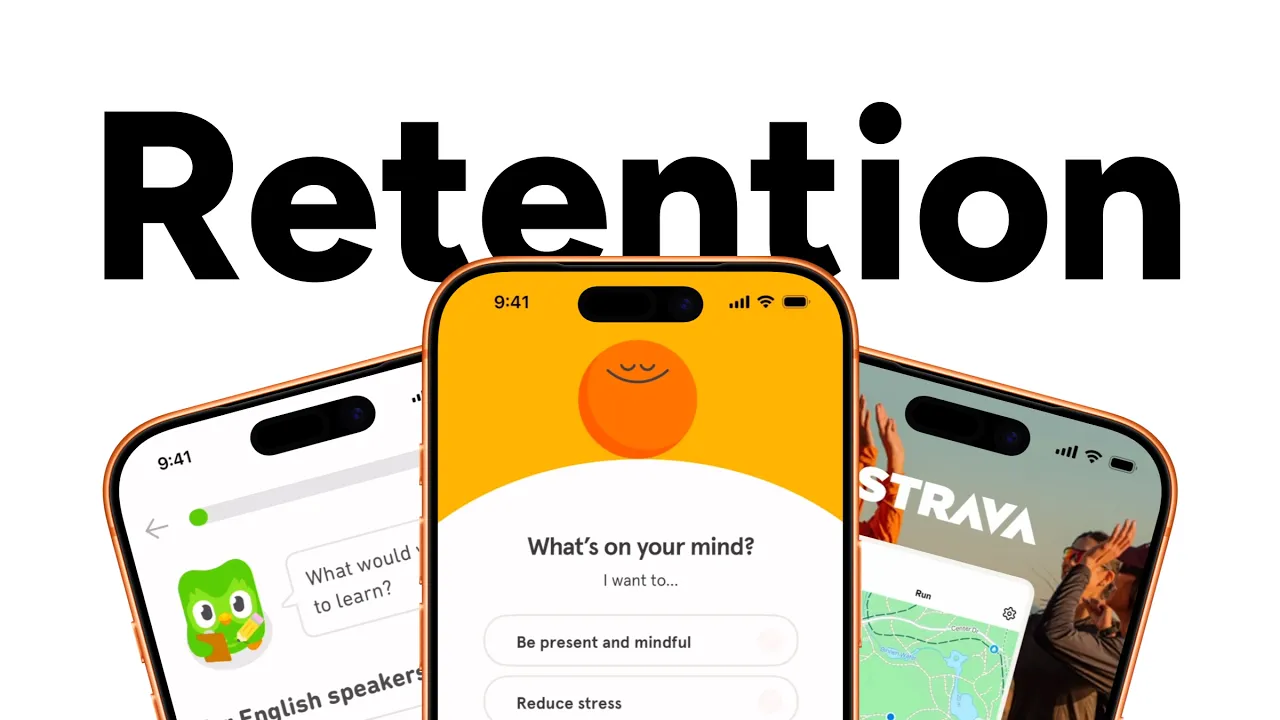
I analyzed over 1,000 different iOS apps that have ridiculously high retention rates and they all [music] have the same one or more principles in common. But what exactly is it that makes these apps so effective? Is it the brand name or is it something completely different? Well, in this video we're going to cover the five different tactics that the leaders in this space do to retain their users and keep them coming back time and time again.
80 words, the words spoken in the first 30 seconds at 160 words per minute.
Free, no signup. See how the first 30 seconds hold attention, with rewrites.
Sentence shape
| Measure | This transcript |
|---|---|
| Sentences | 64 |
| Average words per sentence | 21.4 |
| Longest sentence | 60 words |
| Questions asked | 3 |
| Sentences containing a number | 1 |
Most used terms
Filler phrases
9 in total: like 8 · kind of 1.
A literal whole-word count of the same phrase list the Prepublish browser extension uses, so a phrase inside another word is not counted and a phrase used in its ordinary sense still is. It is a count and not a judgement.
What this transcript is
Every word below is the caption track YouTube publishes for this video, pulled from the video itself and reproduced unchanged. It is not Prepublish's writing, not a summary, and not a re-transcription: it is the video's own published captions. English captions, generated automatically by YouTube, in the video’s original language. Source: the video on YouTube. A channel that would rather this page did not exist can ask for its removal through the contact page, and it is removed.
No Script X-ray for this video: YouTube shows a Most replayed graph only once a video has enough views.
I analyzed over 1,000 different iOS apps that have ridiculously high retention rates and they all [music] have the same one or more principles in common. But what exactly is it that makes these apps so effective? Is it the brand name or is it something completely different? Well, in this video we're going to cover the five different tactics that the leaders in this space do to retain their users and keep them coming back time and time again.
So by the end of this video, you should be able to understand why these tactics work and how to go apply them yourself. So without further ado, let's get into it. To start things off, the first thing that these apps are doing is they're leaning into extreme personalization. Duolingo, one of the gold standards in this space, does this by asking the user a series of questions to deeply understand why they're using Duolingo in the first place, to understand why they want to learn a foreign language, how many minutes they have every single day, so ultimately they can recommend a course that's perfect for that user.
Headspace goes through assigning users a personality type based on questions and knowledge about them and then assigning them a meditation program based on that. Spotify does this by recommending different artists, playlists, and daily mixes all based on a user's listening habits. The aha moment. The apps that keep users around the most are the ones that get the users to value as quickly as possible. Calorie IQ does this on the very first screen of their app.
As soon as the user opens it up, they're shown a demo of what the app does so they understand the concept. And then immediately when they get into the app, the concept is very clear and reiterated by taking a picture and getting their food logged. Granola, their impact moment is the actual output of the data itself. It listens to you while you're on a call and then at the end of the call, it generates notes for you based on everything that was talked about.
And the results are so good that you won't even be able to imagine ever doing a meeting without it again. And then shortly after, another impact moment comes in where you can ask the AI any question about your meeting. These apps form habits, either good habits or bad habits. And each one of these apps do it in their own way. The more ingrained that these apps become in a user's psyche, the more frequency of use that they will get.
And the higher retention that each one of these apps will receive. And to be [music] honest, some of the best in this space at it are fitness apps. For example, Oura Ring does this because they provide their users with sleep scores. It's something that the user gets to look forward to and is ingrained in them every single morning. Because everybody sleeps, every morning when they wake up, there's fresh data for them to check.
And it starts to form this habit for them over time. Strava helps users form habits through completing things like achievements, challenges, attending events. They even leverage a dopamine hit when the user completes something. And then allows them to share it with people, creating that habit loop. Along that though, they understand that people will get sore from time to time and feel less motivated. So they also build in opportunities to be able to highlight things like recovery runs, brisk walks that build on those habits, but also are there to support people in their different times of need.
And then Duolingo here is just the industry leader when it comes to habits and streaks. They probably popularized the streak method itself with their borderline passive-aggressive guilt-tripping and their unhinged widgets that make you never want to miss a streak, and they even highlight friend streaks to maximize the gamification and community. Many of the app leaders in the retention space have really great communities behind them that almost grow the app itself and become advocates for why someone should use an app.
The larger the app gets, the more robust the community gets and the tougher and tougher it is to compete against these apps. Brilliant does this through a combination of leaderboards and gamification. When users go and complete a coding lesson or an experience, they earn XP points that pits them and ranks them against the community and lets them see other people that are on the similar path to learning what they're learning.
And they can unlock different leagues to compete against different people, continuing the community aspect to keep people retained within their app. The Ahead app does a great job of their community building by not just showing a community tab, but they elevate things such as questions of the day and advice. It helps people to find information based on exactly what they're looking for and help them feel like there are other people out there that are going through the same struggles as them.
When people feel heard, that emotional connection tends to keep people in and retained [music] because humans are emotional creatures. And then the final one here is that they make switching expensive. That's arguably the highest retention piece of this entire list that we've gone through. When users get so ingrained in your ecosystem and [music] in your product that the time and the energy and the money to move off of your platform becomes almost impossible to ever do it.
Think banking apps, things like Google Drive, stock apps, communication platforms, anything in that realm is extremely painful for a user or a company to ever leave. Google Drive is probably one of the most notorious for this. The deeper and deeper that you have with more and more storage, photos, [snorts] documents, the harder it is to leave that platform because it's just simply not worth it to people, so they tend to keep more and more users.
Chase Bank or other banking apps, they keep people on there because moving money from one bank account to another is not always the easiest thing to do or close a bank and move it to another. It's just not worth the time and energy for the little bit of bright side that you might get. Places like Coinbase that sell crypto have a high cost associated with moving money. People have to figure out how to time the market or figure out how to make sure they don't lose a bunch of money if they want to move from a different platform, so that ultimately often times leads to somebody not moving off of their platform even if they're not super happy with the service that it provides.
Things like Slack where large orgs will rarely move from communication providers. It just takes up so much time, energy, and money to move. They have things like channel history, saved items, automations and integrations that are automatically synced up and connected and send reports out to different parts of the company and so much more. And so for these companies to have to move off of that to another is just not worth the time and energy.
So that kind of wraps up everything that goes in to high retaining apps. And I'm curious if you made it to the end of the video here, is there anything else on the list that you've noticed that helps an app retain users at a high rate? I'd love to know in the comments. And if you're a founder and you are looking [music] for design help to identify the areas of opportunity to make sure your users stick around for longer and you have higher retention rates, then go ahead and click on the link where you can fill out some information and we can chat and see if we're a good fit.
And I can help you out. So thanks a bunch for being here. Hit the like and subscribe button and we'll see you next time.
The words are the caption track's own and nothing is reworded or re-transcribed. Paragraph breaks are placed between sentences so the text reads as prose.
Free tools for your own script. No signup, no login.
Paste your draft and see where viewers are likely to drop off, with a rewrite for each weak line.
Paste the first 30 seconds of your own draft for a hook score and rewrites.
Check your draft against YouTube's advertiser-friendly guidelines before you record it.
Read this channel's public videos and transcripts, and download a writing brief for it.