Getting the transcript
Reading the captions from YouTube. A video nobody has opened here before takes 10 to 30 seconds; this page fills in on its own.
Getting the transcript
Reading the captions from YouTube. A video nobody has opened here before takes 10 to 30 seconds; this page fills in on its own.
Ask Nigel · @asknigel
This video has no Most replayed graph yet: YouTube shows one only once a video has enough views. These are the moments viewers replayed most in Ask Nigel's most watched videos.
Most replayed moment at 9:47
2.0x that video's typical replay level
daily chin tucks against a wall. This strengthens the muscles around your neck, so they can drag your head back over your shoulders. Eating like garbage. A diet of factory-made food doesn't just make you gain weight, it physically strips away the protective lining of your intestines. Your gut's
Said at 9:40
Most replayed moment at 8:06
2.5x that video's typical replay level
effect. It's the only addiction where the gateway drug is a packet of Taco Bell hot sauce, and rock bottom is buying a bottle of ghost pepper extract with a skull on the label just so you can feel something. Cheese. Spicy food isn't the only thing that acts like a drug in your system. There's a
Said at 7:58
The graph counts replays. It does not show where viewers stopped watching.
Words
3,115
Runtime
16:17
Speaking pace
191wpm
Reading time
13min
191 words per minute, between the 181 median and the 201 75th percentile of 349 measured videos. That distribution comes from the 349-video hook study.
Opening (first 30 seconds)
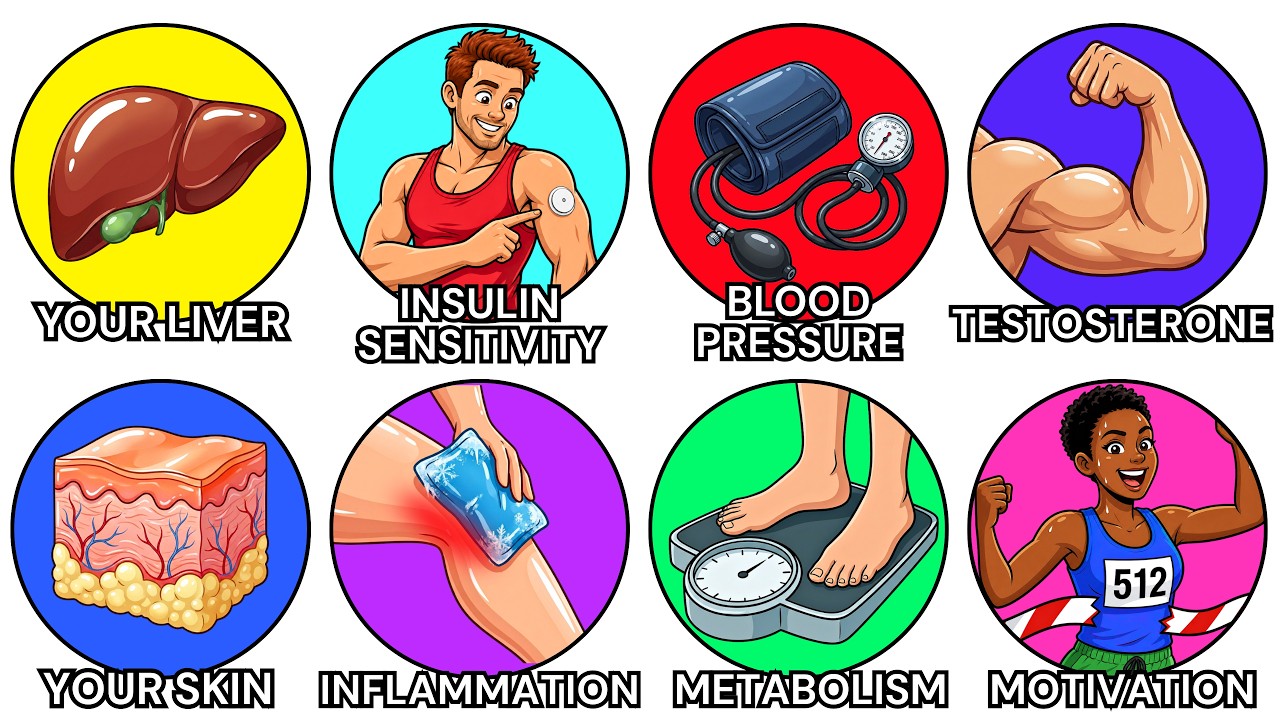
Your liver. Roughly one in three adults is walking around with a fatty liver and has no idea since it gives off no symptoms until it's serious. It's also the organ that heals the fastest. Four weeks of the right changes and liver fat measurably drops. You already know what a weekend bender does to your liver. What catches most people off guard is that sugar damages the exact same organ through a completely different pathway, making non-alcoholic fatty liver the most common liver disease on the planet. Fructose is the sugar doing the damage and
96 words, the words spoken in the first 30 seconds at 191 words per minute.
Free, no signup. See how the first 30 seconds hold attention, with rewrites.
Sentence shape
| Measure | This transcript |
|---|---|
| Sentences | 179 |
| Average words per sentence | 17.4 |
| Longest sentence | 39 words |
| Questions asked | 0 |
| Sentences containing a number | 35 |
Most used terms
Filler phrases
5 in total: like 5.
A literal whole-word count of the same phrase list the Prepublish browser extension uses, so a phrase inside another word is not counted and a phrase used in its ordinary sense still is. It is a count and not a judgement.
What this transcript is
Every word below is the caption track YouTube publishes for this video, pulled from the video itself and reproduced unchanged. It is not Prepublish's writing, not a summary, and not a re-transcription: it is the video's own published captions. English captions, generated automatically by YouTube, in the video’s original language. Source: the video on YouTube. A channel that would rather this page did not exist can ask for its removal through the contact page, and it is removed.
Your liver. Roughly one in three adults is walking around with a fatty liver and has no idea since it gives off no symptoms until it's serious. It's also the organ that heals the fastest. Four weeks of the right changes and liver fat measurably drops. You already know what a weekend bender does to your liver. What catches most people off guard is that sugar damages the exact same organ through a completely different pathway, making non-alcoholic fatty liver the most common liver disease on the planet.
Fructose is the sugar doing the damage and your liver is the only organ in your body equipped to process it. Sugary drinks are the worst offenders because there's no protein or fiber to slow down how fast the sugar hits your bloodstream. Sodas, juices, sweet teas, and that thing they call coffee that's loaded with four pumps of syrup all dump fat on your liver cells. Cut those out for the next 30 days and your liver starts ridding itself of stored fat inside the same month.
If you drink alcohol, give your liver a clean three to four week break. Your body treats alcohol as an immediate poison and halts everything else to clear it out. While it's stuck doing that, fat burning stops and fat storage takes over, which is how fatty liver disease starts. Taking three weeks off drinking reverses a good chunk of that, doing more for your liver than a box of detox tea ever could. Exercise helps burn the fat from your liver, too, and you don't have to lose a pound for it to work.
Studies put people on a training program, their weight never budged, and their liver fat still dropped. If you hate going to the gym, there's always coffee. Drinking two to three cups a day lowers elevated liver enzymes and slows liver scarring. Decaf does it, too, but why anyone would want to drink decaf is beyond me. Omega-3 also reduces liver fat, though research suggests it takes a bit longer than a month to start working.
Omega-3 can also thin your blood, so check with your doctor if you plan to start taking it. All of these help reverse early liver damage, but none of them work if the damage has already turned into cirrhosis, which is permanent scarring. As for milk thistle, it does help lower liver enzymes on a blood test, but studies show it barely touches the actual fat sitting inside the organ. Skip the supplement and spend the money on coffee, but make sure you drink it black.
Insulin sensitivity. 10 minutes of walking immediately after you finish a meal does more for your blood sugar than half an hour of walking at any other point in your day. Every time you eat, glucose floods into your bloodstream and your pancreas releases insulin to shuttle that fuel into your cells. That system breaks down when your blood sugar spikes too often from refined carbs, sugary drinks, and lack of activity.
Eventually, your cells stop responding to insulin. Your pancreas burns itself out trying to compensate and your blood sugar starts climbing out of control. You can break that cycle before it becomes irreversible by taking a 10-minute walk the second you put your fork down. That post-meal window is when glucose is actively flooding your bloodstream and when your leg muscles contract, they pull that sugar out of your blood before it has the chance to spike, completely bypassing your insulin system.
Research suggests it only takes 10 minutes to make a difference, which is roughly one lap around the block and probably the same amount of time you'll spend talking yourself into doing it. Two weeks of that and your fasting numbers start dropping. A full month and the change is significant. Lifting weights is just as effective and has an added bonus. A single weight training session increases your insulin sensitivity for up to 48 hours afterward, giving that incoming glucose a storage locker in your muscles instead of spilling into your bloodstream.
A tablespoon of vinegar before a carb-heavy meal can also help blunt an insulin spike. The effect is small, but it's been repeated in enough studies to trust and it's one of the cheapest supplements you can take. Make sure you dilute it before drinking it though, so you don't damage your esophagus or your teeth. Berberine's another option that's shown promise. Some studies suggest it improves glucose uptake and lowers blood glucose levels as well as the prescription drug Metformin.
Berberine also interacts with a long list of medications and may be a problem for people with kidney disease. So, as always, talk to your doctor before using it. Blood pressure. The single best exercise you can do to bring your blood pressure down has you standing against the wall, not moving at all. Across hundreds of clinical studies, isometric holds beat out running, walking, and standard weight training for dropping resting blood pressure.
Isometric means contracting your muscles and holding that position, like a wall sit, a plank, or squeezing a hand grip. That constant contraction squeezes your blood vessels shut, and when you let go, they open wider than they were before. Repeat it a few times a week and they stay more relaxed at rest. Two minutes of holding, four rounds, three days a week is what most of the research suggests. Of all the isometric moves, wall sits rank the most effective for lowering blood pressure.
After just 4 weeks of doing them, people see significant drops in their numbers, especially if they were high to begin with. In the meantime, stop obsessing over cutting table salt and focus on getting more potassium, since it helps your kidneys clear the sodium you already ate. Opt for real food instead of a pill, like baked potatoes, black beans, spinach, and plain yogurt, which all carry far more potassium than a banana does.
Beetroot juice can also help, because beets carry a lot of nitrates, which your body turns into nitric oxide, a gas that tells your blood vessels to open up. Studies show drinking it can drop systolic blood pressure 4 to 5 points, with effects showing up within hours and building if you keep using it. If you're already on blood pressure medication, beetroot stacks with it and can drop you too low. Worth mentioning to your doctor rather than discovering it at the most inopportune time.
Sleep. You can't fall asleep tonight because of something you failed to do 14 hours ago. Your brain starts its countdown to sleep when morning light hits your eyes. If that light never arrives, the timer never starts and you end up lying there at midnight staring at the ceiling. 10 minutes outside within an hour of waking changes that completely. Indoor lights won't cut it. Even on a gloomy overcast morning, outdoor light is vastly brighter and your brain can tell the difference.
Looking through a window doesn't count either since glass cuts the intensity by more than 90%. At night, take a warm shower an hour before bed to force your core temperature down. Your body has to drop about 2° before your brain will let you fall into deep sleep and the warm water pulls blood to your skin so you dump heat the second you step out onto the tile. If you're looking for a supplement to help, magnesium glycinate's the one.
It boosts the neurotransmitter GABA to quiet racing thoughts and relax tight muscles and research suggests 50 to 60% of adults don't get enough magnesium in their diet. Now for the part you probably won't do. Keep your wake up time consistent every day including weekends. Your body clock anchors to when light arrives not when you switch the lamp off at night. Getting out of bed at the crack of dawn on a Saturday morning may be pure torture but it's what keeps Monday morning from feeling like you got hit by a truck.
Testosterone. The fastest way to raise your testosterone is the sleep you haven't been getting. Deep sleep is when most of your daily testosterone gets released and every night you cut short shuts production down at the source. Research has found that a week of 5-hour sleep nights dropped healthy men's testosterone by 10 to 15% the same drop you'd normally see over a decade of aging. The The light, the warm shower, the steady wake time on weekends, all of it does more for you than just leave you rested.
Get 7 to 8 hours of sleep each night and your testosterone levels climb back on their own in less than a month. Next, drop some body fat. Fat tissue carries an enzyme called aromatase that converts your testosterone into estrogen. So, the more you're carrying, the more you're losing every day. Lose a few pounds over the next month and your testosterone rises without you doing anything else. In the gym, train heavy compound movements instead of running yourself into the ground.
Marathon training and long endurance sessions drive stress hormones up and testosterone down, even if every runner watching this just decided I'm wrong. Squat, bench press, and deadlift 3 days a week sends your body the signal it needs to build muscle and produce more hormones. In the meantime, feel free to stop throwing money at those flashy testosterone boosters in the supplement aisle. Almost all of them are cheap zinc and vitamin D hidden behind a $40 proprietary blend.
Get a blood test and if you're low on either one, a $5 bottle from the grocery store can fix it. If you're not deficient, the pills do absolutely nothing. Metabolism. Your metabolism isn't broken and it isn't slow because of your age. It's idling and 30 days is enough to get it running again. Most of what your body burns every day happens while you're not doing much at all, just keeping your heart going and your temperature up.
That's your resting metabolism and it's set almost entirely by how much muscle you carry, since muscle burns calories around the clock whether you use it or not. Put on a pound of muscle and your metabolism rises naturally, even on the days you never leave the couch. That makes the squats and deadlifts you're already doing for your testosterone the best thing you can do for your metabolism as well. 10 pounds of muscle won't arrive in 30 days, but what you start this month will pay you back for years.
You can also burn an extra 800 calories a day without ever setting foot in a gym. Researchers call it NEAT, non-exercise activity thermogenesis, and it's everything you burn moving around during an ordinary day. Pace while you're on the phone, park at the far end of the lot, and take the stairs instead of the elevator. Do that for a month and you're thousands of calories ahead of where you started. Spend 8 hours at a desk or in a car and those calories don't go anywhere.
Inflammation. The stiffness in your hands when you wake up, the afternoon crash, the injury that used to take a week to heal and now takes a month, that all comes from the same problem. Chronic inflammation is your immune system left switched on with nothing to fight. It was built for a 3-day emergency and leaving it constantly running costs you the repairs it's borrowing against. That's why everything heals slower and hurts longer than it used to.
Sleep switches it off faster than any pill you can take. One short night raises your inflammatory markers by the following morning and a week of those nights leaves you sore for reasons you can't trace to anything you did. 7 to 8 hours a night and inflammation drops significantly within 30 days. Walking also helps more than most people think. Contracting your muscles releases anti-inflammatory compounds into your blood and the effect lasts for hours after you stop moving.
Research suggests 150 minutes a week, so 20 to 30 minutes most days should cover it. Fish oil can help, too, if you buy the right kind, but most people don't. Studies found 2 to 3 g of combined EPA and DHA a day to be most effective, while most cheap bottles only give you 300 mg. Just remember it thins your blood, so your doctor needs to know before you start taking that much of it. You can also try turmeric, as long as you buy the version with piperine on the label, which is black pepper extract.
Curcumin is the active compound and it barely absorbs without it, so the bottles that don't contain it do close to nothing. Taken right, it works on the same pathways as over-the-counter medication without tearing up your stomach like ibuprofen. None of it helps much if you're still drinking. Every drink sets off an inflammatory response your body hasn't finished clearing before the next one comes, which is why your knees ache the morning after a night on the town, even if you just sat at the bar.
Your heart. There's one number that predicts how long you'll live better than your cholesterol, your blood pressure, or your weight, but it's rarely measured. That number is your VO2 max, which is how much oxygen your body can pull in and put to use. Move from the bottom of that scale into the middle and you cut your risk of dying early more than quitting smoking does. Interval training is the best way to do that, since easy jogging never pushes your heart hard enough to force the change.
The protocol with the strongest evidence behind it is called the Norwegian 4 by 4, which is 4 minutes hard, 3 minutes easy, four rounds, twice a week. Hard means you can't get a sentence out and you feel like quitting almost the whole time. Your heart adapts by thickening and widening its main chamber, so it moves more blood with every squeeze and needs fewer beats to do the same work. Take your pulse before you sit up in the morning, write the number down, and check again in a month.
Chances are it's dropped several beats, which is your heart telling you it's getting stronger before you feel anything. Get your iron checked, too. Your red blood cells need it to carry oxygen, so if you're low, your heart can be in perfect shape and the oxygen still won't arrive. It's common in anyone who donates blood, trains hard, or has heavy periods, and it just takes one line on a blood panel to find. Correct a real deficiency and your endurance changes within weeks.
Give it a month and you'll stop being breathless after one flight of stairs. Your skin. Your face replaces its outer layer about every 28 days, so the skin you'll be looking at next month hasn't even been made yet. If your skin is dry, flaky, or stings when you put anything on it, your barrier is damaged and that's a 2-week fix. The barrier is a layer of fats called ceramides that hold your skin cells together and keeps water from escaping.
By Buy a moisturizer with ceramides on the label, use it twice a day, and the flaking and stinging stop before the month is out. That won't do anything for wrinkles or sun damage. Retinoids are the only topical with real evidence there, and they work by speeding up how fast you turn over new skin cells while rebuilding the collagen underneath. Your pores get smaller, your tone evens out, and fine lines soften, though none of that arrives on schedule.
The first month is redness and peeling, which is why most people quit right before it starts working. Start with the lowest strength twice a week and build up from there. Creams only reach the surface, though. Plenty of what shows on your face arrives from inside. That month off drinking your liver's been waiting for pays out here as well. Alcohol widens the vessels in your cheeks and nose, pulls water out of your skin overnight, and wrecks the sleep your face depends on.
So, 3 weeks in the flush settles, and the dullness goes with it. If it isn't obvious by now, sleep is the single most important thing on this entire list. Your face is a dead giveaway when you haven't had enough. Puffiness and dullness show up the morning after a short night, and no amount of moisturizer covers it. Sunscreen every morning is what protects all of it, and it does more for how you'll look in 10 years than everything else here combined.
Most of visible aging on your face comes from sun exposure, not birthdays. Skip it, and the retinoid, the ceramides, and the sober month are repair work on damage you're still doing. Motivation. Motivation isn't something you're born with. It's something your daily habits either build or destroy. Scrolling, gaming, online shopping, and junk food all pay you off in seconds and ask nothing from you. Each one triggers a hit of dopamine, the chemical that makes you want things in the first place, and your brain adapts to whatever it gets most often.
Fill your day with instant payoffs, and anything that takes effort stops feeling worth starting. Cut back on the instant stuff, and the rest of it starts appealing to you again. Keep your phone out of the bedroom, set a time limit on scrolling, and get the shopping apps off your phone, so ordering something takes more than one tap. 2 to 4 weeks of that, and things you'd given up on start feeling worth doing again. What works even better is not waiting to feel motivated in the first place, because motivation's not the thing that makes people succeed, routine does.
Do the same thing at the same time on the same days, and your brain stops treating it as a choice, and starts treating it as part of the day. Somewhere between 3 weeks and 2 months, you quit negotiating and just go. Everyone thinks gym regulars are motivated to work out. They're not. They're just past the point where going was still up for debate. Fixing your body in a month's time comes down to a handful of things nobody wants to hear.
Sleep, exercise, and easing off the alcohol. Start now, while the damage is still early. Your body will undo almost anything you've done to it, right up until the point it can't.
The words are the caption track's own and nothing is reworded or re-transcribed. Paragraph breaks are placed between sentences so the text reads as prose.
Free tools for your own script. No signup, no login.
Paste your draft and see where viewers are likely to drop off, with a rewrite for each weak line.
Paste the first 30 seconds of your own draft for a hook score and rewrites.
Check your draft against YouTube's advertiser-friendly guidelines before you record it.
Read this channel's public videos and transcripts, and download a writing brief for it.