Getting the transcript
Reading the captions from YouTube. A video nobody has opened here before takes 10 to 30 seconds; this page fills in on its own.
Getting the transcript
Reading the captions from YouTube. A video nobody has opened here before takes 10 to 30 seconds; this page fills in on its own.
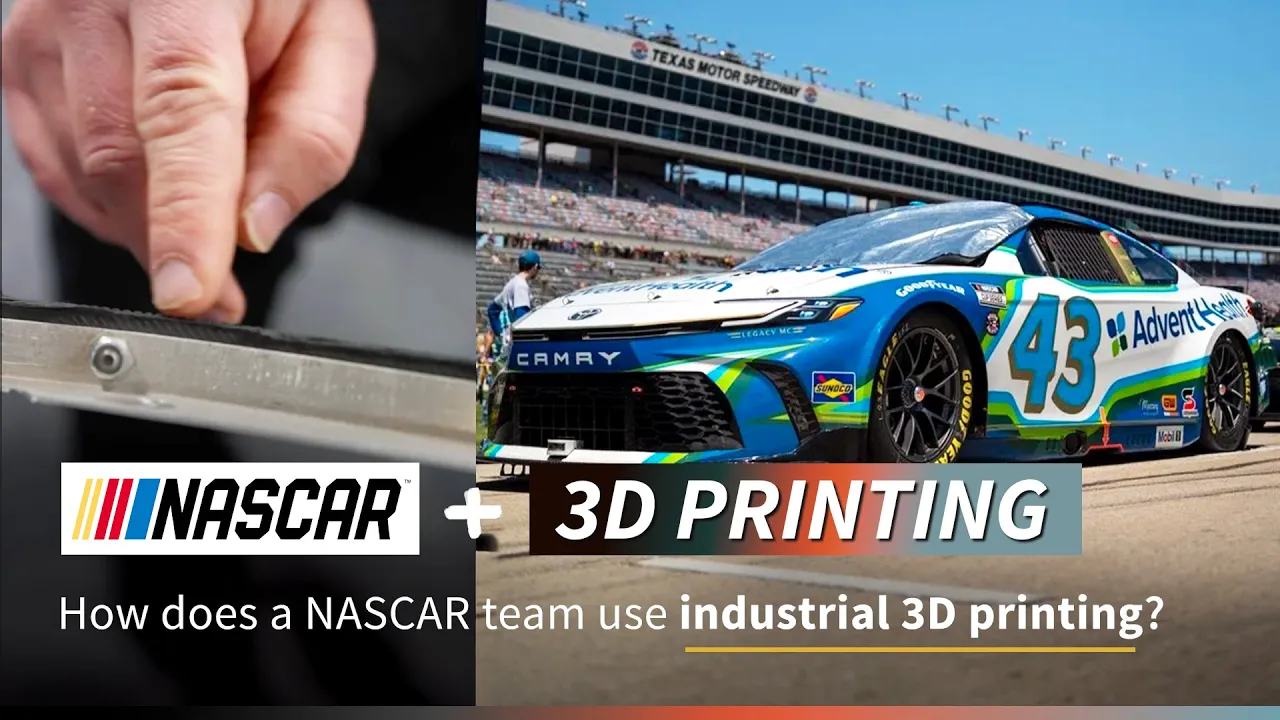
BigRep 3D Printers · @Bigrep3D
Words
2,102
Runtime
11:19
Speaking pace
186wpm
Reading time
9min
186 words per minute, between the 181 median and the 201 75th percentile of 349 measured videos. That distribution comes from the 349-video hook study.
Opening (first 30 seconds)
Hey, this is Jason with BigRep. Here we are inside the number 43 hauler here at the Darlington race. Over the past year, we’ve been partnering with LEGACY. With NASCAR, for motorsports, understanding the way 3D printing is utilized. I'm joined by Steven Sander with LEGACY MOTOR CLUB. Steven, thank you so much for taking the time to talk with us. Would you mind telling us a little bit about your role at LEGACY MOTOR CLUB? Sure. So, I'm the Director of Aerodynamics at LEGACY MOTOR CLUB. We've been racing the Next Gen
93 words, the words spoken in the first 30 seconds at 186 words per minute.
Free, no signup. See how the first 30 seconds hold attention, with rewrites.
Sentence shape
| Measure | This transcript |
|---|---|
| Sentences | 126 |
| Average words per sentence | 16.7 |
| Longest sentence | 96 words |
| Questions asked | 13 |
| Sentences containing a number | 14 |
Most used terms
Filler phrases
28 in total: like 17 · actually 4 · kind of 3 · you know 3 · I mean 1.
A literal whole-word count of the same phrase list the Prepublish browser extension uses, so a phrase inside another word is not counted and a phrase used in its ordinary sense still is. It is a count and not a judgement.
What this transcript is
Every word below is the caption track YouTube publishes for this video, pulled from the video itself and reproduced unchanged. It is not Prepublish's writing, not a summary, and not a re-transcription: it is the video's own published captions. English captions, published by the channel, in the video’s original language. Source: the video on YouTube. A channel that would rather this page did not exist can ask for its removal through the contact page, and it is removed.
No Script X-ray for this video: YouTube shows a Most replayed graph only once a video has enough views.
Hey, this is Jason with BigRep. Here we are inside the number 43 hauler here at the Darlington race. Over the past year, we’ve been partnering with LEGACY. With NASCAR, for motorsports, understanding the way 3D printing is utilized. I'm joined by Steven Sander with LEGACY MOTOR CLUB. Steven, thank you so much for taking the time to talk with us. Would you mind telling us a little bit about your role at LEGACY MOTOR CLUB?
Sure. So, I'm the Director of Aerodynamics at LEGACY MOTOR CLUB. We've been racing the Next Gen car since 2022. This is a huge change from what we used to operate as. Used to be sheet metal, welding it out to whatever shapes you want. Heavy fabricating and lots of metal related parts. So there's a much tighter box in terms of the design freedom with the car. There's a number of components you can still design, but with how tight of a box it is, it's really by design, is really to help encourage parity within the sport.
So the way that we can set ourselves apart from our opponents that we're competing with is just how well we execute. So being able to build a high quality car twice within every single weekend. So the 42 and the 43, sometimes the 84, and do that week after week so that our race teams, when they show up here, they know exactly what kind of car they have, that they can hit their balance, hit their travels, and just give them a shot at competing.
That’s something we talked offline but, just how tight of a timeline you have in order to make and get the cars ready So, can you give us a little bit of insight about what that timeline looks like for gettin a car prepped? Sure, so, in a perfect world, for us, it's a five week turnaround from when the chassis shows up as your center section, front clip, rear clip start assembling the underfloor, then it gets the body panels assembled.
Each of those is about a week process, and then we go through a full assembly and then we go back to the hoist to set our underfloor back to the teams, to then be able to put in their setup and all their final items. For us, it's usually more like four weeks. So four weeks is a pretty typical turnaround from when you take raw components and send that car to the track. Sounds like building a full car within 4 weeks and, there is really little time for error, in a sense, within that time frame.
Yeah, we only had one off-week this season, so... It's four weeks, but then you also have three other cars that are within that cycle. There are a lot of moving parts, and everything that has to move seamlessly, department to department. So, we are all ready to do our job. in a timely manner. I think that translates a lot of the customers we work with, maybe not in motorsports but in general manufacturing or production which also has deadlines to meet and are trying to get pars fabricated in time for meeting either they are prototyping deadlines or, even keeping their manufacturing lines working too.
One thing I loved to hear, obviously, we are working together for a while but, Can you tell us what BigRep machines are you using? And, what are the key components that you using maybe from a production perspective? So we have two STUDIO G2s that we are operating pretty much 24/7 at our shop. Key components that we're making, I mean, all types of templates and fixtures, Because again, I go back to our ability to execute consistently week in, week out.
So we use this heavily to make sure that we're getting our cars to look the same as what we're intending. There's a number of parts that go on the car. So we have nose ducts. So the brake ducts for your front brakes. We print those. Doesn't really make sense to make those out of carbon, when there's a good chance you're going to take front end damage within a race. So it's pretty much a one time use part. So 3D printing makes perfect sense for that.
We have a gear cooler plenum in the back which is a very large component. So something you can't just print on a small hobbyist printer, that you need something industrial that's robust and large in size to get you really accurate dimension control and be able to print within a large volume. That’s great. Some of the materials too, Can you tell us what materials you are using? We've actually exclusively been using BigRep materials.
I know we have the freedom to go use other materials, which I love having that freedom, but it's just not been necessary for us. Every issue that we've come up with, there's a solution right there. So we've used TPU for being able to do like little gaskets so that we can stretch them over parts of the chassis that need to have consistent sealing. We've done HI-TEMP CF for regions where we need the parts to be strong, but also really resilient to high temp situations.
And then PRO HT we've been using very heavily. So when we just need nice looking parts where strength needs to be there, but not too critical and the temperature environment's not too critical. We recently started actually playing around with HI-TEMP and we're we're really impressed with that material. So there's there's so many options for us to be working with. One I forgot to mention right there is BVOH. So we have a water soluble support which allows us to do very complex geometry and not really have to fight with getting support off the part that we can just wash it off.
So it's it's really opened up a lot of possibilities for us. That's awesome. The benefit to of that BVOH, I know there are other materials out there that can be soluble, but typically take like chemicals that you would need to. So just from like a safety perspective, we’re getting, you know, anybody to kind of chip in to, to be able to wash those off is probably pretty handy as well. Oh, absolutely. And the nice thing with BVOH is that we can actually break most of it off really easily without damaging the part, so you're not having to wash out everything.
So if you're you got some little tight crevices, that's kind of hard to to get it off there. You can wash that off. But 90% of the time we can just break it all off. And then we don't even have to deal with washing it. So I’ve mentioned, Steven, we've been working together for just over a year, roughly. Can you tell us a little bit about what it was like before you had the 3D printing in-house? The thing that really highlighted the need to me, that we need to find a partner with this capability was, you know, I talked a little bit about our gear cooler plenum.
Well, we iterate the design of that very frequently, and being able to print that you can't do that on the small hobbyist printers that we had. So for the situation we were in, we can either go to another team and purchase a carbon part, which is very expensive, or we can outsource it to a 3D print shop that could produce the part for us and send it to us. The difficulty with dealing with that, which is what we had to do, last year, was the big thing, was lead time, to be honest.
So if I have a new design that I want to get on the car, typical lead time from when I send out a design to when I receive a part was about two weeks. Two weeks is a lifetime in NASCAR. Like within two weeks we could have a new design and that part is now obsolete by the time it shows up. It was not cheap outsourcing printing. So the biggest thing that was frustrating for me is the shop that I was dealing with. I didn't have any support as to what can I even do, like what type of materials should I be looking at?
How should I have this part oriented to be able to slice it, which I wasn't handling? They were handling it. But like, how thin can I make these walls? What type of, I guess, infill should I have? Because weight is obviously always a concern for us, especially for this component, which is really high up in the back of the car. We want that to be as light as possible. So for us, just needing a part in hand, we had to play it really safe to do very thick wall thickness.
Just immediately went to a carbon filled ABS materials just said this should work. Parts that we received were probably twice as heavy as the carbon parts that we were previously purchasing. So the thing that's been like so nice about this partnership is that, you know, it allows us to play with things at our shop, on our machines, but at the same time, we have support over at your guys' facility that we can stay in contact with your engineers and we can send designs your way, get feedback.
Oh, you should try it like this. “Hey, let me try this at BigRep.” We're going to try slicing it seeing if we can do this material. Print it like this and you guys will figure that out for us. And then just send us back G-code and say, yeah, run this on a machine. It'll be flawless. And it's been great. So this component, I was just telling you about how I said it was twice as heavy as carbon. Well, as we've been iterating that design this year, we are now at the point that we can produce parts that are the same weight as the carbon part that we were receiving before.
Oh my gosh. And the material cost for that, I think we're around like $56. As opposed to $2000. So when we're trying to save weight within NASCAR and all motorsports in general, there's typically a cost associated with shedding weight. And we all have a dollar amount. We're willing to spend this much amount of dollars to get 1 pound out of a car. Additive manufacturing, and specifically 3D printing, is one of the very few applications where we can save weight, which then actually saves us money.
You get to check two boxes off, I like that. It's very rare you get to do that. So we've been thrilled with being able to do that. We can constantly iterate our designs. We've been doing it nonstop this year. I think we're probably on the fifth iteration of what this design is which is if we would have just committed a carbon parts, there's no way I can justify the tooling cost to do that five times within a season. Anything you work on in engineering, it's speed, money, quality.
We get all three of this. I love it. It's always said that you got to give up one of those, and we're not having to. That's... that's great. I need to take a second for that. Everybody in the shop's coming to me like, "Hey, that's cool, you got that? Can you do this part for us?" Like, "Yeah, sure. Why not?" But again, I'm still going to keep going back to just the quality of our cars, of being able to make the fixtures and templates and everything we can, just so that we can keep producing the same high quality car, week in and week out, being able to do that, and then really just prototyping parts where we don't have to go machine out a large metal piece if we're going to end up having to do that, eventually we can just prototype it and be able to check our dimensions and tolerances that way.
So that's I think that's where I see it going within the sport. But again, it's it's hard to tell because ideas come my way every single day from our shop of what we can do. And we're just implementing things that I never even thought were possible.
The words are the caption track's own and nothing is reworded or re-transcribed. Paragraph breaks are placed between sentences so the text reads as prose.
Free tools for your own script. No signup, no login.
Paste your draft and see where viewers are likely to drop off, with a rewrite for each weak line.
Paste the first 30 seconds of your own draft for a hook score and rewrites.
Check your draft against YouTube's advertiser-friendly guidelines before you record it.
Read this channel's public videos and transcripts, and download a writing brief for it.