Getting the transcript
Reading the captions from YouTube. A video nobody has opened here before takes 10 to 30 seconds; this page fills in on its own.
Reading the captions from YouTube. A video nobody has opened here before takes 10 to 30 seconds; this page fills in on its own.
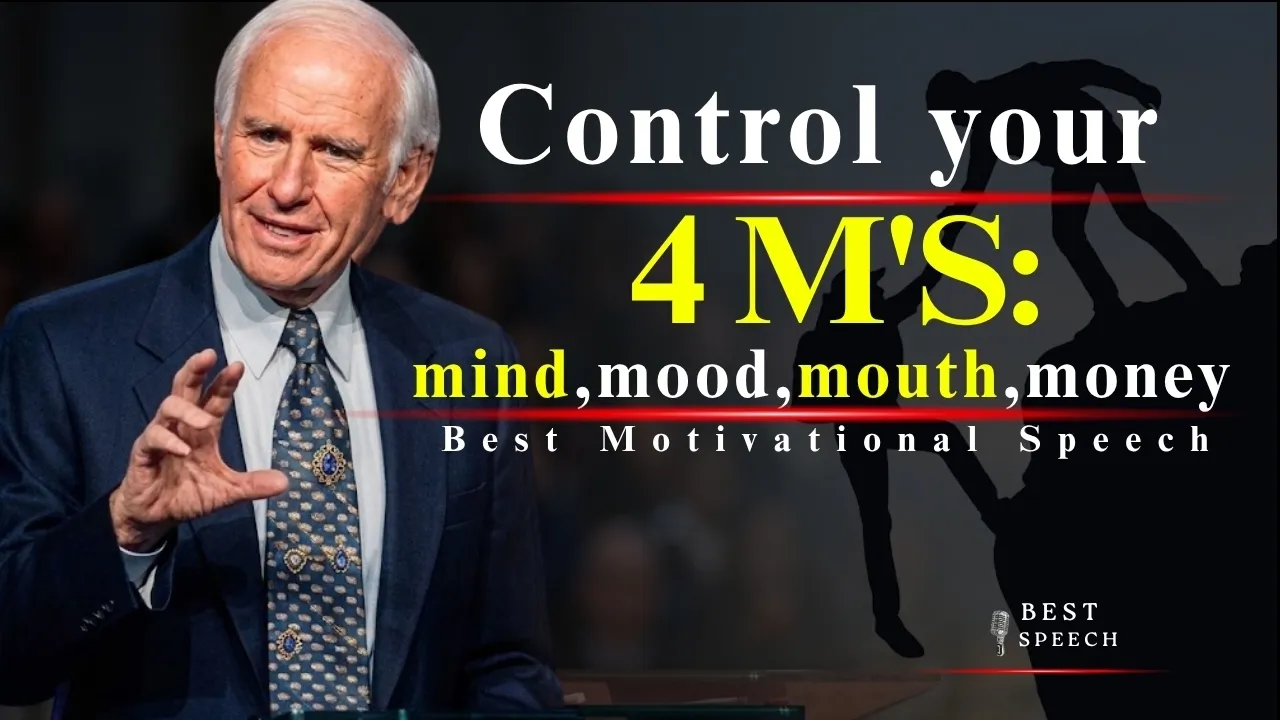
Rohnspired · @Rohnspired
Words
9,437
Runtime
1:04:53
Speaking pace
145wpm
Reading time
39min
145 words per minute, below the 160 25th percentile of 349 measured videos. That distribution comes from the 349-video hook study.
Opening (first 30 seconds)
There are four things that can quietly destroy your life before you even realize they are out of control. Your mind, your mood, your mouth, and your money. Four things. And here is the frightening part. You can be intelligent and still lose control of them. You can be talented and still lose control of them. You can have dreams, opportunities, education, friends, and potential and still watch your life slowly move in
73 words, the words spoken in the first 30 seconds at 145 words per minute.
Free, no signup. See how the first 30 seconds hold attention, with rewrites.
Sentence shape
| Measure | This transcript |
|---|---|
| Sentences | 1,094 |
| Average words per sentence | 8.6 |
| Longest sentence | 39 words |
| Questions asked | 107 |
| Sentences containing a number | 23 |
What this transcript is
Every word below is the caption track YouTube publishes for this video, pulled from the video itself and reproduced unchanged. It is not Prepublish's writing, not a summary, and not a re-transcription: it is the video's own published captions. English captions, generated automatically by YouTube, in the video’s original language. Source: the video on YouTube. A channel that would rather this page did not exist can ask for its removal through the contact page, and it is removed.
There are four things that can quietly destroy your life before you even realize they are out of control. Your mind, your mood, your mouth, and your money. Four things. And here is the frightening part. You can be intelligent and still lose control of them. You can be talented and still lose control of them. You can have dreams, opportunities, education, friends, and potential and still watch your life slowly move in the wrong direction because these four things are controlling you instead of you controlling them.
Let me ask you something. How many problems in your life began with something you thought? How many opportunities disappeared because of the mood you were in? How many relationships changed because of something you said? And how many years have you lost because of what you did with your money? Think about that. Because sometimes we spend years blaming circumstances for a life that was slowly being shaped by decisions nobody else could see.
A thought, a mood, a sentence, a purchase. Small things, almost invisible things. But repeated long enough, they become direction. and direction becomes destiny. There is a man somewhere right now who believes his biggest problem is that he does not have enough money. But maybe his first problem is not money. Maybe his first problem is his mind. Maybe every time he receives money, his mind tells him, "You deserve to enjoy this." Now maybe every time he sees an opportunity, his mind tells him, "You will probably fail." Maybe every time something becomes difficult, his mind tells him, "This is not for you." And because he has never learned to question the voice inside his own head, he obeys it.
Then his mood follows his thoughts. Then his words follow his mood. Then his decisions follow his words. Then his money follows his decisions. And one day he looks around and says, "Why is my life like this?" But the answer did not begin outside of him. It began inside him. And that is what I want you to understand today. Your life may not change when you find more information. Your life may not change when you hear another motivational speech.
Your life may not change when somebody gives you another opportunity. Your life begins to change when you stop allowing every thought to enter your mind, every emotion to control your behavior, every feeling to come out of your mouth. And every desire to take money out of your pocket, that is control, not control over the entire world. You will never control the entire world. You cannot control every economy. You cannot control every person.
You cannot control who rejects you. You cannot control what happened 10 years ago. You cannot control what people think about you. But you must learn to control what is happening in the territory that has been given to you. Your mind, your mood, your mouth, your money. And before we go any deeper, I want you to understand something. This is not about becoming emotionless. This is not about becoming silent. This is not about never spending money.
And this is not about forcing yourself to think positive thoughts every second of your life. No real control is deeper than that. Real control means that there is a space between what happens to you and what you choose to do next. Most people lose their lives inside that space. Something happens. They react. Somebody insults them. They react. They feel sad. They react. They receive money. They react. They have a thought.
They believe it. No pause. No examination. No question. Just reaction. And a person who reacts to everything will eventually be controlled by anything. Think about that. If another person's words can instantly change your mood, then that person has discovered a remote control for your emotions. If one negative thought can make you stop working, then that thought is stronger than your commitment. If anger can make you say things you regret, then anger is speaking through your mouth.
If every desire can convince you to spend money you do not need to spend, then your desires are managing your financial future. And the tragedy is that this does not usually happen dramatically. It happens quietly, one thought at a time, one mood at a time, one sentence at a time, one decision at a time. There was a man I once heard about who worked for years at a job he did not love. Every month he complained about his boss.
Every week he complained about his salary. Every day he complained about his life. And if you listen to him, you would think his biggest problem was his job. But one day someone asked him a simple question. What are you doing after work? He said, nothing. I am tired. What do you do on weekends? Nothing important. I need to relax. What have you learned this year? He became quiet. What skill are you building? Quiet again.
How much money have you saved? Silence. You see, for years, he had been looking at the prison walls, but he had never looked at the key in his own hand. His job was not his entire problem. His mind had become comfortable with complaining. His mood had become addicted to frustration. His mouth had become a factory of excuses. And his money had become a visitor. It arrived and disappeared. The four M's were not working together to build his future.
They were working together to destroy it. And maybe you have experienced something similar. Not exactly the same. But maybe you have been waiting for one big change, one big opportunity, one big person, one big amount of money, one big moment. And while you were waiting for the big thing, the small things were deciding your life. Let me tell you something that most people do not understand. Big lives are rarely destroyed by one big mistake.
They are usually weakened by small permissions. You permit yourself to think negatively for another hour. You permit yourself to stay angry for another day. You permit yourself to say something you know you should not say. You permit yourself to spend money you promised yourself you would save. And because nothing dramatic happens immediately, you think it does not matter. But the compound effect is always working. Always.
You do not need to see it for it to be working. You can plant a seed today and see nothing tomorrow. That does not mean nothing is happening. Something is happening underneath. And your habits work the same way. The mind is planting. The mood is watering. The mouth is reinforcing. The money is revealing what you truly value. And after months or years, people call the result luck. They say he is lucky. She is successful.
He always had confidence. She was born disciplined. But they did not see the invisible years. They did not see the moments when someone controlled a thought instead of obeying it. They did not see the moment when someone was angry but chose silence. They did not see the moment when someone wanted to spend but decided to wait. They did not see the moment when someone felt terrible but still kept a promise to themselves.
That is where a life changes. Not in the applause, not when people are watching. In the private moment when you could do the easy thing and you choose something better. Now let us go deeper because controlling your mind sounds simple until you try it. Your mind is a strange place. It can create a future that has not happened and make your body afraid of it. It can replay a mistake from 10 years ago and make you feel as though it happened this morning.
It can imagine rejection before you even ask the question. It can tell you that everyone is judging you when nobody is thinking about you. It can take one failure and turn it into an identity. I failed becomes I am a failure. One rejection becomes nobody wants me. One financial problem becomes I will always be poor. One difficult season becomes my life will never change. And here is the dangerous thing. The mind does not always announce when it is lying.
Sometimes the most dangerous thoughts are the ones that sound familiar. You have heard them so many times that you stopped questioning them. I am not ready. I am too late. I am not smart enough. People like me do not succeed. I will start when I feel better. I need more confidence. I will do it tomorrow. Tomorrow. That word has stolen more dreams than failure ever did. Because failure at least teaches you something. But endless postponement gives you the illusion that you still have time.
And one day without warning you look up and realize that what you kept calling later has become never. Let me ask you a difficult question. How many versions of your life have already disappeared because you believed a thought without questioning it. Think about that. Maybe there was a business you never started. Maybe there was a skill you never learned. Maybe there was a person you never spoke to. Maybe there was a city you never visited.
Maybe there was an opportunity you never took. Not because you could not. Because your mind created a courtroom and put you on trial before you ever took action. Your mind presented evidence. You failed before. You don't know enough. Someone better already exists. What if people laugh? What if it doesn't work? and you became both the prisoner and the judge. But there is something deeper here. You do not need to believe every thought simply because it came from you.
That may be one of the most liberating ideas you ever understand. A thought is not a command. A thought is not a prophecy. A thought is not your identity. A thought is a mental event. It arrives and you have a choice. You can examine it. You can challenge it. You can replace it. You can refuse to build a house inside it. But most people do not do that. They hear the thought and immediately become it. I feel afraid, therefore I must be weak.
I feel behind, therefore my life is behind. I made a mistake, therefore I am a mistake. No, you are the person observing the thought. And that difference changes everything. I want you to imagine sitting beside a river. Leaves are floating on the water. One leaf passes, then another, then another. Would you jump into the river and chase every leaf? Of course not. But mentally, that is what many people do every day. A thought appears, they chase it.
Another thought appears, they chase that one. A memory appears, they replay it. A fear appears, they feed it. A criticism appears, they build a house around it. By the end of the day, they are exhausted. Not because life defeated them, but because their mind pulled them in 20 different directions. Control begins when you learn to sit beside the river. Not every thought deserves your participation. But I want to be careful here because controlling your mind is not pretending that pain does not exist.
You may have real problems, real bills, real rejection, real disappointment, real grief, real mistakes. Control does not mean denying reality. Control means refusing to let reality become the only thing your mind can see. There is always another question. What can I do now? What is still in my control? What have I learned? What does this situation require from me? Where am I wasting energy? What am I refusing to accept?
What am I capable of becoming because of this? And sometimes that question will take you somewhere uncomfortable because sometimes the mind prefers familiar misery to unfamiliar responsibility. That is a difficult truth. A person can become comfortable with complaining, comfortable with blaming, comfortable with feeling powerless because responsibility is heavy. The moment you accept that you have some power, you also have to admit that you may have been wasting some of it and that can hurt.
There was a young woman who wanted to change her life. She had ideas. She had ambition. She had talent. But every evening she told herself she would start tomorrow. Tomorrow she would study. Tomorrow she would apply. Tomorrow she would exercise. Tomorrow she would stop wasting time. And every tomorrow became another yesterday. One night she was sitting alone looking at photographs on her phone. She saw a picture from 3 years earlier.
In that photograph she was holding a notebook. Inside that notebook was an idea she still had not started. 3 years the idea was still alive. But only inside her imagination she began to cry. Not because somebody had stopped her, not because she had no opportunity. She cried because she suddenly understood something. Time had been moving even while she was waiting to feel ready. And that realization changed her. Not instantly.
She did not wake up the next morning with unlimited motivation. That is not how transformation works. But she started asking a different question. Instead of asking, "Do I feel like doing this?" She began asking, "What kind of person am I becoming when I keep making this choice?" That question changed everything because behavior creates evidence and evidence creates identity. If every day you keep a small promise to yourself, your mind begins collecting evidence.
I do what I say I will do. If every day you avoid responsibility, your mind also collects evidence. I cannot trust myself. Do you understand the difference? Confidence is not only a feeling. Confidence is memory. Confidence is remembering moments when you did not feel ready but acted anyway. Confidence is remembering that you survived difficult days. Confidence is remembering that you kept promises. Confidence grows when your behavior gives your mind a reason to believe in you.
And this brings us to your mood. Because a person can have a good mind 1 hour and lose their entire day because they never learn to manage their emotional weather. Have you ever woken up in a bad mood and decided that the entire day was bad? Nothing terrible had happened yet, but you felt tired. You felt irritated. You felt discouraged. And suddenly everything became evidence. Someone spoke to you. You misunderstood their tone.
Traffic was slow. You became angrier. Something small went wrong. Now you were convinced the day was against you. And by evening you had created an argument, avoided your responsibilities, eaten things you did not need, spent money emotionally, and said things you regretted, one mood, one unexamined emotional state, and it touched every area of your life. Here's what most people don't understand. Your mood is real, but it is not always reliable.
Ride that again in your mind. Your mood is real, but it is not always reliable. You may feel hopeless and still have options. You may feel weak and still be capable. You may feel rejected and still be valuable. You may feel behind and still have time. You may feel afraid and still need to move forward. The feeling is information. It is not always instruction. That is one of the great distinctions of maturity. Children feel something and immediately express it.
Maturity means you can feel something without allowing it to become behavior. You can be angry without becoming cruel. You can be sad without abandoning your responsibilities. You can be disappointed without destroying your future. You can feel fear without surrendering your direction. That is strength. not pretending you feel nothing, feeling everything, and still choosing who you will be. There was a father who came home after a difficult day.
His boss had criticized him. He had lost an important client. Traffic had been terrible. He was exhausted. When he entered the house, his young son ran toward him. "Dad," the boy was smiling. The father was carrying the weight of his entire day. and the boy accidentally knocked over a glass. The father exploded. He shouted. The boy froze. Then the boy began to cry. A few minutes later, the father looked at his son sitting quietly in the corner.
And suddenly, he understood his son had not received the anger created by the broken glass. His son had received the anger created by everything the father had refused to process. the boss, the client, the traffic, the stress, the disappointment, the child simply became the nearest target. How often do we do that? We carry emotions from one place to another. We bring work stress into relationships. We bring childhood pain into adult conversations.
We bring yesterday's failure into today's opportunity. We bring someone else's behavior into our own character. And then we say that's just how I am. No, that may be how you have been reacting. But it does not have to be who you are. Controlling your mood requires one of the most difficult skills in life. You must learn to interrupt yourself. When you feel anger rising, pause. When sadness is telling you to disappear, pause.
When jealousy is telling you to compare, pause. When frustration is telling you to quit, pause. Ask yourself, what am I actually feeling? Why am I feeling this? What happened before this emotion appeared? What story am I telling myself? What behavior will this feeling produce if I obey it? And perhaps the most powerful question, will I be proud of what I am about to do when this mood is gone? Because moods leave, consequences often stay.
That angry message may take 30 seconds to write. The damage may last 30 years. That emotional purchase may feel good for 10 minutes. The debt may follow you for years. That decision to quit during a difficult mood may feel like relief today. 5 years later, you may wonder what would have happened if you had simply waited for the emotion to pass. Never allow a temporary emotion to make a permanent decision for you. Let me say that again.
Never allow a temporary emotion to make a permanent decision for you. Do not resign from your dream in the middle of a bad day. Do not destroy a relationship in the middle of an argument. Do not spend your future because you are frustrated in the present. Do not define your entire life based on how you feel at one moment. Wait. Breathe. Walk bright. Pray lotsly. Think, then decide. Because emotional control is not weakness.
It is delayed power. But there is another side to this. Some people think controlling their mood means waiting until they feel good. That is another trap. You will not always feel good. You will not always feel motivated. You will not always feel inspired. And if your discipline depends on your mood, your mood becomes your master. Imagine a pilot saying, "I don't feel like flying today." so I won't follow the instruments.
Imagine a surgeon saying, "I'm not in the mood to focus." Imagine an athlete saying, "I only train when I feel motivated." We understand immediately how dangerous that would be. Yet, many people run their lives exactly that way. If I feel confident, I will act. If I feel motivated, I will work. If I feel happy, I will be kind. If I feel inspired, I will learn. Then what happens? Their future is being managed by emotions that change every few hours.
Discipline says something different. Discipline says I hear how I feel, but I also remember who I am trying to become. And sometimes you have to move before the mood changes. That is important. Sometimes people wait for the feeling, but action creates feeling. You take the walk before you want to walk. You begin the work before you feel focused. You clean the room before you feel organized. You save the money before you feel financially secure.
You speak kindly before your mood catches up. And something extraordinary happens. Your behavior begins teaching your emotions. Now let us go to the third M. Your mouth. Your mouth can build a bridge or burn one. It can create peace or start a war. It can give courage to someone who is about to quit or it can become the voice they remember for the rest of their life. And yet people often speak as though words disappear after they leave their lips.
They do not. Words enter memory. Words become stories. Words become identity. Sometimes a person is still fighting a sentence they heard 20 years ago. You will never be anything. You're not good enough. You always fail. You're just like your father. You're too stupid. You're too weak. The person who said those words may have forgotten them, but the person who received them is still carrying them. So when you control your mouth, you are not merely avoiding arguments.
You are deciding what kind of influence you will have on the people around you. But controlling your mouth is not only about what you say to other people. It is also about what you repeatedly say about yourself. I am always unlucky. I can never save money. I always mess things up. I am bad with people. I am not disciplined. Be careful. Every sentence is not harmless. Language is rehearsal. When you repeat something about yourself again and again, your your mind begins treating it like an instruction.
You begin looking for evidence. You begin behaving consistently with the story. And one day you become trapped inside a sentence you keep repeating. There was a man who constantly called himself lazy. Every time he delayed something, he said, "I'm just lazy." Eventually, he stopped trying to change. Why? Because if laziness is an identity, then what is the point of working on it? But one day, somebody challenged him.
Maybe you are not lazy. Maybe you are avoiding things that make you feel inadequate. That stopped him because underneath his procrastination was fear. He did not avoid work because he loved doing nothing. He avoided work because starting would reveal his current level. If he studied and failed, then he would have evidence. If he tried and people rejected him, then he would have evidence. So he delayed. And he called the delay laziness.
But there was something underneath laziness, fear. And this is why controlling your mouth is so important. Sometimes you give the wrong name to your own problem. And when you name the problem incorrectly, you cannot solve it correctly. You say, "I have no discipline." Maybe you have no environment supporting discipline. You say, "I have no confidence." Maybe you have stopped keeping promises to yourself. You say, "I have bad luck." Maybe you are making repeated decisions without preparation.
You say, "People always hurt me." Maybe you have never learned boundaries. Words can either hide the truth or reveal it. And a mature person learns to speak accurately, not dramatically, accurately. Instead of saying, "My life is ruined," you say, "I am going through a difficult period." Instead of saying I will never recover, you say I don't yet know how I will recover. Instead of saying I can't do this, you say I haven't learned how to do this yet.
Do you see what happens? You are not lying to yourself. You are leaving the door open. And some doors are closed by the words we use. Now let me take this further. One of the greatest forms of strength is knowing when not to speak. Silence is not always weakness. Sometimes silence is emotional intelligence. Sometimes silence protects your future from your present mood. You do not have to attend every argument you are invited to.
You do not have to answer every insult. You do not have to explain yourself to everyone. You do not have to prove every rumor wrong. There are battles you win by walking away. But be careful. Silence is not fear when you are capable of speaking. Silence becomes strength when you have the power to react, but choose wisdom instead. A woman once received a message from someone she deeply cared about. The message was cruel.
It attacked her character. It blamed her for things she had not done. Her first instinct was to write everything she was feeling. She wrote a long response. Anger, pain, accusations. She was ready to send it, but she stopped. She saved the message and went to sleep. The next morning, she read what she had written, and she barely recognized herself. The words belong to her anger, not to her values. So, she deleted them.
She still addressed the problem. She still set boundaries. She still spoke the truth, but she refused to allow one emotional night to define her character. That is control, not silence forever. Wisdom before reaction. And now we arrive at the fourth Money. This is where many people become uncomfortable because money exposes something. It exposes your habits, your impulses, your priorities, your patience, your fears, your need for approval, your relationship with pleasure, your relationship with the future.
Money is not only numbers. Money is behavior. A person can earn more and remain financially undisiplined. A person can earn less and develop financial control. Of course, income matters, opportunities matter, circumstances matter, but behavior matters too. And one of the most dangerous things that can happen to someone is receiving more money before developing more control. Because more money does not automatically solve undisiplined habits.
Sometimes it simply gives those habits more power. Think about this. If you cannot control spending when you have a small amount, why are you convinced that a larger amount will automatically create control? If you spend to impress people today, you may simply impress more people tomorrow while creating more problems. If you buy emotional relief today, you may buy more expensive emotional relief tomorrow. If every increase in income immediately creates an increase in lifestyle, then no amount may ever feel enough.
There was a man who said, "When I earn more, I will start saving." Then he earned more. His expenses increased. Then he said, "When I earn even more, I will save." He earned more again. The pattern continued. The problem was not the amount. The problem was that every time money arrived, it entered a life without a plan. And money without direction often disappears into desire. Here is a question I want you to consider.
Do you tell your money where to go? Or do your moods tell it where to go? That is deeper than it sounds. How many purchases are really emotional decisions? I had a bad day. I deserve this. Everyone else has one. I don't want to feel left behind. I'll worry about it later. Later. There is that word again. later is often where financial peace goes to die. But controlling money does not mean becoming afraid of spending.
It means becoming intentional. It means asking does this purchase serve my life or am I serving this purchase? Am I buying value or am I buying validation? Will I still want this tomorrow? What future responsibility am I exchanging for this present desire? And sometimes the strongest financial decision is not earning more. It is becoming harder to manipulate, harder to impress, harder to tempt, harder to pressure. When you do not need to impress everyone, you become financially stronger.
When you do not need every new thing, you become financially stronger. When you can delay gratification, you become financially stronger. When you can live below your ability for a season in order to build something greater, you become financially stronger. And this is where the four M's begin connecting. Your mind says, "I deserve this." Your mood says, "Buying it will make me feel better." Your mouth says, "I can afford it.
I need it." Everyone has one. Your money disappears. Do you see the chain? That is why you cannot solve every problem separately. The four M's are connected. A negative mind can create a negative mood. A negative mood can create destructive words. Destructive words can damage relationships and opportunities. Financial stress can then create more negative thoughts. And suddenly the cycle continues. But the opposite is also true.
A disciplined mind creates better emotional awareness. Better emotional awareness creates wiser communication. Wiser communication creates stronger relationships and opportunities. Better decisions create stronger financial habits. And financial stability can create more space for thoughtful choices. One controlled decision can affect another area of your life. This is why small changes matter. A person wakes up 30 minutes earlier not because waking up early magically creates success but because they use those 30 minutes to think instead of react.
Then they plan, then they exercise, then they become proud that they kept a promise. That pride becomes evidence. The evidence changes identity. The identity changes decisions. The decisions change relationships. The relationships create opportunities. Opportunities create possibilities. And years later, people see the result and call it transformation. But transformation did not happen in one morning. It happened through a chain.
Now, I want to ask you something uncomfortable. What is your strongest M? Which one controls you most often? Is it your mind? Do you overthink yourself into paralysis? Do you imagine disasters that have not happened? Do you keep reliving things that cannot be changed? Is it your mood? Do you abandon commitments when you feel tired? Do you become someone different depending on how the day is going? Is it your mouth? Do you say things too quickly?
Do you gossip? Do you complain? Do you destroy your own confidence with your language? Or is it your money? Do you spend without thinking? Do you use money to change your mood? Do you sacrifice tomorrow to feel better today? Be honest. Because awareness is uncomfortable before it becomes useful. You cannot control what you refuse to observe. There was a man who wanted to become successful so badly that he consumed motivational content every day.
He watched speeches. He read books. He bought courses. He took notes. But his life was not changing. One day he became frustrated. He said, "Why am I not moving forward?" Someone asked him, "What do you do when nobody is motivating you?" That question changed the conversation because information had become entertainment. He loved the feeling of learning. But he had confused understanding with transformation. He could explain discipline, but he did not practice it.
He could talk about confidence, but he did not keep promises. He could discuss financial success, but he never looked honestly at his spending. He knew what to do. But knowledge without self- command becomes frustration. And perhaps that is where you are. Maybe you already know some of the things you need to do. You do not need another person to tell you that excessive negative thinking is harmful. You know, you do not need another person to tell you that uncontrolled anger damages relationships.
You know, you do not need another person to tell you that spending beyond your ability creates problems. You know, so the question becomes deeper. Why do intelligent people continue doing things they know are damaging them? Now, we are getting somewhere because the problem is not always lack of knowledge. Sometimes the problem is that your old identity receives comfort from your old behavior. Let me explain. You may say you want change, but part of you may still be attached to the familiar, familiar excuses, familiar emotions, familiar struggles, familiar habits, even familiar pain because at least you know who you are inside them.
Transformation requires a strange kind of death, not physical death. the death of a version of you. The person who reacts immediately. The person who always spends emotionally. The person who needs everybody's approval. The person who speaks without thinking. The person who believes every negative thought. That person may have protected you once. But maybe that person cannot take you where you are trying to go. And this is why change can feel uncomfortable even when it is good.
You are not only learning new behavior, you are becoming unfamiliar to yourself. Imagine someone who has spent 20 years reacting in anger. Now they pause, they breathe, they walk away. At first it feels unnatural. Imagine someone who has spent every paycheck immediately. Now they save. They delay gratification. It feels unnatural. Imagine someone who constantly talks about their problems. Now they begin speaking about responsibility.
Unnatural but eventually the new behavior creates a new normal. And this is where identity begins shifting. You stop asking how do I force myself to do this forever. You begin asking who am I becoming through repeated action. That is a much more powerful question because you are always becoming someone every day. You are not standing still. Your habits are voting. Every thought you repeatedly feed is casting a vote. Every emotional reaction is casting a vote.
Every word is casting a vote. Every financial decision is casting a vote. You may not see the election results today, but one day the identity wins. And then you look at yourself and wonder how you became that person. So imagine yourself one year from now, not a fantasy version, a realistic version created by repetition. If you continue allowing your mind to think the same thoughts, what will your confidence look like?
If you continue allowing every mood to control your actions, what promises will remain unkempt? If you continue speaking carelessly, what relationships will become weaker? If you continue handling money the same way, what pressure will you carry? One year, not forever. 1 year. Now imagine 3 years. Three years of the same excuses, 3 years of the same delays, 3 years of emotional spending, 3 years of self-doubt, 3 years of words you regret.
That future is not trying to scare you. It is trying to wake you up. Now imagine another version. Not perfect, not rich overnight, not suddenly fearless, but controlled. The person who learned to question destructive thoughts. The person who learned to pause before reacting. The person who learned to speak with intention. The person who learned to give money a purpose. Imagine meeting that version of yourself 3 years from now.
What would be different? Maybe the biggest difference would not be your bank account. Maybe it would be your eyes, the way you carry yourself, the way you make decisions, the way you enter a room. Because self-respect changes posture and self-respect is built when you stop repeatedly betraying yourself. That is another deep layer. Every time you make a promise to yourself and immediately break it, something happens. You may not consciously notice it, but your mind notices.
I said I would start Monday. Monday passed. I said I would stop. You continued. I said I would save. You spent it. I said I would apply. You delayed. After enough broken promises, your own mind stops trusting your words. Then you wonder why you lack confidence. But confidence cannot grow easily in an environment where you constantly break trust with yourself. So maybe your next transformation is not making bigger promises.
Maybe it is making smaller promises and keeping them. I will walk for 10 minutes. I will save this amount. I will not respond while angry. I will spend 10 minutes learning. I will stop saying that sentence about myself. Small, specific, repeated. And something begins happening. You start believing yourself again. That is powerful. There are people who need to rebuild trust with themselves before they can rebuild anything else.
And perhaps nobody has ever told you that. Maybe you do not need to become more impressive. Maybe you need to become more trustworthy to yourself. When you say you will do something, do you believe you? Think about that. When you tell yourself, "Tomorrow I will begin." Does your own mind quietly laugh because it has heard that sentence before? That that is not a reason for shame. That is a reason for rebuilding. Start with something small enough that you cannot hide behind excuses.
Then keep going because every kept promise is a brick and eventually you build a person who can stand on their own word. Now there is another danger. Some people hear this message and become harsh with themselves. They start watching every thought with fear. They judge every emotion. They punish themselves for every mistake. That is not control. That is another form of being controlled. You do not need to hate the old version of yourself in order to outgrow it.
You need honesty. You need responsibility. But you also need patience. There will be days when your mind is messy. There will be days when your mood is low. There will be moments when your mouth says something you regret. There will be financial mistakes. The question is not whether you will ever make another mistake. The question is what you do after you become aware of it. Do you defend it or do you learn? Do you blame or do you adjust?
Do you turn one mistake into an identity or do you turn it into information? Strong people are not people who never lose control. Strong people are people who return to control faster. That is important. Maybe yesterday you failed return today. Maybe this morning your mood controlled you. Return this afternoon. Maybe you said something wrong. Apologize. Learn rest. Maybe you spent money unwisely. Face it. At just rest, your power is not in having a perfect history.
Your power is in refusing to allow one mistake to become your permanent direction. Now let me tell you about a man who lost almost everything. He had a business that failed. He had debt. His relationship was under pressure. He was embarrassed. He stopped answering calls. He avoided friends. And for months, his mind repeated one sentence. I ruined my life. The sentence became his prison because if he had ruined his life, then why try?
One day he met an older man who asked him about his situation. After listening, the older man said something unexpected. You didn't ruin your life. You ruined a season. The man looked at him. The older man continued. But if you keep saying you ruined your life, you may ruin the next season trying to prove the sentence correct. That was was the moment, not the moment his money returned, not the moment his business succeeded, the moment his language changed.
He stopped saying, "My life is over." He started saying, "I am rebuilding." and rebuilding changed his behavior. He answered the calls. He looked at the numbers. He stopped avoiding the truth. He cut unnecessary spending. He took work that wounded his pride. He learned again slowly, painfully, imperfectly. And one day he realized something. His greatest victory was not earning money again. His greatest victory was becoming a man who could face reality without running from it.
That is control. You see, sometimes controlling your mind means facing facts you do not want to face. Sometimes controlling your mood means continuing while uncomfortable. Sometimes controlling your mouth means admitting you were wrong. Sometimes controlling your money means accepting that you cannot afford the lifestyle you want right now. And that requires humility. Humility is not weakness. Humility is the ability to see reality without needing to protect your ego.
And your ego can become expensive. It can make you buy things to look successful. It can make you refuse advice. It can make you speak when you should listen. It can make you defend habits that are hurting you. It can make you remain in a destructive argument because you need the last word. How much has your ego cost you? Not only financially, emotionally, relationally, professionally. How many opportunities disappeared because you could not say I was wrong?
How many lessons did you miss because you had to appear intelligent? How much money did you spend because you needed to look successful before you became successful? There is freedom in becoming less interested in appearances. The world may see the expensive object, but you know whether you are financially free. People may hear your confident words. But you know whether you are emotionally stable, people may praise your intelligence.
But you know whether you can control your thoughts, the audience may see the performance. You live with the truth and that is why the work must become internal. Now, think about your environment because self-control is powerful, but wisdom also understands environment. Do not put yourself in unnecessary battles. If you know something distracts you every day, change the environment. If certain conversations always destroy your mood, establish distance or boundaries.
If your phone controls your attention, do not pretend you need more motivation. Change your access. If emotional spending happens when you are bored, lonely, or stressed, learn your pattern before it controls you. The strongest person is not always the person with the greatest willpower. Sometimes the strongest person is the person wise enough to stop creating unnecessary temptations. Why make discipline harder than it needs to be?
If you are trying to build a better mind, what are you feeding it every day? fear, gossip, comparison, negativity, constant outrage. Because your mind is not isolated from what you repeatedly consume. What you watch enters. What you listen to enters. What you repeatedly discuss enters and eventually your inner world begins reflecting your environment. Be selective, not paranoid. Selective. Your attention is expensive.
Do not spend it everywhere. Your emotional energy is valuable. Do not give it to everyone. Your words have consequences. Do not throw them away. Your money represents hours of your life. Do not exchange those hours carelessly. That last point deserves a moment. Money is often stored time. Think about that. You worked hours. Those hours became income. Then income became money. And when you spend money, you are often exchanging pieces of your time.
So before you spend sometimes ask God's this worth the hours of my life that created it. That question can change your relationship with money. And now we come to something even deeper. Control is not really about restriction. It is about freedom. People misunderstand this. They think discipline removes freedom. But what does lack of control create? If you cannot control your spending, debt can control you. If you cannot control your thoughts, anxiety can control your attention.
If you cannot control your mood, other people can control your day. If you cannot control your mouth, your own words can control your relationship. Discipline may feel restrictive in the moment, but uncontrolled behavior often creates the real prison. The person who says no to every um unnecessary purchase may have more freedom later. The person who controls their emotions may have more freedom in relationships. The person who controls their attention may have more freedom to create.
The person who controls their words may have more freedom from regret. The short-term yes can become a long-term prison. The short-term no can become long-term freedom. And now I want you to imagine 5 years 5 years. Imagine that version of you is sitting somewhere. They can see the decisions you are making today. The version of you 5 years from now knows whether you continued the same habits. They know whether you kept delaying.
They know whether you learned control. What would they want to tell you? Maybe they would say, "Thank you for starting before you felt ready." Maybe they would say, "Thank you for stopping that habit." Maybe they would say, "Thank you for learning to stay quiet when anger wanted to speak." Maybe they would say, "Thank you for saving when nobody was watching." Or maybe they would ask you a painful question. Why did you keep giving away the years I needed?
That question hurts. But sometimes pain is useful. Regret is not always a punishment. Sometimes it is a message from the future. It is the future saying please pay attention to the direction you are walking because direction matters more than speed. You can move slowly and still arrive somewhere powerful. But you cannot keep walking in the wrong direction and expect the destination to change. And perhaps that is the deepest responsibility.
You do not have to transform overnight. But you must become honest about direction. Where are your thoughts taking you? Where are your moods taking you? Where are your words taking you? Where is your money taking you? Not where do you hope to go? Where are your repeated decisions actually taking you? Because intentions are beautiful. But repeated behavior is direction. And if the direction is wrong, you do not need to hate yourself.
You need to turn one degree then another. One controlled thought, one controlled reaction, one sentence you choose not to say, one purchase you choose not to make, one promise you keep. And suddenly something begins changing inside you. You stop seeing yourself as helpless. You begin seeing yourself as responsible. Not responsible for everything that happened. Not responsible for every injustice. Not responsible for every obstacle.
But responsible for what you do next. That is where power returns. Nobody can live your next decision for you. Nobody can think your next thought for you. Nobody can control your reaction for you. Nobody can speak through your mouth without your permission. Nobody can manage your money for your future unless you surrender that responsibility. There is a territory that belongs to you and maybe you have been abandoning it.
Maybe you have been leaving the gates open. Every thought enters, every mood becomes behavior. Every emotion becomes language. Every desire becomes spending. And then you wonder why life feels chaotic. But chaos outside becomes more dangerous when there is chaos inside. The world will always have uncertainty. The question is whether you can become a person with an inner center. A person who can hear bad news without immediately collapsing.
A person who can feel anger without becoming dangerous. A person who can receive money without immediately losing direction. A person who can hear criticism without allowing one opinion to become their identity. That is rare. And because it is rare, it is valuable. Now, let me ask you something. Who are you when nobody is watching? Who are you with your thoughts at midnight? Who are you when you are in a bad mood? Who are you when you are angry?
Who are you when money enters your hand? That person is closer to your real character than the version you perform for other people. Character is not what you promise during inspiration. Character is what remains when inspiration leaves. And there will come a day when you are tired. A day when nobody praises you, a day when progress feels invisible, a day when your mood is low, a day when your old habits call you back.
That day will reveal something. Not whether you are perfect, but whether you have learned to govern yourself. And self-government may be one of the greatest forms of success. You can have a title and still be ruled by your anger. You can have money and still be ruled by desire. You can have intelligence and still be ruled by fear. You can have followers and still be ruled by other people's opinions. What kind of success is that?
The greatest victories are often invisible. The moment you refuse to believe the thought that would have stopped you. The moment you choose patience instead of anger. The moment you close your mouth and protect your future. The moment you save instead of performing wealth. Nobody may applaud. But something inside you knows you are changing. And that is why you must be careful with small victories. Do not underestimate them.
The first time you pause before reacting matters, the first week you control unnecessary spending matters. The first time you challenge a destructive thought matters. The first time you apologize instead of defending yourself matters. The first time you say I don't need to prove anything matters. Those moments look small, but identity is built from moments. Now imagine two people. Both experience rejection. The first person thinks, "I knew I wasn't good enough." Their mood collapses.
Their mouth begins repeating the story. I always fail. Then they stop taking action. They spend money to escape the pain. The rejection becomes a cycle. The second person experiences the same rejection. They feel pain, real pain. But they ask, "What happened?" They examine the situation. They allow themselves to feel disappointed. But they do not turn disappointment into identity. They speak differently. This didn't work.
Not I don't work. They adjust. They protect their money. They keep learning. Same event, different internal government, different future. That is why two people can experience the same difficulty and become completely different. The event matters, but what happens inside you afterward matters too. And perhaps this is the question you should carry with you. When life touches me, what does it activate? Does difficulty activate discipline or excuses?
[music] Does criticism activate learning or defensiveness? Does money activate responsibility or impulse? Does anger activate wisdom or destruction? You do not always choose what comes towards you, but you can train what comes out of you. And that training happens before the crisis. You do not suddenly become calm during a storm if you have never practiced calm in small frustrations. You do not suddenly become disciplined when money increases.
If you never practice discipline with little, you do not suddenly speak wisely under pressure. If you never learn to pause in ordinary conversations, the crisis reveals the training. That is why your ordinary day matters, your ordinary morning, your ordinary conversation, your ordinary purchase, your ordinary thought, your ordinary mood. This is where the future is being practiced. Not on the day you become successful.
Today there is no magical day when discipline suddenly becomes easy. There is only repeated practice and eventually what once required effort becomes part of your character. But I want to take you to the deepest place now because underneath the mind, underneath the mood, underneath the mouth, underneath the money, there is another question. Who do you believe you are? Because your identity determines what you tolerate.
If you secretly believe you are not worthy of success, you may sabotage opportunities. If you secretly believe you are always behind, you may rush into bad decisions. If you secretly believe you do not deserve peace, you may create unnecessary conflict. If you secretly believe you must impress people to be valued, money will become a performance. If you secretly believe you are powerless, your mind will search for proof.
Identity is the invisible hand behind many visible decisions. And this is why you can change a habit and still struggle. Because if the identity remains unchanged, the old behavior keeps trying to return. You save money for 3 months, then your old identity whispers, "This isn't you." You become calm for a week. Then someone insults you and the old identity says, "Show them who you are. You begin working consistently." Then the old identity says, "You always quit eventually." And there is a battle.
Not between you and the world, between the person you have been and the person you are becoming. Do not expect the old identity to disappear quietly. It has history. It has evidence. It knows your weaknesses. But you are building new evidence now. Every controlled response is evidence. Every disciplined decision is evidence. Every thoughtful word is evidence. Every intentional financial choice is evidence. You are teaching yourself a new story.
And one day the old voice becomes quieter. Not because you destroyed it with hatred, but because you stopped feeding it with repeated behavior. That is transformation. Slow, real, earned. And perhaps today you are standing in one of those moments. Maybe nobody knows. Maybe everyone around you thinks your life is normal. But inside, you know there is something you need to confront. Maybe your mind has been taking you places you do not want to go.
Maybe your mood has been hurting people you love. Maybe your mouth has created problems. You keep calling misunderstandings. Maybe your money disappears so quickly that you are afraid to look at the truth. Do not run from it. Look, not with hatred, with courage. Look at the pattern because the moment you can see the pattern clearly, the pattern loses some of its power. And then ask yourself something simple. What is one thing I can control before this day ends?
Not 10 things. One one thought you will no longer automatically believe. One emotional reaction you will interrupt. One conversation where you will speak with more wisdom. One financial decision where you will choose your future over your impulse. Do that then tomorrow look again because control is not a single achievement. It is a relationship you build with yourself. Every day life will ask who is in charge here? The thought or you the mood or you the anger or you the desire or you the crowd or you the past or you?
And sometimes you will fail the test but the test will come again. That is the beautiful thing about life. A bad moment does not have to become a bad identity. A bad day does not have to become a bad year. A financial mistake does not have to become a financial future. A sentence you regret does not have to become the definition of your character. Return, learn, adjust, continue. And perhaps the most dangerous day is not the day you fail.
Perhaps the most dangerous day is the day you stop paying attention. Because when you stop paying attention, the mind begins wandering. The mood begins leading. The mouth begins reacting. The money begins disappearing. And years can pass while a person is physically alive but mentally absent from their own life. Wake up. Not with panic, with awareness. Your life is happening in the decisions you make. When no dramatic music is playing.
When nobody is cheering. When there is no audience. When you are tired, when you are tempted, when you are angry, when you receive money, when a thought enters your mind and asks to become your belief, that is where you meet yourself. And maybe the next level of your life will not begin when you become more talented. Maybe it begins when you become more difficult to control, difficult for fear to control, difficult for anger to control, difficult for other people's opinions to control, difficult for temporary emotions to control, difficult for impulses to control.
Imagine that person, not emotionless, not perfect, but centered. A person who can say, "I feel this, but I will choose my response." A person who can say I thought this but I will examine it. A person who can say I want this but I will decide whether it serves me. A person who can say I could say this but I will consider the consequences that person becomes dangerous in the best possible way because manipulation becomes harder.
Distraction becomes harder. Temptation becomes harder. The world can still be chaotic, but there is someone inside you beginning to become steady. And the deeper you go into that steadiness, the more you begin to understand that the greatest freedom you were searching for was never permission to do whatever you wanted. The greatest freedom was becoming strong enough to choose what truly matters when everything inside you wants the easier thing.
Because one day, perhaps sooner than you expect, you will face another difficult thought, another bad mood, another argument, another temptation, another opportunity to spend. And in that moment, nobody may be standing beside you. No audience, no applause, no perfect advice arriving at the right time. Only you. Your mind will speak. Your emotions will rise. Words will wait at your lips. Desire will reach for your money.
And somewhere in that quiet moment, your future will be listening to what you do
The words are the caption track's own and nothing is reworded or re-transcribed. Paragraph breaks are placed between sentences so the text reads as prose.
Free tools for your own script. No signup, no login.
Paste your draft and see where viewers are likely to drop off, with a rewrite for each weak line.
Paste the first 30 seconds of your own draft for a hook score and rewrites.
Check your draft against YouTube's advertiser-friendly guidelines before you record it.
Read this channel's public videos and transcripts, and download a writing brief for it.
Most used terms
Filler phrases
25 in total: you know 10 · like 8 · kind of 4 · actually 2 · um 1.
A literal whole-word count of the same phrase list the Prepublish browser extension uses, so a phrase inside another word is not counted and a phrase used in its ordinary sense still is. It is a count and not a judgement.