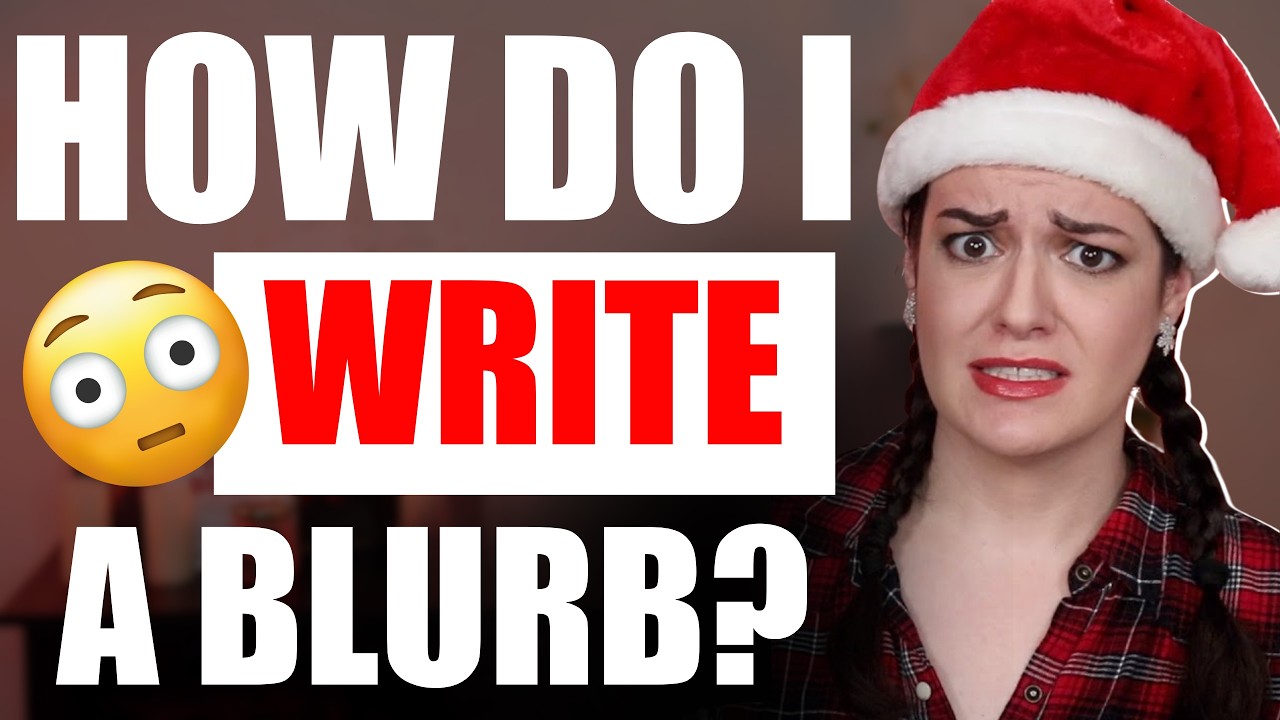
10 Best Tips for Writing your Book Blurb transcript
Writing with Jenna Moreci · @JennaMoreci
Words
2,614
Runtime
13:17
Speaking pace
197wpm
Reading time
11min
197 words per minute, between the 181 median and the 201 75th percentile of 349 measured videos. That distribution comes from the 349-video hook study.
Opening (first 30 seconds)
Hellooo, everybody! Today I am talking about one of the worst parts of publishing a book. Writing the blurb! A book blurb is the summary of a novel that you typically find on the back of a paperback book, on the inside of a hardback book, or under the book's description if you're to buy it online. It's designed to tell the readers what the book is about while also inciting them to both buy and read the book. It's also a pain in the ass. Writers hate writing book blurbs, especially if they're new to the gig. It's
99 words, the words spoken in the first 30 seconds at 197 words per minute.
Sentence shape
| Measure | This transcript |
|---|---|
| Sentences | 208 |
| Average words per sentence | 12.6 |
| Longest sentence | 38 words |
| Questions asked | 15 |
| Sentences containing a number | 16 |
Most used terms
- blurb31
- book23
- read16
- blurbs14
- number14
- conflict13
- writing13
- savior11
- skillshare10
- character9
- classes9
- main9
Filler phrases
10 in total: like 6 · literally 2 · you know 2.
A literal whole-word count of the same phrase list the Prepublish browser extension uses, so a phrase inside another word is not counted and a phrase used in its ordinary sense still is. It is a count and not a judgement.
What this transcript is
Every word below is the caption track YouTube publishes for this video, pulled from the video itself and reproduced unchanged. It is not Prepublish's writing, not a summary, and not a re-transcription: it is the video's own published captions. English captions, published by the channel, in the video’s original language. Source: the video on YouTube. A channel that would rather this page did not exist can ask for its removal through the contact page, and it is removed.
Transcript
Hellooo, everybody! Today I am talking about one of the worst parts of publishing a book. Writing the blurb! A book blurb is the summary of a novel that you typically find on the back of a paperback book, on the inside of a hardback book, or under the book's description if you're to buy it online. It's designed to tell the readers what the book is about while also inciting them to both buy and read the book. It's also a pain in the ass.
Writers hate writing book blurbs, especially if they're new to the gig. It's extremely intimidating, sometimes even more intimidating than writing the book itself. How the fuck do I summarize 100,000 word novel in a couple of paragraphs? What's important enough to mention? What should I leave out? I need an adult. Fortunately, I have written a bazillion book blurbs both for myself as well as for fellow writers. Never fear the bitche is here.
I am breaking down the ten best tips for writing a kick ass book blurb. I covered this topic many years ago, but the publishing industry is constantly changing and I have picked up way more tips since then. Tip number seven is probably the biggest kick in the dick, so I apologize in advance. Just kidding, I'm not sorry. And tip number eight is the most eye roll inducing, the fact that I even have to give this advice pains me to my core.
Enjoy! (The sound of a pen scratching. LOGO.) Today's topic was requested by one of my patrons over on Patreon, Wannabe Author. Like many writers, Wannabe Author a was struggling with the idea of writing a blurb, and wanted some advice. I got you dude. I also wanna give a huge shout out to Skillshare for sponsoring today's video. Skillshare is an online learning community with thousands of inspiring classes specifically for creators.
That means you, writers. They've got classes in a range of topics from illustration to marketing, from graphic design to mailing lists, and of course they have a ton of classes in creative writing. One of the great things about Skillshare is that it's curated specifically for learning. That means no ads. The classes are also divided up into bite sized chunks. I'm talking one to nine minutes so it's super easy to fit into your schedule, and they're constantly releasing new premium classes so you can pick up new skills all the time.
I am both a student at Skillshare as well as a teacher. I have a class on Skillshare all about how to self-publish your book from start to finish. It's a step by step guide to self-publishing the right way, so you can tackle the process easily and effectively. I've also got a couple of other classes all about digital marketing for writers so you can grow your author platform and plan an awesome book release. Whether you're looking to grow your craft or expand on new skills, skillshare has got it all.
Even better, right now you could try Skillshare for FREE. The first 1000 subscribers to click the link in the description below will get a one month free trial of Skillshare. Click the link, take my classes, start exploring your creativity. You will be so glad that you did. Don't forget to subscribe to my channel. I post new videos on Wednesdays. And if you wanna be alerted as SOON as I upload you gotta ring that bell, and you totally should do it.
Consider it your Christmas gift from you to me. The Savior's Champion and The Savior Sister are available in ebook, paperback, hardback and audiobook all over the place. So if you want to give your friends and family the gift of bloodshed and romance this year for the holidays, you totally should pick up some copies. They're linked below. Get on it. Now I'm diving into my ten tips for writing a book blurb. I promise you it's not nearly as daunting as it seems.
Number One (1): Open with a hook. The first and maybe second lines of your book blurb need to be the most interesting. Open with the most engaging part of your plot. Not your favorite part to write, not your main character's entire backstory, get to the juicy stuff first. The reason for this is simple. If the opening line is not interesting, readers are going to stop right there. People read blurbs to see if they may or may not be interested in the book and if the opening line is a dud, they have their answer.
In my opinion, for many books, though certainly not all, it helps to open with the conflict. For example: when Emily said college would be killer, she hadn't meant it literally. Right out the gate the reader knows there will be killing in this book and they have to read further for additional context. Number Two (2): Give us a main character. I see a lot of blurbs that go into minute detail about the main character. We get their job, their hobbies, their physical description.
No one gives a shit. We don't need their life story, in most cases, we just need their name. Personal details about the main character should only be included if they provide necessary context for the story or they enhance the overall blurb. In my blurb for The Savior's Champion, I mentioned Tobias’ name. I don't mention the fact that he's a former artist, or a laborer, or that he has black eyes and brown hair, because none of that is particularly interesting or relevant.
In my blurb for The Savior’s Sister however, I mentioned that Leila is a magical queen. One, because it's intriguing and two, because it's directly relevant to the conflict of the plot. The Savior sister is about Leila fighting for her life, and her life is in jeopardy because she's a magical queen. Yes, you need to let readers know who they are following throughout the story, but be honest about which details add value and which should get the cut.
On a related note, Number Three (3): Two names are enough. The more character names you put into a blurb, the more confusing it becomes. This is a summary, you do not have time to introduce every character and get the reader familiar with them. Name upon name bogs down the blurb, which makes it both overwhelming and boring. Introduce the main character’s name, and maybe the villain's name. If you have two main characters, for example this is common in a dual perspective romance, introduce both of their names, and that's it.
“But Jennaaa, how do I talk about all these other important characters without listing their names?” First of all, are they really important enough to mention? Second, titles and descriptions do way more for blurbs than names. What's more compelling to read: Brontes wants Leila dead, or Leila’s father wants her dead. The second option makes the stakes much higher because of the familial connection. This is also a great way to create intrigue and enhance descriptions.
For example, you could say: she didn't think she had time for romance, until Dave moved next door. Or you could say: she didn't think she had time for romance, until a ruggedly handsome tattoo artist moved next door. The latter provides more context, it creates visuals, and it's more interesting to read. “But Jennaaa, I'm writing a multi-perspective novel. I have like six main characters.” That's great. I don't give a shit.
You know these characters better than anyone. You should have an easy time introducing them. A thief fighting for her family, a prince shunned from his kingdom, a witch without magic. Not only are you introducing your characters without confusing the reader, you're doing so in a memorable way that provides context for the story. Number Four (4): Introduce the conflict. The reason so many writers struggle to write their blurb is because they're not sure how to summarize tens of thousands of words into a couple of paragraphs.
It's not the blurbs job to list the entire cast, or give the history of the setting, or introduce all of the subplots. The number one job of your blurb is to tell readers your novel's conflict. Conflict is the basis of plot. Your main character has a goal to reach, or a problem to solve. What is it? Many novels have layered conflicts; one conflict leads to another conflict. This is what gives a story depth. If you tell your readers the conflict progression, you are explaining your novel's plot.
For example, the first conflict of The Savior's Champion is that Tobias’ family is struggling, and the only way he can help them is by entering The Sovereign’s Tournament. The second conflict is that The Sovereign’s Tournament is deadly, and thus Tobias’ life is in danger. The third conflict is that Tobias falls in love with a woman he is not allowed to be with. Just like that, you have the plot of The Savior's Champion without all the extra details.
Number Five (5): Introduced the stakes. This goes hand in hand with my previous point: if the conflict isn't resolved, what are the stakes? What is at risk? If you're writing a romance, the stakes might be heartbreak. If you're writing an action adventure, the stakes are often life or death. The reason we feature stakes in a blurb is because they're compelling. Stakes are what keep the reader reading, so it makes sense to mention them in the summary, especially since you're trying to get people to buy the book.
You're letting the readers know: hey, if you read this, someone might die. And depending on the genre, that may be exactly what they're looking for. Number Six (6): End with a question. The idea is to leave your reader wondering what is going to happen. You're trying to pique curiosity and encourage them to read the book. Often the question involves the stakes. For example, can she save the planet before it's too late?
Alternatively, can he be the man of her dreams? Or is he still the bully she remembers from high school? Obviously, these examples are trite, but the point is, there is clearly a question posed that involves stakes. Now you don't have to end with a literal question if you don't want to, but your ending statement should evoke questioning. The last sentence of my blurb for The Savior's Champion is: And when his circumstances seem especially dire, he stumbles into an unexpected romance, one that opens him up to unimaginable dangers and darkness.
The question evoked here is, what the fuck are these dangers and darkness? You're leaving the reader hanging. You're giving them a taste, but not the whole meal. If they want their questions answered, they gotta read the book. Number Seven (7): Keep it short. No one likes a long book blurb. One, because they're fucking boring. Two, because people have shit to do, they’re reading the blurb for a summary, not an essay.
And three, because if you can't summarize your story in a succinct, efficient way, then it's probably way too complicated. Ain't nobody wants to read an over complicated novel. The standard length for a blurb is 100 to 200 words. I personally recommend aiming for about 150. Number Eight (8): The blurb is a spoiler free zone. I feel like I shouldn't have to say this, but here we are. I see a lot of blurbs from writers that reveal important plot elements from halfway through the book.
What the fuck are you doing? Say for example, your story involves a troubled relationship between father and son. You can absolutely mention this tension in your blurb. But if you then say: after they mend their relationship… Congratulations, you just spoiled the entire character arc! A blurb is designed to raise questions. If you answer all of those questions in the blurb itself, no one has any incentive to read. Remember, the main job of your blurb is to introduce conflict, not solve it.
Number Nine (9): Read other blurbs. Specifically, read the blurbs of books in your genre that were released within the last year or two. All the tips I've given work for any fiction blurb, but when it comes to style that's going to be genre specific. Different genres have different expectations. Read a ton of blurbs and pay attention to trends. Figure out what you like and what you dislike. And you want to read blurbs of recently released books because publishing expectations change over time.
A blurb that worked in the 90s probably won’t do the trick today. This stuff isn't about copying other blurbs. It's about making sure your blurb fits the expectations of that genre. This way, it'll be much more effective for your target audience. And Number Ten (10): Get feedback, a lot of feedback. Ask fellow writers what they think of your blurb, and if you have any tweaks or suggestions. This happens all the time in Cyborg Central, my exclusive writing group via Patreon.
People are constantly sharing blurbs, and bouncing ideas off of one another. You can also ask your critique partners and beta readers, and for God's sake, run it by your editor. “But Jennaaa, the blurb is only a couple of paragraphs. I don't need an editor.” It's literally going on the back of your book. It's the first thing people are going to read. Do you know how many blurbs I've read with typos in them? Do you think those books got my money, or anyone's money?
It's also super cheap to hire an editor to edit your blurb, because the blurb is short. There's no excuse to skip this stuff. It's vital to polish up your blurb and you will be so relieved you did. So that's all I got for you today. Thanks again to Wannabe Author for requesting this topic. If you'd like the chance to have a video dedicated to you, or if you want access to tons of other rewards, check me out on Patreon.
We have an exclusive writing group. We have monthly live streams. You get to see all of my videos early. They're signed books. I have it linked below. And thanks to Skillshare for sponsoring today's video. Don't forget, the first 1000 people to click the link in the description below will get a one month FREE trial of Skillshare. So click the link, and you get a free trial. And you could take my classes, you could take other people's classes, but take mine first.
Don't forget to subscribe to my channel. I post new videos on Wednesdays. And you want to be alerted as SOON as I upload, ring that bell. The Savior's Champion and The Savior’s Sister are available in ebook, paperback, hardback and audiobook. They're available at all major retailers. So pick up some copies for yourself. Pick up some copies for your friends and family. Do it. They're great. They’re number one bestsellers.
They're awesome, you'll enjoy. And be sure to follow me on social media. I'm on Instagram, Tumblr, Facebook and BookBub. And of course you can tweet me @JennaMoreci! Bye! (Female Voice) Hey everyone! I'm Emma Tigan, narrator for The Savior’s Sister written by Jenna Moreci. If you enjoy her channel and want to hear more writing advice and updates about her books, be sure to subscribe and ring the bell! That way, you'll know as soon as her content goes live!
The words are the caption track's own and nothing is reworded or re-transcribed. Paragraph breaks are placed between sentences so the text reads as prose.
Use this transcript
Three free tools that work on the material around a video like this one. No signup, no login.
Hook Analyzer
Paste the first 30 seconds of your own draft for a hook score and rewrites.
Policy Pre-Flight
Check your draft against YouTube's advertiser-friendly guidelines before you record it.
Channel Skill Generator
Read this channel's public videos and transcripts, and download a writing brief for it.