Getting the transcript
Reading the captions from YouTube. A video nobody has opened here before takes 10 to 30 seconds; this page fills in on its own.
Getting the transcript
Reading the captions from YouTube. A video nobody has opened here before takes 10 to 30 seconds; this page fills in on its own.
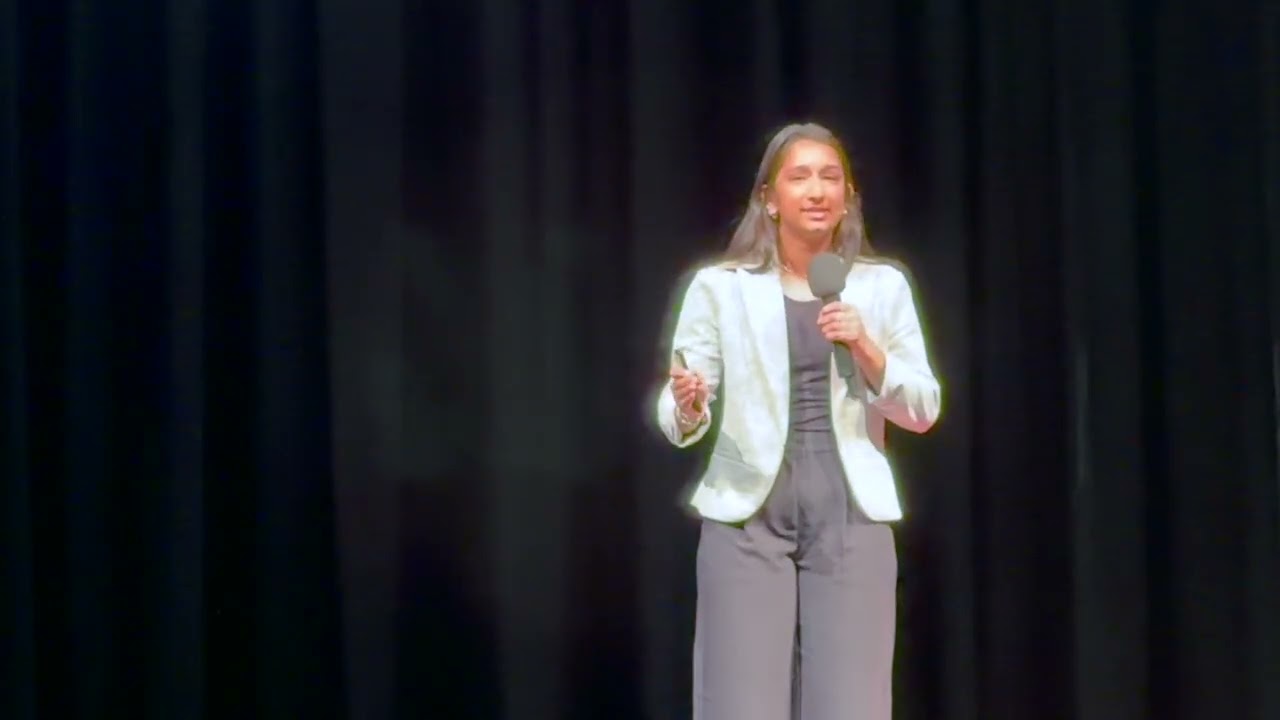
TEDx Talks · @TEDx
This video has no Most replayed graph yet: YouTube shows one only once a video has enough views. These are the moments viewers replayed most in TEDx Talks's most watched videos.
Most replayed moment at 14:28
3.1x that video's typical replay level
that the craving monster is not as threatening as he appears. And sometimes, he even goes away. As we break for lunch, we're going to have choices of what to eat. (Laughter)
Said at 14:21
The graph counts replays. It does not show where viewers stopped watching.
Words
1,098
Runtime
7:44
Speaking pace
142wpm
Reading time
5min
142 words per minute, below the 160 25th percentile of 349 measured videos. That distribution comes from the 349-video hook study.
Opening (first 30 seconds)
I remember the exact moment it happened. An indoor lacrosse game my freshman year. One quick pivot and pop. It felt like the ground had disappeared from underneath me. I didn't know it yet, but I just joined the club that no one wanted to be in. The torn ACL club. In the moment, I thought it was just unlucky. A bad step, a bad day. But over the next few
71 words, the words spoken in the first 30 seconds at 142 words per minute.
Free, no signup. See how the first 30 seconds hold attention, with rewrites.
Sentence shape
| Measure | This transcript |
|---|---|
| Sentences | 96 |
| Average words per sentence | 11.4 |
| Longest sentence | 32 words |
| Questions asked | 9 |
| Sentences containing a number | 8 |
Most used terms
Filler phrases
8 in total: like 6 · actually 1 · basically 1.
A literal whole-word count of the same phrase list the Prepublish browser extension uses, so a phrase inside another word is not counted and a phrase used in its ordinary sense still is. It is a count and not a judgement.
What this transcript is
Every word below is the caption track YouTube publishes for this video, pulled from the video itself and reproduced unchanged. It is not Prepublish's writing, not a summary, and not a re-transcription: it is the video's own published captions. English captions, generated automatically by YouTube, in the video’s original language. Source: the video on YouTube. A channel that would rather this page did not exist can ask for its removal through the contact page, and it is removed.
I remember the exact moment it happened. An indoor lacrosse game my freshman year. One quick pivot and pop. It felt like the ground had disappeared from underneath me. I didn't know it yet, but I just joined the club that no one wanted to be in. The torn ACL club. In the moment, I thought it was just unlucky. A bad step, a bad day. But over the next few months, I started to realize that it wasn't just happening to me.
And within 3 months, I knew 13 other girls who had also torn their ACLs. Same sport, same season, same story. So then it got me thinking. Why does this keep happening to so many of us? The ACL, anterior cruciate ligament. A small but powerful band in your knee that connects your femur to your shin bone. It stabilizes the joint when doing things like cutting, jumping, pivoting. Basically anything that makes your sport fun and dynamic.
But here's the shocking part. Female athletes tear their ACLs at two to eight times the rate of male athletes. That means for every one guy on crutches, there are five or six girls sitting on the sidelines watching another season pass them by. And yet, people still call it bad luck or just part of being an athlete. But it's not. It's biology, preparation, and awareness. And if we started treating this like a preventable problem instead of a normal one, we could change the future of girls sports.
So what makes girls more vulnerable? Well, first, our biomechanics are different. Women tend to have wider hips, which affect the angle of their knees. That angle, called the Q angle, puts more stress on ligaments like the ACL when doing sharp movements or there's a shift in weight. Second, there are strength imbalances. Girls tend to develop stronger quads but weaker hamstrings. So, when we do things like jump and land, more of the force is absorbed into the knee instead of being stabilized by the muscles around it.
Most ACL tears are common with non-contact movements. So, that's when you're doing the cutting and the jumping and the pivoting. And this is where stability becomes really key in those muscles. Statistically, women are supposed to have a hamstring to quad strength ratio of at least 50 to 80%. When I tore my ACL, I learned that pre-tear, my hamstrings were only 30% of my quad strength. And that's an issue. Third, hormones play a role.
Estrogen levels fluctuate throughout a woman's menstrual cycle, which affects the flexibility of their ligaments. The ACL is especially most vulnerable during the stage of ovulation, where it becomes loose, lax, and overstretched. And finally, training. Young girls grow up developing the skills of their main sport. The The sport that they're put in at a young age and will continue throughout high school, college, or maybe even beyond.
They'll learn how to pass the ball, how to dodge, how to shoot, but they won't learn how to cut, land, or decelerate safely. With the rise of early sports specialization, there's a lack of cross-training. So, girls don't use different muscles and don't work different movements. Over time, the same muscle groups will will get tired and overused, and something has got to get. That something is unfortunately your ACL. So, it's not that girls are weaker, it's that our training does not match our physiology.
And that's something that we can fix. When I tore my ACL, the physical pain was pretty bad. I'm not going to lie. But, the mental part was even worse. Sports were everything to me. I was double varsity athlete, excited for the college recruitment season ahead, living for the competition, and waiting for my big high school break. And then within seconds, it was all gone. At least temporarily. And I wasn't alone. A lot of girls my age connect their self-worth with their performance.
And when something as big as an ACL tear takes that away, it can cause sadness, confusion, or even depression. An ACL injury is not just an injury, it's a life interruption. With 9 to 12 months of intense rehab, missed games, missed connections, missed opportunities that we thought would shape us into who we wanted to be. But, what if it didn't have to be this way? I remember after surgery, laying on the physical therapy table, trying to lift my leg just a few inches up, and thinking to myself, "How will I be able to walk again?
Run again? How did this happen to me?" But, then that question changed into, "Why does this keep happening to so many of us? And what can I do about it?" So, then that curiosity turned into research. I learned that high school ACL injuries have increased by 26% in the last 15 years. And about 350,000 ACL surgery reconstructions are done yearly in the US alone. Even more frustrating, studies show that proper prevention programs can reduce injury risk by up to 50%.
Half of these tears could have been prevented if coaches and trainers knew what to look for and train their athletes for. Again, that's not unlucky. That is a gap in education and we can fix that. So, what actually works? Well, studies show that neuromuscular training programs can dramatically reduce risk. Drills that focus on strength, knee alignment, and balance can be added into warm-ups in less than 15 minutes. Even simple things like strengthening your hips and hamstrings, improving landing techniques, or even taking rest days to reduce fatigue can make a huge impact.
But, here's the catch. Many youth sports teams never teach these things. They'll run sprints, they'll push speed, but they won't practice prevention. If every club, school, and coach treated injury prevention as a part of practice, we could rewrite the future of youth sports in general. For me, torn ACL changed a lot. Yes, I missed a season. I missed playing with my teammates. I missed the sport that I loved. But, I realized that being an athlete was not just about playing anymore.
It came with responsibility, resilience, and most of all, awareness. We're at a turning point in girls sports. With participation skyrocketing, more girls are stepping onto the field, the court, the turf, the track. Every injury prevented is another season played. So, let's train smarter, teach Sorry. Let's train smarter, teach smarter, train safer to play stronger because stronger girls don't just win games, they change the game.
Thank you. >> [applause] [applause]
The words are the caption track's own and nothing is reworded or re-transcribed. Paragraph breaks are placed between sentences so the text reads as prose.
Free tools for your own script. No signup, no login.
Paste your draft and see where viewers are likely to drop off, with a rewrite for each weak line.
Paste the first 30 seconds of your own draft for a hook score and rewrites.
Check your draft against YouTube's advertiser-friendly guidelines before you record it.
Read this channel's public videos and transcripts, and download a writing brief for it.