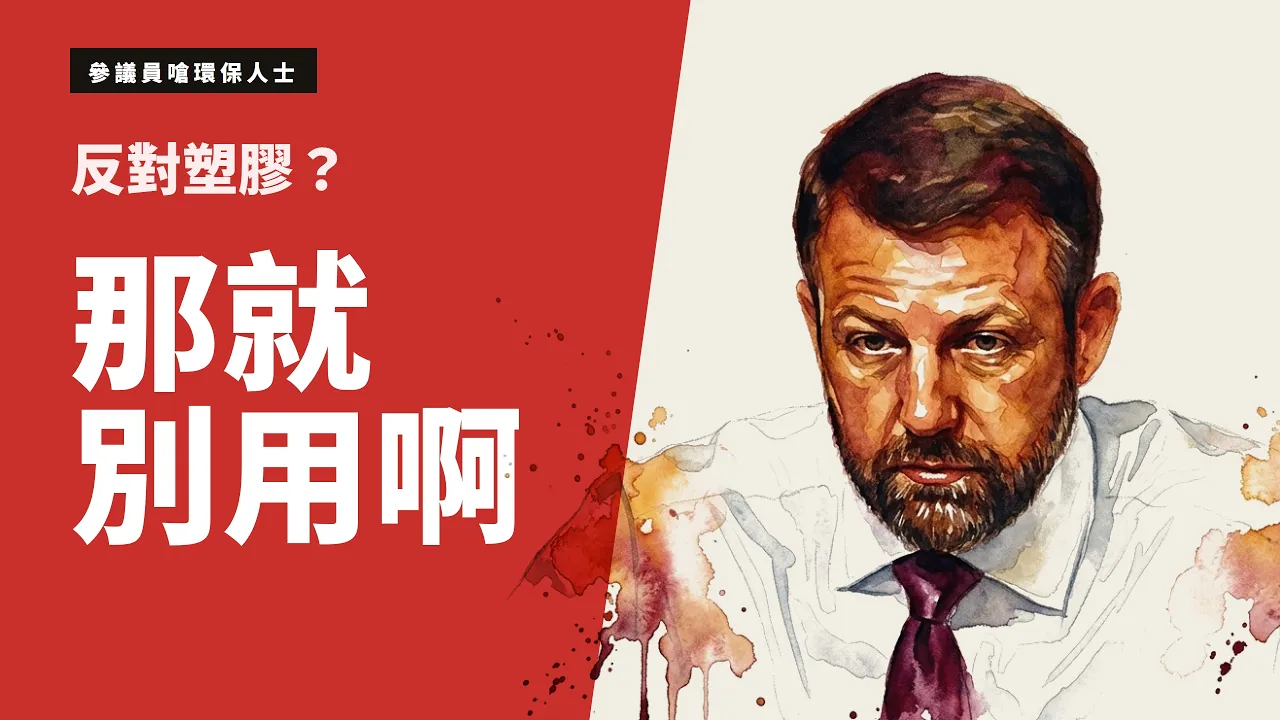
「你反對塑膠,但你身上全都是塑膠」——參議員把倡議者的雙重標準攤在鏡頭前 transcript
MJ English · @mjenglish
Words
1,808
Runtime
9:59
Speaking pace
181wpm
Reading time
8min
181 words per minute, the same as the 181 median of 349 measured videos. That distribution comes from the 349-video hook study.
Opening (first 30 seconds)
Quit using them. If you feel that way, then >> I do. I just told you I do not have single-use plastic bottles in my house. I do what I can. >> Hold on a second. You're against all plastic, but you have plastic all around you. I don't believe we have a plastic problem. We have a recycling problem. And we need we have to learn how to make recycling valuable. Where where it allows us to be able to use that as as a value base. Uh and and
91 words, the words spoken in the first 30 seconds at 181 words per minute.
Sentence shape
| Measure | This transcript |
|---|---|
| Sentences | 159 |
| Average words per sentence | 11.4 |
| Longest sentence | 62 words |
| Questions asked | 26 |
| Sentences containing a number | 1 |
Most used terms
- plastic35
- water14
- manufacturing12
- uh12
- plastics11
- cuz10
- recycling10
- single10
- today9
- um8
- fact7
- bottles6
Filler phrases
36 in total: uh 12 · um 8 · like 6 · actually 5 · you know 2 · I mean 1 · kind of 1 · sort of 1.
A literal whole-word count of the same phrase list the Prepublish browser extension uses, so a phrase inside another word is not counted and a phrase used in its ordinary sense still is. It is a count and not a judgement.
What this transcript is
Every word below is the caption track YouTube publishes for this video, pulled from the video itself and reproduced unchanged. It is not Prepublish's writing, not a summary, and not a re-transcription: it is the video's own published captions. English captions, generated automatically by YouTube, in the video’s original language. Source: the video on YouTube. A channel that would rather this page did not exist can ask for its removal through the contact page, and it is removed.
Transcript
Quit using them. If you feel that way, then >> I do. I just told you I do not have single-use plastic bottles in my house. I do what I can. >> Hold on a second. You're against all plastic, but you have plastic all around you. I don't believe we have a plastic problem. We have a recycling problem. And we need we have to learn how to make recycling valuable. Where where it allows us to be able to use that as as a value base.
Uh and and and if we if we ignore that issue, guys, then you're ignoring the reality. Cuz what is going to replace plastics? Someone's got a solution for that, then we'd probably already be there. But there isn't. I would like to first start by thanking our witnesses here today for attending this subcommittee hearing, including uh Mr. Kevin Sunday Sunday and Ms. uh Donna Jackson. Today's hearing highlights an original novel idea called environmental justice that has been transformed away from its original intent of helping poor and marginalized communities in with specific needs into a social movement Democrats have taken over to push progressive policies forward under the guise of social and racial equality.
I think all of us in this community can agree to this. Everyone deserves clean air and water and access to reliable energy sources that will help create a cleaner, healthier, and safer future. What is missing from the discussion is the critical role the US plays in manufacturing essential plastics, materials that are used in medical applications, helps deliver our clean water, can't get water delivered to you without plastic piping, and keeps our food fresh.
Some witnesses today might make statements that plastics are harmful to your health, but they ignore the fact that fact the fact that plastics are already heavily regulated in the US and have had to go through intense rigorous standards guided by science, to be used in applications, especially when it comes in contact with your food and your medicine. >> We'll turn now to co-chair Senator Mullin. >> Thank you, Chairman.
Ms. [clears throat] Bradford, in your testimony, did I understand you right to say that you want to end all plastic manufacturing? >> I said the plastics industry must be stopped. >> So, does that mean end plastic manufacturing? >> I mean, in my dream world, sure, but I think that um >> Oh, go ahead. >> No, so I did I I don't mean to be condescending here. I'm just pointing out what's going to replace your glasses? >> Um so, I do know >> around your face.
Uh they're made of plastic. >> Maybe. I don't know what they're made out of. >> They are. What And I'm just pointing out some things here because I just want to be realistic when we're having conversations cuz when statements are made like this, I just want to open people's eyes and say, "Well, what Okay, that's easy to say, but what's the solution?" Your water bottle in front of you. >> This one? >> Yes. That plastic? >> No. >> The lid is.
That's plastic. >> Right. So, I would say to your question that I would first be concerned about single-use plastics, and then we can talk about alternatives to this. >> your cell phone there. Is that plastic? >> The case is, but it's glass cuz I >> Well, the components inside of it are not made of plastic. >> The components made out of it are not made of plastic. Uh that they are. Uh the water that you filled that water bottle up with.
Um where'd you fill that water bottle up out of? >> A water filling station. >> All right. And it was delivered by a drink station that was plastic? >> I didn't check. >> The edges are. The piping coming to it. Now, you have a couple choices with the piping. Um we could go back to using wood, but then you have to have lined it in chemical. Uh or we could go back and use [clears throat] lead cuz we used to have water piping that was lead.
That was harmful to us. Uh we go back to galvanized. But galvanized rust and had discoloration. Um we go back to copper. But but copper has to be mined and everybody wants to stop mining in the US. So you use plastic to deliver piping that you fill that water bottle up with today. I I point this out because the clothes you have on I guarantee you have plastic in it. The shoes you have on your feet, the soles of those shoes are plastic.
So we talk about any any manufacture plastic manufacturing and everybody in here cheers when you say that. But everybody here is depending on plastic as you set. So if you want to end it, then quit using it. It's kind of like I don't shop it or shop at certain places right now because I don't agree with some of their policies. I choose not to do that. You can choose to not use plastic. Do your work. If if if if you believe it, then live it that way.
And and and if not, then tell me what the solution is. Mr. Senator, can you manufacture a car today without plastic? Cuz we talked about manufacturing and chairman brought up manufacturing cars as it is safe. But the components that go into the cars today, can you do that without without plastic? >> No, Senator, and increasingly so with the new uh mileage mandates, you increasingly need to use automotive components that are plastics derived. >> So we wouldn't have manufacturing today's modern manufacturing if we didn't have plastics, correct? >> Correct. >> Ms.
Jackson, do you agree with that statement? >> Yes. >> So what's the alternative for manufacturing? Because we The Democrats talk about middle class wages. Middle class wages typically come directly from manufacturing. What is it we're manufacturing that doesn't have plastic in it today? >> Nothing. And you know what? It would increase the cost of everything if we turn to an alternative and it would disproportionately impact low-income people who have lower incomes.
It would be another regressive tax on the poor. >> So, according to your testimony, Ms. Jackson, it sounds like you're saying that the environmental justice agenda does more harm than good for low-income families. Is that correct? >> Yes. >> Yeah, I I just want to follow up with Ms. Bradford. You stated you're against single-use plastics. What's specific are you pointing at for single use? What products are you talking about? >> Good thanks.
Um so, definitely straws, definitely plastic bottles. I won't say anything else cuz I can't think of anything else, right now. >> So, are you for recycling and advanced recycling? >> Uh no, cuz it doesn't work and it doesn't happen. >> Well, then then in your case and everything single use at that point. If you're not for recycling, then you you can't say you're against single use and you're okay with everything else cuz if you're against >> I'm for fact and I think only 9% worldwide are actually recycled. >> That's why I say that we should focus more on recycling cuz if you can tell me you're for recycling, then maybe we can work to something because a while ago you did say you were for you wasn't against all of it because you got to be realistic, but you're against single use because that's what the chairman asked you.
And so, if you're if if if if if you're force against single use, then you must be for recycling. >> No, because it doesn't work. >> Well, then that doesn't make any sense um at all. >> Okay. >> Because you can't exist without plastic today. You We've already pointed that out. And so, I I don't know what the alternative is. And we talk about this all the time. It's like Ms. Levine mentioned that that glass is an alternative.
Uh but if you remember sort of our last hearing we had on plastic, um I I for the record I submitted the McKinsey and Company study that showed that actually plastic has a less carbon footprint than glass. So, where are we moving towards? What is it that we want to look to? Uh if we're if we're still for the middle class and we got to have manufacturing. You pointed that out that we can't do without it. We're against it, but yet everybody here is using it.
I just see a lot of people having a thought process because it sounds good, but no one's actually living by what you believe. >> I don't have any single-use plastics in my house. >> You know that for a fact? >> for a fact because I go >> do you not have? What products because you just mentioned water bottles? >> I don't have water bottles like that in my house. >> But most of these water bottles are actually recycled including the one that I'm having. >> So, I do I am a masochist and I do participate in recycling.
I just know that it doesn't work internationally. It's not adding up. >> Well, I would suggest you maybe doing your homework a little bit more when you come up here and you start talking about this stuff that you actually understand what it is the impact that you're talking about. >> I do my homework. I do understand the impact. I do know I'm wasting my time recycling cuz most of it's not recycled. >> Then >> And that's because of the industry and the fact that plastic is in everything is because the industry forced us to have it. >> using plastics. >> Well, the industry should stop making them. >> Quit using them.
If you feel that way then you can >> I just told you I do not have single-use plastic bottles in my house. I do what I can. >> Hold on a second. You're against all plastic, but you have plastic all around you. So, if you're against plastic, then don't use it. Live by what you're saying. There's a lot of people around here that I disagree with, but if you would live it >> I do live it. >> I respect it. Maybe you don't because you have plastic on your face, you have plastic on the water bottle, you have plastic on your >> I do not own companies to create these things.
So, I cannot make these things, but until they are available, we're stuck with some things. I do what I can.
The words are the caption track's own and nothing is reworded or re-transcribed. Paragraph breaks are placed between sentences so the text reads as prose.
Use this transcript
Three free tools that work on the material around a video like this one. No signup, no login.
Hook Analyzer
Paste the first 30 seconds of your own draft for a hook score and rewrites.
Policy Pre-Flight
Check your draft against YouTube's advertiser-friendly guidelines before you record it.
Channel Skill Generator
Read this channel's public videos and transcripts, and download a writing brief for it.