Getting the transcript
Reading the captions from YouTube. A video nobody has opened here before takes 10 to 30 seconds; this page fills in on its own.
Getting the transcript
Reading the captions from YouTube. A video nobody has opened here before takes 10 to 30 seconds; this page fills in on its own.
Ben Heath · @BenHeath
Words
3,863
Runtime
16:37
Speaking pace
232wpm
Reading time
16min
232 words per minute, above the 201 75th percentile of 349 measured videos. That distribution comes from the 349-video hook study.
Opening (first 30 seconds)
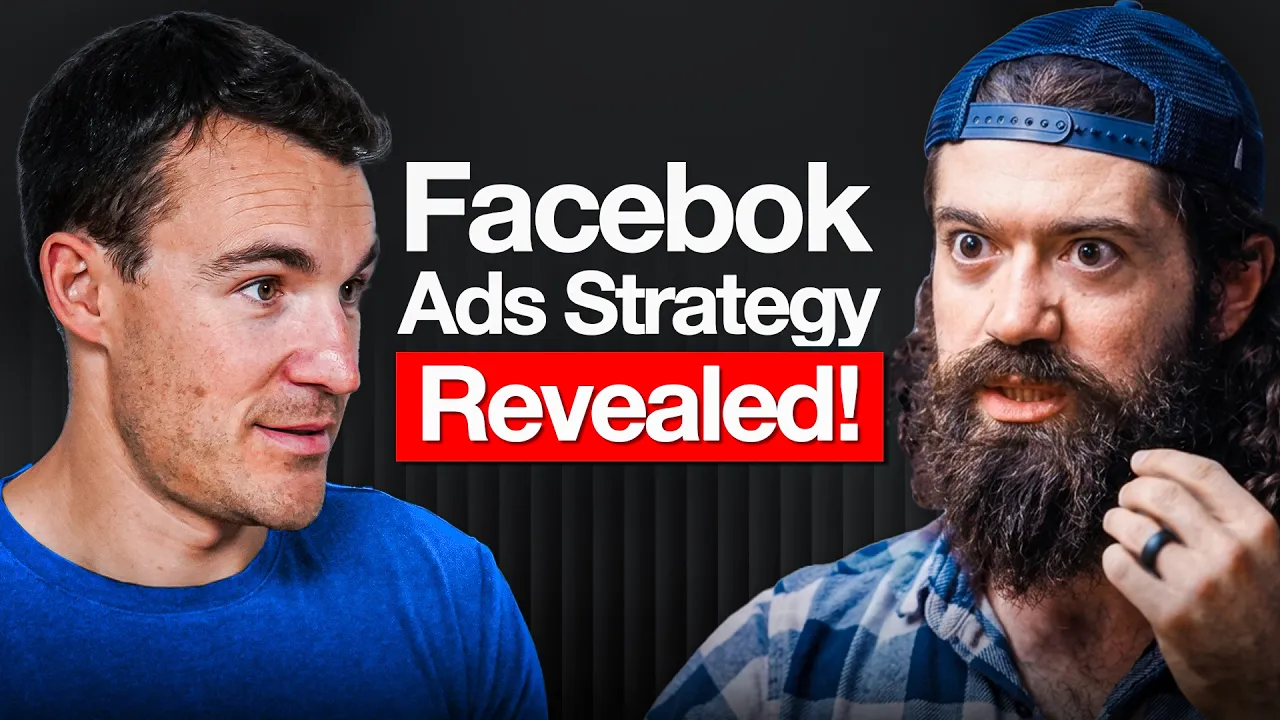
A few weeks ago, I flew to Las Vegas to spend a day with Alex Mosi. He gave me some fantastic advice about my business in general, and we discussed meta ads and his approach to Facebook ads and Instagram ads quite a lot. That day cost me $135,000, and I've got another day booked in with him in February that's costing me another $100,000. So, in this video, I'm going to share the strategies and techniques that I'm fortunate enough to have access to. And don't worry, I'm not going to charge you $235,000 for this Facebook ad strategy and techniques. In fact, I'm going to give it to you for free starting [music] now.
116 words, the words spoken in the first 30 seconds at 232 words per minute.
Free, no signup. See how the first 30 seconds hold attention, with rewrites.
Sentence shape
| Measure | This transcript |
|---|---|
| Sentences | 264 |
| Average words per sentence | 14.6 |
| Longest sentence | 64 words |
| Questions asked |
What this transcript is
Every word below is the caption track YouTube publishes for this video, pulled from the video itself and reproduced unchanged. It is not Prepublish's writing, not a summary, and not a re-transcription: it is the video's own published captions. English captions, generated automatically by YouTube, in the video’s original language. Source: the video on YouTube. A channel that would rather this page did not exist can ask for its removal through the contact page, and it is removed.
No Script X-ray for this video: YouTube shows a Most replayed graph only once a video has enough views.
A few weeks ago, I flew to Las Vegas to spend a day with Alex Mosi. He gave me some fantastic advice about my business in general, and we discussed meta ads and his approach to Facebook ads and Instagram ads quite a lot. That day cost me $135,000, and I've got another day booked in with him in February that's costing me another $100,000. So, in this video, I'm going to share the strategies and techniques that I'm fortunate enough to have access to.
And don't worry, I'm not going to charge you $235,000 for this Facebook ad strategy and techniques. In fact, I'm going to give it to you for free starting [music] now. So there are three big points to focus on. I'll save the best till last. Now the first is his strategy post Andromeda. So for those who don't know, Andromeda is an ad retrieval system. It was rolled out to most ad accounts around about a year ago. And what it allows for is for Meta to be able to better do personalized ad delivery.
Basically work out this person should see this ad, this person should see this ad. Before Andromeda, Meta would put users into buckets like you're interested in this along with all the other people that are interested in this. Therefore, you're all going to see the same ad. Now, Meta is better able to be like, you're more respond to this ad, you might respond to this ad, and they can customize that and we can get better results.
And that's why one of the big pieces of advice that we've had post Andromeda is more ad creative, more creative diversification. So, don't just run the same type of ad, have different formats, videos, statics, carousels, also have different ad styles, right? Do UGC and founderled and animated and influencer, etc., etc. Like lots of different ad types. Now, most advertisers don't like the Andromeda update. You hear it in the community all the time.
Loads of comments. people saying my results got worse, etc., etc. What's really interesting is that Alex said that his results are better than ever post Andromeda. And this is not just for the stuff he's running ads for for his own business, for acquisition.com. Because that could be a bit misleading, right? You'd be like, well, your ads are performing better than ever because your personal brand group, right? But this is across the board.
And if you know Alex setup, but he has a portfolio of companies, many other interests, and he's seeing better ad results post Andromeda across the board, which is very interesting. And like I said, goes against the narrative of what you hear from most advertisers online. Now, he did say in order to get those great results, they're having to produce more ad creative than ever before. So, either him or whoever is recording the ads, like for his portfolio businesses, for example, they're recording ads every single week.
And not just one or two ads, like 50 plus. That's an enormous amount of creative that they're producing. And like, he's a really busy guy. And a lot of the people that are creating these ads within his organization are really busy people. They're finding a way to do this. He did actually laugh and say how bored he is with doing it. Like so bored of of making ads, but that's what's required to get the best results. So I think that this absolutely lines up with what we're seeing in the accounts that we're running is that more creative volume is really beneficial.
And I often get asked, how many ads should I have in a campaign? How many ads should I have adset? And my answer is as much high quality ad creative as you can produce. Like your limiting factor is not what the platform can handle anymore. They used to say no more than six ad creative in any one adset. Totally throw that out. You can have 20, 30, 50 more running in at any one time. The constraining factor is always how much good stuff can you actually produce?
It needs to be good. You don't just want to be producing stuff for the sake of it and not be very good. It needs to be good. But this absolutely ties up with this not just the volume but also the diversification. So, like I said, make sure you're using different ad styles, different ad formats. Don't just get stuck with like we produce static images and they're all of the same type. It's like you're only probably tapping into a small fraction of your target market because those ads are only really being served to people that respond to that type of ad, but you want to be able to take advantage of all the other types of people that some will respond to. client testimonial ads.
Others will respond to partnership ads that you work with influencers. Others will respond to UGC. Others will respond to product demonstration. Lots of different styles. So, you want to make sure you're uh covering your bases there. And look at Andromeda, particularly if your results got worse post Andromeda. If you're running ads beforehand, look at Andromeda as an opportunity, not as this challenge to overcome. Because if other people are struggling with it, but you can really crack that creative volume, carve out that time, realize how important that is to your meta ad performance, which is probably really important to your results, right?
If it's how you get a lot of your your customers, and find a way to use it in your advantage and get a competitive edge over your competition who aren't doing that. So, the next thing was around tracking and tracking accuracy specifically. And he talks about this quite a lot in relation to metadatas, but also in other things within his business, within in my business and other people that that were in the room, recommendations, and he's really keen on making datadriven decisions.
It's like, should I do this or this? It's like, well, let's have a look at the data. And in order to have the data, you need to be tracking it. You need to be tracking it to know which one of these two options actually performs best. That came up very often. I totally get it. I think within a a performance marketing landscape like meta ads, people who've been involved in that space are sort of naturally geared up to that. like, right, we're used to looking at dashboards, we're used to looking at data, being able to make decisions based on on things that we see, but if you're making optimization based on this ad has a better return on ad spend than this ad or this ad has a lower cost per lead than this ad, well, that data needs to be accurate.
If you're making decisions based on inaccurate data, you will be making wrong decisions. And if you're making wrong decisions, it means you're turning off things that should stay on. You're leaving things running that should be turned off. you're not taking the learning that you should be to help inform what you should do next and iterate on on ad performance. Creating high performing meta ad creatives is one of the biggest bottlenecks for most advertisers.
It's timeconuming and expensive especially if you're testing multiple variations. So I want to introduce you to Higsfield MCP. Until now, Claude could talk about ad creatives, brief them, script them, plan them. With Higsfield MCP, it can actually generate, edit, and ship them end to end in one chat. Here's what makes it really powerful for meta advertisers. You give Claude your product link. It reads your reviews, pulls out the selling points and the objections, then writes your ad briefs, and generates the creative all in one go without switching between tools.
So whether you're currently paying for creatives or making them yourself, you can have a full set of ad variations to test in a fraction of the time and cost. And the setup is really straightforward. Go to Claude, open settings, click connectors, hit the plus button, and add Higsfield as a new connector. That's it. You're ready to go. Click the link in the description to get a custom discount for being part of my audience.
And I'd strongly recommend checking it out if ad creatives are eating into your time or your budget. So the third point, and this is the most important, is to make sure that your meta ad campaigns are optimizing for the right thing. Now, most advertisers think they've got this right, but they don't. So the difference between optimizing for qualified leads and leads is an absolute gamecher when it comes to your results.
Because if meta is only trying to get you more of the people that you actually want to become a lead as opposed to just getting leads in general, that system reinforces, it learns over time and your lead quality massively improves. And with just a few small tweaks, you can set up your ad campaigns to do that. So, I'm going to show you how this works and what this looks like. So, I'm an example meta ad account here. I've created an example lead campaign because one of the scenarios where this is most applicable, but this does apply to other campaign types as well.
I'm at the adset level, right? And we've got the conversion location. So let's say we're sending people through to our website. I'll explain this for instant forms as well in a minute. But let's say we're sending people through to our website. We've got our performance goal, maximize number of leads, data set, example ad account. Sure. Now what most people do is they'll have a form on their website. People will fill out the form.
They'll become a lead. They'll go through to a thank you page after they fill out the form. And on that thank you page, you'll have the lead conversion event. And everyone that goes through that, fills out that form registers as a lead. And then you or your team will often then look at that lead and be like, "Nah, no, they're not qualified. We won't bother contacting them. Yes, these ones are qualified. Great. We'll contact them." But Meta can't see that.
Meta can only see the fact that they became a lead. They can't see which ones are qualified and which ones aren't. So, the system isn't working in your favor. What you should do instead is have a function on that form that has some questions that qualifies or disqualifies people based on their answers. So, the classic example would be budget, right? Let's say someone needs to have more than $5,000 to work with you. You can have a question on that form that says, "Do you have a budget of at least $5,000?" Or you could say, "What's your budget?" and have different options.
And then depending on what they select, right? And they can go through and then set up the form so that if they do have more than $5,000, they come through to a thank you page that has a different conversion event. So, in this instance, it might be something like submit application. So, you have the submit application conversion event on the thank you page are taken to if they qualify, if they have more in that case than $5,000.
If they have less, they go through to a different thank you page that says, "Thank you for inquiring. Sorry, we're not able to work with you. We could only work with people that have such and such budget." Whereas the other one says, "Great. Thanks for the info. We'll be in touch shortly." Right? And that would have a different conversion event. You could have lead. You could have whatever. And then what you want to make sure is that when you're configuring your adsets, like I've got here, that the conversion event you're optimizing for is the one that's only triggered when a qualified leads come through.
And like I said, that reinforces a system. That trains Meta to only get you more of these. Anyone that comes through that form and says they have less than $5,000, Meta goes, "We haven't achieved our objective. They don't mean anything. That's not what we're optimizing for in this campaign." Which is exactly what you want, right? You only want the people that have the budget. So you set this up a and and the impact on like day one will be minimal.
The impact after like 30 days of this, 90 days of this because the system keeps learning and it's a reinforcing cycle can be absolutely monstrous. And then you're you as the advertiser are also measuring your results in these terms. So you're looking at your cost per submitted application instead of just cost per lead. And you're like this is what we should be basing it around because some ads might generate lots of lowquality leads.
So, we only want the ones we can work with, right, that can become customers of our business. So, we want to optimize for the ads that get a really good cost per high quality lead or or qualified lead. And this would be a way to um to go about doing it. You can also do the same thing with instant forms. So, if I go ahead and change website to instant forms, I know a lot of people use instant forms. Then I jump to the ad level and then we can scroll down to the instant form section.
I can go ahead and click on create a form. Create a form. Click continue. And then I'll talk about this more in a second actually because I think that's useful. But if we just jump to the question section, we can do this thing where we turn on conditional logic and get rid of this warning here. And then we could do add a question multiple choice. We can do the same thing, right? So we can say what's your budget and then we could have, you know, less than 5K and we could have more than 5K.
Now you probably would want to break out into tiers, you know, n to 5k, 5 to 10, 10 to 20. just look a bit less odd. But here's the important part, right? So, less than 5K, close the form. People don't give you their info and see an end page for non-leads. So, they don't register as a lead. Meta's like, "Ah, didn't do it. That person doesn't count. We're not going to try and get more of those." Whereas, if everyone's a lead, they will try and get more of those.
Then, especially try and get more lowquality leads, by the way, if they register and that's what you optimize for in the campaign because those are the cheapest people to reach and Meta is going to default to that unless you tell it otherwise. but we have more than 5K, you know, submit the form, people give you their info and see a custom end page for leads, E1 end page for leads, and you can go through and set it up.
I've got other videos on my channel you can find about how to set up um instant forms, and you can break this out. And you can do this for various things, by the way. So, I've done it with budget, but it could be timeline, it could be when you're looking to get this project started. It could be that someone needs the project starting tomorrow and you don't have capacity, so they can't become a lead. Or it needs they're not looking to get started for another two years, in which case you're like, whatever.
We don't want to be optimizing for those people. Can't work with them. Could be education, could be what industry they work in, it could be time of life. You know, do you have a small child that would qualify for this martial arts class that we're running? You know, totally going to depend on your business. What makes a lead qualified makes someone not qualified? Just think through that through and then you can add this in as as multiple choice to help improve really really improve your lead quality and more than anything put better on your side when it comes to optimization.
Just a very quick thing about lead quality, by the way, this wasn't mentioned by Alex specifically, but I really like it was if we go into the form type. I really like using higher intent and then require leads to verify their phone number with a onetime passcode. That SMS verification makes huge difference to lead quality. People have to give you their real phone number. You filter out the people that aren't serious.
So, by default, I'm now using this in my instant forms. Just a quick FYI that I'm adding on top there. And then another thing that Alex didn't actually mention, but I'll add on because it's very relevant to this and can help improve that whole thing around getting meta to optimize what you really want is how this would apply to a salesbased campaign. If you're like an e-commerce business, for example, or or you're running salesbased.
So, if I just jump out to campaigns and then create a quick sales campaign, the way we would do this here is at the adset level, instead of optimizing for maximize number of conversions, you want to change that to maximize value of conversions. It's only recommended here to go with number because this is an example ad account that hasn't had any conversions go through. But once you've got a bit of data, you want to go with maximize value of conversions because if you think about how Meta will optimize otherwise, if each conversion is equally valuable in Meta's eyes, they're going to get you the cheap ones.
Just like with the whole lead process, those are the easiest ones to get. They're going to get you the people that don't spend much, that other advertisers aren't trying to reach as much. But if you say, "No, no, look. I would actually be willing to pay twice as much for a sale if that person comes through and spends five times as much on my store." Right? And that's how you do it. You go ahead and click on maximize value conversions.
Just wanted to quickly mention that and add that in cuz I think that's valuable for those types of businesses. And then the final thing Alex recommended when it comes to getting better meta ad results is to sign up for my new school community. I I'm joking. He definitely he definitely didn't say that. He did say he was happy that I was on school. They really want people who are like subject matter experts. I've been doing this 13 years. spent hundreds of millions and they want people like me on there.
So, he's very happy I'm on there, but he definitely didn't didn't endorse it. But, I think you should join my new school community if you want better meta adverts for a few reasons. Firstly, there's new exclusive content in there, 110 plus videos that you won't find on YouTube or anywhere else. Walks you through a total A to Zed of Meta advertising, including advanced stuff that I don't talk about anywhere else. There's really valuable material in there.
I do live Q&A calls every week where you can ask me questions specific to your business. That's really important when it comes to getting the best possible metab results is to know what works for your business specifically. So that's why we've got the live elements. I'm also responding to every single community post, question, comment in there. So again, you can get that tailored advice and feedback for your business because I'll often go in and someone ask question, I'll say, "Okay, I wouldn't normally advise this, but actually in your business, I would advise this.
I'm really glad you asked." And and those sorts of things are are really important. And you only get that from having a level of expertise of just doing this forever and working with thousands of businesses and hundreds of millions spent, right? To know all these little nuances. And right now I'm running a massively discounted introductory offer. I will be putting up the price in the future, but the way school works is if you join now, you lock in that lower price for as long um as you remain a member.
It's only been live a few weeks. We've had more than 700 people join. Only had five star reviews so far, literally. So um yeah, if you're interested, go ahead and click on that link in the description below. I'd love to see on the inside. That was awesome to spend the day with Alex Hozi. It's always great to spend time with people who are absolute pinnacle of their industry, which Alex undoubtedly is. And his breadth of knowledge is is really impressive.
So, I was in the room with him all day. There were a handful of other business owners. There's like six or seven of us in the room as well. And um you know, he was able to talk authoratively on like so many different topics, meta ads included. It was also really nice that he did divertly on a lot of meta ad stuff. So like if there other business owners that are struggling with meta ads related things in the room he'd be like then you'll explain this better than me.
Do you want to talk about this etc etc. And I think it's incredible what he knows and what he does across so many different things but you can't beat that um that specificity. So um so yeah it was a great day. I'm excited to be going back. I'm sure I'll have more to report. I'll mostly keep it metadata focused cuz I know that's what my audience is uh is interested in. I'm sure we will discuss that again when I go back in the future.
So, if you've got questions about this or what I should ask when I next see him, pop them in the comments below. And one last thing, if you haven't watched this video yet, go ahead and give it a watch because unfortunately, there's likely a problem with your ad creative and you don't even know about it. So, in this video, I walk through what the problem is, how we can go ahead and fix it, and what we need to watch out for going forward.
Sky and give it a watch.
The words are the caption track's own and nothing is reworded or re-transcribed. Paragraph breaks are placed between sentences so the text reads as prose.
Free tools for your own script. No signup, no login.
Paste your draft and see where viewers are likely to drop off, with a rewrite for each weak line.
Paste the first 30 seconds of your own draft for a hook score and rewrites.
Check your draft against YouTube's advertiser-friendly guidelines before you record it.
Read this channel's public videos and transcripts, and download a writing brief for it.
| 21 |
| Sentences containing a number | 17 |
Most used terms
Filler phrases
79 in total: like 38 · right? 13 · actually 9 · um 7 · you know 7 · uh 2 · basically 1 · literally 1 · sort of 1.
A literal whole-word count of the same phrase list the Prepublish browser extension uses, so a phrase inside another word is not counted and a phrase used in its ordinary sense still is. It is a count and not a judgement.