Getting the transcript
Reading the captions from YouTube. A video nobody has opened here before takes 10 to 30 seconds; this page fills in on its own.
Getting the transcript
Reading the captions from YouTube. A video nobody has opened here before takes 10 to 30 seconds; this page fills in on its own.
Green Tea Playful Mom · @GreenTeaPlayfulMom
Words
5,602
Runtime
35:35
Speaking pace
157wpm
Reading time
23min
157 words per minute, below the 160 25th percentile of 349 measured videos. That distribution comes from the 349-video hook study.
Opening (first 30 seconds)
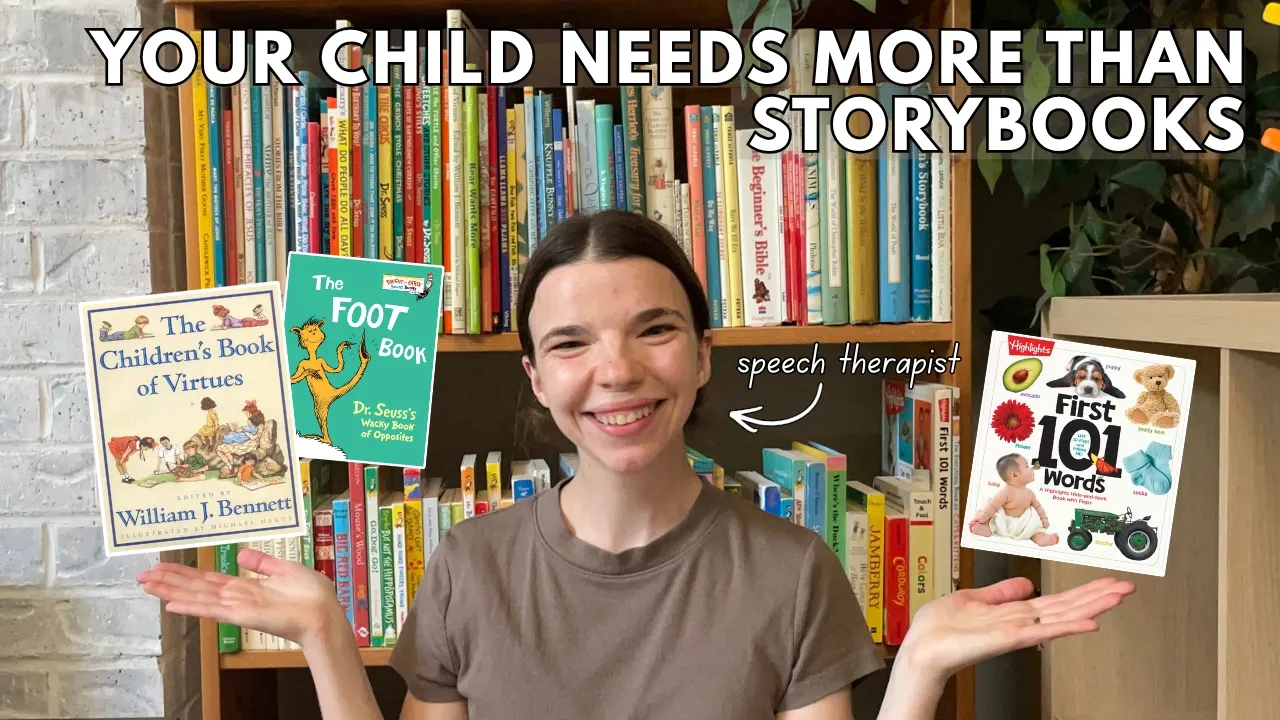
As a mom and speech therapist, I know that books teach our kids so much more than reading. They build funological awareness, empathy, humor, problem solving, and even an understanding of the world. So, I am being very intentional about building a home library that reflects all of that. So today I'm going to share the 11 types of books I think every single home library needs. Not just to build kids who read, but to build resilient, capable
79 words, the words spoken in the first 30 seconds at 157 words per minute.
Free, no signup. See how the first 30 seconds hold attention, with rewrites.
Sentence shape
| Measure | This transcript |
|---|---|
| Sentences | 392 |
| Average words per sentence | 14.3 |
| Longest sentence | 93 words |
| Questions asked | 23 |
| Sentences containing a number | 6 |
Most used terms
Filler phrases
148 in total: like 79 · um 18 · you know 17 · kind of 16 · uh 8 · basically 3 · literally 3 · sort of 2 · actually 1 · right? 1.
A literal whole-word count of the same phrase list the Prepublish browser extension uses, so a phrase inside another word is not counted and a phrase used in its ordinary sense still is. It is a count and not a judgement.
What this transcript is
Every word below is the caption track YouTube publishes for this video, pulled from the video itself and reproduced unchanged. It is not Prepublish's writing, not a summary, and not a re-transcription: it is the video's own published captions. English captions, generated automatically by YouTube, in the video’s original language. Source: the video on YouTube. A channel that would rather this page did not exist can ask for its removal through the contact page, and it is removed.
No Script X-ray for this video: YouTube shows a Most replayed graph only once a video has enough views.
As a mom and speech therapist, I know that books teach our kids so much more than reading. They build funological awareness, empathy, humor, problem solving, and even an understanding of the world. So, I am being very intentional about building a home library that reflects all of that. So today I'm going to share the 11 types of books I think every single home library needs. Not just to build kids who read, but to build resilient, capable little human beings.
If you are new here, hi, my name is Teresa. And if you are interested in creating a languagerich home that supports your child's development, be sure to like this video and subscribe to my channel. Let's dive right in to the first kind of book, and that is Rhythm. and rhyming. These are the books that build your child's funological awareness and an overall understanding of the patterns and sound schemes of language. So, funological awareness is a child's understanding of and ability to manipulate the sound structures of language.
A lot of people think about rhyming when they think about funological awareness. And this, yes, is one part of funological awareness. But we also have syllable segmentation where you can break apart a word into its individual syllables. Onset and rhyme identification. So identifying the first sound of a word and the second part of a word and being able to separate that and manipulate words by changing the onset, changing the rhyme and then also just phmic awareness which is an understanding of individual sounds.
Now the importance of funological awareness is that it is a foundation for reading. If you are not able to understand how sounds are used to create words, how to break words apart, how to sound things out, you're going to really struggle with reading. A lot of books that are designed for infants and young toddlers really nail this rhy sing songy language that is so good for developing funological awareness. So I wanted to share some of my favorites and maybe some books that are on my wish list in this funological awareness category.
So the first few ones I wanted to share mosquito. I don't know my house has been infested with mosquitoes recently. So, if you've seen me swat at mosquitoes in uh my recent videos, that is why. So, [laughter] I will always, always, always recommend Brown Bear, Brown Bear, What Do You See? by Bill Martin Jr. This is like the original just epitome of rhyming singongy books for kids because every single sentence is structured in the exact same way and it rhymes.
They all sound exactly the same. So, yellow duck, yellow duck, what do you hear? I hear a blue horse whispering in my ear, looking at me. Oh my gosh, this is not polar bear. This is This is brown bear. Bre, what do you see? Sorry guys. Yellow duck, yellow duck, what do you see? I see a blue horse looking at me. Blue horse, blue horse, what do you see? So the repeated structure plus the repeated sounds gives children an overall understanding about how words are put together to create meaning, but also how words sound.
It kind of starts that foundation of rhyming and initial funological awareness. Another rhyming book that I really like is each peach pear plum. You can tell that it is very loved by my son. But this book is just a very very simple rhyme. It's just a couplet rhymes all the way through. Each peach pear plum. I spy Tom Thumb. Tom Thumb in the cupboard. I spy mother hubard. Mother hubard down the cellar. I spy Cinderella.
And so it repeats that I spy phrase, but it also again just introduces the singongy rhyming sound of language. Another one that I really like is giraffes can't dance. Now, this one is fun because it kind of introduces the skill of alliteration and so and how words can have similar or the same onsets. So, in this book, the giraffe's name is Gerald. So, it's Gerald the giraffe. We have all the animals doing their dances like the wartthogs started waltzing, the rhinos rock and rolled.
So again, funological awareness is more than rhyming. And then if you want to talk about a little bit more like advanced funological awareness, I have really been enjoying Mother Goose nursery rhymes with my son. Just another way of introducing rhyming and rhythm and poetry into his vocabulary. Some books that are on my wish list I really want to get. A is for artichoke by Louisis Elri. Um, it's a great way of introducing the alphabet and then also those beginning onset sounds.
Some books for more advanced funological awareness would be Trickor Treat by Bill Martin Jr. where they start switching the onsets. So instead of jelly beans, it's Belly jeans. There's also did you take the bee from my UK where the onsets are removed and then the ends of the words are by themselves and it gets gets really silly or the antthony again working on syllable segmentation. All right, next we have silly and absurd books.
These are the books that help kids develop a sense of humor. They involve silly situations or word play. And I really like these books to also really increase the enjoyment factor for reading. If we want to raise kids that read, we have to read them books that they are going to enjoy. So reading them books that are silly and absurd and engaging come with actions and motions that can really help just increase that overall reading experience.
So if you have a reluctant reader and you want to get them more into reading, I would start with silly and absurd books. Silly books are also good for language. A lot of times they include word play or even madeup words that you know, yes, teach humor and yes, teach language, but teach how we can manipulate language to create interesting situations and that silly humor. some of my favorite silly books that we've got on our bookshelf.
I've got the foot book. Dr. Seuss books in general are good for the silly and absurd category. But I love the foot book. It's just very very simple rhyming but uh opposites but the situations are kind of silly that it's all about feet. Like well feet sick feet up feet down feet. Here come clown feet. like just the situation that we're in looking at all these feet. Kind of silly. We've also got old hat, new hat. So, this one is really fun because they're trying on all these different hats and doesn't like any of the hats and the hats just get more and more absurd and crazier and crazier and crazier.
So, this is a good silly absurd situation one. Uh, couple more Dr. Seusses. We've got Walk It in My Pocket. If you're looking for really silly rhymes, I think I know at least I don't have the full Walk It in My Pocket version, but I know this simplified board book version by heart. Mr. Brown Can Moo. Can you? We always love books with sound effects and silly voices or noises, making all of the animal sounds. Another author that I really love for silly books is Sandra Boon.
So, some of my favorite silly books from her are Dinosaur Dance, which has a lot of very silly dance moves in it. Like the Stegosaurus goes shimmy shimmy shake, and the red brontosaurus goes quivery quick. So, it's really fun for getting kids engaged, getting them acting out the dance moves. My son really, really giggles every time I go. The tiny little dino goes, he just thinks it's hilarious. Uh, mooa la is another really silly one just with animal sounds and noises and, you know, singing pigs.
That's absurd. That's ridiculous. And then some silly books that are a little bit more advanced, a little bit older. We've got The Gruff. I talk a lot about this book, but I really, really love it. It's a mouse who meets all of these predators in the woods and he convinces them that he's going to see the guff, which is he's just making it up. He's making up the gruff. But eventually the guff is real and he's scary and he looks like that and he's kind of creepy.
Um I don't know why I'm selling this creepy book as a silly book, but I am. uh if you give a moose a muffin or any of the if you give an animal a food books. These are very silly because it just it's that absurd situation that would never happen of giving food to an animal and then they slowly take over your home and by the time you know before you know it you're creating puppet shows and all that jazz. It's kind of crazy.
Another book that we love, but I do not have it right now because my sister stole it from me, Hannah, um, is The Wonky Donkey. That one is hilarious. Wonky donkey and then a winky wonky donkey and then a pinky pony tanky honky wonky donkey wonky. Very, very silly, and we love that. Next, we have wordless picture books. Now, you might be thinking, Tesa, why would I read a book to my child that doesn't have any words in it?
Well, it is great practice for you as the reader to practice this very important skill of narration, but it's also great for older toddlers, older children to practice expressive language and independent narrative storytelling. So, kids can work on telling the story, identifying the characters, identifying the setting, predicting what happens next. It is a fantastic expressive language task. Plus, it works on critical thinking and a little bit of empathy because they have to interpret characters body language or facial expressions while they are telling the story.
So, one of my favorite books that is a almost wordless picture book is Goodn Night Gorilla. And I don't have it in my little circle of books that I have around me right now because it is in my son's room. I just read it to him before he went to bed and I forgot to bring it out and if I go in there he is going to wake up. But I really really like Goodn Night Gorilla. For older kids, I absolutely recommend the Journey Trilogy by Aaron Becker.
I use these books a lot when I was working as a speech therapist, but they are great for working on um I used them when I was working on summarizing, sequencing, narrative, storytelling, expressive language, grammar, identification of setting, basically all of those literacy based skills. All those skills that are just very important for understanding texts. Next, we have books that follow recurring characters across individual stories.
Following familiar characters while reading creates a sense of familiarity and comfort when reading. Children can become more invested in the stories because they are following characters that they have previous experiences with. It also helps with language as well. When children are following familiar characters or familiar settings, they can better absorb the overall meaning of the text and the story without getting distracted by other information like who all the character names are and you know what and what the setting is.
Some of my favorite books with recurring characters for babies or for young toddlers. I love love love the Little Blue Truck books. how you always follow Little Blue Truck and his good friend Toad. And there's very often all of the farm animals as well. This is another great benefit of recurring character books is that you get exposed to the same vocabulary over and over and over again, which is great for learning. Babies and children thrive off of repetition.
So, I love the Little Blue Truck books. I also love the Bear books by Karma Wilson. These are very lovely. As you can see, we are not quite ready for hard coverver books. I also love the Katie Hudson books. So, Too Many Carrots, A Loud Winter's Nap, and there's one more that I don't have, but they all feature the same woodland animals. So, I love these books. Some books for older toddlers, preschool that I really like for recurring characters are um Winnie the Pooh.
So, Pooh, Piglet, Christopher Robin, Eeyore. getting to know all of those characters. We've also got the Frog and Toad books, which I really, really love, and I cannot wait until my son is old enough for these. And also Paddington's story book. This was my original Paddington story book. Um, so my mom recently gave us a huge, huge, multiple boxes full of children's books, and so that's where we got a lot of these books from. um these books that I grew up reading.
I'm so excited to start reading to my son once he is old enough. The next category is kind of similar to recurring characters, but it is books that focus on character dynamics and relationships. So, these are the books that teach kids empathy, emotional awareness, and how to treat others. I've been reading a book called Good Inside by Dr. Becky Kennedy and it's been really really interesting and one of the things that she talks about a lot in this book is that yes children are good inside meaning that they have an innate innocence about them where they just don't really know any better.
But they need to be taught explicitly a lot of basic lessons like kindness and let's not throw things at people. Maybe don't bite. And so they don't have an innate civility about them even if they have an innate innocence. So I think it is very important to read books to our children that teach them how to be a kind, generous person and how to interact appropriately with others. So for little kids, infants, I really like the book Bear Feels Scared.
It's a very very sweet book about how Bear is lost in the woods and his friends, they care for him so much they just go out and they search for him. So, it's a great book about just teaching Daryl kindness and feelings and they realize, "Oh my gosh, it's storming outside. Bear's not home yet. He must be so scared." So, this is a really good one. I also like Katie Hudson books for relationship and character dynamics. So, I already talked about Too Many Carrots, but I also love A Loud Winter's Nap.
Now, in Too Many Carrots, you got the basic lesson of be respectful of other people's space and other people's possessions, which I really, really like. And then in a loud winter's nap, you've got just the you've got another general lesson of being respectful of other people's wishes, their likes, and their dislikes. Because this tortoise does not like winter, and all of the animals around him are like, "Why not? I'm going to have a snowball fight right where you're trying to sleep.
For older kids, for preschool um and up, I really like Frog and Toad are friends, a beginning book on friendship and just how to treat others. But, uh, this is an area of my book collection that I feel like I really need to start fleshing out more so in the to for the toddlerhood years as we, you know, start to teach a little bit more of those lessons of just general general how to be a good person. Like, it's really funny.
My son right now, he is 15 months old. He's 15 months today as I'm filming this video. And he is just so univilized. It's hilarious. Like if I am getting him his milk after a meal, breakfast, lunch or dinner, it doesn't really matter. And I'm like, "Okay, I'm going to get you your milk." He starts freaking out. He is so impatient. He's like standing there in the middle of the kitchen going [laughter] and he's freaking out when I don't give it to him immediately because I have to pour the milk into the bottle first and then I can give it to him.
I just can't give it to him in the container, you know. [snorts] And then when I give it to him, I say, "Oh, here's your milk. Here you and he snatches it from me and shoves the straw into his mouth and starts chugging like just and walks away. I'm just like, "Okay, there he goes." So, eventually we're going to have to start to teach um you know, patience and not snatching milk out of your mother's hand. But, you know, this is partly this is an area of my book collection that I'm definitely uh going to be working on.
Some books that are on my wish list for this category are the Elephant and Piggy books by Mo Williams. I've also heard of The Big Umbrella by Amy I have written down Amy June Bates and then A Sick Day for Amos McGee I've also heard is very good. And then eventually down the road books like Ramona and Bezes are great for those character dynamics interacting with people. Next we have books that are rich and have descriptive language in them.
So, these are the books that really, really expose children to a wide variety of vocabulary. If you have watched any of my videos about books, you know my spiel that reading to our kids exposes them to words and vocabulary that they wouldn't necessarily hear in their dayto-day if we were the sole source of what language they were hearing, what vocabulary they were hearing. And so books that have rich, lovely, descriptive words just exponentially increase the language and just the variety of words that your child is being exposed to.
And it really, really shows them the beauty of language. I just love, as a speech therapist, I'm kind of a language nerd. And I just love that there are words to describe exactly what we see, exactly what we're feeling, exactly what we're thinking, and it's just it's so specific, but also so beautiful. So, some books that I really love that have just beautiful language. Um, for babies, I love Bear Snores On. This might be This might be my favorite children's book.
I might I'm putting it out there. This might be my favorite children's book because it has rich language. Yes, it has recurring characters. It has really cute character dynamics. It has beautiful rhyming and onset rhyme and all of that. It is just it is one of the it is like a perfect book in my opinion. But look, just listen to the language in it. An itty bitty mouse, pitter pat, tiptoe, creep crawls in the cave from the fluff cold snow.
Mouse squeaks, too damp, too dank, too dark. So he lights we twigs with a small hot spark. The coals pip pop and the wind doesn't stop. But the bear snores on. I think that might just be the most exquisitly written sentence in a children's book that I have ever heard. Like it is so so beautiful. Oh, and the illustrations. Cute. Look at that. Oh my gosh. So, if I had one recommendation, that book all the way for slightly older kids, um, like young toddlers, I really love Mouse's Wood by Alice Melvin.
This book, I might talk about it in my next category as well, but it's so whimsical with this mouse going through the wood in all the changing seasons and seeing all of the different animals. But the language in it is so cute, too. Like here, in March, I help out hedgehog, newlywoken by the spring. The wind shakes sheets and tosses trees. The finches flit and sing. This is a great book for funological awareness as well with that alliteration.
Um, shakes, sheets, tosses trees, finches flit and sing. Like how poetic and rhythmic that is. It is so beautiful. Um, so I really like this book. And then if you're talking about even older kids, I love Beatatrix Potter books for their rich language, The Tale of Jeremy Fischer. So I love how posh these books are. Like he was quite pleased when he looked out and saw large raindrops splashing in the pond. And then when my kids are a little bit older, I really want to read The Wind and the Willows to them.
This has absolutely gorgeous language in it as well. um very very rich descriptions, great stories of woodland creatures, good for um recurring characters, too. One book on my wish list as well for rich descriptive language is the Bramly Hedge series, which I've heard is absolutely gorgeous. So, I might put that on Christmas wish list. So the next category of books is books that spark imagination and wonder and that kind of transport you into a different world.
Developing a healthy imagination is so important for cognitive and language development. When children are engaging in imaginative play, they are testing out different scenarios, practicing their problem solving skills. They're working on empathy by playing out pretend scenarios and they are building this internal monologue of the world in their head. Whoa, the the lighting just got wonky in here, guys. So, some of my favorite books for imagination for little kids.
I love snowmen at night. So, this book, a kid is wondering, hm, what do snowmen do at night? Because my snowman always looks a little bit wonky in the morning, like it's all melted and stuff. So, what do they do at night? So, he's imagining all the different things that snowmen do at night. And this is a great introduction to it's not actually what they do at night. It's just what we imagine that they're doing at night.
Another great one that I love for imagination is corduroy. Just it it creates a sense of wonder about ordinary things. like he's going let's see he goes into the department store into the level where all of the beds and chairs are and he's like this is a palace or when he goes up the escalator he's like this is a mountain I've always wanted to go up a mountain so creating that sense of wonder I love this book for another great one for imagination and whimsy is Jamberry the language of this is so cute and it just takes takes the concept of picking berries just to a whole new level.
Like berries filling up your canoe, going down a waterfall, and there's blueberries streaming down. The next thing you know, you're in a field of ponies and there's strawberries. Like the most whimsical, crazy, beautiful, imaginative berry picking outing I have ever seen in my entire life. This so cute. And then, oh, we can't talk about imagination without talking about where the wild things Are, which is literally a story about a boy trapped in his room because he's been in a timeout and he imagines that he is transporting into the forest and becomes king of where the wild things are.
And so, it's a great introduction to this idea of imagining yourself in another world. Category number nine is adventure and mystery books. Now, there are a lot of complex cognitive and language tasks that you can learn and develop through reading mystery and adventure books. You've got prediction, where kids are guessing what is going to happen next. You've got cause and effect, where you are seeing an event and determining what its cause or what it direct impacts from that event are.
So, it really helps with following the plot of books. You've got clue tracking, a great memory and cognitive task. You've got following the plot, which is a fantastic task for memory and just a general understanding about story structure. Now, you might think, h, well, I guess I'll work on adventure and mystery books when my kids, you know, are like five, six, seven. No, you can start adventure and mystery from the beginning. like the adventure and mystery books that I have in my collection are literally Where's the duck?
And we're going on a bear hunt. This is also an area of my book collection that I really need to flesh out as my son gets older, but we can still, you know, start to develop that sense of adventure and wonder and mystery from a very early age. So, where's the duck? This is about as simple an adventure as you can get. Where's the butterfly? There it is. Oh my gosh, it's so crazy. What an adventure. What a mystery. Where's the butterfly?
Where's the worm? Where's the duck behind the [singing] what is it? Sailboat. Anyway, does this count as mystery? I think it does. And then we've got We're Going on a Bear Hunt, which is a classic adventure tale of going on a bear hunt. And it also creates a really beautiful like sense of wonder in ordinary little things like going through the the grass, swishy swashy swishy swashy, going through the river, splash splash splash splash.
Eventually I want to get books like Nate the Great, Encyclopedia Brown, Boxcard Children, Nancy Drew. Those sorts of books I think would be great additions to my book collection later down the road. Next, we have books that encourage resilience and flexible thinking. basically the books that teach our kids to have a growth mindset to not get stuck in negative trains of thought and help them understand that they can work through and improve themselves through different circumstances.
Now, this is an area that I don't really think I have any books for, which I was looking through my collection and I was like, "Girl, you got any books about teaching resiliency and growth mindset?" I was like, "I don't think so." Um, but some books that I would love to get. Now, I was never a fan of Pete the Cat, but when I was thinking about this video, I was like, "Oh, Pete the Cat is like a great beginner resiliency book because he's got his shoes." And he's like, "I'm wearing my shoes.
I'm wearing my shoes." And they keep getting dirty and he's like, "I'm wearing my shoes. I'm wearing my shoes." And he just like doesn't care. He's just happy and having a good time. So, that is a book that I would love to get. I've heard of a great book called Coffee Bean for Kids, which is basically talking about how our reaction to circumstances is what matters. So, you put something in boiling water. Are you going to be the coffee bean, which becomes wonderful tasting coffee?
Are you going to become the egg, which becomes hard and boiled, or are you going to become the carrot that becomes soft? And I love love love that. analogy for how are you going to respond to difficult circumstances. So, that one is definitely on my wish list for a little bit later down the road. There's also The Girl Who Never Makes Mistakes, which is all about a girl who never makes mistakes, but she learns that it's okay.
And then The Grumpy Monkey is another one that is on my wish list as well. Category number 10 is books that teach some sort of moral or kind of morally complex. So again, kind of talking about the idea of all kids are good inside. Yes, they are all innocent, but they do not they're not born with fully formed moral compasses. Uh we need to teach them. It's up to us as parents and as a society to guide them towards a good moral compass.
One of my favorite books for teaching just beginning morals is Little Blue Truck Leads the Way. It's a great book about teaching taking turns, working together, cooperation, that sort of just basic teamwork, interpersonal virtues. I really, really like other books for morals. Um, Dr. Seuss, he does a pretty good moral complex story. Like Horton, Here's a Who, am I right? Ule the Turtle, the Lorax, the Sneeches. Oh my gosh. like his books for older kids are really really good.
I'm not a huge fan of him for baby books even though yes I've got some of his more silly books but he really he is in on his agame when he is talking about a morally complex story. So I love Dr. Seuss books for that. And then if you want a little bit more of an explicit morals virtue teaching book there is the children's book of virtues. can't talk. There's the children's book of virtues which has different stories that teach virtues like hard work, patience, what else?
Perseverance, kindness, all that. All that jazz, honesty. So, just teaching them those basic basic virtues and basic morals. This has been a marathon video to film. All right, the last category is nonfiction and reference books. These are the books that teach kids basic knowledge about the world and how to go about finding information. They also encourage curiosity about different topics. I think these types of books are even more important now in the era of just saying, "Hey Google, hey Alexa, hey Siri," or whatever to find the answer to your question or your sol or your problem.
Because that very act of being unsure of something, working towards a solution, possibly even failing in finding your answer is how we build problemolving, independence, and resilience. This is another category where you might think, well, I'll wait until my kid is like in first grade or something to work on like non-fiction and reference books. No, you can do it from the very beginning with babies. Like, you know those books that literally have a picture of a fish and say fish on it?
Those are non-fiction reference books for babies. Some of my favorites that I have, I've got this colors book, the any kind of touch and feel book or lift a flap informational book. This definitely goes in that category, teaching that basic information about the world. I love books like this. Any book that's like first words, 101 words, I love these kinds of books, too, where they've got real pictures. My son has been loving this book right now.
And I used to be kind of skeptical about these kinds of books. I was like, you know, I'm not going to read these books to him because they're not actual stories. They're not, you know, they're not proper proper literature. No, these are fantastic. Like, since we've introduced non-fiction books to my son, I have seen a huge increase in his overall comprehension and his expressive vocabulary. like he has just been blowing me away with what he can identify and what he can say.
It is so so cool. So I love this one. And then even like these beginner, not even beginner, but reference books like all about cats or all about dogs or whatever he So my son, he became obsessed with my sister's cats. And so he learned cat, how to say cat like the quickest I've ever seen him learn a new word. It was insane. So, he loves looking through this book and just looking at the different pictures of cats and he'll just go cat.
That's how he says cat. And it's really, really cute. as kids get older. Um, you know, the things like a thesaurus, an encyclopedia, an atlas, a dictionary. But for younger kids, like for infants and young toddlers and maybe even preschoolers, I would focus on those interactive non-fiction kind of reference books with real pictures. And then build off of your child's interests. So like my son really, really loves cats, so I got him a reference book on cats.
All right. So, those are my 11 types of children's books that I think every home library needs. Now, I'm not saying you need to go out and like buy every single book that I've talked about in every single category. As you noticed, there are some categories that I do not have very fully fleshed out. Like, I don't have very many adventure and mystery books. I have no books about resiliency. So that is two areas that I am definitely going to work to build towards and slowly develop my book collection as I go.
And also a lot of these books kind of overlap in categories. I tried to share books that were unique in each category, but some books teach a lot of different skills and that is what I feel like makes a really really good like top tier children's book. So thank you so much for watching this video. I hope you enjoyed. Please take a moment to like this video, subscribe to my channel, leave a comment down below. It just helps the YouTube algorithm know that I exist, that you guys like me, and it helps other people buy into this video.
So, thank you so much. Until next time, have a cup of tea for me. Bye. [music]
The words are the caption track's own and nothing is reworded or re-transcribed. Paragraph breaks are placed between sentences so the text reads as prose.
Free tools for your own script. No signup, no login.
Paste your draft and see where viewers are likely to drop off, with a rewrite for each weak line.
Paste the first 30 seconds of your own draft for a hook score and rewrites.
Check your draft against YouTube's advertiser-friendly guidelines before you record it.
Read this channel's public videos and transcripts, and download a writing brief for it.