Getting the transcript
Reading the captions from YouTube. A video nobody has opened here before takes 10 to 30 seconds; this page fills in on its own.
Getting the transcript
Reading the captions from YouTube. A video nobody has opened here before takes 10 to 30 seconds; this page fills in on its own.
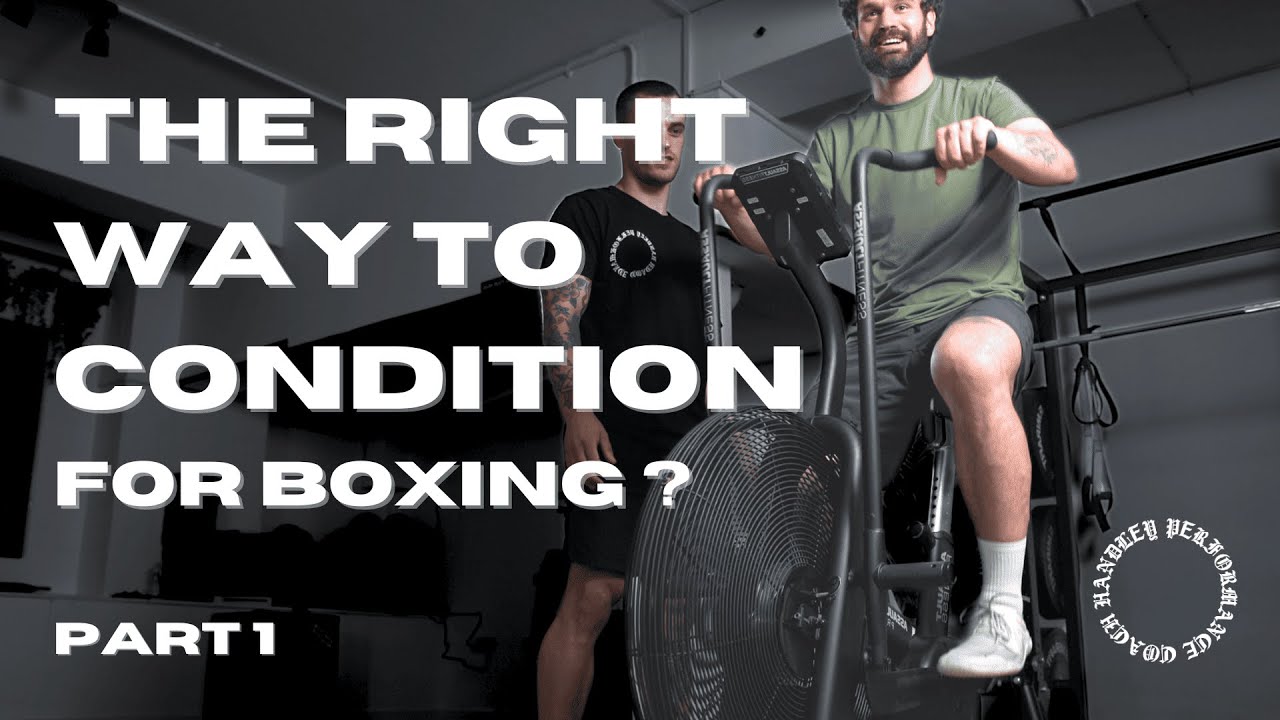
Handley Performance Coach · @handley_performancecoach
Words
1,794
Runtime
9:16
Speaking pace
194wpm
Reading time
7min
194 words per minute, between the 181 median and the 201 75th percentile of 349 measured videos. That distribution comes from the 349-video hook study.
Opening (first 30 seconds)
boxers have been doing their conditioning all wrong or at least inefficiently for far too long. What if I told you that all of the long slow runs and the zone 2 work is giving you less return than you actually think? And what if I told you there was a better way to get results quicker with far less time so you can actually spend time on boxing and developing your skills. And so based on current research, a deeper understanding of physiology, and actually applying this with the boxers I work with for the last
97 words, the words spoken in the first 30 seconds at 194 words per minute.
Free, no signup. See how the first 30 seconds hold attention, with rewrites.
Sentence shape
| Measure | This transcript |
|---|---|
| Sentences | 93 |
| Average words per sentence | 19.3 |
| Longest sentence | 54 words |
| Questions asked | 7 |
| Sentences containing a number | 22 |
Most used terms
Filler phrases
37 in total: actually 19 · like 8 · kind of 4 · basically 3 · uh 3.
A literal whole-word count of the same phrase list the Prepublish browser extension uses, so a phrase inside another word is not counted and a phrase used in its ordinary sense still is. It is a count and not a judgement.
What this transcript is
Every word below is the caption track YouTube publishes for this video, pulled from the video itself and reproduced unchanged. It is not Prepublish's writing, not a summary, and not a re-transcription: it is the video's own published captions. English captions, generated automatically by YouTube, in the video’s original language. Source: the video on YouTube. A channel that would rather this page did not exist can ask for its removal through the contact page, and it is removed.
No Script X-ray for this video: YouTube shows a Most replayed graph only once a video has enough views.
boxers have been doing their conditioning all wrong or at least inefficiently for far too long. What if I told you that all of the long slow runs and the zone 2 work is giving you less return than you actually think? And what if I told you there was a better way to get results quicker with far less time so you can actually spend time on boxing and developing your skills. And so based on current research, a deeper understanding of physiology, and actually applying this with the boxers I work with for the last year, I think there's a far more timeefficient and effective way to condition for boxing.
So let's start with what's traditionally been done. So most boxers would out of camp kind of focus on long slow runs, maybe doing three to five road runs per week. And this is what we'd typically call zone 2 work. Then as the fight gets closer, they start to ramp up the intensity. So whether they add in some intervals, some sprints, or they just replace those long, slow runs with those intervals and sprints. Now, I don't think this is necessarily a bad approach.
I think there's just a more time effective way to go about conditioning, which means you're not spending hours per week just running miles. So let's talk about one of the most common arguments that most boxers and coaches would have for doing this long, slow zone 2 work. And that comes down to the claim that low intensity helps build your aerobic base, which obviously helps with recovery and then sustained energy provision over a long time.
Okay, fair. Like I do think that's a decent argument, but the issue I have with that is how do you actually define this aerobic base that everyone always goes on about? Are we saying this is having a high V2 max? What about a low resting heart rate, even a higher lactate threshold or a better fat max? And don't get me wrong, there's probably correlation between things to kind of combine to have this good aerobic base.
But my point is this. If we can't actually clearly define what we're chasing, why do we spend hours trying to build this aerobic base with slow and inefficient methods? Wouldn't it make more sense for boxers just to condition enough so they can spend the rest of the time on actually developing the skills? Because, as we know, skills pay the bills, and this is what's going to actually make them a better fighter. And so, here's where I think a good understanding of the difference between central and peripheral adaptations really matters.
When you're thinking about central adaptations, we're really talking about adaptations that occur at the heart and the lungs. So, how well you can actually deliver the oxygen to the working muscles. On the counter of that, when we're talking about peripheral adaptations, we're basically thinking about what's occurring at the muscular level and how well you can utilize that oxygen. And when you look into some of the research, particularly by that of Dr.
Andrew Russia, if you haven't already checked him out, make sure you check him out. we can start to see that boxes typically aren't really limited by those central factors. In other words, the heart and the lungs aren't really the bottleneck that causes boxes to gas out. And then I guess this is also reflected in the fact that boxers don't have high V2 max scores. They usually range between somewhere from 49 to 55. And when we compare this to elite endurance athletes like cyclists or marathon runners who usually have V2 max scores of 75 plus, we can see that boxers kind of have a average V2 max score, but they're able to perform at these extremely high levels.
So basically what gives it tells us that the limiting factor isn't the central adaptations, it's the peripheral adaptations particularly how well the muscles can actually utilize or uptake and utilize that oxygen. And essentially what this comes down to is the fact that it's something to do with the mitochondrial content and the efficiency of the mitochondria themselves. And so when we're trying to increase the mitochondrial content and efficiency, there is a bit of research to show that zone 2 and lower inensity work can do that.
And there's arguments online that people say it's more efficient. And I will say that there is research to show that zone 2 does increase these mitochondrial adaptations. But there's two main problems with this. Number one is it takes a lot of time to actually get these adaptations. And number two is it might not even work in well-trained athletes. and will define what a a well-trained athlete actually is. But for those well trained athletes, these lower intensities might not be stimulating enough to actually cause the adaptations at the muscular level.
I've got a paper that's actually going to highlight this and we'll go through this now. Essentially, what it was was a paper by Molman uh last year and it was a systematic review and metagression and the data was analyzed from nearly 6,000 participants across 131 studies and basically what they compared was low to moderate intensity continuous training. So, aka the zone 2 runs or long slow runs. They compared this to highintensity training or hit.
And then they also compared this to sprint interval training. So, they looked at the differences between all three and compared them to each other. And here's I guess what I would say one of the key findings from this whole paper. They found that sit or sprint interval training was 2.3 times more efficient than HIT and nearly four times more efficient than zone 2 or that continuous endurance training. when it comes to developing those mitochondrial adaptations.
And then even more interestingly was for well-trained athletes. So they considered this of a V2 max around 55. Only sprint interval training improved mitochondrial adaptations. So let's let that sink in for a second. SIT was nearly four times more efficient than continuous zone 2 training. And for well-trained individuals, only SIT improved the mitochondrial adaptations. So, what we can kind of gather from that is that if you've been consistently training for a couple of years, even just three to four times a week, chances are you already have a V2 that is near 55 or just below it, which means zone 2 probably is doing jack for you. it's probably doing nothing because the intensity is so low.
It's not enough to stimulate the mitochondrial adaptations which like we mentioned before is where boxes are typically limited by these peripheral adaptations and not by the central adaptations. So I guess you have to ask yourself is what is the jogging actually achieving apart from adding extra kilometers to the legs and potentially just contributing to fatigue. I would argue that it's probably not contributing anything to your overall cardiovascular adaptations.
Mainly because, like I mentioned, most boxers would probably have a good V2 max score already. If you're training three to four times per week for the last couple years, naturally your V2 would have just gone up from boxing itself. And if you really think that you do need this submaximal exposure, this submaximal uh aerobic exposure, you're probably already getting enough exposure from this from boxing itself. So through shadow boxing, pad work, some partner drills, even technical sparring.
Don't forget that all training is training. All training has a stimulus on the body itself. And just because you're not dedicating specific time to zone 2 doesn't mean you're not already getting exposure to that. So you have to consider does adding extra zone 2 or low inensity jogging actually do anything. And this idea was backed up by a recent narrative review. And yes, you obviously have to take narrative reviews with a grain of salt because they're just reviewing studies, but the quality of the studies I thought were quite good, but this is what they found.
And I'll butcher the name, but it was by Stoshook and colleagues, and they noted uh and this is a quote from them. The effect of zone 2 exercise on PGC1 alpha, a key regulator of mitochondrial biogenesis, is unclear. super maximal intensities may be required to induce mitochondrial adaptations in well-trained populations. And so the translation from all of that sciency jargon is if you're well-trained, zone 2 just isn't intense enough to keep pushing the needle.
You need higher intensity methods to actually continue progressing because your body has become so adapt to lower intensity work. Just adding more isn't again pushing the needle to actually see adaptations in your conditioning. And like I said, if you're well trained, so what they mentioned above is a V2 max of 55. And in the next video, I'll show you another way to look at if you're well trained or not. If you're well trained, the low inensity work is just not doing anything for you anymore.
Your body has adapted to it so well that no longer is it considered a stressor upon the body. And then to keep pushing the needle, you need to keep upping the intensity. And this is why sprint interval training and high-intensity interval training is going to be key for boxers that are considered in this well-trained and even moderately trained standpoint. And so what does this mean practically? Well, like I mentioned, if you're a boxer that's already training three to four times per week for the last couple of years, your time is better spent on shorter highintensity conditioning, not just endless running at a lower intensity or even any lower intensity work.
There is some value in it which I'll get to in the next video, but I think time can be far better spent on more timeefficient and effective methods like this higher inensity means rather than just spending hours on these road runs. Because like I said, this will give you more time to actually practice your skills, hone in on anything you need to work on, and actually get better at boxing itself rather than just getting better at the conditioning side of things.
And so, in part two, we're going to break down how you can go over testing. So, the different tests that I usually go through with the boxes I work with, how to structure your conditioning using these highintensity means, and some guidelines on some protocols. Make sure to subscribe so you don't miss part two. And if you've got any questions, drop them in the comments.
The words are the caption track's own and nothing is reworded or re-transcribed. Paragraph breaks are placed between sentences so the text reads as prose.
Free tools for your own script. No signup, no login.
Paste your draft and see where viewers are likely to drop off, with a rewrite for each weak line.
Paste the first 30 seconds of your own draft for a hook score and rewrites.
Check your draft against YouTube's advertiser-friendly guidelines before you record it.
Read this channel's public videos and transcripts, and download a writing brief for it.