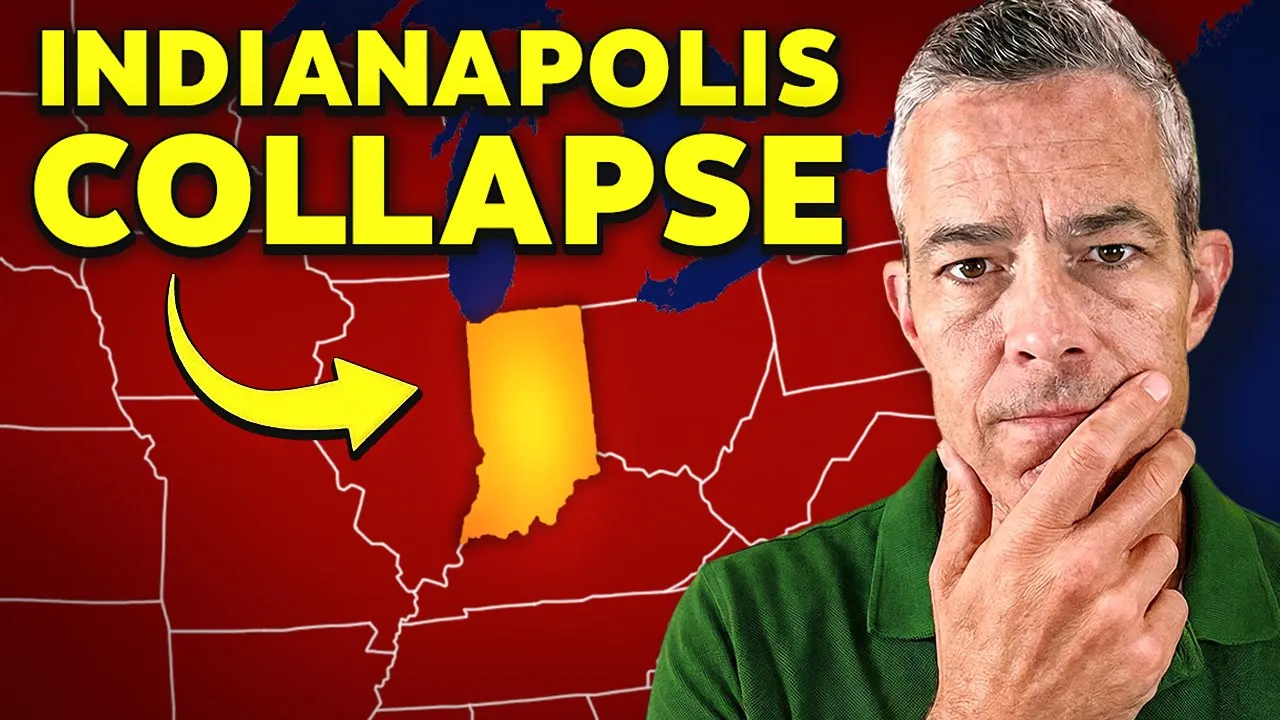
This Will Be Worse Than a Housing Market Crash in Indianapolis transcript
Living In Indianapolis · @LivingInIndianapolis
Words
2,976
Runtime
16:19
Speaking pace
182wpm
Reading time
12min
182 words per minute, just over the 181 median of 349 measured videos. That distribution comes from the 349-video hook study.
Opening (first 30 seconds)
Everyone's been waiting for a housing market crash in Indianapolis, [music] but what's coming next might actually be worse. It's not fast. It's not dramatic, but it's a slowm moving shift that could quietly trap homeowners and blindside a lot of buyers who aren't paying attention. [music] And here's why this could matter far more than a crash ever would. The real threat isn't prices dropping. It's actually affordability [music] collapsing. Even if the prices stay flat, entire parts of the greater Indianapolis metro, they're heading in opposite directions. And it's
91 words, the words spoken in the first 30 seconds at 182 words per minute.
Sentence shape
| Measure | This transcript |
|---|---|
| Sentences | 165 |
| Average words per sentence | 18.0 |
| Longest sentence | 60 words |
| Questions asked | 4 |
| Sentences containing a number | 8 |
Most used terms
- music90
- lot36
- homes21
- areas19
- buyers19
- market17
- prices17
- county14
- affordability12
- growth12
- indianapolis11
- home10
Filler phrases
36 in total: like 22 · actually 7 · kind of 4 · uh 2 · you know 1.
A literal whole-word count of the same phrase list the Prepublish browser extension uses, so a phrase inside another word is not counted and a phrase used in its ordinary sense still is. It is a count and not a judgement.
What this transcript is
Every word below is the caption track YouTube publishes for this video, pulled from the video itself and reproduced unchanged. It is not Prepublish's writing, not a summary, and not a re-transcription: it is the video's own published captions. English captions, generated automatically by YouTube, in the video’s original language. Source: the video on YouTube. A channel that would rather this page did not exist can ask for its removal through the contact page, and it is removed.
Transcript
Everyone's been waiting for a housing market crash in Indianapolis, [music] but what's coming next might actually be worse. It's not fast. It's not dramatic, but it's a slowm moving shift that could quietly trap homeowners and blindside a lot of buyers who aren't paying attention. [music] And here's why this could matter far more than a crash ever would. The real threat isn't prices dropping. It's actually affordability [music] collapsing.
Even if the prices stay flat, entire parts of the greater Indianapolis metro, they're heading in opposite directions. And it's creating a widening gap that most people just don't see yet. And behind the scenes, there are investors. [music] There are long-term structural issues. There's a lot of stuff that are changing neighborhoods faster [music] than buyers even realize. My name is Jason Compton, and I help families, individuals, [music] and investors buy really smart, sell confidently across the whole Indianapolis metro.
Let's jump into what's actually going on beneath the surface. So, let's take a look at this first part. The market isn't crashing. [music] It's stalling in a way that's really more dangerous and possibly disruptive. The Indie Metro home prices, they aren't dropping, but they're [music] really barely moving. And most areas are hovering within a super narrow year-over-year range. Now, stable prices, a lot of people feel like, well, that's fine.
But it's not always a positive sign. And when appreciation stalls out, equity builds very slowly and people lose a lot of flexibility with that. They move lose flexibility to move or upgrade or whatever it is that they want to do. [music] So we're seeing a split market developing across the whole metro. If you look at places like Hamilton County where you find Caramel, Westfield, places like that, it it's still pretty competitive and there's tight inventory, too.
So not a lot to choose from. And that's keeping those prices stable and actually in a lot of cases pushing the prices up. And then if you look at other places like Marian County as an example, it has pockets where some of the inventory is really growing. You get more choices and the demand is softening. That's what's actually [music] causing that. So this widening split between different areas, it makes timing harder.
Buyers, they face affordability issues in really strong suburbs. And sellers in weaker areas, they're going to face a lot slower activity and a lot of price resistance. [music] So the outcome of all of this is just a really stale environment where very few people win. Buyers don't get great deals and sellers, they don't get the bidding wars to get them the great deal that they [music] really want. So, why a stall is more dangerous than a total crash.
[music] Well, a crash, it's painful, of course, but it resets the prices really quickly, and it creates pretty clear entry points. But a long stall, it creates uncertainty, slower equity growth, and fewer opportunities for both buyers and [music] sellers. People stay stuck longer. They're unsure when they want to make a move, which can be a lot worse than a short, really sharp correction. So, now that we've unpacked just a little bit about how Indy's market is quietly stalling, let's look at even the bigger problems out there.
So, affordability is breaking down even without falling prices. [music] And that doesn't make a whole lot of sense to a lot of people really. So, why are flat prices still hurting buyers? Well, the monthly cost to own a home has really jumped dramatically, and that's because, no surprise, mortgage rates are elevated. They are a lot higher than they were just a few years ago. So, if you look at a home that cost $1,600 a month in 2021, it can easily now cost over $2,000.
Even if the sale price hasn't changed at all, we're still looking at monthly payments changing like that. So, this creates an affordability crisis without the market appearing bad on paper, which is why so many buyers just feel really, really stuck. [music] So, that payment shock is freezing the market. And a lot of homeowners, they hold 3% loans or sometimes even less than that. And that's exceptionally low and they just can't justify selling their home when their next payment could sometimes [music] double or at least be a lot higher than what they currently have.
And that affordability gap [music] between a lot of different areas, like we said, is widening. Like Hamilton County, it has some of the strongest schools, strongest amenities or most desirable [music] amenities in the entire state. But the payment gap between these suburbs and places [music] like inside of Marian County, at least certain parts of it, is growing really fast. So even modest homes in places like Westfield, Carmel, and Fisers, they feel really out of reach for a lot of middle-income families [music] once they run the monthly numbers.
Well, meanwhile though, some parts of Marian County, they [music] may appear more affordable upfront, but they can sometimes come with surprisingly higher taxes or aging homes or rising insurance, and it just creates a different kind of long-term affordability issue. So, why this is worse than a crash? Well, a crash again, it lowers the prices and resets affordability [music] really fast. But what we're seeing in indie is a squeeze where prices they stay high and it's enough to hurt the worst case scenario for buyers because [music] nothing becomes easier and it can last years.
So Indianapolis has an aging housing stock problem, but a large portion of Indy's homes, they're anywhere from 30 to 70 years old and sometimes they're a lot older than that. Minneapolis neighborhoods, especially inside Marian County, they've been there a while. So, they're filled with homes that are built between the 1950s and 1980s. Many need really expensive updates. So, if you look at the roof [music] or HVAC or plumbing, electrical, windows is one that sneaks by a lot of people or the siding or you get into foundation repairs.
When these major systems, they start failing at the same time across entire neighborhoods, it creates a wave of costly repairs. And renovation costs, they've [music] skyrocketed like a lot of other things. labor, material prices, they've all increased significantly over the last four years. So, what used to be a $20,000 renovation can now push $35,000 or sometimes up to >> [music] >> $50,000 for the same work.
So, this makes older homes less attractive to first-time buyers and harder for sellers to update before listing. [music] And that's going to add more pressure to an already slowmoving market. Deferred maintenance is piling up in some cases, too, where [music] you got homeowners that have been there a long time. They've avoided large repairs or even some of the smaller ones. So, as a result, more homes are hitting the market with outdated systems, maybe safety issues or some really big ticket items that need kind of immediate attention.
So, buyers either walk away or you see a discount in a in a heavy manner that a lot of sellers aren't willing to price drop enough to really match the condition. When too many homes need major updates, the neighborhood values start to really move unevenly. Some streets get fully renovated and they jump in value and then others decline because of the aging and the home that's really just been ignored [music] and not maintained.
So, this creates unpredictable market conditions that can hurt future resale and trap some homeowners in areas where the equity growth is really stalling. So, let's get into this next part where investors are reshaping in a quiet way entire [music] parts of Indianapolis. That investor activity, it's concentrated in some of these older homes in more affordable [music] areas. So, you have some institutional and small to medium investors.
They [music] target neighborhoods in Marian County where those homes are older and cheaper and they're just easier to convert into rentals. [music] When you look at areas near downtown like Irvington, Found Square, Garfield Park, and parts of the east and some of the south sides too, [music] they've seen some of the highest investor concentrations. The investors, they often purchase [music] homes in bulk, out bidding first-time buyers, and of course, they're going to reduce the number of [music] owner occupied properties in that entire neighborhood, those areas.
Single family rentals are expanding [music] really fast. investors. They're turning traditional single family homes into [music] really long-term rentals, and they're shrinking that inventory that's already really limited for [music] some of those first-time buyers. And as some of these rental portfolios grow, the character of entire blocks can change. You have fewer long-term homeowners, [music] uh, you get more turnover and just a totally different feel for the neighborhood.
So this whole dynamic, it drives rents higher over time and it feeds a cycle where buying becomes harder and even renting becomes more expensive. [music] It's gotten so much more expensive over the past 5 years and we're seeing a lot of renovation to rent type strategies. So those are increasing instead of flipping. So a lot of investors are heavily renovating really outdated [music] homes strictly to rent them out and long-term hold these things not to [music] sell.
And a lot of the renovated rentals, they can look desirable, but the neverto return owner occupied [music] market is keeping that inventory just kind of artificially low. This strategy is especially [music] common where property taxes are a little lower. First-time buyers, they lose their main path really to building equity. When investors purchase the most affordable homes, those are typically the best ones for first-time home buyers.
So, over time, owner occupancy rates, they fall. Local families get priced out of areas they could have afforded just a handful of years ago. Now, the true cost of owning a home in Indianapolis and a lot of places, of course, too, it's rising faster than a lot of people realize. You look at things like property [music] taxes. They're increasing unevenly in places like in Marian County, different parts of it. You've [music] had noticeable tax increases in several neighborhoods and it's driven by a lot of things [music] like rising assessed values, local budget pressures, and then you look out in some of the suburban counties like Hamilton County.
They have a higher baseline tax value [music] anyway and those have climbed too. But Indiana hasn't seen the insurance spikes that you're going to find in coastal states, but rates are still increasing here. And that's [music] due to a lot of things like national underwriting pressure, weather claims, aging housing stock like we've [music] mentioned, older homes with outdated roofs, wiring, plumbing. So, a lot of buyers when they budget, they're budgeting really for the principle and interest only, and they're getting blindsided by a lot of these rising premiums in insurance, and some [music] of the rising taxes, too.
Maintenance costs are escalating rapidly, too. So, aging homes, they just require more frequent repairs, and [music] then the cost of materials and labors has increased sharply. The cost of an annual cleaning and servicing has gone [music] up over the past 5 years and a lot of buyers underestimate all these expenses and of course it leads to some financial strain and then even some regret after they've moved in [music] and close when things like taxes, insurance, maintenance, they rise faster than the income does.
Even if the home prices stay totally flat, the affordability [music] declines. So over time, the rising costs, they can really force some homeowners into to moving unexpectedly and [music] they're going to prevent others from moving at all. So uneven population growth, it's creating really winner and loser areas around Indie. You've got some suburbs that are exploding in demand like Hamilton [music] County communities, Westfield, Fischers, Carmel.
Those are the typical ones. They just continue to attract families because they've got really strong schools, new developments, consistent [music] job growth, really great economies, familyfriendly, and these areas, they see steady demand even when the broader market cools off and keeps prices elevated and the competition pretty high for those [music] places. The areas they want the most are absolutely the hardest to afford.
Meanwhile, parts of Marian County, they're losing momentum because certain Indianapolis neighborhoods, they're experiencing slower population growth or sometimes even population decline. So, as demand softens here, these areas, they face really longer market time, slower appreciation, and a lot more variability in their resale [music] value. But it doesn't mean that these neighborhoods have no future at all. It does mean though that buyers have to be a lot more strategic and cautious.
So, we said the affordability gap is widening and the [music] cost difference between really strong suburban markets and a lot of parts of the city is growing faster than incomes. It really divides the region into two really different markets. One where you've got demand that consistently outpaces the supply and another where demand lags >> [music] >> uh even if the prices are lower. So, over time, this creates really uneven equity growth [music] which can trap homeowners into slower growth areas and it's going to push buyers into smaller, further [music] out suburbs.
So, why is this trend more dangerous than people realize? In a really divided market, some areas really surge, others stagnate or go backwards, [music] and it creates longterm inequality in home equity. And that split makes it harder for families to [music] move up, relocate, or compete financially, even if they've owned a home for years. And this uneven growth is it's happening at the same time as another major issue.
Indianapolis is [music] facing future housing needs that current building trends, what we're seeing right now, just aren't really super prepared to meet. So, these populations moving around [music] and into areas that are growing. The new construction, it's not solving the problem. It's actually making the divide even bigger in a lot of cases because builders are focusing on higher priced homes. really across the greater Indie metro.
Most builders are prioritizing larger single family homes or high amenity communities in suburbs like Westfield, Noblesville, Whitestown, [music] some of the really growing smaller towns. And these homes, they they often start at price points well above what a first-time buyer can afford. Starter homes are nearly non-existent. [music] the cost of the land, materials, labor. It's made true entry- levelvel construction just not impossible, but really a small [music] part of the market.
Builders can't profitably sell new homes in that $250 and $300,000 price [music] range very often anymore. And there are also some areas where permitting and development are kind of slowing in some [music] parts of Indie. So that creates an uneven pipeline where you've got it booming in the northern and western suburbs and the eastern suburbs too like in Hancock County where Greenfield is. But it's going to be slower inside Marian County, at least a lot of parts of Marian County where India is and in older urban corridors.
So long-term this mismatch, it starts to lead to housing shortages in even some high demand areas and [music] over supply sometimes risk of that in others. So it deepens that divide that we're seeing where you've got the high demand suburbs, they just keep accelerating and keep going and the new developments, new amenities, the new jobs, the economic growth keeps fueling them on. And older areas with limited new construction, they fall behind both in the the value and the long-term growth demand.
So why it feels worse than a crash is that there's just no reset [music] point. So no relief in a crash, you at least do, like we said, get those quick price drops, affordability resets. It [music] allows new buyers to enter the market and it happens fairly uniformly. But in Indianapolis, prices are staying high enough to hurt while costs [music] they just continue to rise and nothing is really being reset. So what India is facing and a lot of other places too is really a long-term [music] structural challenge.
It's affordability pressure, aging inventory, investor ownership, uneven growth, slower construction, just all happening at the same time. And these conditions, they can last for years and sometimes even decades if nothing shifts at all. So, what does it all mean if you're thinking [music] about buying or selling in the Indianapolis area? Right now, the Indianapolis housing market's not dealing with a dramatic crash.
It's dealing with something much harder to navigate. Prices [music] that won't reset. They affordability getting squeezed from every single direction. You have aging homes needing major work and minor work. investors [music] reshaping entire neighborhoods, taxes being a concern, insurance going up, uneven population growth, [music] and new construction that is really helping to widen the gap instead of closing it. All of these slowmoving forces add up to a market that can [music] quietly trap people and homeowners if they want to sell and if they don't have a clear strategy.
We study these trends every single day, neighborhood by neighborhood, and we're in these [music] places physically, so you're not blindsided by what's really happening beneath the surface. [music] whatever that is. Just so you know, whether you're buying or selling or you're [music] just trying to plan ahead, reach out anytime. I'll help you navigate all of this [music] by buying smart, selling confidently, and make the move that actually put [music] you in a stronger long-term position.
We'll catch you in the next one.
The words are the caption track's own and nothing is reworded or re-transcribed. Paragraph breaks are placed between sentences so the text reads as prose.
Use this transcript
Three free tools that work on the material around a video like this one. No signup, no login.
Hook Analyzer
Paste the first 30 seconds of your own draft for a hook score and rewrites.
Policy Pre-Flight
Check your draft against YouTube's advertiser-friendly guidelines before you record it.
Channel Skill Generator
Read this channel's public videos and transcripts, and download a writing brief for it.