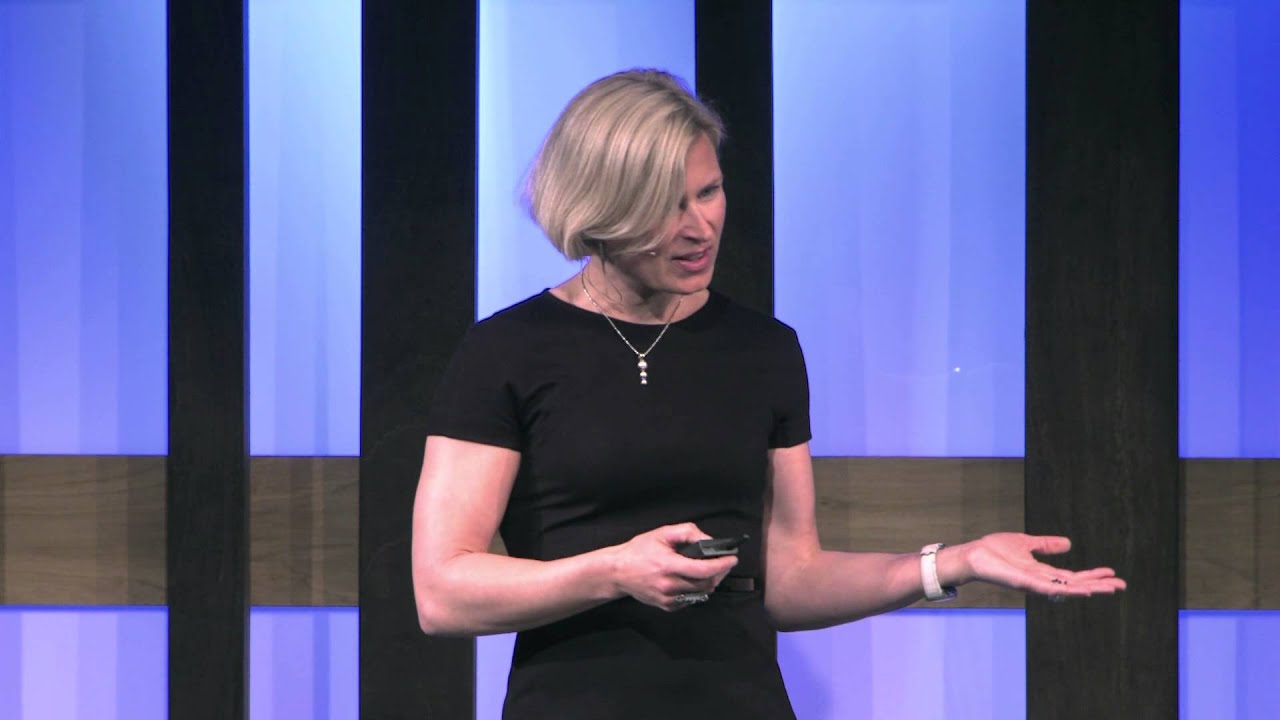
Britta Folmer: How Crema Impacts the Consumer's Perception of Coffee transcript
Re:co Symposium · @RecoSymposium
Words
2,617
Runtime
16:26
Speaking pace
159wpm
Reading time
11min
159 words per minute, below the 160 25th percentile of 349 measured videos. That distribution comes from the 349-video hook study.
Opening (first 30 seconds)
[Music] So, I'm a scientist and as a scientist, I like to look at uh coffee from a different angle. Uh so, I'd like to illustrate this with a little movie. [Music] So what you're hearing is the sound of crema and what you saw with the little bubbles in the crema that were bursting. Now the crema is a very important aspect of espresso coffee. It's important for a barista because he will judge the quality of his extraction
80 words, the words spoken in the first 30 seconds at 159 words per minute.
Sentence shape
| Measure | This transcript |
|---|---|
| Sentences | 150 |
| Average words per sentence | 17.4 |
| Longest sentence | 52 words |
| Questions asked | 7 |
| Sentences containing a number | 2 |
Most used terms
- crema68
- coffee57
- uh31
- cup29
- amount19
- aroma16
- consumer15
- study15
- sensory14
- coffees13
- information13
- um11
Filler phrases
60 in total: uh 31 · um 11 · actually 10 · like 6 · you know 2.
A literal whole-word count of the same phrase list the Prepublish browser extension uses, so a phrase inside another word is not counted and a phrase used in its ordinary sense still is. It is a count and not a judgement.
What this transcript is
Every word below is the caption track YouTube publishes for this video, pulled from the video itself and reproduced unchanged. It is not Prepublish's writing, not a summary, and not a re-transcription: it is the video's own published captions. English captions, generated automatically by YouTube, in the video’s original language. Source: the video on YouTube. A channel that would rather this page did not exist can ask for its removal through the contact page, and it is removed.
Transcript
[Music] So, I'm a scientist and as a scientist, I like to look at uh coffee from a different angle. Uh so, I'd like to illustrate this with a little movie. [Music] So what you're hearing is the sound of crema and what you saw with the little bubbles in the crema that were bursting. Now the crema is a very important aspect of espresso coffee. It's important for a barista because he will judge the quality of his extraction based on the crema.
For a consumer, the crema is also very important because it's it's a big part of his ritual of consuming the coffee. So, some people they will spoon the crema of the cup. Some people they will actually stir it into the cup. Personally, when I drink my espresso, just before I finish it, I'll swirl it around to make sure the last bit of crema gets into the liquid coffee before I finish my cup. So, at Nespresso, we have an extraction system that makes espresso coffee with crema.
We uh we know that this crema is very important for our consumers and we use this in our communications. What we did not know was how the crema impacts the overall sensory experience of the consumer. So from the visual aspect, the smell and the taste of the coffee. So we decided to take a scientific approach to better understand how the crema impacts the overall sensory experience of the consumer. So I will talk you through the sample space, the research approach that we took, the experiments that we did, then I'll show you some results and finally how all of this impacts the appreciation of the consumer.
We wanted to do a systematic scientific study. For this, we had to create a sample space where the base of the coffee was exactly the same, but we had a different amount of crema on each of our coffees. So, we used one blend, a commercial blend. Uh, it's a strong roast and we extracted it one time with our standard espresso machine. And this gave us a nice quantity of creme on the cup. We wanted to increase the amount of crema and to do this we uh had a prototype developed which could extract the coffee at a higher pressure and with this higher pressure we could pretty much double the amount of crema on the cup.
We also had to reduce the amount of crema and to do so we used a filter. We placed the filter between uh on top of the cup so that the coffee when it was extracted it was it went through this filter. So we had a quite coarse filter that would reduce the crema by about about half and we used uh a more fine filter that would completely uh take the crema of the cup. And with monetic sensory profiling we controlled that the liquid of all the coffees were exactly the same.
It was only the amount of crema that was changing from one cup to the other. So we had four cups from going no crema at all to a large amount of crema. We could have done this study by sensory science consumer research but we decided to take a different approach to better understand how the crema impacts the consumer appreciation. So we decided to split our sensory experience into three parts. We have the observational part, the smell and the taste of the coffee.
For the observational part, we did a consumer science study. For the smell, we did an an aroma analysis study. and for the taste both a sensory and an aroma analysis study. Next, I'll explain these this approach in more detail before we move on to the results of the study. So, we wanted to understand how the crema generates expectations on the cup. We did a consumer research study in France. Uh so, we had French consumers.
They were all regular espresso coffee drinkers and we divided them into three groups. The first group was only allowed to visually observe the coffee and they were asked, "What do you expect this coffee to taste like?" The second group, they were allowed to taste the coffee, but they were blindfolded. So, they had no visual information, only in-mouth information. And they were asked, "What does this coffee taste like?" And the third group, they did a standard tasting.
So, they both had the visual observation and the in-mouth information. And by doing this study, we could understand how the visual information would generate expectations and how this impacted the overall sensory experience. To understand the smell of the coffee, we used a methodology called PTRMS, which stands for proton transfer reaction mass spectrometry. And as you know, Crema sorry, Aroma consists of many different uh aroma compounds.
What this PTRMS methodology does is it's it breaks down this smell of coffee into individual compounds. When you're smelling a coffee over a certain period of time, the smell of the coffee changes. So what we did here, we extracted the coffee into a closed cell and then we sampled air from the headsp space and we injected it into PTRMS and we could see how the different molecules changed over time uh when we had a varying amount of crema on the cup.
So we could see how the crema impacted the smell of the of the of the coffee. So finally we did uh we wanted to see the in-mouth information and here we used the sensory methodology called CDS which stands for temporal dominance of sensation. So what we did here we had a trained panel and they were consuming the coffee in seven sips. So they did one sip waited for 30 seconds a second sip 30 seconds. So in three and a half minutes the uh coffee was consumed.
And in each of the sips they were asked what is the dominance in this specific sip. And this way you get information about the dynamics of the whole cup. And an experiment could look something like this. You have one aromatic notes that is dominant in the beginning another one in the middle and a third one at the end. And we wanted to combine this with an analytical method. So here's a picture of Philip. Philip is a scientist in the research center.
And in the research center, they always come up with fantastic new ideas how we can evaluate our coffees. So he's illustrating how you can measure the aroma release retronasally upon drinking the coffee. So he has little tubes injected in his nose. So when he's drinking his coffee, the aromas they are when they're retronasally going, you know, into the nose and we're sampling his nose and the the nose base uh it goes into the PTRMS and we see how the aromas change as a function of time when he's drinking the coffee.
So we use the same panelists as did the sensory study. So they were drinking the coffee in seven sips and we could see how the aroma release in the mouth in the nose was changing depending on the amount of crema. So these were the experiments that we did. Now let's have a look at the results. So we had the consumer study and we asked the consumers to um to describe the strength of the coffee. So what you see here on the y-axis is um the perception.
So, it's either uh just right or it's too strong or it's not strong enough. And you see below the coffees with no crema up to the largest amount of crema. So, the consumers that were only visually observing the coffee, they judged the coffee without crema as being less strong than the other coffees. Now, when we blindfolded them and they only had in-mouth information, all the coffees were exactly the same. And we knew this from the sensory from the monatic profiling.
Now what happened when they were standard when they were doing the standard tasting again the coffee that did not have any crema was judged as less strong than the coffees that did have crema. So the visual information that they expected the coffee be less strong it actually uh went through to the overall tasting and the coffee was perceived as less strong because it didn't have any crema. So then we asked them about the smoothness of the coffee.
So the consumers that were just visually observing the coffee again they didn't expect the coffee to be very smooth the one without crema while the coffees that did have crema were all perceived as more or less the same smoothness. So when we as when we did the blind tasting the smoothness is increasing with the amount of crema. So it's a textural aspect. So it perfect makes perfect sense that the crema enhances the texture and the smoothness of the coffee.
So what happened when we did blind uh the standard tasting? It's actually the visual information is dominating the overall experience. The coffee that does not have any crema is judged as less smooth while the one with just a small amount of crema is judged as smoother than it is in reality. So this way we actually could could see that the visual information from the crema it impacts the overall sensory experience. Now let's look at the smell of coffee.
And you might have read or heard that the crema is a acts as a cover that prevents aromomas from escaping. And what we show is actually just the opposite that the crema helps to release aromomas above the cup. So at the first moments after extraction you see that the red line which is the coffee with crema is above the the line which is white where we have removed the crema. So uh we here we only have two coffees here.
It's with and without crema. And on the y-axis you see the um one aroma marker and the intensity of this aroma marker. And on the y x x-axis you see a function of time. So you see that the at first moments after extraction the coffee with crema actually has a higher amount of aroma above the cup than the white line. Uh at longer times however the coffee with crema is below the line white line which is the coffee without crema.
So here indeed the crema acts as a lid that prevents the aromomas from escaping. However it's an espresso coffee. It's 40 milliliters and after 3 minutes you have your consumed your coffee. So it's not really relevant. Um the last couple of years we have worked on the development of a new extraction system that makes long cup coffee with crema and we wanted to make sure that this long cup coffee with crema also enhances the above cup aroma release.
So you see here it's the same aroma marker uh that we measured and again at short moments after extraction you see even an amplified effect from the smoke cup. there's really an increased amount of aroma above the cup um and the first moments after extraction. So again, this coffee helps to in with the crema here, it helps to release aromomas above the cup. And I do not have any uh data on it, but when you do the experiment yourself and you smell the two two different coffees, it's really quite uh amazing the difference that that the crema brings to the cup.
Um so now let's look at the in-mouth information. So uh remember that we have only one coffee monetic sensory profiling the coffees are all the same. So what happens when the consumer when the ta the panelist is tasting the coffee over seven sips and we have s simplified the um attributes. So we have roasted carbon and bitterness. Um, so what happens throughout the cup when we're increasing the amount of crema? So when we have no crema, we have an a dominance of mainly carbony, a bit of bitterness, the roasted note is much lower in dominance.
When we're increasing the amount of crema, the red line, so the roasted note is moving up. It's moving up again further. And when we have the largest amount of crema, the roasted note is actually dominant throughout the cup. So we see that the crema indeed again enhances the perception of the aromomas when you're consuming your cup. Now we wanted to confirm this with the analytical method. So remember Philipe that had a little nose tubes and um what we saw here and you have to just be aware that it's the same coffee.
There is an interindividual difference between the uh panelists. So when they're consuming the coffee, it's not exactly the same. So we did not expect very big differences here. We do however see two groups. We have on the y-axis the sum of certain aroma compounds and on the x-axis it's the number of sips. We see two groups. The coffees without crema and with a very small amount of crema. They are below the coffees that do have a larger amount of crema.
So again with crema we see enhanced release of aromomas into the nose space when we're drinking the coffee. So this is confirming what we saw with the um the TDS that the perceived uh roasted note it can actually be measured in terms of uh high volatile aroma compounds in the no space. So what does this mean for the consumer? We did not want to study the consumer preference. We wanted to understand how the crema impacts the appreciation of the consumer.
Uh so we saw first with the consumer study that the crema impacts the visual uh information and that this impacts the expectation of the coffee. So the visual cues are very important. We also saw that the crema enhances the aroma release above the cup and in the nose. And you would ask a question, why would this um make a difference? What what does the crema really do? So I just want to show you a little movie again.
Same as before, but we're moving into the cup. We're starting to hear the bubbles that are exploding. So what happens when you extract your coffee is that you have a high amount of aroma volatiles that are encapsulated into the little bubbles. So each time when a bubble is breaking, the aromomas are escaping from the cup. So the molecules are coming out and you're actually having an enhanced perception of the aromomas above the cup.
So I hope been able to illustrate to you that taking a scientific approach to better understand a traditional sensory uh methodology can actually help to better understand the consumer appreciation and also to create new value in coffee. We have used this study the information from this study in our communications to our consumers. We talk about the crema not only in visuals but only how it impacts the sensory experience.
But it also gave us confidence when we're developing a new uh product long cup coffee with crema that there is a really enhanced benefit of having this crema on the long cup as well. Such a study is of course done through the collaboration of many different people. So here we work together uh between the headquarters of Nespresso together with the Nestle Research Center and I'd like to thank all my colleagues that contributed to this work.
Thank you.
The words are the caption track's own and nothing is reworded or re-transcribed. Paragraph breaks are placed between sentences so the text reads as prose.
Use this transcript
Three free tools that work on the material around a video like this one. No signup, no login.
Hook Analyzer
Paste the first 30 seconds of your own draft for a hook score and rewrites.
Policy Pre-Flight
Check your draft against YouTube's advertiser-friendly guidelines before you record it.
Channel Skill Generator
Read this channel's public videos and transcripts, and download a writing brief for it.