Getting the transcript
Reading the captions from YouTube. A video nobody has opened here before takes 10 to 30 seconds; this page fills in on its own.
Getting the transcript
Reading the captions from YouTube. A video nobody has opened here before takes 10 to 30 seconds; this page fills in on its own.
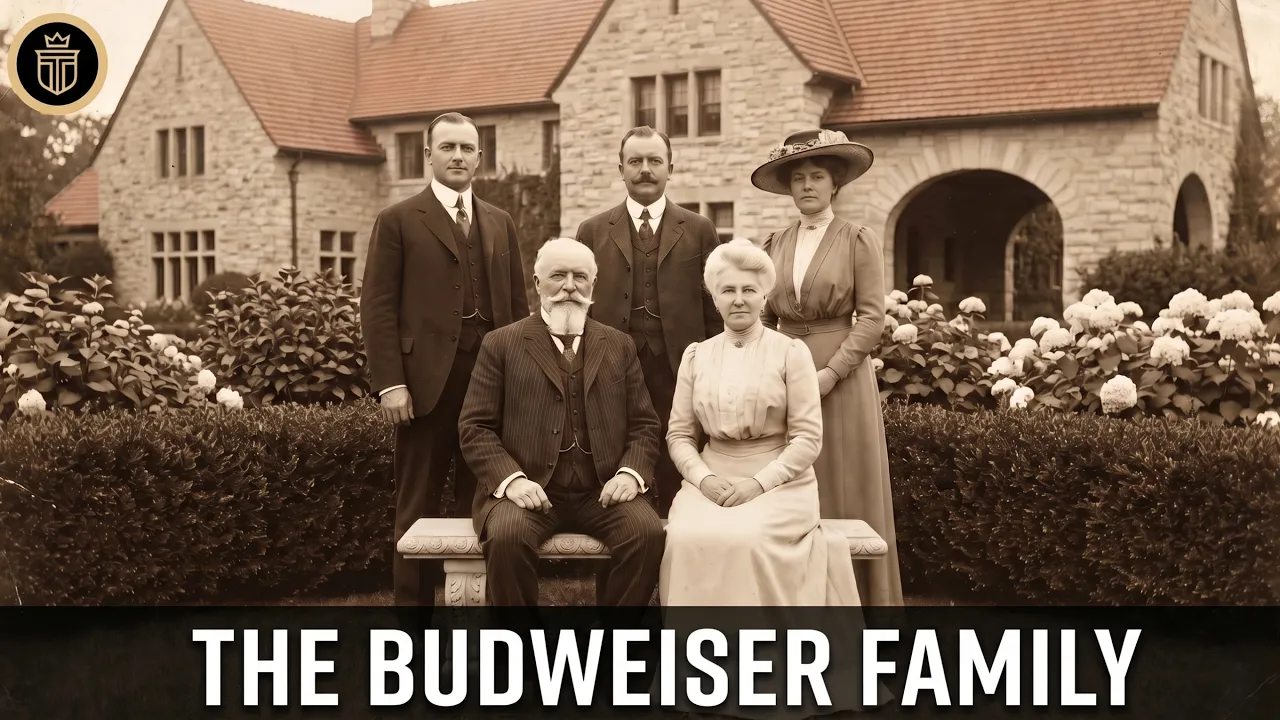
Old Money Documentaries · @OldMoneyDocumentaries
Where viewers went back to watch this video again, from YouTube's public Most replayed graph, lined up with what was said at that moment.
Most replayed moment #1
10:4112.8x the video's typical replay level
pasteurization to beer production. By heating the finished beer to a precise temperature sufficient to kill spoilage organisms without affecting flavor, Bush gave Budweiser a shelf life that other beers simply did not have. It could be
Said at 10:35
Most replayed moment #2
5:5612.2x the video's typical replay level
no longer merely as a supplier, but as a family stakeholder. And in 1864, he joined the company in an official capacity as a salesman. He was 25 years old, married into the brewery's ownership, and now drawing a salary from the same company he had previously
Said at 5:50
Most replayed moment #3
50:2512.1x the video's typical replay level
months of investigation, the Puma County Sheriff's spokesman, Jim Howard, announced simply that the case was closed because there was insufficient evidence to file manslaughter charges. The family had dispatched its legal team. Tucson residents noted the closure
Said at 50:19
The graph counts replays. It does not show where viewers stopped watching.
Words
9,630
Runtime
59:19
Speaking pace
162wpm
Reading time
40min
162 words per minute, between the 160 25th percentile and the 181 median of 349 measured videos. That distribution comes from the 349-video hook study.
Opening (first 30 seconds)
On an estate outside St. Louis, a cannon fires every time the master of the house returns home from a trip. His name is Adulus Bush, and he carries business cards that read simply, "Adulus Bush, your friend." He travels in a private railroad car, builds his own glass factories, owns his own coal mines, and ships beer to every corner of a continent in a refrigerator car fleet he designed himself. When he dies in 1913, 6,000 of his employees
81 words, the words spoken in the first 30 seconds at 162 words per minute.
Free, no signup. See how the first 30 seconds hold attention, with rewrites.
Sentence shape
| Measure | This transcript |
|---|---|
| Sentences | 486 |
| Average words per sentence | 19.8 |
| Longest sentence | 62 words |
| Questions asked | 0 |
| Sentences containing a number | 111 |
Most used terms
Filler phrases
16 in total: kind of 9 · like 5 · actually 1 · literally 1.
A literal whole-word count of the same phrase list the Prepublish browser extension uses, so a phrase inside another word is not counted and a phrase used in its ordinary sense still is. It is a count and not a judgement.
What this transcript is
Every word below is the caption track YouTube publishes for this video, pulled from the video itself and reproduced unchanged. It is not Prepublish's writing, not a summary, and not a re-transcription: it is the video's own published captions. English captions, generated automatically by YouTube, in the video’s original language. Source: the video on YouTube. A channel that would rather this page did not exist can ask for its removal through the contact page, and it is removed.
On an estate outside St. Louis, a cannon fires every time the master of the house returns home from a trip. His name is Adulus Bush, and he carries business cards that read simply, "Adulus Bush, your friend." He travels in a private railroad car, builds his own glass factories, owns his own coal mines, and ships beer to every corner of a continent in a refrigerator car fleet he designed himself. When he dies in 1913, 6,000 of his employees march in his funeral procession and 25 delivery trucks are required to transport the flowers.
His estate is the largest ever probated in the state of Missouri. 95 years later, in the summer of 2008, the American company he built will be sold to a Belgian conglomerate run by Brazilians for $52 billion, and an entire city will mourn as if it has lost a member of its own family. Between those two moments lies a story of suicide, fatal car crashes, palace coups, lost blood samples, [music] and a great grandson who stood in front of his employees and promised that the company would not be sold on his watch.
This is the story of the Anheiser Bush dynasty. Adulus Bush was born on July 10th, 1839 in the Riverside town of Castell near Mates in the Grand Duchy of Hessa. He was the second youngest of 21 children born to Olrich Bush and his second wife Barbara Feifer. His father was a prosperous wholesale dealer in wine and brewery supplies, a respected landowner and inkeeper whose business instincts ran deep. In a family that large, the estate would always be divided and the inheritance diluted, and younger sons were expected to forge their own paths.
What separated Adulus from his many siblings was the education his father could afford to give him, exposure to the finest institutions in Europe. He attended the gymnasium at Mes, [music] the academy at Dharmmstat, and the collegiate institute of Belgium in Brussels, trained in languages, accounting, and the logic of commerce. Before he ever left Germany, he had apprenticed in a brewer's supply company his father owned and worked in a merkantile house in Cologne.
He arrived in America having absorbed almost osmotically [music] the entire vocabulary of the brewery supply trade, knowing the names of the equipment, the language of the suppliers, and the margins on the materials without yet having brewed a single barrel of his own. It was an unusual preparation for an immigrant because most German immigrants of the period arrived in America with practical trades and very little capital.
While Adulus arrived with limited practical trade experience and a merchants's eye for systems and margins, he was in effect an MBA student in an era before the MBA existed. In 1857, when he was 18 years old, he sailed from Germany with three of his older brothers. They crossed the Atlantic and landed not at New York, but at New Orleans. Then traveled north up the Mississippi River to a city that had been chosen with calculation rather than chance.
St. Louis in the 1850s was the American city most defined by German immigrant culture. A place where German was spoken on street corners, German newspapers circulated widely, and demand for Germanstyle beer was insatiable. The city also possessed two natural resources that made it perfect for brewing. The cold, clean waters of the Mississippi and the ice that could be harvested from the limestone caves used for laga storage.
Adulus arrived broke by the standards of the immigrant entrepreneur. But he carried something more valuable than capital, which was fluency in the trade. He found work as a clark on the St. Lewis Riverfront, the commercial artery where brewery supplies moved daily and spent 2 years building contacts and learning the local market. When his father died and a modest inheritance arrived from Germany, he moved quickly to establish his own brewery supply company in partnership initially with a man named Ernst Venberg and then with his brother Olrich.
One of his first major customers was a fellow German immigrant struggling to make a go of a troubled brewery on Pestalotti Street, a man named Ebahard Anheiser. Annheiser was not a brewer by training, but a successful soap and candle manufacturer from Cron who had immigrated to St. Louis in 1843 and built a comfortable fortune in the cleaning supply trade. His entanglement with beer had been accidental, the result of extending credit to the financially struggling Bavarian Brewery Company and finding himself, when the brewery could not pay, somewhat against his will, the owner of a beer operation.
He renamed it e Anheiser and Company in 1860 and ran it with the competence of a businessman rather than the passion of a brewer, which explains why it remained a middling local operation through the early 1860s. On March 7th, 1861, in a ceremony that would alter American business history in ways nobody present could have foreseen, two sets of siblings married two other sets of siblings. Adulus Bush wed Lily Anheiser, [music] his customers daughter, a woman he had met through the supply business.
On the same day, in the same ceremony, his brother Olrich married Lily's older sister, Anna Anheiser. It was a double wedding that combined two families at the altar before combining them at the boardroom table. A merger by marriage long before it would ever be a merger by contract. That same year, the American Civil War erupted and Adulus, despite his recent arrival and his German heritage, despite having little obvious personal stake in the American conflict, enlisted in the Union Army and served as a corporal before being discharged.
It was a declaration of allegiance more than a military career. The kind of gesture that announced this man was choosing America. When the war ended, he returned to his father-in-law's brewery, no longer merely as a supplier, but as a family stakeholder. And in 1864, he joined the company in an official capacity as a salesman. He was 25 years old, married into the brewery's ownership, and now drawing a salary from the same company he had previously served as a supplier.
The configuration was exactly the kind of conflict of interest that a careful businessman would resolve in his own favor. And Adulus was a careful businessman. Within a few years, he would absorb the brewery into the orbit of his own ambitions, restructure its operations, and begin a transformation that would make Ebah Anheiser's name a footnote in the empire of the man who had married his daughter. The salesman would soon become the strategist, and the strategist would soon decide that the brewery's beer was not good enough for the empire he intended to build.
Adulus Bush's first act as a salesman was diagnostic. He recognized that Ebahad Anheiser's [music] brewery was producing a product that was at best serviceable and at worst indistinguishable from dozens of other local laggers. To thrive in the market he saw coming, the brewery needed not just better distribution, but a better beer. One with a story attached, an identity that could command loyalty rather than merely satisfy thirst.
The answer arrived in 1876 when Adulus and his friend Carl Conrad, a German-born wine and liquor importer with refined tastes, took a research trip to Bohemia in the Austrohungarian Empire. They visited the brewing city of Budweis known today as Cheske Buddhajiche in the Czech Republic where brewing had been practiced since at least 1265 and where the local laggers were celebrated as the beer of kings. The beer was pale, clean, and effevescent.
Strikingly different from the heavy dark German laggers most American breweries were producing. Bush and Conrad recognized its appeal immediately. A beer for the German and Czech immigrant communities of St. Lewis who were homesick for the bright crisp laggers of central Europe and for a broader American market that was gradually developing beer drinking sophistication. They developed their own recipe [music] light and filtered made with a blend of barley malt and adjunct rice for crispness and Conrad registered the trademark Budweiser Laga beer [music] with the United States Patent Office in 1878.
Conrad held the trademark and Anheiser's brewery manufactured the product, an arrangement that lasted until Conrad went bankrupt in 1883 and Adulus acquired the trademark outright. By 1891, the Anheiser Bush Brewery owned the Budweiser name in America in perpetuity, a position the company would defend in court for the next century and a half. A Czech brewing dispute over the name would continue across that entire period with Bohemian brewers correctly arguing that they had used the word Budweiser for 600 years before Carl Conrad had ever tasted a drop of their laga.
But in the American market, the trademark was secured. The name itself meant from Budweis in German and Bush was cleareyed about the marketing. He was not claiming to be making a Czech product. He was evoking the oldworld prestige of Bohemian craft laga for an American market hungry for the familiar. The slogan he eventually deployed, the king of beers, was itself a cheeky inversion of what Czech brewers had been calling their product for centuries, the beer of kings.
Adulus Bush had taken their heritage, inverted their slogan, and built one of the most recognizable brand identities in human history. It was marketing genius of the First Order. The slogan migrated from a niche claim about a particular German Czech style of brewing into a universal claim about the beer itself, packaged in the increasingly familiar red and white label that would become one of the most reproduced commercial images in human history, traveled along behind the slogan into bars and grocery stores in cities Adulus had never personally visited.
But marketing genius without a way to deliver the beer was merely a clever idea. and beer in the mid-9th century faced a problem of pure physics. Without refrigeration, Laga could travel perhaps a few dozen miles before becoming undrinkable. Every regional brewer was by necessity a local brewer, bounded by the radius within which his product could survive the trip from cellar to glass. Adulus Bush decided to solve the logistics problem so thoroughly that geography itself would become irrelevant.
His first critical move came in 1872 when he became among the first American brewers to apply Louis Pastor's newly published theory of pasteurization to beer production. By heating the finished beer to a precise temperature sufficient to kill spoilage organisms without affecting flavor, Bush gave Budweiser a shelf life that other beers simply did not have. It could be bottled, crated, and shipped hundreds of miles without souring.
This single technical innovation was the foundation of everything that followed. The brewery on Pestalotsi Street, run by a soap manufacturer who had stumbled into beer, was about to become an industrial enterprise that would reshape the geography of the American drink trade. The beer of a Czech city would become the beer of an American century. And the salesman who had come from Hessa with nothing but a vocabulary was about to demonstrate that he understood something his contemporaries did not.
A brewery, he had decided, was something much larger than a place where beer was made. It was the center of a system, and the system was about to swallow most of the American beer industry whole. The beer itself would carry the brand, and the brand would carry the story, but the system underneath the story would be what allowed Anheiser Bush to do what no American brewer had ever done before. sell a beer brewed in one city to drinkers in every other city in the country with the same taste in the bottle on the day it arrived as on the day it left the brewery.
It was an exercise in patient capital deployment that would not become commonplace in the American beer industry for another 50 years and that in the meantime would give Annheiser Bush a head start so large that no domestic competitor would ever fully close it. Most of his competitors did not yet understand what he was building. A few of them, mostly the Germans who had been in the trade for generations, understood it perfectly and were already terrified because they could see in the patient, methodical way Adulus accumulated his railroads and his ice plants and his glass factories, the outline of a machine that would render their local breweries obsolete inside of a decade.
The machine was not yet finished, but it was already further along than anyone outside St. Louis understood, and it was only just beginning. The second critical move was refrigerated transport. In 1877, Anheiser Bush began shipping beer by railroad. And a year later, recognizing that he could not rely on third party rail equipment, Bush founded the St. Louis Refrigerator Car Company, and built his own fleet. By the early 1880s, he owned roughly 250 refrigerated cars, insulated rolling stock with ice bunkers at each end, serviced at a network of icing stations placed at regular intervals along the rail lines across the Midwest and into the east.
Other companies products use this infrastructure too, the armor meatacking empire among them. But it was Bush who built the network and Bush who controlled the terms. Then he began expanding into every supporting industry his empire required in a pattern of acquisition that would have been familiar to any of his industrial contemporaries. Rather than purchasing bottles at market prices, he built his own glass manufacturing operations [music] and the Adulus Bush glass factories became significant regional industrial concerns in their own right.
He built ice plants alongside the glass factories, ensuring a controlled yearround supply of the refrigeration his distribution network depended on. He acquired coal mines in Illinois and the rail lines to connect them directly to the brewery's boilers in [music] St. Louis, eliminating the middlemen in his energy supply. He built his own bottling works, controlling the packaging process and eliminating the independent bottlers who had previously captured a portion of the margin.
A local St. Louis joke of the era captured the scale of what Bush had assembled that the city was a large city on the Mississippi located near the Anheiser Bush plant. The brewery complex on the St. Louis Riverfront eventually covered 70 acres. A city within a city producing its own electricity, its own ice, its own glass, and its own rail connections. All in service of shipping beer to every corner of a continent. This model, the vertically integrated supply chain dominant industrial conglomerate was being pioneered simultaneously by his contemporaries Andrew Carnegie in steel and John D.
Rockefeller in oil. The three of them were without explicit coordination, demonstrating to American capitalism what the modern industrial corporation actually was. Not a company that made a product, but a network that controlled every input required to make the product, every step in the production process and every channel through which the product reached the consumer. Adulus Bush belonged in that company. He was not a brewer who became a businessman.
He was a businessman who chose beer as his medium. The distinction matters because it explains why Anheiser Bush thrived when dozens of purely craft focused competitors withered. By the turn of the century, the brewery was producing more than 1 million barrels of beer annually. The first brewery in American history to cross that threshold, surpassing its main rival, PBS Brewing, by a measurable margin. Its workforce numbered in the thousands, and its refrigerated distribution network reached every state in the union.
Budweiser was no longer a St. Louis beer. It had become an American beer, the first truly national brand in the industry's history. And the man who had built it understood [music] that the next problem was not how to make more of it, but how to defend it. He cultivated relationships with distributors, politicians, and competitors with the same energy he applied to supply chain management. He carried business cards that read, "Adulus Bush, your friend," and meant it in a way that made the receiver feel the friendship was genuine.
His personal charm was a business instrument. He was a natural showman, and his life was a constant performance for an audience he had handpicked. He had a cannon fired on the grounds of his estate every time he returned home from a trip. He traveled between his St. Louis mansion and his Ry Valley estate in a private railroad car of imperial comfort. He received Kaiser Wilhelm II's personal representative at social functions as an equal.
He funded a building at Harvard University known today as the Bush Risinger Museum with a gift of $265,000, an act of cultural diplomacy from the German immigrant who had become the king of American beer. With his wife Lily, he built the Villa Lily, a 39 hectare estate in the hills above Bad Schwallbach in Hessa, not far from where he'd grown up. Designed as a summer residence and named in her honor, the estate began construction in 1891 and expanded over the following two decades into a full compound of mana houses, farm buildings, staff residences, and a private fairy tale park where he and Lily spent summers with their 13 children.
He and Lily entertained visitors there whose social standings spanned continents, German industrialists and American senators and European aristocrats sitting at the same long tables. The entire performance staged by a man who had once worked as a cler on the St. Louis riverfront and who now received the personal representatives of an emperor as social equals. His wife Lily was the emotional anchor of the empire, a quiet, steady presence to whom he wrote long, affectionate letters from his many travels.
He named his greatest estate after her. He named his finest beer after a city he had visited with an eye toward feeding the homesickness of immigrants. Both names spoke to a man who understood that loyalty, sentiment, and identity were as important to a business empire as cold storage and pasteurization. It was at Villa Lily that the king of American beer would die. By the summer of 1913, Adulus Bush's health was failing.
The dropsy that had dogged him for years was worsening alongside heart disease, and he continued to travel to manage and to correspond despite the obvious decline in his vitality. He spent his final months at the Villa Lily in Bajalbach in the hills of Hessa in the country he had left 56 years earlier. He died there on October 10th, 1913 at the age of 74. His body was imbalmed at the estate and a local legend persists, unverified but enduring, that his heart was literally left in the German soil he had loved.
His coffin was transported to America in 1915 for final burial in St. Louis. The obituaries were extraordinary in their scope. The German Kaiser sent his personal representative to pay respects. The president of the United States dispatched condolences. 6,000 employees of Anheiser Bush marched in the funeral procession through the streets of St. Louis. 25 delivery trucks were required just to transport the floral tributes sent by associates and admirers from across two continents.
His estate was valued at more than $50 million, the single largest estate ever probated in the state of Missouri at a time when a factory worker earned perhaps $500 a year. It was a fortune that put him in the company of the Rockefellers and Carnegies he had so closely emulated. What he left behind was more than money. He left a mythology, the immigrant who came with nothing and made the most American of all beverages into a national institution.
He left an infrastructure of refrigerated rail networks, glass factories, ice plants, and coal mines that would serve his heirs for generations. He left a family of 13 children and a dynasty still uncertain about who among them had the steel to hold the throne. The son who inherited the chief executive role, August Senior, was a capable man. But the business he had inherited was about to be tested in ways that even his father, with all his gift for prediction, had not foreseen.
He also left a problem his heirs could not have anticipated, a deep and very public German identity that was about to collide with the worst possible moment in American politics. At the 1912 cornerstone ceremony for the Adulus Bush Hall at Harvard, the Germanic cultural museum he had funded as a monument to German American friendship. Adulus had publicly declared before the assembled dignitaries forever live the good on taunt between Germany and the United States.
The building had barely been completed when America entered the First World War in 1917, transforming the gift from a cultural ornament into a symbol of divided loyalties. Harvard officials were placed in the awkward position of having their most prestigious German cultural facility. Funded by the most famous German American businessmen in the country, standing as an emblem of everything the nation now considered suspect.
The Bush family and the broader German American brewing industry were subjected to suspicion, surveillance, and social ostracism during the war years. To be German and a brewer in 1917, America was to be doubly damned. suspect on grounds of ancestry and suspect on grounds of industry because the temperance movement had long associated saloons and beer culture with German political manipulation. One contemporary account described the brewers as being in very bad odor on patriotic grounds, noting that their industry association had been caught in an attempt to buy a newspaper to influence public opinion.
August Bush Senior, who had inherited the company on his father's death in 1913, weathered the war years by purchasing Liberty Bonds and maintaining conspicuous public loyalty to the American war effort. The family dispatched its connections and its checkbook and passively weathered the storm. Americans by allegiance and Germans by ancestry, knowing the wave would pass. They were right. But the years of suspicion left a residue of anxiety about the family's perceived foreign allegiance, the buried wire of the dynasty's German roots, the thing nobody quite spoke about and nobody could fully erase.
The mythology of the German immigrant who had become an American titan had served the family beautifully during Adulus' lifetime when the immigrant story was the most American story there was. It would serve them less well in a country newly suspicious of any allegiance that crossed the Atlantic in the wrong direction, and the family would spend the next several decades quietly distancing itself from the most visible markers of its origins.
The German name on the bottles would remain, the German hall at Harvard would remain, and the Villa Lily in Hessa would remain. But the public performance of Germanness, which Adulus had cultivated as a point of [music] pride, would never quite return. It was an anxiety that would surface again in a darker form a generation later. And it was about to be joined by a second crisis far more existential to the business itself.
The patriarch was 4 years dead. The country had spent 2 years at war with his native Germany. And the temperance movement that had been organizing for half a century was about to deliver the coup that no foreign army had ever managed. In January 1919, the United States Congress ratified the 18th Amendment, and the country that had drunk Adulus Bush's beer for 50 years made it illegal to brew the stuff at all. The immigrants monument had been completed only 6 years before it would be expected to function in a country that had outlawed his life's work.
[music] And the son he had left to manage it now faced the question of whether a brewery could survive in a country that had banned brewing. Where competitors folded, collapsed, or disappeared during the era of prohibition that began in January 1919, August Bush Senior refused. The LMP Brewery of St. Lewis, once Anheiser Bush's most formidable rival, simply surrendered and shut its doors. August Senior reportedly told his employees, "We'll make shoelaces if we have to, but I'll never close this plant." That stubbornness proved precient.
Anheiser Bush pivoted with astonishing speed and breadth. The company launched Bivo, a near beer cereal beverage that became by far the most popular of its kind, selling over 5 million cases annually at its peak. It diversified into baker's yeast, a product that would eventually save the company financially by becoming one of the nation's dominant yeast suppliers. It produced malt syrup explicitly marketed for home baking, which everyone in the country understood was shorthand for home brewing.
The company also pivoted into ice cream, soft drinks, corn products, truck bodies, refrigerator cabinets, carbonated coffee, frozen eggs, baby formula, and even the Lambsteed camp car. an early camper attachment designed to bolt onto the back of Model T Fords. Between 1920 and 1927, more than 26 new products were introduced to keep the workforce employed and the lights on. The Baker's Yeast operation, in particular, proved so successful that it generated significant profits throughout Prohibition and positioned the company as a major food manufacturer independent of alcohol.
The pivot was so thorough that by the early 1930s, August Senior could plausibly have made the case that Anheiser Bush was no longer a brewery at all. It was a diversified consumer products company that happened to have very large dormant fermenting [music] tanks in St. Louis. By the time Prohibition ended on April 7th, 1933, [music] when the Cullen Harrison Act legalized beer of 3 and 2/10% alcohol, Anheiser Bush was ready.
The equipment had been maintained, the distribution network had been preserved, and the workforce was intact. The very day after repeal, more than 3,500 barrels of beer rolled out of the St. Louis plant. A team of horses pulled a red delivery wagon through the city's streets and a case of Budweiser was sent to President Roosevelt at the White House. The horses were Clydesdalees, the first Budweiser Clydesales, gifted to the company by August Senior's sons, August Jr. and Adulus III, as a surprise on the exact day beer was legalized again.
The old man wept when he saw them. The imagery was perfect and permanent, the team and the wagon and the case for the president, an American icon born on the very day the American beer industry came back to life. But August Senior did not live to see the full fruits of his perseverance. After years of battling heart disease, gout, and dropsy, the same constellation of ailments that had slowed his father, and exhausted by the relentless strain of steering the company through its most perilous era, he took his own life on February 13th, 1934 at Grant's Farm, the palatial family estate outside St.
Louis. He was 68 years old. He shot himself with a 32 caliber revolver beside his bed, leaving an unsigned note that read, "By precious mom and adorable children." The New York Times reported it the following morning under the headline, "August Bush ends life with pistol." St. Louis police, with the mortant familiarity of men who had seen this before, noted that so many German American brewers had killed themselves in the years following prohibition that they had a grim term for it.
They called it the Dutch Act. The phrase was not kind, but it captured something real. The particular despair of a generation of immigrant entrepreneurs who had built their empires precisely on the product their adopted country had decided to criminalize. The St. Louis Brewers had been a tight community, German speakers and German named men whose families had shared neighborhoods and synagogues and Lutheran churches for two generations. and the suicides ran through that community like a slow contagion.
The Clydes Dales given to him just one year earlier as a celebration of survival had become by the time the year was out the legacy of a man who had survived everything except the survival itself. The throne now passed to his son Gussy, the man who would manage the company for the next four decades. Gussy was the son who had given his father the Clydesales on the day of repeal, the one who had wept when his father wept.
And now in the immediate aftermath of the suicide, he stepped into a role that nobody in the family had truly prepared him to occupy. He inherited a brewery and with it the memory of two men, the immigrant grandfather who had built the empire and the father who had refused to close it during the dry years and had paid for his refusal with his life. He would run the company for four decades. He would make it the dominant American brewer of the postwar generation.
He would manage the St. Louis Cardinals and become one of the most beloved figures in the city. He would also in time [music] become a man very much like his father, warm and expansive in public, exhausted and grief haunted in private. And when the question of succession finally came, he would find himself displaced by his own eldest son in a campaign of the kind that the Bush family had quietly perfected. That eldest son was on his way.
In 1937, 3 years into Gussy's reign, his first wife would give birth to a boy whose Roman numeral August Bush III would one day be whispered through the corridors of Anheiser Bush with something approaching dread. Bush III was born on June 16th, 1937. The son of Gussy and his first wife, Elizabeth Dozier, whose own nickname carried the family's marketing instincts into the cradle. She was called Budweiser. He was nicknamed Orgie in his youth and acquired a more ominous moniker later among Anheiser Bush employees and subordinates three sticks.
A sardonic reference to the Roman numeral he carried after his name and to a man who gave orders rather than absorb them. He was by temperament and design nothing like his father. where Gussy was warm, expansive, a performer who loved the crowd and the Cardinals and the theater of American life, August III was cold, precise, and intensely interior. A man who ran a brewery the way a general runs a campaign with no sentiment for civilians.
He began at the company not as an executive in waiting, but on the brewery floor. By his own account and the company's official history, he started as a union employee in the molt house, then worked as a brewer, deliberately learning the production process from the bottom up. He was convinced, rightly as it turned out, that he needed to understand every link in the chain before he could command it. He moved into the marketing department in 1962, was named vice president of beer marketing in 1963, and was elected to the board of directors at the age of 25, the same age at which family tradition expected its heirs to achieve their first milestone of corporate responsibility.
The ascent was orderly and accelerating, and to outside observers, it looked like the natural elevation of a competent son into the family business. To those inside the company, it looked like something more deliberate. August III was, by the time he was in his early 30s, already running the practical day-to-day operations of the brewery, while his father attended to the Cardinals and the Clydesales, and the public-f facing performance of being Gussy Bush.
The son was learning the muscle of the company. The father was performing the soul of it. By 1974, he was 37 years old, had been inside the company for 18 years, and commanded the respect and the fear of the company's board. He was watching his father's grip slip. The corporate and personal crises that would make a coup possible converged that year with grim efficiency. On the financial front, Annheiser Bush's first quarter profits had dropped sharply to 12.5 million from $18.5 million the year before, a decline of 31% that alarmed shareholders and gave board members ammunition to question Gussy's continued effectiveness.
The company's market share hovered around 23%, far below what critics believed it could achieve. A former vice president of marketing, Ed Vogel, told Forbes magazine that year that Gussy had become more interested in his debt to equity ratio and in keeping control of the company than in expanding the business. If Gussy had followed his marketing chief's advice and built bigger breweries, Vogle argued Anheiser Bush would already have captured half the American beer market.
Richard Meyer, the president of the company, resigned that year in a public dispute that further destabilized the leadership structure. August III stepped into the vacuum and was named president of Anheiser Bush. He was now nominally second in command, while Gussy retained the titles of chief executive officer and chairman. Then, in the autumn of 1974 came the event that truly broke Gussy's will to fight. His youngest child, 8-year-old Christina, was riding home from school in the family's chauffeur driven car when it was involved in an 8car pileup accident.
Christina and the chauffeer were killed. Another of Gus's sons, Andrew, survived. The old man was 75 years old, already showing the slowing that comes with age, and the death of his youngest child devastated him in a way that those who knew him said he never fully recovered from. His attention, his focus, and his fierce animal vitality all dimmed in the months after Christina's funeral. The grief was visible to the board and visible most of all to the eldest son, who had spent 18 years preparing to take what his father was no longer fully able to hold.
It was in the months after Christina's funeral that August III would begin actively moving against his father in a campaign that the historians Peter Hearnen and Terry Gayy would later document in detail. The vehicle would be a strategic disagreement that Gussy himself had created. The old man, exhausted and grieving, had begun seriously considering selling Annheiser Bush outright to R.J. Reynolds, the tobacco and consumer goods conglomerate.
August III was appalled. The RJ Reynolds approach was the kind of strategic decision that in August the third's view should never have been on the table. It was the kind of decision that an exhausted 75year-old man distracted by grief and uncertain about his own competence might allow himself to make. It was also, in his son's estimation, evidence of exactly the kind of impaired judgment that the directors needed to recognize.
The son had not spent 18 years learning every malt house and marketing channel in the company to watch his father surrender it to tobacco men for a check. He had not spent his entire working life inside the brewery in order to inherit a portfolio of cigarette brands. He was about to do something about it. In the months following his sister Christina's death, August III began circulating among board members the suggestion that his father was mentally unfit to continue leading the company.
He used his father's visible grief and erratic behavior as evidence of unfitness for command in a move that those who later wrote about it described as worthy of Machaveli. He lined up the votes patiently and managed the optics of an aging father's decline. Senator Tom Eagleton, the Missouri Democrat and political ally of the Bush family, was consulted informally about whether Gussy had legal grounds to contest a removal through a lawsuit or a proxy fight.
No action was taken. In May 1975, the board of Anheiser Bush convened and voted. The official statement released with studied blandness noted that August Gussy Bush Jr., aged 76, had passed the title of chief executive to his son, then 38. The company looks forward to many years of continued close association of Mr. Bush Jr. with the company that he has built over the years. The board of directors said Gussy was allowed to retain his perks, his title of chairman emeritus, his access to the company's assets, his box at Bush Stadium, and his management of the St.
Louis Cardinals. He was presented with the public narrative that his departure was voluntary, the dignified exit of a patriarch who had chosen his moment. The reality, which did not become publicly known until after Gus's death in 1989, was precisely the opposite. He had been forced out in a boardroom campaign orchestrated by his own son, [music] who had spent months quietly lining up votes and managing the optics of an aging father's decline.
Gussy was 76 years old, exhausted by grief, and surrounded by men who had already decided. He went quietly, publicly at least. The family's capacity for palace intrigue had been on display 6 years earlier in another smaller incident that provides additional texture to the story. Harry Karee had been the beloved irreplaceable voice of the St. Louis Cardinals since 1945. He was fired after the 1969 season without public explanation, abruptly and in terms that shocked St.
Louis. The rumor that has persisted ever since, which Carrie himself neither confirmed nor denied, was that he had been having an affair with the wife of August III, which Gussy discovered and could [music] not forgive. The officially stated reason, a long list of complaints about his on-air performance, satisfied almost nobody. [music] Career went on to Chicago where he became an even larger legend at Kamisky Park and Wrigley Field.
Whether the affair story was true or not, it illustrated a family in which information was weaponized and loyalties were conditional. The boardroom coup of 1975 was simply the same dynamic at a larger scale. The curve firing of 1969 and the Gussy removal of 1975 were viewed together the same family operating the same machinery on a different scale. When the family decided that a person had become inconvenient, the family found a public-f facing rationale and the person was gone.
And the public-f facing rationale was almost never the real reason. Whatever moral complexities attended his ascension, August III's stewardship of Anheiser Bush over the next 27 years was, by the metrics of the industry, close to masterful. He inherited a company with 23% of the American beer market and would leave [music] it in 2002 with 49%. The dominant position in the largest beer market in the world. In raw financial terms, annual profits grew from $85 million in 1975 to $1710 billion in fiscal year 2001, [music] a 20fold increase.
Beer sales volume grew 185% over the same period. His methods were studied and sometimes brutal. He built three new domestic breweries, licensed production in Japan and Great Britain, invested in Mexico's Groupupo Modello, the maker of Corona, and acquired a 27% stake in Tingtao, [music] China's largest brewer. He launched Bud Light, a product initially resisted within the company as an unnecessary dilution of the flagship brand and watched it eventually surpass Budweiser itself to become the bestselling beer in the United States.
He made Anheiser Bush one of the largest advertisers in the nation, a category in which he was personally engaged to a degree unusual for a chief executive. In licensing arrangements alone, he extended the Annheiser Bush brand into markets [music] the company had never previously reached. And he did it without the company having to assume the risk of building physical infrastructure overseas. It was a form of capital efficient international expansion that Wall Street admired.
The kind of move that earned him the grudging respect of the industry analysts who had not initially considered him a strategic thinker. The groupello investment turned out to be perhaps the most quietly consequential decision of his reign because it gave the company a foothold in the Mexican beer market that would later be the single most contested asset in the inb negotiations. The tinga stake placed Anheiser Bush inside the Chinese beer industry at a moment when Chinese consumer purchasing was about to explode.
None of this was reckless expansion. It was the patient deployment of capital by an executive who had been trained from his first day in the malt house to see the brewery as a system whose every link could be optimized. The lessons he had learned at the bottom of the operation he was now applying at the top and the results were visible in every quarterly earning statement. The profits compounded, the market share climbed, and the dividends to the family rose with every passing quarter.
But what his subordinates would remember was not the strategic vision. What they would remember was the temperament. August III's management style was a byword for intimidation. He was described by those who worked under him as pathologically attentive to detail, personally frugal to a degree that bordered on self-denial, and capable of a coldness towards subordinates that served a calculated purpose. It kept everyone slightly offbalance, slightly afraid, and therefore working harder.
He had an assistant who reportedly kept a notebook of his daily preferences, what he [music] would eat, what temperature he preferred in rooms, how he took his coffee, because deviating from those preferences was understood as a source of risk rather than mere inconvenience. He inspected the company's theme park facilities with the eye of a man looking for excuses to be disappointed. A piece of gum on a sidewalk or a cracked planter beam was, in his own words, a cardinal sin.
His personal code of frugality was something of a family legend. A man who presided over a multi-billion dollar corporation insisted on turning out lights in empty rooms and flagged minor budget overruns with the attention he might give a quarterly earnings miss. It was a deliberate performance and the message to his organization was that no expense was too small to scrutinize, no waste [music] too trivial to correct.
It created a culture of extreme fiscal caution and incidentally of extreme resentment among an executive class who felt perpetually surveiled. A son who had displaced his father by exploiting that father's grief was not about to be displaced himself by anyone less than perfectly prepared. And the question of who could possibly be that prepared became the central drama of his last decade in charge. The natural answer by family tradition was his son.
But the relationship between August III and his son August IVth replicated [music] with uncanny fidelity, the dynamic that August III had enacted with Gussy, only inverted in its emotional register. Where the father had been coldly ambitious and active in displacing his father, the son was passive, approval seeking, and chronically uncertain whether he would ever measure up to what three sticks demanded. The father had learned his emotional repertoire from a larger than-l life patriarch who had failed to prepare him emotionally for leadership.
The son was learning his from a distant, demanding perfectionist who communicated love, if at all, through expectations exceeded and opportunities given. Multiple accounts describe August III's deliberate ambiguity about his son's succession, refusing to publicly anoint him as his heir, insisting that the board would decide the matter on its merits, conducting public evaluations of his son's performance in ways that were humiliating to a grown man who had been working in the company for nearly two decades.
When the transition eventually happened through a two-step process in which an outside chief executive Patrick Stokes was first appointed in 2002 to bridge the generations before August IVth was elevated in 2006. It was dressed in the language of merit and organizational [music] process. The Stoke's appointment was appointed message. The throne was still August III's to give and he was not yet ready to give it. But the emotional reality, as August IV later described it, was of an heir who had spent his entire adult life trying to earn a confirmation of worthiness that his father had no intention of simply giving him.
The withholding had become its own kind of language, a way of communicating expectation that did not require the discomfort of explicit affection or the risk of explicit promise. The son had been raised on the brewery floor. The son had a brew master's degree from Berlin. The son had the marketing instincts the company badly needed. The son had everything, in fact, except the one thing he most wanted, which was his father's unconditional confidence.
And the son had a problem in his past that the family had buried with the efficiency it had always applied to its problems. But that was about to become relevant in ways the elder bush had perhaps not yet calculated. The son had also in 1983 when he was 18 years old walked away from a car crash on a Tucson back road that had killed the woman riding in his passenger seat. The Tucson story had been buried with the efficiency the family had always applied to its problems, but the wreckage of that buried story would prove harder to pave over than anyone in the family imagined.
The boy who had walked away from it would grow up to inherit the very throne his father had so carefully withheld. The pattern was about to complete itself. The grandfather had been removed by the father, and the father, when the time came, would let the company go rather than fight to keep the throne warm for his son. August Anheiser Bush IV was born in 1964, the son of August III, and his first wife, Susan. Family law has always held that the first liquid to touch his lips was Budweiser beer administered at 10 hours old as a kind of donastic sacrament in the same way his father had been initiated.
He grew up at the center of a family that expected heirs to apprentice from birth and he absorbed the brewery's rhythms, the smell of fermenting grain, the logic of distribution, the language of marketing as naturally as other children absorb music or language. By the time he was a teenager, he could walk the plant floor with the ease of someone who had done it a thousand times because he essentially had. He was also from an early age growing up in a family defined by two things that were rarely discussed openly and never resolved.
The first was extraordinary privilege. The second was the knowledge that the family's standing rested on the willingness of others, employees, distributors, shareholders, the public to keep believing in the mythology. The mythology required the heir to be presentable, competent, and clean. August IVth was born presentable. The other two would require more work. On the night of November 13th, 1983, 18-year-old August Bush IV was, by all accounts, drinking in Tucson, Arizona, where he was a freshman at the University of Arizona.
He had spent part of the evening at a nightclub with Michelle Frederick, 22 years old, a fellow University of Arizona student, who also worked as a waitress at the same establishment. Frederick was described by those who knew her as bright and aspirational, interested in finishing her degree, working nights to pay for it. The two left together in his black Chevrolet Corvette. What happened over the next hour is a matter of disputed reconstruction.
What is not disputed is what investigators found on River Road in an area colloquially known to Tucson residents as Dead Man's Curve for its poor safety record. The Corvette left the road, became airborne, rolled, and ejected its passenger. Michelle Frederick was thrown from the vehicle with massive force. She died at the scene of blunt force trauma to the head and chest. Inside the Corvette, sheriff's deputies found Bush's wallet, a jacket, and a revolver. registered to him.
The car itself was registered in his name, but Bush was not at the scene. Deputies working through the early hours of the morning eventually tracked him to his Tucson townhouse, and found him half naked, dried blood on his chest, a sheet around his waist, in a state they described as severely disoriented. He claimed amnesia about the night's events. He was treated at a hospital where a fractured skull was documented.
The blood and urine samples collected at the hospital, the critical evidence that would have established whether Bush was legally intoxicated, were subsequently described as having been inexplicably lost. The chain of custody failure left prosecutors without the biological evidence needed to prove intoxication beyond a reasonable doubt. Eyewitness testimony placed him at a bar consuming multiple cocktails earlier that evening.
The physical evidence of injury suggested he had been inside the car when it crashed. The fact that he left the scene was at minimum morally troubling. But in July 1984, after 8 months of investigation, the Puma County Sheriff's spokesman, Jim Howard, announced simply that the case was closed because there was insufficient evidence to file manslaughter charges. The family had dispatched its legal team. Tucson residents noted the closure with the flateeyed skepticism of a community that had watched a famous name receive a treatment unavailable to the ordinary citizen.
A local newspaper column at the time observed that while the investigation had found insufficient evidence for charges, it had found sufficient evidence to make a great many people deeply uncomfortable. Michelle Frederick's family received no criminal accountability. August Bush IV received no charges. He was back in St. Lewis within months and his father's company enrolled him as an apprentice brewer the following year.
Two years later in 1985, he was involved in a high-speed police chase through the streets of St. Louis that ended only when officers shot out his tire. According to the account he gave officers, he had believed he was being chased by kidnappers and had been fleeing in fear rather than running from law enforcement. The explanation was creative, the kind of story that would have been laughed out of court for any defendant with a less famous name.
The officers, apparently persuaded by his explanation and perhaps also by his identity, changed his tire and let him go. He was later charged with assault, specifically for an incident in which he was accused of attempting to run over an officer with his Mercedes. He retained counsel. The case went to trial and he was acquitted by a jury on all charges. The aquitt produced little celebration in the quarters of St. Louis that were keeping a running tally.
Two incidents, one dead woman, not a single conviction. The pattern that the family's critics noticed was not that the heir was uniquely reckless because the children of the very wealthy are not always reckless and not always criminal. The pattern was that whatever the heir did, whatever evidence existed, whatever physical or testimonial trail he had left behind him, the matter was resolved without consequence. The blood samples disappeared, the witnesses were not called, and the jury acquitted.
The brewery kept its apprentice on the payroll, and the apprentice kept his eyes on the throne his father was withholding from him. What is genuinely striking about August Bush IVth's career is that alongside the accumulating disasters, there existed a parallel record of real professional achievement that his detractors often underweighted. When he joined the company as an apprentice brewer in 1985, becoming in keeping with family tradition a union member of brewers and molsters local 6, he worked his way through roles in brewing operations and logistics before gravitating toward the function where he was genuinely gifted.
By 1994, he was vice president of brand management. By 1996, vice president of marketing. By 2000, group vice president of marketing and wholesale operations. He studied seriously, holding a bachelor's degree in finance from St. Louis University, a master's in business administration from the same institution, and a brew mast's degree from the International Brewing Institute in Berlin. He knew what he was selling, and he knew how to sell it.
His fingerprints are on some of the most successful beer advertising in American history. The Budweiser Frogs campaign, three mechanical frogs croaking bud Weisser, launched in 1995 and became [music] an instant cultural phenomenon, embedding the brand name in American consciousness without a single human face or plotted narrative. The WhatsApp campaign of 1999, a series of spots featuring African-American friends exchanging the exaggerated greeting over the phone and a game of football, swept the advertising industries awards circuit, and entered the lexicon of American pop culture.
As vice president of marketing at the time, August IV was the executive who approved it, championed it against internal skeptics, [music] and put the company's media dollars behind it. When the campaign won the Grand Cleo for television in 2000, the award effectively belonged to him. A campaign live profile from 2001 named him advertiser of the year and noted that he had overseen a marketing program that was by any independent measure one of the world's most recognized.
His father publicly acknowledged the results. But what August III would not do even then was commit to his son as his successor. In April 2002, when the Elder Bush stepped down as chief executive after 27 years, the man installed in the role was not his son. It was Patrick Stokes, a 37-year Anheiser Bush veteran with a track record of operational excellence, the first outsider to lead the company in its entire history.
It was not until December 1st, 2006, four full years after the Stokes appointment, that August IVth was formerly named president and chief executive officer of Anheiser Bush Companies. He was 42 years old. He had spent 21 years inside the company. He had survived two incidents in which people had been gravely harmed in his presence without ever being convicted of anything. And he had made in front of distributors and employees and the people of St.
Lewis who worshiped the brand a promise. Anheiser Bush would not be sold not on his watch. At the time of his elevation, the company held 48 and 8/10% of United States beer sales. It owned half of Grouper Modello and a 27% stake in Singtao. It brewed the world's bestselling beer and the world's bestselling light beer. By every conventional measure, the inheritance was extraordinary. He had approximately 22 months before the call came.
In the early summer of 2008, the Belgian Brazilian conglomerate InBev, the product of a series of mergers that had assembled a portfolio of European and Latin American brewing brands under management based in Louven and run by executives from Brazil, made its move. The bid was hostile in everything but its formal mechanics. It was fast, well financed, and aimed precisely at a company whose share price had drifted, whose CEO was newly installed, and whose internal disputes between father and son had become visible to anyone who cared to look.
The number was $52 billion. What almost nobody knew at the time, and what the journalist Julie Macintosh would later document in her book, Dethroning the King, [music] was that even after the bid materialized, August III was not unambiguously on his son's side. The elder bush was widely believed within the company to have facilitated or at minimum not to have obstructed the conditions that made the inbe bid successful.
Whether his actions were a deliberate sabotage of his son or simply a recognition that the company had reached the end of family control, the public conflict between father and son during the bid drove the price higher and the process faster. The promise that had been made to those employees in 2006 was broken 22 months after it was made. The company that Adulus Bush had built with a cannon on his lawn and a railroad car of his own design and a refrigerator car fleet that had reshaped American commerce was sold to a Belgian conglomerate run by Brazilians for $52 billion.
An entire American city mourned as if it had lost a member of its own family because in a real sense it had. The Clydesales kept walking through the Super Bowl commercials. The brewery on the St. Louis Riverfront kept producing beer. But the dynasty that had ruled American brewing for 151 years that had survived prohibition and two world wars, and the suicide of one patriarch and the palace coup against another was finished.
The fourth had inherited a throne his father had not wanted to give him and he had lost it within 22 months. The Belgian conglomerate would rename itself AB InBev and become by some measures the largest brewer in the world. The cannon on the lawn of the founders's estate had long since gone silent. The distributors who had received that promise in 2006 [music] watched it dissolve with the embarrassed silence of men who had believed something a wiser audience would have known better than to believe.
The employees at the brewery on the riverfront, many of them third generation Anheiser Bush workers, learned what had happened from the same news reports that the rest of America saw. The city of St. Louis received the announcement the way a town receives news that its most famous family has lost the family home with a quiet collective shock that lasted longer than anyone expected. The Villa Lily and Hessa had passed out of the family.
The name on the bottles remained, but the family that had put it there was no longer in the building.
The words are the caption track's own and nothing is reworded or re-transcribed. Paragraph breaks are placed between sentences so the text reads as prose.
Free tools for your own script. No signup, no login.
Paste your draft and see where viewers are likely to drop off, with a rewrite for each weak line.
Paste the first 30 seconds of your own draft for a hook score and rewrites.
Check your draft against YouTube's advertiser-friendly guidelines before you record it.
Read this channel's public videos and transcripts, and download a writing brief for it.