Getting the transcript
Reading the captions from YouTube. A video nobody has opened here before takes 10 to 30 seconds; this page fills in on its own.
Getting the transcript
Reading the captions from YouTube. A video nobody has opened here before takes 10 to 30 seconds; this page fills in on its own.
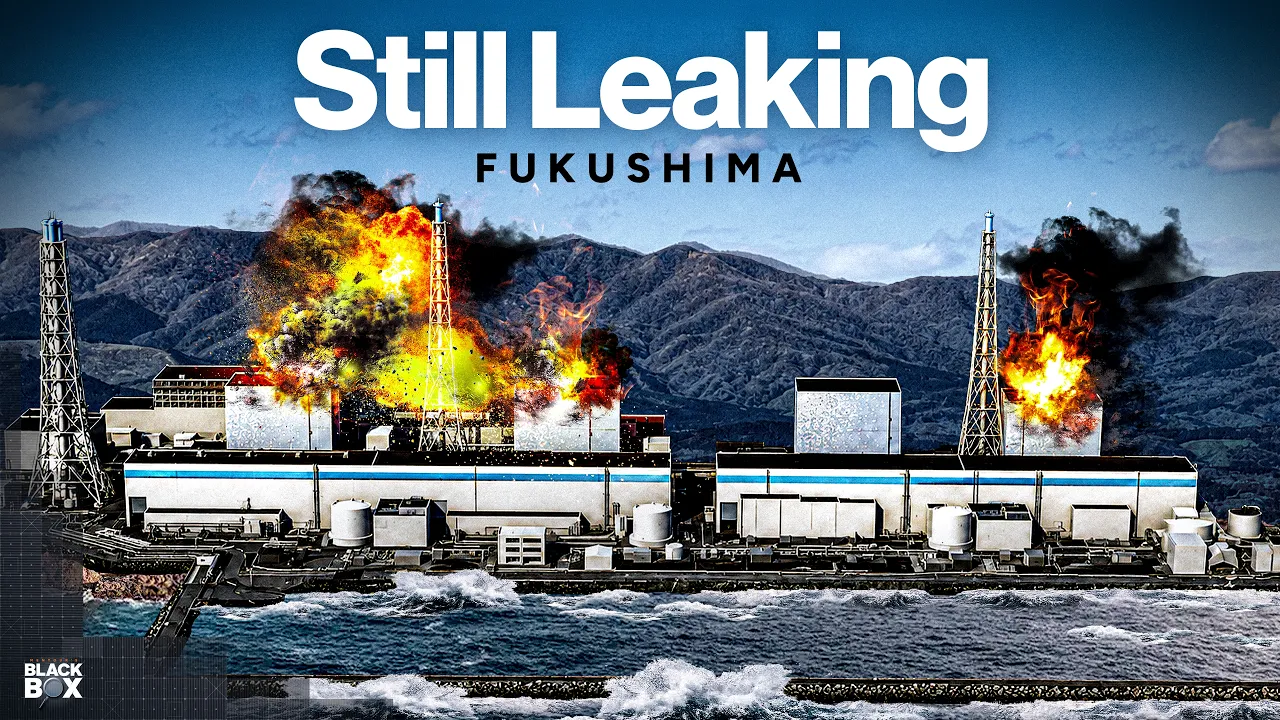
Mentour's Black Box · @MentourBlackBox
Where viewers went back to watch this video again, from YouTube's public Most replayed graph, lined up with what was said at that moment.
Most replayed moment #1
17:123.9x the video's typical replay level
running or is shut down is that water must be kept circulating through the core, or else the reactor core will begin to destroy itself or using a word that I think everyone recognizes, [music] a nuclear meltdown will begin.
Said at 17:05
Most replayed moment #2
46:143.7x the video's typical replay level
moving again. Now, I understand that you guys might be shaking your heads when you hear this, but remember that this was a highly improvised solution, and no one had ever thought about fire engines ever being used this [music] way. Around time 2120,
Said at 46:07
Most replayed moment #3
10:453.7x the video's typical replay level
pellets were made [music] from uranium dioxide. But not all uranium is equally [music] useful as nuclear fuel. Natural uranium is made mostly out of two isotopes. Uranium 238 and uranium
Said at 10:38
The graph counts replays. It does not show where viewers stopped watching.
Words
8,138
Runtime
53:44
Speaking pace
151wpm
Reading time
34min
151 words per minute, below the 160 25th percentile of 349 measured videos. That distribution comes from the 349-video hook study.
Opening (first 30 seconds)
The time is 1446 on March 11th, 2011. And off the eastern coast of Japan, 29 km beneath the surface of the Pacific Ocean, the boundary between two tectonic plates begins to tear apart. For the coming 6 minutes, a magnitude 9.1 earthquake, the strongest ever recorded in Japan's history, then reshapes the seabed so violently that [music] it shifts the axis of the Earth itself and pushes Japan's main island 2 and a half meter
76 words, the words spoken in the first 30 seconds at 151 words per minute.
Free, no signup. See how the first 30 seconds hold attention, with rewrites.
Sentence shape
| Measure | This transcript |
|---|---|
| Sentences | 439 |
| Average words per sentence | 18.5 |
| Longest sentence | 60 words |
| Questions asked | 10 |
| Sentences containing a number | 116 |
Most used terms
Filler phrases
28 in total: like 15 · actually 9 · basically 2 · kind of 1 · literally 1.
A literal whole-word count of the same phrase list the Prepublish browser extension uses, so a phrase inside another word is not counted and a phrase used in its ordinary sense still is. It is a count and not a judgement.
What this transcript is
Every word below is the caption track YouTube publishes for this video, pulled from the video itself and reproduced unchanged. It is not Prepublish's writing, not a summary, and not a re-transcription: it is the video's own published captions. English captions, generated automatically by YouTube, in the video’s original language. Source: the video on YouTube. A channel that would rather this page did not exist can ask for its removal through the contact page, and it is removed.
The time is 1446 on March 11th, 2011. And off the eastern coast of Japan, 29 km beneath the surface of the Pacific Ocean, the boundary between two tectonic plates begins to tear apart. For the coming 6 minutes, a magnitude 9.1 earthquake, the strongest ever recorded in Japan's history, then reshapes the seabed so violently that [music] it shifts the axis of the Earth itself and pushes Japan's main island 2 and a half meter to the east.
As part of this process, the ocean floor also lurches 9 m upwards, lifting billions of tons of sea water in an instant, and that causes a pulse to begin to [music] spread with the speed of a jet aircraft across the Pacific and towards the nearby coast. Along [music] the coastal villages of Japan, an old saying foretold what was then coming. Fukushima Dai or number one is a nuclear power plant located on the Pacific coast of Japan's Honu Island around 225 km north of Tokyo.
From above, the 3 and 1 half kilome site looks like a small industrial city housing six reactor units lined up along the shoreline. It was the first nuclear power plant built and operated by the Tokyo electric power company known as TCO and its reactors were then designed and supplied by the US company General Electric. Together the six boiling water reactors were capable of producing nearly 4.7 gawatt of electricity.
Enough to make Fukushino and Tai Chi one of the largest nuclear power stations in the world. and it formed part of a massive nuclear fleet that helped power the world's largest metropolitan area. Before 2011, Japan relied on nuclear power for roughly a third of its electricity, and Fukushima Dai was one of the machines that was making that possible. Despite Japan's complex relationship with nuclear power after the bombings of Hiroshima and Nagasaki during World War II, in June of 1955, the United States and Japan had signed an agreement to collaborate on the research and development of atomic energy.
And in 1963, [clears throat and music] Japan's prototype power reactor or JPDR first produced electricity. And then in 1966, Japan's first commercial nuclear reactor, Tukai 1, began operating. But Japan's embrace of nuclear power also came with an unavoidable threat. You see, Japan is located along what's known as the Pacific Ring [music] of Fire, a 40,000 km long string of volcanoes and seismic activity sites, which is considered the most seismically and volcanically [music] active zone on Earth.
It sits at a convergence of multiple tectonic plates including the Pacific, the Philippine Sea, the Okk, and the Amore. And because of this, in Japan, earthquakes are woven into the fabric of daily life. For generations, people have learned to live with the reality of frequent tremors with buildings designed to sway rather than collapse. bullet trains equipped with earthquake detection systems and with evacuation and emergency response procedures ingrained in everyone from the time they are in kindergarten.
So when Japan started constructing its nuclear power stations, earthquake protection measures were central to their design philosophy. [music] The construction of Fukushima Dai began in 1967 and on March the 26th, 1971, it became TCO's first nuclear reactor to enter commercial operation. [music] Over the next 8 years, the station then expanded unit by unit until all six reactors were in service by 1979. And like other Japanese nuclear power plants, it was then fitted with seismic detectors that would trigger an automatic emergency shutdown system called [music] Scram.
If a big enough seismic event would be sensed, that system was designed to automatically emergency shut down the critical part of the plant. And at time 1446, on March the 11th, 2011, that system was brought to its ultimate test. As the 9.1 magnitude earthquake started shaking the ground, seismic sensors in the station detected the quake almost immediately. At that time, three of the [music] six reactors, unit one, two, and three were operating with units five six already shut down for inspection and maintenance.
And with unit 4 in a slightly different situation, it had been shut down for maintenance and refueling. So, its entire fuel load had been removed from the reactor core just 4 months earlier and then transferred to the spent fuel pool on the upper floors of the building. As the ground began shaking beneath their feet, workers grabbed hold on consoles and railings with loose equipment clattering to the floor and within seconds the scram system activated as per design and the reactors were safely shut down.
So at that point the plant was responding exactly as designed and luckily for everyone the earthquake had not damaged the actual reactors but it had done something else. It had severed the [music] external power lines connecting the plant to Japan's national power grid. And to understand why that would become a matter here, it's crucial to understand a bit more about how the Fukushima reactors worked. Like I mentioned before, Fukushima Dai housed [music] six boiling water reactors and these were in a sense very advanced steam engines.
The nuclear [music] fuel produced heat. The heat boiled water into steam. The steam then spun a turbine and the turbine drove a generator much like most nuclear power [music] plants work all over the world. Now, do you see those six buildings painted in soft blue and white, [music] almost like waves breaking against the shore? Well, they are the outermost visible structures of Fukushima's six reactors. And while they look peaceful from the outside, inside of them are some of the world's most complex machines capable of producing unimaginable heat.
This light bulb shaped structure is the dry well of the primary containment vessel. A thick [music] steel and concrete protective shell weighing up to 3,200 tons sealed at the top with a heavy removable lid. That lid is designed to enclose the critical reactor components and below it sits a donutshaped metal ring which forms the suppression pool also called the wet well. Now that suppression pool will become important later since it's basically the containment shock absorber.
If steam would be released from [music] the reactor or drywall, it can then be routed down into that pool causing [music] it to condense back into a liquid which matters here because steam have a much larger volume than water. So the suppression pool helps pressure from building up [music] too fast in the dry well in case of an accident. Now inside a primary containment then sits the reactor pressure vessel. This is a massive steel cylinder with the largest at Fukushima Dai being installed at unit 6.
[music] Measuring 23 m high, 6.4 m wide, and weighing about 750 tons. It had [music] been built to withstand pressures up to 86 bar at temperatures of more than 300° C. And it had to be that strong because inside of it sits the reactor core, generating enough heat to power an entire [music] city. Now that core was made up of several fuel assemblies and in unit 6 alone the core contained 764 fuel assemblies which each one holding 60 individual fuel rods meaning nearly 46,000 fuel rods in total.
Each fuel rod was then a long sealed metal tube [music] made from a sirconium alloy. And that metal is also worth remembering here because it will soon play a crucial role. Now, stacked inside each one [music] of these tubes were small ceramic pellets. Each being only about the size of a fingernail, but put together thousands of them formed the fuel that ultimately powered the entire reactor. These plants are actually fantastic [music] feats of engineering, which I'll get back to in a minute.
But the key thing to remember is that they have to be because of the inherent danger in working with radioactive materials. One of the most unsettling things about radiation is that it can't be seen, smelt, or felt. So, in order to stay safe when working around it, the nuclear industry rely entirely on robust engineering procedures and instruments made to measure potential radiation. And actually, it turns out that online leaks of your personal data works similarly as radiation leaks because they too happen without any warning signs or obvious alerts.
Information like your address, phone, and social security number are easily sucked up by shady data brokers who will then sell it to the highest biders, which might be insurance companies, advertisers, or even criminals. This is incredibly completely legal. But with today's sponsor, Incogn, you can start to fight it. Once you sign up, Incogn will scan the internet 24/7 for your personal information. And when they find it, they will then force the website who has it to immediately remove it.
And they will then keep scanning even already checked websites to make sure your information doesn't surface again anywhere. [music] Every week, Incogn will then send you a progress report showing exactly how many pieces of data that they've removed. And as you can see, in my case, they're being quite busy. You can also extend this service to your close ones using incognist family and friends plan where you can add up to four people.
So to get started with protecting your online presence today and get 60% off the normal price then scan this QR code or go to incognit.com/blackbox and use the code blackbox at checkout. Remember to use that because it's really important for this new channel. Thank you incognit. Now let's get back to Fukushima. Those pellets were made [music] from uranium dioxide. But not all uranium is equally [music] useful as nuclear fuel.
Natural uranium is made mostly out of two isotopes. Uranium 238 and uranium 235. [music] Where uranium 235 is the useful part since it's the isotope that releases huge amounts of energy. But it only makes up less than 1% of naturally occurring uranium with the rest being uranium 238 which doesn't easily sustain the reaction needed inside of a commercial reactor. This means that before uranium can be used as nuclear fuel, the concentration of uranium 235 has to be increased from less than 1% to around 3 to 5% [music] using a process called enrichment.
After uranium is mined and refined, it is first converted into a chemical form called uranium hexafflloride, which can then be turned into a gas. And that gas is then spun at extremely high speeds inside of a centrifuge. Since uranium 238 atoms are slightly heavier than uranium 235, the uranium 238 tends to move a little more towards the outside wall of the spinning cylinder, while the slightly lighter uranium 235 stays a tiny bit closer to the center.
Now, that difference is extremely small. So, one centrifug isn't [music] enough. The gas has to pass through many centrifuges again and again gradually increasing the proportion of uranium 235 with the ultimate result being lowenriched uranium a fuel-grade material suitable for civilian nuclear power reactors. Now the reason uranium 235 is used for power generation is because it is file meaning that it can readily undergo nuclear [music] fishision.
The process in which a large atom splits into two smaller atoms. But how does an atom actually split? Well, it begins when a uranium 235 atom absorbs a neutron for a fraction of a second. It then becomes uranium 236, an excited, unstable atom that cannot hold itself together for long. It then splits into two smaller atoms. But strangely, the combined mass of those two smaller atoms is slightly less than the mass of the original atom that produced them.
The amount of mass lost in each split is tiny. But the mass to energy conversion follows Einstein's equation E= MC^ squared. And because that tiny amount of mass is multiplied by the speed of light squared, [music] the energy released is enormous for something happening at the scale of a single atom. But energy is not the only byproduct of this nuclear fishision. When uranium undergoes this process, it usually releases two or three more neutrons and those can then be absorbed by other uranium atoms triggering further fishision releasing more neutrons and so on in a chain reaction.
So inside the core of a nuclear power plant, billions upon billions of fishes happens every second producing the intense heat needed to boil the water for the steam and this is called reactivity and has to be controlled with extreme [music] precision. A nuclear reactor is essentially a machine designed to carefully balance various different factors that either increase or decreases [music] that reactivity. The fuel increases reactivity because more fuel means more neutrons to feed the chain reaction.
So if you don't balance that reactivity, it will continue to rise indefinitely [clears throat] and a meltdown will occur. To keep that from happening and balance the equation, control rods are used [music] made from materials that can absorb neutrons. When those control rods are withdrawn from the core, more neutrons are available and the power increases. And when the rods are then inserted, they absorb the neutrons and slow the reaction down.
But freshly produced neutrons are moving extremely fast, far too fast to be efficiently absorbed by uranium atoms and continue the chain reaction. So the reactor also needs a moderator to slow them down. And in a boiling water reactor, that moderator is water. Water increases reactivity. But when that water boils and turns to steam, [music] it becomes much less dense and loses much of its ability to slow neutrons down.
So the presence of steam in the core decreases reactivity. You with me? Water increases reactivity, but steam decreases it. So in a reactor of the type used at Fukushima, water basically plays two main roles. Firstly, it acts as the coolant, meaning that carries heat away from the fuel. And secondly, it acts at the moderator, which means that water flow rate can [music] also be used to control reactivity. Increasing flow means that the water spends less time heating up.
So less [music] steam is present in the core, which increases reactivity. And decreasing flow means that the water spends more time heating up. More of it then turns into steam and reactivity decreases. But what if something would go wrong then? Well, the first response is to stop the chain reaction, which is what a scram does. If that activates, the control rods are quickly driven into the core, absorbing neutrons and shutting down the fishision process within seconds.
But there is a dangerous catch there. You see, stopping the fish doesn't fully stop the heat. Remember those smaller atoms that uranium splits into? Well, those atoms are also radioactive and unstable. So over time they decay into other atoms releasing radiation and heat in the process. And that heat is known as decay [music] heat. Now it is much smaller than the heat produced during normal reactor operation, but it is still quite potent.
Immediately after a shutdown, a reactor can still produce around 6 to 7% of its previous power using that heat. So when dealing with [music] nuclear reactors, the one thing that matters above almost everything else, whether the reactor is running or is shut down is that water must be kept circulating through the core, or else the reactor core will begin to destroy itself or using a word that I think everyone recognizes, [music] a nuclear meltdown will begin.
So let's now follow the water. Feed water pumps push water into the reactor vessel around the middle and is then spread evenly around the inside by a circular pipe called a feed water sparger. That water then flows downward driven by jet pumps through the space between the outer wall of the pressure vessel and the large metal structure surrounding the core. As it reaches the bottom of the vessel, it then turns inward and flows upward through the reactor core.
There it is heated by the fuel and begins to boil turning it into steam. And that steam then travels upward into the cyclone [music] steam separators which uses centrifugal forces to separate water droplets from the steam. The water separated from the steam then drains back [music] down into the reactor vessel where it mixes with the incoming feed water inside of the diffusers to the jet pumps and each group of 10 jet pumps are driven by a recirculation pump installed outside of the reactor vessel.
The dried steam that exits the steam separators then goes out through the main steam lines [music] to the turbine. And after that, the steam is cooled back into water in the condenser, pumped through the feed water system, and finally sent back into the reactor vessel to do the whole journey again. This is the elegant loop at the heart of a boiling water reactor. But the problem is that this elegance depends on a lot of different pumps. pumps that are powered by electricity and at Fukushima Dai under normal conditions that electricity then came from Japan's national power grid.
Now of course in an emergency every nuclear power plant has a backup power system in the form of diesel generators and batteries. But most of Fukushima's backup [music] systems were located in the basement of the buildings from where they were supposed to then make sure that those pumps kept running specifically when a power failure happened. And that was now exactly what this earthquake had created. Plant records show that after the earthquake hit and the outside power was cut, the automatic safety systems did shut down the reactors and the generators kicked in to keep the pumps operational.
So for 40 minutes, everything worked exactly as it was planned. But remember, it's always been said on the shore that tsunami will follow the earthquake. Now, the designers of the plant had taken tsunamis into consideration when this plant was constructed. This was critical since the backup systems protecting the reactor cores could only do their job if they stayed [music] dry. So the designers had looked at historical records of tsunamis, in particular, the tsunami that had occurred following a huge earthquake in Chile back in 1960, which had resulted in a 3.1 m high wave that hit Unahama Port in Fukushima.
To protect against a wave of that size, the plant's main buildings would be located 10 m above sea level, with the pumps that provided cooling to the reactors sitting at 4 m above sea level. And then the whole plant would be protected by a 5 to 6 [music] m high seaw wall. So from that it might look like the designers had been taking every precaution against the threat of a tsunami. But it turns out that they had made a fundamental and ultimately fatal error in their reasoning.
You see the 1960 Chile earthquake was in fact the largest earthquake ever recorded in human history rated at a magnitude of 9.5. [music] But by the time its tsunami had crossed the entire Pacific Ocean, around 17,000 km, it had reduced to just [music] 3.1 m as it impacted the Fukushima coastline. But no one had seriously confronted the more dangerous question. What if an earthquake like that didn't happen in Chile, but instead directly offshore of the Japan trench, just 70 km from the coast?
And as it turns out, there would have been good reason for asking that question. You see, there existed not theoretical but physical evidence of a similar event buried [music] in the soil of Japan itself. In 869 CE, more than a thousand years before [music] Fukushima Dai was built, a massive earthquake had struck the Tuhuku coast and it [music] created a tsunami that reached heights up to 15 m, which may have penetrated up to 4 kilometers inland.
Geological sediment records clearly showed it, and it had even been given a name, the [music] Jan Tsunami. In 2008, TCO's own engineers ran the numbers from that wave, and they calculated that a similar tsunami of up to 15.7 meters could indeed strike the Fukushima coast. But rather than act [music] on that finding, TCO instead questioned its own calculation, and they eventually referred their findings to the Japan Society of Civil Engineers for further review.
In the meantime, TCO also revised its official estimate down from 15.7 m to just 6.1 m with Nissa, Japan's nuclear regulator, being informed but taking no action. So, this meant that the plan was now sitting there right by the coast with its critical electrical systems low enough to potentially be reached. [music] 3 minutes after the earthquake struck, at time 1449, the Japan Metrological Agency issued a major tsunami warning.
At time 1527, the first wave hit. It was powerful, but not yet catastrophic, with government and technical reports later estimating it at around 4 to 5 m. This meant that it struck the coastal edge of the power plant, but it didn't rise high enough to breach the actual wall, and it therefore didn't disable any essential safety systems either. So, for a short moment, it looked like the plant had survived this second threat as well.
Inside of the control rooms, operators were still dealing with an extraordinary emergency, but the basic safety logic of the plant was still holding together. Then roughly 10 minutes later, the ocean came back. At time 1536, the second wave reached the station. But this was not just a 4 m surge the plant had been built to withstand. No, this was the main tsunami. A colossal wall of water 15 m high, which reached far above the seaw wall and the assumptions built into the site.
It now poured over the coastal defenses and completely swallowed up the seafront. Now, at almost exactly that same moment, the nuclear power plant itself also began to go blind. At unit one, the control room lost [music] everything. Instrument readings disappeared, alarm panels went dark, water level indications were gone, and even the room lights went out. And this meant that the operators were now unable to check what the true water levels in the core were or know the exact valve positions for their various systems.
Remember, the core must always be submerged in circulating water in order to cool it down and keep it from melting. And as I explained earlier, during normal operation, the steam generated by the core exits through the main steam lines into the turbine and then from there into the main condenser where it's condensed back to [music] water. But when the reactor is shut down, the main steam valves close and cut the core from the turbine system.
In case of unit one, the steam that was still being generated was then routed to a backup cooling system called the isolation condenser. So, what was that then? Well, this was a clever backup system where steam from the reactor was routed into heat exchanger tubes sitting inside of a large tank of water. The hot reactor steam then passed through those tubes where it gave up most of its heat to the water around and condensated back into liquid water.
That condensated water then flowed back into the reactor vessel using gravity. So, the isolation condenser didn't [music] pump new water into the reactor. Instead, it just recycled the reactor's own steam back into water. The cooling tank water was also separate. So, [music] it didn't mix with the reactor water. It simply absorbed the heat from the tubes. And as it heated up, that tank water could then boil off and release harmless steam outside of the system.
This is why seeing steam from the isolation condenser area could suggest that that system was working. Heat was being carried out of the reactor and dumped into that external water tank. Remember that another elegant part of this system was that it didn't need a large electric pump. Instead, it used the reactor's own steam, condensation, and gravity. So, in a blackout like this one, that made it incredibly valuable for unit one.
Units two and three used a different backup solution known as a reactor core isolation cooling system or RCIC. That is a turbine-driven pump system that provides backup water from an external condensate storage tanks to the reactor vessel for core cooling. And it did so when the main steam lines were isolated and the normal water supply was lost. Now the clever part with that system was how it powered itself. RCIC also didn't need a large electric motor to drive its pump.
Instead, in a blackout, a small steam line would take steam from the reactor system and send it to a small turbine. That turbine then spun the rcic pump, which pushed water back into the reactor vessel. After that steam had done its work in the turbine, it was exhausted into the suppression pool, keeping the system isolated. And with that, no radioactivity would escape. But this RCIC was designed to run for a maximum of about 4 hours because since the turbine exhaust went into the suppression pool, prolonged operation added a lot of heat and pressure to the containment system.
This meant that the RCIC could only by time as a temporary solution in a blackout, not sustain a prolonged loss of power by itself. And crucially, it still needed a usable water source as well as batteries for control and valve operation, which will become important very soon. 1 minute after unit one lost all of its power and went blind. At unit three, the tsunami also finished off that plant's AC power, but its DC systems, the [music] batteries that kept some controls and instruments alive, survived, at least for the moment.
Then at time 1541, unit 2 also lost its AC power. Fortunately, just a couple of minutes earlier, operators had managed to get the RCIC system up and running. But shortly after that, unit 2 lost its DC power as well, meaning that its instruments now went dark. And from the control room, operators could therefore no longer confirm what the RCIC was doing. At this point, across the site, the tsunami was still working its way into the plant's guts.
And at the time 1542, TCO sent a formal notification to the Japanese government. The plant had lost all AC power, something that should just never happen. By time 1636, units one and two were completely in the dark, which meant that terrifyingly the isolation condenser at unit one and the RCIC system at unit 2 could no longer be reliably monitored or controlled. So no one at the plant really knew if the plan B was working as intended and that in turn meant that TCO now had to report a loss of emergency core cooling function for units one and two.
And about half an hour after that site superintendent Masau Yoshida began preparing for plan C instead. He now gave the order to find a way to inject water into the course using the fire protection system. And if that didn't work, they needed to try and do the same using fire engines. Now, that showed just how far the plant had by this point fallen from its design [music] bases. Its operators were now going beyond the textbook emergency procedures and into complete improvisation.
This meant that workers now began stripping batteries from cars [music] and company vehicles. And piece by piece, the operators wired together whatever power sources they could find, trying to get some control panels back up working. The unit one timeline, believe it or not, records reactor pressure being read using car batteries up to the early hours of March 12th. In any case, at time 1730, workers then tried to get into unit one and check the isolation condenser directly.
But that building was now no longer looking like they remembered it. It was dark, damaged, and contaminated. And somewhere behind the concrete and steel, the reactor was now continuing to heat up. Before long, the workers had to retreat out due to rising radiation levels, which meant that containment barriers had now already been challenged. Around 6:00 in the evening, some DC power [music] had been restored and operators discovered that the outside containment valves on isolation condenser system A [music] were closed.
That therefore made them suspect that the isolation condenser had isolated itself after the blackout. So 18 minutes after that, they went in again and manually opened valves in it. And for a moment, they then saw something that looked like hope. steam outside the building. Steam was now visible from the system. So maybe the condenser was actually working, which would mean that unit one still had some cooling left. But that steam soon started to fade.
And with that, the operators began suspect that either the inner isolation valves were still shut or that the condenser tank water [music] had been lost. So they ended up closing the valve again at the time 1825 since they couldn't trust the systems condition. Later that same night, by around time 2030, temporary lighting suddenly came back in the main control rooms. And for the first time since the blackout, operators could finally see more than just shadows and emergency lamps.
At unit one, crews were by this time preparing a desperate injection path using firefighting equipment. But they then came across a further problem. You see, the reactor was still pressurized. So, fire engines just wouldn't be able to force water into this pressure vessel that was fighting back with its own reactor pressure. This meant that in order to get water in, they would need to bring that pressure down somehow.
But depressurizing a damaged reactor meant opening a path for the contaminated steam, hydrogen, and radioactive material to possibly escape. Every option now carried a cost. At time 2119, operators finally got a water level reading from unit one. And for a gleaming moment, the number suggested that the fuel might still be covered. But no one could fully trust that because this instrument had been through a lot of heat, power loss, and conditions that they were never meant to be subjected to.
So their readings were at this point just clues with other clues steadily getting worse around them. At time 2151, workers detected extremely high radiation inside of Unit One's reactor building, so something additional inside there must now have gone seriously wrong. The water level was also indicating a decline which meant that the fuel rods who were supposed to always remain covered was now being exposed. And when nuclear fuel is exposed, problems escalate brutally fast.
You see, these fuel rods were, like I mentioned earlier, wrapped in sirconium alloy cladding. A metal chosen because of its strength, corrosion resistance, and exceptionally low thermal neutron absorption. But it also had a dangerous weakness. When it got extremely hot and exposed to steam, it would react with water molecules in the steam where the sirconium would grab the oxygen forming sirconium oxide and leave the hydrogen behind as a gas.
And as most of you likely know, hydrogen as a gas is not good news when it's not controlled. By this point, the containment pressure was rising far beyond anything that the operators wanted to see, which meant that the last major barrier between the fuel and the outside world was being pushed by a buildup of pressure of a flammable explosive gas, only tamed by the absence of oxygen inside of the containment vessel. And this meant that the next decision was as terrible as it was unavoidable.
They had to vent it. This meant that they would have to deliberately open a path out of the reactor system for the pressure. A path that would carry radioactive material into the world outside. Now, this is exactly the kind of decision that no one wants to take. But the alternative, an uncontrolled explosion would be much much worse. Now to complicate matters even further, the valves that would need to be moved to start the venting process would need to be opened manually since there was no power to control them from the control room.
And the places that workers needed to reach in order to do this were radioactive, dark, and very dangerous. By the early morning of March 12th, Unit One's containment pressure had climbed so high that venting was no longer just an option. It was becoming a necessity. Yoshida and his crew were genuinely trying to open the vent, but the valves needed power, air pressure, or manual access. And all of those three options were problematic.
Now, Yoshida made it clear that if necessary, they would send men in to open the valves by hand. Something that was being spoken of like a suicide mission. But still, one team at a time, the operators prepared to enter the dark reactor building and force those valves open. Eventually, venting appeared to be successful and the pressure began to come down, which meant that finally the crews could start injecting fresh water into the core.
But whilst the vent system was supposed to send that gas safely out through the exhaust stack, in the chaos of the damaged plant, some of it appeared to have found another path upward into the upper part of the reactor building. Now, that space was not inert like the containment vessel had been. It had air and therefore oxygen, which meant that the hydrogen gas now only needed one more thing to ignite, an ignition source.
By the afternoon, crews were preparing to switch the water source that they were using to inject water into the reactor from fresh water over to seawater. Now, they were doing this because their freshwater supplies were running out, and using seawater meant that they would no longer be able to preserve the reactor. This would permanently destroy it. But before they could get to it and further stabilize the situation, unit one delivered its next blow, literally.
At time 1536, the upper reactor building suddenly exploded and the blast ripped away the walls and roof panels above the containment and then threw debris clear across the entire site. This meant that the building was now open to the outside world, raising fear that the radioactive material inside of it could now escape beyond its containment. The situation was now becoming truly desperate. As that was happening, people inside the plant were still trying to keep water moving into the melting reactor.
Now, they thankfully managed to actually do that at the time 1904, which meant that seawater was now finally starting to flow into the plant. But at the headquarters, there was now some confusion over whether the prime minister's office had actually approved this seawater injection. Remember, this would permanently destroy the plant. So, TCO actually ordered the injection to be suspended. But Yoshida understood what that would mean.
Stopping the water, even briefly, could make this accident even worse. So, he now made the decision himself to ignore that order and keep the injection going whilst hiding it from the headquarters. This was an extraordinary act of courage, especially in a culture built around obedience and respect for the chain of command. And it is very possible that this decision prevented a major escalation of this disaster. By time 2045, boric acid was being mixed into the seawater since boron absorbs neutrons and thus reduces reactivity.
Now boron is actually the same material that is used in the station's control rods. Earlier that day, unit 3's rcic system had stopped. But then the next backup system had kicked in. the high-pressure coolant injection system or HPCI. For the moment, this smaller system was now keeping unit 3 alive. But as I'm sure you have guessed by now, it couldn't run forever. This system also used steam from the reactor to run itself.
So if the pressure inside of the reactor vessel fell too far, the system wouldn't be able to work properly or safely. By the end of March 12, the Fukushima da plant had changed shape dramatically. Unit one's building had been blown open. Its core was badly damaged and seawater together with boron were being forced into it by fire engines. Unit two was still alive, but only because of its RCIC system. And remember, that was only designed to operate for a maximum of 4 hours, and it was now still the main source of cooling after 32 hours.
Unit 3 was also still being cooled, but its current smaller backup system was already eating away at the very conditions that it needed to keep working. So this meant that day three started with unit 3 still alive, but just barely. And by the early hours of March 13th, its HPCI system was no longer behaving normally. [snorts] The pump was now slowing down and its discharge pressure was falling. So at time 02 242 operators finally shut [music] it down which meant that unit 3 was now walking down the same path as unit one had by time 0510 reported that unit 3 had lost emergency core cooling and Yoshida ordered preparations for venting it to start injecting water.
Now, in order to open its relief valves, workers had gathered car batteries, carried them into the control room, and wired them together just to get enough power to do so. And through the morning, the crews then fought valve after valve until at around 9:00 in the morning, they finally managed to bring the reactor pressure down far enough to start injecting water. Borated water now began flowing into unit 3 as well through the fire extinguishing line.
But by midday, the freshwater supply was running out. So the crews therefore had to switch over to seawater and another reactor was permanently destroyed. By the afternoon, radiation near the reactor building was now climbing. Unit 3 had spent hours without reliable emergency core cooling. And the delay between the loss of its HPCI and the start of the improvised water injection had likely allowed part of the core to become exposed, which in turn meant that the saconium cladding around its fuel rods had started oxidizing.
At the response center, it was therefore believed that hydrogen gas would already be collecting inside. So the workers were temporarily pulled back from the site, fearing a potential explosion. The threat of the unit one scenario, now repeating itself at unit 3, was very, very real. Then just after 1:00 in the following morning, the seawater supply feeding the fire engine pumps began running low. At this stage, they were not drawing water from the ocean directly, but instead from a limited supply that had collected in a pit inside of the wrecked site.
And when that source dropped too low, injection therefore had to be stopped until they could reposition the hoses. So for more than 2 hours, the reactor that had already begun generating hydrogen now lost that improvised cooling flow completely. At time 0320, the seawater injection restarted, but the pressure inside unit 3's containment then just [music] kept rising. Steam and hydrogen were now building inside the containment system, and operators were once again trying to vent it out.
They worked through the morning to keep the vent path open, but above the reactor inside of the upper floors of unit 3, that same gas that had destroyed unit one was now quickly building up. So at time 11:01, unit 3 exploded, and this time the blast was far more violent than the one in unit one had been. White smoke and debris erupted with terrifying force from the upper reactor building with concrete, steel, and containment wreckage once again raining down across the site and with [music] workers diving for cover.
And with this came the next important question. Had unit 3's reactor vessel survived that blast? Pressure readings from unit 3 were still coming in, indicating that the reactor vessel and its containment were probably still intact. But whilst everyone was still focusing on what was happening at unit 3, unit 2 had now suddenly also begun to slip. For almost 3 days, unit 2 had [music] been the quiet survivor. Its rcic system had kept running long after the tsunami, using steam from its reactor to pump water back into the vessel.
But around time 1250, [music] its water level began falling. And that meant, as I'm sure that you can guess by now, that its reactor pressure also began rising. The RCIC system was simply no longer keeping up with the cooling demand. So, at time 1305, Supervisor Yoshida turned the site's attention to unit 2. The path between units two and three was covered in wreckage, and radiation levels were now going up quickly. So the workers went in shifts doing what they could and then pulled back before the dose became too high.
By late afternoon, the operators began trying to depressurize reactor 2 and inject sea water through fire engine lines. But the pressure just refused to come down. And by early evening, unit 2's core had become badly exposed. So for the third time in this disaster, a core was now creating a massive hydrogen buildup. But the workers kept valiantly fighting, trying to open as many valves as possible in the hope of depressurizing it.
Finally, at time 1903, pressure dropped low enough to give the fire engines a chance, but it wouldn't last long. Only 17 minutes later, at 1920, the fire pumps stopped since they ran out of fuel, and it then took the crews 34 minutes to restart them. But at least then, water was moving again. Now, I understand that you guys might be shaking your heads when you hear this, but remember that this was a highly improvised solution, and no one had ever thought about fire engines ever being used this [music] way.
Around time 2120, operators then managed to open two relief valves and confirmed depressurization as well as some water level recovery. Fukushima Dai had survived another day, but only by a hair. And this story was still far from over. Day five of this horror show began with unit 2 in the worst condition it had ever been in. Just after midnight, radiation readings linked to unit 2's core had jumped sharply. And then around 6:00 in the morning, a sudden loud sound could be heard.
It came from the area of unit 2's suppression chamber. And inside of the emergency response center, a pressure reading now dropped suddenly, which meant that something in the containment system might have failed or started leaking badly. If that was true, radioactive material had now found a much easier path out. So, most of the workers were immediately ordered to pull back. But a small group still stayed behind to keep the plant alive. and the world would later come to know them as the Fukushima 50, though the number was never exact.
They were operators, engineers, firefighters, and technicians rotating through impossible conditions, and staying behind because someone still had to inject water, read pressures, open valves, and keep the damaged reactors from getting worse. Now, almost at the same time as that strange noise from unit 2's suppression chamber had been heard, unit 4 now also entered the disaster. If you remember, unit 4 had not been operating when the earthquake struck and its reactor had no fuel inside of it.
Instead, that fuel had been moved into the spent fuel pool for maintenance. But that building now still exploded, which was deeply confusing for everyone involved. If the reactor was empty, where had the hydrogen gas come from? Well, the most likely answer was unit three. Hydrogen from the damaged unit 3 reactor appears to have traveled backwards through shared exhaust piping and then collected inside of unit 4's upper building.
And there it finally then found air and ignited. Now that sudden explosion at the top of unit 4 led to a new fear, the spent fuel pool. That pool held fuel assemblies underwater with the water shielding radiation and removing residual heat. But if that pool had now boiled down or started leaking, the used fuel would soon start overheating in the open air. But of course, no one could see the water level in the pool. And this now meant that the plant had three severely damaged reactors as well as a possibly new crisis in the fourth.
So the most urgent question now became what was happening in that spent fuel pool. Now, we now know thankfully that the storage pool in unit 4 had not boiled dry. But at the time, no one could be sure of anything, and every possibility had to be considered. By the end of day five, the situation was incredibly grim. Fukushima Dai was battered, exposed, and still unstable. In the days that followed, most of the fear centered on unit 4.
Smoke and fire alarms kept pulling everyone's attention back to the building that should have been the quiet one. Helicopters were sent in and from above the crews tried to drop water onto the damaged reactor buildings, but these drops were crude. Wind pushed the water around and radiation limited how long the helicopter crews could stay overhead. By the beginning of April, the damaged cores inside units 1, 2, and three were still hot, and the water being injected into them was now causing another massive problem.
You see, the water coming out of the reactors was highly radioactive, and it was now spreading through the site with storage space for it starting to run out. So, TCO began building a circulation water cooling system to pump contaminated water out, remove salt and radioactive material, store it, and then send the treated water back to cool the reactors again. And the entire plant was by this point being kept alive using only temporary systems.
On December 16th, 2011, the Japanese government finally announced that units 1, 2, and three had reached what it called a cold shutdown condition. The IAEA welcomed this announcement, saying that the reactors were in a stable state and that releases of radioactive material were under control. That marked the end of the acute phase of this crisis. But Fukushima now entered a slower fight instead, one measured in years. robots, tanks, radiation maps, and unanswered questions.
The work ahead was simply enormous. Fuel assemblies had to be removed from spent fuel pools. Contaminated water had to be collected and treated. Damaged buildings had to be reinforced. Radiation had to be mapped. And somewhere inside units 1, 2, and three, melted fuel debris had to be located, understood, and eventually removed. The decommission of Fukushima therefore soon turned into a generational engineering project with thousands of extremely complicated projects layered on top of each other.
Under the Japanese government road map, this work is expected to take 30 to 40 years, but the cost is much harder to predict. Japan's official estimates put the broader Fukushima bill at roughly 200 billion, including compensation, decontamination, waste storage, and decommissioning. And in that, the decommissioning portion alone is estimated at around 70 to 75 billion. Nuclear energy can power entire nations without the smoke and carbon of fossil fuels.
But it also demands almost perfect discipline, [music] honesty, and preparation for disasters that may seem impossible until they arrive. In this way, the nuclear industry is actually very similar to my line of work, aviation, and its systems and procedures are therefore also very similar. I am myself quite bullish on the future of nuclear power, especially far away from active seismic regions. But I would love to hear your take on this.
After Fukushima and Chernobyl, do you still believe nuclear power has a place in our future? Let me know in the comments here below. Thank you so much for watching and remember to subscribe to the channel. There are a lot of people watching this and not everyone have subscribed and we want to change that. And also please consider joining our Patreon crew by scanning this QR code or by going to patreon.com/join/mentorpilot.
We spend a lot more money on these episodes than what we get in. So, your help will come and go a long way. My name is Peter Hornfeld and you're watching Mentors Blackbox. Remember, every accident is a lesson.
The words are the caption track's own and nothing is reworded or re-transcribed. Paragraph breaks are placed between sentences so the text reads as prose.
Free tools for your own script. No signup, no login.
Paste your draft and see where viewers are likely to drop off, with a rewrite for each weak line.
Paste the first 30 seconds of your own draft for a hook score and rewrites.
Check your draft against YouTube's advertiser-friendly guidelines before you record it.
Read this channel's public videos and transcripts, and download a writing brief for it.