Getting the transcript
Reading the captions from YouTube. A video nobody has opened here before takes 10 to 30 seconds; this page fills in on its own.
Getting the transcript
Reading the captions from YouTube. A video nobody has opened here before takes 10 to 30 seconds; this page fills in on its own.
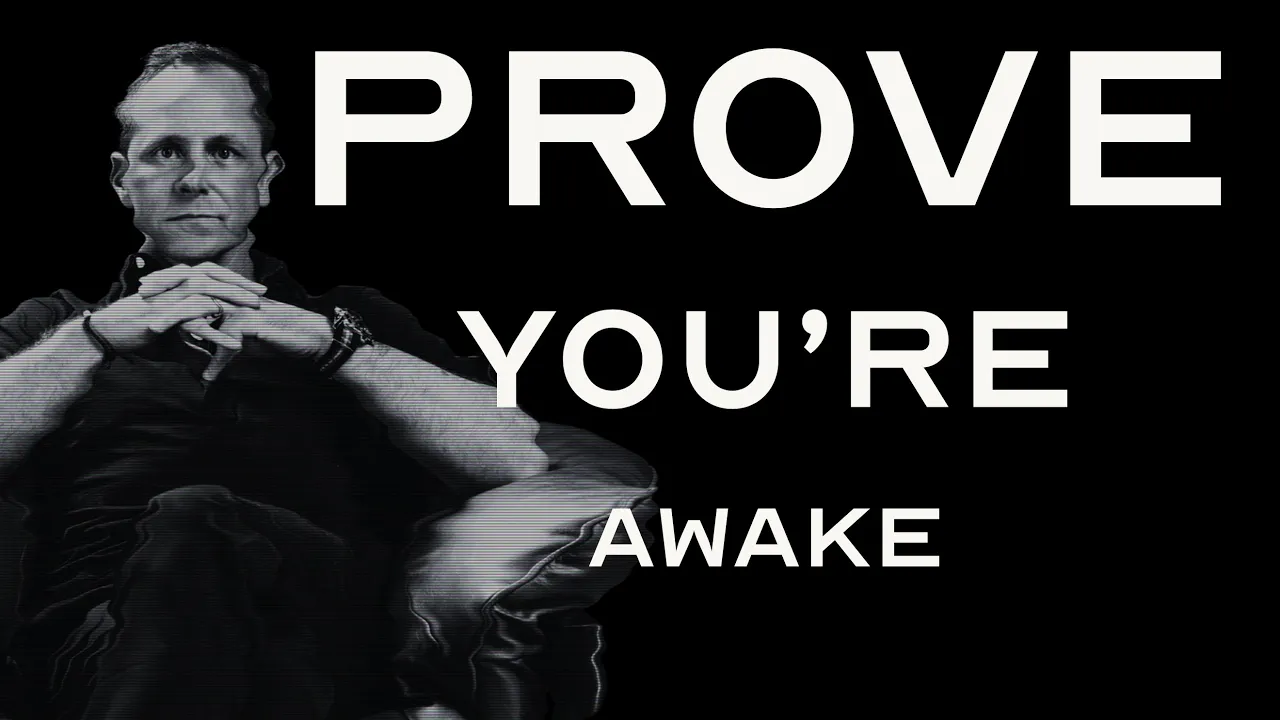
Chase Hughes · @chasehughesofficial
Where viewers went back to watch this video again, from YouTube's public Most replayed graph, lined up with what was said at that moment.
Most replayed moment #1
11:573.5x the video's typical replay level
an emotion. You have only ever stuck them together. You've assembled them. And how do we assemble emotions? One prediction at a time. It happens so quick, we experience this assembly as like, "Oh, that's the truth. I had a gut
Said at 11:51
Most replayed moment #2
32:073.2x the video's typical replay level
message from inside of a dream. He's sending a message outside of his reality to another level of reality, to someone who does not exist in the reality that he can still prove is real. And I want you to notice what the first message from inside a dream, what was it
Said at 32:00
Most replayed moment #3
33:373.2x the video's typical replay level
clients are asleep. Your enemies, your adversaries maybe are asleep. And what are they doing while they sleep? They're dreaming a character in there with your name on it. >> Authorities are reporting a citywide
Said at 33:31
The graph counts replays. It does not show where viewers stopped watching.
Words
5,493
Runtime
37:21
Speaking pace
147wpm
Reading time
23min
147 words per minute, below the 160 25th percentile of 349 measured videos. That distribution comes from the 349-video hook study.
Opening (first 30 seconds)
Picture yourself in a room. You're looking around the room for a second. This is a dream. You're asleep. But you don't know that yet. And I'm in there in the dream with you. And your eyes are open looking around the room. It looks real. And I turn to you and I say, "Prove to me this is real. Prove it." And then you'd laugh at me like I'm a and you'd say,
74 words, the words spoken in the first 30 seconds at 147 words per minute.
Free, no signup. See how the first 30 seconds hold attention, with rewrites.
Sentence shape
| Measure | This transcript |
|---|---|
| Sentences | 538 |
| Average words per sentence | 10.2 |
| Longest sentence | 52 words |
| Questions asked | 65 |
| Sentences containing a number | 25 |
Most used terms
Filler phrases
67 in total: like 38 · kind of 8 · right? 7 · actually 5 · uh 4 · you know 4 · I mean 1.
A literal whole-word count of the same phrase list the Prepublish browser extension uses, so a phrase inside another word is not counted and a phrase used in its ordinary sense still is. It is a count and not a judgement.
What this transcript is
Every word below is the caption track YouTube publishes for this video, pulled from the video itself and reproduced unchanged. It is not Prepublish's writing, not a summary, and not a re-transcription: it is the video's own published captions. English captions, generated automatically by YouTube, in the video’s original language. Source: the video on YouTube. A channel that would rather this page did not exist can ask for its removal through the contact page, and it is removed.
Picture yourself in a room. You're looking around the room for a second. This is a dream. You're asleep. But you don't know that yet. And I'm in there in the dream with you. And your eyes are open looking around the room. It looks real. And I turn to you and I say, "Prove to me this is real. Prove it." And then you'd laugh at me like I'm a and you'd say, [music] "Of course everything's real. Look at it." So I say, "Fine.
Let me put something in front of you. It's a gumball machine." And then I say, "All right, tell me what this is made out of." You're going to say, "That's easy. It's glass, [music] steel, chrome." And then I say, "Okay, prove it." You lay your hand down on the >> [music] >> the glass globe part. It's cold. It's smooth. Uh you knock on it with your hand a couple of time and it rings the same way that >> [music] >> glass rings a little bit.
And the machine is real and you've just proven it using your senses in in several different ways. >> [music] >> But there's one question. Do you have glass inside of your head? >> [music] >> Or steel? There's no chrome. Is there one single cold, hard, >> [music] >> shiny thing anywhere inside of your skull? No. Your skull is a dark, extremely wet, sealed room. And that's where all of this, this gumball machine, was happening.
So, I go back again. I'm still there in the room with you. And I tell you that it's a dream, and I say, "What is the machine made out of?" You just proved it's real. Touch, sound, and it's made of nothing but consciousness. It's made of your mind. 100% provable that it's real. Also, 100% consciousness. But, we're not done. The next question I have for you is, "How far away is it from you?" So, let's call it 6 ft, and you don't have to guess.
I have a measuring tape in my hand, and I I give it to you. It's uh 6 ft 2 in. Exactly. "6 ft of what?" I ask you. Look at the gap between you and the gumball machine. What's in there? It's not air. Because there is no air in this room. So, the distance is made out of the same thing that the machine is. It's made out of mind. It's made out of consciousness. And you measured it with a tape measure down to the inch. But, we're going to keep going.
So, you're looking at it, and seeing it takes light. Is there a light source bright enough to light this room up anywhere inside of your skull? There's no light. Nothing in this room is glowing because there is no room, right? And you can see it perfectly. You can prove that it's real using every single objective measure. You can prove that it's absolutely real. Matter, space, light, three for three, all of it provable, none of it is there.
But, we're not done. And this is the one. You've been looking at this machine the whole time. With what? >> [music] >> Why did you manufacture eyes? You're asleep. Your real eyeballs are closed. They are in the dark. Your eyes are laying down in a bed that you can't even feel right now. They're seeing nothing. And the eyeballs that you're using in here, you invented them. You created fake eyes to look at a fake machine across a fake distance using light that doesn't exist.
And it all worked 100% flawlessly. So now come back. We're not asleep anymore. You're here in the room you're in right now looking at your screen or whatever. Everything you just did in that little room to prove the world was real, you could do it in the room you're in right now. It's measured. It's replicated. Try to catch your own eyes moving for a second. Your eyes are moving and you can't see [music] them move. Every time your eyes jump from one point to another point, in neurology this is called a saccade, s a c c a d e.
So your brain, when your eyes are moving, completely blacks out the visual field. We're not even counting blinks. So it doesn't show you it like a smear of motion because that's what mushrooms do, right? And it waits until your eyes stop, and then it takes the new image and backdates it. [music] And the timeline of like those eyes moving around is completely falsified. And we never notice. If you're on a phone camera, you might have caught a little flicker of movement.
You know why? Because of lag. So, the video on your phone is delayed by a tiny fraction of a second. So, the movement might play back after your brain's editing window is is shut. The only way to catch your eyes moving is to watch a delayed recording, which tells you exactly where the edit is taking place. Your brain took the image and stretched it backwards and to overlap the blackout. So, scientists have a word for this, chronostasis.
If you add up the blackouts, you're talking about 51 to 90 minutes every day where you are totally, functionally blind. Your trust is in an editor with a documented history of lying and deleting footage. And in the second result, vision isn't instant. If you're a baseball player, you got the bat ready to go, >> [music] >> and you were looking where the ball actually was, you'd swing after the ball passed you. No one could ever hit anything.
So, the brain doesn't show you where it is, it shows you where it thinks it will be by the time you experience it. >> [music] >> Everything in our visual field right now is just a forecast. None of us have ever really seen the present moment. No light has ever entered your skull, not [music] one time in color. What about color? It's just electromagnetic. Like, I have a silver ring on. If this was gold, it would be maybe a better experience.
My wedding ring is like a I don't know, some material that looks silver. But if I zoom in on this under a microscope to the atomic level, there's not one atom in this that's silver. So, when you look at something that's red, that's a paint that your brain applies to something. Color happens inside the viewer. Remember the dress that was like blue, white, black? Is it What color is dress thing? Half the world saw this uh like I think it was white and gold and half the people saw I think it was blue and black.
Everybody's yelling at each other, arguing about it. Same pixels on every screen. But what was different? The rendering. So millions of people got this demonstration that color happens inside the viewer and only inside of the viewer. So in the dream, you saw like the shiny gumball glass thing with no light source anywhere. >> [music] >> And I've got bad news. That's also exactly how you're seeing your screen right now.
There's a cognitive scientist, his name's Donald Hoffman, and he spent years running evolutionary simulations. That's what made him popular in nerd circles. But these were populations of digital organisms that were competing to survive. So he made some of these organisms see the world >> [music] >> extremely accurately. They could perceive everything. So some of these other organisms saw this simplified useful version that was tuned for survival.
It was absolutely inaccurate. In his simulations and about a thousand other ones that have been duplicated, accuracy loses every time. No one yet maybe where accuracy won. So the organisms tuned for I'm the most useful, they drive truth seekers extinct, universally extinct. So Hoffman came up with this conclusion that evolution never built your perception to show you what's real. And the next part's worse. It's 1962.
Two researchers, they inject these volunteers with pure adrenaline. So some of these people are told the truth about the shot. Some of them they said nothing to them. So then each of them, they put them in a new room that's a waiting room that's just two people. It's them and an actor. For some, maybe I'd probably half of these people, the actor plays like they're absolutely euphoric. The happy actor, they said they want more of these drugs.
And with the pissed off guy, they got pissed off. Identical chemical. Exact same heart rate. Same sweaty armpits and palms. 12 years later, in 1974, these two guys named Dutton and Aaron. They did this thing called the bridge study. This super hot researcher woman stops men like in this public park, okay? And she asked them to fill out a survey. And then she gives them her phone number. So half of these men she stops on this super wobbly suspension bridge that's over this like I think it was a 150 ft canyon or something.
The other half of the dudes were on this like a wooden bench in the park. So the dudes on the bridge called her back at several times up to nine times the rate of the dudes that were on the bench. What does this mean? They're on the bridge, what's happening to their heart? Heart rate's going up. Not because it's some girl. They're 200 ft in the air over these rocks and stuff. And their brain looks around, sees boobs or some woman and is like, oh, this is called attraction.
My body's feeling attraction right now. So those men, they go home that night absolutely convinced they had met the love of their life. They've met somebody special. So that certainty got mislabeled. It was just an adrenal response. It was just adrenaline. So what happens? The body is sending up this raw signals like static. All this arousal's coming up. The static doesn't show up in the brain with a label on it. So, something happens and it shows up and your brain grabs the context and stamps a name on it.
And whatever you name it is the feeling. But you have never felt an emotion. You have only ever stuck them together. You've assembled them. And how do we assemble emotions? One prediction at a time. It happens so quick, we experience this assembly as like, "Oh, that's the truth. I had a gut feeling. That must be the truth." I know this probably isn't what you planned to watch right this second, but if you give me a minute, this might be one of the most useful things that you will ever hear.
Most people in your life that you know are listening to just words. >> [music] >> But behavior doesn't come from words. It comes from what's underneath all of those words. At NCI level two, >> [music] >> you're going to start seeing that layer. All of the motives, the incentives, the drivers, pressure, all the stress and deception. You don't just hear what somebody says, you understand why they're [music] saying it. And you can predict behavior before it happens.
You can spot what's real and what isn't. And that changes every interaction you have. I have seen this change thousands of lives and I feel compelled to tell you about it. I at least want you to check it out. So, once you see this level of reality, you're not going to go back. This is NCI level two. The link is right down there in the description. Let's get back to the video. So, the research on memories, it's called reconsolidation research.
And this researcher's name Karim Nader. Karim proved that a memory isn't a like a DVR. Every time you recall a memory, it becomes chemically unstable. What's the thing that helps to stabilize and reconsolidate and retrieve memories is called acetylcholine, right? So, Alzheimer's drugs, if I know I need acetylcholine, there's a drug in your brain called acetylcholine esterase, which eats all that stuff up. So, when you hear somebody say, "I'm taking an ACE inhibitor." They're inhibiting the thing that eats up acetylcholine.
A touching a memory makes it chemically unstable. So, we think that when we retrieve a memory, we're opening this uh read-only file. That's not true. Every time it it opens it for editing. And whatever state you're in, whoever you're telling the memory to, and whatever they say back to you, gets saved as the new version. And the new version overwrites the old one. You think there's an original in there? Not a chance.
What do you see when you go back and look at it? Do you see an edited memory? Nope. You see the memory. You do not remember your childhood. What you remember is the last time you remembered it. After 9/11, Twin Towers go down, the building seven. But these researchers, their names are Talarico and Rubin. They had these people write down exactly how they learned about the news. They came back and they asked again, same obviously the same people, but it was like 18 months later.
Some of it was years later. And what they found was that the details drifted big time. And they completely contradicted the original thing. And it kept mutating over time. But you know what didn't move at all? There's one thing that didn't move in these people 1 mm. What do you think it was? Their confidence about the memory. Vividness and accuracy are not the same thing. And this woman named Elizabeth Loftus, who's like the false memory expert, she has a TED Talk on false memories.
It's Take your defining memory, like something that you think explains you. Maybe it's a divorce, or a day that your dad said that thing, or you decided who you were going to be for life or something. That memory right there has been opened and re-saved dozens and maybe hundreds of times. It was edited while you were sad. That memory has been edited while you're pissed off, while you're happy. It's been edited to make a cooler story at like a dinner party or something.
And the most recent editor of your most important memory is the last person you told it to, because their reaction, even if they just smiled and didn't say anything, their reaction is what got rewritten over that file. The room you're in is rendered. The light that you see is manufactured and rendered in the dark. This present moment, like right now, is only a forecast and is delivered late with some fake counterfeit timestamps.
Your feelings >> [music] >> are absolutely static unless they have a label. And all of your past is a Google Doc that rewrites itself [music] every time that somebody opens it. Their skull is also dark, completely sealed, isolated, lonely room. Light doesn't get into their skull, which means you in their head are just a render. Your face, your voice, everything you've ever said to them, none of it has ever entered their head.
What's in their head is a render. It's a character of you wearing your name on it. So, think about what that character is built from. They've known you what, 10 years, 20 years? Out of those years, how many hours were they actually with you 24 hours a day? Whatever hours those were, what stuck? What was the huge big spikes in memory that they will remember? Maybe if it was 20 years, you have a few hundred moments. >> [music] >> It's tiny handful of stories that you've probably told them.
That's the whole file. The whole thing. That's you. A couple hundred data points standing in. It's not you. Obviously does what brains do with really sparse data. What do we do? We fill the gaps with prediction, knowledge, [music] friendship, knowing I know them really well. So, you have a workforce of these things. So, every person who's ever met you is running one of these characters. There's a duplicate of you inside of the brain that can't distinguish a dream from reality.
So, here is where it starts to split open. Your mother's render of you isn't you at all. Your friend, your business partner's render of you. If you put all of those renders in one room, they would not recognize each other. They're different personalities, absolutely different motives. So, which one is the real you? And your instinct is to say, "None of them." The real one is right here, right in here. I'm the authority on me.
Are you? Yourself is experienced through the same rendering engine as everything else. Your feelings about yourself, they're assembled. It's just static that got a random label based on what was going on. Your memories of your own life are rewritten every time you touch them. And they're Those memories are edited the hardest around the events that matter the most are the least reliable memories. Always kind of drifting toward a better story, or if you're a victim person, maybe a worse story.
The you inside that you kind of consult for a second when you say, "I would never do that." It's just another character. Cuz what's the machinery that built it? It's the same machinery that your mom's got, that your business partner has, from the same corrupted files. The one in your head has an extra distortion that none of the others have. You might be thinking like, "Well, you know, what if they get updated?" How often do these characters get updated?
Almost never. And this is measurable. So, the character gets built really quick. Think about the character as somebody that you met at a Verizon store recently or at a shop or something. It was just a couple minutes. There's still a little fading out character that might still be there a little bit. And it only took a couple minutes to build a character. So, they get built fast. First impressions, all that kind of stuff.
After that, the brain does with people exactly like it does with super fast pitch baseball. So, it stops perceiving exactly like the baseball. It stops looking at the ball and starts predicting the ball because it's cheaper. Our brain's job is to conserve data and conserve energy, right? If there's new data that comes up that disagrees with the the render, what happens to it? It just gets explained away. Cuz the brain would rather bend evidence than rebuild this whole model from scratch.
That's why the alcoholic who quit drinking 2 years ago doesn't get credit from his family. Think about where we are right now. All the stuff that we went through. Why do we see the render instead? It just saves energy. You're running these characters in your head. Think about the last time you had an argument in the shower. You've all done it. Everybody here's done it. Like all the arguments I've won in the shower. What are we doing?
We're going through some kind of rehearsal of a confrontation with somebody, our boss, an ex, mother-in-law, whatever it is. And they're not here, hopefully. Like you're fighting a render. I'm having a simulated argument with a rendering of another human being. And notice something about how each every single one of those fights go. How do they all go? How does the render show up? Hostile. Why? You built that character out of a threat-weighted memory.
The memory had high threat when you formed the character. Do you think the brain saves insults or kindness with the super high resolution? Insults. They have 4K. Kindness is like 240p. You've lost actual hours of your real life with your actual heart pounding and real cortisol in your blood fighting software. The scarier part of this, in it in my estimation, is that you carried the results of that fake fight into the real conversation.
So, you walk in already pissed at the person for the things that the render said while you were washing your ass crack. They've done the same thing with you. Some of the worst arguments and fights in your life were sequels. So, if we smoosh all of that together and look at what a relationship actually is, every conversation you've ever had was their render of you talking to your render of them. That's a conversation that you're having with another person.
Two rendering engines making live corrections and neither one of us touching the other completely. Every marriage is two of these things kind of negotiating with each other. Every conflict that you've ever probably been in contained zero actual people. You think you need the Matrix for that to happen? It's right here. No people. When your wife or your husband says, "My god, you always do this." Who are they describing?
So, when you defend yourself, who are you defending? The character that needs the best PR, right? So, the two people the fight is about aren't in the room. They're never in the room, but it gets worse. Somebody who loves you, somebody that you love, dies. Think really quick about what gets lost. Their render of you dies with them. There was a version of you, the real you, that existed nowhere else in the universe. Like when you lost a grandmother, and the you that your grandmother saw, the one that was super kind, way more funny than you actually were, way more smart than you actually were, even though your parents knew you were a dumbass, she knew she knew that you were a smart, right?
And when she died, that version of me went dark. That died. Nobody else on Earth has that file. Nobody has that file anymore. And that [music] is part of what grief is, and not one person I've ever heard in my life talks [music] about this. I think that's part of what grief truly is. So, you're not just mourning the other person. It feels like, "Oh, my grandfather died." Or somebody died. We're also mourning a version of me that only existed inside of them. >> [music] >> And you can feel that it's gone.
If you think about it right now, you felt that [music] go away. No one's ever met you, and you've never met anybody. And you might be feeling something right now, and I want to name it before we move, cuz if I don't name it, it'll receive a bad label. >> [music] >> And it feels like loneliness. Like I just locked up locked everybody in solitary. So, everything up till now, all [clears throat] the stuff that we talked about up until now, was philosophy and science.
And now it's tradecraft. And it starts with a massive correction to how you're thinking about influence, even if you're an NCI coach. You have never influenced a person. I haven't, either. It's not possible. There's no access. I'm sorry to be the one to tell you this. >> [music] >> The person is sealed inside a dark room that you can't go in. So, every word that you ever say to that person is just a bunch of electrical static [music] and then rendered by their machinery on their side of the wall.
So, what you influence in a human being, the only thing that you have ever influenced is the render. And you've only ever influenced two renders. Target number one, their render of the world. So, we talk about how the brain show people predictions and stuff like that instead of data. And we talk about how we're like, "We'll bend evidence to protect a model." So, the amateur and [music] every trainer I've ever met in my life fights the model with evidence, facts, arguments, [music] proof, losses, commitments, because what is what is the render do?
Contradicts data. >> [music] >> The render is an expert at contradicting data. The professional goes upstream. You get to the prediction before the experience starts up. So, their machine that's locked in that dark room renders the experience your way. >> [music] >> That's called a frame. And now, it's their own certainty. It's the same certainty that's survived the dream and the is the dress black or white or gold and the fake timestamps and all the things that we think are absolutely real.
Now, the machine is going to work for you. All of the things that we talk about. It's not word play. So, what it happens, their engine renders this situation inside of your frame. So, every frame that you've ever set in your life was a rendering instruction. That's what a frame is. >> [music] >> Target number two. This is their render of you. They are in order. World first, then you. This is why we don't need rapport.
So, every word you say gets filtered through the character. That character in their head gets to talk before you do. So, if their render of you is sales person, then the most sincere that you've ever said in your life sounds like a tactic. If their render of you says extremely smart, super wise, trusted advisor, the shittiest argument sounds like wisdom to them. Identical words, exact same delivery, the meaning is never the words.
This is what I mean when I say it's never the words. It's the render. So, the render of the person speaking supplies the meaning before you can finish the sentence. The render of you in their head. So, the first project in any engagement, everybody says, "Oh, I don't need to get a good pitch. I need to get a good pitch for this thing so we can pitch it to these investors." Or "We need better questions for the sales script." It's none of those things.
It is the character inside that person's brain. What does the render of you predict you will do? Cuz 100% of what you say, no matter what, everything you say will be interpreted as that character saying it. So, we think the FASTE model was about being authoritative. We think it's about focus, authority, tribe, emotion. That is costumes. What you're doing is dressing up a character that performs in a theater you will never see.
And how many people is that performing for? It's an audience of one. It's a lonely theater. And it's all happening while you wait outside. Now that there's a shitty case, what if you're locked in a bad render? You have an in-law that decided that you're a disappointment. So, understand what you're up against. You're up against the fastball problem. You are not being perceived. You're only being predicted by these people.
We're not perceiving the fastball. We're predicting where the ball is going to be as it comes down at us. When you walk in there like a perfect attorney with a fresh haircut and all that kind of stuff, all these reasonable, super patient, really well-argued self-defense with all the evidence laid out, take a look, your honor. All of this kind of stuff goes in the garbage can. It gets rendered as more evidence for the character in their head.
They're going to say, "Yeah, of course he would say that." You cannot ever in your life argue with a render. So, what breaks render? What breaks that character? We have a thing in psychology called prediction error. And this is when they observe behavior so far way outside that little model's forecast, and it has to re-render you from scratch. Is this starting to sound familiar? Now we're messing up. We're kind of screwing around with the psychological prediction error.
This has to come in sideways. The character that they built in their head would never say this. They would never admit to something like that. They would never have a long period of silence there. One super duper clean violation does what 10 years of just gradual change could never do. One violation. And this is the third target, the defensive layer here. And this is your own render. Go back to what we just said about all that in the other person's brain.
That's running in the you about the other person, too. The one you're maybe profiling or working with for some reason. That's your render of that person, and it's built from all the same stuff. These little fragments, stuff that was weighted by a potential threat, [music] and your character of them is re-edited every time you think about them based on the mood that you resaved it in. So, when you do behavioral profiling, what are you creating?
You're making a render. You decide what somebody is in the first 10 minutes, and from then on, what do we do with the fastball problem? We get into predicting instead of perceiving. Every read on a human being is a draft and will always be a draft. So, at the beginning of this lecture, I asked you a question and I refused to answer it. If you can't tell the difference from the inside, the only question left is whether you can wake up inside of it.
It's 1975. This researcher in England his name is Keith Hearne. He has this subject wired up in a sleep lab. So, the subject is in this REM sleep state right now. Everything's paralyzed in REM sleep except eyeballs. He had agreed with this person that was in the sleep study on a secret signal before the dude went to sleep. If you become lucid during this dream, if you realize that while you're dreaming, you're like, "Oh, I'm in a dream." I want you to move your eyes left to right, left to right, up and down, up and down deliberately.
So, in one morning, the machine draws the pattern, left, right, left, right, up, down, up, down. Unmistakable, deliberate, right? So, he's sending a message from inside of a dream. He's sending a message outside of his reality to another level of reality, to someone who does not exist in the reality that he can still prove is real. And I want you to notice what the first message from inside a dream, what was it sent with?
The guy in the dream, what did he use to send it send the message? Fake eyes, not real ones. So, the ones that are in the dream are the eyeballs he used to send a message to another reality. He used it from the inside of the dream on purpose because he knew you cannot exit the render. Nobody can. There's no waking up out of this one. There's no secret Truman Show door if you sail far enough. That's the bad news and it's I don't know, maybe 400 years old.
But the lucid dreamer wasn't trying to exit. That's what everybody gets wrong about this. The room he was in in that dream was still fake. Light was fake, the eyeballs were fake. The one thing that changed is that he effing knew. And the one who knows is the only body that can really steer what's going on. You have to know. Everybody that you're going to deal with throughout the week is asleep inside of their render.
They're asleep inside their model of the world, their model of you, their parents, themselves. Your clients are asleep. Your enemies, your adversaries maybe are asleep. And what are they doing while they sleep? They're dreaming a character in there with your name on it. >> Authorities are reporting a citywide manhunt [music] underway. >> [music] >> The world is breathing. A fragile sound. >> [music] >> No echoes here.
On sacred ground. A quiet pulse. A steady [music] beat. The truth we feel in simple heat. >> [music] >> Barefoot steps on hollowed ground. A sacred [music] rhythm we have found. >> [music] [music] >> The world just breathes and I can feel it. A perfect promise can't conceal [singing] [music] it. Just shadows leaning on the light. Another beautiful quiet night. >> [music] [music] >> The past is gone, but we remain. [singing] Washing over all the pain. >> [music] >> A simple truth.
A feeling pure. A soft connection drawn door. >> [music] [music] >> The world just breathes and I can feel it. A perfect promise can't conceal it. Just shadows leaning [singing] on the light. Another beautiful quiet night. >> [music] [music] >> It's quiet now. >> [music] >> What remains for us? And the world just breathes.
The words are the caption track's own and nothing is reworded or re-transcribed. Paragraph breaks are placed between sentences so the text reads as prose.
Free tools for your own script. No signup, no login.
Paste your draft and see where viewers are likely to drop off, with a rewrite for each weak line.
Paste the first 30 seconds of your own draft for a hook score and rewrites.
Check your draft against YouTube's advertiser-friendly guidelines before you record it.
Read this channel's public videos and transcripts, and download a writing brief for it.