Getting the transcript
Reading the captions from YouTube. A video nobody has opened here before takes 10 to 30 seconds; this page fills in on its own.
Reading the captions from YouTube. A video nobody has opened here before takes 10 to 30 seconds; this page fills in on its own.
Steve Eisman · @RealEismanPlaybook
Words
10,249
Runtime
50:52
Speaking pace
201wpm
Reading time
43min
201 words per minute, above the 201 75th percentile of 349 measured videos. That distribution comes from the 349-video hook study.
Opening (first 30 seconds)
Hey, it's Steve Eisman. Welcome to another episode of The Real Eisman Playbook. We get a lot of different types of guests on this show. We get sellside analysts, we get byside analysts, we get authors, we get economists, we're getting substackers, but it's nice to sometimes get someone who has a background that's similar to mine, who has been an asset manager and is now a podcaster and is expressing opinions like I've been expressing opinions. And that person is George Noble, who was once a portfolio manager at Fidelity and now is a podcaster, newsletter writer. and we're going
101 words, the words spoken in the first 30 seconds at 201 words per minute.
Free, no signup. See how the first 30 seconds hold attention, with rewrites.
Sentence shape
| Measure | This transcript |
|---|---|
| Sentences | 879 |
| Average words per sentence | 11.7 |
| Longest sentence | 228 words |
| Questions asked | 91 |
What this transcript is
Every word below is the caption track YouTube publishes for this video, pulled from the video itself and reproduced unchanged. It is not Prepublish's writing, not a summary, and not a re-transcription: it is the video's own published captions. English captions, generated automatically by YouTube, in the video’s original language. Source: the video on YouTube. A channel that would rather this page did not exist can ask for its removal through the contact page, and it is removed.
Hey, it's Steve Eisman. Welcome to another episode of The Real Eisman Playbook. We get a lot of different types of guests on this show. We get sellside analysts, we get byside analysts, we get authors, we get economists, we're getting substackers, but it's nice to sometimes get someone who has a background that's similar to mine, who has been an asset manager and is now a podcaster and is expressing opinions like I've been expressing opinions.
And that person is George Noble, who was once a portfolio manager at Fidelity and now is a podcaster, newsletter writer. and we're going to have a very broad ranging conversation about a whole range of topics. And when we're done, I'll be back with some thoughts. Hi, this is Steve Eisman and welcome to another episode of The Real Eisman Playbook. Our guest today, George Noble, who has been here before, who has been a portfolio manager, uh he's now a podcaster and a newsletter writer, kind of like me.
Um, so George, welcome back. It's always a pleasure to be here with you, Steve. >> So, not that there's much going on. >> No, [laughter] >> but let's start. We got so many things to cover. Let's just start with the latest news. G give me You give me your thoughts. I'll give you my thoughts about the whole Treasury Secretary Scott Besson trying to, for lack of a better term, repress interest rates. What What are your thoughts about this? >> Before I answer that, uh it's just one of the lines I always use.
It's the quote from Vladimir Lenon where sometimes years go by and nothing happens and sometimes weeks go by and years happen. Okay, we're in one of those right now. All right, we're also in one of those periods where you and I are both stock pickers, but there are times when you really have to pay attention to macro and there are times when the macro is rather quiescent. Right now, we got so much going on with um with w with w with with with the oil price with um AI um with the concerns over the deficit.
There's just a lot of moving parts right now. >> So, over and beyond just I'm going to buy StockX. >> Correct. And so, and a lot and you know this Steve, sometimes it always helps to have the force with you, the macro either neutral in your favor like rumor has it you once did financials. Okay. Yes, right. Okay. So much better that you're in an environment where you don't have to think about interest rates. It's either flat or going down.
All right? But when you have a gale force hurricane in your face, say you want to own home builders or a mortgage guy and rates are going up and to the right, it's hopeless, right? So there are times when you have to be really pay attention to the macro. And Michael Cananter who I believe you know has always said um you know most groups most stocks they can be their behavior can be described as a as a combination of various factor influences.
Are rates going up or down? Is the dollar going up or down? Is the economy slowing or increasing? Right? So uh I tend to use that framework a lot of looking at stocks. But anyway getting to Scott Besson um look he's in a he's in a very tough position. >> Let's have a little mercy. Yes. And a little sympathy. You know, we could be very we could be I know what word you're looking for. No, no, no, no, no. You know, the word I was about to use was raised to explain to the viewers is is Yiddish for sympathy, empathy.
Correct. Correct. >> So, so we we'll get critical. We will have a little in a tough spot. >> Correct. And someone asked me a few week few weeks ago, couple few months ago, what would I do if I were what advice would I give Scott? What would you What would you do? What advice will I give Scott? They said resign. It's like [laughter] it's like it's like you know everywhere you look there's no good options here really. >> It's kind of like sometimes in chess you're in a position where you have no move. >> Correct.
Correct. And so I I think you and I have a similar worldview in this regard. And I don't want to make it political. Your job of mine is not to take sides. It's we're just trying to deal with the cards are turned up. Like what do we do? and the situation we find ourselves in like it's a it's a group effort all the accumulated deficits the left did it the right did it you know we could argue there's plenty of blame to go I don't want to get about what aboutism god forbid you say something critical about one side they'll say what about the other side so any event he he's walking into a very difficult situation >> and it's it's not just the deficit because as you know the the the explosion in debt issuance from AI is in in a a crowding out treasuries >> 100% >> and so and so rates have this have this sort of >> push to them >> that if there was no AI story >> right >> rates would probably be 40 basis points lower I just made that number up something like that >> that's fair and you and I were exchanging uh emails before we went on the air and um you know the I think I wrote something the word something to the effect capex boom meets runaway deficits you know okay so And and what's really going on right now, we'll get to best in a second.
It's not about the Straits or Hormuz. Um it's not about the latest CPI number if you talk about the bond market. Okay. Those who breathlessly hang on every CPI number like it really matters. >> We're talking about >> But by the way, just so people know, >> there are people like that. Oh yeah. Who trade bonds and and like and they look at the CPI number like like it's Moses coming down with the tablets. >> 100%. And I I'm going to mention names.
I I'm I'm reminded you should you can praise specifically but only criticize generally. Well, I'm going to suspend alternate size street parking regulations for this discussion. Okay. I love Truflation. I have no problem with TruLation. True. Truthflation is a service. They they measure like 10 million different prices and they try to come up with their own estimate of what inflation is. It's >> as an alternative to CP. >> Yeah.
Okay. Okay. And they do good work. So, I'm putting in a So, I'm not critical of trueflation. That's not the point, right? What I'm critical of is I have these monthly calls. This is going to turn into the Yish hour. They have these macro yentas come on. All right. And they're going on and well, you know, it's it's like you and I got to look at the replay. Well, the CPI came in at 38 instead of 36. And it's like, who cares?
It's like, you know, and and they're and they're just they're just fixated on these monthly CPI numbers. They're totally missing the plot. All right. The plot is and listen you no one knows financials better than you do and and and and interest rates and and and all the like we've been in this environment it's now changed we're going through a regime change all right where no when we were post GFC no matter how much money they spent no matter how much how much more money got printed it didn't really matter almost to the point you and I discussed this the last time I believe almost to the point you might believe MMTs actually makes sense it actually is legit but as Louis Gav likes to say the policy responses, the impacts of those policy measures are much different in a deflationary environment.
We're worried about a bust as opposed to when you've got um you you've got you've got binding constraints. In other words, you know, we're running out of shortages of things. So now if you go to cut rates, if you go to stimulate, it's going to have a real it's real inflation because you got bottlenecks. >> Correct. Okay. And and I think I remember reading some last year or two years ago. I think it was Jim Biano who said it.
I shamelessly name drop but I want to give credit where it's due because I'm full of criticisms as well. The market you know this Steve the market was constantly up until like 2021 thereabouts. Post GFC the market was constantly overestimating the extent to which inflation would pick up. >> Right. >> Okay. And and inflation never came like people thought. And you know this and actually I wrote my senior paper at Yale U. uh Bill Brandwood, my senior adviser, on the on the efficacy of forward markets and predicting interest rates.
They do a horrible job. So when people say, "Oh, look at the bond futures." ignore that. Okay? They're no better than the weatherman. All right? Anyway, the point is the market constantly overestimated inflation precoid and since 2022, the market's been constantly underestimating inflation because we have fiscal dominance, right? >> Uh and we have constraints and so it's a much different environment. So Bessoness, let's talk about what you think he's been he's just give my view quickly and then and then then you go. >> He's in a tough spot, but leave that aside.
And we could have a debate about, you know, yes, the the entire federal debt is 40 trillion. We could we could talk about how important that is or not important that is. I mean, we could go back on this to toward blue. Leave that debate aside. I think there's no question there's upward pressure on rates mostly because of AI, not so much the deficit because because the real change is is the AI. You're talking about 40 trillion in US government debt.
I mean, the numbers so big it's hard to even get your mind around it. And he's talking about buying some debt that it's it's like, you know, treating it's like trying to kill a whale with a BB gun. >> Well put, Steve. It's like where the other line of hurt. It's like bringing a water gun to a to a real battle. A real battle, right? >> That's bad enough. What's worse, he's got a credibility issue now because if let let's say just for example, in two three weeks rates go to five. >> Mhm. >> His credibility is shot. >> Well, in my view, it already is happening.
I mean, you know, rates went down for a millisecond and we're meaningfully higher now than we were before he opens his mouth, right? So, so he's in a tough position. But I'll tell you the issue I have with Scott. I'm [snorts] going to keep this source in the federal witness protection program. >> Okay? >> I know someone who used to broke to him who used to be was a had him as a client institutional equity sales guy. Okay. >> Okay.
So this this is an institutional equity salesperson who used to serve as Bessa when he ran his hedge fund. >> Correct. Okay. And known Besson for a long time. used to like Scott, respect Scott, but he's now shaking his head. This is not the Scott best I once knew. >> All right, that initially he probably was saying the things he was saying cuz he knows who his boss is and he has to carry water for Trump. We're not getting into discussion about Trump, but he's taken it to a whole another level now.
And the my source suggests it's it's almost at best it really believes what he's saying. the smuggness, the arrogance, and I would say the incompetence. Okay. You and I were speaking earlier uh before we started about Stan Ducker Miller's re rebuttal. I mean, if we're playing pickup basketball in the Rucker League and you got Scott Besson on one team and you got Duck on the other, I know who I'm going with. All right.
You know, I I know Scott Margie. I don't want to speak. I mean, he's in a very difficult situation, but what he can he can't be held accountable. In fact, we're in a bad situation, but he can be held accountable for the lies that he is telling. All right? And those lies are what? >> Oh, when he talks about, you know, how much oil is going through the straight or did you see he was with the gas line the other day? No pun intended.
He was like everything would have been okay except the Ukraine got invaded and that's why gas prices went up. I mean, it's just one exaggeration and smear job after another. And and for those who are um Trump supporters, I don't want to make this political and then you get into what aboutism. I don't want to get into what aboutism. You mean if you start asking me what about the Democrats, I can do that, too. I'm a fierce middle- of the road kind of a guy.
All right. as I think you are as well. And so I I I take issue with the mistruths like he's either misguided or he's lying. And I think he's smart enough to to say he's not he's he's not that misguided. And to your point about bringing the water gun to the fight, it's like what are you doing? And the bigger point out of all that as well, you're a free markets guy >> by trying to suppress rates, which they're not it's not going to work.
Okay? I I mentioned to you he is Norman Lamont. Okay, this is the UK government under John Major. It's kind of funny. It's so rich. It's role reversal. Okay, so you know he was working for Soros when Soros and Duck attacked the Bank of England and they made a fortune doing it. And by the way, sidebar um many try to credit Bessant with being involved in that uh in that trade. He was a 28-year-old junior. >> He had nothing to do with it.
Okay, this is also we're going to get to narratives later in the conversation, but this idea that he somehow was responsible for that trade, nothing could be further from the >> truth. It was me and Soros. >> It was Dr. Millan Soros, right? But anyway, for those that weren't around then aren't as old as you and I are, um, you know, in I guess it was 90 or 91, I forget the exact year when Soros figured out they're trying to they're trying to maintain, you know, the sterling at a at an artificial rate.
And Steve, you know this, when there's a wrong price, markets have a way of attacking, right? >> Okay. So when I saw Besson open his mouth a couple weeks ago, I was like, "Ding, ding, ding." Okay, he's let the it's basically exactly what Ducker Miller started to say as well. Let the market decide what the right prices. Okay, now he he's he's not bringing enough firepower to really influence. He's trying to engage in what they call open mouth operations.
All right, but intervention and stuff like that, you know this, Steve, it only really works when the fundamentals are with you, right? >> Okay, it's like when the Japanese try to intervene in the currency, only do it when the fundamentals are right. come to Japan a bit. We will. Okay. So, let's move on to a topic that I must write about every single week and I know you write about every single week and I discuss every week and you discuss every week, which is the whole AI ecosystem.
So, let's play uh you show me yours, I'll show you mine. Okay. [laughter] >> Steve, see Steve, my cap my capex is bigger than your capex. >> Exactly. [laughter] So, exactly. So, I mean, again, another topic that we literally could talk about for the next four hours. Let's try and shorten it. Give give us give us your shortened version of the whole AI debate. >> Let me get let me get to the to the money page. All right.
The my for the bare case. Okay. Show me the ROI. All right. Another Yiddish term coming. We can hack into a China all day long about semiconductor demand and this and that and everything else. Okay. It's all being funded with like with with funny money. Okay. The fact that Nvidia has to announce, you know, what was it, it $250 billion package for Open AI to fund what they're doing. The fact that they're having to do that tells me all I need to know.
All right. And again, rumor has it you were involved in some I I think I I I I texted you. The AI boom, it's kind of like it's kind of like.com and subprime all merged in one because you got you [laughter] got unsustainable phenomenon. In your case, it was housing. Now it's the the values didn't make any sense with this open AI with the AI it's the same thing. Show me the So again to answer your question, show me the ROI because eventually if the ROI is not there, the funding is going to dry up and we can go on all day long.
You know, you come out with a model which is 50% faster and Valerie comes out with a model that's 50% cheaper and blah blah blah blah blah. This is, you know, and the Chinese are coming out every week with a model which is 95% less and it's cost cutting at large. >> Give me K3. >> Okay. And by the way, best best name out there except for meta's [laughter] model is called Llama, which is great. >> And you know what's happening with these guys?
They're so and you see this on X and in the public domain. People are so in the weeds in technology, this version, that version. Okay, they're missing the point. The point is AI is set up to fail. Okay. Um Julian Garren, who you should have on your show from Macro Strategy in the UK, we'll talk about him later. Okay. He's made the calculation that the malinvestment is 24 times 24 times what we saw during.com. So you can say whatever you want about well you know I used AI to write my summary or this use AI I use AI.
That's not the issue. The issue is is it's just going to be an application which has a very narrow technology which is a very narrow application. Maybe the market's worth 50 or hundred billion dollars. I have no doubt the the really highowered needs will use it. Okay. But then for the rest of us, we don't. It's good enough for the Chinese model is good enough for like 95% of us at 95% less cost. All right? So when people say, "Oh, George, use AI.
It's very rich. You're criticizing." It's not the point. Just just like with the internet, Steve, one thing to say, "Oh, gee, you you know, you're bearish on internet stocks, but you use the internet." I mean, I I recall I was interviewing Peter Barersen from Bank Credit Analyst, another guy you should have on your show. He pointed out that the bullish forecasts on the internet back in 99200 were right. Internet traffic compounded at 43% a year for the next 25 years.
It went up by like 25 million%. Some crazy number, right? Didn't stop global crossing and all the rest of them from going bankrupt. Okay, that's what I think we're dealing with here, >> right? So my synopsis, I think about it like as a chain. So you've got Nvidia selling the chips. Nothing wrong with selling chips. You've got the hyperscalers who buy the chips. Nothing wrong with with somebody buying chips. [snorts] Where it starts to get squishy is something like 70% of AI revenue of the hyperscalers is just from OpenAI and Anthropic and that's about 25 to 35% of their entire cloud revenue.
So basically if you follow the chain down the entire ecosystem is dependent upon two companies who lose to say that they lose billions is a euphemism and one of them I think is in trouble which is open AI. >> Totally agree >> and so anthropic is going to go public. They I think they need to get their S1 out fast because token maxing is ending. >> That's done. Yeah. And so I don't think they want to they want to go public having reported third quarter numbers.
They want to go public having reported second quarter numbers with token max as as at its peak. But they're in better shape regardless. They're in better shape than open AI. And if open AI gets in real trouble because the entire ecosystem is just is just dependent upon two companies. The whole ecosystem is in trouble. In a world where AI is changing every role in every industry, knowing who actually has deep expertise matters more than ever, Upwork connects you with highly skilled freelance professionals with proven track records so you can hire with confidence.
Upwork gives your business fast access to highly skilled specialists with deep expertise so you can fill critical skill gaps, launch projects faster, and scale support up or down without committing to full-time headcount. Upwork is where businesses find highly skilled freelance professionals for specialized work from software development and AI implementation to marketing design and business operations. You can browse profiles, review past work, and get help scoping the roles so you can hire with confidence and get started quickly.
With Business Plus, you can access the top 1% of talent on Upwork. AI powered shortlisting delivers a curated short list of top freelancers matched to your goals in under six hours. No endless searching required. Upwork also cuts down operational hassle by handling things like contracts and payments in one place so you can spend more time running the business. With over 170,000 freelancers holding five-star ratings, you can hire with the confidence that comes from hiring someone with a verified track record.
It's free to sign up and posting a job is easy. Visit upwork.com right now and post your job for free. That is upwork.com to connect with top talent ready to help your business grow. That's upwork.com upwork.com. Are you sick of dealing with a slow computer? Most people blame their device, but the real slowdown often comes from heavy traditional anti virus programs that hog storage and drag everything down. Web Routt is a cloud-based anti virus engineered to stay out of your way.
It takes up 33 times less space than bulky competitors and scans six times faster. So instead of waiting around, you're getting instant powerful protection without the lag. And because the intelligence lives in the cloud, WebRoot keeps your computer running light, fast, and smooth, all while defending you in real time against malware, fishing, ransomware, and other threats. Whether you're working, browsing, or streaming, Webroot is the anti virus that works for you, not against you.
Make the switch and feel the difference of truly fast, modern anti virus protection. For a limited time, you can save 60% on Webroot when you go to webroot.com/isman. that 60% off today, but only when you go to webroot.com/isman. And by the way, if your computer feels sluggish, heats up when you open a few tabs, or sounds like it's preparing for liftoff every time it runs, here's a secret most people don't know. Your device probably isn't the problem.
Your antiviruses. Many of the bigname brands out there have become bulky, complicated, and full of pop-ups and upsells. I hear from so many people who feel overwhelmed or annoyed by them. And honestly, I felt the same way. That's why I switched to Redroot Essentials. And frankly, you should, too. >> Steve, can we take a little detour here? Uh, I want the hunter to become the hunter. We do a little role reversal here.
You're going to enjoy this. >> Okay. >> I want you to go back to uh GFC and all the work you were doing on financials. And we know accounting is a very imperfect science. It's an attempt to portray the economic reality of what's going on. Correct. But often times it has limitations. So you can have related party transactions, you can have VIES, controlled interests, um, etc., etc. So I'm sure part of your work, you were looking to see what's the relationship to all these different entities.
Okay? >> So if I said to you, Steve, >> there's a home builder, okay? They're selling all these homes, but you know what? P price appreciation's starting to kind of Yeah. And so they're kind of getting stuck a little bit. So what they're now doing, okay, is they're um lending all the money to the wouldbe buyers. All right. At ridiculous at uneconomic uneconomical interest rate. So they're extending they're extending a mortgage at zero 1% let's say, right?
Okay. Okay. >> And they're not acrewing the the the difference between the market rate the mortgage that's mortgage should be seven, right? And they're doing it at zero. >> All right. and they're booking the whole thing as income, right? And you can see what's happening. This this car crash is is is is all right. That's what's going on here. How how would you how would you respond to that? To me, it's it's the same thing.
All this related party transaction, this is not a healthy situation. So So drawing on your past experience, >> now you're in the hot seat. Okay. What what do you draw from your forget about it, what do you draw from you've done financials forever and ves and all this sort of stuff. What do you draw from this based on p muscle memory pattern recognition from you've seen this before? >> I mean the circular financing kind of drives me crazy but um but I'll turn it around. >> Yeah. >> If if >> if by some miracle anthropic and open AI became insanely profitable, it wouldn't matter because the loans would be would would be good. the the the the circ the circular financing just tells me that there's probably something wrong >> but but in and of itself it's not necessarily the issue >> correct but what you wouldn't do >> you wouldn't blindly say oh look at the earnings look at the PE >> you know not at all I mean I give an example on something that Nvidia when they reported that I still to this to this day can't understand like why no one has comment on this other than a few substackers which is Nvidia's revenue in the in the quarter that was just recently reported was up over 100%.
But if you go in the queue, it says that 70% of accounts receivable is from five accounts. [sighs] I mean, think about it this way that the largest company on planet Earth basically 70% of its revenue comes from five customers is is very frightening. >> Yes, >> that's frightening. But as you pointed out, the receivables piling up, the loans, the whole deal, if it was a healthy system, if the banks thought this was a good business or private credit on it on its back on its heels.
If there were healthy lenders that thought these are good credits, >> they'd make loans. >> They'd make loans, but they're not doing it. Why? Right. >> They're nervous, >> of course. >> Right. Okay. All right. Let's move to a topic that you're more familiar with than me because I've never >> You know how some people have everybody has mental blocks about certain things. >> Sure. >> My mental block is the dollar yen trade.
I I don't understand it. I don't understand what's going on. I don't understand why that trade is is is a measurement of risk. I know something's going on. Educate me because I just don't get it. >> Well, you're giving me too much credit. I mean, I've only been following Japan for 40 some odd years and um >> well that's 40 some odd years basically longer than me but but Steve as we know those who've tried to short the JGBs actually it's been a great trade now but for years they call it the widowmaker trade like if you were any self-respecting hedge fund manager and you hadn't lost money trying to short JGBs like that's a sign of you know [laughter] okay so so >> I can I can live with without such a badge of honor by the way >> exactly exactly so any rate um the yen you know captain obvious checking in the yen continues to go from weakness to weakness.
Been many calls of the turn. >> Explain what the trade was. >> Okay. >> And explain what's happening to the end now. What's happening to rates? Because because I don't really understand it, but I know a little, but I'm sure my audience could really use the help. >> Okay. So, this gets back to actually gets back to accounting in a certain degree. Say you're a Japanese life insurance company or Mrs. Watonabi, the proverbial housewife that's speculating, >> right? >> Um, money's yielding you nothing.
You put your money in the bank, it's half a percent. JGBs are sub 1%. Um, oh gee, I'm gonna buy some US stocks, you know, maybe they're yielding the US equity market back then. >> Maybe I'll buy REITs that have a nice yield. >> Exactly. Okay. The old carry trade. Uh, >> so I take my yen. >> Yes. Yes. >> And I buy I change it into dollars and I buy Correct. I buy Avalon Bay. Correct. Example. >> So, Mr. Eman, isn't it true that you know something about carry trades?
Yes, your honor. I Okay. So they're they're involved in the C. So they're doing that for the yield pickup. And then lo and behold, guess what? Not only is there yield pickup, but it's yield pickup. Plus, the dollar keeps going up. >> The dollar keeps going. >> So Avalon Bay, forget about what the price Avalon Bay did in in dollar terms. The dollar, >> let's say the dollar goes up. Let's say Avalon Bay goes up 10%. >> And the dollar goes up 10%. 20%. >> You just made 20% by by taking your yen and buying Avalon Bay.
What's wrong with that? >> Yeah. What could possibly go? >> What could go wrong? >> Okay. All right. Okay, the yen, mind you, at one point going back number years ago, it was 80. It's now 160. All right. The reason the yen keeps weakening is because rates are not high enough. Um, in Japan, in Japan, they have I urge everyone to follow Robin Brooks on X, former Goldman Sachs guy, uh, related to Brookings, great guy, >> and he has a wonderful chart.
Um, you'll appreciate this. Um, he graphs, um, uh, debt to GDP versus interest rates. And you might figure out the more debt the country is, the higher the rate should be, just as you would with a subprime buyer. All right? So you look at countries like uh Switzerland or Sweden, they have very low borrowing costs on one extreme. And then pretty far up the you got Europe in the middle and further up the curve, you got the US and then you got Japan, right? >> Okay. >> And if you look at the line, if you look at Japan's debt to GDP, their tenure, you think it's high now.
It just crossed 4% for the first time in 30 years. It really should be around 7%. >> Okay. So, so let me ask so our debt to so audience knows our debt to GDP today is around 125 130%. Correct. Japan's is 240. Correct. >> So >> if what you if what if the relationship >> worked >> our 10 year today is 4.8%. Japan should be seven. >> They're saying seven. And by the way by a couple footnotes I need to add. It is true that um the unlike our country the Japanese much of the Japanese debt is owned by the Japanese themselves. >> Yes. >> So if you net it out it's more like 130 instead of 230 whatever the number is >> but um >> Robin makes the point um I checked this actually $50 in double jeopardy.
Steve, what do you think? And again prediction markets and prediction markets we know forward markets are usually not always they're they're not infallible. Okay. But what do you think? Well, I'm not gonna I'll make the statement. The market right now is saying 10 years forward the 10-year US rate is at 6%. >> That's what the the market is saying. The market is saying right now today 10 years in the US, forget about the US will be 6%. >> Okay?
Because it's because and that's whether it's going to be right or wrong. Who knows? But that's that's a reflection of its commentary on the sustainability of the path that we're on. All right. Okay. And so wherever we're going, the Japanese are going to get there first. All right. So what's happening in Japan? answer your question. All money is fungeable. One thing that's changed enormously since you and I were young, we were young once upon a time.
Um, you've had tremend um global liquid whole global economy liquidity being created everywhere. So money is fungeable. It flows from one place to the next. So if there's too much money in Japan and it's only yielding half a percent, they'll take the money and they'll go put it in the US if they did it for the Chinese. So the importance of Japan is our markets our bond market and NASDAQ more generally it's not this the NASDAQ is not just a Japan story has benefited enormously from an influx of money from abroad all right >> like Japan >> okay from Japan and even you go you know this too I'm sure Steve you look at Europe the number of like European pension funds that have outsized allocations to like NASDAQ to US tech stocks cuz like look it's the greatest story ever told it's the best macro I mean it's been a huge winner the last 10 years so the point of it is and this is a very important point our markets this is a really important point now you you triggered me our markets have benefited enormously from the influx of money from abroad but now what's happen but first with Japan and I say more generally in Japan because rates have been going up the yield differential in other words if I can buy a 10-year JGB at three and the US is at 480 it's only 180 basis points the gap used to be much bigger and it's getting smaller and smaller as we go along and if you say and here's the problem at some point I don't know when could be tomorrow, could be 5 years from now.
The Japanese are going to say enough. >> Bring the money home. >> What we we we we're sick of the yen going down every day. It's causing, you know, rice prices are going up, inflation, this that, whatever. Okay. >> And when they and they can stop the end from weakening, but they got a problem at home as well, which is, you know, they've got a debt problem. So, if they let rates go up too much, they have the same issue we're dealing with.
All right? So the point is the Japanese are going to be caught in a rock in a hard place. They have to balance like how much do we want to let the yen weaken versus how much can we tolerate in the form of higher interest rates. And the reason this is important is because the Japanese are the world's largest creditor country. They're the savers. If they decide, you know what, we don't think US yields are offering a particularly attractive uh proposition right now.
So we're not going to buy US bonds anymore. Sorry, Scott Bessant. Um and you know what? We're not so sure about the US tech trade anymore in the AI that's got a little bit of hair on it so we don't know. So they may source to be they may cease to be a significant source of funds flows into our market. And the last point I'll say on this they've already they already have been selling our bonds in recent months. You saw a few weeks ago um when this again Scott Besson please call your office um there was noise about there was noise about the Japanese maybe having to sell some of their bonds and this is another point I want to make in respect to this.
If they're like, okay, if they're like, we had we had enough of a weekend. They had, I think it was 95 billion of intervention one week a few weeks ago. >> So, Japan >> with Japan, right? Okay. It's a huge number. They say, "Okay, we want to stop the end from weakening." So, what does that mean? We're going to sell our dollars and we're going to buy yen. Okay. We have dollar assets. What do we got? Oh, we have US Treasury bonds.
Hey, Scott, it's a really nice bond market you got there. It'd be a shame if something happened to it, right? So the US gets wind of this. They're like, "No, no, no, no, no. Don't sell our bodies. Tell it what we'll lend you the money." Okay, that's what they did. >> They lent Japan the money. >> They lent Japan. They set up a swap line. This is This is like insanity. This is total insanity. >> Repeat. So instead of Japan because they want to protect their currency, >> selling US bonds, which means selling dollars and bring the money back into Japan.
[laughter] >> Correct. They went to Bessant and Bessant basically said, "Well, I'll give you a loan." >> Correct. >> And you and so you and take that money and and and buy JGB. >> Correct. >> Wow. I didn't understand what that was about. Now I understand. Okay. >> And so and by the way, by the way, so the Japanese have been have been selling the US treasuries for a while now. The Chinese have been selling treasuries for years.
For years. Okay. >> And Scott, I mean, you know, Bessant's got to look at it and say, "Wait a second. Also, we're not really treating foreigners all that well. You know, the you know, the whole idea where we um um we impounded expropriated a lot of money from various sources post the post the Ukraine invasion in 2022. Um our tax policies, you know, the the trade and so on and so forth. And foreign partners looking increasingly a scance at like what are we doing here?
You think they're feel feeling warm and fuzzy about why don't I put more money to the US or less money to the US. So, at a time when we need their funding more than ever, it's almost like we're doing everything possible to discourage it. So, that begs the question then, who's going to buy the bonds, >> right? Okay. All right. Let's change topics again. Let's just talk about what this investing environment is like to you and what what kind of lessons you're you're learning from what's going on out there. >> Um, >> a small question. >> I think I could probably make the I'll make the case for myself.
I'm not going to project. I would actually and many have said this. I mean, David Einhorn was he had a great interview the other day talking about how his his his model didn't work anymore. >> He said that years ago. >> Yeah. But he said it again the other day and I remember Yeah. Yeah. I remember it was interviewed a couple weeks ago and I remember Jeff Vinick, former colleague of mine at Fidelity when he tried to raise money a number of years ago and had difficulty raising money.
Even the great Jeff Venick, he's like people aren't interested in what I do anymore. It's like they just want to know the narrative. When you say people want to know the narrative, the immediately thing that I think about is is the last episode of Game of Thrones when when Tyrion Tyrion Lannister says, "What motivates people?" >> Yeah. >> Stories. >> So 100%. Uh I did an interview with Guy Dami a few months ago and Guy said something really uh profound.
He started off by saying, "George, you know, when I started in this business, I thought people I thought people want to be told the truth. No, they don't want to be told the truth. They want to be told a story that'll make them feel good, >> right? >> Okay. So, right here, right now, on September 2nd, 2026, I'm now introducing Jim Kramer's not going to steal this and all the I guarantee this is going to go viral. I thought about this one.
Just came to me. You know, we all know about fiscal dominance, how fiscal fiscal policy is driving the bus. Okay. Well, I for the stock market, I'm weighing in with narrative dominance. Narrative dominance. Don't tell me about the fundamentals and the PE and the valuation, all that kind of stuff. Tell me a story. I like bedtime stories. I don't want the story about the three little bears. I want the story about three little bulls, maybe.
Okay. Narrative dominance. So, this gets back to the AI thing. Okay. Forget about the sender financing. The valuation. Forget about we got, you know, >> I got a story about something that's going to change planet Earth. >> Exactly. Okay. And by the way, you don't you don't have to know any finance. You don't have to read any 10Ks, >> right? Just look at the chart and hear the story. And oh, by the way, if the stock's big enough in the index, the the price will be uh appreciation be augmented by the fact it's passive the passive bid on all this stuff.
All right? So, there's no price discovery. There's no price discovery, which creates threats and opportunities when the force is with you, when the passive bid is all the rage in the market and there's money everywhere. Um, as Charles God famously once said, if you have more money than fools, you have a bull market. You have more fools than money, you get a bare market. Okay. Okay. It hasn't really mattered. Like I'm going to put your I'm gonna push back against you, Steve.
Right. No, I'm with you. I'm teasing you. Okay. When you look at like take some crappy alternative lender, I mean, if you were running Frontp Point now, you know, okay, you got some crappy BNPL lender and the loan loss reserve is like way too low and it's on six times book for a financial. You'd be like, you'd be like pulling your hair out. I want to blow my brains out. Oh, but you don't understand. This is SoFi. Okay.
You don't understand. All right. Okay. So, so what have I learned? All right. It's funny. I may have said this to you last. I don't really recall. So, we're on Substack now. We've been writing reports. And by the way, I'm very proud of our recommendations so far. We can talk about that later, but I wrote my first report in January. It's the only stock I recommend. It's gone down. Actually, we're 11 for 12. And uh it was on Southwest Airlines.
It was a good story. It's cheap. They don't make any money. Elliot Management's involved. They're getting rid of the middle seat. They're going to charge for bags. Blah blah blah blah blah. You know, if they if they earned half of what United or Delta made, it would be big stock. >> Okay. >> So, it was a good story. And then, you know, the hormos came along and the oil price, all this other stuff. So, it's kind of gotten derailed.
It's down a few%. No big deal. But here's the point. I wrote this story. I got to write a report. So, I went back in those boxes in my basement. I'm sure you have them as well. And I fished out some of my fidelity reports. And we had what we know was investment community reports. It's like six or eight pages, you know, SWAT analysis, strengths, weaknesses, cash flow, income statement, balance sheet, catalyst, insider buying, you know, blah blah blah blah.
The usual stuff. I'm sure the type of work he used to do, >> right? And um I wrote it up and I said, "You know what? I'll make I'll make it three or four pages." So I show it to a close friend of mine. He looked at it. He goes, "George, nobody writes reports like this anymore." I said, "Yeah, that's exactly why I'm going to do it this way. Back to the future." Okay. So here's the funny thing. You're going to laugh. You know exactly what I'm talking about.
So I write these reports and it's enough. And I was on a I have these month I have these monthly Zoom uh calls with my investors. I have one tomorrow. And so I'm going through my spiel and I said, "By the way, what do you guys want from me? How can I make the product better and they said, "Yeah, yeah, we like we like the stock ideas, but you know what? Three or four pages. Too long." >> Too long. >> Just give us one page. >> One page. >> Elevator pitch.
Elevator pitch. >> Pitch a story. Give me a story and a page. >> Exactly. Story. Story and a page. >> So that's that that's AI perfectly, right? But I think you and I are going to become relevant now. There's a future for you, Steve. How am I going to become relevant? Well, because when the cost of capital is zero and any schmo can show up and get whatever he wants, pigs fly. Cats sleep with dogs, right? When the cost of capital starts to matter.
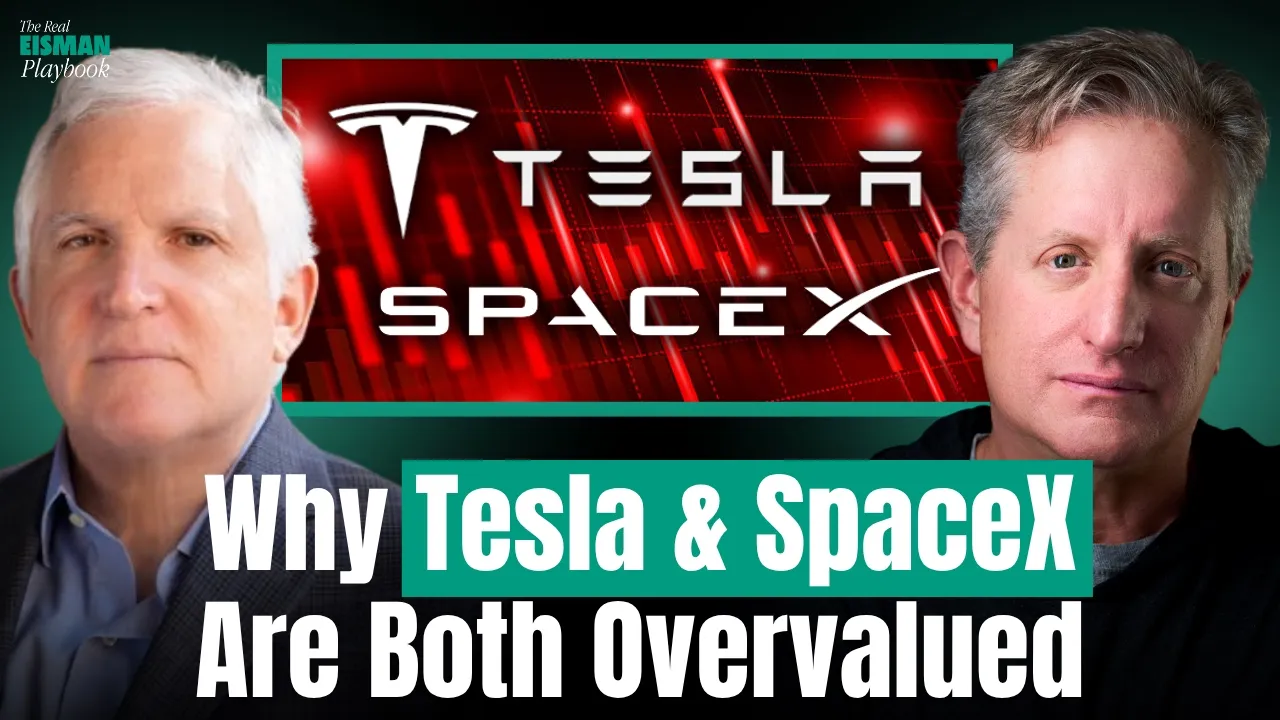
Oh, so you you want to borrow this money? Show us Eisman Eisman data centers, right? Show us how you're going to show us the economics of this data center. Uh uh. [laughter] >> All right. Let's finish up with two companies that you write about. Well, let's talk about Tesla. Yep. >> Um, you were negative on Tesla last time. >> I'm sure you're still negative on Tesla. Give us an update on Tesla. >> The update is um, >> and weave in a little SpaceX just to spice up the story. >> Okay. >> Cuz we're telling the story. >> Oh, yeah.
The story. Okay. I think I' I've never seen such shorts at scale as these two companies. >> What do you mean at scale? >> Market cap. >> I mean, such large market cap. >> You've had subprime lenders shorted at a $500 million market cap. Okay. I'm talking a trillion seven trillion four. Okay. All right. That that's the mindboggling part. >> Starting with SpaceX. Um it's built to fail. And the point I'd like to make to people, forget about the 90 times revenues.
Leave that out. We all know that already, but it's important. But what's what's incremental to the to the story and that is the lockup. Uh it's already started. The unlock post the recent earnings the flow went I think from 5% of shares that same to like 20 or 25%. There's a regular schedule now every few weeks 7% more is going to go into the free float. So the extreme overvaluation owes itself to a the story the narrative but b the incredibly small float >> which is about to change >> which is in the process of changing.
So if nothing changes if nothing changes fundamentally >> and the float goes from 5% to 25 to 50 to 75 to 100 stock's going to go down. And think about it if you're if you're a family office or whatever you bought SpaceX, you know, a valuation of 200 billion, 400 billion, 800 billion and now you wake up with still trillion five like you know it's ridiculous and in fact you've seen this with some universities the SpaceX position's gotten so big like their four sellers diversification stand but they have to sell it right so I think so I think that's what people are really missing with SpaceX otherwise it's a story and here's the problem if you're a baron SpaceX.
It's a Kathy Woods type of story in so far as they make these predictions out in the future. They're so far out, you can't really disprove them. >> Well, he's got a prediction he's going to do uh asteroid mining. Okay. How can you disprove that? >> Okay. Well, but by the way, you talk to any serious physicist, okay, data centers in space, it's ridiculous. >> Total insanity. Okay. >> I think what people don't understand is that people actually all think that space is always very cold.
And it's true that part of space is very, very cold. But whether you're in the sun, it's really really hot. So if you're going to build a data center in space, you're gonna have to deal with heat and cold. >> Eyes when you're no fun. You're letting the facts enter [laughter] the discussion. So So SpaceX SpaceX is uh you know, I had people like we shorted the stock publicly. We actually were the first ones to write up a big report.
It got almost two million views on X back in May before it went public. And now every yent is talking about SpaceX and they're all, you know, stock goes up 5% one day like, "Oh, George, are you feeling squeezed?" I'm like, "Well, not really. It's still down meaningfully from where I shorted it." And Steve, you don't invest on a daily basis. I don't invest any daily basis. Check back with me at year end or the end of next year.
We'll see how this plays out. Another catch catch line I use, and you can relate to this, others speculate, we invest, >> right? And there's and also in this particular environment I feel really my heart goes out to individual investor because the shiny object is a daily price volatility and that has a way of like oh oh my god yeah fomo oh my god space went up 6% I don't own it right and then you have the clowns on the cartoon network praising praising the idea you really don't know what to do so SpaceX stay awake run by the way last point on SpaceX it is not really a space play it's really an AI play.
Okay. With a SP with a rocket thing attached to it. That is to say, if you look at their S1 in the perspectives when they had like a like a $29 trillion T. >> Yeah. Most of it is AI related. >> 22 trillion was an AI. So, it's an it's cash burn by but it's a weak AI company. Totally. That's the crazy part. It's not It'd be one thing if Grock, which which is a great name. Um, >> you said Croc. F Gro was an incredibly profitable fast growing company and then you know we could say TAM is silly but but but but okay it's it's a great company this is like a third tier AI company >> totally and and okay so Starlink is worth something you look I've done you want the deep dive let's get let's get away from that I'm going to talk facts I come armed with facts I assault you with facts Starlink I don't know worth 200 billion 300 billion some number like that you know reasonable people could disagree a little bit two or 300 billion keep in mind The market cap of SpaceX is like I think it's a trillion7 right now.
Okay. All right. The AI thing, you know, it was bought for stock at an inflated price of 200 billion 250 billion. It's worth a fraction of that. Uh and the rocket thing. Yeah, it's cool. But again, narrative, oh, it's cool. Oh, how can you be short SpaceX? You see these cool rockets rockets? Okay. Okay. Right. So, so, so >> you know what the By the way, you know what the problem is? Having grown up reading sci-fi, >> you're into that stuff. >> And I'm into that stuff.
Too many people READ THE [laughter] SAME STUFF. THEY take it very seriously. >> 100%. The point I want to make is though, you add it all up, you're going to come up with 300 billion, 400 billion, 500 billion. The mark's trillion seven, >> right? It's crazy. >> All right. So, that's that Tesla Tesla the update um sales are imploding. Um I want to remind you that >> and um how do you know that? >> Oh, that's public public data.
Gordon Gordon J came out with it. it came out. I think US sales in the months of July were down 26%. Europe's down, China's down. What's really interesting is the third quarter last year benefited immensely from um pre- buying the last minute buying ahead of the removal of credit credits, right? So, the third quarter is going to be a disaster this quarter. >> This quarter okay um their AI venture at Tesla, right? Tesla is going seriously cash flow negative.
Now one of the things about Tesla Tesla's ROI return on equity is abysmal. All right, they never earn their cost of capital. Now what's happening is their capex capex the depreciation was running I think like 6 or 8 billion order of magnitude and the capex was like similar number the capex is going to 30 billion this year >> and for what >> AI >> but he's got AI in SpaceX >> company he's got he's got AI AI in Tesla all right also. >> Yes.
All right. So, so, um, they're going seriously cash flow negative at a time when the auto business is falling apart. The, um, the robot thing, yeah, is a complete freaking joke. All right, here's the point on Tesla and the self-driving car thing, that's a total joke. Um, you know, it's been, it's been, it's been firmly established. Everyone in the world, this is another fugazi. um the fake they have with the self-driving cars like so the so in so in Austin, Texas and a few other places they've got the self-driving cars going but it's in a very narrow area it's like geoenced right and there's very few this is a crucial point so please let me finish on this one >> u the number of rides and and Gordon Johnson made a great point about this they actually gave data they gave data which now proves that the auto the the self-driving car thing doesn't work the robo taxis and keep in mind the vast majority of the valuation of Tesla depends on the robo taxis and toit what I'm trying to get at is in Austin which has I think a population a million people whatever it is if you look at the number of rides per million of population like who's actually using it okay and then you extrapolate that to 350 million people United States you wind up coming up with a valuation for um >> tax for robo taxi >> robo taxis it's like 800 million not 800 billion >> slight problem all right so so we're going to the the cyber taxi thing is complete completely overcooked.
The robot thing is a total joke. Um they're they're going cash flow negative. All business is falling apart. You do the sum of the parts. It's kind of funny. I come up with the same numbers for both Tesla and um SpaceX. You're talking somewhere in the neighborhood of 30 $40 $50 a share. Since you're in a good mood, I'll give you 60. All right. The point is Tesla's, you know, 38 360 wherever it is and SpaceX is 140. So, I think they're both outstanding shorts.
And by the way, last thing I'll finish on. This is why you and I both are stock pickers. And the fact that they managed to jam both of these stocks into the S&P, I'd love to compete as a stock picker. If you were had your old hat back on and you get to go against SpaceX and uh Tesla, it's like, yeah, bring it. I mean, it kind of reminds me of the Japanese market in the 80s where, you know, Japan was killing everything because it was a huge momentum market.
Japan got up to 60 times earnings. The financials, the banks, maybe this is before your time. Japanese banks were on 100 times earnings, six times, 10 times book. Six times book. Can't even remember now. I'm getting old. And so as long as it was going up was a mania. You couldn't John Templeton would be freaking out. Jeremy Granthon because they're not going to buy that rubbish. But once the worm turned, all you have to do is avoid that and just index everything else and you kill it.
So, so I'm what I'm saying is SpaceX and um Tesla, it's been passive buying and also the story and the momentum. And last point I'll say on Tesla for all the hype on Tesla and kudos to anyone who owned it way back when. Do you realize Tesla's stock price is unchanged over 5 years? It's done nothing despite all the hype. I think it's all a function of liquidity and narrative. And I think I think I think the clock's about to strike 12. >> George, thank you.
That was great. >> Always good. >> That was great. >> And we're back. So, that was a pretty wide-ranging conversation. Tons of stuff was discussed. Let me just give a quick synopsis. We first started out talking about Treasury Secretary Scott Bessant trying to repress interest rates. George basically agreed with me. It's a complete waste of time. The the amount of debt that the US government has, 40 trillion, is just too big for Treasury really to impact interest rates for any duration of time.
We also talked about the yen and how interest rates in Japan are climbing, which if they get to a certain level might mean that Japanese institutions and retail will sell dollar assets. Thought that was kind of interesting. We touched on AI. He may be more negative on AI than I am. The way he looks at it is what's the return on investment? He thinks it's exceptionally low. And then we finished up with SpaceX and Tesla, which he is short both.
He thinks SpaceX maybe is worth 200 to 300 billion when the market cap is 1.7 trillion. And then we moved on to Tesla where I think the most interesting data point that he pointed out was that auto sales at Tesla are turning quite negative and he is very very skeptical about the robo taxi business. So I thought it was a great conversation. See you [music] soon. This podcast is forformational purposes only and does not constitute investment advice.
The hosts and guests may hold positions in stocks discussed. Opinions expressed are [music] their own and not recommendations. Please do your own due diligence and consult a licensed financial adviser before making any investment decisions. [music]
The words are the caption track's own and nothing is reworded or re-transcribed. Paragraph breaks are placed between sentences so the text reads as prose.
Free tools for your own script. No signup, no login.
Paste your draft and see where viewers are likely to drop off, with a rewrite for each weak line.
Paste the first 30 seconds of your own draft for a hook score and rewrites.
Check your draft against YouTube's advertiser-friendly guidelines before you record it.
Read this channel's public videos and transcripts, and download a writing brief for it.
| Sentences containing a number | 81 |
Most used terms
Filler phrases
337 in total: like 92 · you know 71 · um 55 · right? 36 · uh 28 · I mean 18 · kind of 15 · actually 13 · basically 6 · sort of 2 · literally 1.
A literal whole-word count of the same phrase list the Prepublish browser extension uses, so a phrase inside another word is not counted and a phrase used in its ordinary sense still is. It is a count and not a judgement.