Getting the transcript
Reading the captions from YouTube. A video nobody has opened here before takes 10 to 30 seconds; this page fills in on its own.
Getting the transcript
Reading the captions from YouTube. A video nobody has opened here before takes 10 to 30 seconds; this page fills in on its own.
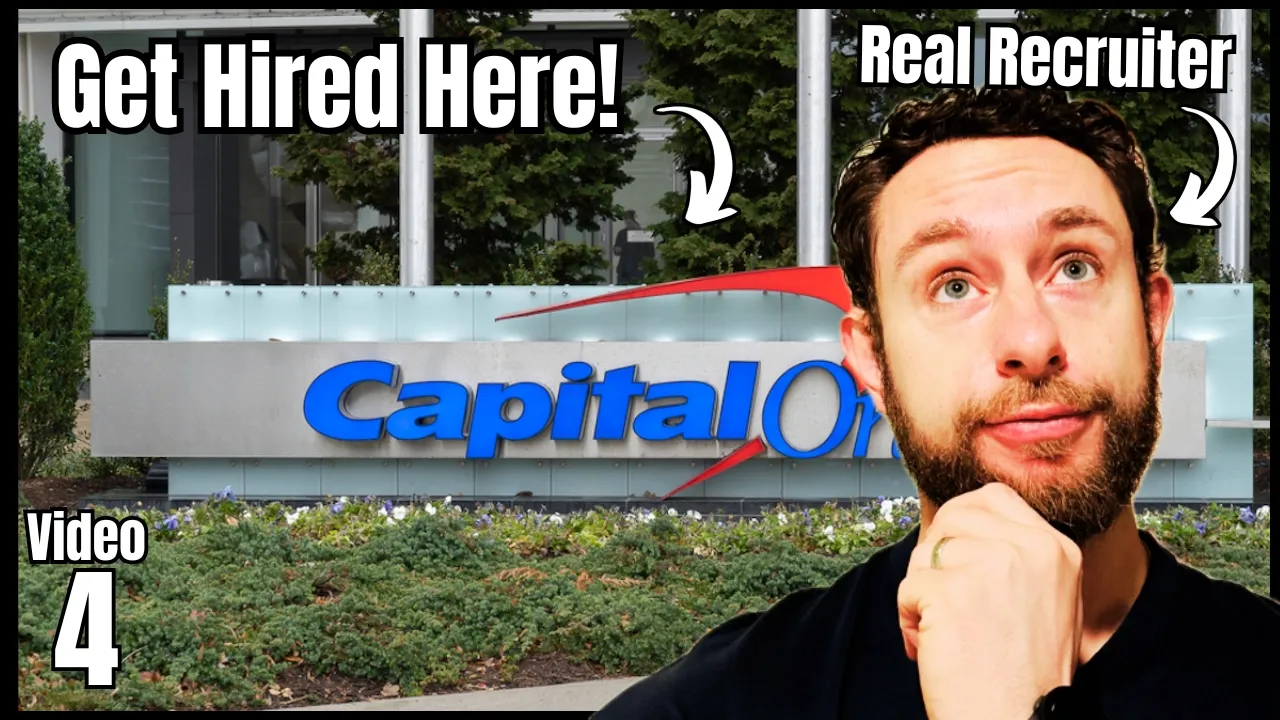
Ben Talks Talent - Interview Tips · @BenTalksTalent
Words
1,214
Runtime
5:52
Speaking pace
207wpm
Reading time
5min
207 words per minute, above the 201 75th percentile of 349 measured videos. That distribution comes from the 349-video hook study.
Opening (first 30 seconds)
As a candidate, one of the last opportunities you have to impress the hiring manager and increase the likelihood of getting hired is asking great questions in the interview. Often, at the very end of the interview, they'll say, "Do you have any questions for me?" And having no questions is basically a death sentence for your candidacy, but there's still a huge difference between asking good questions and asking bad questions. In today's video, I'm going to give you five questions you can ask in your Capital One interview that are going to help you stand out ahead of other candidates. Now, this
104 words, the words spoken in the first 30 seconds at 207 words per minute.
Free, no signup. See how the first 30 seconds hold attention, with rewrites.
Sentence shape
| Measure | This transcript |
|---|---|
| Sentences | 74 |
| Average words per sentence | 16.4 |
| Longest sentence | 51 words |
| Questions asked |
What this transcript is
Every word below is the caption track YouTube publishes for this video, pulled from the video itself and reproduced unchanged. It is not Prepublish's writing, not a summary, and not a re-transcription: it is the video's own published captions. English captions, generated automatically by YouTube, in the video’s original language. Source: the video on YouTube. A channel that would rather this page did not exist can ask for its removal through the contact page, and it is removed.
No Script X-ray for this video: YouTube shows a Most replayed graph only once a video has enough views.
As a candidate, one of the last opportunities you have to impress the hiring manager and increase the likelihood of getting hired is asking great questions in the interview. Often, at the very end of the interview, they'll say, "Do you have any questions for me?" And having no questions is basically a death sentence for your candidacy, but there's still a huge difference between asking good questions and asking bad questions.
In today's video, I'm going to give you five questions you can ask in your Capital One interview that are going to help you stand out ahead of other candidates. Now, this is video four of a four-part series. So, if this just happens to be the first video you're seeing, make sure you go to the playlist and watch the first three cuz they're going to help you a ton. And make sure you stick around to the very end cuz at the very end of this video, I'm going to put a video on the screen right here that's going to help you nail your interview and it's going to increase the likelihood of you getting a job offer 12-fold.
Okay, so here's the question I want you to ask and I love this question. And it's Capital One is one of the most data-driven financial services companies out there. How does this show up on a day-to-day basis for this team? This is a great question because it is a layered, it is nuanced, it shows that you are well researched, and the answer is probably going to be really interesting. You know, I've said in some of my previous primer videos on how to get hired with Capital One that um you know, they are a uh you know, a financial company, but they're like a tech company.
They are heavy in tech. They are heavy into data. And this will definitely manifest in your day-to-day. And asking a question like this, one gives you a a glimpse into what that'll look like. It'll show the hiring manager that you are the type of person who does research and understands some of the nuances of the organization. Um it'll also give you uh an insight into their understanding of that. Like if they have a great, well-informed answer in which they truly understand, that probably will give you some confidence in going to work for this person.
On the other hand, if it's terrible, then you might go, "Do I want this person to be my boss?" Either way, great question to ask. The next question I want you to ask is, "How does this team balance moving quickly with the compliance and risk requirements of operating in financial services?" Really interesting, because it's going to give you a glimpse into what type of leader they are. Leaders exist on a spectrum. There are people who are incredibly risk-averse and people who are open to a lot of risk.
They also operate in environment where you can't completely like eliminate risk, right? Like you have to be focused on that. So, it's just a high-level question and makes you look like a very well-researched um candidate. I think it's an interesting question and it's the type of question that hiring managers don't get asked a lot. Like it is a complicated question. So, if nothing else, they will remember you because of the quality of question you asked.
So, I love this question. I think it's great. I'd recommend asking it. Okay, so here's another uh really good question and it makes you look well-researched. And it's "Capital One has made a big push into tech. So, we're talking cloud, machine learning, digital banking. How has this shown up on this team on a day-to-day basis?" Really interesting. Or how has this changed the way this team operates? You know, you could end it in a few different ways, but it makes you look like you're someone who is really understanding the business and where the business is moving, right?
One of the biggest mistakes a candidate can make is not understanding the current climate of an organization they're interviewing with. But asking a question like this shows that you do. It shows that you understand not just where Capital One has been, but where they are going. And that makes you look like a really, really strong candidate. You'll also get a very interesting answer. You'll understand how this team is adapting.
To me, it's very valuable for a lot of reasons. Okay, and this is a classic question. "What does this person have to do in the first 12 months of being hired in order for you to consider this hire to be a success?" I I essentially never leave an interview without asking some version of this question and for a few reasons. One, it makes them think of you as someone who is success-oriented. Two, as someone taking a job, I want to make sure that the hiring manager has reasonable expectations of the role and I feel like I can hit the expectations of the role.
Nobody wants to sign up to fail a job. So, you need to understand what is required. Um lastly, I want to understand that my future boss can articulate success and can do so smoothly and confidently. Sometimes you get a hiring manager who just doesn't know and I got to tell you, you do not want to work for that person. If that person does not, like immediately, understand success in the role, they are going to be a terrible person to work under.
Okay, here's another one of my favorite questions. In the past, what has separated great from good candidates from a skills and behavior perspective? This is good because you want to understand what matters to them. What they say here are the things that essentially the hiring manager values. And I like asking this, especially if there are more interviews, because then you can incorporate the things they say into future answers as skills and behaviors you possess to position yourself as an ideal candidate.
But even if this is the final interview, you can respond to that by saying, "Oh, you know, that is really interesting. I think attention to detail is something that has allowed me to succeed in previous roles. For example, when I worked for ABC company, it was critical when I was on project blank." Right? And you can actually turn that around and give them an example of something that matters to them and sell them on something you had done in the past.
It's a great uh question to ask. You get a ton of information and it provides you an opportunity to position yourself as a great candidate. Now, I said at the beginning of this video that if you do something, you can increase the likelihood 12 times of getting a job offer. This video contains that information. It's only going to take you about another 6 or 7 minutes to watch it and it'll be worth every single second because you will get so much more when it comes to job offers.
So, I'm done here, but I'll see you over there.
The words are the caption track's own and nothing is reworded or re-transcribed. Paragraph breaks are placed between sentences so the text reads as prose.
Free tools for your own script. No signup, no login.
Paste your draft and see where viewers are likely to drop off, with a rewrite for each weak line.
Paste the first 30 seconds of your own draft for a hook score and rewrites.
Check your draft against YouTube's advertiser-friendly guidelines before you record it.
Read this channel's public videos and transcripts, and download a writing brief for it.
| 11 |
| Sentences containing a number | 4 |
Most used terms
Filler phrases
32 in total: like 14 · you know 5 · uh 4 · um 4 · right? 3 · actually 1 · basically 1.
A literal whole-word count of the same phrase list the Prepublish browser extension uses, so a phrase inside another word is not counted and a phrase used in its ordinary sense still is. It is a count and not a judgement.