Getting the transcript
Reading the captions from YouTube. A video nobody has opened here before takes 10 to 30 seconds; this page fills in on its own.
Getting the transcript
Reading the captions from YouTube. A video nobody has opened here before takes 10 to 30 seconds; this page fills in on its own.
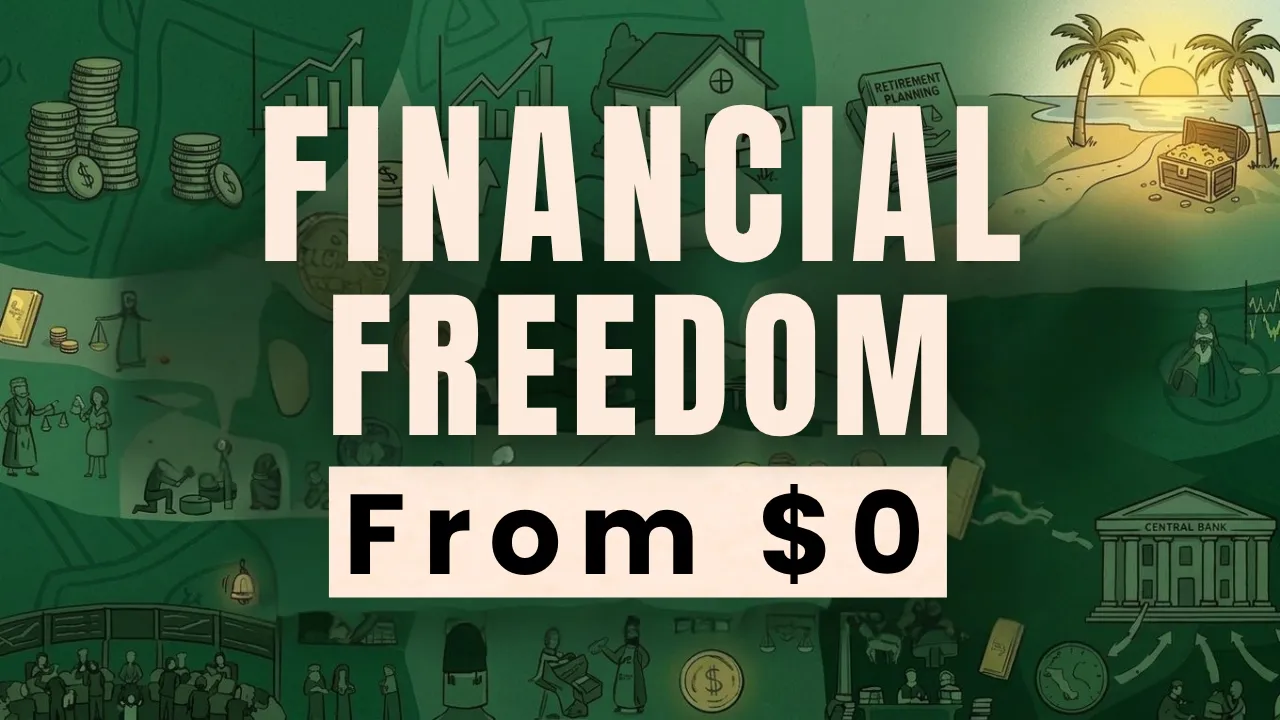
LITTLE BIT BETTER · @littlebitbetter7
Where viewers went back to watch this video again, from YouTube's public Most replayed graph, lined up with what was said at that moment.
Most replayed moment #1
10:405.0x the video's typical replay level
Take whatever you spend in a year, multiply that by 25. That's how much you need invested in income-producing assets to be financially free. Say you spend 40,000 a year to live. Multiply that by 25 and your freedom number is a million.
Said at 10:33
Most replayed moment #2
3:373.2x the video's typical replay level
If you have high interest debt, do not invest, do not save, pay it off first. Most people do the opposite. They put money into the stock market earning 8% while paying 16% interest on a loan. That's like running up an escalator that's going down twice as fast. No
Said at 3:30
Most replayed moment #3
5:102.9x the video's typical replay level
you better opportunities than others. Most people call that luck, but luck is just what happens when you're financially prepared and the right opportunity shows up. Level two, 25 grand to 100 grand.
Said at 5:04
The graph counts replays. It does not show where viewers stopped watching.
Words
2,734
Runtime
17:12
Speaking pace
159wpm
Reading time
11min
159 words per minute, below the 160 25th percentile of 349 measured videos. That distribution comes from the 349-video hook study.
Opening (first 30 seconds)
At $0, you're a slave to the next paycheck. At $25,000, you finally have breathing room. At $100,000, you're dangerous. But once you hit that final level, work becomes optional. I used to think getting to financial freedom was just one long road. But after reading the book Set for Life, I realized that it is actually a game with three different levels. And the rules change at every level. The [snorts] exact rules that get you to your first
80 words, the words spoken in the first 30 seconds at 159 words per minute.
Free, no signup. See how the first 30 seconds hold attention, with rewrites.
Sentence shape
| Measure | This transcript |
|---|---|
| Sentences | 255 |
| Average words per sentence | 10.7 |
| Longest sentence | 32 words |
| Questions asked | 6 |
| Sentences containing a number | 36 |
Most used terms
Filler phrases
22 in total: actually 11 · like 9 · I mean 1 · literally 1.
A literal whole-word count of the same phrase list the Prepublish browser extension uses, so a phrase inside another word is not counted and a phrase used in its ordinary sense still is. It is a count and not a judgement.
What this transcript is
Every word below is the caption track YouTube publishes for this video, pulled from the video itself and reproduced unchanged. It is not Prepublish's writing, not a summary, and not a re-transcription: it is the video's own published captions. English captions, generated automatically by YouTube, in the video’s original language. Source: the video on YouTube. A channel that would rather this page did not exist can ask for its removal through the contact page, and it is removed.
At $0, you're a slave to the next paycheck. At $25,000, you finally have breathing room. At $100,000, you're dangerous. But once you hit that final level, work becomes optional. I used to think getting to financial freedom was just one long road. But after reading the book Set for Life, I realized that it is actually a game with three different levels. And the rules change at every level. The [snorts] exact rules that get you to your first 25 grand will keep you totally stuck when you try to hit 100 grand.
If you play the wrong level with the wrong rules, you can work hard for 10 years and never move forward. So today, I am giving you the full map through levels from zero to financial freedom. Let's start with level one, zero to 25 grand. Most people are one bad month away from a crisis. Their whole life depends on next month's paycheck arriving on time. Level one is about escaping that. The goal is simple. Save one full year of living expenses.
Depending on where you live, that's somewhere between 15 and 25,000 dollars. Think of it like a plane taking off. Without a runway, you can't get into the air. Without cash in the bank, you're stuck. Here are four rules that will help you to save faster. Rule number one. You don't deserve the best, you deserve freedom. Does an $80 bottle of wine make you 10 times happier than an $8 one? Of course not. Good enough and the best usually give you the same experience, but the price difference is huge.
The same goes for your phones, clothes, cars, all of it. Right now, you don't need to buy the best. You get what's good enough at a lower price so that you can save more. Rule number two, a dollar saved is worth more than a dollar earned. Most people think earning more is the fastest way to get ahead, but saving is actually more powerful at level one. Here's why. Income is taxed, while savings are not. If you're paying 25% in taxes with a $5,000 raise, you only keep 3750.
But if you move to a cheaper apartment and save 5,000 on rent, you keep all 5,000. So at this stage, the money you don't spend is worth more than the money you chase. Rule number three, change the big things, not the small ones. On average, over 70% of our spending goes to just three to four categories, housing, transportation, food, and health-related costs. The fun stuff like coffees, clothes, and the rest is less than 20%.
And most people focus on that because they think big expenses like rent are fixed. They're not. Get a flatmate, move to a cheaper neighborhood, switch to public transport. Or if your culture supports it, live with your family. There's no shame in this. One decision about a big thing like housing can save you thousands a year. You make it once and it's done. No willpower needed every day. Compare that with trying not to eat out every Friday night.
You save very little and you have to think about it every week. Rule number four, kill the bad debt first. If you have high interest debt, do not invest, do not save, pay it off first. Most people do the opposite. They put money into the stock market earning 8% while paying 16% interest on a loan. That's like running up an escalator that's going down twice as fast. No matter how hard you run, you're still going down.
Change how you see this. Paying off debt is like investing. If you pay off a loan that charges you 16% interest, you just earned a guaranteed 16% return on your money. These four rules don't just save you money, they open doors to better opportunities. Let me show you what I mean. Meet David. He earns five grand a month and spends it all and he never saves. One day he gets offered a new job. The salary is 15% less than what he makes now, but the upside is huge.
Commission, ownership in the business, and a path to double his income within two years. But David can't take it because of the way he lives with big rent, big car payment, and all that. He can't afford to earn less, even for one month. Now meet Marcus. He also earns $5,000 a month. But Marcus spends half and has saved $25,000. Same job offer lands on his table. He takes it without thinking twice. The lower salary is still more than he needs and if it doesn't work out, he has a full year of savings to survive.
That's the hidden power of level one. It doesn't just save you money, it gives you better opportunities than others. Most people call that luck, but luck is just what happens when you're financially prepared and the right opportunity shows up. Level two, 25 grand to 100 grand. Level one was defense, saving, and protecting. Level two, you get to attack. There are two things you need to do to get from 25,000 to 100,000.
Let's start with the first one. Make your house pay for you. The place you sleep in is not an investment, it is an expense. Whether you're renting or have your own place and mortgage, housing eats up the biggest chunk of your income. But there's a way to change that. The strategy is called house hacking. Here's how it works. You buy a place, you live in one part of it, then you rent out the rest. It could be a house with a spare room, a small building with a few units, or a place where you rent out the ground floor to a business and live upstairs.
The tactic will look different depending on where you live, but the idea is always the same. Make housing pay for you. When I first heard about house hacking, my immediate reaction was, "It's not for me. I have a family. I live in a city where this seems impossible." Then I found out that one of my own friends, with two little kids, actually did it. He found a two-floor house a little far from the city center. The first floor, he turned it into office space and rented it to a company.
And the second floor is where he lives with his family. His story taught me something important. The moment you say, "It's not possible," you just blocked your brain from thinking further. You completely stop looking for solutions. But the second you ask, "How could I make it work?" your brain immediately goes to work. Keep your mind open, because one smart decision about housing will help you more than cutting all other expenses for years.
Now, let's talk about the second thing, earning more. How you increase your income depends on who you are. Most people fall into one of two categories. The first group doesn't want to deal with the headache of running a business. Their personality wasn't built for it. Asking them to build a business is like asking a fish to climb a tree. The second group, which is likely most of you watching right now, has that deep hunger to work for themselves.
You won't ever be truly happy working for a boss. So, no matter which group you're in, here is exactly how you handle level two. If you don't want to run a business, you need to stop climbing a job ladder that only gives you a tiny 3% raise every year. You're going nowhere fast. Instead, find a job where the work you do directly controls how much you get paid. Look into skills like sales, where you get a direct cut of every deal you close.
Join a small, fast-growing company. Or start doing freelance work on your own terms, where you set your own prices. Now, the author of the book actually warns against starting a side business here. He thinks you can't make real money after you're tired and worn out from working your long day job. And look, if your side hustle is just trading your time for pennies, like driving a taxi or delivering food, the author is 100% right.
You will quickly burn out. But, if you are building a real business that can scale up, I completely disagree with the author. And I can say that because I actually lived it. When I built my YouTube channel, I didn't just quit my job to go all in. That's financial suicide. Instead, I learned to look at my day job differently. My day job became the angel investor that paid for my life while I built my dream. It paid my rent and bought my groceries, so I never had to panic about money.
So, here's what I did. I woke up early. I worked on my own business before I went to work. I poured my nights and weekends [music] into it. It was exhausting. It was a massive grind, and it took me three straight years of working on the side before my YouTube channel made enough money for me to quit my job for good. Now, look, whether you start a business or grow at your job, the exact second you start making more money, a dangerous trap will trigger.
Your brain will tell you that because you're earning more, you finally deserve to spend more. You'll want a better apartment, the brand new car, and the expensive clothes. This is called lifestyle inflation, and it will kill everything you just built. Do not fall for it. The goal of level two is not to look rich. Make more money but don't spend more yet. Now, let's move to level three. A hundred grand to financial freedom.
Before we talk about how to get there, let me first clarify what financial freedom actually means. Financial freedom means the money that comes from your assets is more than your living expenses. That's it. It's not about having a million in the bank or sports car. It's cash flowing in every month, money landing in your account from assets you own more than your bills. Even when you don't work, it keeps coming. That is financial freedom.
And it starts with you knowing your freedom number. How? Take whatever you spend in a year, multiply that by 25. That's how much you need invested in income-producing assets to be financially free. Say you spend 40,000 a year to live. Multiply that by 25 and your freedom number is a million. Remember all that cutting back you did in level one? This is where it really pays off. Let's say you reduce your spending by $500 a month.
That's six grand a year. Now, your yearly expenses just dropped to $34,000. Multiply that by 25 and your new freedom number is $850,000. You didn't just save money. You literally pulled the target closer to you and wiped $150,000 off the board in one single move. So, if you learn how to cut more in level one, you can get to financial freedom faster. Now, let's talk about how to actually get there through investing. There are two proven paths.
Path number one, passive investing. Warren Buffett's mentor, Benjamin Graham, said, "Don't try to maximize returns, try to maximize your chances of getting decent returns over a lifetime." This simply means it's always better to move at a steady, safe pace and actually finish the race instead of sprinting so fast that you trip and break your leg. This is the exact philosophy behind low-cost index funds. Based on history, on average, they return about 8 to 10% per year.
It won't make you rich by next year, but it gives you something much more valuable. Peace of mind and consistency. Look, my entire job is reading finance, investing, and money books, finding the core lessons, and summarizing them here on YouTube. And if you take the most famous investing books in history, strip away all the Wall Street jargon, they all boil down to one simple sentence. If you're an average person, buy index funds and stop picking stocks.
That's it. Every top investor says the same thing. But almost nobody listens. My friends know what I do for a living. So, whenever we get together, they are always asking me for investing advice. And every single time I say the same thing. Just buy index funds. Don't waste your time picking stocks. Invest your time to earn more at your day job or business. Want to guess how many actually do it? Zero. Instead, they choose to waste hours picking individual stocks, checking their portfolio six times a day, and stressing over every little dip.
Why? Because index funds are boring. Most people don't want something small and consistent. They want a dopamine hit. What they don't realize is that a volatile stock that rockets up 30% for a few years will eventually crash 50% in a single market downturn. Meanwhile, the boring investor earning a steady uninterrupted 8% they'll win. Quietly. A single massive loss can destroy your compounding power. When you lose 50% of your money, you don't need a 50% gain to break even.
You need a 100% gain just to get back to where you started. Being consistent is better than going all in once. Look, the person who actually gets in shape and loses weight isn't the guy who goes completely insane at the gym for 2 weeks and burns out. It's the person who just shows up and does a moderate workout week after week, year after year. And it's the same story for business, relationships, just everything. One goes too hard and crashes, the other stays consistent and wins.
So, that's path number one. Now, let's talk about path number two. Active real estate investing. You've already got a head start because of housing hacking from level two. Buying a property, living in part of it, renting out the rest. The game now is to scale it. After a few years, you move out of that first property, keep it as a rental, and buy the next one. Do this a few times and you've got a portfolio of properties generating passive income.
Real estate builds wealth five ways at once. One, your tenants pay you rent every month, which is cash flow. Two, the property tends to go up in value over time, which is appreciation. Three, your tenants are paying down your mortgage, which means they're building your equity for you. Four, tax benefits, and five, inflation. Normally, inflation eats your savings alive. But when you own property, you change the game. Think about it.
Inflation forces your rent up. It forces your house value up. But your mortgage to the bank is frozen in time. 10 years from now, you're collecting more rent but paying the bank with cheaper dollars. And unlike index funds, real estate gives you control. You can find a better deal. Renovate to increase rent. With stocks, you press buy and wait. With property, you can actively make it more valuable. Over 90% of small rental properties around the world are owned by regular people.
People with day jobs who learned the basics and built from there. They can do it. So can you. Most people who reach financial freedom use both paths. Index funds for the peace of mind and real estate for the speed. So, that's the map. Three levels. Level one gives you safety. Level two helps you to earn more. And finally, level three gives you freedom. And one last thing. Don't confuse financial freedom with being rich.
Rich comes later. You get free first. Then you pour all that time and energy into something that truly matters. And that's when the real wealth shows up. Freedom first. Rich second. Get the order right. And always remember, while the math of money is simple, the behavior is hard. Your biggest enemy on this journey will always be your own psychology. If you want to master the mindset needed to actually reach financial freedom, watch this video on the psychology of money.
Thanks for watching, and I'll see you there.
The words are the caption track's own and nothing is reworded or re-transcribed. Paragraph breaks are placed between sentences so the text reads as prose.
Free tools for your own script. No signup, no login.
Paste your draft and see where viewers are likely to drop off, with a rewrite for each weak line.
Paste the first 30 seconds of your own draft for a hook score and rewrites.
Check your draft against YouTube's advertiser-friendly guidelines before you record it.
Read this channel's public videos and transcripts, and download a writing brief for it.