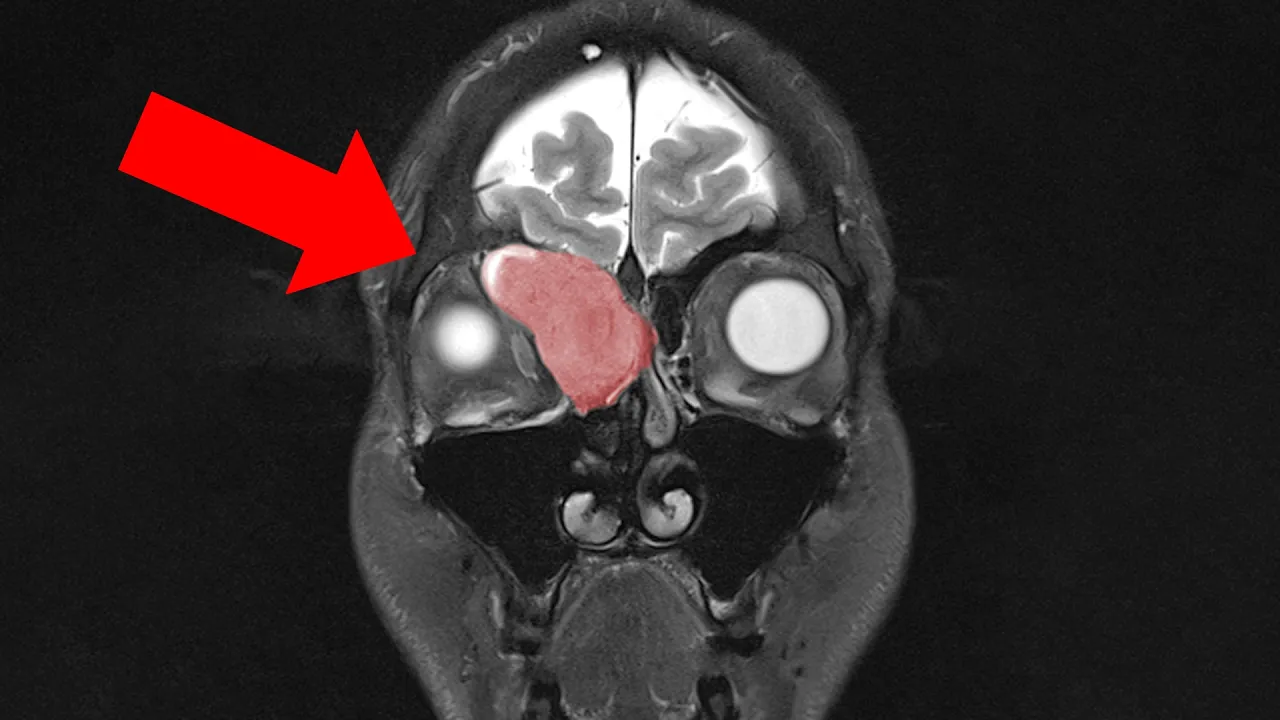
Only a few doctors know exactly what this is... for now transcript
Heme Review · @HemeReview
Words
4,282
Runtime
24:39
Speaking pace
174wpm
Reading time
18min
174 words per minute, between the 160 25th percentile and the 181 median of 349 measured videos. That distribution comes from the 349-video hook study.
Opening (first 30 seconds)
Attention is often best grabbed in a short sentence describing unusual actions. That culture was started from news headlines. And the modern-day descendant of that is social media titles. These used to entice people to read and today entice people to click in. In the world of medical case reports, these usually amount to a relatable situation such as eating 5-day old pasta or drinking excessive amounts of soda for a very long time. And these are interesting stories. They combine relatability with action. Someone did something
87 words, the words spoken in the first 30 seconds at 174 words per minute.
Sentence shape
| Measure | This transcript |
|---|---|
| Sentences | 220 |
| Average words per sentence | 19.5 |
| Longest sentence | 159 words |
| Questions asked | 10 |
| Sentences containing a number | 55 |
Most used terms
- cancer28
- tumor28
- b126
- um21
- gt20
- smark20
- surgery19
- different18
- smark b118
- tumors15
- cancers14
- sdsc14
Filler phrases
68 in total: um 21 · uh 13 · you know 10 · actually 9 · like 7 · kind of 3 · sort of 3 · basically 1 · literally 1.
A literal whole-word count of the same phrase list the Prepublish browser extension uses, so a phrase inside another word is not counted and a phrase used in its ordinary sense still is. It is a count and not a judgement.
What this transcript is
Every word below is the caption track YouTube publishes for this video, pulled from the video itself and reproduced unchanged. It is not Prepublish's writing, not a summary, and not a re-transcription: it is the video's own published captions. English captions, generated automatically by YouTube, in the video’s original language. Source: the video on YouTube. A channel that would rather this page did not exist can ask for its removal through the contact page, and it is removed.
Transcript
Attention is often best grabbed in a short sentence describing unusual actions. That culture was started from news headlines. And the modern-day descendant of that is social media titles. These used to entice people to read and today entice people to click in. In the world of medical case reports, these usually amount to a relatable situation such as eating 5-day old pasta or drinking excessive amounts of soda for a very long time.
And these are interesting stories. They combine relatability with action. Someone did something and then this happened. But the problem is interesting things can still happen when someone did nothing and as a result something still happened. Doing nothing is actually the most relatable because majority of people would have also done nothing. Kind of like how not making a choice is still making a choice. Doing nothing is still doing something.
Inaction is still action. It's just that in certain situations there's results that should not be. In late 2019, ET, a 23-year-old woman, was working in a bookstore in London. She was as normal of a 23-year-old in 2019 London as you could get. She was originally from Paris. She did nothing out of the ordinary that you would expect of someone of her age, but something had been happening. For most of her life, ET did have a reported history of something happening on the left side of her face.
She'd have short episodes where she just couldn't see out of her left eye. It would feel cold on just that one side of her face. This happened when she was a child and went away in adolescence. We don't know what this was. Examination at different hospitals over several years encompassed comprehensive imaging and diagnostic tests at major academic hospitals and they didn't find anything. But this started happening again years later when she was 23 years old.
And it preceded her experiencing excruciating pain on that left side of her face. And at the end of 2019, that pain was unbearable to the point where she couldn't go to work anymore and she had to return to Paris where it was examined. In the overwhelming majority of healthy 23-year-olds, this patient's symptoms of headache, facial pain, nasal congestion, and obstruction all point to sinus infection. Assuming that they have more than that could actually harm the person when you didn't need to.
Simply said, it might prompt them to stick something into their face and then give them some kind of medicine that they didn't need. that would be causing harm when statistically you wouldn't need to. So she was diagnosed with a sinus infection, but it was refractory to antibiotics and time was spent discovering that. This prompted imaging and when that was done, one of the physicians suspected that something else was happening.
The reality though is that that particular image that was done didn't really look like anything massively life-threatening at that particular point in time. A biopsy was performed. So, in this case, they did have to stick something into her face, and they found something that was massively life-threatening. It was cancer, but something was wrong. Once cancer is anatomically defined, we need to be more specific. How big is the tumor?
If it's already spread, is this the primary tumor or is this a metastasis? Where on the anatomical structure is it? And most importantly, how is it different from normal tissue? In humans, sinoasal malignancies are among the most, if not the most, diverse cancers. Dr. Shirley Sue, head and neck surgeon, explains. >> There's actually 200 types of sinus cancers. So, for the amount of footage in in your nose, there's more tumors there than anywhere else in the body.
So coming up with the right diagnosis is first and foremost the most important aspect because the treatment for each different type can be night and day for the next one. >> The differences in types come from genetic mutations. Different types have different mutations. The problem for ET was that her cancer only had one mutation. That was it. That was the only difference that it had from normal tissue. It was so rare that when ET was referred to the cancer center, the doctor there had not yet come across such a case in syonasal cavity.
This mutation was the deletion of the gene smark B1. This cancer is called smark B1 deficient syonasal carcinoma SDSC. Dr. Pavlo Massal, one of the leading researchers in smark B1 deletions, explains. So, SMARK B1 is what we call a tumor suppressor, meaning that it is a gene that suppresses the formation of tumors, which means that if you lose SMARK B1, then tumors, cancer, can form. More specifically, SMARK B1 is what we call an epigenetic tumor suppressor.
Epigenetic means that it controls the regulation of the DNA. DNA is translated to make proteins which are the building blocks of the cells. And what happens is that SMARK P1 is a subunit of a bigger complex that opens or closes the DNA in order to make different proteins. So when SMARK P1 is lost, the regulation of these proteins changes. It gets deregulated. And so proteins that were not supposed to be expressed are now being expressed.
And proteins that were supposed to be expressed are no longer expressed. And that is what drives the cancer cells to grow. and then start spreading around the body. >> There's two considerations for ET. The first is that a tumor growing in the syononeasal cavity is a tumor growing in a highly sensitive area of the face. It's right next to major blood vessels going right to the head. It's right next to many of the nerves that go right into the brain.
It's right next to the brain and the eyes and the nose. Surgery here would mean that surgeons would have a very very small and extremely sensitive space that they'd be working in. And this brings us to the second consideration which is that smark B1 related cancers are extremely aggressive ones on the nature of their mutation. These grow very quickly and that brings us back to the time that was spent taking antibiotics when doctors thought that she had a sinus infection.
There was a time a very short one where if identified ET would have been early enough to have gotten that tumor removed. when it grows, it grows into structures that make it very hard to treat. We think about what makes a tumor resectable or can that you can comfortably do surgery on uh in terms of what is clearly, you know, you can reectable, what is borderline or or very morbid resect and what what is just completely unresectable in those types of categories.
Of course, the earlier you find it, the more likely you're going to be able to take it out and, you know, in its entirety. And this is really important because in sinus cancers the most important factor in predicting survival is whether you can take the entire tumor out with the ne with negative with no tumor left negative resection margins and having a positive margin reduces your survival by 60%. In all of our studies so that's an early tumor.
And then for an intermediate tumor, we think about tumors that are in the eye or in the soft tissue of the face into the bone of the nose uh into the lining of the brain that's pretty you know fairly early. Those tumors we can take that out. Uh we can do using a combination of open surgery or minimally invasive surgery through the nose. um still but at the same time when it's in the eye you know taking that tumor out is going to leave you with some deficits like for example double vision right or visual impairment but but those tumors are still you know you can still take them out and then there the tumors that are so far advanced that we literally cannot take it out because of the structures that it's in and um some of examples are if it's on the lining of the brain the meningas very dusely you know you can't take it out or in its entirety or it's in the eye but not only in the eye in the apex of the eye and at the apex of eye there's nerves and blood vessels that connect directly into the brain around the bigger blood vessels and nerves in in the brain and that makes it very hard to clear all the cancer out.
And then finally if the tumor is um problem so extensive that it's wrapped around the internal corateed artery that um you know supplies blood supply to your brain then in that instance you wouldn't be able to get any of the tumor out. Uh and additionally there are also nerves cranial nerves um in the in this area that would also make the tumor unresectable. So you can go from a resectable tumor to unresective tumor very rapidly in sinus cancers.
A smark B1 is one of those tumors that has that potential. >> Currently, that's the only curative treatment that we have. But as the tumor grows larger and larger, this can happen over a very short time frame. It becomes harder and harder for the surgery to happen. Dr. Neil Aave, head and neck medicalon oncologist explains unfortunately smart B1 deficient carcinomomas are defined by generally presentation very at a very advanced stage.
Generally, the tumor is quite bulky within the nasal cavity. they may be involving eyes or involving the nose leading to nasal congestion or blurry vision. So compared to other cancers of the nasal cavity, they're associated with a more advanced presentation or when they when a patient comes into clinic, they have more advanced disease or a larger tumor, then they may be more symptomatic. Further, unfortunately, in comparison to other cancers of the nasal cavity, they're associated with a poorer prognosis, meaning that despite our best available treatments, the patients themselves do not have the best outcome.
And and that represents an area where we'd like to do better. If SDSC's cure is physical removal and it has the constraints of proximity to delicate structures in the skull, then attempting to shrink it first is a strategy. Our approach, my approach and the MD Anderson approach has been to give systemic therapy or treatment that goes all over the body such as chemotherapy to try to shrink the cancer down to improve the likelihood of a surgery that's going to get the cancer out in its entirety and in some sense address the biology of whether we should go down the route of a surgery or go down the route of chemotherapy and radiation.
But let's go back to SDSC's name SMARK B1 deficient syonasal carcinoma. Syonasal carcinoma can happen without smark B1 deficiency and it's also true that smark B1 deficiency can happen outside the syonasal cavity. This means that smark B1 deficient cancers can happen all around the body. How are those treated? And would they be treated the same way as SDSC? When the gene is deleted, that can lead to many, many, many downstream processes that happen.
And so if we want to find ways to help in this situation, we have to determine which one of these pathways, which one of these processes is the most fundamental in protecting the cancer cell and helping it grow so that we can start targeting it. That's one way of potentially treating cancers driven by the loss of smark B1. The other way is that once you lose B1, the deregulation of the expression of proteins can make the cancer cells express proteins that otherwise you would not find in most parts of the human body.
And that means that these are now specific proteins expressed only or mainly by the cancer cells. And these are proteins that we could potentially target depending on the original cell where smart B1 was lost. Let's say if it came from the kidney or if it came from the head and neck and the face. There can be different proteins that may be expressed. And so understanding how the original tissue and cell context plays a role in driving the different smart B1 deficient or smart B1 negative cancers can be extremely helpful in us developing research that can drive the new therapies and new clinical trials for these diseases. >> Dr.
Misau's primary area of focus is renal medularary carcinoma RMC, a kidney variant of a smark B1 deficient cancer. He's published many papers highlighting how RMC develops and how new treatment protocols for it have greatly improved survival over the last several years. These drugs have already existed for some time. It's just that we're getting a better idea of how and when to use them now. But that's in the case of kidney cancer.
One interesting point is that while smart B1 deletion is the same mutation happening it's a little bit different around the body in different tissues it changes very fundamental question is why even though all of these cancers lose mark B1 they look different even under the microscope they express different proteins they behave somewhat differently what is it that drive this differences and also what are commonalities that we can use to treat all of these diseases because some in some things they're different.
They have distinctions clearly, but there are certain commonalities. And are these commonalities so fundamental that if we target them, they can lead to the cancer cells dying. Meaning we can potentially treat or even cure completely eradicate these cancer cells by targeting fundamental processes driven by the loss of smart B1. One interesting aspect that shows SDSC really is different from its kidney counterpart is that in renal medularary carcinoma you have to do chemotherapy first.
The patient will die earlier if you do surgery first because what happens is that it makes it harder for the patient to recover from the surgery before they can get chemotherapy. Dr. Misal and his team discovered that in 2017. There's some flexibility in kidney cancer relative to SDSC though because of the anatomy >> is giving chemotherapy prior to surgery or radiation actually the right approach at MD Anderson.
This has been our treatment algorithm because we sort of identified an algorithm where if we can use chemotherapy to shrink a cancer that predicts for a better response to something like chemotherapy and radiation which may may spare somebody of surgery. In contrast, if you don't have a great response, then we should do a big surgery even if it is more morbid with the goal of then cleaning up with chemotherapy and radiation.
Um whether that is actually applicable in smark B1 deficient cyasal carcinoma is actually hard to say. No studies ever really specifically looked at smark B1 deficient cyonasal carcinoma. When we look at nasal cavity cancers as a whole or the the group of cancers known as snuck cyanasal undifferiated carcinoma of which historically smark B1 deficient sinasal carcinoma was a small group the suggestion in that larger group of which SDC is a smaller group there was a suggestion that people did better if they had a benefit from chemotherapy upfront followed by chemotherapy and radiation if they did follow or surgery if they did not whether that's actually true in smark B1 deficient cyasal carcinoma it's really unclear and I would say that I constantly personally asked myself this question in clinic which is to say is the right approach in somebody who has upfront purely rectable disease just to rect.
So basically, if you have a disease that's relatively small, you happen to capture somebody who has small cancer that's not sort of pushing up against the eyes or pushing back into the brain, should you just take them from a big surgery up front? And I actually more recently have really advocated for that even though it goes against sort of the MD Anderson approach. Um, but if you have very advanced disease to begin with that would not have otherwise been a candidate for resection, you try your best recognizing that if you can get them the surgery, the best thing you can do for any patient is to do a really good surgery that gets as much of the cancer out as possible. >> This field has evolved in enormously over the last 50 years.
So, um, previously all everybody with a sinus cancer would get an open surgery. So, you know, cuts on the scalp, taking the the um the the the skull open and taking out the brain tumor from the top and then a cut on the face um to open up the face and then opening the bones um in the face, taking out the tumor and then putting everything back together with screws and wires. We've really evolved from that and in the last 20 years using minimally invasive approaches have really taken off.
So endoscopic approaches we're using high definitionition cameras with magnification forceps to operate in the nose and around the brain that is now a proven technique for uh sinus and skullbased tumors and um the our publication MD Anderson has excellent survival uh in the patients that we uh appropriately select for this technique. Um and I think their surgical techniques are always evolving. So for example, you know, if the tumor is around the eyes, uh we're now using more transorbital approaches.
So making cuts around the eyelids and through the eye to take out those tumors instead of making facial cuts, for example. Um our techniques are uh also getting better in terms of how we can um make surgery safer and more accurate for our patients using image guidance, using different types of visualization during surgery. So that's really important. And then finally um when we take out tumors in in the uh skull base and around the nose we have to somehow put our patients together and give them the best quality of life.
Uh and so you know we've evolved techniques to reconstruct the defects ranging from using um um the parocranial flaps so lining underneath the scalp that we tunnel in into the nose through a little bur hole in the sinus to using um say free flaps that and MDNS has a big experience with that because for that very high following of patients with advanced tumors. ET was eligible for a trial of an experimental medicine, EZH2.
As of the time that I'm recording this, which is 5 years after ET's case in 2025, we still don't know if it specifically works for SDSC. There's a couple reasons why, but one of the most immediate ones are identification. If someone who has SDSC comes into a cancer center, many times the center might not even recognize that that person has SDSC. And this greatly impacts clinical trials because if you do enroll a patient, chances are that they already have advanced disease.
Otherwise, you wouldn't enroll them in the first place because the SDSC wouldn't have been identified. Very commonly, we hear the story of, oh, I had a stuffy nose for a long time and I went to my doctor and they thought I had just some polyps back there or they thought I had sinusitis. I got a series of antibiotics or steroids and it didn't work. And then suddenly I started having double vision or or frequent nose bleeds.
And then they went in and they saw, "Oh my gosh, there's a big mass here." And then they biopsied it. And then they biopsied and they say that it's cancer, but don't exactly know what kind of cancer this is. Um because there's not a lot of expertise in this particular country. You really need to be in a place that knows what it's doing, that understands the various different types of nasal cavity cancers. And they're not familiar with doing this particular test, which is actually a very simple test to order.
You just order a test on the tissue itself. It's called INI1. It's an immunostochemistry. Very straightforward to get at you. I get the answer in two to three days but you don't get the answer right away because you don't order it >> right >> uh and therefore that leads to a delay I would say very very very common almost every case of STSC that I have seen at MD Anderson comes as a different diagnosis before they come to MD Anderson so one of the things we know about these tumors in the sinuses is that about 50% of snucks get misdiagnosed and when they come to MD Anderson we change the diagnosis and this impacts treatment because if you come to MD Anderson your diagnosis changes, but you've had no prior treatment, we know that you may have a slightly lower uh um rate of survival.
But if you've already had treatment and then you come to MD Anderson and we change your diagnosis, your survival drops by 16%. >> One part of why this is the case is because once a treatment is received, the tumor biology will change. I'll give you an example. In metastatic melanoma, that is skin cancer that's already spread. They did a trial that was published in clinical oncology in 2023. Back in 2002, scientists had identified a common gene mutation in melanoma called the BFF V600E mutation.
That is in the gene BFF which is a part of the common cell pathway for growth. There's an amino acid substitution at position 600 due to a genetic mutation which creates aberant BFF protein that leads to unmititigated cell growth. In 2008, using X-ray crystalallography, we were able to identify a bunch of different small molecules that bound directly into the protein that resulted from BFF V600E. And by 2010, there were candidates that were being tested in clinical trials.
Now, not all melanomas have BFF V600E. Some are wild type. Some are BFF V600K. The exact percentage varies depending on the region and time. And sometimes we'll see a place that has 30% or less V600E. other places and times it can be upwards of 60%. But having a direct targeted therapy specifically for this mutation was one pharmacologic treatment modality for patients with melanoma. And given that the metastases would also have BFF V600E, technically we could use a medicine to treat it in the metastatic setting too.
There's two things to consider here. The first is that the targeted therapy for BFF V600E was seen to induce resistance in the tumors during the confirmatory clinical trials. The survival reflected that. This made it so that single agent BFF targeted therapy was not the standard of care. It was paired with a mech inhibitor from downstream the pathway. So it became a dual therapy. The second is that around the time that this dlet was approved, PD1 and CTLA4 imunotherapies were approved.
These were antibodies that enabled the immune system to attack the tumor directly. And the initial PD1 inhibitor approval in September 14 happened in melanoma under the rare disease designation. A question quickly evolved out of these two events. For a patient who has metastatic BFF V600E melanoma, is it better if they got targeted therapy first and if and when they progress, give them combination imunotherapy or is it better that they get the combination imunotherapy first and if and when they progress give them targeted therapy.
This question would generate data to give evidence in the form of a crossover trial. So one group of patients get imunotherapy first then targeted and another group gets targeted first then imunotherapy. I know the principal investigators of this trial and within the first about 2 years they already had the idea that imunotherapy first was probably going to generate greater survival primarily because they noticed that tumor biology would change in an attempt by the tumors to resist targeted therapy.
It would change with imunotherapy too. It's just that the more generalized approach of immune system attacking the cancer would make the cancer adaptations less uniform. So based on this example, it shows us that the tumor biology can and will change over time and treatment sequencing has an impact on survival. Hence, when it comes to misdiagnosis and wrong prior treatment, it will make an impact on the efficacy of subsequent treatment.
Hence why it's important to raise awareness of SDSC. While knowledge surrounding SDSC will develop over the coming years and decades, Ella's situation will always remain unique to her. What were those episodes happening to the left side of her face when she was young? Before she was born, an ultrasound had detected an abnormality in her left ethmoid sinus. What was that? Because none of the diagnostic tests that were done for her when she was six found anything out of the ordinary.
Why did the SDSC decide to manifest itself when Ella was 23? what was happening in her environment and her life that allowed for it to just suddenly appear like that. Those are questions that we may have a better explanation for later. And by that time, we can only hope that we're in a position to prevent SDSC from happening like this to others. Thanks so much for watching. Take care of yourself and be
The words are the caption track's own and nothing is reworded or re-transcribed. Paragraph breaks are placed between sentences so the text reads as prose.
Use this transcript
Three free tools that work on the material around a video like this one. No signup, no login.
Hook Analyzer
Paste the first 30 seconds of your own draft for a hook score and rewrites.
Policy Pre-Flight
Check your draft against YouTube's advertiser-friendly guidelines before you record it.
Channel Skill Generator
Read this channel's public videos and transcripts, and download a writing brief for it.