Getting the transcript
Reading the captions from YouTube. A video nobody has opened here before takes 10 to 30 seconds; this page fills in on its own.
Getting the transcript
Reading the captions from YouTube. A video nobody has opened here before takes 10 to 30 seconds; this page fills in on its own.
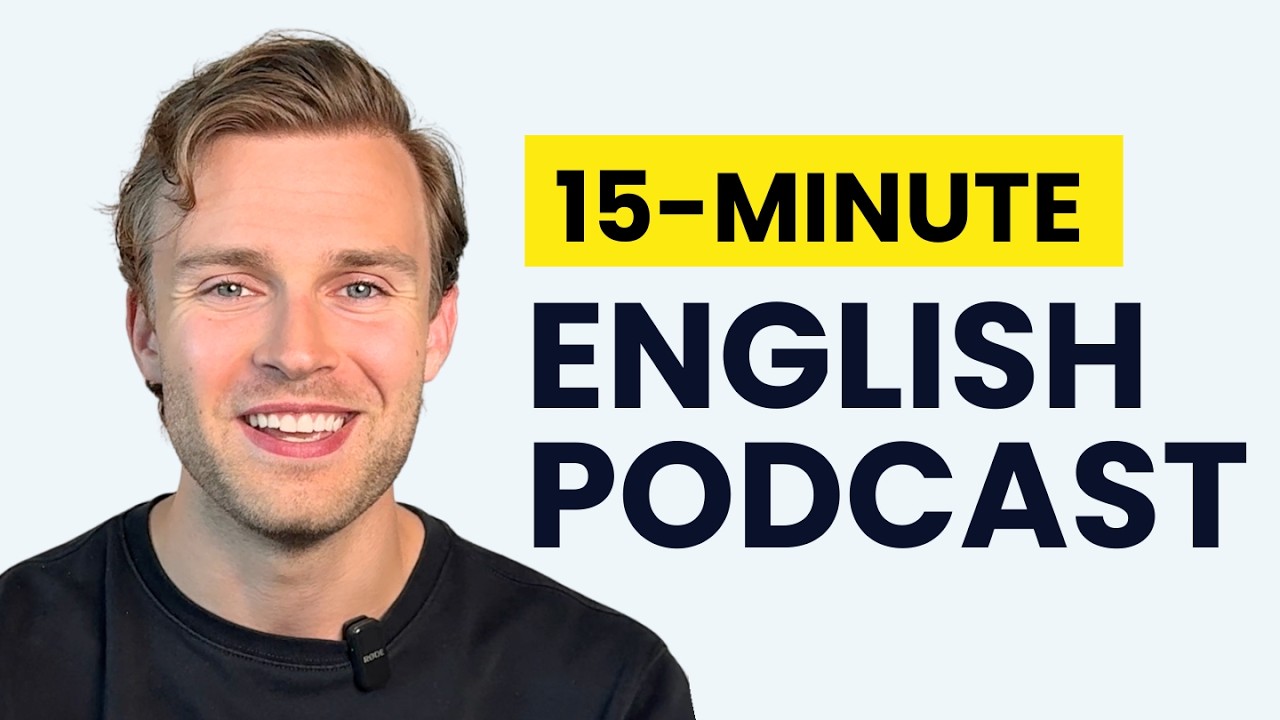
English At The Ready · @englishattheready
Where viewers went back to watch this video again, from YouTube's public Most replayed graph, lined up with what was said at that moment.
Most replayed moment #1
12:1911.6x the video's typical replay level
on the west coast of Vancouver Island. So, right on the Pacific Ocean. There's nothing between Tofino and Japan. It's just ocean for thousands of kilometers. And uh I saw sea otters, I saw
Said at 12:11
Most replayed moment #2
5:1110.1x the video's typical replay level
spent quite a few years in Europe. Believe it or not, I actually studied piano. I play piano. Piano is one of my uh hobbies now, but at the time I was studying it uh university professionally.
Said at 5:03
Most replayed moment #3
1:044.3x the video's typical replay level
background, how I started teaching English, so I thought this would be a good opportunity to share a bit more about that with you. First of all, I was born in Vancouver, Canada. Vancouver is a city on the west coast of
Said at 0:58
The graph counts replays. It does not show where viewers stopped watching.
Words
2,764
Runtime
17:51
Speaking pace
155wpm
Reading time
12min
155 words per minute, below the 160 25th percentile of 349 measured videos. That distribution comes from the 349-video hook study.
Opening (first 30 seconds)
Hello, hello, and welcome to today's video. In today's video, I'm going to give you a chance to practice your English listening skills. We're going to have a conversation. I'm going to talk to you about a variety of different topics, and you're going to have a chance to practice listening to and understanding real-world spoken English. This is a topic, or rather a video, that many of you have requested, and I think it's a great idea
78 words, the words spoken in the first 30 seconds at 155 words per minute.
Free, no signup. See how the first 30 seconds hold attention, with rewrites.
Sentence shape
| Measure | This transcript |
|---|---|
| Sentences | 205 |
| Average words per sentence | 13.5 |
| Longest sentence | 66 words |
| Questions asked | 11 |
| Sentences containing a number | 20 |
Most used terms
Filler phrases
42 in total: like 16 · uh 14 · actually 7 · you know 4 · kind of 1.
A literal whole-word count of the same phrase list the Prepublish browser extension uses, so a phrase inside another word is not counted and a phrase used in its ordinary sense still is. It is a count and not a judgement.
What this transcript is
Every word below is the caption track YouTube publishes for this video, pulled from the video itself and reproduced unchanged. It is not Prepublish's writing, not a summary, and not a re-transcription: it is the video's own published captions. English captions, generated automatically by YouTube, in the video’s original language. Source: the video on YouTube. A channel that would rather this page did not exist can ask for its removal through the contact page, and it is removed.
Hello, hello, and welcome to today's video. In today's video, I'm going to give you a chance to practice your English listening skills. We're going to have a conversation. I'm going to talk to you about a variety of different topics, and you're going to have a chance to practice listening to and understanding real-world spoken English. This is a topic, or rather a video, that many of you have requested, and I think it's a great idea because honestly, the more you listen to English, the more exposure you get to the English language, the better your English will become and the faster you will improve.
Now, today I'm going to tell you a bit more about myself. This is not something I normally talk about on this channel. The focus is normally grammar, vocabulary, speaking, and pronunciation, but I know many of you are curious about my background, how I started teaching English, so I thought this would be a good opportunity to share a bit more about that with you. First of all, I was born in Vancouver, Canada. Vancouver is a city on the west coast of Canada.
It's a city on the Pacific Ocean. Very beautiful place. If you've ever been to Vancouver, or you've ever seen photographs of Vancouver, I'm sure you will agree with me. We have the mountains, we have the ocean, we have beaches, we have forest, we have incredible nature very, very close to the city. So, I grew up here, and I've been exposed to nature. I've done outdoor activities since I was a kid, and it's something that I still enjoy today.
I like going for hikes, I like going skiing in the winter, I like going sailing, I like taking advantage of all the activities that this city has to offer. I don't know about you. Let me know in the comments which city are you from? What do you have to offer or rather what does your city have to offer? Do you have outdoor sports? Do you have any attractions that are of interest? What do you like about your city? Is it hot?
Is it cold? In Vancouver, the weather is actually not too bad. You probably think of Canada and you think of the snow, you think of the cold, you think of minus 40° in the winter. And it's true that Canada is a cold country. It gets really snowy in the east and the north, but in my part of Canada, in the west, it's actually quite mild. The winters are not too snowy. And at least in Vancouver, because we're right on the ocean, it doesn't snow that much.
It's quite rainy in the winter. November is not a great month in this city. It's very rainy. It's very dark. It's very gray, which is fine for a week or two, but you know, after a while it gets quite tiring. It gets a bit depressing at times. But the summers here are beautiful. We have the ocean, as I mentioned, we have beaches, we have a lot of different things you can do. You can take advantage of the nature right next door to the city.
And summer is just a great time to visit. So, if you're ever thinking of visiting Vancouver, definitely come in the summer. January is also nice, especially if you like to ski. We have some great ski resorts and ski hills very close to the city. About 2 hours north, we have Whistler. Whistler is a world-famous ski resort. I think it's actually the largest ski resort in North America. We hosted the Olympics in 2020. Sorry, 2010, not 2020.
Uh we had the Olympics in 2010. And they were hosted in Vancouver, but part of the Olympics were also held in Whistler, about 2 hours north of Vancouver. I remember I went to a hockey game during the Olympics. That was 2010, so 16 years ago. So, quite some time ago, but I do remember going to a hockey game. I think it was one of the finals. I can't quite remember it. It's all a bit of a blur. It happened quite a long time ago.
Canada is quite good at the Winter Olympics, as I'm sure you can imagine. The Winter Olympics are definitely our strength. Let me know in the comments as well, is the national team in your country better suited to the Summer or the Winter Olympics? Some countries are hot. Australia, Australia, I think they're quite quite good at the Summer Olympics. Some countries are of course cold, like Canada, we're better at the Winter Olympics.
Okay, I was born and raised in Vancouver, and then I moved to Europe. I spent quite a few years in Europe. Believe it or not, I actually studied piano. I play piano. Piano is one of my uh hobbies now, but at the time I was studying it uh university professionally. And I discovered in Austria that I liked teaching English. I liked helping people improve their English. So, I came back to Canada and I started posting on social media.
This would have been 2023. So, 3 years ago, 3 and 1/2 years ago at this point. I started posting some grammar lessons, some tips and tricks on uh vocabulary, idioms, slang, that kind of thing. As I'm sure you know, you've seen my videos, probably. If this is your first video, then welcome to the channel. Make sure to subscribe to English Up the Radio here on YouTube. But, uh yeah, one thing led to another, and here I am today.
I started some online programs. We teach English in our online programs. I also work with teachers from the UK and the US. At this point, we've helped over 3,000 students in our online programs. This is something I'm incredibly proud of. We have an amazing community. We have incredibly motivated students and learners from all over the world who are professional, they're disciplined, they want to be there, they want to improve their English, and honestly, that's what I love about the community the most because to be honest, working with people who are disciplined, who are motivated, who want to improve their English is something that is very enjoyable.
It's very refreshing. I love the energy we have in the community and in the classes. So, if you are a professional and you are looking to improve your English for work and for daily life, then I'd love to invite you to click the link in the description below to learn more about our programs. We have group classes on Zoom. We have private lessons. We have video lessons. We have a community, and we have a support circle to help you become more fluent in English, whether that's for work, for the IELTS exam, for daily life, for moving to a new country, whatever it may be, we can help you.
So, just click the link in the description below if you want to learn more. Teaching English is great because I can meet people, and I have met people from all over the world, from all different walks of life, who have different life experience than I do, who have different perspectives, different insights, and all around different outlooks on the world, which is incredibly valuable to me because one of the things I really believe in is learning from others.
Learning from others who have done different things than you have. Learning from other people who have more life experience than you because we're not alone on this planet. Everything you want to achieve has probably already been done before. And if you want to learn about how to do something, what better way to learn about it than from somebody who's already done it. Learning a language is a lot like learning any other skill.
You have to be disciplined. You have to be motivated. And you have to put in the effort and the work consistently. It's not something that you can do overnight. It's not something that you can do for a week and then expect to magically become fluent. It's something you have to dedicate a significant amount of time to. It's like any skill, any sport, any instrument, if you play an instrument like I do. You might have heard of the 10, 000 hour rule.
I think it was coined by the author Malcolm Gladwell. He said that you need to spend 10,000 hours on a skill to truly master it. And you know, I don't know if that's exactly or entirely accurate. It might be more than 10,000 hours. It might be a bit less than 10,000 10,000 hours, but that's a good target. 10,000 10,000 Can't even say that today. 10,000 hours is a good amount of time to budget to truly master a skill.
The other thing is the students we have in our programs are learning English for all sorts of different reasons. We have students learning because they want to move to an English-speaking country or maybe they're already in an English-speaking country. We have students who are learning for the IELTS exam. We have students who are learning for their careers because English is a global language. It's a truly international language.
So, if you want to advance your career, you do most likely need to learn English to a high level. Or at least a level where you can communicate effectively with your colleagues and your peers and your international partners. English is also very, very useful for travel. And travel is something that I really, really enjoy. I've traveled all over Europe. I love Europe. Right now, I'm in Canada, but I would like to travel more to Africa, to the Middle East, to Asia, to Australia, to South America, anywhere, really.
I'd love to see more of the world because I think, as I said earlier, travel is one of the best ways to expand your horizons and to get new perspectives and insights on the world. One of the experiences I would really like to have is a safari in Africa. I'd love to go on safari. I'd love to see the giraffes, the zebras, the elephants, rhinos, all the wild animals in Africa. In Canada, we do have quite a few wild animals like bears, cougars.
Oh, by the way, did you know the cougar has the most names of any animal in English? Cougar, mountain lion, puma, panther, these are all the same animal, believe it or not. So, we have a lot of cougars. We mostly call them cougars in my part of Canada, but in other parts of the world, they call them, as I said, mountain lions, panthers, uh pumas, and cougars. Cougars are especially dangerous. Bears are dangerous, grizzly bears are dangerous, and we also have an abundance of sea life, wildlife, aquatic life, uh in the ocean.
Whales, blue whales, uh orca whales, or killer whales are the same thing. Seals, sea lions, uh sea otters. Actually, 2 months ago, I went on a wildlife safari here in Canada on the ocean. I was in Tofino. Tofino is a very small town on the west coast of Vancouver Island. So, right on the Pacific Ocean. There's nothing between Tofino and Japan. It's just ocean for thousands of kilometers. And uh I saw sea otters, I saw whales.
Can't remember, I think they were humpback whales. And I saw seals. So, very, very interesting. I love wildlife. I love nature. I love animals. And seeing those animals in the wild is a totally different experience than seeing them in the zoo or the aquarium. Especially for those big animals like whales or dolphins. In my opinion, it's just not fair to keep them in such a small enclosure in the aquarium. So, seeing them in the wild is definitely the best way to do it in my experience and in my opinion.
If you're ever in Canada, you have to see the wildlife. You have to go whale watching. You have to go see the whales. We have so much amazing wildlife in this country. One of the big problems that we're having right now in Canada, as I record this video right now, it's July, so it's midsummer. We have a lot of wildfires. We have so much forest in this country, and the forest burns and burns quite easily, either from lightning, a lightning strike could set the forest on fire.
Unfortunately, some of the fires are also man-made. So, people smoking cigarettes and discarding the cigarette butt, people maybe having campfires. Right now, there's a campfire ban. So, you're actually not allowed to have campfires, believe it or not. This has been in place almost every summer for the last 5 or so years because we do have a lot of wildfires. And these wildfires are not only devastating because they wreak havoc on communities, small towns, small villages, people's property, but the smoke that they produce travels a long way.
It goes up into the atmosphere. It travels for hundreds of kilometers. So, there might be a a wildfire 300 km away, and even in the city, here in Vancouver, we'll experience heavy smoke. Unfortunately, we're exposed to the smoke and the particles of the smoke, which really aren't good for your health. It's really not something you should be breathing in, and a lot of people actually wear masks, especially if you are immunocompromised or you're vulnerable, maybe you're elderly, you you've suffered from a respiratory condition.
It's really not healthy to be breathing that stuff in. And it's also quite frustrating because you can't get out of the house, you can't go for a run, you can't breathe in the fresh air anymore. So, this unfortunately has been a problem over the last few years, and it's getting worse and worse. Last winter, in the local mountains here, we didn't have a very thick snowpack. What this means is that every winter, we get snow, and we get what's called a snow pack.
And in the spring, the snow pack melts and the bigger the snow pack is, the more water will come rushing down through the rivers. But unfortunately, recently the snow pack has not been very good. It's been quite small, which means that the forest floor, the dirt, the soil, the brush, the underbrush has been very dry. And that obviously leads to forest fires. Because it just takes one spark to set a tree on fire if the tree is very dry, if the timber is very dry.
And once that happens, it's incredibly difficult to put out. And then you have little fires that combine and they create these huge fire complexes. So this is a problem that's unfortunately been affecting Canada recently, as it has also affected other countries in the world. I've been following the news in Europe, uh Australia, uh Russia, they've had similar problems this year and also in the past. Let me know in the comments, do you have any natural disasters in your country?
Maybe earthquakes, maybe forest fires, uh maybe droughts, maybe floods, monsoons, hurricanes, any natural disasters, let me know in the comments. Unfortunately, it seems like they're getting more and more common. Okay, let me know in the comments, how much of this video did you understand? I was talking to you in a more casual, informal way about a variety of different topics. We normally don't discuss these topics on this channel, but of course, it's important for you to be exposed to English and to be exposed to as many topics as possible.
If you want to study English with me, click the link in the description below. We have several programs available, group classes, private classes, uh video classes, a community of like-minded learners and teachers. So, don't miss out. Click the link in the description below. I know you're going to love it. If you found this video useful, if you want me to do more of these videos in the future where I talk, where I answer your questions, where you can practice listening, let me know.
I really, really value your feedback. It's been an incredible 3 years on the channel, and I'm really excited to see what the future has to offer. Thanks for watching. I'll see you in the next video, and bye for now.
The words are the caption track's own and nothing is reworded or re-transcribed. Paragraph breaks are placed between sentences so the text reads as prose.
Free tools for your own script. No signup, no login.
Paste your draft and see where viewers are likely to drop off, with a rewrite for each weak line.
Paste the first 30 seconds of your own draft for a hook score and rewrites.
Check your draft against YouTube's advertiser-friendly guidelines before you record it.
Read this channel's public videos and transcripts, and download a writing brief for it.