Getting the transcript
Reading the captions from YouTube. A video nobody has opened here before takes 10 to 30 seconds; this page fills in on its own.
Getting the transcript
Reading the captions from YouTube. A video nobody has opened here before takes 10 to 30 seconds; this page fills in on its own.
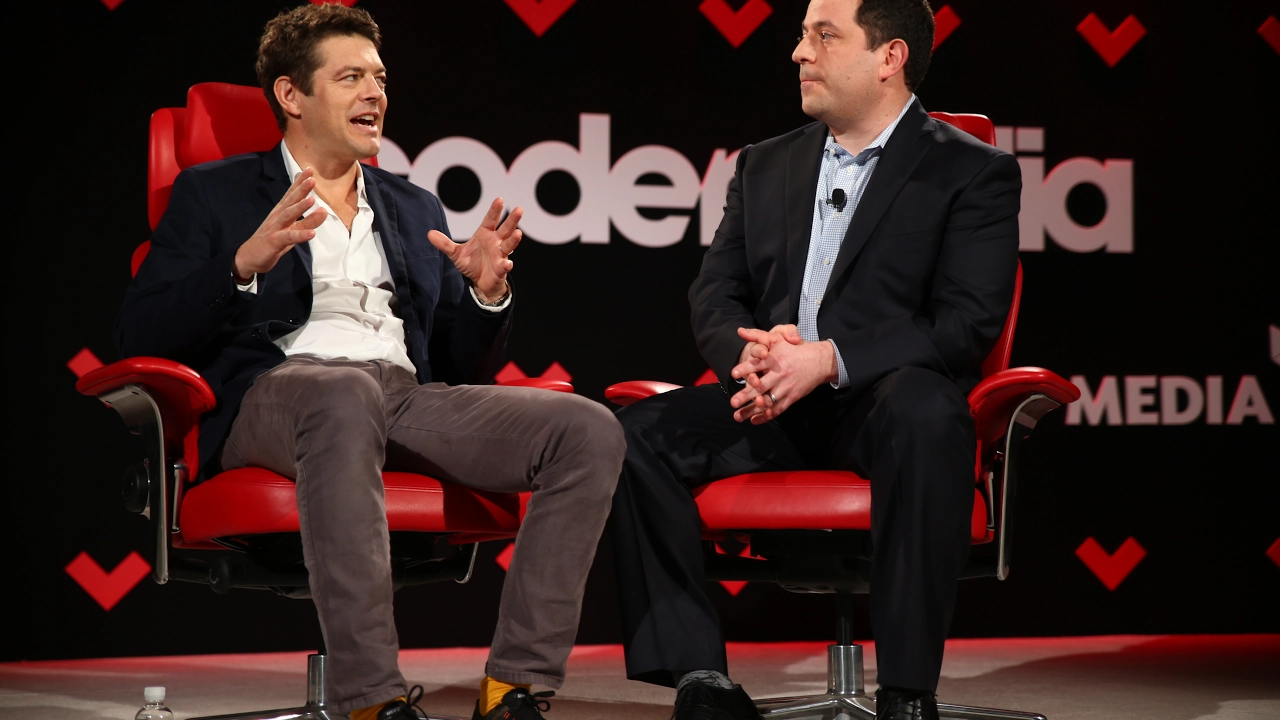
On with Kara Swisher · @onwithkaraswisher
Where viewers went back to watch this video again, from YouTube's public Most replayed graph, lined up with what was said at that moment.
Most replayed moment #1
1:343.4x the video's typical replay level
embarrassed that I do it. I kind of love that. But it's not it's not gore, right? I mean there's there's some We've made some gory ones. I used to say we only scary, not gory. I broke my rule. We've got some The Purge is pretty bloody. Yeah. All right, fair enough. Um and and the other commonality for most of these
Said at 1:28
Most replayed moment #2
10:363.2x the video's typical replay level
to work. He Jeff and I agreed and we thought it was really going to work. There were other people in there who didn't, but but there was a enough of a group of people who said we should bet on this one. The movie tested really well. It screened great. it just didn't work. So, sometimes there's an outlier.
Said at 10:29
Most replayed moment #3
36:082.5x the video's typical replay level
One last question for me. Director of Whiplash. Yes. Went on to make La La Land. That's a sore that's a sore subject. I I didn't mean to end on a on a sad note but did you have a chance to make what happened? I mean, you really are you Josh? Did you put him up to
Said at 36:01
The graph counts replays. It does not show where viewers stopped watching.
Words
8,259
Runtime
39:15
Speaking pace
210wpm
Reading time
34min
210 words per minute, above the 201 75th percentile of 349 measured videos. That distribution comes from the 349-video hook study.
Opening (first 30 seconds)
[Music] Sir, [Music] I told you we do a fast introduction. I mean, really fast. I was I was waiting for all my stats. I mean, my god. I think this audience knows who you are, but in case they don't, but I can never hear them enough. What do you do for a living? Uh, I make make TV shows and movies. Mostly movies. Half and half. Half and half. Half and half. Yeah. Uh, movies. People in this audience would movies. I've done much better. Movies are much more successful than the TV part. For sure. You have stuff in the theaters now.
105 words, the words spoken in the first 30 seconds at 210 words per minute.
Free, no signup. See how the first 30 seconds hold attention, with rewrites.
Sentence shape
| Measure | This transcript |
|---|---|
| Sentences | 676 |
| Average words per sentence | 12.2 |
| Longest sentence | 132 words |
| Questions asked | 58 |
| Sentences containing a number | 50 |
Most used terms
Filler phrases
256 in total: like 77 · uh 38 · kind of 36 · um 36 · you know 31 · I mean 18 · actually 9 · right? 6 · basically 3 · sort of 2.
A literal whole-word count of the same phrase list the Prepublish browser extension uses, so a phrase inside another word is not counted and a phrase used in its ordinary sense still is. It is a count and not a judgement.
What this transcript is
Every word below is the caption track YouTube publishes for this video, pulled from the video itself and reproduced unchanged. It is not Prepublish's writing, not a summary, and not a re-transcription: it is the video's own published captions. English captions, generated automatically by YouTube, in the video’s original language. Source: the video on YouTube. A channel that would rather this page did not exist can ask for its removal through the contact page, and it is removed.
[Music] Sir, [Music] I told you we do a fast introduction. I mean, really fast. I was I was waiting for all my stats. I mean, my god. I think this audience knows who you are, but in case they don't, but I can never hear them enough. What do you do for a living? Uh, I make make TV shows and movies. Mostly movies. Half and half. Half and half. Half and half. Yeah. Uh, movies. People in this audience would movies. I've done much better.
Movies are much more successful than the TV part. For sure. You have stuff in the theaters now. Yes, we have a movie. We have Split in the theater now and we have a movie coming out uh in a couple weeks called Get Out, which is a movie by Jordan Peele. And Split is We'll We'll do the one that's Split is Might Shyamalan. He we did The Visit with him and this is his uh his his follow-up to The Visit, which we uh we're very happy about.
It's done very well. And then other movies people would have seen, they've seen a lot of your movies. Um, some big hits. Paranormal Activities. Paranormal Activity. Insidious, Sinister, The Purge, Ouija, Whiplash, Normal Heart. So, Whiplash Excluded. There's generally a theme here, right? You do dark horror thrillers. Scary. Whiplash is my Sundance kind of indie scary scary movie. It's still scary. It's just a different tone.
Should we pull people if they've seen par a whiplash crowd or or a paranormal? I It's a whiplash crowd. I know. I know. I don't I don't I so I Let's I mean I not that I don't appreciate my crowd, but I actually one of the things I love about scary movies is that we're kind of outcast. My parents are kind of embarrassed that I do it. I kind of love that. But it's not it's not gore, right? I mean there's there's some We've made some gory ones.
I used to say we only scary, not gory. I broke my rule. We've got some The Purge is pretty bloody. Yeah. All right, fair enough. Um and and the other commonality for most of these movies, I think all of them, is none of them are big budget movies. Some of them are very cheap. They're all cheap. So this is kind of your calling card, right? You have you have a formula. You want to explain what the formula is? Yes. So the formula in broadstrokes is we only make lowbudget movies.
We get paid nothing. The directors get paid as little as we're allowed, which is scale. The actors get paid as little as they're allowed, which is scale. And the pitch to the filmmaker coming in. My my greatest successes or our greatest successes have been with filmmakers who've kind of had a hit and then kind of gone off a little bit. So James Juan did Saw and he did two movies for Universal you've never heard of. And he came into my office and he is pissed.
They're in movie jail. They're in movie jail. They're pissed at the system. And one of the biggest reasons they're piss where we get mad at the system is we go to work for a studio. The studio tells us what to do. The movie bombs. We get blamed. So we being the filmmakers get blamed. So, that is a very powerful tool that our company uses. And we say to James or whoever it may be, can't promise you a hit, but I'm going to give you Final Cut and I promise the movie will be your own.
So, you're going to live or die on your own work. And I I kind of make a joke, although it's not really a joke, that it's oure film making. It's the kind of French style of film making, but it's for commercial movies. And that's a very powerful message to a man or hopefully woman who has kind of been burned a little bit by the system. So it's not first-time filmmakers necessarily. We don't The big difference between us and Roger Corman, we're we're compared a lot to Roger Corman who I love and is terrific, but totally different system.
Roger Corman was first time do everything. If you're if you're not an old person, Roger Corman was 60s7s exploitation. Famous. Yeah. Did Famously gave everyone their start. famously gave Jack Nicholson and and uh and so a gazillion people their start. Um uh but his whole thing was super super cheap from beginning to end. Mine I don't want a first-time filmmaker. I want a filmmaker who's who's kind of been through the system and and has something to prove.
Scott Derekson did Exorcism Emily Rose which was a kind of a big hit and then he did this movie uh this Keanu Reeves movie for Fox which didn't work at all and he was in my office and ready to make sinister and um and we've done it time and time again and it's been it's a very effective tool and when the director doesn't make money unless the movie makes money guess what more often than not when it's a choice about what's going to make the movie more commercial the argument is a lot smaller because our our interests are aligned with the director as opposed to paying him a big fee upfront when and he just wants good reviews cuz he's been paid already.
The studio hasn't. So, the economics of it are are you you've got some actual sort of it's it's a formula, right? Like up to 5 million for the first movie. Yeah. Five. Yeah. Well, we we the reason that we get to our number is actually it's it's totally reverse engineered. So, the number used to be 3 million, 4 million, now it's 5 million. And and besides the fact besides inflation um which obviously isn't that big a percentage that I just mentioned uh we get to the number by worst case scenario where are we going to lose and it's very studios do low mid high ranging cases but they're low the movie can come in below their low case like and often does we can't get worse than our low case.
So in a a worst case scenario, the movie is upside down and backwards. I can get $2 million out of the United States and $2 million. No one comes to see this movie. Oh, it's not in theaters. You right. So you've you've you've got a version of this. You don't even put it out. It's not a version. It's a pillar, right, to our strategy, which is I say to the directors, no distribution guaranteed. You look at it. We don't decide.
You test it. We test it a million times. And we don't decide how the movie is going to be distributed until it is finished. And I can I say to the directors, I guarantee your movie will be seen, but I'm not guaranteeing how it will be seen. So it might just be seen on iTunes or it might be in 3,000 theaters. And we make that decision after the fact. So there's So how many of the movies that you make for So we you're going to say, so basically there's a version of this where the movie never gets shown in a theater, but you can still get your 5 million back or close to it.
Yeah. Maybe our worst case is four. So we lose a million bucks. iTunes international international all media domestic worldwide all media selling a pirate of deep well you don't get any money for the pirate we don't get that money yeah um people saying are movies we've never had a movie distributed in China but all our movies are seen in China always by everybody but no we've never distributed one and then you've got a second tier for someone who's established like might he gets to like 9 million 10 million is that right no our second tier when we go a little more expensive everything that I just said is off the First of all, for sequels, sequels guaranteed release date before we start.
We have proven IP, so we have a proven we still make sequels a lot less money than studios, but our sequels are more closer to 10 than five. Um, and the sequel is it's a just a much a sequel. The sequels that we do are much follow the life much more closely to a traditional studio movie. They're still a lot less expensive. We still don't get paid. I don't like a big above the line on the sequels, but they follow a line much more like a traditional studio film.
And so what's how what's your what's the methodology you use to figure out, all right, this is this is theater worthy. This is this is going to iTunes. Well, when you screen a movie with an audience in Burbank or wherever Westlake Village or wherever we screen these movies, 99 times out of a hundred, if you were there and I'm there and the director there and Universal's there, it's we kind of all agree. It's very rare that you disagree.
And there's a there's a a lot of watch how the replay. could see you could you could you could you could you guys could it's like it was like paranormal activity is such a genius like no I screened the movie in front of an audience and watched them all jump out of their seat and was and no I couldn't get anyone in the theater to watch that but anyone if they were in the theater would have known Paranormal Activity was going to be a hit I just everyone would watch it on a DVD at home so no one put that together but there's a great benefit to the director this is easier usually for the director to understand than his representatives but for the director There's a great benefit.
Thank you. Uh uh to to the system that I just described. Because it's almost director proof. In other words, it's it's there's almost no way. It's almost hit proof. You make a movie, you screen it, we think we got a winner, we release it wide. 99 of 49 times out of 50 on that movie, we do well. The bar is so low. The movie cost $5 million. If it opens to 10 and gets to 23, it's not like a home run, but it's a success.
Everyone made a little bit of money. If the movie doesn't come out well, it goes to iTunes, so it kind of disappears. So, there's no there's no magic to this. You show it in a screen, you show it in in a in a theater, everyone sort of gets it right away. Yeah. There's not a lot of We had no complicated algorithm. We had we had one big disagreement. I guess if I disagree, technically, if anyone's interested, the way it works with Universal is if I disagree with them and I think the movie should be a wide release and they don't, I'm I'm if they're financing, they don't finance everything we do, but most of what we do, then I'm allowed to go show it to other people.
I've made 22 movies for them. One movie I disagreed with them about and they were right. I was wrong. I shopped it everywhere. Everyone said, "Universal is right. You should not release this." And we didn't. What was that one? It was Stretch. It was Joe Carneahan's movie. And there's and there's one case and this is I was talking about your comm's guy and how well he's done by telling me about this stuff. He made a point of telling me about this movie in case I forgot.
You have a you you hold a record for the least watched movie. I mean Josh he's he's touting my biggest bomb. My only bomb. Um tell people what that movie is. We have a record. We do we have many records. We have a record for the um lowest weekend gross of a wide release film. So, a film released over 2,000 screens and the the the lowest number possible. I think it did like 1.1 for The Weekend, which is a record for the It's the lowest grossing wide release film ever of all time.
Do you do you guys want to guess what that movie is called? No, it's called It's called It was called Gem and the Holograms. It was a lesson to stay in scary. I was trying to get fancy, do kids movies. So, what went wrong there other than going into kids movies? Well, how did you how did you screen it in the theater and think this is a winner. Let's go and and and get it that far wrong. Well, that movie went through exactly the same process I described and and and it I I blame myself, but it was a group.
We Universal thought it was going to work. Actually, the studio was divided, but the Jeff Shell thought it was going to work. He Jeff and I agreed and we thought it was really going to work. There were other people in there who didn't, but but there was a enough of a group of people who said we should bet on this one. The movie tested really well. It screened great. it just didn't work. So, sometimes there's an outlier.
Well, yeah, there once where it was. And then you make a $5 million movie. If you market it, and this is Universal, Comcast, who actually does it, um, then they spend how much marketing it? They spend 25 to 35. So, they treat it like it's a like a blockbuster. Oh, yeah. Yeah. Yeah. Yeah. That's the whole thing. That's the whole mechanism of of those kind of releases. Yeah. So, the idea of of spending a little bit, having an indie studio make a movie for a small budget and then get picked up by a bigger distributor, that's not a new idea.
The idea of focusing on horror, that's not a new idea. Uh, Weinstein used to do very well with Dimension. Um, is there something specifically new that you're doing here or you're just the only like why aren't other people doing what you're doing? Well, I think the new idea is that and this certainly holds for the Weinstein and it holds for the Independent. There's a method in Hollywood which is very hard to escape from largely ego-based which is if you have a hit you should make a more expensive movie.
If you have a director and you have a five or10 million movie you should make a $50 million movie. Same thing with the producer after I produced Paranormal Activity you should go make World War Z. And I always say I was lucky enough that I'm was 30 in my mid30s when Paranormal Activity happened. So, I'd been kicked around for 15 years. I think if I was 22, I probably would have gone to do an expensive movie, but I had seen both sides of the world and was very fixated on this idea of let's continue to keep budgets low and kind of play for the upside.
And it's not sexy. I'm not in a a sexy part of the business. I'm not like maybe our offices are in like Tai Town, you know? I'm not I'm really kind of an an outsider in the Hollywood system. And I think that that I I really think it sounds simple and kind of a little silly, but I think it is kind of true that it's so hard for everyone, whether you're on the talent side or the representation side or even the studio side, to not think the cool kids spend money and kind of the less cool kids don't.
And and and studios I I know this. I'm not even it's not even a theory. I I people who've run other studios have come to me often and said we want to do this this is such a great business but when you test that it just it falls apart for a variety of reasons but really all the reasons come down to what I just said and I could give specifics on that if you wanted but it's ego is is where we were just yeah I mean it's like you I I had this one situation this is kind of a good story we had this movie uh we had this movie called the gift um which we made which which uh which Universal didn't want to do and I loved it and we had a stop date with an actress working on the movie.
So, we had to start spending money on the movie before I had a yes from Universal, which I do occasionally. And so, we're like a couple hundred,000 $300,000 in. I assumed they were going to say yes. They said no. And I had two studio head head the superhead which was probably a mistake already but I had the superheads of two studios who will remain name nameless who said anything Universal does we're in. We're in and it happened to be that these two meetings happened very close till the month before this movie became available.
And I called them both and I said well good news we have this movie. It's exactly the situation that you want. And by the way, I'm not interested in a bidding war. I don't I I'm really stressed about the 250,000, which is a small company. I got a quarter million bucks that I'm like kind of flying by the wind and I'm going to owe another $300,000 next week. Uh here's the deal I have at Universal. The first one to say yes to the exact same terms gets the movie.
And I was a Friday. And on Monday, I'm Sunday, I'm waiting for my phone to ring like this is I'm in business. And on Monday still we like no we like come in meet with us can you put Scarlett Johansson in the movie we want I'm like Scarlett Joe like we have an actress it's closed now I'm $600,000 into this thing what are you talking about and they wanted to develop it and we'll pay Scarlett Johansson five $8 million and I think a lot it's very hard as a producer to think I got Rebecca Hall for scale but if I could work with Scarlett Johansson for $8 million this would be great.
I don't think that way, but a lot of people do. And anyway, I wound up doing it with neither one of those people and someone else. And I was like 900 grand into the movie, but I always think of that as an example of kind of what you're mission ego plus mission creation. Mission, we do this better than you. You don't know what you're doing. Kind of like that. And um and it's it's it's kind of fascinating. It's good for me.
There is one studio who's doing what we're doing pretty successfully right now. And and why does horror work in other than us? Why does horror work as this genre? Why what does horror work? You don't need names. You don't need movie star. You need movie stars, I think, for comedy, for almost every other genre, you need movie stars. Horror, you just need a concept. So, so that's the biggest reason. And by I believe the best horror comes from low budgets.
So, as soon as you pull out special effects and and as soon as you pull out the bells and whistles, you have to focus on the stuff that really makes movies scary. So, it's not a coincidence that Paranormal Activity is 10 grand and Blair Witch was 25 grand. People are absolutely not. No. It's not a coincidence that low-budget horror consistently works better than any other genre on a wide release platform. For sure. So, speaking of horror, you have we have a new movie.
You have a new movie coming out. Yeah. Yeah. Directed by Jordan Peele of Kian Peele. Yeah. Keenan Peele. Yeah. Um let's show a clip from that and then we'll talk about how that came about. Okay. Great. Good to see you brother. Yes, of course it is. Something wrong. Chris was just telling me how he felt much more comfortable with my being here. That's nice. Get out. Sorry, man. Get out. Yo yo chill chill chill chill chill get out.
Get out. Should we explain what Get Out's about? I'm I'm It's a fun This is a fun movie to talk about given what we're talking about. So, one of the other um benefits of doing lowbudget movies and doing lowrisk movies is that we get to have kind of the opposite conversations that a studio has before on a Monday morning when you read scripts. So, if you worked at a studio, if I ran a studio, I would do the exact same thing, which is you have to have comps.
So, we read the script, it's comps to this, comps to this. So, worst case scenario, $25 million. We get to do the opposite because the most we can lose is a million bucks. So, what I always look for is what has anyone read this weekend that there are no comps? What feels totally different? So, Get Out is a great example of that. Get Out was is is it's hard to tell from this, but it's basically uh a horror version of Guess Who's Coming to Dinner.
Right. So, Allison Williams, the whitest girl in America, Alison Williams from Alison Williams Girls, right? Right. Has or from Brian Williams has both. Right. Exactly. Or from Brian Williams from both. Uh has an African-American boyfriend. They've been going out for three months. movie opens and and he says to her, you know, have you told your family that I'm black? And she says, why would I do that? Like the fact that you would even ask that is so messed up, you know, and and he and what you learn in the first 10 minutes of the movie, she is ultra race sensitive and he's super relaxed.
They get pulled over by a cop. He's not driving. The cop asks him for his license. She's up in arms. He's like, I'm used to it. They get to the house and right at 20 minutes into the movie, you know, the dad says, you know, I loved Obama and do you like to golf? I love Tiger Woods. And you're just like this like oh like this is terrible. And what turns out into it's Jordan's kind of worst American nightmare. I won't give away what the movie is, but it's there really isn't a comport.
It is a straight scary movie that's not a comedy at all. And it's my f we don't all of our movies obviously don't have this, but but some of my most favorite movies that we've done have a social message underneath it. This movie has that. The Purge certainly had it. And uh and so it opens two weeks. I'm excited about it. So five years ago this would have been open field for you. You wouldn't have had real competition for a movie like this.
Now when when Jordan Peele wants to do a movie like this, is he also talking to Netflix and Amazon? Any Q is going to be here from Apple? Well, that's another Netflix and Amazon. Yeah. Not yet. Uh we have you're not bumping into them. We're bumping into them all the time on the making deals with talent side because everyone and their mother is busy, which is great and great for the business. not good for our business.
But we we built our company when there were when there were no jobs. So it was much easier to get people, you know, working on our movies. I'm very glad the business is much healthier, but we have to go about it a different way. But um but the answer on the competition is no. You know, it's still like the we've done best with movies that have been kicking around and everyone has said no to. This movie was written eight or the concept was eight years ago.
The purge was floating around for four years. And that's not just that's not because we're great risk takers. because what I talked about before, we're doing it for much less money than people would ordinarily do. So, we can try weird stuff, but this is not a downthe-middle scary movie by any stretch of the imagination. But back to Netflix and and Amazon, seems like they would wade into this. Maybe they're going for for bigger budget, higher profile stuff.
They want to make a splash instead of going low budget or it's not your problem. You don't care. You're not I do care. No, it is our problem, but there we're I don't find it's it's just what I said before. I don't find that I'm chasing the same projects as them, but I'm chasing the same talent. For sure. For sure. For sure. So, this stuff is going to open in a theater. That's the whole premise. If it's successful, it goes to a theater.
Um, every year people come on the stage and we talk about windowing and day and date releases. And if someone hears from a studio, say, "I'd love to do it, but it's not really going to happen." Right. Do you want people to see a movie like this at home instead of a theater, or would you be okay? I want windowing to collapse for I think I think my thinking has evolved over the last 18 12 to 18 months. I'm sure people have heard but I think that there are going to be some movies that stay in the traditional windows and most movies where the windowing will collapse.
I personally don't don't it makes no difference to me if we can monetize the movie if they see it on their watch on a screen on their I think it drives me bananas. I always have the argument with filmmakers. filmmakers get totally taken advantage of by the theatrical release being hung, you know, in front of them in a in a in a way that's, you know, kind of harsh. You think you think a traditional filmmaker still wants to have their movie show up?
Every filmmaker because God, it's insane. I have no idea. They don't go to the movies. You say, "What's the last movie you saw in a theater?" It's like, "Ah, four years ago, I went to go see." So, why do you want your movie in a theater? And but don't for horror, don't don't I need to see this in a theater to get the max? Yes. I mean, no, you don't. We are so beyond the time of telling kids what where they need to see what.
Like, you should never do that, you know? It just you're killing you're killing your own business. Like, it should be available in a theater. Our biggest audience is women under 25. Surprisingly, that's who goes to scary movies. They go in groups. They bring their boyfriends. They scream. They love to be in that environment. We should have that as an option for them. But I would just, you know, I'd be just as happy if you had it as an option at home, too.
As long as we can, as long as the economics are the same, which I believe that they will be or even better, and we can keep trying to make different things. You know, that's how you make great stuff by making a lot. Some of it's great. But if you stop making it, you're not going to have anything great. You came out, I said you're in you're making movies. You said no movies in TV. Does this Can you do this formula in TV or is that a whole different animal?
No. It's a great question. I tried. Didn't work. You tried You tried the cheap ass. We tried the cheap ass TV. Yeah, we you you it's the the te television production. I mean there are a lot of reasons for it. Mostly it's much healthier than the film business because of Netflix because of Amazon because we're in the golden age of TV because they're 52 networks or 52 places financing television or 54 whatever the latest number is.
And so when you say to a showrunner, I'll let you do whatever you want and do it for $500,000 an episode, the showrunner will say, I could do whatever I want for $2 million an episode, so I don't need you. Um, so that's why. And then you were trying to expand. You're doing, everyone has to say they're they're doing branded content these days, which is basically a euphemism for a long TV commercial. Branded I I don't I I don't you don't do branded content.
That sounds No, I hate I don't like brand. Didn't I read that you were doing branded content? Are you calling it something else? Are you making advertising for someone? No. Budweiser's not paying you. Oh, did I black out? A live event. Live event. We did a lot. We had We were in the haunted house business for a few years. terrible business. Don't go into it. I've lost I've lost money every time and but I keep going back in.
So, the one way you can the one time I guess we didn't lose. We lost we made a little bit. We made 15 cents with Budweiser is uh they paid uh our little haunted house company. They paid us to do a a scary experience where you drink beer in Argentina which you we went everyone did the scary experience and there the the the um the it's not a euphemism. go to Argentina and do it. I didn't go, but we sent our people to Argentina.
Yeah, they made it. And uh and the magic the magic formula there is you get the brand to pay for the event and then you charge everyone 10 bucks and then you get to keep the 10 bucks. Like, you know, it's like that that that that works great. It's hard to do. You're sticking with movies. So, you can repeat sticking with movies. You can repeat this formula for years. Anything about the political environment, cultural environment where this Who said I could repeat it for a year?
I never said that. Years. Years. I wouldn't say that. It changes all the time. our model. Yeah. No, I don't think I can repeat it for I we've we've it's evolved, but I never would say I will repeat it for who knows what'll you know the market the whole forces everything when you come back in a couple years you're going to be making$und00 million move. No, I don't I really unless there's some seismic change in my life.
I'm not um I really don't like all the things that go along with making a hundred million dollar movies. And I don't have any ideas about how to ch I don't think the process is broken. It works great. I mean Disney, they I can't put this Marvel all of that is spectacular. I can't imagine doing it how they would I do it halfway as well as they do. But I'm not it's something that is I like I think there's a real there's a lot to be said for like reading it.
Jordan sends me the script and we read it and we like it and we don't have to cast movie stars and we can go make it and you can't that would be irresponsible to do with 100 $200 million movies. So I'm not not interested in that. But I think our little mind it's changed so much. The movies used to be I said three they actually used to be they started we started with a five picture deal with Alliance for a million dollars a piece.
So it changes and it'll continue to change and now we're making movies. We used to make 10 movies for $3 million a year. Now we make five for five, five for three, five for a million. So it changes. All right. It's not a cookie cutter. It's not a cookie cutter. No, no, no. I just I I don't I don't also I don't like the idea of like, oh, we're doing this well, so we're just going to keep doing it. I have a I don't like that thought.
Change is good. Change is good. Bunch of smart people here. Let's ask them if they have questions for you guys or I have more. Open up the lights here. Hello. Turn the lights. Answers. Lori, can you turn the lights on so the audience can ask a question? Thank you. Questions for Jason. I see a shy person working his way up. Or is that a photographer? Wow. Oh, you psyched me out. So nervous. Oh, Jeff Greenfield was on nervous.
We got one back here. Joe. Yeah. Um, I just want to ask a little bit more about your what are your marketing practices that are different than a big theatrical release? Are there particular things that you're doing looking at from a marketing perspective that are unusual? Well, we our relationship to marketing changes a lot on how the movies released. We have a movie, we have a little company called Tilt which does the distribution oursel and all the things that I just described with Universal is totally different with Tilt.
With Universal, Universal does the marketing and they So, they're going to market this. You hand Yeah, we hand it to Universal. We talk to them all the time about our thoughts on the trailer and the TV spots and the social media, everything else, but they make the final call on all those things and they do a great job. And so I'm I'm very pleased with that partnership. Um, uh, I would say generally certainly because our movies are made for people under 25, the digital spend, our digital ad spend is much even on the normal studio releases proportionally much higher than the norm. on our little tilt movies, it's it's much it's over 50%.
So, if I was gonna generalize about it, we just we do spend much more on digital than most movies do to market our movies. Question here. Hey, I'm Jason Peterson at Go Digital. I was curious from a revenue ultimate perspective, how in from a percentage standpoint, how your revenues break down for these movies across the different windows? Uh well we have a we have a we have a gross deal with the studio with whoever we're working with and so we get a percentage of the revenue which is um which changes a little bit depend the pay TV the free TV the physical um the theatrical it changes a little bit but we get the we have a very fair share I would say of the profits of the movie given the fact that most of the movies we put up zero capital and the studio puts up all the capital both for the budget and the marketing.
There's there are handful of movies where we're putting up the we're doing the next Halloween movie which we're co-inancing. We'll have an even better deal on that. But it's a very fair split of the profits. The system would break down if that didn't happen. Yeah. Sorry, maybe I wasn't clear. I was speaking more to, you know, is 20% of your ultimate revenue from paper download channels, 15% from AVOD, you know, pay-per-view, right?
Got it. are are on the wide releases. Most of our revenue, which is unusual, is from the theatrical release. Um, scary movies do um much worse. Their ancillary value both VOD and physical is does much worse than the norm. So, our ratio, if you do X amount of box office, you're going to do X amount of ancillary is much lower. The pay TV deals stay the same because the studio they go into packages of pay TV deals so that you can predict it's a direct reflection of box office but our ancillary value is much less.
Most of the revenue comes in from theatrical because people want which is very which is by the way very unusual um uh because most people want to see in I guess so most people want to see in the theater. Question here. Hey, my name is Olivia. Uh question about a script. So when you have a script in your hand and you're reading it for the first time, what what makes you excited? What makes you want to make this movie and what are some red flags?
Well, what makes us want to make the movie is it's different. Kind of what I talked about before, like I've never read anything like it. That happened on The Purge, that happened on Get Out, that happened on Split, that happened on The Visit. Like, I've never read anything like it. And then the other thing, which is which is which is the other part of that equation, is I'm really interested in what can you do on a very low budget that has mass appeal.
You know, my dad was an art dealer, my mother was a art history professor. I grew up in this very kind of, you know, hoyytoidy art world and and my reaction against it is I like doing like broad appeal things and I think it's like a chess game of like what can you do for a little bit of money that has broad appeal. So in addition to original, how can you sell it with one line or can you sell it? What's the what's the trailer?
What's the TV spot like? Is there a wide release movie in this idea? Most small movies don't have that. So those are the two things that we're looking for. We're not always right about the wide release, but we always go into it thinking that's where we're going to wind up. What percentage of your movies go wide? Well, about 60%, not of all the movies that we make, but of the movies that I just described where you're coming in cold.
We're coming in. Yeah. About 60%. Which is better than it was. It was We were used to be about 50%. So, we're doing a little pretty It's pretty It's a pretty good hit range. Pretty good hit ratio. It Well, it's a pretty good wide release rate. All the wide releases are not necessarily hits, but they like that your gut is doing well enough there. No t-shirt today, Rich. No t-shirt. Um, I still have it though if you want one.
Hey, bring it. Uh, Rich Rich had a had a custom t-shirt made last year. Nice. Nice. Um, you know, Jason, you know, you mentioned the kind of thinking about applying this to TV, uh, and the challenges of kind of applying what you've done to TV. And, you know, it just strikes me that, you know, the next guest you have in Brian Robins at YouTube and what he's done in terms of creating content in a very different way, at a very different budget level, like Why why doesn't what you're doing work for TV in some form when if if you expand the definition of TV to digital rather than just think about it as TV.
Well, what you said is the key. When you said TV, I was just thinking traditional television. Digital, it's all cheap. Um, and Brian can tell you how you can, you know, monetize that. We have an interest in a company called Crypt TV, which does lowcost short form scary content. Um uh and so we are we we we are in that space. Um you know it's not as flashy or anything but we are in that space and it does quite well for us because I was just thinking like you made the comment that no one goes to the movies or everyone goes I can't remember the last time I went to the movies.
Well I don't think anyone thinks about TV as TV anymore. They just think about it as a screen. I agree with you on the user side. I disagree with you on the creator side. So most of the people who Brian works with or who work for Crypt are really starting out. So the notion that you're going to take someone who's got a who had a hit show 10 years ago and say I'm not going to pay you like the underdog notion to do a digital series.
There's enough work in traditional television where he gets paid. Still people making digital content. The rates are terrible. So what that means is most people doing it are at the beginning of their career. But but you're not gonna talk someone who made a million dollars or $2 million on a TV series five years ago to do a series for $400,000 an episode or very rarely much you know and with a movie you can really do that.
And then just last question you made a comment that someone's doing it well. Who who are you talking about? Who's actually doing this well and why aren't others doing doing doing your your low? You said there was one company doing what you were doing well. Uh New Line is doing it well. New Line is doing it well. And why is no one else? Well, that was kind of the question. I mean it was my it's my my my that was kind of the ego question I was saying and I think that that's kind of I I kind of answered that one.
I don't want to repeat myself. Last question here. Uh yes, Justin Safy. Uh I was interested in your comment about your changing views about the window collapsing and also about the impact that Netflix and Amazon are have uh having on the industry. um look into your crystal ball and tell us what you think the difference is going to be five years from now in terms of the economic model for making movies and whether different movies are going to be made because of the economics may be changing within the next five years based on the trends that you've seen in the past five years.
Well, distribution is becoming more efficient. So, it's not in the last five years. The change has already happened. I mean, five years ago, if you tried to make um Manchester by the Sea, I don't I don't think it's getting made. I mean, I think there was like like five years ago, four years ago, the the theatrical drama or the the the the featurelength drama was almost gone. And now it's just come back in force because there is a real market for adult dramas. and the market and the market the traditional movie distribution was not reaching that market efficiently.
It was coming out in a theater when it was advertised. By the time it was four months later, the advertising was over and the two parents my age didn't you know they were on to something else. So I think that Netflix and Amazon are making distribution much more efficient and so we are going to have a much better idea of what the market wants and that's what's going to be made. And the good news is the market wants much more sophisticated content both in TV and movies than anyone ever thought.
I mean no one everyone five years ah there's no one you know it's great that you like these fancy Oscar movies but no one else does. That's just not true. It's just this the system that we had to reach those people wasn't working. So I my crystal ball says even though they you know may be spending a lot like it may be scaled back a little bit because right now it's like cuckoo bananas but I think in five years we're going to see a very healthy market for all content but especially quality content.
Thank you. One last question for me. Director of Whiplash. Yes. Went on to make La La Land. That's a sore that's a sore subject. I I didn't mean to end on a on a sad note but did you have a chance to make what happened? I mean, you really are you Josh? Did you put him up to this? No, we had the movie. I mean I mean I mean that's I'm trying to think of how I tell that story in 30 seconds. We had the movie. Take a minute.
I'll take a minute. We had the movie. I worked my one of my first jobs was working for Harvey. I definitely learned you give a first-time director a movie and you do it, you know, you give him a big shot, you tie him up for at least one or two after that. Uh and I was on my way to doing that. Um, we actually had a lunch I had a lunch with the director before Sundance in December before Whiplash went to Sundance. And um, and I I I'm going to really blame this executive who works for me.
But as I do that, I'm going to also say the executive for who works for me is 100% the reason why we got Whiplash in the first place. So needless to say, he's still working at the company. So I can't really hold it on a macro level. It's hard to hold this against him. So he uh he he I was having lunch with Damian. and I said, "I just want to lock up the next thing." He said, "It's done. It's called La La Land. We got it.
Damian's finishing the cut of the movie. Don't worry about it." So, I blew off this lunch. And then Sundance happened. And and one thing that a lot of people don't know about Whiplash is a no one but no one wanted to finance the script or anything. No one wanted the finished movie. We did the worst deal with Sony uh ever because there was no competition. No one wanted the movie. And the movie was really not well distributed in the United States either.
But that's a whole It made more money in South Korea than the United States. I thought it blew up at Sundance. It was It did not blow up at Sundance. It did not. No, everybody. No one wanted the finished movie. We had an offer from Sony Classics and one other crap offer. It was even worse. Anyway, we closed that deal and as part of the press announcement, I said, "And we got to announce La La Land like we're making that too." And it the f and then I was I was actually in Mexico.
I was on the phone and and there was this thing of like, "Oh, there's this other thing and there's a question." And I knew right there. I was like, "Oh shit." It's cuz you blew off a lunch. Well, I mean that had something to do with Yeah. Well, I just wasn't totally locked up. I was told we had it 100%. And one thing I don't regret about is that I I for three months I thought I There's a real attitude in Hollywood. In fact, our partners on the we were like, "You know what?
Like, let's just let him do." I was like, "Uh-uh, not you know what?" Like, I went after it as hard. I threw every bone in my body and every brain cell in my mind going after the movie in every possible way I could and we lost. Like we just lost. We just lost. And it kills me. And I'm not going to the Oscars this year because I just not not I never go to the Oscars, but I'm not going to participate in the Oscar. I'm not watching them.
I'm actually going to New York for the Oscars because I can't take it. Thank you for letting me pick at the scab. If it makes you feel any better, I like whiplash better. Thank you. You're welcome. My wife said that, too. Feel better. Thank you. Thank you. Awesome. Thank you. Thank you. [Music]
The words are the caption track's own and nothing is reworded or re-transcribed. Paragraph breaks are placed between sentences so the text reads as prose.
Free tools for your own script. No signup, no login.
Paste your draft and see where viewers are likely to drop off, with a rewrite for each weak line.
Paste the first 30 seconds of your own draft for a hook score and rewrites.
Check your draft against YouTube's advertiser-friendly guidelines before you record it.
Read this channel's public videos and transcripts, and download a writing brief for it.