Getting the transcript
Reading the captions from YouTube. A video nobody has opened here before takes 10 to 30 seconds; this page fills in on its own.
Getting the transcript
Reading the captions from YouTube. A video nobody has opened here before takes 10 to 30 seconds; this page fills in on its own.
Fares Ksebati · @FaresKsebati
Where viewers went back to watch this video again, from YouTube's public Most replayed graph, lined up with what was said at that moment.
Most replayed moment #1
5:243.9x the video's typical replay level
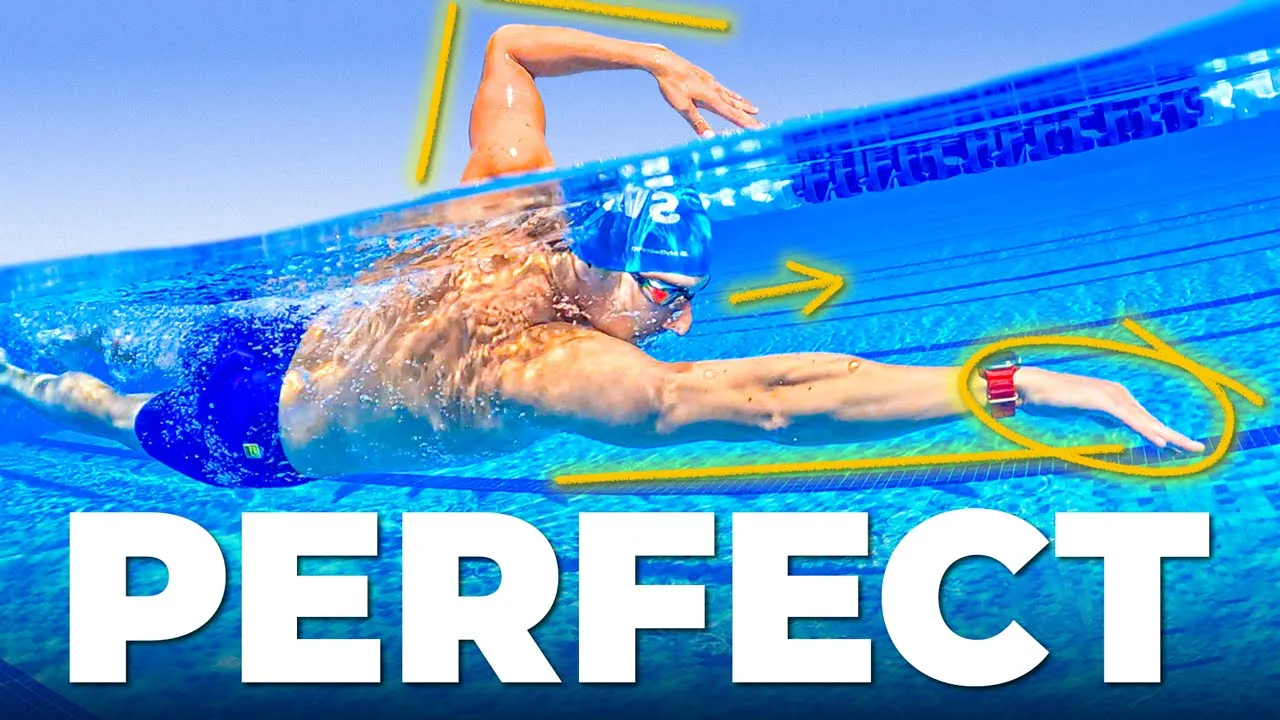
all the way through your forearm and into your bicep all the way into your armpit and even your lat if you can engage this High elbow catch you're going to engage a lot more muscles on your back and you're actually going to pull with more power and more strength imagine you're doing a pull-up in the
Said at 5:17
Most replayed moment #2
8:593.8x the video's typical replay level
coaching program so if you want to work with an expert coach who's going to tell you exactly where to focus on what part of the technique and which drills to do and have a personalized training program then make sure you apply Down Below in the description because we would love to work with you to reach your goals and
Said at 8:52
Most replayed moment #3
3:292.3x the video's typical replay level
and then put your face back underwater you should shoot for breathing every two strokes and what that means is every time hand reaches to take a stroke you rotate your head you get a breath you take one stroke and then on the second stroke you rotate
Said at 3:22
The graph counts replays. It does not show where viewers stopped watching.
Words
2,439
Runtime
11:13
Speaking pace
217wpm
Reading time
10min
217 words per minute, above the 201 75th percentile of 349 measured videos. That distribution comes from the 349-video hook study.
Opening (first 30 seconds)
stop swimming with bad technique swimming faster comes down to three things perfect body position catch and breathing if you're feeling exhausted after only 50 m it's because you're probably making a few fundamental mistakes with your swimming technique and how you're approaching your swim training I'm going to show you how to swim faster using less effort but you can't train swimming like you do other sports such as running that's like comparing apples to oranges you need to know that water is 800 times more dense than air so when you're trying to swi fast you have to overcome this medium that is so thick so if
109 words, the words spoken in the first 30 seconds at 217 words per minute.
Free, no signup. See how the first 30 seconds hold attention, with rewrites.
Sentence shape
| Measure | This transcript |
|---|---|
| Sentences | 1 |
| Average words per sentence | 2439.0 |
| Longest sentence | 2,439 words |
| Questions asked | 0 |
| Sentences containing a number | 1 |
Most used terms
Filler phrases
26 in total: actually 12 · like 9 · basically 2 · you know 2 · literally 1.
A literal whole-word count of the same phrase list the Prepublish browser extension uses, so a phrase inside another word is not counted and a phrase used in its ordinary sense still is. It is a count and not a judgement.
What this transcript is
Every word below is the caption track YouTube publishes for this video, pulled from the video itself and reproduced unchanged. It is not Prepublish's writing, not a summary, and not a re-transcription: it is the video's own published captions. English captions, generated automatically by YouTube, in the video’s original language. Source: the video on YouTube. A channel that would rather this page did not exist can ask for its removal through the contact page, and it is removed.
stop swimming with bad technique swimming faster comes down to three things perfect body position catch and breathing if you're feeling exhausted after only 50 m it's because you're probably making a few fundamental mistakes with your swimming technique and how you're approaching your swim training I'm going to show you how to swim faster using less effort but you can't train swimming like you do other sports such as running that's like comparing apples to oranges you need to know that water is 800 times more dense than air so when you're trying to swi fast you have to overcome this medium that is so thick so if you want to swim faster you have to do two things the first is you have to decrease drag the second is then increasing propulsion now the reason you're not seeing the results that you want in the pool is because you're focused on too many different things remember the water is 800 times more dense than air so if you want to swim faster you really need to focus on reducing the amount of drag that you have when you swim let's talk the physics of swimming I have two swimmers on the Whiteboard to illustrate the point we have swimmer a and swimmer B now the biggest difference you can tell is the head position because when it comes to swimming fast we got to make sure the head is in the right spot eyes are looking down you can see swimmer B the eyes are looking forward and as a result the legs are now sinking under the water and this distance the depth right there that displacement is why swimming is so difficult because if your legs are sagging in the water you're going to have all this resistance pushing against your body and that's going to make it that much harder to swim faster using less energy swi a on the other hand has their eyes pointed down and they're just literally hovering right over the surface now this extends from your head all the way to your toes it's not just your head position but if you look here the feet are flexed in swimmer B the toes are not pointed swimmer a has the toes nice and pointed and that's basically going to lengthen the body line streamline is the fundamental body position in swimming and if you notice this body position in a is very streamlined very high in the water reducing the amount of Dr bag that is being created we want to decrease the amount of displacement that we have in the water another thing you want to consider is the body position you want to feel like you're swimming downhill it's so important that when you're swimming freestyle in all The Strokes actually you always have this neutral body position where your eyes are pointed down your whole body is Riding High in the water unlike swimmer B and you're carrying that momentum that you have off the push from the wall to carry that speed and you feel like you're swimming downhill and we talk about breathing this is one of the things that most swimmers get absolutely wrong when you breathe in swimming you really want to focus on keeping one eye and one ear underneath the surface of the water this way as you take your breath you can keep your body position high and you breathe just enough so that way you get oxygen into your mouth now when you're breathing and swimming you don't want to overthink this you really want to simplify it and remember you want to breathe in your mouth and out your nose and this is one of the most difficult things for beginner swimmers to understand now it's not like you're blowing your nose with a tissue instead it's a controlled exhale you want to think about having a certain amount of pressure pushing out of your nose while you swim so that way when you take your stroke and you rotate onto your side to breathe you're actually going to have just enough exhale so that way you can breathe in your mouth close your mouth and then put your face back underwater you should shoot for breathing every two strokes and what that means is every time hand reaches to take a stroke you rotate your head you get a breath you take one stroke and then on the second stroke you rotate back to the same side to get your breath now it's optional to do what's called bilateral breathing this is where you're actually going to rotate to both sides by breathing every three Strokes now this is okay as a more advanced skill and it's really going to help you balance your body position so that way you're actually breathing on both sides and you have a symmetrical stroke the problem with this is you're probably going to have a more dominant side and it's a lot easier to build Rhythm by breathing on one side as opposed to trying to balance breathing every three or five Strokes so for the more advanced swimmers I highly recommend incorporating some amount of bilateral breathing into your training breathing every three or every five Strokes however most of the people watching this should really prefer one side and as long as you incorporate some good drills and technique to balance out your breathing on both sides you'll be good to just breathe on one side for most of your training when it comes to the mechanics of how you actually place your fingertips into the water you want to think about having a nice graceful hand entry you don't want to make a lot of Splash remember Splash is slow so you want to slide your fingertips into the water reach and really extend the more you can extend your body the better to a point you don't want to completely stop moving but you're really trying to reach for those extra few inches centimeters and even millimeters that way you can maximize your distance per stroke as you reach and reach reach you're now going to initiate the catch and this is what we like to call an early vertical forearm evf you can call it a scoop you can really call it whatever you want the point is you're trying to maximize the amount of surface area that you take with every single pull and that's not just your hands that's your fingertips all the way through your forearm and into your bicep all the way into your armpit and even your lat if you can engage this High elbow catch you're going to engage a lot more muscles on your back and you're actually going to pull with more power and more strength imagine you're doing a pull-up in the gym if you have your hands right next to each other or super wide it's not going to work but if you have your hands just outside of your shoulders that's where you're going to get the most lat engagement and you're going to really engage these muscles right here to pull the most water with the most amount of power and then carry that speed into the next stroke as you extend your body through the water now when you're swimming you don't want to have your hands like this your fingertips are super spread out the water is going to go through all of those gaps that's not good you also don't want to have your hand in a cup position you're actually decreasing the total amount of surface area that you have to pull the water instead you want to make sure your hand is relaxed but in a powerful position if you're sitting at a table right now I want you to put your hand right on the table open your fingers super wide you're probably going to feel a lot of control but according to physics all the water is going to go through that and that's not very fast on the converse side if you squeeze your fingertips together push your hand on the table and see how much control control that you have you don't have a lot of stability and control now relax your fingers a little bit have a little bit of a gap it's actually going to increase the total surface area of which you can pull and if you push your hand on the table you're actually going to feel the most amount of control and power and stability and this is the fastest position to swim a small gap between each of your fingers we're not talking inches we're talking millimeters and you really want to find a position that's comfortable for you so that way you relax but also have a lot of power as you pull of the biggest mistakes swimmers make of all levels is how often and how hard they kick now in reality when you're a beginner swimmer you really shouldn't focus on your legs at all they're there for stability but when you do Advance your skills and you are ready to incorporate more kicking in your freestyle technique here's how you should think about it I have two examples again Sumer a and Sumer B now I just have the lower section of the body that we're going to look at and this is the kick if you notice summer a is pointing the toes and they have a very small amplitude that's the distance from the top of the kick to the bottom of the kick we want to decrease the amplitude of the kick conversely swimmer B over here has a massive amplitude and that means they are yes going to maybe kick more water but you're going to displace more water at the same time and we remember that water is 800 times more dense than air so the increase in propulsion is going to be negated by the increase in amplitude of the kick so it's really important that when you kick you want to think about keeping your knees as straight as possible your legs are barely bending you're pointing your toes unlike over here and you have a short and fast kick the higher you can increase your Tempo and the more you can decrease your amplitude the faster and more efficient your kick will be if you've been watching this video so far you know the importance of technique because it dramatically can change how fast you move through the water everything from your body position head position the way that you pull the angling and positioning of your feet all indicate exactly how fast you're going to move through the water now you might be wondering to yourself well crap I don't even know what I look like when I swim and that's the importance of actually watching yourself swim that way you can see exactly what you're doing but you know one of the biggest challenges of doing that is you're going to see so many different potential mistakes and you're not going to know which one to focus on first is it my head position is it the way I'm pulling how do I think about that what drills do I do and this is why we developed our Swimming Academy this is our VIP coaching program so if you want to work with an expert coach who's going to tell you exactly where to focus on what part of the technique and which drills to do and have a personalized training program then make sure you apply Down Below in the description because we would love to work with you to reach your goals and swim faster and smarter than ever before in swimming there are two ways to train the first is you swim continuously this is option A where you go 15 minutes of continuous swimming option b is where you break it up and you follow what's called structured interval training so instead of going for 15 minutes straight you're going to swim 50 m you're going to take a break and you're going to do that 10 times now what's really important to consider here is the interval so in this case I'm going to use an example and let's say we use the 1 minute and 30C interval now that's your swim time plus your rest time so let's say your average swimming speed for that 150 is 1 minute so you're going to swim for 1 minute and then you're going to rest for 30 seconds even though you might be able to get more Distance by swimming 15 minutes continuously you're actually going to get a better workout because what's going to happen is in that 15 minutes of swimming your average pace is probably going to be 1 minute and 10 seconds so if you can compare 1 minute compared to 110 per 50 you're actually going to swim significantly faster and you're training your body how to move through the water more efficiently you want to be more rested and recovered before every effort that you push off the wall that way you're going to be training your body in a more efficient way there's nothing wrong with swimming 15 minutes continuously but if you train like this all the time you're basically setting yourself up for plateau and you're not going to be able to improve your speed and you're in technique as effectively because you're just swimming continuously and you're getting yourself more and more fatigued and tired so if you want to swim faster and more effectively use your time in the water you need to think about structured training if you can do it with intervals that's even better it's one of the reasons why we developed the my swimpro app so you don't have to think about any of this you tell us your goals and the application will automatically give you your training program that way all you have to do is swim now if you made it to the end of the video it means you're serious about improving your swimming and taking your time in the water to the next level if you want to learn how to swim faster in 30 days using the swim efficiency blueprint then make sure you watch this video right over here I'll see you over there and happy swimming
The words are the caption track's own and nothing is reworded or re-transcribed. Paragraph breaks are placed between sentences so the text reads as prose.
Free tools for your own script. No signup, no login.
Paste your draft and see where viewers are likely to drop off, with a rewrite for each weak line.
Paste the first 30 seconds of your own draft for a hook score and rewrites.
Check your draft against YouTube's advertiser-friendly guidelines before you record it.
Read this channel's public videos and transcripts, and download a writing brief for it.