Getting the transcript
Reading the captions from YouTube. A video nobody has opened here before takes 10 to 30 seconds; this page fills in on its own.
Getting the transcript
Reading the captions from YouTube. A video nobody has opened here before takes 10 to 30 seconds; this page fills in on its own.
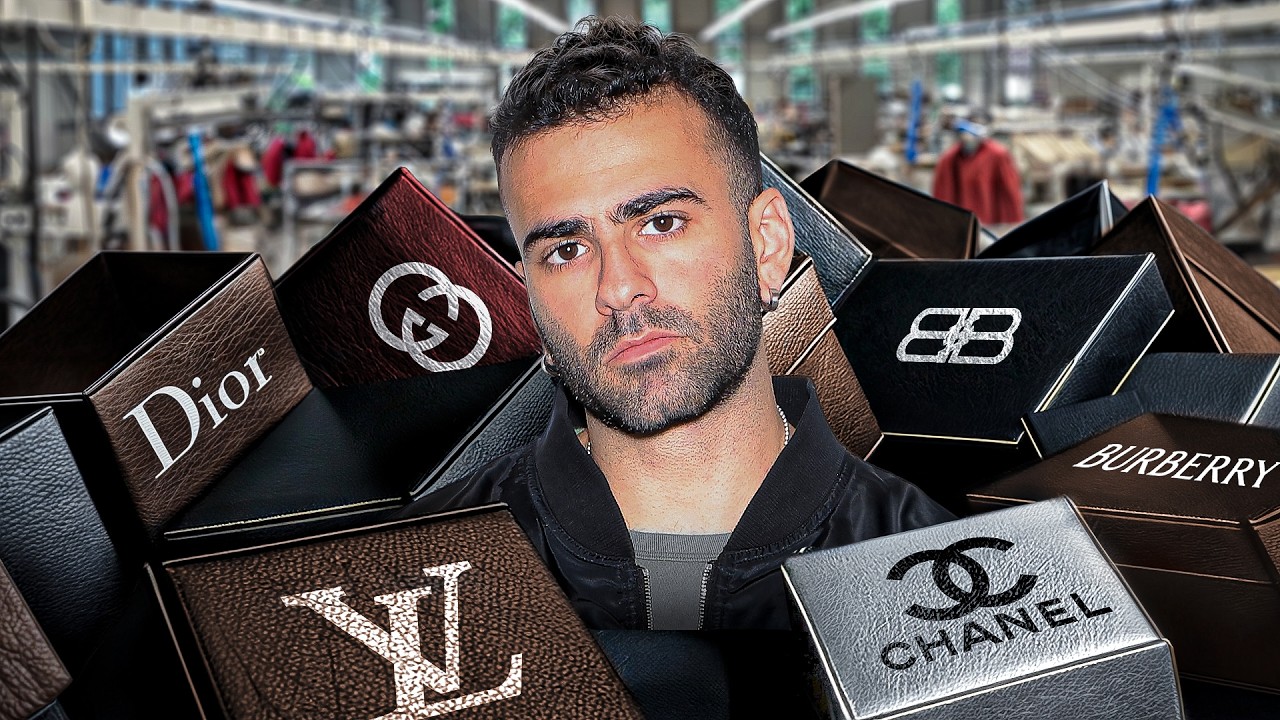
Will Lasry · @wlasry
Words
8,790
Runtime
43:55
Speaking pace
200wpm
Reading time
37min
200 words per minute, between the 181 median and the 201 75th percentile of 349 measured videos. That distribution comes from the 349-video hook study.
Opening (first 30 seconds)
Luxury brands don't want the public to know where they make their product. After all, manufacturers are one ingredient in every brand's recipe for success. Keeping it a secret protects what makes them unique. Like the Google search algorithm or the Coca-Cola recipe, Chanel considers the construction behind its tweed fabric a trade secret, and so do their counterparts. But after visiting a hundred of the best clothing factories in the world, I've seen exactly where and how they do it. And today, I'm pulling back the curtain. I'm taking you inside these factories and showing you how to manufacture
100 words, the words spoken in the first 30 seconds at 200 words per minute.
Free, no signup. See how the first 30 seconds hold attention, with rewrites.
Sentence shape
| Measure | This transcript |
|---|---|
| Sentences | 634 |
| Average words per sentence | 13.9 |
| Longest sentence | 48 words |
| Questions asked | 19 |
| Sentences containing a number | 60 |
Most used terms
Filler phrases
54 in total: actually 20 · like 13 · literally 9 · kind of 5 · you know 4 · sort of 2 · right? 1.
A literal whole-word count of the same phrase list the Prepublish browser extension uses, so a phrase inside another word is not counted and a phrase used in its ordinary sense still is. It is a count and not a judgement.
What this transcript is
Every word below is the caption track YouTube publishes for this video, pulled from the video itself and reproduced unchanged. It is not Prepublish's writing, not a summary, and not a re-transcription: it is the video's own published captions. English captions, generated automatically by YouTube, in the video’s original language. Source: the video on YouTube. A channel that would rather this page did not exist can ask for its removal through the contact page, and it is removed.
No Script X-ray for this video: YouTube shows a Most replayed graph only once a video has enough views.
Luxury brands don't want the public to know where they make their product. After all, manufacturers are one ingredient in every brand's recipe for success. Keeping it a secret protects what makes them unique. Like the Google search algorithm or the Coca-Cola recipe, Chanel considers the construction behind its tweed fabric a trade secret, and so do their counterparts. But after visiting a hundred of the best clothing factories in the world, I've seen exactly where and how they do it.
And today, I'm pulling back the curtain. I'm taking you inside these factories and showing you how to manufacture at the same level as the biggest luxury brands. I'll even show you how to work with the exact same factories they use. And stick around because by the end of this video, you'll know exactly how to contact them. And by the way, I'm currently filming this inside a luxury clothing factory in Turkey called It Team.
And this is just one of many factories I'm going to introduce in this video. My name is William Lazerie and I travel the world with my team visiting luxury clothing factories. I used to be in the same position as many brand owners. I went into a ton of debt dealing with bad factories. They kept delivering terrible samples and there was constant delays. It cost me over $100,000 and 5 years of wasted effort. I knew there had to be a better way.
The biggest luxury brands were making incredible product, but their factories completely hidden from the public. So, I made it my mission to travel the world, find these factories, and figure out exactly what makes them the best. After visiting a hundred of the top manufacturers across Japan, Italy, Portugal, China, India, Turkey, and so many more, we've built the most comprehensive factory resource in the world, designed for brands that want to produce at the highest level.
And today, for the first time ever, we're making it public. Let me start off by showing you exactly what makes these factories special. Luxury isn't just about the brand name. It's about how things are made. Some luxury brands cut corners and produce lowquality goods with a high price tag. But there's select few brands that stand out and deliver product that actually justifies the elevated price tag. The best brands in the world work with the best manufacturers not because they can produce more for less, but because they can actually produce better quality.
But what does better actually mean? After visiting a hundred of the world's best factories, I've learned that luxury manufacturing comes down to five key pillars: fabric selection and production, craftsmanship, embellishing, specialization, and tradition. At the end of this video, I'll give you the best strategy to actually get in touch with them and get real responses because most factories will not answer you without that knowledge.
Fabric selection and production, the foundation of luxury. The first thing that separates luxury products is material. Luxury brands don't just pick any fabric. They source from the absolute best suppliers in the world. And typically, they aren't selecting from existing fabrics. They're creating their own fabrics from scratch. In fact, a large portion of the world's top brands have built their house on the back of instantly distinguishable fabric.
If we think about Burberry, Iyaki, and Chanel. In 1879, Thomas Burberry, founder of Burberry, invented gabarddine. Patented in 1888, Gabberdine is a breathable, durable, and weatherproof fabric made from tightly woven worsted wool or cotton. During World War I, Burberry developed a trench coat, adapting officer coats to the battlefield using this gabarddine fabric. And by the way, I'm going to give a nod to Matsumaru, a smaller factory headquartered in Tokyo, which has worked on cutting and sewing some of these Burberry jackets in recent years.
I was lucky enough to sit down with the owner, Kicho, back in 2023, and walk through some of his unbelievable fabric selection that he had at the factory and at the headquarter. There was also Isi Miyaki's iconic Pleats Please Polyester. And this was introduced in the '9s. And the Pleat Please line used technical innovation to create machine washable sculptural clothes. By using heat pressing on polyester, they were able to create permanent pleats that hold shape, but actually allow you to stretch with movement, being very, very modern, playful, and lowmaintenance that you can just throw in the wash.
And here I'll give another nod to my Denco, [music] a tiny factory in Kyoto responsible for printing on some of Iss fabric. We visited them in early 2023 and watched how they applied beautiful water-based inks in a traditional screen printing method where fabrics were actually laid out on an angle in long columns. We might even mention Chanel's iconic Boulay tweet. We visited a factory that works closely on developing this fabric in Italy.
But unfortunately, they are under strict NDA, so we cannot mention their name, but here's a little shot of us inside the factory watching this fabric get. However, a factory I can talk about more has historically worked closely with Junior Wantab and CDG to develop a special wool blazer. During our time in Italy last summer, we had the honor of visiting Laniro Bulli, a wool factory nestled in the shade of the Dolomite foothills.
This factory is quite literally as old as time, dating back to 1861 and passed generation to generation. Ever since, we were able to sit down with Eto and his father to learn a bit more about their history. They source materials from all over the world. Be it alpaca from Australia or Peru, vakunia from Mongolia or of course beautiful wools from Italy. Lani Fishro Bolei is celebrated for its collaborations with some of the most important fashion houses in Japan, France, England, and of course, Italy.
Specifically, they work closely with Junior and CDG to develop this iconic blazer that they actually let me try on. He explained how the blazer was made up of more than 12 unique fabrics, each of which they developed from scratch. And they also developed custom fabrics for other pieces in the collection, including denim and a mock neck sweater. The factory is such an important part of developing garments, and they should get credited more often.
So, it was really refreshing to see their label on the garment. In order to create these fabrics, it begins with material selection. It brought us to their giant storage room where they have all kinds of exotic wools being stored. They always experiment with different mixes of wools to get their desired results. Lani featuri is particularly special because they process the wool from raw material all the way to finished fabric.
This includes shearing the wool, cleaning it, carting and combing the fibers, spinning them into yarn, and finally weaving it into fabric. And honestly, the process hasn't changed much over 150 years. To manufacture garments with fabric from Mani Foi is to literally weave history into every piece. There's a lot more examples of brands that develop their own unique fabrics. [music] We might think about Barbour's wax cotton, silk twill, mason space dye knits, stone islands nylon, especially the reflective stuff, Laurel Piana's baby cashmere, and so on.
I also want to give a special nod to Yamuzaki knit, another fantastic factory we visited who developed some of the most beautiful knit fabrics in Japan. They were responsible for the infamous slub jersey you'll see on some of the humanmade t-shirts. As you dig further down the luxury brand realm, you'll notice this is a trend for all of the best brands. What I want you to take away is that sourcing the right materials is actually the foundation of true luxury.
You simply can't build greatness with poor quality fabrics. This often means innovating your own from scratch or going on very meaningful sourcing trips to touch and feel fabrics in person. The second pillar of true luxury is craftsmanship. Let me be a bit more specific here. I'm not just talking about how a garment is made, but I'm talking about who makes the garment and what knowledge they actually bring to the table.
Most of luxury manufacturing doesn't rely on machine. It relies on the hands and the eyes and the instincts of expert artisans, often times with decades of experience, sometimes generationally deep. Because at the end of the day, what separates a luxury garment from the rest is not the branding, but the shape of the garment, the proportions, the way it moves when someone wears it. If we think about some of the most iconic designers, they didn't build their legacy on logos.
They built it on silhouette. For example, Crystal Ball Balenciaga and his cocoon coat. Dior had a more cinched waist on some of their skirts. Jill Sander had razor sharp tailoring. The truth is, you don't even need to see the label with these brands. You can recognize a silhouette from across the room. And that's where craftsmanship goes deeper than sewing skills. It's about realizing those silhouettes in fabric, across styles, across bodies, across motion.
All of this brings me to AR Consulting. They are a small atier in Mal, Italy that's trusted by some of the most constructionheavy luxury brands in the world. They don't post about it, and you will only hear this name if you're in the business. AR consulting is where brands go when the design is too complex for standard production. Their seamstresses do not just sew, they sculpt garments. They work with delicate fabrics, hand finish invisible seams, and handle pieces that can't be rushed.
There are two women inside the atelier who specialize exclusively in invisible hand finishes. That is literally all they do. You won't find that kind of skill in 99.9% of factories. And they aren't decorative finishes. They impact the structure of the garment directly, but most people would never really know that. These are the details that make a jacket sit completely differently on a body. And here's what most people miss, the grading.
In fast fashion, size grading is math, right? You might scale a 38 to a 40 to a 42 and so on. But that's not actually how bodies work. A bigger size requires more than just additional fabric. You need to rebalance the whole garment. The whole proportion needs to be rethought to account for a different body. Let me try to explain this in simpler terms. A size large hoodie is not just 10% bigger than a size medium hoodie.
It might be 8% longer on the collar, 6% longer in hem length, 12% longer in back length, 4% longer in sleeve length. All of these proportions can completely change depending on the size. AR Consulting does all of that rebalancing by hand. Every size gets evaluated to maintain the original design's intent, and that's what keeps the silhouette consistent. And in luxury, consistency is everything because a garment that looks great in a size 36 but falls apart in a size 44 is not a luxury garment.
I want you to understand that craftsmanship comes down to the long term. Many garments can look beautiful in a store before they are worn, but they fall apart after a few washes. Proper luxury is about how well a garment retains over time. How well it holds its shape, its identity, and its integrity. And that comes down to the people and not the machines. Now, I want to talk about embellishment. Embellishing is the added touches that take garments to the next level.
This comes in so many different forms. In embroidery alone, we might reference Gucci satin jackets with tigers on the back or Bod's chain stitch shirts that feel like they were made at your grandmother's table. Even Margela's four corner tag is a type of hand embroidery. Very minimal, but very meaningful in those garments. Applique is another major one and this is when pieces of fabric are added on top of the garment for designer contrast.
Kenzo's tiger patches, JW Anderson's felt logo. Beading and sequin work are classics in evening wear. Hand printing is also part of this world. In Kyoto, we visited Maida Senco that I spoke about earlier, a small studio that prints for a simiyaki. There's also quilting, smoking, lace work, visible mending, mirror work to name a few more. Really a lot more out there. and Capital and Greg Lauren both play with that patchwork repaired look.
These are the types of finishes that create depth and make a piece feel alive. In order to understand how deep embellishment can run, I want to take you inside one of the most intentional and mind-blowing factories we visited. This story takes place at CR International, an Indian handiccraft specialized factory just outside of Delhi. This little at produces some of the most meticulous luxury brands in the world. Their clients send them pieces that require detail. most factories would never approach.
When we visited, the team had dedicated stations for different techniques, artisans working in tight columns and each of them focused on a different type of handiccraft. We want to highlight just some of those techniques that we saw. Firstly, we must talk about the hand painted garments because each product one by one, stroke by stroke, was produced with a paintbrush by a single artist with intention to match the previous garment.
During our visit, they were working on a white brush canvas jacket with highly intricate oil stylesque painting detail. Each panel was recreated precisely from the previous garment, taking days to make just one garment. In the other corner, an artisan was literally squatted on a wooden stool twisting thread tens of times to create 3D hand embroidery on a linen shirt. The result was this beautiful branch and floral pattern with these very intentional gap.
The hand feel of the embroidery work was like nothing we've ever seen before. In another area of this small workshop, an operator was creating hundreds of panels inspired by traditional Indian cabin blankets. This mesmerizing square pattern became the base for a jacket with well over 100 individual panels on it. Turning around, we found an operator using a hand embroidery machine. This is not a simple technique to say the least.
The machine is cranked manually with a wheel to control speed. He used a base of thin mesh to apply thread and craft these beautiful 3D details within the garment following tracings left behind in the pattern in the previous step. It probably wouldn't surprise you to know that CR International, the small batch production for some luxury brands that retail at incredibly high prices. But even with all of that, they are open to new business.
These Indian handiccrafts are dying and they need more clients to keep them alive. I'll show you how you can contact them in the next part of this video. And what's particularly amazing with this factory is that they understand modern fashion very well. They are extremely tapped into what brands are succeeding and know how to bring together traditional Indian techniques with clean modern silhouette. I also have to give a special nod to Rami Ficho Riyad, a beautiful Italian embroidery house responsible for some of the most beautiful luxury embellishments.
We got the chance to visit them last summer and they were incredible. It's important you walk away from this understanding how much embellishment can elevate your garment. It really makes the difference between a $100 jacket and a $1,000 jacket. It truly tells your story through the garment and completely sets it apart from anything else on the market. And if you choose the wrong partner, it's going to look cheap. It won't come to life the way you want it to, and it just won't be luxury.
One of the biggest lessons I learned visiting these factories is that luxury brands work with specialists, not generalists. You need specialized inputs at every single step. Let's take a pair of jeans for example. On one pair, there's cotton, spinning, which turns the cotton into yarn, weaving, which turns the yarn into fabric, dying, thread, zippers, buttons, rivets, labels, washing, quality control, and packaging. That's 12 inputs, and that's just for a basic pair of jeans.
And we haven't even gotten into branding. A luxury brand will have a specific supplier in mind for most, if not all of these inputs. If they are using buttons, the metal needs to be made out of the right brass or stainless steel. And the zippers, they need to be YKK or Ragny or Loompa or Talon or Riri or one of a million other brands. And they'll oxidize a certain way when they go into the wash. But what truly distinguishes jeans from one another is the washing and the treatments.
Jeans are one of the most altered garments in fashion. The character, the fading, the softness, all of that is built in after the fabric is made. That's where Wash Italia comes in. This is a denim wash house tucked into the foothills of a bruto. It's the kind of place that doesn't really post on Instagram, but quietly works behind the scenes for the best luxury denim brands in the world. Their jeans retail for well over $1,000.
And there's a good reason why. Inside Wash Italia, everything is custom. They do laser treatments, enzyme washes, pigment dips, hand brushing, 3D whiskering, stone washes, sand blasting, ozone fading, and so much more. They can create a completely unique wash profile for every single pair. This is a family business. Nathan, the founder's son, gave us the tour alongside his friend Nick from Little Denim Jean. Both of them run their own brands, Adam Red and Sex and Jeans.
They rely heavily on Wash Italia's craftsmanship. Wash has a deep archive from their days running Miss60. Upstairs, their showroom literally looks like a capital store exploded. There's jeans and other beautiful treated garments scattered all over the floor. Everything they do has been inspired by the best garments ever made. Let's start with their manoper laser technique. They coated a denim piece with flock adhesive, which is these tiny satin pellets, then laser cut a monogram into the surface.
The laser had to be calibrated to slice the satin without actually piercing the denim. You can tell they're truly scientists with laser tension because they have an entire diagram on denim directly showing you how different laser tensions impact the denim fabric. We also have to talk about hand distressing. They took the time to hand distress an entire pair of jeans in front of us prior to washing. It truly shows you the level of handwork and human DNA that goes into every pair of jeans.
First, they inflate the jeans to their final size using vacuum tube. Then, they use Dremel, sanders, and sandpaper to distress the surface by hand. Every fade and crease is placed with intention. There's also the peel away jersey treatment. By using a specific adhesive and applying heat, they bonded a white jersey fabric to the denim, then tore it away. The result was this really raw effect that looked insanely cool.
With all of this, I haven't even scratched the surface of their core specialty. This brings us to washing and dying facilities. Customuilt tumblers are carefully timed and tempered to create entirely unique effect. At this point, we're no longer in a factory. We're in a laboratory. Everything here is a science experiment gone mad. For example, this giant runway sample for Balenciaga they had just created and let us try on.
Their approach to spraying is next level. The team understands how to mix chemicals and apply them in a way that feels organic. Every operator knows exactly how much product to apply. With the combination of their sprays, washers, and tumblers, they are able to achieve a very wide range of products, not just jeans. They did this gel coat for diesel as a sample, and they've done tons of Diesel samples like it. Their quality control is fantastic as well.
When we were there, they were going through a batch of Dior denim jackets, inch by inch, checking every seam and every imperfection. They use these specialized dye markers with the same dye used in the wash process to fill in any white spot. A factory like Wash Italia makes you design differently. They show you what's possible and they're willing to sit down, come up with the unimaginable, and give it a shot. And that's why working with those who specialize, allows you to create at the highest level.
As a luxury designer, you recognize that you will never know as much about washing and dying as the factory that spends their entire days innovating on it. You need to work collaboratively to get the strongest ideas. Luxury is working with factories that specialize. They are so acutely advanced in a specific set of processes that they will execute on those better than anyone else. I also have to give a special tribute to Blue Fashion in Pyino Des and Green Lab in Grotoare.
These are two other Italian die houses that are doing incredibly innovative work with the luxury fashion houses of this world. We got to visit them last year as well and they truly impressed us with their techniques. two really insane factors. I will show you how to get in touch with all three of these watch houses shortly. The final pillar of luxury manufacturing [music] that barely gets talked about is traditionalism.
Real luxury is not meant to be mass-produced. It's made with care using techniques that have been passed down for centuries built one by one. Luxury brands can afford to pay a premium for this kind of manufacturing because their retail prices give them the margins to do it. And the biggest driver of cost in manufacturing is time. When you choose traditional methods, everything takes longer. Take 5P ventures in India for example.
They use traditional shuttle looms entirely operated by hand. There is no electricity required to operate these machines. Every single meter of fabric is woven by humans. And if the operator takes a break, so does the fabric. It takes hours to weave just a single meter of fabric. This allows for the creation of extremely human fabrics. They have subtle imperfections which are highly desirable and sell for a premium. The fabrics melt to your skin much better with wear.
They breathe better, too. Machine-made fabrics are far more rigid in nature. It requires a high level of skill to operate these traditional shuttle machines, a skill that very few people left today have. 5P also pays their workers very well. They're an example of a woman-ledd micro supply chain in India made up of four factories run by women that all support each other. Namely, there's two up, two down, the hand dying facility headed by Namata.
Blank studio, the cutting and sewing facility led by Shivanji. 5P Ventures, the handwoven fabrics facility run by Barathi. And lastly, Farenini, piloted by Padmini. Farenini specializes in hand block printing, which is an ancient craft that [music] creates patterns by hand, literally stamping them one block at a time. The artisans load each carved block with ink and align it perfectly with the previous stamp over and over by hand and it's rhythmic, almost meditative.
But more than that, it's actually very, very skilled. What sets Theini apart is how connected they are to their materials. A lot of the ingredients used in their dyes are grown right in their backyard. Indigo, turmeric, merry gold, real plants, not powders. They even walked us through the garden and showed us what's going to become next season's color. When we visited, Padmini placed fresh turmeric into a mortar and pestle and grounded it by hand into a deep golden paste.
That paste became dye. The process is immediate, tactile, but more than anything, it's very personal. These dyes behave entirely differently than synthetic. They soak into the fibers instead of sitting on top. They wash down slowly over time, and they reveal new tones every single wear and every single wash. [music] They really age well with the garment, and nothing feels harsh or overly fixed. It's soft. It's alive.
It's very textured. When we visited, they were working on an order for Story MFG. The blocks were dipped in these earthy handmade inks. Once the fabrics are printed, they're sent down the road to Blank Studio where Shivanji's team cuts and sews the garment. One part of the village handles the printing, another the sewing. This microlo supply chain functions like a self-contained ecosystem entirely built on traditional knowledge and close collaboration.
The difference between this and industrial production is night and day. Machine prints are slick and uniform. Hand block prints breathe. They carry pressure marks, pigment variation, minor misalignments, little traces of the person who made them. That's the soul of the garment and what makes them so desirable. Traditional techniques force you to slow down. But that's where the intention lived. These garments take longer, cost more, involve real people with real skill, and that is the entire point because luxury is not about speed.
It's about care. And the more hands a garment passes through, the more value it accumulates along the way. So when people ask me what makes luxury different, this is what I tell them. It starts with the materials. It's made by the best craftsman. Every detail is intentional. The best brands work with specialists, not generalists. And real luxury is made with more traditional manufacturing technique. The best brands in the world already know this and that's why they work with these factories.
But for years, this information has been hidden from small brands and independent designers. This gatekeeping needs to stop. In order to innovate, everyone should have access to the best resources. So, now that you know what makes luxury manufacturing different, let's talk about how you can actually produce at this level, even if you're just starting with your first production order. If you want to make the best products, you need to find the right factories.
Let me save you a lot of time here. Finding good factories is very hard. I wasted over 5 years of my life and $100,000 dealing with shitty factories. Don't risk your production with bad factories. Let me break down a few resources, namely Alibaba, the Chinese manufacturing hub, Glass Factory, the factory resource I've built with all of the best factories I've visited, and trade shows, the most important ones to attend to find the right factories.
Let's start off with the biggest directory of Chinese factories, Alibaba. You have to be real careful when navigating this website. There's thousands of factories ready to say yes to anything. They will tell you they can make your sneakers, even though they are a t-shirt factory. This yes man mentality is very common when producing overseas and you need to know how to identify the right factories that stick to their guns and specialize.
The best way to demonstrate how to use Alibaba is by using Alibaba. I've worked with about 50 factories here. Most of them bad, but a select few were good. And yes, there are some luxury factories on Alibaba. In this case, I looked up hat in the search bar and the website returned hundreds of results. With Alibaba, there are so many suppliers that you need to know how to sift through them. I look for a few key things.
Firstly, are they verified? This means that they've been inspected by one or more third-party companies. There's also verified pro, which is the same as verified, but with over 5 years of experience. Next, I look at how long they've been around for. I try to work with a supplier that's been in business for at least 5 years. Lastly, I will check to see if they've received a lot of reviews and check if reviews were left in the last 3 months.
This way, I know they're active. A standout factory I found on Alibaba was CN Greatest. not so much a luxury factory, but a premium factory for hats that can source extremely highquality fabrics. I found them all the way back in 2019, and together we've produced all of these different hat designs. We've done truckers, dad caps, unstructured corduroy caps, and so much more. I've even recommended them to more than 20 different people that work with them to this day.
On Alibaba specifically, they are titled Dong Wan Great Clothing Co. LTD. So, let's see if they satisfy the checklist. Are they verified? If I scroll down on their profile, I can see that they are there was an on-site check that took place. Next, how long have they been around for? It says only 3 years on Alibaba. They were apparently established in 2022. Sadly, this is false. I've been dealing with them since 2019, and that was on Alibaba.
And if you go deeper into their profile, they wrote that they opened in 2013. This is the frustrating part with Alibaba. You can't believe the first thing you read, and you cannot believe everything you read. What about reviews? Yes, they've had three reviews here. Sadly, this also doesn't make sense because I've left them reviews before. I don't know where those are. At the time I started working with them, they had over 50 reviews.
I also noticed it says they are a manufacturer and trading company. Trading companies in China are something for the most part you should definitely avoid. They act as middlemen that try to get your product produced as cheaply as possible and maximize their profit. When I started working with them, this was not written and I can confirm I've been to their factory. They are not a trading company. The reality is, even with these Alibaba techniques, there's still quite a lot of flaws.
A lot of the information does not line up with reality. The way I found out this factory was actually good happened after trying out three other hat factories on Alibaba, all of which were terrible. They gave me really bad samples and shitty communication. CN Greatest was a roll of the dice, and it turned out to be great. I only truly knew they were great once I visited them. I flew to China and made a video with them, and you can watch it here.
I did this because I was going to start referring a lot of people to them and I wanted to make sure the factory was incredible inside and out. I found out that they are indeed not a trading company once I visited them and realized how good they are. And I tackled the next problem I had with their Alibaba profile. They have all of these stock images that [music] plague Alibaba. Everywhere you look, tons of factories use stock images.
How do I know the factory actually made these hats? I sat down with CN Greatest in their showroom and took pictures of their hats. A lot of pictures. Then I took a lot of videos inside their factory because [music] I had absolutely no idea what it looked like before visiting. Can you blame me? Look at their Alibaba profile. There is no indication and it's not their fault. This brings me to the next way to find factories.
This method is more reliable. The method I'm talking about is the glass factory website. It allows you to easily browse premium factories from all over the world that have been personally visited or vetted by my team. So, let's go back to CN Greatest for a second. We created a unique profile for them. I work with my colleague Petros to write up a distinct description and do a deep dive on their factory statistics. We included all the photos and videos we took during our visit.
And we even went as far as developing a custom glass factory hat with them just to prove that they could walk the walk. But what if you don't want to produce your hats in China? After all, tariffs can be very high, especially if you're based in the US and you're impacted by the new laws that are changing every month. We totally understand that, which is why we visited factories in other countries, too. In fact, glass factory includes manufacturers from over 40 countries.
So, back to hats. We want to make them. We want to produce them somewhere different in China. We want a luxury factory that's already producing for other luxury brands. And let's say also using organic materials. We also want a factory with lowQ. Great. If we put all of those filters into glass factory, we might come across BB head, a Portuguese factory born in the '90s with exceptional capability to produce the highest quality product.
They've worked with Min Techla amongst other very well-known brands that are under NDA unfortunately. But how can we know all of this? Well, it's because the glass factory team visited them last summer in 2024. We met the owner Ruie and we met his son Muish. We went for lunch with them. We got to know their story. And when we visited their factory and understood their process, we understood the level they were operating at.
We condensed all of that information onto their factory profile. and we added a button which allows you to contact them and start producing with them right away. In total, there's over 50 factories on Glass Factory specializing in a wide range of fashion products. They include luxury knitwear, activewear, swimwear, footwear, accessories, and so much more. Oh, and by the way, we made all of these factories accessible entirely for free because we believe that the future of manufacturing is transparency.
Anyways, just for fun, here's some standout factories you can catch on our website right now. Texman, a small batch garment producer working with the likes of Kiko Castadenov and a Cold Wall among many others. Black Hugh, a luxury garment factory working with the likes of McQue McQueen, Cult Gaia, Proenza Schuler, Kazablanca and more. Yamazaki knit, the Japanese fabric mill behind some of the human-made and real McCoyy's top-notch materials.
Classic Apparel, a highly creative Indian flatknit factory withQs as low as 50 units. They also have a huge focus on sustainability. Blue Fashion, a denim dye and wash house, working with top-notch brands all under NDA. But I promise you know exactly who these brands are. By the way, every factory we just discussed, we've personally visited and made a YouTube video about. And there's a lot more. Go check out Glass Factory.
Link is in the [music] description. It's completely free. It's a really, really great resource and it is my entire life's purpose to build. We're adding factories every single week. Now, let's talk about a way you might find these factories. This is how we found a few of the factories we work with today. Trade shows are a pretty strong method of meeting factory partner. There's quite a few standout trade shows depending on what you want to make.
So, I'll give you three good options. Canton Fair, Sourcing with Magic, and Premier Vision. When it comes to Chinese manufacturing, the standout is Canton Fair. It happens twice a year in Guangjo. Once in April, once in October. There's three phases, each one week long, and the third phase is dedicated to textiles and apparel. So, that's typically when I go. You can find me there this year. Most great suppliers will attend, but you're going to have to sift through the bad ones because there's literally thousands of suppliers.
We visited the one in November of 2023, and you can watch us negotiate with some of these suppliers here. Although this is not something I would actually recommend doing, I did it for visual purposes. Magic is another great trade show that's in the US, takes place in Las Vegas, makes it easier for the Western world to attend. Factories are from all over the world, which opens up more opportunities for those looking to produce outside of China.
PV or Premier Vision is my favorite. It focuses mainly on premium suppliers. It's very good for those looking to make elevated clothing garments and it happens both in NYC and in Paris twice a year. I suggest going on the Paris one. It's been around for far longer and has a much larger number of suppliers, especially European suppliers. We've done both and we were at the one in September in Paris. Here's a few other good options.
PT Womo is great for inspiration. It happens in Italy and showcases the latest in men's wear, luxury fashion, and emerging trends from global designers and brands. Another Italian trade show is Linia Pelle. It's very strong for leathers and accessories. The last one I'll give is Colombia text. It's a good option for South America. We won in January of 2024 with our buddy Isaac, the sourcing guy, and we're pleasantly surprised by the up and cominging factories in Colombia and the rest of South America.
Some of these Colombian factories are now on Glass Factory. There's also thousands of other trade shows that I'm not accounting for, but these are the main ones I'll talk about for now. At this point, you understand a bit more about how luxury manufacturing works. You even know where to find great factories. But there's one missing piece to this puzzle. How do you actually get in with these factories and how do you develop incredible products with them?
We're going to need two things to happen. Number one, the factory has to actually answer you. It's going to be really hard to do anything if they don't answer you. Number two, the factory needs to believe in you or else they will not work with you. and you need to know how to give them a reason to believe in you. With these two things, you will make amazing products and more importantly, you'll enjoy making amazing products.
Oh, and also, you'll make these products much faster and they will cost you a lot less. I've personally reached out to over 5,000 factories, so I will demonstrate exactly what I've learned to help you succeed in product development. Before reaching out to the factory, you want to make sure it's likely to be a good fit. Working with the factory is a two-way relationship. The factory needs to be right for your brand, but your brand also needs to be right for the factory.
There's a lot to cover in this section, but I will boil it down to two simple elements. Are yourQs in line with that factory? This means if you want to make a 100 t-shirts, you shouldn't work with a factory that hasQs of a thousand. Instead, work with a factory like Citex in Portugal that hasQs of 75 pieces. Is the factory specialized in what you're looking to make? You shouldn't try to make hoodies with bell footwear.
They're a sneaker factory. Now let's assume you have the rightqus and the factory is specialized in the product you want to develop. So how do we actually get the factory to answer? For the factories you find on glass factory, you can contact them directly through the platform. However, sometimes you'll find the factory in a [music] completely separate way. You might have a general email or a specific contact from the factory that was given to you.
In an ideal world, you get directly introduced to the factory by email, phone, or in person. But we don't always live in an ideal world. So, let's talk about how to send the perfect email to a factory that has the highest likelihood of getting a response. Here's a sample email I drafted. You don't need to read the whole email. Just focus on what I highlighted. First thing you'll do is state your name and the company you're representing in the email.
They need to know this so that they can easily look you up and validate that you're the right fit for them. In this case, I wrote, "My name is William and I represent Glass Factory." The next thing you'll do is write the quantity and a very short description of the product you want to produce. in this case, 200 highquality ringspun jersey t-shirts. Then you will indicate that you've attached the tech pack and literally attach a tech pack.
And I'll talk about that momentarily. Next, you're going to write your production deadline. In my case, it's 4 months. And make sure this is something reasonable. If you're producing any sort of clothing garment, it should be minimum 3 months, unless you're using an existing blank from the factory, but generally speaking, 3 months should be the minimum that you put forward here. If you're developing sneakers, it's going to be a lot longer.
Same for handbags. These things just take more time. Then you're going to attach more information about you. So in this case, I put my brand's website and Instagram. And the last thing I'll do is let them know that if they need any additional details, they can reach out to me. [music] And in that sentence, I'll also tell them to provide a quote. The key thing we're trying to get here is a quote for the product you make.
Now, with this email, you're going to need to attach a tech pack. And this is crucial because it's going to let them know exactly what type of product they're getting involved in. The reality is, I don't want to sugarcoat this for you. A shitty tech pack will not get a response. You need a very high level tech pack to get a response [music] because factories are instantly able to tell if you're an amateur brand. So, please try to use better quality tech pack.
If you want a free resource to download Techpack templates, I've created the best tech pack template in the world and I've made it accessible entirely for free on Glass Factory in the resources section. The link is in the description. You can download that resource and use those templates to build your garment. Finally, the factory replies to your email or you got in touch with them another way. Congratulations, you've crossed the first hurdle.
You might be coming at them with a lowQ order to start. Maybe you want just around 50 pieces. Here's the key thing you need to remember. You are an investment. If you think this factory is surviving off of a bunch of 100 unit orders, I will be the first to tell you they are not surviving off of that. In some extreme cases where they're making very high-end garments, they might be, but the vast majority of them are not.
So, when a factory accepts your opening order of a 100 pieces, they are hoping you order again and you order more the next time. If you take blank studios or classic apparel in India, Texmen or Citex in Portugal, Kings in Italy, you know what all of these factories have in common? TheirQs are 75 units or less. They've all said exactly the same. These orders that are just 75 units are not keeping the business alive. They are looking to invest and grow with brands.
That's why they take on the small orders. Here's another reality. Because theirQs are so low, they get absolutely bombarded with inquiries. They can't take on all of them. They need to sift through and figure out which ones are best and which ones they actually want to work with. This means that you need to do more than provide them with a project that fits their factory. You need to show them long-term potential. How do you show them long-term potential?
You need to know exactly what you want and exactly where you're going. Some sort of brand deck which clearly describes your vision goes a long way. It needs to describe where you see your brand heading, who your target customers are, what kind of products you're looking to develop, which markets you want to expand into, and more information an investor would want to know. A brand who is confident about their vision is much more convincing for a factory.
And think about it, if a factory knows you want to make a,000 t-shirts over the course of a year divided into 10 drops of 100, they might consider knitting a custom fabric for you, which will drastically cut your costs. It's in your best interest to know this information anyway. And the funny thing is, I've seen brands walk up to factories withQS of 300 and convince them to make a hundred pieces for them because their visions were just that good.
The factories will not tell you this directly, but are flexible. How flexible they are depends on how good of a brand you are. Beyond having the right vision, you need to master communicating with factories. After discussing with all the factories I've visited, I've learned that a common red flag for factories is when a new client's first question is, "How much does this cost?" Yes, price is important, but if you focus on price too early, the factory just assumes you're going to go with the cheapest option.
Instead, lead with questions about quality, process, and expertise. Ask about products they've made in the past. Make sure they're in line with what you're looking to make. You might ask questions like, "What type of cotton do you typically work with for heavyweight knits?" Ask them about quality control procedures, AQL levels, and shipping procedures to ensure safe delivery. Once the factory sees that you're focused on making something great rather than just making something cheap, they'll take you a lot more seriously.
They'll understand that you're not an amateur. But above all, the factory will truly see how serious the brand is when they see your tech packs. It's so easy to distinguish a brand's experience entirely from their tech pack. In fact, I've asked many of the factories I've visited the same question. How can customers be successful in producing with your factory? And the most common answer was that your tech pack is the single most important part of production and determines how quickly you will reach an SMS, which is a salesman sample or a production sample is also what it's referred to as.
And this is the sample that will determine the standard for your production. If you have a shitty tech pack that's missing a lot of key details and will require a lot of additional questions from the factories, they will treat you like a beginner, push back your production, and charge you a lot more than they would a normal client. they will literally bully you. And I've seen this happen with so many brands. Having a great tech pack tells the factory that you know exactly what you want.
You won't compromise on that vision. And being 100% certain goes a long way. Never go into sampling if you're not sure of what you're looking for. Here's why. Factories aren't good at guessing, and without precise instructions, they will cut corners. Every tech pack looks different, but at the base it must include visual references and inspiration, fit measurements and size range, fabric specification, key design features, stitching and construction method, branding elements.
Realistically, it needs a lot more than that, but these are just the bare bones to be considered acceptable. If you want to make a quality tech pack, you can hire someone on Fiverr. As long as you find someone with good reviews and past experience, it should generally be pretty fine. Everything I just described establishes a good foundation and a long-term potential. From there, knowledge and passion will convert that potential into beautiful, long lasting relationships.
Learn a lot about sampling. Send them physical items to reference. Be very clear about what you want. Hire a third party to do quality control during production. This is very important. Pay on time. This is also very important. Communicate clearly and answer quickly and be genuine. But here's a couple cherries on top to really set you apart from everyone else reaching out to these factories. You need to be incredibly conscious of the country the factory is from.
Culture makes a huge difference in how you do business. Just because Uni Alex and Dongan Anu offer a garment dyed t-shirt for the same price, it does not mean that the process for making it is the same. One factory is in Turkey, one factories in China. During Ramadan, the Turkish factory will be difficult to contact. And during Chinese New Year, the Chinese factory will give you a very hard time to contact. When dealing with a Chinese factory, you can expect that on average, they will answer a bit faster and be a bit more aggressive with their communication.
When it comes to Turkish factories, communication isn't as good. However, they can be very attentive to details. And by the way, what I'm saying right now are generalizations and should be taken with a grain of salt because there are very elegant Chinese factories and there are very responsive Turkish factories. My team, the factory I'm in right now, is in Turkey and they are extremely responsive. Here's the other tip.
This one will take your relationship to another level. When it's the factory owner or sales rep's birthday, or it's an important holiday in their culture, send them a gift. I sent the Chinese factories in China a gift for Chinese New Year's a few years ago, and I have never paid for a sample from those factories ever since. Learn their children's name. Wish them a happy birthday. Do the little things. You will see a world of difference in the way they communicate with you and prioritize you.
A great factory theoretically shouldn't prioritize, but everyone has their favorites. For decades, luxury brands have kept their manufacturing a secret. But the truth is, the best factories aren't just available to billion-dollar companies. They're available to anyone who knows where to look. And some of these factories really need new business. In fact, they're counting on it. They just want to work with people who want to make great products and [music] understand exactly what it takes.
If I can leave you off with something, I want to tell you not to do business with the first factory you come across. Even if they work with a luxury brand, even if on the surface they seem perfect, assess your [music] options. Different factories will give you different prices and qualities. You need to test [music] and test and test a lot. Try out samples with a few different factories and only make your decision once you're confident and you have a lot of factories in front of you.
I created this video by taking the knowledge from building my own brand, consulting for over 350 brands anywhere from tiny emerging brands to billion-dollar giants like Guest Jeans and handling production for some of the largest clothing brands in the world. But most importantly, by visiting 100 different factories, I applied that knowledge to build an insane team and create Glass Factory, the most comprehensive list of vetted premium fashion factories in the world.
Click the link in the description to check it out and start reaching out to factories right now. If you found this video helpful, please make sure to like and subscribe for more behind-the-scenes looks at the world's best factories. It is so expensive for us to travel the world and visit these factories and to make these [music] videos. So, any kind of support goes a long way. We even made Glass Factory entirely available for free.
Until next time, thank you so much for watching. I'm out. Peace.
The words are the caption track's own and nothing is reworded or re-transcribed. Paragraph breaks are placed between sentences so the text reads as prose.
Free tools for your own script. No signup, no login.
Paste your draft and see where viewers are likely to drop off, with a rewrite for each weak line.
Paste the first 30 seconds of your own draft for a hook score and rewrites.
Check your draft against YouTube's advertiser-friendly guidelines before you record it.
Read this channel's public videos and transcripts, and download a writing brief for it.