Getting the transcript
Reading the captions from YouTube. A video nobody has opened here before takes 10 to 30 seconds; this page fills in on its own.
Getting the transcript
Reading the captions from YouTube. A video nobody has opened here before takes 10 to 30 seconds; this page fills in on its own.
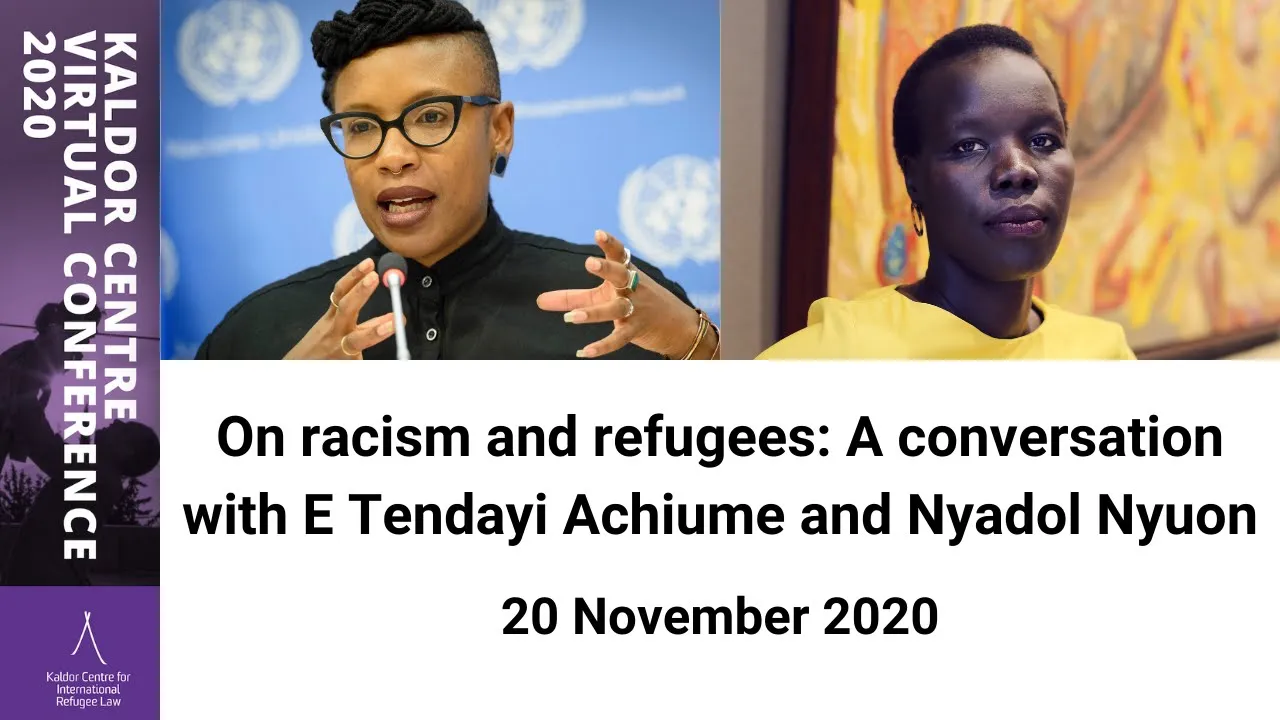
UNSW Kaldor Centre for International Refugee Law · @unswkaldorcentreforinterna4813
Words
10,611
Runtime
1:03:08
Speaking pace
168wpm
Reading time
44min
168 words per minute, between the 160 25th percentile and the 181 median of 349 measured videos. That distribution comes from the 349-video hook study.
Opening (first 30 seconds)
good morning everybody and welcome to this final session of the 2020 cal center annual conference my name is jane mcadam and i'm the director of the caldor centre at the outset i would like to acknowledge the traditional owners of the lands on which we meet and pay my respects to their elders past present and emerging this session the closing session of the conference brings together two outstanding women tendai achume and nyadol nuen to discuss how racism and displacement intersect and
84 words, the words spoken in the first 30 seconds at 168 words per minute.
Free, no signup. See how the first 30 seconds hold attention, with rewrites.
Sentence shape
| Measure | This transcript |
|---|---|
| Sentences | 2 |
| Average words per sentence | 5305.5 |
| Longest sentence | 10,449 words |
| Questions asked | 0 |
| Sentences containing a number |
What this transcript is
Every word below is the caption track YouTube publishes for this video, pulled from the video itself and reproduced unchanged. It is not Prepublish's writing, not a summary, and not a re-transcription: it is the video's own published captions. English captions, generated automatically by YouTube, in the video’s original language. Source: the video on YouTube. A channel that would rather this page did not exist can ask for its removal through the contact page, and it is removed.
No Script X-ray for this video: YouTube shows a Most replayed graph only once a video has enough views.
good morning everybody and welcome to this final session of the 2020 cal center annual conference my name is jane mcadam and i'm the director of the caldor centre at the outset i would like to acknowledge the traditional owners of the lands on which we meet and pay my respects to their elders past present and emerging this session the closing session of the conference brings together two outstanding women tendai achume and nyadol nuen to discuss how racism and displacement intersect and whether the international refugee protection regime is part of the problem or part of the solution tendai is professor of law at the university of california and a research associate of the african center for migration and security at bits university in south africa she is also the un's special rapporteur on contemporary forms of racism racial discrimination xenophobia and related intolerance and she's the first woman to serve in this role since it was created in 1994. tendai was awarded the ucla distinguished teaching award which is the highest university-wide honor for excellence in teaching and when it comes to her scholarship her work is renowned for its incisive analysis of race xenophobia and the ethical implications of colonialism for contemporary international migration her work challenges us to recognise the race problem of international refugee law scholarship so welcome tendai nadal newan is a community advocate writer lawyer and an accomplished public speaker she was born in a refugee camp in ethiopia she was raised in kokuma refugee camp in kenya and then she moved to australia in 2005 as a refugee she obtained her ba from victoria university and her jd from melbourne law school and she now works as a commercial litigator with arnold block liebler in melbourne in 2019 yadal won the diversity and inclusion category in australia's 100 women of influence awards in 2018 she won the australian human rights commission's racism it stops with me award for her advocacy on behalf of the of the australian african and melbourne south sudanese communities and in 2016 she was the recipient of the future justice prize so welcome nyadol this session is going to run as a conversation between our two speakers you can still submit your questions via the q a tab on zoom and you can vote on questions that you like if you'd really like them to be answered we'll try to get through as many of those questions as we can the speakers may choose to take them as they go or turn to them towards the end so i'd now like to welcome both our speakers tendai and yadol to commence their conversation i thank you very much jane for that introduction it's a huge pleasure to be um well i was going to say on the same table but clearly on the same zoo and i um and to really get to also learn myself from having this conversation with you uh we're going to be exploring exploring a number of themes and i wanted to start with the first one which is the you know phenomenon and experience of racism and its impact on refugees and as part of that what we you know wanted to cover is um you know just the general question about racism and xenophobia and whether it's on the rise uh whether you're seeing any new manifestations in or you know new or old manifestations of of this kind of attitudes against refugee and asylum seekers and how do you think racism in xenophobia impacts refugees or um and other forced immigrants to bring that all together i think i'll just frame it into the first question uh based on your experience as the un special repertoire can you reflect on any trends or development in relation to any of these questions any of the the previous three questions absolutely thank you so much nettle i can't tell you how excited i am to be in this conversation with you as well and jane thanks for that's really um generous um introduction and thanks also to all of the participants who have uh joined us i recognize a number of the names and it's an honor to be in conversation um with you all so what i thought i might do is um before diving into some of the trends that i think are useful to pay attention to and before diving into how in my work is special rapporteur and then also in my academic work i think about the relationship between race and refugees i think it's helpful to just start with some definitional terminology that can help when we're having conversations about race and xenophobia and things like this so i think that um it's important for for refugee advocates for refugee scholars and and for people human rights advocates generally working in in this area to really confront race as a social construct of course but one that definitely has uh very real impacts and structuring the way that people experience access to human rights and experience their day-to-day experiences and so um we might think about about race as a social construct that imbues physical features with social and legal and economic meaning operating at the level of kind of how individual bodies are treated because of their appearance and their interactions with police with immigration enforcement with health care officials but also thinking about race at a structural level and thinking about how in many societies right now race actually is a structure that determines who has access to what and in the context of the covet pandemic for example you're seeing that its impact on different groups is definitely racialized in ways that speaks to the continuing salience of race as a kind of access of um subordination and and i also want to highlight that you know in our conversation even though we're going to be talking very much about contemporary structures it's important to understand the origins of race as a category in in the ways that we will be talking about it and to connect it to sort of um colonial empire whether we're talking about settler colonial empires you might talk about in the context of australia but other forms of of colonial empire as well where race emerges as a technology for as i mentioned just essentially allocating rights among um different groups if we think about race in all of those ways and if we think about racism as related to race i think we have to confront the fact that racism fundamentally shapes the experience of refugees it drives their flights it shapes the nature of their flight and it also shapes their reception wherever they go right and of course race is not operating on its own race interacts with religion it interacts with gender it interacts with sexual orientation and so it's also important i think to have an intersectional eye on the way that racial discrimination and other forms of exclusion um are operating where refugees are are concerned and so if you think about racism in relation to xenophobia or xenophobic discrimination which is a distinction that i think is a useful one to make and my title is special rapporteur has racism racial discrimination xenophobia and related intolerance i think for refugees this difference is a really important one to highlight you know um refugees experience harm on account of racism but also on account of of xenophobia or xenophobic discrimination which is about their construction as kind of foreigners who are undeserving of the benefits of national membership in the different places that they are and again foreigners can be about race it can be about religion it can be about gender but it is this um intersectional um category so in terms with that long background that long-winded background to get to to the questions that you were asking me about the way that um race affects uh refugees so you might think about the very definition of a refugee and who it grants protection to and who it excludes from protection and i think even at that level the scholars who've written about that cut itself as one that being that is a racializing um cut right and and you see this in different contexts in the u.s context for example there's been definitions of who's included and excluded that results in particular national origin groups or particular ethnic groups being denied protection because of kind of racialized ways of interpreting um what refugee law looks like you can think about the way that immigration i mean asylum policy enacts forms of racialized exclusion and if we're talking about australia and we're talking about its border externalization processes and the various mechanisms that it's implemented to make it difficult for people to seek asylum when we see the groups that are most impacted those p those groups are racialized groups and the groups that are being kind of excluded on a disparately racial basis in a way um that makes me wonder that if we went to nauru or we went to one of the other islands would we see a white person in detention there even though it's clear that you have people who travel and unauthorized across different um racial groups in terms of trends that i focused on in my capacity of special rapporteur in the last five to six years you've seen the rise in the use of things like national origin or religion bans on on refugees so you had this in the youth in the us you had this in parts of europe for example in response to the syrian refugee crisis with specific groups specifically um refugees fleeing from muslim majority countries were facing bans that disproportionately um excluded them um from protection in ways that were uh really um troubling and and i would say another um axis of racial and xenophobic discrimination that's been especially heightened and that i've noticed in the context of my mandate has been the demonization of refugees and refugees of color in particular as kind of carrying the pathogens that are associated with the pandemic and so that kind of racialized demonization has resulted in increased racist and xenophobic attacks in addition to structural forms of exclusion and marginalization of refugees and asylum seekers in in the pandemic context so this is all to say i think there is a very serious problem here it is one that has historical um origins and we could pass it at multiple levels but i think um it's irresponsible to have conversations about the rights of refugees in most contexts without thinking about how racism and xenophobia is is kind of inflecting the conditions under which they're living i was just sitting i think feeling like i was in a lecture and i wanted it to continue i hope everyone else is enjoying enjoying this session but it made me think about something when you when you were talking about the the impact of um [Music] corvette 19 and the kind of coverage of refugees as as either spreading the disease or even in some instances you know in at least in australia the debate was almost as if we were impacting the government policy or government reaction to limit uh or to deal with with the disease the conversations especially talk about refugees tend to construct these this conversation around people who are out of the country seeking to get into the country but what i find fascinating even with with the conversation about race and covet 19 is how even people who are already settled in those countries who but who came as refugee or who look like refugees or immigrants escape that and and how that then feeds almost a double narrative of well look we've already created a problem by bringing them here they do not language they do not integrate this you know they're hindering our ability to deal with national or public health issues and therefore as a result we should not let more of them in we should you know exclude even more of them and it's it's an interesting interaction between even whereas someone who like me has came to australia is now a citizen i'm still referred to as a south sudanese refugee as a sustenance lawyer as as and and how my treatment or the treatment people look like me continue to feed the conversation about how refugees are are treated do you have any any comment on that about that kind of domestic narrative sort of flowing into having a kind of foreign policy impact yeah you know i think that that is a is a really powerful insight and one that i think speaks to why you know so in in different contexts in in my capacity of special repertoire i often encounter state actors and even humanitarian aid actors human rights act actors who say look why are you going on about about race or ethnicity or any of these categories that's not what this is about this is about immigration status you know this is about exclusion of non-nationals or it's about citizenship-based exclusion and i think your example really gets at the heart of the fact that for refugees and migrants of color um their race kind of functions as a border this is how i i often think about it where even if you are fully you know incorporated in legal terms through citizenship status or whatever case uh whatever the case might be there's a perpetual outsider status a perpetual subordinate status a perpetual kind of threat status that is imbued to you because of the social construction of your race that even legal categories can never overcome and you know your experience in australia i think is one that is reproduced all over the world and so when i do country visits i've done country visits to the united kingdom um to the kingdom of the netherlands to to morocco and to qatar and in all of those places you find people who had refugee status who are naturalized who are citizens some who were never refugees some who've been there for for generations and generations sometimes as a result of kind of the way the colonial empire works but who to this day on the basis of their release are constructed as foreign and as perpetually part of the problem and subordinated and kind of labor markets subordinated in the healthcare context whereas for example and this is an example from the netherlands i wouldn't be surprised if the same was true in australia you'll have you know people who travel say from white people who travel from the us who are based in the netherlands who are kind of presumed um insiders right on the basis of their racialization in ways that really trouble um what you're describing so i think i think it's it's to me your um insight which is about how even after you overcome the hurdles associated with legal status refugees and you know people of color will sustain will remain constructed as outside of the nation speaks to a need to really grapple with how belonging is racialized how national security is racialized how outsiders data is racialized in ways that most nations are actually not willing um to confront or at least the majorities in most nations are not um willing to confront i want to pick up two points the first is that this notion of your race um always functioning as a border and those who are presumed to be insiders because i think that two categories at least in my view in australia really plays a big part in defining who is a domestic and national threat and and it's quite i use the word fascinating partly because analytically it's it's interesting because it exposes so much incoherence and double standard the treatment in one class of people differently but of course the results are horrific so you would find even um you know migrants who appear to be white um or who are white uh sort of because of their presumed insideness being insiders taking on role and clearly saying that other immigrants you know who are brown black or you know indigenous are then constructed as the foreigners the constant foreigners and it's it's a lot of the conversation about whether we should settle refugee whether we should have a more generous um refugee policy over the last years has shifted in my view to more conversations about immigration and really a threat either to the internal coherency of the country the way we leave they change our attitude or then the other conversation is threat to national security the terrorists they are gangs um they bring religious they do not believe in our legal systems so it's moved away from i think conversations about necessarily being directly racist you know so a black the monkey that that to this new form of almost would seem intellectual you know debates about national coercion and national security so this thing of of language that have exactly the same consequence in very different terms and i find i think that makes it really hard or to advocate against or even point out that racism plays a function in how these debates are framed because they're not framed with race as visibly a central part of it does that make that make sense no yeah no i think it absolutely it absolutely does and i think your comments really it's like they really challenge us to think about the level at which racialized encoding takes place right and we're definitely living in a time when you know the rise of ethno-nationalist populism in different parts of the world australia included mean that people are free to express racist explicitly racist sentiments and ways that i think what i'm true say a decade um ago but i think you're right to point out that the most kind of toxic racialized forms of exclusion and harm that i think prevail in in most societies it's encoded in these other ways of of othering and talking about other that make it really difficult to kind of directly confront this kind of racial project so you're right to point to national security what kind of security threats you know the gangs the terrorists and and what's fascinating is that all of these terms are racialized when you say terrorist when you say gang in so many parts of the world the image that is conjured up in most people's minds is of people of color and and people of color who then have the outsider label of kind of refugee or migrant um attached to them and it's not an accident right so that the racialization of national security which i think is peddled by media sources by political actors um really bakes kind of racialization into the the kind of the the baseline levels of analysis so that then it's not necessary to even say what we don't want here is people of color you can just say what we don't want is gans and what we don't want is is terrorists and it's been it's it's been interesting so i've i one like very concrete way that this has manifested in my work as as um special rapporteur is witnessing how counter-terrorism frameworks in so many parts of the world have focused on black and brown individuals especially muslims completely ignoring the threat of white supremacists and kind of extreme right-wing groups which in many parts of the world have been em emboldened by the rise of kind of leaders who are emboldened that way of behaving and you see states scrambling to even conceive of kind of white supremacist and white nationalist threats as threats to the nation in my opinion because often white supremacist ideologies are so baked into what counts as the nation that it's even it's like a short circuit short circuits the national security discord to confront whiteness and those forms of whiteness as a threat you know so so i think your point is absolutely right and then it makes it hard for advocates you know to to speak out against those forms of racialization because it's like what are you talking about don't you care about the security of the country i don't know if your experiences resonate with this near door but in many places i find people who will say that then actually raising questions around racialization are met with kind of a defensiveness or a kind of why are you bringing in race when it's not about race it's about security or kind of why are you so defensive about these issues in ways that again i think diffuse um the capacity to really get at them well one way i experienced that directly was um was we some years back there was the founder of um a far-right group that had been identified as a hate group and this guy had made videos had said things like we will choke you will kill you he was anti-immigrants he undermined you know indigenous people he was racist he was xenophobic he was you know and he made it really clear you know he made videos about them where he threatened direct violence and in addition to just sort of having forming this group the group was consistently engaging in violence in places like united states in places like portland where it got to the point where i think they were considering bringing in laws just to deal with with the impact of the violence that some of this group had brought and the um the founder of that organization wanted to come to australia for a tour a comedy tour um and a lot of the debate even though his retreat was out there his videos were out there a lot of his rhetoric was defended on the grounds of freedom of speech this is a matter of freedom of speech freedom of speech the fundamental aspects of western societies and therefore when you set out no this is not free speech this is actually inciting violence and that's where we've legally drawn the line historically it was an uphill battle and it requires organ and organized organizing almost 80 000 people signing the petition getting them organized getting a number of them organized to call the minister's office so that he can be prevented from coming to australia because under australian immigration law you have to pass a character test to be allowed to come to clear clearly by his conduct this guy had failed the character test but in my in my view you know his skin color didn't function as a boundary to stop him because i was you know i think even people listening here there is no way that a muslim brown person could say i am going to choke someone you should shoot someone you should kill them and there would be that there is no way they would have had a chance of coming to australia they would have been completely burned and stopped however it took so much campaigning to stop this man from coming and i think partly because of what you're saying i think his ideas were somehow baked into the system they were much more receptive to the system look like one of them and so australia recently started monitoring far-right groups violence and from the moment they started organizing now it occupied 40 percent of the intelligence work 40 before they didn't but the thing that i found interesting was that minority groups knew that they were not safe because you saw it online you saw it in the commentary about calling them and killing them and so surprised that you know that these groups existed but it took intelligence community such a long time to arrive where you know people of color had known but no voice and express and indeed when they expressed it they were seen as if they just did not understand how this country worked you just don't understand free speech you know it's just you getting offended so it was it was quite it was quite telling but it was also telling because of what that man knew because he said our job is to sort of do these things and for the authority to turn a blind eye even understood the functions of the system to allow those gaps and opportunities that will not be afforded to to someone else so it really really showed me either a willing blindness and almost a tactical approval or at least what is read by this far-right group as tactical cultural approval for some of the things they do knowing very well others would not get away with it um so but i wanted to ask another question which i think sort of touched on on this issue and it's um it's it's about international law and and racism a youth international legal scholarship on refugee has as a race problem um i'm assuming uh part of it is because they don't think that such a race problem exists but can you explain what what you mean by this yeah so on on so you're right i have said that i think that international legal scholarship has a race problem and and i wish i could say that i'm the only one who said this there's been a few other people who've observed um this point and i'll say something about that but i do you know your comments just now made me want to mark something else in the conversation which is you know where do we what are the epistemic sources that we trust to tell us what national problems are and look like and what solutions to them should be and i think in many parts of the global north racial and ethnic minority groups refugees included are not considered reliable epistemic sources about problems and their solutions right so you're describing how you know it's true many governments are playing catch up now and saying oh i guess white supremacy is a is a threat there are many communities who have been saying this for a very long time but who are not considered you know reliable or valid or valuable knowledge producers and i think here there's also a challenge even to mainstream and even liberal rights you know groups that are trying to advocate on behalf of refugees migrants you know people of color to say who are you relying on to produce knowledge about the nature of the problem and the nature of the solution and part of what it means to undo structures of racial injustice is also to shift how you understand the nature of the problem and who you look to to tell you what the problem is um and i thought your comments very powerfully illustrate that but to come back to the specific question then you asked me about the race problem in international law so i i studied and i went to law school studied international human rights law what is considered you know a very fancy school and all of this my legal education my international legal education very rarely um confronted or even named racial injustice as a problem that international law had many things to say about or was implicated in um producing i teach international human rights law right now and i use a a text i did like a survey of textbooks and even in looking at international human rights um textbooks the number of them that are actually devoted to thinking about racial equality and non-discrimination and the international regimes that apply to that the the coverage is really really limited right so in education and both in scholarship um there isn't um there isn't as much attention to racial discrimination or racial injustice and where international legal scholars and here i'm speaking broadly whether they're scholars of refugee or whether the scholars of of human rights typically when international law is invoked it's as a possible solution when you have explicit forms of discrimination and exclusion it's hardly ever included in the analysis of you know exacerbating forms of of injustice and inequality on the basis of of race and oftentimes its capacity to undo kind of structural forms of injustice are also um neglected and you know there are scholars refugee law scholars who have come before me who've written about this bs chimney has written i think very eloquently about you know the failure of um international refugee scholarship to really grapple with the racialized forms of exclusion that are rooted in the refugee regime i think this is changing you know and i think there's the scholars and many scholars actually coming out of australia i think who are trying to shine the light on racialized forms of exclusion in which international law um is complicit but to say that international legal scholarship and international law in general has a race problem is to say that it it is kind of characterized by what deborah thompson has has called a racial aphasia you know an inability and unwillingness to confront the ways in which race structures international law and and also has structured the way that international legal scholars kind of speak about this and i think some of this has to do with the controversial meaning of race i think some of it has to do with who's producing um international legal scholarship and how racial and ethnic minorities often don't don't dominate those spaces and so issues to do with racial and ethnic inequality can also be kind of excluded from those spaces but um you know to the extent that our audience includes scholars of international law international human rights law or international refugee law or practitioners or even students i would be curious if we did a survey how many of them would say that their education or their practice has really centered um anti-racism or anti-racial and xenophobic discrimination norms is kind of central to helping them understand the work that they're doing i would say that we the poor would result in kind of a really low number which i think is is is an indictment of our field in a way it feels like international law which i think carry almost an intention that they are doing good work that that ability to self-reflect in your implicit role to either actually make things worse becomes really difficult because out of it include almost a sense of wanting to deconstruct the very system that you what um in what ways do you think the scholar advocates or anyone in this space can begin to really think about race and incorporate it in their practice yeah i mean i think i think you're you're right to you know touch on the themes that that you're you're touching upon like i think because most people who are engaged in kind of advocacy on behalf of refugees or other groups understand themselves to be well-intentioned actors who are confronting external you know regimes of oppression they can be a reluctance to turn the lens inward to see the ways in which even the movements or the formations that are supposed to be advocating for human rights and justice may themselves internalize some of the systemic forms of racial discrimination exclusion that that operate and i think um conversations like the ones that we're having i mean the fact that there is this um you know that the caldwell center is having this phenomenal symposium and the final conversation is devoted to issues like this i think speaks to the kind of visibility and and the kind of need for conversations like what the ones we're having um to be able to change those issues but i i think it just requires taking up the charge it requires looking at our syllabi for those of us who are low professors and saying what would it mean to have a syllabus that actually took racial justice and racial equality um seriously i mean we've we've spoken about this in a prior conversation but i think it would be helpful to hear from you what some of the challenges you see in your you know work that you do i know that you're in private practice you're not necessarily focusing on issues to do with you know racial discrimination in your private practice but i mean in your career as an attorney how easy or difficult has it been to talk about issues to do with racial discrimination maybe internally and externally affecting society like i don't know how much of that was a process of your education as part of your practice as part of kind of your day-to-day i'd be curious to hear kind of what your sense of this challenge is in in light of your own your own journey i think it's always been the silent influencer in my life because i think even choosing to do commercial law was in a way running away from being racialized you know to do expectations like you do certain things i should do certain things because of their history but it was also a way of um [Music] and i went up honestly i think was worth running away from the task itself because i i knew that in some ways as a woman of color i would have to engage with this outside of my life and i would have to and it and and in a way that became true so i needed an escape a place where i could sort of just engage intellectually professionally with something that didn't require the additional task of having to deal with all the other parts of myself equally is in my job as well i just thought that would be just emotionally exhausting to do so like to to be working in that space and then to be living in it because interesting in the way i think it talks and deals with racism like i think there's a lot of racism but there's very limited conversations about it you pick up about racism you tend to be accused of being the racist of totality of in fact being ungrateful because you know we took you from your refugee country to uh and then here you are complaining about racism and discrimination so in a way it it it's always influenced sort of the moves that i may i i've made either to refuse to engage with the conversation by doing something else but i've attempted to sort of run away from it i've spent almost the last four years advocating in this space it consumes a lot of my time voluntary because we've we had the an election in the state i live in that was run on african gangs and there was political vilification of black and brown kids and vilification of black and brown kids it was so intense it felt as if you were under a siege you couldn't go to the shopping center without you know a front page of african gangs did this and so everybody in the community felt like a gang member and and it did had that impact you know there was incidents where two boys were kicked out of a library because their presence they had not done anything wrong but that present was somehow terrorizing everybody else had to be moved like these were just two boys you know we've had african kids kicked out of shock because people say we thought you would steal um so it felt like a very weird stuff and so out of the need to to just push back i began to speak in the media and all these things and some of the fi some of the hardest things i've found is that the language of racism the way we think about racism is so stuck in some people's mind you know they they think that racism is someone turning up at your door burning a flag the ku klux klan kind of mantra where the in other ways that racism continued to present in your life and the way it continued to limit you and diminish you actually it's not seriously enough and people don't have the personal experience to understand the burden that comes with being a racialized body in a predominantly white society and so it's you know it it's a it's inexcapable i think if you're a black and brown person and it of a level of engagement in addition to just living and being or at this form of detachment really where you just think i'm just not gonna deal with it i'm gonna pretend it's not in my face you know and it's um so what what would be what would be interesting to see is whether the current things current movements such as the black lives movements will have any greater impact in the way we talk about race you know in political spaces in media spaces um and in our schools or in our universities i i didn't come across when i studied law i there was no subject on racial equality you know there was really none none that touch touch on it um not even in my undergraduate study in ba there is a shyness to deal with race and there is quite a push now i think uh especially as is it seems some countries in the west are moving to the right there's actually push against you so what you were seeing in the united states where donald trump was um i think he abolished the anti-racism trainings and things like that this there's a push in australia here and some of it has been presented more almost a fight for western civilization you know and and and the idea that you know oriental studies and black studies and indigenous studies are taking far more space than they deserve and that our focus as a community should be around how do we structure everybody um around this concept of western civilization you know that they should buy into this this principle which is uh both interesting and incoherent in a country like australia where it keeps projecting an image of being a multicultural society really when you look whether it's in in our politics in our media in our leadership spaces it's predominantly a very wide country and remains and remains so so that's that's been my my personal experience um we've got a few more minutes before it's asking questions but i wanted to ask you my final question which is about the future and touching a little bit on even what you think things like the black life movement movement have done and whether they've improved stuff and or even the the you know the pandemic itself uh which we would be otherwise really impacted movement and you know including refugees and and immigrants um in your role as the special repertoire have you encountered any kind of positive practices um either in the instant of settling refugees during this global pandemic or just just new and emerging kind of thinkings of trends or of views that have been influenced by um things like the black live movements yeah so you know this there's a number of things that one could say about the racial justice uprisings that took place you know over for us was the summer but i think it was winter where you guys are but june july um august and i think um to my mind one of the most remarkable things was witnessing what i think on many accounts is the most um basically the biggest racial justice transnational racial justice uprising that we have witnessed in our lifetime right so speaking to people who um were active in the anti-apartheid struggle or who were active in the civil rights struggle or even active and like anti-colonial struggles as well my conversations with people who have that kind of lived personal experience um suggested that what we saw um in the black lives matter um uh protests across the world was something bigger right in terms of just the numbers of people that were out on the streets protesting and also the kind of multi-racial multi-ethnic coalitions that were making issues of racial justice a central cause so that was really i think a moment of great hope and excitement and kind of it was very invigorating for me um to see and one of the things that was i think most powerful about the movement was its insistence that issues of racial injustice be articulated as systemic and structural rather than as about being about just you know individual bad actors or bad apples in these different um contexts and in terms of of positive ramifications um in the context of of uh migration and refugees i would say that i've been heartened to be in more conversations following the the uprisings that have sought to center racial justice issues and conversations around refugees and migrants more so than ever before so i think what you see is that migrants rights advocacy refugee rights advocacy is often siloed from racial justice advocacy at the international level and also in most national contexts but i have noticed um in my conversation with conversations of migrants rights groups and refugee rights groups a greater willingness and interest in engaging in racial justice claims and also a greater willingness to confront that within migrants rights and even refugee rights contexts um issues to do with racial discrimination and racial and ethnic minorities within those groups are often marginalized so thinking about how you reform solidarity movement or human rights movements advocating on behalf of groups in ways that kind of tackle systemic racism as well and then at the level of states there have been a few states that i think that have responded really positively so portugal for example gave um all people who were in a kind of limbo in a migration limbo status they gave them status once the pandemic onset happened and kind of gave them rights that would allow them to be able to cope with the onset of the pandemic in ways that i think were different from the xenophobic responses that many nations had there were some countries in west africa that while um they were shutting down their borders to to regular um mobility were making exceptions for people who for refugees essentially who are fleeing conflicts i think you do have some examples of states that have really attempted to be um you know and i don't know if it has it's tied to the to the black lives matter protest i don't know that there's that direct relationship but i'm giving you these examples of as examples of of good outcomes but i will say that side by side with my um optimism and kind of hope that i feel has been inspired by the movement energy around racial justice is a very deep worry that the window is open but it's very steadily closing you know and that you know in the different parts of the world where there was a willingness to embrace even the statement black lives matter i mean the number of contexts i've been in you know high-level u.n meetings parliamentary conversations in different spaces where you never thought the words black lives matter would ever be said right the number of spaces where those words have been said has been astounding but already you start to see how any sorts of commitments that may have been associated with that are beginning to be whittled away and narrowed and i think we're going to go back to a world in not too long where it's as difficult to push for racial injustice as it had been before the uprisings um took place so i think in terms of hopefulness i think we've seen a shift in the way that racial injustice is articulated as a systemic problem and we've seen more groups including people who have huge amounts of racial privilege becoming invested in issues to do with racial injustice what i don't know is how sustainable and how long-term that's going to be and part of it has to do with i think the way that even movements are funded so you were describing how you know you engage in your racial justice advocacy on a voluntary basis and i think a lot of the energy that has pushed the conversation for racial justice for forward has been by volunteers by people who do this work because they're most directly impacted by the regimes that are subordinating them but i'm often stunned at how little funding there is at global and national levels for work that is explicitly racial justice work so it's almost like you have to be willing to volunteer to do that work and then the groups that are funded to do migrants rights work human rights work very few of them have resources devoted to fighting kind of racial justice work so to me one thing that would make a difference is changing funding models and changing structures that fund advocacy work to ensure that they are sustaining some of the amazing gains that we have seen made so that it's not constantly falling on the most impacted communities to do this work on top of just living the the racism or the xenophobia that they're going to be living so some days i'm really optimistic and other days i'm i'm really kind of not that optimistic but that's just i think i share very much your cautious optimism um you don't want to lose hope but you also realize how much work there is to do and how as much as the people pushing for change that for pushing against those chains and it's that tag of war that is trying to move the needle um and sometimes i mean i i i found that the most exhausting exercise about this is is accepting that you probably not gonna see the kind of changes you need to see in your lifetime but that your role is really to sort of occupy this gap do your best and hope that the next generation meets the challenge and take it a little bit a little bit further there's a question uh for youth um about strategic and pro strategies and programs uh that would be most important for mainstream anti-racism and anti-discrimination work in the process of uh refuge i think i have to read that carefully i'll appreciate it if professor aichimu and [Music] identify what strategic programs are the most important to mainstream anti-racism and anti-discrimination into the process of refugee and claim adjudication i don't think that fully grabs what that question is trying to touch on i can take a stab at this question and i think you know we can think about um anti-racist or anti-xenophobic interventions as operating at multiple different levels we can think about them as an as as kind of being anchored in advocacy that is trying to change refugee policy in ways that undercut kind of racialized forms of exclusion but i think this question is asking about specifically in the context of refugee claim adjudication like in the decision of whether somebody's going to be granted refugee status are there ways to mainstream anti-racist and anti-discrimination claims and ways of approaching them and i would say i think there's more to be done on this front right so the the refugee convention prohibits discrimination on the basis of of um race there's a bunch of international human rights treaties that also prohibit discrimination on the basis of race in a in a book chapter that i just did for the handbook that jane and two other scholars are putting out i talk about how the the you know the analysis that exists of refugee adjudication on the basis of kind of um racial persecution shows that that adjudicators aren't um doing as much as they can to take advantage both of the prohibition of discrimination on the basis of race and also the granting of refugee status on the basis of race there's also studies that point to the the prevalence of racial stereotypes and ethnic stereotypes and religious stereotypes in the context of refugee adjudication that then undercut anti-racist and anti-xenophobic kind of claim-making so i think there's work to be done both on the part of the lawyers or the representatives of refugees who are representing them in adjudicative context but i think there's also work to be done on the part of the status of terminators the status determination actors to ensure that on both sides there is an awareness of the way that racial stereotypes um function and the way that racialized kind of conceptions about who can be a refugee and who can't be a refugee can really function as a mechanism of undercutting inclusion and exclusion i'll give you the example of again a country visit that i did to the netherlands where i met with um muslim uh queer muslim refugees who were describing how in their status adjudication there was a kind of intersectional form of discrimination where you know they had to prove that they could be african muslims who were queer right because there was a way in which being african and muslim was being understood as fundamentally in tension with being queer because queerness was being kind of culturally appropriated as some as a as a status that is of you know the global north so so i think in claim adjudication itself there is work to be done that would improve anti-racist and kind of anti-discrimination interventions but it requires naming these problems um i think in the in the first place i wanted to pick up on a question about the recent release of the report on the alleged crimes committed in afghanistan by australian forces the question here is um whether there is a common word racism in xenophobia plays a common theme in in these abuses and i think the obvious answer is yes because in my view what what racism does fundamentally is to dehumanize an individual and therefore to open them up to all form of abuses because when you've seen someone as less than um they don't have rights they don't have privileges they're not like you they are just almost in in a sad way a means to an end toys at the very end to play with and to misuse and abuse it that's that's sort of the function of what racism allows us to do it gives us those psychological excuses to treat another human being in a way that would have not been permissible in any other context well this means that australia start talking about race my immediate answer is no um because what we've seen in uh with these reports is not new we've seen similar reports in the united states um the pictures and the abuse and the torture of of um of prisoners of war um and no one has been held accountable for those things there is potentially some space that there will be an investigation for the individuals that engage in these alleged abuses um to be held accountable we don't know that but the reason why i really do say no is because you just have to look at um what this country has done to first nation people to indigenous people and if that history doesn't transform us to the stage of really being conscious about race and racism if that history hasn't changed australian perception that we're still having a debate about what they to have australia day um because some group don't want to move it even though it reflects to indigenous people the day in which that genocide began then i think if we don't if australia doesn't solve the issue of racism and discrimination against first nations people then i think that that reflects a fundamental attitude that needs to be addressed before we can think that incidents like horrific incidents that are happening in afghanistan or happened in afghanistan can be changed and i and i think partly what what what feeds this horror of racism and racist abuse is because we're used to seeing black and brown people already even in the context of australia as lesser than and when you grow up with that perception and you go to another country where you feel you that you are powerful and that you are bringing freedom and that you you're better than then it's it doesn't seem you know um far-fetched that you would commit allegedly commit these crimes and i've read or i've heard commentary about some of this report and it's important to note that a lot of the issues that were pointed to that was that these crimes were not committed under stress or in the midst of war these were almost internal act of harm and abuse where the existing excuses that normally would maybe permit a reasonable acceptance of this didn't exist you know so that tells you something else is happening more than just the pressure of war um so yeah i'm not i i wouldn't go as far saying that that would make um yeah i don't think australia will be having conversations about racism as a result of that and i'm i'm not even sure that even the report really touched about the report by the defensive segment talks about what kind of attitudes impacts um impacts that behavior initially before this report come out i think there was reports about racism and discrimination and even the flying of certain far-right flags by members of the force so i think perhaps you know uh there needs to be a far more conversation within the australian defense force about what race and race racial attitudes plays a part in how our defend force react and treat other people that don't are not white so that that's my response to it i'm trying to be very careful because i know that they it's alleged alleged crimes um and so one has to be careful not to end up ending up in i don't wanna by the way i don't wanna end up in the front page of the herald sun because we know you know members watching here we know that there was harassment of a muslim young woman until she had to leave this country and i have no intention of stepping into that um you know if i do step into it unknowingly maybe but i have no intentions of nothing so that's my take on it um i think you know your final comment i think also kind of how personally dangerous it can be for you know people who were originally refugees more naturalized people of color to do to engage in this advocacy because oftentimes your very states and membership can be stripped as a way of silencing you so i know the work you do yeah and even if it's not professionally strict like if even if i don't lose my citizenship right i am stripped of the privilege to have honest conversations about the country because if you know so for example if i've talked about racism i've i've had severe trolling online been told to go back where i come from to be deported with my family i have been threatened i have uh you know there was a with another person we we had a far-right group organized to abuse us and try trying to get us offline for saying things that to me don't seem controversial and the idea is that someone who looks like me is always a permanent guest and i must call my citizenship as a permanent guest not offending anyone not saying anything too congratulations knowing where i should stand and belong you know um unfortunately i'm not really set up for that but it's it's a it's it's a huge cost and you know maybe maybe it's a point for for people to to really reflect on because it it's it's i don't i would not say sitting here i will not comfortably advise a young black woman to step into this space because first there's not a lot of protective structures outside of it when you step into this place and you have to deal with a lot of this a lot of this personally um we've got three more questions i'm not going to take any more questions but i might just um ask you um if there are any other things you want to mention or any other comments or just general statement that you like to make no so i think two things i'd like to think include three things one is this has been a really amazing conversation and i feel like i've learned a lot from from you and from from speaking with you so thank you for that the second thing is i think you're right to highlight that we often talk about these conversations in ways that don't really highlight the personal toll of doing this work and even having these conversations and you know i feel like i too could write a book about the difficulties of doing this advocacy that are rooted in the fact that i am who i am and i look the way that i that i look at its own thing and it's something that we have to embrace and really think about but the final thing i'll say is there's a number of questions that i think really get to something we haven't discussed fully but you know what does it mean to move towards a world in which these injustices are addressed and i want to say that i think my time as special rapporteur has made vivid to me that the work of racial justice is actually about unmaking the worlds that we live them in we live in now and remaking them in more just ways right so this idea that you can keep the world as it is and and get racially just outcomes is completely false there was a question that was talking about um the covert pandemic and how even liberal responses have been to say that you know migrants need more covert intervention and that's really the solution to solving the problem without fully confronting the fact that that um labor is racialized and it puts those communities on the front lines of of doing the so-called essential work it's like part of the reason why you have the discourse in that way is because many nations are unwilling to confront who keeps the race the nation running right so the final comment i'll say is for those who are interested in what the way forward looks like to me the way forward is about remaking the worlds that we are living in and understanding that injustices are baked into the very basic functionings of the economy of the society of the law in ways that require confrontation but thanks and i wish we had more time well tendai and nadal thank you so much for that kaleidoscopic discussion it was an absolute privilege to be a fly on the wall and i suspect many of us have now added you both to our list of people we would most like to have at a dinner party uh once we can hold dinner parties the way in which you were in that conversation able to spotlight systemic biases many of which even well-meaning people may adopt unconsciously the way you could pinpoint everyday and personal examples to illuminate and concretize complex philosophical questions really gave me pause for thought and i know that i'll keep reflecting on this conversation for a long time to come so thank you both very very much well our ambition for the kaldor centers conference this year was to bring people together across borders for a truly global event to discuss the key challenges facing the refugee protection regime as we look to shape a post-covert 19 world and we're delighted that 600 of you from 50 countries chose to do this with us thank you very very much for your participation and for your engagement through audience questions and in the breakout sessions i hope that you've enjoyed the conference and we would welcome your feedback via the survey that we've sent out to you of course i'd like to thank all our speakers our chairs and our facilitators for the breakout sessions who provided us with such stimulating material and really pushed us to think in new directions thank you to our conference sponsors for their support gail hall and wilcox watton and kearney slater and gordon and varess and to those of you who've individually supported the cal law centre through donations large or small thank you very much our work wouldn't be possible without you i'd like to thank the unsw law faculty and the acting dean professor andrew lynch as well as the unsw student volunteers who've assisted us madeleine barclay merrill malzhang and sarah arias well as you know this was the first time that we held the caldor centers conference online and as you might imagine there was a huge amount of organization involved that went well beyond what we were used to i'd like to express my thanks to the whole caledon centre team for their work behind the scenes but two people in particular deserve a very special mention first our centre administrator francis nolan has gone above and beyond the call of duty to make sure that everything runs smoothly from finding an appropriate an appropriate web platform to arranging sessions in a variety of time zones to pre-testing the technology with all the speakers and so on secondly our centre executive manager francis voon went to extraordinary lengths to ensure that we curated a diverse representative and coherent series of panels which showcase the voices of people with lived experience of displacement of academics of humanitarian actors of innovators of journalists and of practicing lawyers thank you to both our francis known as team francie for making this conference happen it's it's a huge amount of work and we're sincerely grateful to you so it now falls on me to draw the caldor centre conference 2020 to a close it's been a pleasure to interact with you over the past few days and i sincerely hope we do see you at a future event whether online or hopefully in person soon thank you very much for coming and please stay safe
The words are the caption track's own and nothing is reworded or re-transcribed. Paragraph breaks are placed between sentences so the text reads as prose.
Free tools for your own script. No signup, no login.
Paste your draft and see where viewers are likely to drop off, with a rewrite for each weak line.
Paste the first 30 seconds of your own draft for a hook score and rewrites.
Check your draft against YouTube's advertiser-friendly guidelines before you record it.
Read this channel's public videos and transcripts, and download a writing brief for it.
| 2 |
Most used terms
Filler phrases
399 in total: um 133 · you know 93 · kind of 64 · like 54 · uh 25 · actually 11 · sort of 11 · I mean 7 · basically 1.
A literal whole-word count of the same phrase list the Prepublish browser extension uses, so a phrase inside another word is not counted and a phrase used in its ordinary sense still is. It is a count and not a judgement.