Getting the transcript
Reading the captions from YouTube. A video nobody has opened here before takes 10 to 30 seconds; this page fills in on its own.
Getting the transcript
Reading the captions from YouTube. A video nobody has opened here before takes 10 to 30 seconds; this page fills in on its own.
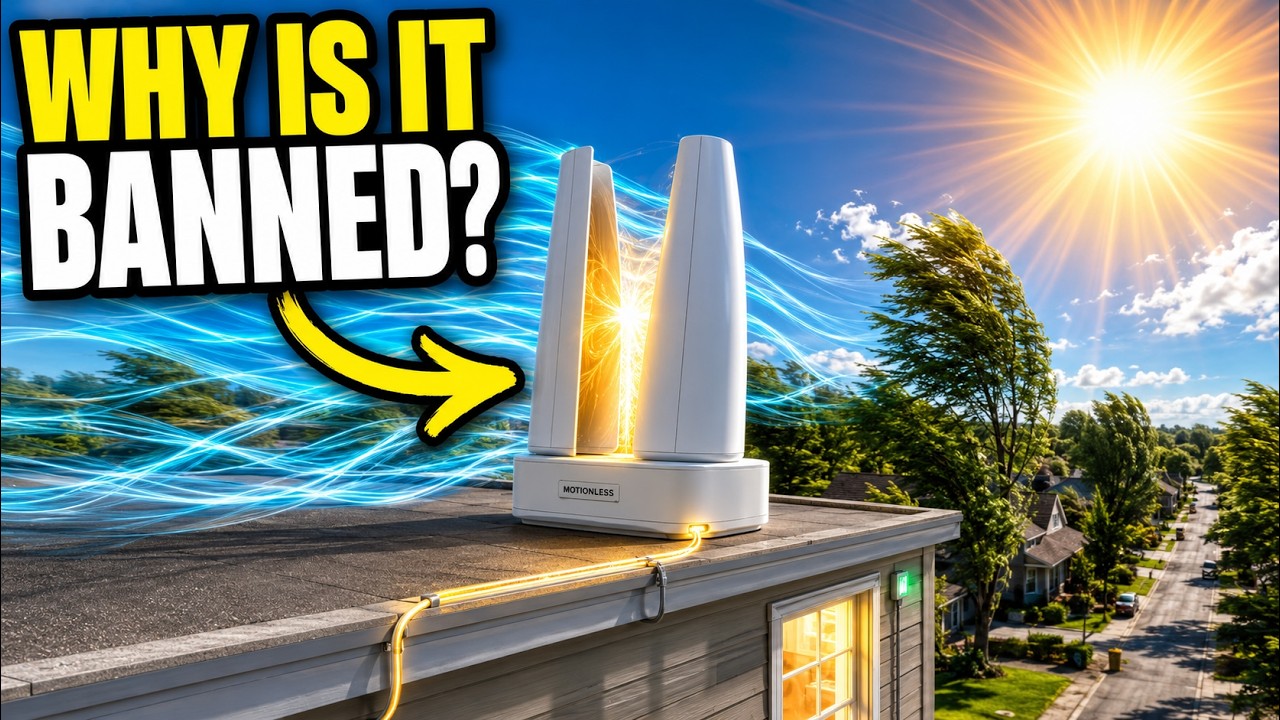
The Passive House Files · @griffithselijah7018
Where viewers went back to watch this video again, from YouTube's public Most replayed graph, lined up with what was said at that moment.
Words
5,181
Runtime
34:04
Speaking pace
152wpm
Reading time
22min
152 words per minute, below the 160 25th percentile of 349 measured videos. That distribution comes from the 349-video hook study.
Opening (first 30 seconds)
In 1986, a retired electrical engineer named Harold Wigs bolted a 4TX 6 ft aluminum panel fitted with 36 ceramic transducers to the south face of his barn roof in Gallatin County, Montana, and spent the next 37 years pulling electricity from the wind without a single moving part ever turning once. His neighbors thought he was crazy. His grandchildren thought he was ahead of his time. Montana State University, when they finally ran a field
76 words, the words spoken in the first 30 seconds at 152 words per minute.
Free, no signup. See how the first 30 seconds hold attention, with rewrites.
What this transcript is
Every word below is the caption track YouTube publishes for this video, pulled from the video itself and reproduced unchanged. It is not Prepublish's writing, not a summary, and not a re-transcription: it is the video's own published captions. English captions, generated automatically by YouTube, in the video’s original language. Source: the video on YouTube. A channel that would rather this page did not exist can ask for its removal through the contact page, and it is removed.
In 1986, a retired electrical engineer named Harold Wigs bolted a 4TX 6 ft aluminum panel fitted with 36 ceramic transducers to the south face of his barn roof in Gallatin County, Montana, and spent the next 37 years pulling electricity from the wind without a single moving part ever turning once. His neighbors thought he was crazy. His grandchildren thought he was ahead of his time. Montana State University, when they finally ran a field survey of the property in 2004, measured 14 watts of sustained output in a 12 mph breeze from a device that had not been touched or serviced in 18 years.
No bearings, no gears, no gearbox, no lubricant, no monthly maintenance bill of any kind. Just a sheet of aluminum, a handful of ceramic discs, and a principle of physics so simple that the modern residential wind turbine industry [music] has spent the better part of four decades pretending it does not exist. Because if you understood what Harold Wigs understood, you would never write another $3,000 check to a turbine installer for as long as you live.
And that is exactly what ranchers and off-grid tinkerers across the high plains in Montana, in Wyoming, in the Dakotas, and every windswept county from the Rockies to the prairie have been quietly doing for over 30 years. They call it the motionless wind panel. If you built the same panel on your own roof this Saturday, you would have a silent, maintenance-free source of electricity feeding your battery bank before sundown.
You would never pay a technician $250 every 3 years to replace the bearings on a machine that should not have had bearings in the first place. The materials cost you $90, not 900, not $9,000. $90 of aluminum shim stock, PZO ceramic discs, and epoxy from any hardware store or electronic supplier in the country. That is what stands between you and a device that does the same job as the $3,000 residential microurbine the installer wants to bolt to your chimney and then visit every 36 months to service.
And that installer and the manufacturer behind him and the warranty company behind both of them all have a very strong financial interest in making sure you never find out how simple the physics actually are. Let me show you why this works. why it has always worked and why almost nobody in the residential wind turbine industry will ever mention it to you. The physics is so simple it almost feels like cheating. You already know what happens when wind hits a thin piece of metal.
You have heard a stop sign hum on a gusty day. You have watched a loose piece of flashing on a barn roof vibrate so fast it blurred. That vibration is not random noise. It is energy. And the only question is whether you capture it or let it rattle itself into nothing. Here is what is happening. When moving air passes over a thin flexible strip of material, the airflow separates on one side, curls into a tiny vortex, and sheds off the trailing edge.
Then another vortex forms on the opposite side, and sheds again, back and forth, over and over, hundreds of times per second. A Hungarian-born engineer named Theodore von Karman described this cycle mathematically in 1911. He called it vortex shedding. The frequency depends on three things. The speed of the wind, the width of the strip, and the density of the air. Change any one of those three and the vibration frequency shifts.
But the vibration itself never stops as long as the wind is blowing. That is the mechanism. That is what Harold Wigs figured out how to wire. Now, here is where the money comes from. In 1880, two brothers in Paris named Jacques and Pierre Curi discovered that when you apply mechanical stress to certain crystals, the crystal produces a voltage across its faces. Squeeze it, it generates electricity. Bend it, it generates electricity.
Vibrate it back and forth a thousand times a minute, it generates electricity a thousand times a minute. They called it the pazo electric effect. The word comes from the Greek pazine which means to press. Every quartz watch on every wrist in the world runs on this exact principle. The physics has been settled for over 140 years. What the motionless wind panel does is marry those two ideas together. You take a thin reed of aluminum about 1 in wide and 6 in long and 2000s of an inch thick.
You bond a PZO electric ceramic disc to the center of that reed. When wind crosses the reed, vortex shedding forces it to flutter. That flutter stresses the ceramic disc. That stress produces voltage. One disc on one read in a 12 mph wind [music] produces roughly half a volt and a few milliamps. That is almost nothing. But you do not build one read. You build 36 of them. You wire six reads in series to stack the voltage.
Then wire six of those strings in parallel to stack the current. A single 1 mm thick PZO ceramic disc 27 mm across can produce up to 20 volts under sustained cyclic flex. Multiply that across a 6 square ft panel and you get enough continuous current to trickle charge a 12vt battery bank every hour the wind blows. The Department of Energy's Wind Energy Technologies Office published a technical brief in 2017 titled non-rotational wind energy harvesting modalities and performance benchmarks.
It is a title so boring that nobody outside a federal cubicle has ever willingly read it. But on page 14, the authors [music] confirm that PZO electric flutter harvesting produces measurable continuous electrical output at wind speeds as low as 7 mph [music] with no rotational components and no mechanical wear surfaces. 7 mph. That is barely enough wind to move a flag. And it is enough to keep your panel producing current while your neighbor's spinning turbine sits locked because its cut-in speed is nine.
And stick with me because what I'm about to show you next is the part that should convince you this is not some garage curiosity. Real companies, real universities, and real government laboratories have tested this principle for decades, published the numbers, and then watched the industry bury every one of them. Start with Nicola Tesla. In 1894, Tesla filed United States patent number 514,169 for what he called a reciprocating engine.
The drawings show no turbine blades, no spinning rotor, no flywheel. What they show is a column of fluid, air, or steam flowing past a flexible body and forcing it to oscillate at a fixed frequency. Tesla's insight was that you did not need to spin anything to extract energy from a moving fluid. You just needed to let the fluid push a surface back and forth and then harvest the motion at the point of maximum flex. He described the physics in four pages.
He filed the patent. He moved on to other work and the idea sat in the patent office for the next 85 years while the entire wind energy industry built itself around one single assumption that a blade has to rotate. You are paying for that assumption right now. Every bearing, every gearbox, every lubricant change, every service call on every residential turbine in America exists because the industry chose rotation over oscillation more than a century ago and never looked back.
Tesla handed them the alternative in 1894. Nobody picked it up. The next time anyone took it seriously was 1979. Sandia National Laboratories in Albuquerque, New Mexico, published an internal study on vortex induced vibration harvesting. The researchers mounted flexible polymer strips inside a wind tunnel, attached strain gauges to each strip, and measured the electrical output generated by flutter alone. No rotation, no gears.
Their published data showed consistent repeatable voltage production at wind speeds between 8 and 18 mph. That is exactly the range most American rooftops experience on an average afternoon. The study recommended further development. Then oil prices collapsed in the early8s. Federal research funding for alternative wind harvesting dried up in a single budget cycle. The Sandia study was shelved. The file number still exists.
The data still holds. Nobody funded the next phase. But the physics did not care about oil prices. It kept working. Three decades later, a small company in Spain proved it again at commercial scale. Vortex Bladeless, founded in Avala in 2015, built a tall, flexible mass with no blades and no rotational components. Wind hits the mast. The mast oscillates. Electromagnetic generators at the base convert that oscillation into current.
Their published field test data showed 12 watts of sustained output in a 15 mph wind. The company raised over €1 million in crowdfunding. Thousands of people wanted this. [music] The mainstream wind industry did not mention it once. Four years later in Houston, a company called Aeromine Technologies took the concept indoors. Founded in 2019, Aeromine designed a rooftop-mounted motionless unit [music] that uses the aerodynamic pressure differential created by the building itself to drive internal air flow across a generator.
No external moving parts, no spinning blades, no noise. In 2022, Aeromine installed pilot units on BASF distribution center rooftops and published a claimed output equivalent to 16 solar panels per unit. BASF did not do that as a charity project. They did it because the numbers worked. And it was not just startups. In 2020, Professor Lelay Zoo at the University of Michigan published a peer-reviewed study demonstrating a PZO electric wind panel producing continuous measurable current at wind speeds as low as 7 mph.
The panel used the same PZT ceramic discs you can order online for 60 cents a piece. the same aluminum reed strips you can cut from shim stock with tin snips. Professor Zuo's team did not use exotic materials. They used hardware store components, a university wind tunnel and a voltmeter and they got continuous output. So here is the pattern. Tesla described oscillation harvesting in 1894. Sandia proved the voltages in 1979.
Vortex bladeless proved it commercially in 2015. Aeromine proved it on real rooftops in 2022. The University of Michigan proved it with 60 C discs. Every single one published their numbers. Every single one showed it worked. [music] And every single time the rotating turbine industry looked the other way. The physics worked. The market did not want it. And if you were sitting there thinking that this sounds promising, but the output numbers seem too small to matter, good.
That is the exact objection I want to address right now because it is the first of three and two of them are dead wrong. The first objection is that the output is too low to be useful. You heard the numbers 14 watts, 12 watts. Your brain did the math immediately because you know your refrigerator alone pulls 400 W. So you were thinking what am I going to do with 14 watts? Here is where the objection falls apart. You were not building one panel.
You are building a system. A single motionless wind panel produces 15 to 25 watts in a steady 12 mph breeze. Mount three along your roof ridge and you are producing 45 to 75 watts continuously every day the wind blows. That is not peak power. That is trickle power. Trickle power keeps a battery bank alive between solar cycles. It keeps your LED lights on at 2 in the morning. It keeps your chest freezer from thawing during a 3-day grid outage.
You do not need to replace your peak load system. You need to stop confusing peak load with baseline. Your baseline overnight draw, the clock on the stove, the security light on the porch, the modem, the phone charger runs between 60 and 120 watts in a typical American home. Three panels cover that for $270 total. The second objection is that PZO electric elements degrade and you will be replacing those ceramic discs every couple of years.
This one sounds reasonable until you look at the data from the people who have used PZT ceramics the longest. That would be the United States Navy. The Naval Research Laboratory has published fatigue cycle ratings for PZT5A ceramic at 1 billion cycles before measurable performance loss. At a typical wind flutter frequency of 40 hertz, you would need to run your panel continuously for just under 800 years to hit that number.
The Navy uses these discs in sonar transducers that operate submerged in salt water under extreme pressure for decades. Your rooftop is a vacation by comparison. PZO ceramics do not wear out from vibration. They were designed for vibration. The third objection is that wind is unreliable. And if you cannot count on a steady breeze, the whole concept fails. This one is not dead wrong. It is just backward. A spinning turbine needs smooth laminer air flow to generate power efficiently.
Turbulence is the enemy of rotation. Gusty, swirling wind tears at bearings, stresses gear teeth, and trips overspeed shut offs. That is why your neighbor's rooftop turbine sits locked on the windiest days of the year. A motionless wind panel is the opposite. It feeds on turbulence, chaotic gusts, crosswinds, updrafts bouncing off your roof. All of that is vibration energy waiting to be harvested. National Weather Service data shows the average American rooftop sees sustained wind between 7 and 12 mph on a typical afternoon.
That range is below the cut-in speed of most small spinning turbines, but sits directly in the peak flutter zone for a properly tuned aluminum reed. Your roof is not too calm for this. Your roof is too turbulent for the other thing. And that performance gap changes depending on where you live. Does this work in your climate, on your roof, in your zip code? The answer is yes, but the reason is different in every region.
Start with Phoenix, Arizona. Average ground level wind runs about 6 mph. Most rooftop turbines will not even turn at that speed. But on a July afternoon when your shingles hit 150°, hot air launches off that roof surface in rolling thermal convection currents that gust to 9 and 10 mph right at the ridge line. That is invisible, chaotic vertical turbulence. A spinning blade cannot use it. A motionless reed panel sitting 12 in above your ridge is vibrating in it all day long.
In Phoenix, the heat your roof absorbs is the fuel your panel runs on. Now go to the opposite extreme. Fairbanks, Alaska. Sustained winter winds run 15 to 20 mph for months. That sounds like turbine country, except that at -40°, the lubricant inside your turbine gearbox turns to paste. The bearings seize. The overspeed brake freezes in the locked position. Your $3,000 turbine becomes a very expensive weather vein from November through March.
A motionless wind panel has no lubricant, no bearings, no gearbox. Aluminum does not freeze. PZT ceramic does not freeze. At minus40, your panel is still fluttering, still pushing voltage into your battery bank, while the spinning machine next to it has not moved in 11 weeks. Houston gives you a different problem. GF Coast humidity and salt laden air corrode turbine gearboxes from the inside out. Installers in the Houston metro will tell you privately that bearing life drops to 18 months, not 3 to 5 years.
Your service costs double. Meanwhile, average wind speed along the Gulf runs 14 mph, putting your motionless panel right at peak output. You coat the aluminum in marine epoxy, seal your solder joints, and the salt air never touches the working surfaces. Boseman, Montana is Harold Wig's territory. 12 mph average, steady and predictable, rolling off the Bridger Range all year. His panel proved this region 37 years ago.
Then there is Cape Hatteris, North Carolina. Salt air on the Outer Banks destroys spinning bearings within 2 years. Installers have stopped warrantying rooftop turbines entirely. A motionless panel sealed in marine epoxy with stainless steel brackets has no bearing to corrode, no gear tooth to pit, no lubricant reservoir to contaminate. If you live in a mild climate, this saves you money. If you live in a climate extreme, this saves you money and it actually works when the spinning turbine beside it has shut itself down.
So, if the physics works everywhere and the proof goes back decades and the materials cost less than a decent pair of boots, you should be asking one very specific question right now. Why has nobody ever sold you one? The answer is not a conspiracy. The answer is a business model. Follow the money from the moment you type rooftop wind turbine into a search engine. A manufacturer builds a spinning turbine with an asel, a gearbox, a tail vein, and composite blades.
The manufacturing cost runs about $480. The manufacturer sells it to a distributor for $900. The distributor sells it to an installer for $1,400. The installer charges you $3,000, including a $2,000 fee for mounting, wiring, and commissioning. That installer is not done with you. He comes back in 36 months to replace the bearings. He comes back in 72 months to replace them again. He comes back at the 10-year mark to replace the inverter.
He sells you an extended warranty at $12 a month that covers service calls existing only because the machine has moving parts that wear out. Every single dollar in that chain depends on rotation. Parts that spin are parts that fail. Parts that fail are parts that get replaced. Parts that get replaced are revenue. Now look at what happens when you hand that same customer a motionless panel. He buys $90 of materials once.
He mounts it himself in a weekend. Nothing spins. Nothing wears. Nobody comes back. There is no installation fee because there is no installer. There is no service contract because there is no service interval. Every step in the revenue chain evaporates the moment you remove the rotation. and the structural barriers make sure you never get the chance to try. The international standard governing small wind turbines is IEC61400-2.
The definition on the first page specifies a rotor swept area. A rotor. The standard assumes rotation in its own title. If your device does not rotate, it does not fit the classification. If it does not fit the classification, it cannot be certified. If it cannot be certified, your local building inspector has no code pathway to approve it. He is not saying no because it is dangerous. He is saying no because his checklist does not have a box for it.
The tax credits work the same way. The federal residential clean energy credit under section 25D lists solar electric, solar water heating, fuel cells, small wind energy, and geothermal heat pumps. Small wind energy in the IRS guidance references equipment meeting performance and safety standards for wind turbines. Turbines, not panels, not oscillators. The credit was written around a spinning blade. If your device does not spin, you do not get the 30% write off.
Then there is the appraisal gap. When you sell your house, the appraiser has a line item for solar panels and a line item for a wind turbine. There is no line item for a motionless wind energy panel. Your $90 device that has been feeding your battery bank for 15 years adds zero assessed value to your home. A device with no moving parts, no maintenance schedule, and no component that wears out in under 30 years is an extinction event for recurring revenue.
And an industry built on recurring revenue does not help you find the thing that would end it. But you do not need their permission to build it. Here is how you build one in a single weekend. Friday evening is your parts run. You need 36 PZT PZO electric ceramic discs 27 mm in diameter. Order them from Stemints or Marada through any online electronic supplier. They run about 60 each, roughly $22 for the set. You need one sheet of 0.02 02in thick aluminum shim stock 4T x 6 ft about $32 from any metal supplier.
You need two-part marine grade epoxy rated for outdoor flex and vibration. You need a fullbridgeidge rectifier rated for at least 50 volts and 1 amp. You need a 470 microfarad electrolytic capacitor rated at 50 vol. [music] You need six shotkey blocking diodes. You need one weatherproof junction box at least 4x4 in. You need 20 ft of 12 gauge outdoor rated stranded copper wire. You need eight stainless steel L brackets with matching stainless lag bolts/4 in x 2 in.
You need a half sheet of 3/4 in exterior grade plywood for the backing frame. And you need tin snips, a soldering iron with rosin core solder, and a multimeter. Lay it all out on your workbench Friday night. Total cost sits between87 and $92 depending on where you source the shim stock. Saturday morning you start cutting. Take your shim stock and cut 36 reed strips each 1 in wide and 6 in long. Aviation snips do this in about 40 minutes.
Deburur the edges with a fine file. Now take each read, clean the center with isopropyl alcohol, and epoxy one PZT disc face down onto the center of the strip. Press it flat, hold it for 30 seconds, and set it aside to cure. While those cure, wire your junction box. Solder six blocking diodes and your rectifier onto a small piece of PF board inside the box. Wire the rectifier output to your capacitor. Run your 12 gauge leads out through a weatherproof cable gland.
This is your power output stage. The whole junction box assembly takes about an hour if you have soldered before and 90 minutes if you have not. Saturday afternoon is assembly. Your epoxy has cured for at least 4 hours. Take your plywood backing and mark a 6x6 grid with 4in spacing between centers. At each grid point, mount a quarterinch standoff spacer, nylon or rubber, that holds the reed above the plywood so it can vibrate freely.
Screw each read to its standoff at one end only, leaving the opposite end cantalievered to flutter. Now wire them six reads per string in series, positive pad to negative pad, using thin flexible lead wire soldered to the silver electrode face of each disc. You end up with six strings. Wire those six strings in parallel and route both bus leads into your junction box. Close the box. Seal every cable entry with silicone.
Carry the assembly up to your roof. Mount it to the ridge line using your stainless L brackets reads facing perpendicular to your prevailing wind. Keep a minimum 12in standoff from the roof surface. Torque each lag bolt to 6 ft-lb. Run your 12- gauge wire down to your charge controller and battery bank. Mounting takes one person about 2 hours. A second pair of hands cuts it to one. Sunday morning, you walk out to your battery bank with your multimeter, clip the leads to the terminals, read the voltage, read the amperage, write both numbers down on a piece of paper, and tape it to the wall above the battery.
That is your baseline. You started Friday night with a clean workbench. You finished Sunday morning with a silent, motionless energy source on your roof that has no part inside it capable of wearing out in your lifetime. And you did it for less than the cost of a single service call on the machine you will never need to buy. Before you order your next batch of discs or start planning a second panel, here are the details I deliberately held back until now because they only matter once you have already decided to build this.
And if you have made it this far, you have decided. I can tell. The first detail is resonant tuning, and it is the single biggest reason a firsttime builder gets disappointing numbers. Your reed has to flutter at the right wind speed. Too stiff and it sits there like a dead shingle while perfectly good wind rolls over it. Too thin and it overflexes past the fatigue limit of the ceramic. The target is flutter onset at 70% of your local average wind speed.
If your average is 12 mph, you want the read vibrating at about 8. The variable you control is the free length of the cantal lever. The distance from the mounting screw to the tip. Longer lowers the onset speed. Shorter raises it. Start with 5 in of free length and test in real wind with your multimeter clipped to a single read before you wire the full array. Trim a/4 in at a time until you see peak voltage at your local average.
This costs you nothing but 30 minutes and a pair of snips. Skip it and you leave half your output on the roof. The second detail is moisture. Water does not just corrode your solder joints. It changes the dialectric properties of the ceramic itself and drops your voltage output by as much as 40% on a humid morning. Every solder point, every exposed electrode face, every wire junction needs conformal coating. The product you want is MG Chemicals 422B silicone conformal coat.
It runs about $11 a can and one can covers three full panels. Brush it on every electrical connection after soldering. Let it cure for 24 hours before mounting. This is not optional. This is the difference between a panel that works in July in Houston and one that does not. The third detail is your wiring topology. Inside each string of six reads, you wire in series positive electrode of disk one to negative electrode of disk 2 and so on.
That stacks your voltage. Then you wire your six completed strings in parallel at the bus leads going into your junction box. That stacks your current. If you reverse this, your total output drops by up to 60%. and your rectifier sees a high current, low voltage signal, it cannot efficiently convert. Series within each string for voltage parallel across strings for current. Write it on the inside of your junction box lid so you never have to think about it again.
The fourth detail is mounting orientation. Your reads must face perpendicular to the actual wind direction at your specific roof location, not the general compass direction on a weather website. A 5° misalignment reduces flutter amplitude by 30%. The fix costs 50. Tie a 12-in ribbon to a stick, mount it where your panel will go, and leave it for one week. Check it every evening. The direction that ribbon points most consistently is your true prevailing wind vector.
Aim your reads across that line, not along it. The fifth detail is lightning protection and grounding. If your panel sits at the highest point on your roof or within 18 in of it, you need a dedicated ground path. Run a minimum number six bare copper wire from one of your stainless mounting brackets straight down to an 8 ft copperclad ground rod driven into the soil. This is code in most jurisdictions. A direct strike to an ungrounded metal panel will vaporize your rectifier, your wiring, and possibly start a fire in your attic.
The ground rod costs $9. The copper wire costs about 14 for a 20ft run. $23 is cheap insurance against losing your roof. And here is where I owe you the honest tradeoffs. A single panel in good wind produces 15 to 25 watts. That is real, continuous, and useful. But it is a trickle system, not a peak load replacement. You are not running your air conditioner on this. You are keeping your battery bank topped between solar cycles and powering your baseline overnight draw.
Know what it is and use it for what it does. The second trade-off is hail. A direct hit from a/4in hailstone will crack a PZT disc. In halprone regions, cut a/4in polycarbonate sheet to fit over your read array with a 1-in air gap so the reads can still flutter freely underneath. That shield costs $18 and it is worth every cent if you live anywhere from North Texas to Nebraska. If you want to power, heat, and cool your home off-rid, the passive house files show you how.
Full plans, exact materials, and the honest numbers nobody else gives you. It is not too late to start lowering your bill. Scan the QR code and see for yourself. Wind has been shaking every blade of grass, every loose shingle, every barn door on every farm on this continent for 10,000 years. It shook them before Edison wired his first bulb. It shook them before the first turbine blade ever turned. The only thing that changed is that someone finally thought to wire it.
Go out to your roof tonight. Stand at the ridge line where your panel would sit. Feel the wind pressing against your chest, pulling at your collar, tugging at your sleeves. That is not weather. That is electricity you have been throwing away every single day you have lived in that house. Picture the next time the grid drops out on your street and every house goes dark except yours. Your porch light is on. Your freezer is humming.
Your phone is charging. And the only sound on your roof is silence because nothing up there is spinning. $90 of aluminum and ceramic doing the job of a $3,000 machine with no service calls, no replacement parts, and no technician's phone number in your contacts for 30 years. A lot of what this channel covers disappeared from the mainstream, not because it stopped working, but because a sell it and service it industry decided that simplicity was not profitable enough to sell.
A motionless panel that never breaks does not fit inside a business model that needs you to call back every 3 years. So, the physics got buried, the patents got ignored, and the standards got written around the thing they could keep selling you. If this is the kind of knowledge that matters to you, subscribing and sharing is the simplest way to make sure it keeps being found. Now, I want you to do something for me. Go buy a $20 handheld animometer from any outdoor supply store, mount it at your roof ridge for one full afternoon, and tell me in the comments exactly what your average wind speed reads.
I read every single one. And if you want to know what happens when you combine a motionless wind panel with a passive solar thermal collector for a zeroo moving parts offgrid energy stack, that is the next video. And the numbers in it are going to change the way you look at your entire roof.
The words are the caption track's own and nothing is reworded or re-transcribed. Paragraph breaks are placed between sentences so the text reads as prose.
Free tools for your own script. No signup, no login.
Paste your draft and see where viewers are likely to drop off, with a rewrite for each weak line.
Paste the first 30 seconds of your own draft for a hook score and rewrites.
Check your draft against YouTube's advertiser-friendly guidelines before you record it.
Read this channel's public videos and transcripts, and download a writing brief for it.
Most replayed moment #1
22:0911.9x the video's typical replay level
event for recurring revenue. And an industry built on recurring revenue does not help you find the thing that would end it. But you do not need their permission to build it. Here is how you build one in a single weekend. Friday evening is your parts run. You need 36
Said at 22:04
Most replayed moment #2
27:169.1x the video's typical replay level
control is the free length of the cantal lever. The distance from the mounting screw to the tip. Longer lowers the onset speed. Shorter raises it. Start with 5 in of free length and test in real wind with your multimeter clipped
Said at 27:11
Most replayed moment #3
23:527.8x the video's typical replay level
and cut 36 reed strips each 1 in wide and 6 in long. Aviation snips do this in about 40 minutes. Deburur the edges with a fine file. Now take each read, clean the center with isopropyl alcohol, and
Said at 23:44
The graph counts replays. It does not show where viewers stopped watching.
Sentence shape
| Measure | This transcript |
|---|---|
| Sentences | 400 |
| Average words per sentence | 13.0 |
| Longest sentence | 52 words |
| Questions asked | 3 |
| Sentences containing a number | 123 |
Most used terms
Filler phrases
7 in total: like 3 · actually 2 · kind of 1 · you know 1.
A literal whole-word count of the same phrase list the Prepublish browser extension uses, so a phrase inside another word is not counted and a phrase used in its ordinary sense still is. It is a count and not a judgement.