Getting the transcript
Reading the captions from YouTube. A video nobody has opened here before takes 10 to 30 seconds; this page fills in on its own.
Getting the transcript
Reading the captions from YouTube. A video nobody has opened here before takes 10 to 30 seconds; this page fills in on its own.
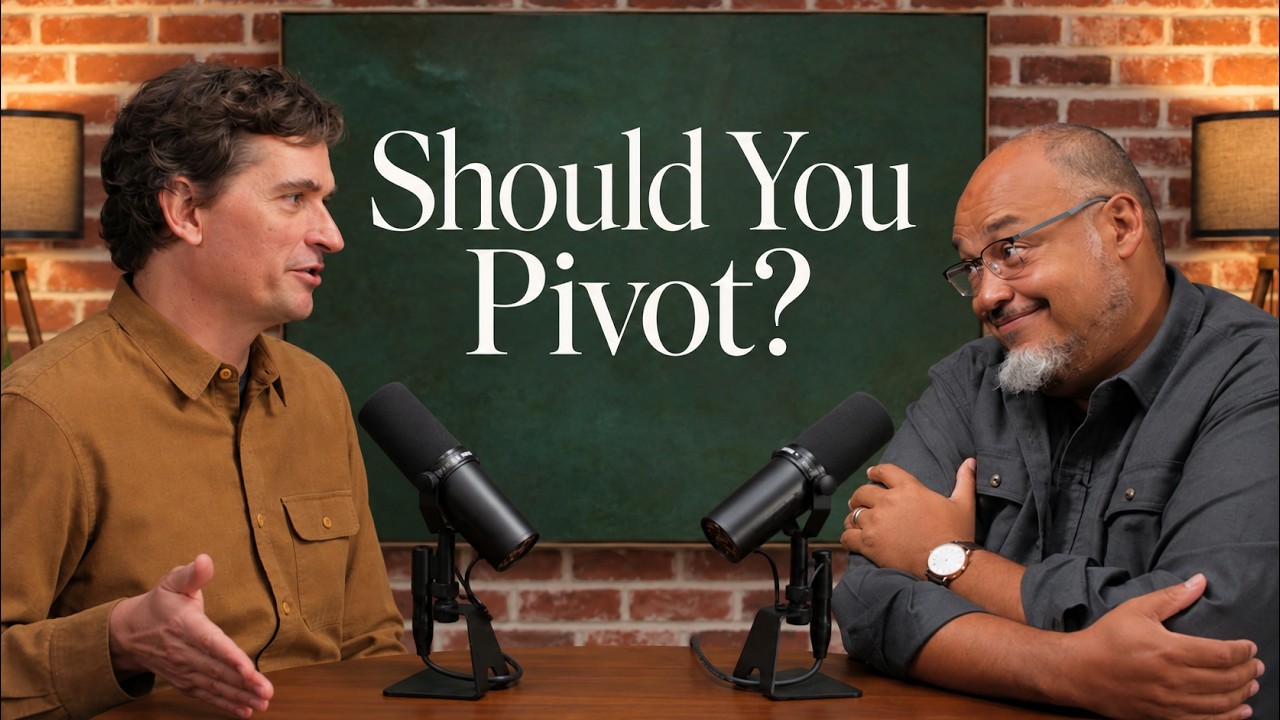
Dalton + Michael · @daltonplusmichael
Words
4,878
Runtime
23:46
Speaking pace
205wpm
Reading time
20min
205 words per minute, above the 201 75th percentile of 349 measured videos. That distribution comes from the 349-video hook study.
Opening (first 30 seconds)
It's never been easier or a better time to change your idea because of how fast [music] you can grow. And if you're going to re-roll, please don't get into pivot hell. Like like like that's not actually obviously better. >> This is Dalton plus Michael and today we're going to talk about should you pivot? We've never been asked questions about startup pivoting before so this fresh fresh content. >> I would say this is the most common topic that I got as a YC partner for someone that wanted to book office hours with me. And this would be like the
103 words, the words spoken in the first 30 seconds at 205 words per minute.
Free, no signup. See how the first 30 seconds hold attention, with rewrites.
Sentence shape
| Measure | This transcript |
|---|---|
| Sentences | 347 |
| Average words per sentence | 14.1 |
| Longest sentence | 71 words |
| Questions asked | 36 |
| Sentences containing a number | 13 |
Most used terms
Filler phrases
216 in total: like 133 · kind of 28 · you know 19 · actually 12 · um 11 · right? 6 · basically 5 · I mean 1 · uh 1.
A literal whole-word count of the same phrase list the Prepublish browser extension uses, so a phrase inside another word is not counted and a phrase used in its ordinary sense still is. It is a count and not a judgement.
What this transcript is
Every word below is the caption track YouTube publishes for this video, pulled from the video itself and reproduced unchanged. It is not Prepublish's writing, not a summary, and not a re-transcription: it is the video's own published captions. English captions, generated automatically by YouTube, in the video’s original language. Source: the video on YouTube. A channel that would rather this page did not exist can ask for its removal through the contact page, and it is removed.
No Script X-ray for this video: YouTube shows a Most replayed graph only once a video has enough views.
It's never been easier or a better time to change your idea because of how fast [music] you can grow. And if you're going to re-roll, please don't get into pivot hell. Like like like that's not actually obviously better. >> This is Dalton plus Michael and today we're going to talk about should you pivot? We've never been asked questions about startup pivoting before so this fresh fresh content. >> I would say this is the most common topic that I got as a YC partner for someone that wanted to book office hours with me.
And this would be like the title of the office hours. What they want to talk about. And this would be this would be the topic. And so [laughter] >> I got very practiced at doing this office hours and I think something great about these videos is we can kind of give you the audience an office hours experience without meeting with all of you. So I think we'll kind of go from there, right? So >> Let me try to ask you some kind of a setup question.
So um what's the difference in kind of how you would take an office hour like this when you're talking to a founder who is maybe three or four months in and and kind of afraid of their lack of progress versus a founder who was two years in. How in your mind were you calibrating slightly differently based on just that? >> The first thing that I would do my framework for this type of office hours was I kind of would think of myself like a doctor where you know when you go to the doctor's office you you don't get out the prescription pad at least not a good doctor.
You're not like okay well here's your prescription, you know, that would be I think deeply unethical I think would be the term for that. >> I came in for a hurt shoulder. Here's your shoulder [laughter] surgery. >> It's been great. And instead what I would do is spend a large amount of time at the beginning of the office hours asking a lot of questions. just like what a good doctor would do is they would want to assess you, they would want to look you all over, they would then ask family history.
There's just like all this context that you need to make a diagnosis as a doctor. And so, the way that I would diagnose case of the pivots would be would be to ask, "Okay, remind me the backstory of the company, how long have you guys been working on this idea, when did the founders come together, how much alignment do you have between the founders that you're working on the right idea, objectively how is it going, do you agree objectively of how it's going?" And then I would always like to ask, "What is your next best option?" So, I would say, "Okay, so you're asking me about pivoting, do you have an idea like in the in the can here or are you just in the abstract?" >> a blue ocean. >> [laughter] >> Um cuz again, on that point, just let's just say that they said, "Oh, Dalton, we do have other ideas." I'm like, "Well, what are they?
What are your top three?" Because sometimes their top number one backup idea was phenomenally good. >> [laughter] >> And they'd put a lot of time and thought into it. And so, my diagnosis would be like, "Well, that sounds It sounds like you're pretty high conviction on that idea and you're you've thought about a lot. Maybe you should look at that." Versus, "Oh, we have no other ideas. We're just asking you this very abstract question." I would tend to be like, "Well, So, I'll pause here.
And so, the the way I think about this is there's like a decision tree of asking a ton of questions about the founders' context. And and as for what you said a moment ago, Michael, if it's a company that's been in the basket for 4 weeks and has not talked to a single customer and has no other ideas, generally be like, "Yeah, you probably shouldn't pivot. Like, you should at least try." But if you've been working on it for 3 years and it's going nowhere, yeah, you should you should probably pivot, right? >> On average, founders know less about the problem that they're trying to solve than they think.
And there's this kind of frame of like, "I'm going to start this company because I know the right solution, which is like a helpful frame to convince yourself to like do the idiocy of starting a company. But the reality in my mind is that in the first couple years of a company, you're actually trying to figure out everything. Like trying to figure out what the customer's problem is, can it be solved, is it worth solving everything.
And what I find is that I encounter, and this is very, very general, is two types of founders. I encounter type of founder who like once they realize their vision of the world is slightly different um than what the world's turning out to be, they get scared. And they're like this seems like a harder problem than I thought. But I think this problem over here is easier. I want to kind of run away from the hard. And that's kind of what I tend to see as the early pivoter. >> 100%. >> And let me give you the textbook example and >> Yes. >> Um I mean this from a place of love, audience.
If any of you are working on this idea, this is not I'm not trying to give you a hard time. But the classic one was companies working on some idea and they're like, okay, we're going to pivot. We're thinking dentists. Like for some reason >> dentists was the thing where it seemed really easy. >> Yeah, like somehow >> fill out the forms for you. >> Yeah, this thing sounds hard. >> Yeah. >> But I was asking ChatGPT and I think we're going dentists.
And I'm like, oh, another one of these. That was like the classic pivot. >> I thought you were going to go the the the user interview product. That was another classic. >> It was. And again I'm sure there's some great dental startups. We love you. Like no diss. I just that one was a great example of a startup idea that feels easy. For whatever reason >> Yes. >> a lot of founders >> Yes. >> searching for an easier startup idea >> Yes. >> gravitate towards dentistry. >> And >> [laughter] >> It's it's always entertaining to me.
So, carry on. >> And then there was the second kind of pivot conversation I'd have where basically be a founder who they actually know about their industry now. They actually know about their customer. I can sit down and have a half hour extremely interesting conversation about what have you learned? And they can teach me all kinds of stuff. And for that founder when they say they want to pivot, I take it completely differently.
I basically take this as like have they actually tried their core hypothesis and has it not worked? And then like once that's happened and you've given that a good faith effort, it's you kind of should either pivot or shut down. Like >> I think that's fair. Another another rubric I would do in my diagnosis is if it was a developer tool, >> Mhm. >> I would say, "Okay, are you all using this yourselves?" >> Yeah, God, that's a big one. >> And it was it was actually surprising how many companies building a developer tool could not be bothered to use their own product to build their own company. >> That was the whole thesis about pivoting or doing a developer tool.
It's like if you're a developer, >> [laughter] >> here's the area you know really well. >> We spent 6 months building this AI coding thing or whatever. And I'm like, "Well, cool. Are you are you using it on a daily basis?" And they're like >> No, we're using cursor. >> You know, we'll get back to you on that. Um that was generally a sign that it probably wasn't the right space for them or the very least they're not on the right track. >> Yeah.
So, let's just say everything we've talked about before. I think I believe in the pre-AI world and the post-AI world. Let's talk about how the AI world changes this concept of pivoting. One of the things that I see is that a lot of hypotheses that founders had about how the world works for companies that were started you know, let's say before February this year. That was my awakening. Maybe it was >> It was like December. >> But close.
December last >> It's like the quad code. >> Right. Yeah, yeah. Maybe AI is kind of proving some of those hypotheses wrong. And so let's talk about a company where it's basically like their set of assumptions, oh, it takes 100 developers to build blank or it takes a lot of humans to do Y or the best we can do to improve a process is improve the UI and some screens and some workflows. What do we think about pivoting to some to those companies where maybe like the core assumption is just wrong now. >> Yep. >> And like maybe we don't they don't have to be two years in like they're going out to customers now and their basic customers are just like this is categorically not what's going on.
But maybe they raised some money and they're excited and the da da da da like how do you think about that kind of case? >> This is very nuanced feedback and I'm glad I have video to do this cuz I don't know how I would tweet this. This is way too subtle of a point. So here's what I would say. It's never been easier or a better time to change your idea because of how fast you can grow and the growth rates are real. And so you're taking a bigger opportunity cost than ever to keep grinding on an idea that structurally was rendered obsolete by cloud code or what have you, right?
It's super clear. >> Can I extend that? I would also argue that AI probably opens the opportunity aperture. So it's probably was more opportunity post AI than pre-AI. >> And the nuance here though is I would be really sad if people were watching this video and it causes them to get into pivot hell. >> Yeah, I know. Yeah. >> And let me define pivot hell. It's where you change your idea every week >> Yeah. >> and you just rotate through whatever you read about on social media and you have no conviction.
You're just chasing hype and you're yeah, like you have no conviction, you have no ideas. You're just a vessel for what you read about on x.com. >> Yeah. >> And >> And what just raised money. >> It would be so sad if someone watched this video and I accidentally got them into pivot hell. And so the nuance here is it's such a fine line, it's such a delicate balance for the viewer to yeah, you know, it's not working. You should probably roll the dice again.
Like you get a re-roll in the age of AI. And if you're going to re-roll, please don't get into pivot hell. Like like >> [laughter] >> like that's not actually obviously better. And so again, there's some some feedback I would give. There's there's some structure that I would give someone when they're choosing ideas, which is try to find an idea that you know something about, try to find an idea that you can get early customers on, try to find an idea that is not just a regurgitation of who's raising lots of money.
Like try to avoid the obvious, >> Yes. >> gravitational pull towards pivot hell. Which again is a very bad place to be. It's better It's honestly better to be working on kind of a not great idea than being in pivot hell. >> Yeah. Yeah. Yeah. >> very nuanced again. What what we're saying is >> Yeah. Yeah. Very nuanced. >> I think that if we could blind poll a lot of early stage founders and they would never get attributed back to them, I think a common belief is that most of the companies that win, those founders kind of like played around in the sand and figured something out.
And this whole idea of knowing something about what you're working on is not true. Like the stories are much more like this seemed cool and I tried it out and I was running a bunch of experiments and this ended up working versus like I actually had some kind of deep connection to this idea space, something about it. And I think what's so frustrating to me is that when I look at the winners, I can always tie or more way more often than not, I can tie some deep connection to what the founder was into.
And you know, I think we lived this personally in Twitch and it was it was weird to watch cuz I think there was this initial phase where like we were trying to make celebrities. And Justin >> Yeah. >> was the first one and he wanted to be a celebrity. Like we were solving his problem. Then there was this kind of middle phase where all we cared about was graphs and metrics and are more people coming to the website? And then there was a phase that worked, which was kind of Emmett caring about video games, and he somewhat irrationally cares about video games. >> Yep. >> And it's so funny when I go through so many stories of startups, and I kind of get to the meat of like, so why are you doing this?
And then there's some like oh, my dad was a pharmacist, or I grew up in a restaurant. Like, you know, there was like an actual And I always think to myself, if you're competing against somebody where you're just doing the random walk of what sounds like a good idea, and they're doing something that like >> doing their life's work, and you're just like hanging out. >> Trying to get lucky. >> to win? >> Yeah. And so it's like so it it doesn't seem counterintuitive to say this, but it's like your best dice roll is in a game you know how to play.
Like, your best shot, even if it seems out of vogue, is probably something that you know something about before you sat down to think about startup ideas. And like, I don't think people like to hear that, cuz they're like, I grew up in a middle-class family, and I went to a good school, and I had no problems. How do you advise someone on how to figure out what the next thing is? If the thing you're [laughter] convinced >> There's >> the thing isn't working. >> There's two things I would do.
Number one, my diagnosis would be to understand if their natural state is to pivot too much or too little. >> Mhm. >> And so, do you have a case of pivotitis? >> Yeah. >> Or do you have a case of like >> Yeah, I don't have a name for it. All right. >> The the opposite. >> And if someone was already pivoting every week, I'd actually prescribe to them don't pivot for a 3 months. Like, force yourself to work on this long enough to learn something.
Cuz right now, you're getting such surface-level insights >> Yeah. >> to just work on an idea for a week and then change again. >> You're right. >> You're learning nothing. >> Yeah. >> This is you're wasting your time to pivot every week. >> Yeah. >> So, you know, my prescription is work, pick any idea, I don't even care what it is, but force yourself to work on it for 3 months, >> Yep. >> so that you have enough time to learn something. >> What about the opposite? >> And now the opposite would be they've been working on something for 2 years, and it's still not working at all.
And so I'd be like just do something now. Like it'd be the prescription is just try some stuff because your natural order is to is to never try anything new. And also that advice is always much harder for a hard tech company where if all they know if the founders are like doctors or something there's only so many ideas they can really work on. And so the the scope of things that they could try out is much smaller. >> So let's wrap this up with kind of two interesting thoughts.
And I I will desperately try not to make them depressing. Here I go. One observation that I think we've both shared is that there were a large number of mobile startups um funded pre-the-iPhone-App-Store. There were folks that were building on top of Blackberry, on top of feature phones, on top of Palm OS, on top of Microsoft. Like all of these were were smartphone platforms pre-iOS. And as far as I can tell, none of the big mobile winners started until after the new platform was adopted.
And so what gives there? Right? Cuz I think that if I'm a first principles thinker, I would say here's a company who already understands the power of smartphones, who already has a software a product live in smartphones, who has funding, who has engineers. Wouldn't they have so much more of an advantage against someone who's starting fresh now that they have an iPhone in their hand and like oh I here's what I wish I could do. >> I think if I wanted to engage with that thinking, it's that it's a disadvantage to have inertia working on the wrong thing.
And that if you spent a lot of time and effort porting your mobile game to Blackberry, and the iPhone comes out you're going to have a lot of cope to not basically just reboot your whole company. Like the day the iPhone comes out you're like okay, well we're going to lay everyone off and we're going to throw away all the code we spent years building and we're going to admit to our investors we were wrong. And I think there's probably some founders who have the wherewithal to do that. >> Mhm. >> Um most people don't.
I think where you're going with this is that's kind of happened with AI where a lot of companies that have been around for a while, >> Mhm. >> they need to either be like, well, we're just rebooting everything, you know, like all that stuff that we spent millions of dollars all that code we wrote, uh it's worthless and it can be replicated in two months with cloud code. Thanks for playing and and and [laughter] basically you have to almost like declare emotional bankruptcy on your existing business to truly reboot it. >> Yes. >> That is such a hard thing to do versus a brand new company.
There is no emotion. They're like, cool, we just started yesterday. >> Yeah. >> And so it's almost like an existing company has to to put themselves on a level playing field with a brand new company, they have to go through your emotional state of letting all that stuff go and letting go of all the sunk cost before. Most people can't, won't, choose not to do that, right, man? Like >> What I'm hoping is that this cycle is different.
And and here's what I've seen um and I've got a couple companies in the back of my mind. One thing I've seen is that a lot more companies um that kind of got later stage pre-AI, the founders took some secondary off the table. And like in a weird way, that's kind of helpful. Like in a weird way, that kind of gives them the freedom to say like, I can take a bigger bet because if this didn't work out, at least I already got some secondary off the table.
So, I'm seeing that. And then second, I think that there are a lot of founders, maybe due to some of our advice, I don't know, when they went through COVID and they saw the crazy times, they got financially more responsible. >> Yep. >> So, it's a lot easier to think about these big moves when you're running your business at break even versus like you've got this train and if you can't keep track of the line. >> If you're like, "Oh no, the board's going to fire me." Like if you feel like [laughter] the the hatchet's hanging over your head. >> Harder. >> It's much harder to be like, "Hey, all of the stuff we did is worthless." Like Like that's a much harder pitch.
[laughter] Harder pitch. >> Yeah, harder to explain that to your board. >> And so I've seen a couple companies kind of in this position um really reboot. And like what's fun about watching it is that like in some ways if they can get their mind around this cope, it's an advantage. Like their ambition level's high. They actually are good at what they do. Like they got this business so far. They're actually kind of like talented.
Often times if they're AI pulled, they can kind of look at all the stuff they've done before and see, "Oh, we could have done it like this." And they can actually package that up and use it. >> Yep. >> And often times they had time to learn about some customers, some markets, some problems. You have some insights. So I hope and I maybe I'm I'm optimistic that this cycle's different, but I think that if I was a founder of a company between, let's say, 10 million revenue and 300 million revenue and most of that business was built on pre-AI assumptions, this is a moment.
Right? Like 5 years from now you're going to look back at this moment and you ask yourself some really hard questions. What like I might argue that like if you're a company at 500 to a billion in revenue and good economics and maybe you can IPO in the next year or two, maybe you can like sneak over the bar. But if you're not there, that bar is moving. And I think sometimes I talk to founders and and and I'm just like, "Look, you got to make a bigger move than maybe you think." >> Yep. >> And it's so hard. >> unable to make the move.
They're like, "Yeah, I know. I know, but >> But there's a but, right? >> Like if they were advising another company, they would tell them to make the move. Yeah. >> [laughter] >> Yeah. And it's it's it's hard, but I'll tell you folks are doing it. Folks are starting products at zero revenue >> Yeah. >> that have tens of millions of revenue and like what you mentioned before AI is a powerful tool, you can go fast. >> Sure can. >> You can if you've got the right idea, you can make moves.
And so I think more companies 5 years than ago 5 years from now are going to look back at this moment and say >> Why didn't we do X? >> Was this the iPhone moment? >> Yeah. >> Should we have just gone all in? And the other nice thing about a lot of these companies that may boost different in the world is like a lot of them have money. >> Yeah, their capital is not the issue. >> And I think a lot of them also I hear the story like what will my investors think?
And it's like you're an investor now. >> [laughter] >> Can you Your job is not to manage optics. Um unless it's someone that can fire you. And again, we can't you know we don't take board seats. So Standard Capital structurally you get you know there's no universe where you have to worry [laughter] that Dalton's grouchy with you. You're good. But your job is to is to is to win and to perform as an investment and not to like perform for us.
Like it's not here for my entertainment. >> [laughter] >> It's kind of like well I hope I hope this investment works out and I want to help you the best I can, but at the end of the day that's what matters. And I think I think sometimes founders think that the personal relationship matters more than if their company does well. And I as someone who's a former founder and how are you? That is not true. >> [laughter] >> Having the company work is what matters more. >> Well, and what's funny is like you what you didn't say was having the first idea work.
Or having the thing the company's doing now work. >> None of that matters. >> Just company if the company works, the investor will brag about it. >> Yes. >> [laughter] >> If the company doesn't >> Amen. >> They won't they won't You might not even know they invested. >> [laughter] >> It's true. >> There's like there's no extra points for it was my first idea. >> [laughter] >> No. >> No extra points. No extra points. And I guess my my final thought for more early-stage founders >> Yes. >> that I would always give people, there's a there's an old video where I talk about pivoting that's still on the the YC channel.
I think it's called like all about pivoting. >> Mhm. >> And one of the one of my comments is the best pivots are getting closer to the founders' zone of expertise. >> Yes. >> pivot feels like coming home. >> Yes. >> And so what I would say is if you're at this precipice of pivoting, you should ask yourself, what makes me special? What am I best in the world at? And sometimes you don't know. Something that I would do as a YC partner a lot is tell the founder what made them special.
I would look at their LinkedIn. I would look at their resume. And I'd be like, "Wow, you were writing papers about this like really esoteric topic as an undergraduate. How about that?" And they'd be like, "Oh, I never thought about that, Dalton." I was too busy, you know, worrying about dentists. And I'd be like, "Well, like seems like you know a lot about this thing you were writing papers about." >> And how much do you know about dentists again? >> Right.
Seriously. And >> [laughter] >> And it was Sometimes when you're in your own little world, >> Yeah. >> what makes you special and different and what you're a world expert at. And so I would just really encourage the audience >> Yes. >> to do that inventory of your upbringing, of where you're from, of the jobs you've had, even internships you've had. >> Yep. >> And you might have more super elite expertise than you realize.
And that's such a great source to move towards and not away from. >> I love that thought because what most founders will do, will say none of those things are hot right now. And that's like, yes. We're aiming for it looking good 10 years from now. >> Yes. [laughter] Yeah, we're not worried about today. >> Yeah, yeah, yeah. So if you're not like machine learning AI expert today, like that is okay. I would just speak for myself as an advisor, it is so much more fun to work with the founder who has an expertise in what they're doing.
Like it's so much more rewarding. I think people don't think about this but like as an advisor when the founder can teach you something it gives you more energy to help them. As a founder when it's like you feel like you know more about the problem they're solving than they do it's a it's a drag unless it's your weird hobby or something but like and and so man I really wish people started with their expertise versus started with what's in vogue.
That'd be [music] really nice. All right good luck pivoting or not pivoting. Cheers Michael. Appreciate it.
The words are the caption track's own and nothing is reworded or re-transcribed. Paragraph breaks are placed between sentences so the text reads as prose.
Free tools for your own script. No signup, no login.
Paste your draft and see where viewers are likely to drop off, with a rewrite for each weak line.
Paste the first 30 seconds of your own draft for a hook score and rewrites.
Check your draft against YouTube's advertiser-friendly guidelines before you record it.
Read this channel's public videos and transcripts, and download a writing brief for it.