Getting the transcript
Reading the captions from YouTube. A video nobody has opened here before takes 10 to 30 seconds; this page fills in on its own.
Getting the transcript
Reading the captions from YouTube. A video nobody has opened here before takes 10 to 30 seconds; this page fills in on its own.
Wint Wealth · @WintWealthYT
Where viewers went back to watch this video again, from YouTube's public Most replayed graph, lined up with what was said at that moment.
Most replayed moment #1
5:064.8x the video's typical replay level
65 to 70 lakhs. That that was it really. I in 2015 I kind of hoped that I had achieved financial freedom and therefore I didn't need to work anymore. I think there's also a very interesting study. So they saw that people who were you know giving up work or retiring around
Said at 4:59
Most replayed moment #2
7:254.6x the video's typical replay level
will be a safe enough corus. So like as I said in my case, I had assumed 12 lakh annual expenses. I had multiplied it by 30 and I had set 3.6 crores and you you might want to keep a safety margin in in thankfully in my case it was a little
Said at 7:20
Most replayed moment #3
10:314.4x the video's typical replay level
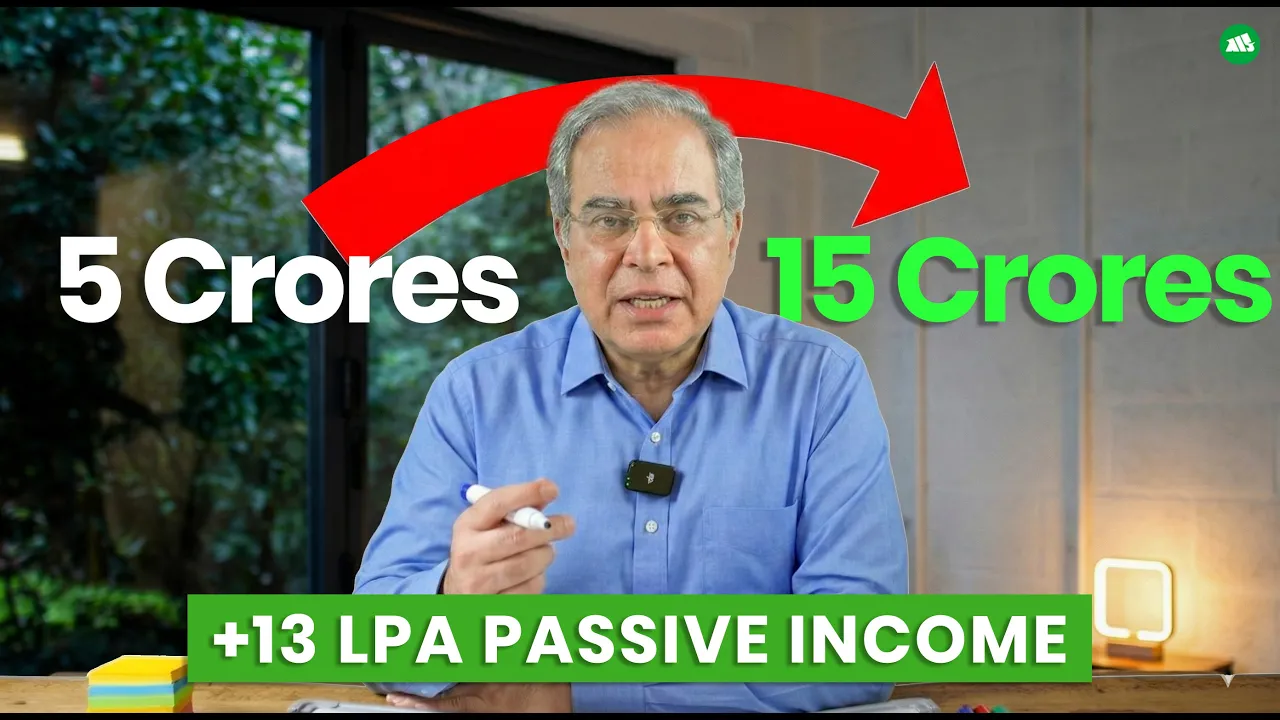
of debt mutual fund you know within that 5 crores initially if you look at the portfolio today let's say around 15 crores plus the house if you look at the predictable income streams I would say uh dividend is something which will happen every year. The exact amount of
Said at 10:24
The graph counts replays. It does not show where viewers stopped watching.
Words
3,139
Runtime
15:27
Speaking pace
203wpm
Reading time
13min
203 words per minute, above the 201 75th percentile of 349 measured videos. That distribution comes from the 349-video hook study.
Opening (first 30 seconds)
when he decided to give up his uh corporate career, I was very apprehensive. I was quite skeptical when he announced it. It was a bit of a shock and I felt [music] that why he giving up this 10 years of earning life. >> I used to go to Netherlands very often. So if you go by KM and you are flying business class, then they actually give you one of these when you get down from the flight. the actual houses that are there in in the Netherlands they are built along the canal and it is it is a
102 words, the words spoken in the first 30 seconds at 203 words per minute.
Free, no signup. See how the first 30 seconds hold attention, with rewrites.
Sentence shape
| Measure | This transcript |
|---|---|
| Sentences | 126 |
| Average words per sentence | 24.9 |
| Longest sentence | 182 words |
| Questions asked | 1 |
| Sentences containing a number | 43 |
Most used terms
Filler phrases
142 in total: you know 43 · uh 40 · like 20 · I mean 14 · actually 10 · kind of 8 · um 7.
A literal whole-word count of the same phrase list the Prepublish browser extension uses, so a phrase inside another word is not counted and a phrase used in its ordinary sense still is. It is a count and not a judgement.
What this transcript is
Every word below is the caption track YouTube publishes for this video, pulled from the video itself and reproduced unchanged. It is not Prepublish's writing, not a summary, and not a re-transcription: it is the video's own published captions. English captions, generated automatically by YouTube, in the video’s original language. Source: the video on YouTube. A channel that would rather this page did not exist can ask for its removal through the contact page, and it is removed.
when he decided to give up his uh corporate career, I was very apprehensive. I was quite skeptical when he announced it. It was a bit of a shock and I felt [music] that why he giving up this 10 years of earning life. >> I used to go to Netherlands very often. So if you go by KM and you are flying business class, then they actually give you one of these when you get down from the flight. the actual houses that are there in in the Netherlands they are built along the canal and it is it is a very unique thing there. >> Now I feel okay things things have turned out well.
There are times of uncertainty but then we have lived with times of uncertainty. The financial security is not something that I need to worry about anymore. >> Proudly part of the 01 network by Zerodha. >> Born and brought up in Dapur. It's an industrial town about 150 odd kilometers away from Kolkata. My dad was a chemical engineer. So he joined there in 1960. We were not rich but we had a very comfortable living. I mean I had two siblings.
I mean money supply I mean as far as my dad was concerned I suppose was always a little tight. You know all three of us were studying at the same time practically. I mean we didn't have any luxuries so to say but we did go out for travel once in a while. We went to places like Kashmir once we went to the Andamans. That's primarily what we did. Once I did my 12th, you know those days you could either look at engineering or you could look at medicine.
I did my engineering from Jadup University and in computer science which had just started one year back. So my engineering degree was from 1982 to 1986. In ' 85 you know we started thinking about okay what after engineering. So that was when I um I just saw the ad one day about uh the IM and all that and I thought it would be a good idea to at least take the test. Then when I got the call you know that that went pretty well you know so that's what I did for the next two years 86 to 88 I was in uh in Joka in the IM campus.
Let me let me give you a rundown on my career in terms of the different phases. So the first phase you can you can probably say was between 1988 when I joined the my first job up to 1994. So in the first phase I was mainly involved into uh software consulting uh some amount of project management. When I joined my salary was obviously you know just out of college I was probably getting only about 60,000 per year. By the time I left I I was probably getting maybe about two lakhs a year or something.
Uh the second phase mainly to sales and marketing. So this period was from 94 to98 when I joined nuclear salary itself was probably around 2.5 lakhs a year and then when I left then my salary was about 5 lakhs 98 to 2000 uh that was a little different because I joined a company called Satyam foreway they had to set up some kind of a call center which is very common nowadays but was you know quite a novelty in 1998 uh you know my salary increased a reasonable amount like I I got about nine lakhs.
So here I think the major shift in my career is that there was one company from the US who were actually looking to set up an IT related services company in Chennai. So this was a major break in the sense that okay my my salary in Tatyam was probably about 9 10 lakh. So this kind of went to you know something like 20 lakhs like so this was a significant break I would say. uh but uh even though you know I did quite well there in terms of setting up things and all I didn't really you know like the company culture they wanted to get profits even before you invest in the operation like unfortunately it doesn't work like that and by that time okay I already had the designation of a president and all that so to that extent it was easy to find other roles and uh I joined a company in Chennai where I worked for the next 5 years but initially when I went there I was you know the vice marketing but uh you know within a year I became the CEO.
So this place as I said my my salary again was in the in a similar uh pattern total of about 24 lakh and I was here till 2005 six and then 2007 I shifted to Chad. shifted here. I joined a company called Forsoft. I mean again I I initially joined in terms of uh you know implementation and you know managing the entire software business of the company and at a later date you know again after maybe one and a half years or so I was made the CEO.
I was there till 2012. I initially joined at about you know 30 lakhs plus some variable salary and all. When I left it was probably in the range of 45 to 50 lakhs. Then the last 2 years I was in a company called Goldstone Technologies and uh then in Goldstone um my overall salary would probably be in the range of 65 to 70 lakhs. That that was it really. I in 2015 I kind of hoped that I had achieved financial freedom and therefore I didn't need to work anymore.
I think there's also a very interesting study. So they saw that people who were you know giving up work or retiring around 55 or something they lived till 8590. People who worked till 67 proportion of them who died by 75 was very high. What they were saying is that by the time you worked till 67 you really don't have energy to do anything else and therefore you are kind of being yourself and being at home or whatever and then you don't have much to live for.
Whereas somebody who's actually retired at 55 or even 60 I mean they have probably traveled for 10 years. So they have that level of well-being and energy to kind of take them for another 15 years or so like they're actually advising people to retire early now. So what they say there is if you have even a couple of millions or even 1 million and you are being reasonable in your spending and all that then by the time even if you die after another 20 30 years money that you started with you'll actually end up with much more than that.
I mean the fear that people have that I'll run out of money is actually unfounded. But as I said the more important thing is that what are you going to do? uh you need to be comfortable with that. If you are not comfortable with that then you know just the fact that you are not going to office by itself is not helping like you know your calculation for how much money you need is going to depend on two things. One is how your money increases and the second is how your expenses increase.
Your money increase is going to depend on the rate of return of your portfolio. Your increase in expenses are largely going to be linked to inflation. The inflation number that is relevant to your lifestyle. We need to look at what we call as a real rate of return which is the difference between your portfolio return and the inflation. As long as the real rate of return is positive, you can simply multiply your first year expenses by the number of years hoping to live.
As long as you're earning more in terms of your portfolio return, that gap that you are having is only going to have a positive bias towards your portfolio. And if you look at a 30-year period, you know, there will be a few years about 4 5 years maybe where the real rate of return will be negative. However, when the market rebounds, then you get a lot more than what you had lost and therefore over a 30-year period, you can easily make the assumption that your first year expenses into that 30 years will be a safe enough corus.
So like as I said in my case, I had assumed 12 lakh annual expenses. I had multiplied it by 30 and I had set 3.6 crores and you you might want to keep a safety margin in in thankfully in my case it was a little more than that I was talking about 5 crores. So therefore that seemed to be a very safe figure. It was primarily in 1992 and then in 1993 when I was thinking of getting married I probably tried to think more consciously about money.
Two reasons like one is whatever money I had most of it uh was kind of spent in the wedding. So beyond that both of us realized that okay it was you know we are pretty much starting from scratch to a large degree in those days uh the money that we you know invested was mostly done for uh you know taxing purposes. He had started a PPF account sometime back before we got married and um I thought that was a good idea. So in 1994 I started a PPF account too. first investment into equity was uh you know more of an accident because I actually invested in a non-convertible dementure LNT had come out with in those days they were paying 17% interest so I had 10,000 rupees so I thought it would be a good idea to put it in that and that's what I did and they paid it for 3 years I think every year they paid 1 1700 rupees and then they gave me back the 10,000 they also had acquired this company Altex cement and they were generally giving some money to the people who had invested in their NCD.
So they gave me 40 shares of ultr tech cement. So those 40 shares of ultr techch cement if you if you look at the value today it'll probably be nearly five lakhs or something. It was only at a later date I mean um you know 200 onward that we started looking at mutual funds and also looking at some other areas because that time our salary had grown considerably. uh 2004 2005 period was when we started investing in equity in a big manner because once we got an idea about the mutual funds and we understood you know what what was actually happening then we realized that okay I mean some of these things we could do on our own and we started that >> he already had LNT and I think ITC but uh I added to that the fundamentals I would understand like uh how how is the economy doing and what are the industries that are doing well and for the technical analysis.
Both of us would watch this program on CNBC and I would get you know when a stock is expected to break out or when it is just going sideways from there I would get some idea and that is how I started choosing the companies and where to invest and >> I mean at the point of time I gave up my regular corporate job. Uh my portfolio was about 5 crores. It was only in equity and debt and within equity more of stock less of mutual funds.
So what happened since then is that whatever surplus I had through through my consulting or through any other uh you know any surplus that I had even from my passive income we were able to channelize it into mostly mutual funds and part of it was also into debt mutual fund because um I didn't have too much of debt mutual fund you know within that 5 crores initially if you look at the portfolio today let's say around 15 crores plus the house if you look at the predictable income streams I would say uh dividend is something which will happen every year.
The exact amount of it is obviously depending dependent on the market but it'll probably be between you know four lakhs and six lakhs. It rarely been less than four. It has rarely been more than six. Most of the times it's around five. So that I think is one part of it like the second part of it as I said is the rent from the Chennai house. That is [snorts] also fairly predictable. We came here in 2007. So for the last 17 years or so it's on rent really.
There have been odd periods of maybe 3 months you know 2 months where we are changing from one tenant to the other where that money is not coming but I would say 90% of the time or maybe even 95% of the time you know we get the rent the tax-free bonds which I talked about 2.2 two lakhs a year from the interest that is totally predictable it comes every thing the annuity that I get from LIC and also the post office whatever we used to get those are also totally predictable that's also about two lakh the way I have tried to structure my portfolio is that it's not just a question of how much you are earning out of it I have actually structured it in such a way that I actually don't need to worry where the money is coming from the only difference I mean like you know you'll have a lot of people saying that okay we have got so much money and then you know you you set up some redemption every month.
I haven't done it that way. I I believe that the way I have structured it there are cash flows that will happen at different points of time in the year and unless there is a significant expenditure then I won't need to redeem anything. That's what I believe like in education you know we talk of three types of things the schooling the college and then of course if the children want to do it then the postgraduation I believe that um as far as my responsibilities are concerned I think uh it is to give them a good schooling and then to give them the best possible graduation based on of course where they can get admitted and all that beyond that you should be able to find a decent job and then you know it's a personal decision as to whether uh you want to do the job for a few years and then do a post-graduation or in some cases people want to do it immediately uh like I had done when I was younger.
So I believe that it very important for people to feel they are responsible for the money that is going into their education especially when they are adults. So after I was in my in a regular job obviously the amount of time that I had uh was uh significantly increased. So that gave us the opportunity to find out more about places and also kind of decide what we wanted to do. It also gave us much more flexibility like earlier we would have to you know uh wait till he could take leave or whe whether it uh it coincided with the children's leave.
So I think that flexibility was also much more enhanced >> and sometimes we plan at short notice also >> I mean especially countries which doesn't require a visa and all that I mean there we can plan at really short notice >> very short notice. Yes. After we got married, you know, we have consciously tried to travel. Uh so typically in a year we would travel three or four times. All those things were mostly you know within the country like but u but we used to travel.
In fact when we shifted to Chennai one of our major interest was that uh you know we would get to see a lot of south India. Last year I think we started with the sailing trip on on the Maldives and then Sri Lanka in the next month and then this Malaysia trip and one very interesting trip was the Kazakhstan trip because that was uh it's it's not really a tourist country in that sense. Then of course we went to UK because my daughter was there so we spent uh a month there and um they with them we went to Scotland for a week.
There was Georgia. We used a UK visa for the Georgia trip because on the UK visa you can go to some places which uh don't for which you don't need a separate visa. So that was one and I think the last trip was Cambodia. So about seven eight countries in one year. I think that was quite a bit. So that was just a one-off year. I don't think we'll be repeating that. >> Wherever we travel we don't try to do a whistle stop tour like we try to at least be at a place for a couple of days so that we we can walk around. we can experience the place, you know, have food somewhere, that kind of thing.
Plus, of course, see whatever is there to be seen. But I think the the excitement of newer places, some places are, you know, completely different from what you think about like >> Yes. I think exploring a new place is is the motivating factor and also getting to know new cultures. I mean people have such different ways of living. >> Okay. So for this year what we have planned so far is a trip to the Philippines which uh we are going on the 21st and uh beyond that we haven't really decided on anything but we'll see we'll hope hopefully do a few more.
Yeah. Hey, if you think you resonate with these stories and you think you have one worth sharing too, then please fill in the form in the pinned comments below and you can get featured on Winalth.
The words are the caption track's own and nothing is reworded or re-transcribed. Paragraph breaks are placed between sentences so the text reads as prose.
Free tools for your own script. No signup, no login.
Paste your draft and see where viewers are likely to drop off, with a rewrite for each weak line.
Paste the first 30 seconds of your own draft for a hook score and rewrites.
Check your draft against YouTube's advertiser-friendly guidelines before you record it.
Read this channel's public videos and transcripts, and download a writing brief for it.