Getting the transcript
Reading the captions from YouTube. A video nobody has opened here before takes 10 to 30 seconds; this page fills in on its own.
Getting the transcript
Reading the captions from YouTube. A video nobody has opened here before takes 10 to 30 seconds; this page fills in on its own.
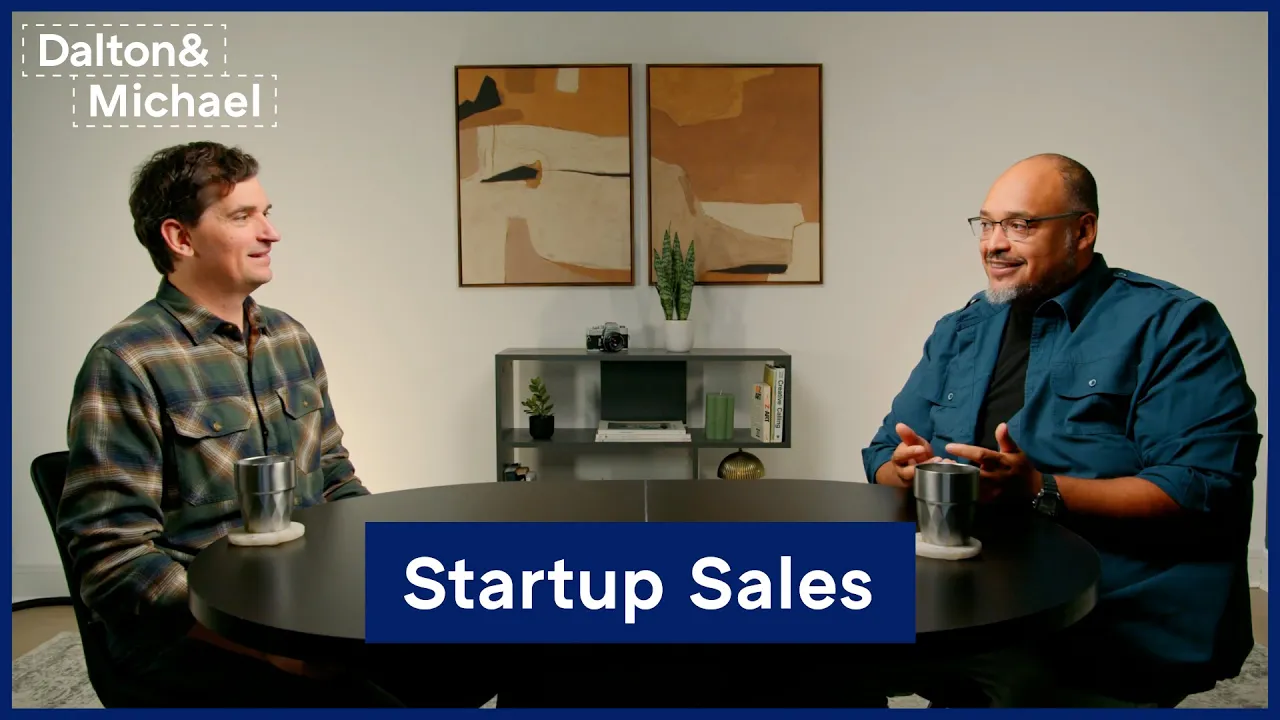
Dalton + Michael · @daltonplusmichael
Where viewers went back to watch this video again, from YouTube's public Most replayed graph, lined up with what was said at that moment.
Most replayed moment #1
9:402.3x the video's typical replay level
a company is winning, you might not understand the value they create for their customers, but don't dismiss it to zero. >> Well, that's the classic thing of um dismissing a product because the design is bad. >> Yeah, man. This HRS looks like crap.
Said at 9:33
Most replayed moment #2
11:461.9x the video's typical replay level
as we have funded more B2B companies over the years and I think personally as I've realized that like every B2B company is just an enterprise company or not every the vast majority are just enterprise companies that haven't figured out their enterprise companies yet. I think one of the things that
Said at 11:39
Most replayed moment #3
8:241.7x the video's typical replay level
okay, like well if you were the CEO of this business like what do you think your top three problems would be? They're like I have no idea. It's like would your product be a solution to any of the problems in the business? Like I'm just trying to sell them marketing software, Michael. Like why are you making this more
Said at 8:18
The graph counts replays. It does not show where viewers stopped watching.
Words
4,256
Runtime
21:01
Speaking pace
203wpm
Reading time
18min
203 words per minute, above the 201 75th percentile of 349 measured videos. That distribution comes from the 349-video hook study.
Opening (first 30 seconds)
If I'm trying to sell you a burrito you don't want. >> Yeah. Yeah. >> Trying to keep cutting the price doesn't make you want the burrito. >> If anything, you make it makes it kind of worse if you keep discounting it cuz like what's wrong with this burrito? >> Yes. >> All right. Welcome to Delton Plus Michael. Today we're going to talk about startup sales and specifically mess ups, screw-ups, misconceptions. It's like I think that uh instead of trying to make a sales 101 style video, we want to make it more entertaining by telling about when people
102 words, the words spoken in the first 30 seconds at 203 words per minute.
Free, no signup. See how the first 30 seconds hold attention, with rewrites.
Sentence shape
| Measure | This transcript |
|---|---|
| Sentences | 326 |
| Average words per sentence | 13.1 |
| Longest sentence | 194 words |
| Questions asked | 34 |
| Sentences containing a number | 12 |
Most used terms
Filler phrases
227 in total: like 162 · you know 15 · kind of 14 · right? 10 · actually 8 · um 7 · uh 4 · I mean 3 · basically 3 · literally 1.
A literal whole-word count of the same phrase list the Prepublish browser extension uses, so a phrase inside another word is not counted and a phrase used in its ordinary sense still is. It is a count and not a judgement.
What this transcript is
Every word below is the caption track YouTube publishes for this video, pulled from the video itself and reproduced unchanged. It is not Prepublish's writing, not a summary, and not a re-transcription: it is the video's own published captions. English captions, generated automatically by YouTube, in the video’s original language. Source: the video on YouTube. A channel that would rather this page did not exist can ask for its removal through the contact page, and it is removed.
If I'm trying to sell you a burrito you don't want. >> Yeah. Yeah. >> Trying to keep cutting the price doesn't make you want the burrito. >> If anything, you make it makes it kind of worse if you keep discounting it cuz like what's wrong with this burrito? >> Yes. >> All right. Welcome to Delton Plus Michael. Today we're going to talk about startup sales and specifically mess ups, screw-ups, misconceptions. It's like I think that uh instead of trying to make a sales 101 style video, we want to make it more entertaining by telling about when people screw up and uh that's always the most fun stuff.
So when you're in office hours with the founder and you're just sitting here, you know, you're hearing kind of kind of a a hoham story, something didn't work and then like you just hear something that makes you cringe. you're just like tell an example of that like where you're just like oh look >> I certainly was the type of founder who >> wasn't excited about the concept of sales and I had a lot of cartoonish ideas about what sales looks like right you picture like a used car salesman or an insurance salesman or just like a high pressure um time share salesman oh you love those right and so I'm like man I never want to do that that's bad >> yes >> I think that founders may resolve themselves they need to do sales like it's a ne necessary thing >> but they deep down are still thinking about the used car salesman somewhere >> it's like they never had a canonical example of good sales >> it's like this it's that good sales is so good it doesn't feel like sales >> like think about service providers you know I I've had good service providers >> you just kind of email them with a problem and they're like yeah >> you have a problem like let's fix it let's do the thing that you want to do.
Yes. >> And they're super responsive and they're really nice and they understand where you're coming from. Yeah. >> And those people are totally making money off me. >> Those people are selling me a product. But when I'm interacting with these people, it feels like they're not a friend, but it feels like someone that knows me. They understand me. >> Yeah. A partner. >> I present a problem to them and they're in a position to help me with a good or service. >> Yes. >> And we both walk away feeling really good about the the transaction. >> Yes. >> That's good sales. >> Yes.
And it's so good that it would never register in my brain is that's a saleserson selling me something. >> Which is so weird because I'm like is there isn't another word for that. Like there isn't like another word. It's just it's almost like oh this was all my idea. Like this was all like >> I think for me the thing that makes me cringe when the founder basically is like you know I think I figured out a little bit of what the customer's problem is.
It's gonna be really hard to solve and like I don't think I can solve it, but I still need to sell them something. They're kind of talking to well like maybe we can help them with this thing or they, you know, I know what their problem is, but they're asking for this. I'm not gonna help them with the thing that's screwing them up. I'm gonna help them with this other thing. I'm trying to figure out how to get out of here with doing the least amount of work possible and get paid.
I'm not trying to do this like trade, right? Like like the very concept of trade where sales comes from is like by trading goods we both end up better. Like I'm not actually engaging in trade. Yeah, >> I don't want to say I'm engaging in theft, but like >> if we were to look at the utility, if you sell something to somebody that doesn't produce any benefit to them, but you make money in the end, >> I don't think the word for that is trade.
I know, I think it's a different word from that. I have to think about what that word is. >> It's a different word. >> I think it's a different word, >> but it's like so common. I think that's the thing that really gets me. It's just this like, oh, we're I'm not being selfless. I'm not trying You described this great like, oh, I emailed someone. They tried to help me. They did help me. I paid them. Great. Yeah. But so often it's the exact opposite.
It's like, oh, like I'm trying to get paid and I don't know if I can help. My mental model for someone just starting out doing sales is you have this, you want to just go talk at someone and cram it down their throats and get them to say yes. And so it's usually a monologue. >> Yes. >> And you say a bunch of stuff and you list the features. Another thing is like often founders will think that discounting is the most powerful weapon they have.
They'll be like, "Well, I offered them a huge discount." And if they bought now, they get a discount. And again, when you think about it, if you don't want something, like, if I'm trying to sell you a burrito you don't want. >> Yeah. Yeah. >> Trying to keep cutting the price doesn't make you want the burrito. >> No. No. >> If anything, you make it makes it kind of worse if you keep discounting it because like, what's wrong with this burrito?
Well, and especially in those situations, it's so clear the customer doesn't realize that they can get any value out of the product that like why are we talking about pricing? >> It's I don't even you do >> exactly like I don't even know why this would help me. And it's almost like I'm trying to speedrun. It's weird to me that like the process of helping someone has been turned into this torturous process. >> Yep. >> It shouldn't feel like torture. you should be trying.
Why else are you doing this business if you're not trying to help people? >> Yeah. >> Like, and I and I think at core, >> a lot of people are better at sales than they realize. And it's getting them >> to like put the car salesman thing out of their mind >> and think about it to to picture >> what their best sales experiences were of someone helping them with a problem and to just emulate that. And I think often people have an aha moment when you say it that way, the way we're talking about it. >> Yes.
And that's what you need to be like the the founders I know that are best at sales >> are good at listening and not saying much and being really empathetic and then truly solving the problem so that it feels like a relief to the customer. >> I think you said it best. Good sales is good problem solving. And any good founder is solving how many problems in their company every week? And if they took that exact same feeling into the sales conversation, they'd be so, you know, it's like, are your employees having a problem with productivity and yada yada yada?
And you're like, hm, like, let me figure out how to get this guy to like get out of my face without helping me at all. Like, that's not how you're thinking. It's like, oh, maybe being more flexible at this, maybe we can help you here. I think that like if you take the core assumption that often times the customer doesn't know how to solve their problem. So, the other thing that I see people try to do in sales is like, great, Dalton, give me a list of things you want me to do.
I'll do them. That will obviously make your business better because you gave me the list. >> Yep. >> And then we will both profit. And it's like, how often are you selling customer? The customer is like, well, I want to make more revenue. I don't really know how. Or a customer even worse, I'm talking to somebody who doesn't really understand the whole business they're in. And like, hey, can you help me do X, Y, and Z, but you realize it's not going to really help the business that they're operating.
That's a problem solving situation if you treat it that way. >> I mean, this is like trit advice, but like a lot of trit advice, if you pretend like you're hearing it for the first time, it might hit differently. So, this is one of those things which is put yourself in the shoes of a customer. >> Again, you're usually like, "Yeah, yeah, put myself in the sho." No, but really pretend like you you've never heard that before. >> Yes. >> Pretend like this is the first time someone's ever said that. >> Yes. >> Actually take a minute and it's almost like a method actor.
Yeah. Like, pretend you're that person walking into the room. >> Pretend you can see their email inbox. Pretend you can imagine what their boss is telling them they should be worrying about >> what their next meeting's going to be. >> Yeah. Like actually take a moment and sit with that advice. >> A lot of people aren't doing that is where I'm going with this. Like they they're like, "Yeah, yeah, yeah." You know, put yourself in the shoes of a customer.
But they they actually have never done that exercise. My version of that is imagine you were the CEO of the company that's buying your product. what would you think? And it's so interesting when I have that conversation with people because first of all they're just like because then I'm like okay tell me about the business of your customer, right? Because like you're selling this product to them, it's going to help their business.
Tell me about their business. They're like anything about their business. And like okay, like well if you were the CEO of this business like what do you think your top three problems would be? They're like I have no idea. It's like would your product be a solution to any of the problems in the business? Like I'm just trying to sell them marketing software, Michael. Like why are you making this more complicated than it has to be?
And I'm like, are you trying to help your customer or are you just trying to accomplish your goals and your customer's goals are incidental? You can certainly get somewhere with that mentality. You can you can probably raise your seat round. You could probably hire people. You could probably raise your series A, right? Like like there's a whole set of milestones you can have with that, but like you'll never win unless one day you you like wake up from this slumber.
Basically, you fix this. like this is like a >> yes >> you might get pretty far never figuring this out but one day you probably need to figure it out. >> Yeah. I think that's the thing that confuses a lot of our founders is like they see these products. I mean I've had this conversation with founders like we use the product it sucks. >> Yeah. >> We don't like it but they're doing well. Maybe we should do what they do. >> Yep. >> Cuz like if you can only see two or three steps ahead of you, you might be following or copying company with a bad product and thinking that's how you win and it's like yep. >> No.
Oh, and the other side of that is if a company is winning, you might not understand the value they create for their customers, but don't dismiss it to zero. >> Well, that's the classic thing of um dismissing a product because the design is bad. >> Yeah, man. This HRS looks like crap. >> I don't I don't know if that's the higher bit here. >> No, I totally agree with that. Here's another fun one. I I'll give you a scenario.
Great. I'm doing my company. I've raised a little bit of money. I've done some sales. Now it's time to hire VP sales, right? Because like that's a whole thing. That's not my specialty. I'm just a founder. Like I can hire someone and they'll build a sales team and they'll do it. >> It's just that easy. >> Isn't that how company building works? >> Yeah. You just hire someone and they do a perfect job and you you ride off into the sunset. >> Right.
Right. Like the the title is VP sales. It seems like they'd be good at sales, right? >> What do you think actually happens? Like when a company does well, what is actually going on? The deal with executives, and we've talked about this in other videos, you want them to function at a at a high level, and they've probably had a similar role in the past. Yeah. And what it actually means in practice is running a team and hiring other people and managing those people. >> Yeah. >> But it usually doesn't mean figuring out from first principles how to do sales.
The most common source of problems is that the founder just expects a new VP of sales to come in and just do as good of a job as the founder was doing or the better not doing a good job >> and just like know what to do. >> Yeah. >> And like that's not at all what they're really prepared for. Like imagine someone was a former VP of sales at at Google or something like that. That's a successful product with a successful machine and they were trained and so they were super effective at like running a team and hitting their quota.
Yeah. >> But if you're like a >> new startup and that hasn't been around for a while without an established playbook, it's not obvious those skills transfer over one to one. I can I state that more strongly? It is obvious those skills do not translate. >> Those skills definitely do not translate. I mean they could like they don't tend to. I think what's interesting about this is as we have funded more B2B companies over the years and I think personally as I've realized that like every B2B company is just an enterprise company or not every the vast majority are just enterprise companies that haven't figured out their enterprise companies yet.
I think one of the things that founders have a misconception on is just how personally involved the CEOs of enterprise companies are in sales. >> Yeah. And I remember talking to we have a bunch of founders from Palunteer and I remember just being like, "Hey, you know, you have these deals. Palunteer's getting these crazy deals like da da. How does some junior salesperson originate a hundred million dollar deal with Boeing?
Like how do they even get in the room with the right people? It's PLG, right? >> Yeah. Yeah. Yeah. It's different, right? That Boeing came on the website, signed up, right? What was really interesting to me was like how much executive sponsorship and executive like founder level, CEO level involvement there is in those deals >> and how much the CEO is originating them or is scouting for them is kind of handing them back to a team to kind of process a little bit but then like debugging anything going wrong.
It's the exact opposite of let me hire someone and look the other way. It's like the sales organization is almost built around y the founders and as a as almost like a a multiplier effect on their work as opposed to built to the side of them. And you know I get these questions from founders who you know their employees I got this great question from employees like how do I meet with this important CEO myself and I'm like you don't like why would they meet with middle manager salesperson the the CEO of this company is going to have a hard time getting this meeting. >> Why aren't you asking yourself the question how can I help my CEO get this meeting?
Can we reframe? Like that doesn't mean it's not your deal or like whatever. Like let's just separate credit out, right? Like >> just still get paid. Go ahead. >> Yeah, fine. >> You're good. Can we go for the most effective solution, which isn't junior sales guy meeting with CEO? >> Yeah. And so this misconception is also just kind of like this idea of like you told me I should do sales as a founder, but now that we've moved along, I can give >> I'm not I'm done. >> Yeah.
Maybe the last one that I want to talk about is consulting. So I'll bring up still my favorite company YC never funded Palunteer. I have been surprised at how many founders will say some version of well we don't want to do this for the company because that's going to be consulting. Well you know that integration is going to take too long. It feels a little too oneoffy. It feels like consulting. It seems like consulting is the weird boogeyman in the room. almost as if you would assume that YC has like thousands of companies that have died because they did too much consulting yet like I have have not seen that.
So what's going on? >> Yeah. So this is one of those um phrases that gets repeated so much. >> Yeah. >> That it feels like >> conventional wisdom. >> Uh yeah, it's like being like, you know, love thy neighbor. You know, you just said it. Consulting is bad. Don't do consulting. >> Let's pretend like we're hearing it for the first time. Let's examine this with fresh eyes. Yes. >> I remember in my first startup um when we were not succeeding >> getting a meeting with Disney. >> Yes. >> Because to to cut through a bunch of [ __ ] They took many meetings to get to this.
But like at the heart of the matter, >> they wanted my startup to build a white label social network so that big fans of the Disney parks >> could network and share tips with each other so they could sell more tickets to Disney. And they had to control the whole thing. And like there's they gave us a speck of all the stuff they wanted us to build. >> Yes. >> To like control what people could say. Like we said no even though it would have been for millions of dollars because that was consulting. >> Yes. >> Like it was literally a big company that wanted my startup to not have a product and instead outsource their entire R&D. >> Yes. >> Because I seem like a schmuck or I'm sure they asked lots of people to do this.
And you know, if one out of 20 startups said yes to that deal, >> good for Disney. >> It's good for Disney. So, you can see why Disney would try to do those. Um, obviously, that would have been a horrible idea. >> Yes. >> From my perspective, right? And hopefully the people in the audience can see why getting a million- dollar deal for Disney to build a >> just random piece of software that no one else would ever want that's super bespoke is like >> obviously a really bad business.
Yes, >> that is the true heart of this advice, which is just building super random stuff for big companies is a bad idea. However, the amount of times founders say, "Oh, that's consulting and dismiss it out of hand." I think is way larger than the than the specific example I gave you. >> Disney's not running around asking startups to build them [ __ ] all the time. >> Yeah. And so I do think there's a question under the do things that don't scale rubric of, you know, it's it's basically a gray area, friends.
There's a lot of gray area of what is consulting and what is not consulting. Yes. And so I would just try to be open-minded and decide this on a case- by case basis versus dismissing out of hand that you shouldn't do something because it's consulting. >> That's a very measured approach. >> Okay. Okay. I will take an unmeasured approach. Just do consulting. Like nine times out of 10 you're probably not doing real consulting.
Like you're probably especially early you're probably getting the opportunity to learn about the problem and that is such a unique opportunity and trust your ability to productize over time cuz we're giving this advice in mass right so 10% of the companies will do this and they'll die. I apologize. And Michael, I don't like those odds, man. >> 90% will like >> better than their 10% is too high. >> 90% will will learn something.
And and all too often I reframe consulting as like a deep integration is a deep moat. A long sales cycle is a moat. Like a lot of these things that people associate with enterprise, you can't on one hand say why does it take 80 years for someone to get off of SAP and on the other hand be like I hate long sales cycles and deep integrations. It's like that's the game, you know? It's like, >> oh man, I want to win the Super Bowl, but I hate [ __ ] throwing the ball.
And it's like, well, man, come on. Like, >> I'll go a step further. I secretly think the reason why Palenterer doesn't have more competition is because too many people shy away from anything involving that kind of sales process, that kind of cycle, that kind of product. And if Palanteer figure how to make this not consulting, I feel like a lot of people could figure >> Well, I think you could argue that they are doing consulting, but they're able to make enough of a margin and have enough scale.
Well, again, this is semantics, but I wonder if this is a this is somewhere in the gray area. I will challenge this. >> Go ahead. >> Disney wanted to pay you $10 million to build this website, let's say. But let's say you could build it in 3 days. Is that consulting? >> Probably not. But I think a big part of what they wanted was the operations of it and to do the moderation. It wasn't just the building. Let's say you could build and operate it with only 3 days of work.
So you certainly don't have consulting margins at that point. >> Yeah. >> And you probably have figured out some kind of base level technology that would enable you to spin that up from nothing. >> It would have been the opportunity cost that it's like wait are we in the business of making white label social networks. >> I'm not sure that was a good business, >> but that doesn't mean it's consulting. >> I agree. I'm just thinking this through. >> Yeah. >> I think sometimes people fall in these these these pseudo tarpits.
Yes. where like you get revenue but it's like not that interesting >> to me it's actually not consulting versus non-conulting at least within the YC community it's so rare that I see consulting happen yeah >> I think it is more I am making revenue not solving that much of an important problem for someone I'm doing like something myself in a corner and I'm making money yeah >> it doesn't generalize into something that's exciting >> I agree so anyways the big takeaway here I want to steal two things to kind of summarize.
I think one is this concept that like great sales feels like problem solving. You should be in the business of solving your customer's problems. Otherwise, you shouldn't be doing this and you won't win. If you want to win, you should seek to consistently solve your customer's problems. Um, and then two, the very underpinning of business trade is both sides have to end up better at the end of a deal. Please structure things in that way.
Um, please don't, oh well, we hit our 15% month overmonth goal, so I won. I don't know if you won. You You >> Let's not worry about problem. >> It's your problem to figure out whether you won your problem, Michael. Uh, we'll solve that later. >> Understand that core principle like do right by your customers. All right. Good chat. >> All right. Thanks, Michael.
The words are the caption track's own and nothing is reworded or re-transcribed. Paragraph breaks are placed between sentences so the text reads as prose.
Free tools for your own script. No signup, no login.
Paste your draft and see where viewers are likely to drop off, with a rewrite for each weak line.
Paste the first 30 seconds of your own draft for a hook score and rewrites.
Check your draft against YouTube's advertiser-friendly guidelines before you record it.
Read this channel's public videos and transcripts, and download a writing brief for it.