Getting the transcript
Reading the captions from YouTube. A video nobody has opened here before takes 10 to 30 seconds; this page fills in on its own.
Getting the transcript
Reading the captions from YouTube. A video nobody has opened here before takes 10 to 30 seconds; this page fills in on its own.
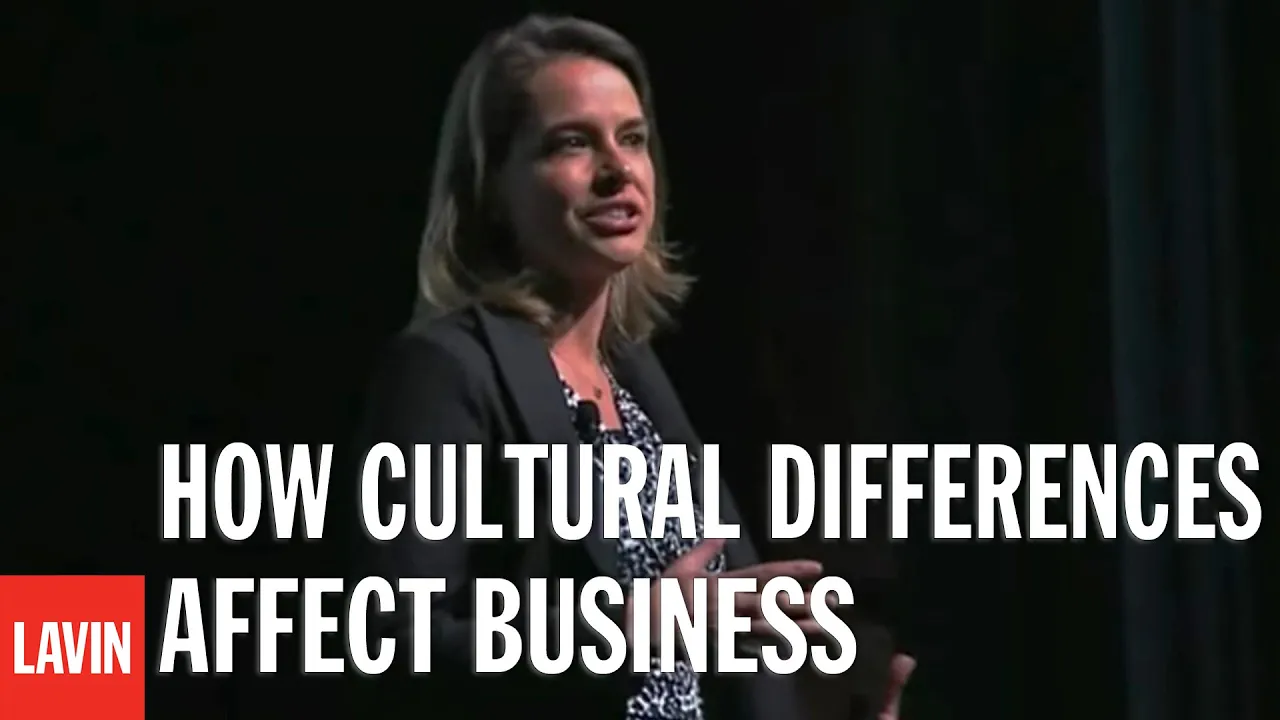
The Lavin Agency · @TheLavinAgency
Where viewers went back to watch this video again, from YouTube's public Most replayed graph, lined up with what was said at that moment.
Most replayed moment #1
0:052.1x the video's typical replay level
I have spent the last 16 years studying how cultural differences are changing global organizations, but I have not always been working in a cross-cultural
Said at 0:03
Most replayed moment #2
0:301.6x the video's typical replay level
started living in other countries and kind of uh learning about these things. But I had a situation early in my career that got this all started for me where I was on a trip to Japan with a Japanese colleague and I gave a short presentation to a group of Japanese
Said at 0:23
The graph counts replays. It does not show where viewers stopped watching.
Words
713
Runtime
4:10
Speaking pace
171wpm
Reading time
3min
171 words per minute, between the 160 25th percentile and the 181 median of 349 measured videos. That distribution comes from the 349-video hook study.
Opening (first 30 seconds)
I have spent the last 16 years studying how cultural differences are changing global organizations, but I have not always been working in a cross-cultural space. I was raised in a very monocultural place. I was raised in Minnesota in the Midwest of the US and it was only later as an adult that I started living in other countries and kind of uh learning about these things. But I had a situation early in my career that got this all started for me where I
86 words, the words spoken in the first 30 seconds at 171 words per minute.
Free, no signup. See how the first 30 seconds hold attention, with rewrites.
Sentence shape
| Measure | This transcript |
|---|---|
| Sentences | 33 |
| Average words per sentence | 21.6 |
| Longest sentence | 104 words |
| Questions asked | 7 |
| Sentences containing a number | 1 |
Most used terms
Filler phrases
16 in total: you know 7 · like 3 · kind of 2 · uh 2 · actually 1 · um 1.
A literal whole-word count of the same phrase list the Prepublish browser extension uses, so a phrase inside another word is not counted and a phrase used in its ordinary sense still is. It is a count and not a judgement.
What this transcript is
Every word below is the caption track YouTube publishes for this video, pulled from the video itself and reproduced unchanged. It is not Prepublish's writing, not a summary, and not a re-transcription: it is the video's own published captions. English captions, generated automatically by YouTube, in the video’s original language. Source: the video on YouTube. A channel that would rather this page did not exist can ask for its removal through the contact page, and it is removed.
I have spent the last 16 years studying how cultural differences are changing global organizations, but I have not always been working in a cross-cultural space. I was raised in a very monocultural place. I was raised in Minnesota in the Midwest of the US and it was only later as an adult that I started living in other countries and kind of uh learning about these things. But I had a situation early in my career that got this all started for me where I was on a trip to Japan with a Japanese colleague and I gave a short presentation to a group of Japanese participants and at the end of the presentation I asked them if they had any questions.
When I looked at the group that no one raised their hands so I went to sit down. My Japanese colleague then said to me, "Erin, I think actually there were some questions. do you mind if I try? And I said, "Okay, fine." So he then stood up and again he said, "Any any questions?" And again, no one raised their hand. But this time he looked very carefully at the group. "Oh, do you have a question?" And the woman said, "Well, thank you.
I do." And she asked a fascinating question. And then he did it again. "Oh, do you have something you'd like to say?" "Yes, thank you. I do. So afterwards, I said to him, you know, how do you how did you know that these people had questions? And he said to me, well, it had to do with how bright their eyes were. And I thought, wow, you know, they don't teach us that in Minnesota. So then I said, but how do you know how bright their eyes are?
And he said, well, you know, in Japan, we don't make as much direct eye contact as you do in the West. So when you ask people if they have any questions, most people are not looking at you directly, but a few people in the audience are looking directly at you and their eyes are bright and that indicates that they would be comfortable with you calling on them. So the next day I gave another presentation and again I asked if there were any questions and again no one raised their hand but this time I thought okay I'll just try.
So I did as he'd instructed and I looked carefully at the group and I saw just as he said that only a couple of people in the room were looking directly at me and if I really thought about it well yes okay their eyes were bright. So I you know I gestured to one of them and he kind of went like that and then I said would you like to say something and he said yes thank you. So um this was a very important experience for me because well there's a a an expression in Japanese Japanese which is cookie yommani they shorten it to ky and it means someone who is unable to read the atmosphere or someone who's unable to read the air meaning to pick up the communication that's in the air and here we could see that he clearly could read the air and I was clearly ky but I also saw that with a little bit of assistance and direction that I also could become better at picking up those signals that were in the air.
So then as I was thinking about this, I became very interested in trying to figure out if there was a method that we could use to help people to better read the atmosphere when they were working with cultures that they didn't know intimately. And we then started to develop this uh this framework that came from lots and lots of research where we divided culture up into different types of behaviors. And we started looking at, you know, how is trust built in different parts of the world and how do we make decisions differently in different parts of the world?
And we saw that we were able to come up with patterns for how countries or cultures fell differently on those scales.
The words are the caption track's own and nothing is reworded or re-transcribed. Paragraph breaks are placed between sentences so the text reads as prose.
Free tools for your own script. No signup, no login.
Paste your draft and see where viewers are likely to drop off, with a rewrite for each weak line.
Paste the first 30 seconds of your own draft for a hook score and rewrites.
Check your draft against YouTube's advertiser-friendly guidelines before you record it.
Read this channel's public videos and transcripts, and download a writing brief for it.