Getting the transcript
Reading the captions from YouTube. A video nobody has opened here before takes 10 to 30 seconds; this page fills in on its own.
Getting the transcript
Reading the captions from YouTube. A video nobody has opened here before takes 10 to 30 seconds; this page fills in on its own.
Elders Guide · @eguideusa
Words
5,583
Runtime
32:05
Speaking pace
174wpm
Reading time
23min
174 words per minute, between the 160 25th percentile and the 181 median of 349 measured videos. That distribution comes from the 349-video hook study.
Opening (first 30 seconds)
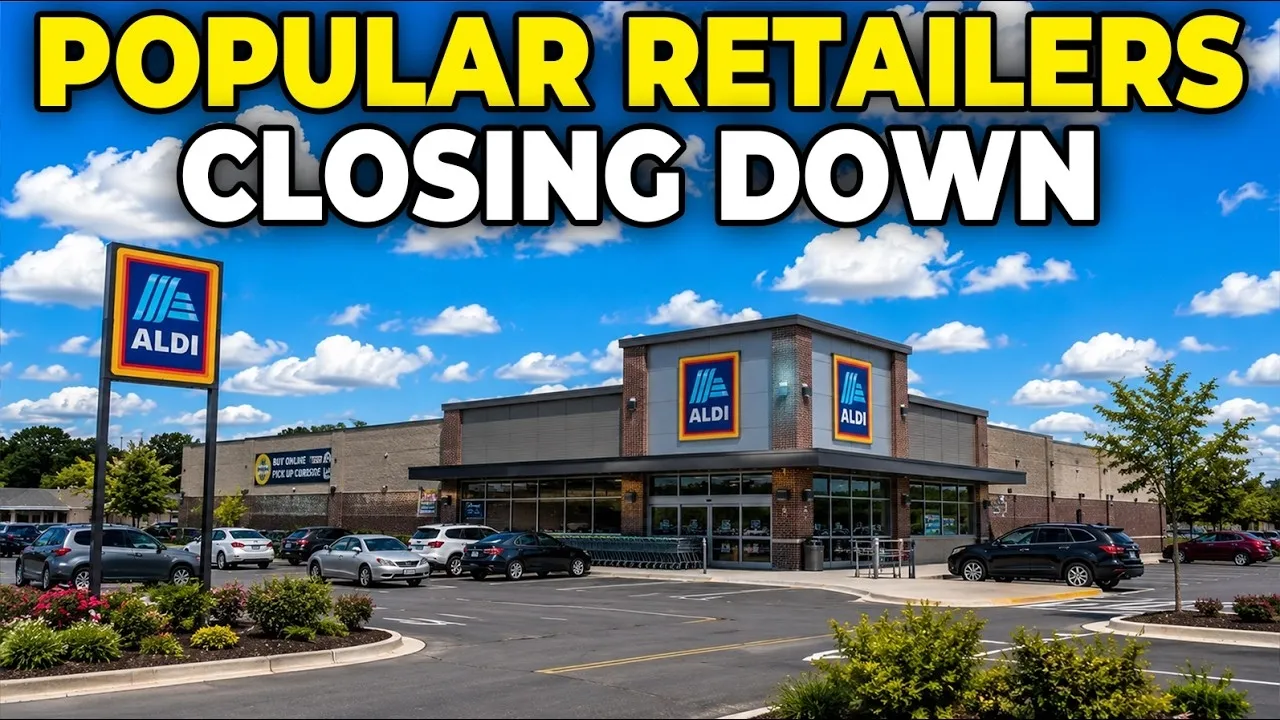
Right now, familiar storefronts are going dark at a pace we haven't seen in a very long time. And here's what makes it different from past retail downturns. These aren't no-name chains nobody cared about. These are brands your parents shopped at, brands you grew up with, brands that were so woven into the fabric of daily American life that most people assumed they'd just always be there. They won't. In this video, we're breaking down 15 well-known American retailers that are shutting their doors right now
87 words, the words spoken in the first 30 seconds at 174 words per minute.
Free, no signup. See how the first 30 seconds hold attention, with rewrites.
Sentence shape
| Measure | This transcript |
|---|---|
| Sentences | 472 |
| Average words per sentence | 11.8 |
| Longest sentence | 54 words |
| Questions asked | 4 |
| Sentences containing a number | 53 |
Most used terms
Filler phrases
24 in total: like 15 · actually 5 · kind of 2 · basically 1 · literally 1.
A literal whole-word count of the same phrase list the Prepublish browser extension uses, so a phrase inside another word is not counted and a phrase used in its ordinary sense still is. It is a count and not a judgement.
Run the check on the words above: where attention is likely to drop, with a rewrite for each weak line. The free check shows the scores and the one issue costing the most.
What this transcript is
Every word below is the caption track YouTube publishes for this video, pulled from the video itself and reproduced unchanged. It is not Prepublish's writing, not a summary, and not a re-transcription: it is the video's own published captions. English captions, generated automatically by YouTube, in the video’s original language. Source: the video on YouTube. A channel that would rather this page did not exist can ask for its removal through the contact page, and it is removed.
No Script X-ray for this video: YouTube shows a Most replayed graph only once a video has enough views.
Right now, familiar storefronts are going dark at a pace we haven't seen in a very long time. And here's what makes it different from past retail downturns. These aren't no-name chains nobody cared about. These are brands your parents shopped at, brands you grew up with, brands that were so woven into the fabric of daily American life that most people assumed they'd just always be there. They won't. In this video, we're breaking down 15 well-known American retailers that are shutting their doors right now and three that are actually thriving through all of this chaos. >> [music] >> Individually, each closure has its own story, but when you line them all up side by side, something bigger starts to reveal itself, a pattern, a shift in how American families spend money, where they spend it, and what makes them walk through a door in the first place.
That shift is really what this video is about. [music] And fair warning, some of these are going to hit you harder than you expect, not because of the financial numbers, >> [music] >> but because of what these places meant to people. Let's get into it. Number 15, Joann Fabrics. Look, Joann was never a place you ran into for 2 minutes. Nobody walked into that store, grabbed a single spool of thread, and left. That's not how it worked.
You went in with a tiny list, maybe some buttons, maybe a zipper, >> [music] >> and 45 minutes later you were still standing there running your hand across bolts of fabric imagining what a particular pattern would look like as a holiday table runner or a baby blanket for your sister's new kid. The whole place pulled you in. It was sensory, the colors, the textures, the smell of fresh fabric right off the bolt. That was the Joann experience, and now it's gone.
After nearly eight decades in business, [music] the country's biggest fabric and craft chain has collapsed. Close to 800 stores are in the process of being liquidated. Two separate bankruptcy filings in under 2 years brought the entire operation to its knees, but here's the thing, this didn't happen [music] because of one rough quarter or one bad holiday season. The roots go back years. The company loaded itself up with a mountain of debt long before anyone saw trouble coming.
When the pandemic hit, sales actually spiked because everyone was stuck at home sewing masks and picking up craft hobbies. That surge masked the real problems. Once life normalized, foot traffic dried up, but the debt was still sitting right there, untouched, and it crushed them. What struck me most though was the public reaction. When the closure was announced, almost nobody talked about balance sheets or creditors.
They talked about the fabric cutting counter. They talked about spending Saturday afternoons there with their mother. They talked about the very first quilt they ever made for a grandchild. >> [music] >> Joann wasn't in the fabric business. It was in the memory business. And when that last store goes dark, what vanishes isn't just a retailer, it's a quiet little corner of millions of family histories. Number 14, Claire's.
Most people can't remember where they bought their first bracelet. But an enormous number of women remember exactly where they got their ears pierced for the very first time. And for a huge chunk of that group, the answer is Claire's. Not because Claire's had the fanciest jewelry, not because it had the best deals, but because it was the backdrop for a moment that mattered. You were maybe 8 or 10 years old. You sat in that little chair by the register.
You grabbed your mom's hand. You closed your eyes. A few seconds later, you walked out with your first pair of studs >> [music] >> and felt like you'd conquered something. That kind of emotional real estate is incredibly hard to build. And it's even harder to watch disappear. Claire's is going through yet another restructuring after years of bleeding money. Stores have been closing. Others are on the auction block. The ones that remain feel like they're just waiting for a decision that hasn't been made yet.
The core problem is straightforward. Claire's was built for the shopping mall era. You'd go to the mall with friends, try on clothes, eat something greasy in the food court, [music] maybe catch a movie, and then swing by Claire's on the way out. The whole afternoon was the product. Today, that afternoon doesn't happen nearly as often. Malls are quieter. The impulse accessories that Claire's sold can be found on a phone screen in seconds [music] with a hundred cheaper alternatives.
Claire's didn't wake up one morning and lose all its customers. The foot traffic just slowly evaporated, and without people physically walking past that storefront, [music] there was no trigger to walk in. Joann lost a creative community. Claire's lost the physical space where those little milestone moments used to happen. Number 13, Rite Aid. [music] Here's one that hit a lot of communities hard, especially on the East Coast.
Rite Aid, once the third largest pharmacy chain in the country, filed for bankruptcy and has been aggressively shutting down stores ever since. Hundreds of locations are already gone. Entire neighborhoods that relied on a Rite Aid for prescriptions, over-the-counter meds, and basic household supplies suddenly had to figure out a plan B. The company's problems were years in the making. Rite Aid was drowning in debt, dealing with opioid-related litigation, and watching its customer base erode as Walmart pharmacies, mail-order prescriptions, and Amazon ate into its business from every direction.
The stores themselves often looked tired, outdated layouts, half-empty shelves, and a general sense that nobody was investing in the experience anymore. What makes Rite Aid's collapse worth paying attention to is what it says about the pharmacy business in [music] general. Filling prescriptions used to be a reliable, high-margin anchor for these stores. That's no longer the case. Reimbursement rates from insurance companies have been squeezed.
Generic drugs generate thin profits, and the convenience factor, the whole reason you'd pick a corner drugstore over driving to Walmart, has been undercut by apps that deliver medication straight to your front door. Rite Aid is a warning signal. If you think the pharmacy on your corner is safe simply because it sells things people need, think again. If you're finding this useful so far, do me a quick favor. Hit that like button, drop a comment, and subscribe.
It takes 2 seconds, and it helps this channel more than you'd think. Let's keep going. Number 12, GameStop. Remember midnight launches? A line wrapping around the building, >> [music] >> people in folding chairs, someone wearing a hoodie from a franchise they'd been obsessing over for months. The clock hits 12, the doors open, the crowd cheers, and the first copies get handed out like trophies. That was the GameStop experience for an entire generation of gamers.
That scene is basically extinct now. GameStop continues to hemorrhage stores in 2026, extending a downsizing campaign that's been grinding on for years. Walk into one of the locations that's still open, and you'll notice the shift immediately. The game shelves have been shrinking while Funko Pops, Pokémon cards, and random collectibles fill more and more floor space. The store is morphing into something it was never designed to be, and the reason is painfully obvious.
People didn't stop playing video games. The gaming industry is generating more revenue than ever. What disappeared is the physical transaction. A brand new release now takes about 90 seconds to download directly from PlayStation, Xbox, or Steam. No drive, [music] no line, no ripping open that plastic wrap in the parking lot. The product is identical. The delivery method changed completely. GameStop had the right product in a world that completely overhauled how that product gets into people's hands.
That's a brutal position to be in. You can't fight a shift in infrastructure with better store layouts, and that's why watching GameStop shrink feels different from watching other retailers go under. It's not bittersweet [music] because people loved the merchandise. It's bittersweet because what's really disappearing is a communal experience. >> [music] >> Standing in that line at midnight, you weren't just buying a game.
You were sharing anticipation with a crowd of strangers who cared about the same thing you did. Digital downloads are faster and more convenient, but they're also completely solitary, and some people feel that difference more than they expected to. Number 11, Red Lobster. [music] This one caught people off guard. Red Lobster, the chain that practically invented casual seafood dining for middle America, filed for bankruptcy and started shuttering locations across the country.
Dozens of restaurants closed almost overnight. Employees showed up to padlocked doors. The Cheddar Bay biscuits, the all you can eat shrimp promotions, the anniversary dinners at that corner booth, all of it suddenly at risk. >> [music] >> The mismanagement here was staggering. The company's private equity owners made a series of baffling decisions, including selling off the real estate underneath the restaurants [music] and then leasing it back at inflated rates.
The infamous endless shrimp promotion, which was supposed to drive foot traffic, ended [music] up costing the company tens of millions because it was priced so aggressively that it [music] attracted customers who ate far more than the math could support. But the bigger picture is this, casual dining as a whole is under siege. [music] Costs for ingredients, labor, and rent have all climbed. Meanwhile, consumers are increasingly choosing between cooking at home and ordering delivery, skipping the sit-down restaurant experience entirely.
Red Lobster didn't die because Americans stopped liking shrimp. It died because the middle ground between fast food and fine dining is getting squeezed from both ends, and the companies stuck in that gap are the ones paying the price. When your rent doubles because you sold the building out from under yourself, and your signature promotion loses money on every single plate you serve, it doesn't matter how many people love your biscuits.
The math stops working. And in the restaurant business, when the math stops working, the lights go off fast. The saddest part is how many long-term employees were blindsided. People who had worked at the same Red for 10, 15, sometimes 20 years found out their restaurant was done when they showed up for a shift and the building was already being cleared out. That's not just a business closure. That's a community losing a gathering place it took for granted.
Number 10, Macy's. When Macy's leaves a shopping mall, the whole building feels it. That's not an exaggeration. It's a documented retail phenomenon. Macy's was what the industry calls an anchor store. It was the gravitational center. Shoppers came to Macy's for clothes, housewares, or a gift and on the way in or out they'd wander past a dozen smaller shops, stop for a coffee, maybe grab lunch. That traffic kept the entire mall ecosystem alive.
Now Macy's is pushing ahead with plans to close roughly 150 stores nationwide. For Macy's, it's a strategic move. Double down on the locations that are performing well and cut the ones that aren't pulling their weight. Smart enough on paper, but for the malls that lose that anchor, the aftermath is devastating. Weekend foot traffic drops. The small boutiques that depended on spillover customers start seeing empty afternoons.
[music] The food court gets quieter. Lease signs start multiplying. It's a chain reaction that has played out in community after community across the country. The demand for clothes, perfume, and home goods hasn't vanished. People still [music] buy all of it. What's vanished is the habit of spending a full afternoon drifting through a department store. [music] And once that behavioral shift takes hold, the retailers that were built entirely around that habit are left scrambling.
Number [music] nine, Eddie Bauer. Somebody reading this still owns an Eddie Bauer jacket they bought 12 or 15 years ago. The zipper works perfectly. The waterproofing hasn't given out. The stitching hasn't frayed. That jacket has been through countless winters and it still performs. That kind of durability used to be Eddie Bauer's single greatest marketing tool. No ad campaign necessary. Customers just told each other.
But, durability doesn't pay the bills anymore. By mid-2026, >> [music] >> the parent company is still in the middle of a messy restructuring following a bankruptcy filing. Around 175 stores in the US and Canada are on the chopping block if no buyer steps in. The debt load sits somewhere around 1.7 billion dollars. It's a bizarre situation. Plenty of customers still swear by the quality, but swearing by the product and actually walking into the store to buy the next one are two very different things. >> [music] >> The outdoor gear market hasn't shrunk.
National parks are packed. Camping reservations fill up months in advance. What happened is that the competitive landscape shifted. Budget shoppers found cheaper alternatives. Premium shoppers migrated to brands with sharper identities. Patagonia, Arc'teryx, names that signal something beyond just function. Eddie Bauer got trapped in no man's land. Not affordable enough to compete on price. Not distinctive enough to compete on brand cachet.
The irony is painful. Eddie Bauer proved it could build a jacket that lasts a decade, but in retail, survival doesn't depend on the jacket someone already owns. It depends on whether they choose you for the next one. Quick reminder. If you're still here, that like button and a subscribe really do make a difference. Drop a comment, too. I read them. All right, moving on. Number eight, Kohl's. For years, walking into Kohl's felt like winning a small lottery. 30% off this, Kohl's cash on that.
Stack a coupon on top of a sale on top of a rewards bonus, >> [music] >> and you'd walk out with a bag of clothes, some bed sheets, and a coffee maker, absolutely convinced you'd pulled off a heist. That coupon game was genius. It turned routine shopping into a treasure hunt, and people loved it. But, the thrill has faded. By mid-2026, Kohl's is actively closing underperforming locations as store traffic continues its downward trend across multiple quarters.
The appetite for discounts hasn't gone away. Americans love a deal as much as they ever did. What changed is the competitive landscape. A smartphone can compare prices from 20 retailers in 10 seconds flat. The exclusive deal that once made a Kohl's trip feel special is now available everywhere, all the time. When every store offers a discount, no store's discount feels special anymore. Kohl's didn't lose its coupons.
It lost the monopoly on making you feel like you outsmarted the system. Number seven, Kroger. >> [music] >> Here's where things get personal for a lot of families. You can skip the mall for a year and barely notice. You can avoid a clothing store for months. But groceries? That's a weekly requirement. And Kroger, one of the largest grocery chains in the country, is closing around 60 supermarkets. The easy explanation is inflation.
And sure, that's part of it. But the real story is more complicated. Kroger's massive merger attempt with Albertsons, >> [music] >> worth close to 25 billion dollars, got blocked by regulators. That deal was supposed to give Kroger the scale it needed to compete toe-to-toe with Walmart and Costco. Without it, the company is stuck absorbing rising costs for labor, transportation, and insurance, while watching its customers adopt a completely new shopping pattern.
Here's what that pattern looks like. Families aren't loyal to one grocery store anymore. They're loyal to the lowest price, wherever that happens to be on any given week. Meat from Costco, milk from Walmart, produce from Aldi, the weekly deals from Kroger. Each retailer gets a slice, but nobody gets the whole cart. Over time, that fragmentation bleeds a grocery chain dry. Kroger isn't running out of shoppers. It's [music] running out of full baskets.
And that distinction makes all the difference. Number six, Walgreens. Picture this. Your doctor calls in a prescription. You drive to the pharmacy you've been going to for years. You pull into the parking lot. The doors are locked. There's a piece of paper taped to the glass [music] directing you to another location several miles away. That scenario is playing out in neighborhoods across the country right now. After more than 124 years in business, Walgreens is executing a plan to shut down roughly 1,200 stores over the next few years with close to 100 more going dark this year alone.
This is different from Joann or GameStop. Walgreens wasn't selling a hobby or a pastime. It was selling something that nobody wants to need, but almost everyone eventually does. Prescriptions, basic health care supplies, the stuff that matters when you're sick, aging, or managing a chronic condition. And yet the business is still bleeding. The problem is structural. The products that used to generate healthy profit margins, snacks, toiletries, cosmetics, are increasingly being purchased at Walmart, Costco, or through Amazon for less.
Prescription reimbursements from insurers keep getting squeezed. Operating costs keep climbing. One resident in Manhattan Beach, California said a Walgreens sat on his corner for over 20 years and he walked inside exactly twice. That's not an outlier story. >> [music] >> That's the whole challenge in one sentence. A prime location means nothing if people don't need to physically enter the building. Walgreens [music] isn't fading because people stopped needing pharmacies.
It's fading because even essential services have to adapt when the entire delivery model around them changes. And this should make every business owner in every industry sit up straight. If a 124-year-old pharmacy chain selling products that people literally need to stay alive can't survive on location and necessity alone, then no business can. The assumption that people will always need what we sell is not a strategy.
It's a comfort blanket. And Walgreens is proving in real time that comfort blankets don't pay the rent. If you're getting value from this, smash that like button and subscribe. >> [music] >> It genuinely helps. Comment below, too. I want to know which of these stores you miss most. [music] Let's keep rolling. Number five, Big Lots. By mid-2026, the Big Lots that millions of Americans knew is effectively finished. After a bankruptcy filing triggered a massive wave of liquidation sales, only about 220 stores survived.
Picked up by Variety Wholesalers and reopened under modified operations. Hundreds of other locations either shut down permanently or got snapped up by competitors moving into the vacant real estate. And here's the kicker. Big Lots wasn't selling luxury goods. It sold couches, mattresses, canned food, cleaning supplies, the basic stuff every household needs. Demand for those products never went away. What went away was any reason to buy them specifically at Big Lots.
Walmart kept expanding its low-price selection. Costco kept luring members with bulk deals. Dollar General kept blanketing small towns with new locations. Aldi, Ollie's, and T.J. Maxx moved into many of the exact spaces Big Lots vacated. >> [music] >> The lesson here is blunt. Being cheap used to be an advantage. Now it's the bare minimum entry requirement. When every competitor can match your prices, undercut your convenience, or move faster than you can, low cost alone stops being a strategy.
It just becomes the floor. Big Lots didn't collapse because bargain shopping died. Bargain shopping is bigger than ever. The company collapsed because it had nothing left that set it apart from the five other stores offering the same thing for the same price or less. >> [music] >> In the old retail world, being the discount option in town was a position of strength. In today's retail world, every store is the discount option.
Every app, every website, [music] every warehouse club is fighting for the same budget-conscious shopper. And when everyone is competing on the exact same dimension, [music] the weakest player gets squeezed out first. Big Lots was that player. Number four, Express. Express was the store you walked into when you needed something sharp for a Friday night out or a work outfit that didn't scream corporate drone. For years, it occupied a specific lane in American retail.
Trendy, affordable, and age-appropriate for people in their 20s and early 30s who wanted to look put together without dropping serious money. >> [music] >> Then the brand started drifting. The styles got muddled, the quality dipped, the prices crept up without justification. And the target audience, millennials who'd grown up shopping there, aged out and didn't see a reason to come back. Meanwhile, fast-fashion giants like Zara and H&M were offering trendier designs at comparable or lower price points.
And online native brands were eating into the market from the digital side. [music] Express filed for bankruptcy and began shutting down stores. Many malls that already lost their Macy's anchor now watched another familiar name disappear from the directory. Express is a textbook case of what happens when a brand loses its identity. If you can't clearly articulate who your customer is and why they should pick you over the 12 alternatives, you're already in trouble.
And in the fashion retail space, that trouble compounds faster than almost anywhere else. Trends move at the speed of social media now. A style can go from viral to outdated in a matter of weeks. If your supply chain can't keep pace with that cycle, >> [music] >> and your brand doesn't carry enough weight to transcend trends entirely, you're fighting a losing battle on two fronts. Express tried to be everything to everyone and ended up being nothing distinctive to anyone.
That's a fatal mistake in a market with this many options. Number three, Dollar General. In dozens of small towns scattered across rural America, Dollar General was the last retail pulse. The nearest supermarket might have been 20 or 30 miles out. Dollar General was the place where families could grab bread, canned goods, paper towels, and basic household supplies without turning it into a half-day road trip. One resident in Missouri said his family used to drive 11 miles just for [music] groceries.
When Dollar General opened nearby, that trip became a few minutes. That's the value proposition that fueled one of the most aggressive retail expansions in American history. By mid-2026, Dollar General had crossed the 20,000 store mark. But for the first time after years of relentless growth, the company is pulling back, closing underperforming locations, and pumping the brakes on new openings. That's a significant shift.
The issue is saturation. When you open stores that fast, you eventually start cannibalizing yourself. New Dollar General locations weren't pulling in new customers. They [music] were siphoning sales from the Dollar General 3 miles down the road. Meanwhile, labor costs kept ticking upward, and operating expenses ballooned. [music] Dollar General isn't failing because rural America emptied out. It's struggling because even the most bulletproof business model has a ceiling, >> [music] >> and relentless expansion is what finally hit it.
In retail, growth can be your greatest weapon right up until the moment it becomes [music] your biggest vulnerability. All right, we're getting close to the end now. If you've made it this far, you already know this channel is worth a subscribe. Hit that button. Like the video. Tell me in the comments, which store closure surprised you the most. Number two, CVS Health. Most people don't think about CVS until they need a prescription filled.
It sits in the background of daily life, a store you pass a hundred times before you actually walk in. That's why CVS trimming its footprint matters more than the headline suggests. After a multi-year restructuring, CVS has closed around 900 stores while maintaining a network of over 9,000 remaining locations. But here's where CVS separates itself from the others on this list. This isn't a brand in collapse. It's a brand in transition.
More prescriptions are being filled through the app. More customers are opting for home delivery. The in-store health clinics, MinuteClinic and similar services, are becoming the real draw, not the snack aisle. CVS doesn't need a store on every other block anymore. It needs fewer, better performing locations that function more like healthcare hubs and less like convenience stores. For decades, retail growth meant one thing, open more doors.
CVS is proving that the next chapter might be the exact opposite. Fewer doors, smarter operations, better per location results. That's not retreat, that's evolution. And it might be the playbook the rest of the industry eventually has to follow. Number one, Party City. There's only one Halloween a year, but for decades when October rolled around, millions of families knew exactly where they were heading, Party City. Birthdays, graduations, baby showers, [music] 4th of July, New Year's Eve.
This chain practically owned the celebration market. At its peak, Party City operated more than 850 stores [music] and had almost no serious competition in its category. By mid-2026, the vast majority of those stores are gone. Two bankruptcy filings gutted the network. >> [music] >> Liquidation sales cleared the shelves. Competitors swooped in on the vacant real estate almost immediately. [music] Nearly four decades of dominance finished.
But here's what makes this one sting. The demand for celebrations didn't disappear. [music] Birthdays still happen. Halloween still comes every October. >> [music] >> Kids still graduate. What changed is where families source the supplies. Balloons from Walmart. Costumes from Amazon. Decorations from Target. Party City lost customers not because people stopped throwing parties, but because they stopped making a dedicated trip to a dedicated party store.
That behavioral shift, the death of the single-purpose shopping trip, might be the single most important trend in retail right now. Products aren't disappearing. The habit of driving to one specific store to buy them is. >> [music] >> Now, those are 15 retailers that are shrinking, struggling, or gone entirely. But through all of this upheaval, three chains are doing the opposite. They're growing. They're expanding. [music] And the reasons why tell you everything about where American retail is actually heading.
The survivors. Number three, Walmart. Go back through everything we just covered. One name kept popping up in almost every single story. Walmart. The store that absorbed customers fleeing Big Lots. The pharmacy that grabbed Walgreens prescriptions. The grocery section that stole Kroger's full shopping carts. The low-price alternative that made Kohl's coupons feel unnecessary. People complain about Walmart constantly.
The self-checkout lanes are frustrating. Everyday items locked behind Plexiglas feel insulting. The whole experience is less pleasant than it was 15 years ago. >> [music] >> And yet, the parking lots are packed every weekend. The carts are full. The doors keep opening and people keep walking through them. By mid-2026, Walmart operates more than 4,600 stores, generates north of 680 billion in annual revenue, and continues expanding same-day delivery, automating its supply chain, and growing Walmart Plus to keep customers locked into its ecosystem.
But the technology isn't really the secret. The secret is simpler. As household budgets get tighter, low prices stop being a competitive advantage and start being a survival necessity. Walmart isn't where people want to shop. >> [music] >> It's where people have to shop. Because it's nearly impossible to find another single destination where you can [music] buy groceries, prescriptions, household goods, and a hundred other essentials in one trip at prices that keep [music] the monthly budget from blowing up.
That's not loyalty born from love. It's loyalty born from math. And it's the most durable kind there is. Every other retailer on the struggling list tried to keep customers by holding on to what used to work. Nostalgia, brand heritage, specialty positioning. Walmart keeps customers by being the place that solves the most problems in a single trip. It's not romantic. It's not exciting. But when you're a family watching every dollar, excitement is a luxury.
Reliability is the priority. And right now, nobody delivers reliability at scale the way Walmart does. Number [music] two, Aldi. Smaller lots, fewer employees, fewer products. [music] A store that looks, at first glance, like it's cutting corners everywhere it possibly can. And yet, Aldi keeps growing. By mid-2026, Aldi has passed 2,500 US stores and remains the fastest expanding supermarket chain in the country. After acquiring hundreds of Winn-Dixie and Harvey's locations, the expansion shows no signs of slowing.
Aldi has never tried to become Walmart. A typical [music] Aldi carries about 1,800 to 2,000 products. A Walmart Supercenter stocks over 120,000. There are no frills at Aldi. You grab your own cart with a quarter deposit. You bring your own bags. You bag your own groceries. In return, your receipt is lower. That's it. That's the entire value proposition. Cut every unnecessary cost. Pass those savings directly to the customer.
While other retailers compete on convenience, selection, or experience, Aldi competes on discipline. Fewer choices, fewer services. But for a growing number of families, the only metric that truly matters is walking out of the store having spent less money than they did last week. Aldi doesn't try to make grocery shopping fun. >> [music] >> It tries to make it affordable. And right now, that's winning. There's a lesson in that simplicity. >> [music] >> While other chains kept adding services, expanding departments, and complicating the shopping experience, Aldi stayed ruthlessly focused on one thing, [music] keeping prices as low as humanly possible.
No loyalty programs. No elaborate app, no gimmicks, just a [music] lower receipt. In an economy where millions of families are recalculating their budgets every single month, That clarity of purpose is worth [music] more than any marketing campaign. Aldi knows exactly what it is, and that self-awareness is rarer than you'd think in this industry. Number one, Costco. [music] Every Saturday, the same ritual unfolds in cities across America.
The Costco parking lot is nearly full before the rush even starts. Shopping carts the size of small vehicles are being wheeled past pallets of bottled water and industrial-sized packs of paper towels. By mid-2026, Costco has surpassed 900 warehouses worldwide with over 620 in the United States. Membership renewal rates in the US and Canada remain above 90%, one of the highest customer retention numbers in all of retail.
Costco isn't trying to be the cheapest option on every single item. What it's trying to do is make you believe that every trip through those doors is worth the drive. A carefully curated product selection, massive bulk purchasing power, razor-thin margins on most items. In return, customers happily pay an annual membership fee just for the privilege of shopping there. [music] It's a fundamentally different model. While most retailers depend on the profit from each individual sale, Costco builds its customer relationship the moment someone signs up for a card.
You might not shop at Costco every week, >> [music] >> but when it's time to stock up on groceries, toilet paper, bottled water, or a big-ticket household item, >> [music] >> Costco is the first name that enters most families' minds. That's the real competitive moat, not the lowest price, not the biggest selection, trust. The deep, habitual confidence that this trip will be as worthwhile as the last one, and Costco reinforces that trust in small, smart ways that most people don't even consciously register.
The rotisserie chicken that's always priced at just under $5, even though the company likely breaks even or loses money on it. The food court hot dog combo that hasn't budged in price for decades. >> [music] >> These aren't random pricing decisions. They're trust anchors. They tell the customer every single visit that this store is on their side. In a retail landscape where dozens of long-standing brands are proving that history and scale don't guarantee survival, Costco keeps demonstrating that [music] the hardest thing to build and the hardest thing to lose is the belief that showing up is always worth it. >> [music] >> Final thoughts.
These 15 retailers didn't collapse for the same reason. Some drowned in debt. Some got swallowed by shifting habits. Some just couldn't evolve fast enough. And the three that are thriving aren't using the same strategy either. But together, every single name on this list, they point to one undeniable conclusion. A store's survival in 2026 is no longer determined by how long it's been in business or how many locations it operates.
It's determined by one brutally simple question. Does it still give people a reason to come back next week? History doesn't protect you. Scale doesn't protect you. Even selling essential products doesn't protect you. The only thing that protects a retailer in this environment is relevance. The kind that gets renewed every single time a customer makes a choice about where to spend their money. That's what you should take away from this.
Not which logo is disappearing from your local strip mall, but which store still matters enough to be part of your weekly routine. And why? Because the answer to that question tells you more about the future of American retail than any earnings report ever could.
The words are the caption track's own and nothing is reworded or re-transcribed. Paragraph breaks are placed between sentences so the text reads as prose.
Free tools for your own script: paste a draft and see where it stands before you record it.
Paste your draft and see where viewers are likely to drop off, with a rewrite for each weak line.
Paste the first 30 seconds of your own draft for a hook score and rewrites.
Check your draft against YouTube's advertiser-friendly guidelines before you record it.
Read this channel's public videos and transcripts, and download a writing brief for it.