Getting the transcript
Reading the captions from YouTube. A video nobody has opened here before takes 10 to 30 seconds; this page fills in on its own.
Getting the transcript
Reading the captions from YouTube. A video nobody has opened here before takes 10 to 30 seconds; this page fills in on its own.
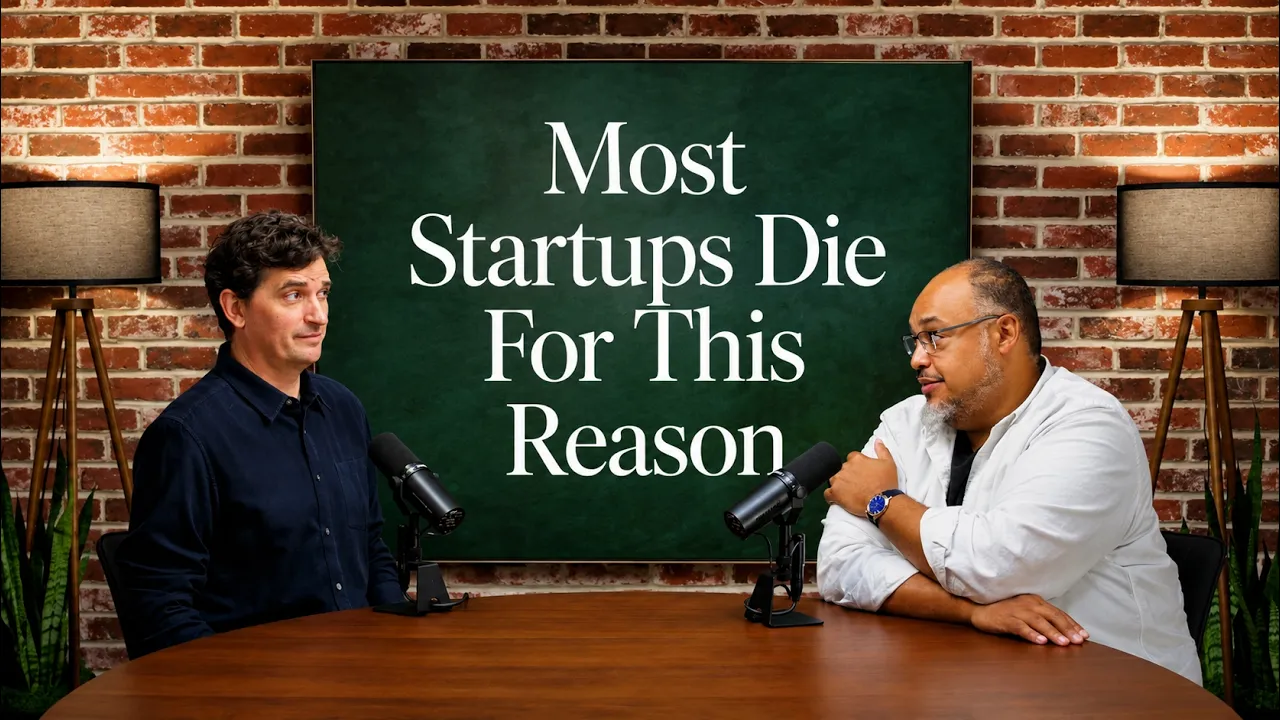
Dalton + Michael · @daltonplusmichael
This video has no Most replayed graph yet: YouTube shows one only once a video has enough views. These are the moments viewers replayed most in Dalton + Michael's most watched videos.
Most replayed moment at 9:40
2.3x that video's typical replay level
a company is winning, you might not understand the value they create for their customers, but don't dismiss it to zero. >> Well, that's the classic thing of um dismissing a product because the design is bad. >> Yeah, man. This HRS looks like crap.
Said at 9:33
The graph counts replays. It does not show where viewers stopped watching.
Words
2,938
Runtime
14:36
Speaking pace
201wpm
Reading time
12min
201 words per minute, above the 201 75th percentile of 349 measured videos. That distribution comes from the 349-video hook study.
Opening (first 30 seconds)
If you're basically doing money expected value calculations, this is not your game. >> Yeah, your math is correct. Don't do it. >> Exactly. Yeah, yeah, yeah. You're doing the math right. Don't do a startup. Don't do it. >> Like that's totally correct. >> You're making a trade where you're giving yourself more agency for more risk. This is Dalton plus Michael. Today, we're going to talk about why you should keep working on your startup. So, uh set this up for us. Look, >> it's well understood. I think that um most startups die of suicide than homicide. And
101 words, the words spoken in the first 30 seconds at 201 words per minute.
Free, no signup. See how the first 30 seconds hold attention, with rewrites.
Sentence shape
| Measure | This transcript |
|---|---|
| Sentences | 285 |
| Average words per sentence | 10.3 |
| Longest sentence | 53 words |
| Questions asked | 30 |
| Sentences containing a number | 14 |
Most used terms
Filler phrases
181 in total: like 114 · kind of 14 · you know 13 · right? 11 · um 10 · actually 8 · uh 4 · basically 2 · literally 2 · sort of 2 · I mean 1.
A literal whole-word count of the same phrase list the Prepublish browser extension uses, so a phrase inside another word is not counted and a phrase used in its ordinary sense still is. It is a count and not a judgement.
What this transcript is
Every word below is the caption track YouTube publishes for this video, pulled from the video itself and reproduced unchanged. It is not Prepublish's writing, not a summary, and not a re-transcription: it is the video's own published captions. English captions, generated automatically by YouTube, in the video’s original language. Source: the video on YouTube. A channel that would rather this page did not exist can ask for its removal through the contact page, and it is removed.
If you're basically doing money expected value calculations, this is not your game. >> Yeah, your math is correct. Don't do it. >> Exactly. Yeah, yeah, yeah. You're doing the math right. Don't do a startup. Don't do it. >> Like that's totally correct. >> You're making a trade where you're giving yourself more agency for more risk. This is Dalton plus Michael. Today, we're going to talk about why you should keep working on your startup.
So, uh set this up for us. Look, >> it's well understood. I think that um most startups die of suicide than homicide. And that running out of hope is the is the thing that causes people to give up. >> Yes. >> And so, I know a lot of our audience is startup founders or startup employees. >> Yes. >> And I like to think or they they tell me that um sometimes we inspire them to to feel fired up about what they're doing. And so, this is one of those videos where we are going to do our best to help you feel fired up and hopefully bring logic and reason behind it, not just >> Yes. >> add fuel to the tank.
I guess to start with, if you give up, there is no way you will succeed. There is a 100% chance that the day you decide to give up, you your startup will not have succeeded, right? >> Yes. >> This is just logic. >> Yes. >> The natural state of startups is that they are failing. >> Yes. >> And I think there can be like this dysmorphia thing going on where it seems like everyone else's startup is going better than yours.
It's not. And so, [laughter] it is not. >> It is not. >> We can tell you. We we we spoke to that. >> We know. We we were aware. [laughter] And so, right there, >> Yes. >> you if you feel like it's not really working, A, you're probably right, and B, that's kind of what you should be expecting. >> It's funny. It's kind of like if you are, you know, a freshman in high school and you're racing against seniors and you're losing to them, that's kind of that's the game. >> That's the game. >> Right?
You're going to you you're They've had four more years of growing, of training, and like you can do the same thing. Founders get in their heads that successful companies succeed quickly. And they always have like a couple of like what I call pop examples, like things that would appear on Twitter or TechCrunch. And one of the things that I think is now very possible with AI is to actually get the real facts. >> Yep. >> Like make a list of the 10 companies you like.
Go to your phone and look at the 10 companies that are on your phone. And just ask AI, how long did it take them to do blank? And you're going to find some. >> Right. YouTube sold for >> Yeah, it was Google. Yeah. >> 18 months or so. >> Yeah. >> And then you're going to have like Nvidia, like who didn't figure out their business for a while. And and I think that what I try to comfort founders with is that like there are a lot of roads to success, and most of them are longer >> than you think. >> Yep. >> So if this is like year one and you're not Cursor yet, it's like you don't have enough evidence yet to know >> Yeah. >> like whether you're it's going to work or not.
And I think that like one of the things that I see a lot of founders do is like repeat year one over and over again. Like, oh we're going to pivot or I'm going to do something new, but I'm not I can never get past year one. I can never get to the point where I actually know something. I can actually build a good product. It's like if it doesn't work too quickly, I'm on to the next thing. And I think the caveats are like, you know, if you are literally out of money, okay, then that's a reason.
If you are literally suffering, health reason. >> Yeah, okay, those are great. Yeah, cool. Like >> Yes. >> Those are really good reasons. But if if what's going on is you're just like, "Wow, why aren't we taking over the world yet?" and >> Yes. >> we feel embarrassment or like our expectations are not being met, I think you can just reframe your thinking. >> And give yourself enough surface area to be lucky. >> Yes. >> And to be your own worst critic.
Like if you have a voice in your head that's telling you negative things about your startup, um don't do that. Like >> [laughter] >> Like that's like self-defeating behavior. And if you think about it like you're sort of validating the bad kind of authority figures >> Mhm. >> by giving up too early. Like don't you want to stick it to the man? Like don't you want [laughter] to Don't you want to prove everyone wrong? Like don't you Right? >> It's funny because like this period of time is so common.
It has a name. So like it's called the trough of sorrow, right? And so that's just another indication that you're not alone. Like if someone's named it, um almost everyone is going through it. And almost everyone had to go through it. >> Well, and again, founders can talk about this after they're successful. Like, "Yeah, now we're worth a zillion dollars, but man, we really sucked for a while there." >> Yes. >> So you hear it from them, but otherwise people won't really talk about this. >> No.
Certainly investors are not like Here's all my shitty investments. >> the investments I made that >> [laughter] >> went horribly. I guess we're willing to talk about that, but but like, you know, like there's kind of no incentive to be honest about Again, this is the natural default state of things. >> Yeah. This is like there's 100% evidence over all of time that most startups fail. That most startup investments fail. >> Just to kind of like put ourselves in the shoes of the people experiencing this.
I remember going through this when I was a founder. You come into work. You're working hard. But you're not really sure what to build. >> Yeah. >> And the ideas shift every week. Like we have a new conversation every day. Yeah. And we're like, "Oh, what if we added agents?" Or like, "Oh, like How we Let's put in an MCP." And so you're just kind of like Yeah. Gluing together random ideas. You unfortunately might be reading a lot of tweets or tech press about how everyone is doing better than you. >> Yes. >> And that some combination of that makes you want to pivot to copy what's working. >> Yep. >> And to be like, well, those guys aren't so great.
We're better than, you know, some kind of like emotional feeling about this. >> Yeah. >> Probably bad. >> Probably not talking to your users. >> Yeah. And unfortunately, a lot of people in this state, they want advice from authority figures to make them feel better. And so, >> Yeah. >> you know, again, I I I guess we are sort of doing that, which is to keep going, but I think they sometimes Sometimes I would do office hours with people and they'd be like, Dalton, what should we pivot to?
And I'm like, I don't know, man. Like >> Yeah, exactly. Exactly. [laughter] Wish I spent the next 10 years of my life working on. >> And so, I think you just want to learn to enjoy this process and realize it's normal, and realize that you just have to dig deep and find the answer as a consequence of talking to your users and shipping product and not getting in like a bad mental state, right, man? >> Well, I remember this time very clearly, and I remember I would always come back to I'm 23 years old and I'm running a company.
Like, holy Like, how even if the graphs look like it's a failing company, like like in the scheme of how enriching an experience and how lucky I am, >> Yeah. >> this is winning. Being in this game is winning. And I think that I would always kind of, you know, or I could have some East Coast job where I'm like the grunt of the grunt of the grunt of the grunt of the grunt of the person who makes decisions, and I can wait 25 years.
Like >> I think the more [laughter] common uh black pill, let's just address it now, is that I've seen a bunch of tweets that's like, well, if you just would have got a job at Anthropic 4 years ago, yes, you would have made way more money. And so, let's let's disassemble that argument. Number one, um how would you have known Anthropic was going to be the one and not, you know, Airtable or whatever? >> Yeah. >> Okay, so that's >> Yep. >> That's a point.
Number two, could you have actually gotten a job at Airtable? Like would you pass the Anthropic technical screen? I don't know, maybe. I Who's to say? But like, you know, >> I like that. That's like a Of course of course I would [laughter] in hindsight. >> Yeah. Maybe you would have, but I don't know if you actually could have gotten a job there even if you wanted to. >> Yes. >> Number three, is that really what it's all about?
And if what you're trying to do is make the most money in the lowest risk way possible, don't start a startup. >> Thank you. Thank you. >> it, man. This is not what you want. >> This was math you could have done from day one. >> [laughter] >> Like if you're like, "Oh gee, I should have just worked at Anthropic." >> Yeah. >> It's like, well why did you why did you start a company? >> Yeah. >> You thought it was going to be easy and you thought the odds were high? >> This is what I kind of hate is there's this like if you're basically doing money expected value calculations, this is not your game.
Like just >> Yeah, your math is correct. Don't do it. >> Exactly. Yeah, yeah, yeah, yeah. >> you're doing the math right. Don't do a startup. >> Don't do it. >> Like that's totally correct. >> And and and it's like I'm not saying that that's bad, right? Like if that's kind of what motivates you, I would argue go figure out what's going to be the next great company and like you can get a ton of great EV. >> Yeah. >> But if you want to have your hands on the controls, >> you're getting agency.
You're making a trade >> Yeah. >> where you're giving yourself more agency for more risk. And that's not the right trade for everybody. >> Yeah. >> Again, this is I don't actually think startups are for everybody. >> I agree. >> You just need to look yourself in the mirror and be like, "I made a trade >> Yes. >> for more agency for more risk. And >> Yes. >> by making that trade, I should at least keep doing this long enough >> Yes. >> to have the chance.
Yes. To maybe >> For something interesting to happen. >> Yeah, right? Well, it's interesting cuz it's like what EV calculation you're doing? If you're doing a cash EV calculation >> Go work at Google, bro. Like >> If you're doing an agency excitement adventure EV calculation Talk to those people. >> Yeah, well, they'd say to me like, well, it was really exciting to work at Anthropic and I again I'd be like, okay, yeah.
But who Did you know that it was going to Could you have predicted that what was going to happen in Anthropic is what happened? >> Yeah. >> You should just like be an investor or something. You know, >> [laughter] >> you're a super genius, man. I I don't think most people predicted that. >> No. >> Right? >> And it's funny because anyone who's been around the startup in the startup game enough, these are silly conversations.
Like, oh, I could have worked at Anthropic, right? Like, oh, I could have angel invested in blank. Oh, here's all the money I could have made but didn't. It's like, come on. Like, go go cry in your soup. Like, that's not the game we play here. >> Yeah. I mean, you're just going to drive yourself nuts. >> Exactly. >> Right? >> So, long story short, if you enjoy having your hands on the wheel Um if you enjoy kind of feeling like you get to call the shots and if your health or your bank account or etc. is not getting in the way you don't have to stop because it's not working out.
It's not working out for anyone. >> [laughter] >> You're not the only one. >> the only one. >> alone. >> And like if it does work out for you, you will be so happy that you went through this. You'll value it more. Get through this phase as long as possible. And I would argue this. It's very different when I talk to a founder who's kind of like 1 year in and they're like, oh man, this is painful. And a founder that's 4 years in.
Um I would argue that like embedded in every startup is a hypothesis. And it takes some period of time to learn the results of that experiment, right? Do you our users want this? Can we provide it? Etc. Etc. I think that the failure mode is to quit before you actually have clear information about whether your hypothesis was right. I think that if you want to pivot or make a different decision because you've learned about your industry, you've learned about the product, you've learned about the customers, and you've realized something important about your hypothesis is not correct.
Great. Like that's fine. But if you are stopping because you don't yet know the answer to your hypothesis, but you are not succeeding as fast as you expected. Yeah. Some tactical suggestions are to enjoy the process and to try to find wins. >> Yeah. >> And to try to feel like you're providing value to your customers, which has always been a big theme in our videos. Like if you view this as this all or nothing thing and you're comparing yourself to others, bad news guys.
If you compare yourselves to others, um you're no matter how successful you get, you're still going to be sad. >> You know, so that's like an aside. >> That's going to like haunt you for life. Uh just like FYI. But you know, if you're instead of valuing your progress on how much you're learning or how much agency you have and how much you're helping customers, you can actually be making progress even when things aren't going super well. >> Even during the trough of sorrows. >> Yes.
Yes. >> And and everyone that gets out of the trough of sorrows is learning while they're in the trough of sorrows. Yeah. They're not just kind of twiddling their thumbs and feeling bad about themselves. Yeah, I I don't It's not public when we're recording this, so I I I can't talk about the specific company, but there's a recent investment that I did and I know the founder and yeah man, it just like all went wrong for 2 years.
Like like really good idea, but >> Yep. >> Like what are the things that can go wrong? Um launched early, got beat by competitors, didn't grow for 2 years, fundraising was hard, co-founder quit, >> No. >> considered applying for jobs. That's all the things. >> [laughter] >> Like Everyone gave up on him. >> Yeah, yeah. >> You know, like and like it's like totally working. And all I can say that I learned from that story is that just the guy's hardcore, man.
Like respect. >> Yeah. >> Like yeah. >> Like there's really no lesson there uh about why >> of advice that would have gotten him through that, right? >> know. Like a lot of It's like you keep flipping a coin and he kept getting tails. Yeah. And then finally, okay, came up heads. Like all these things went wrong over and over and over again for 2 years. >> Yeah. >> And he could have completely justified sent sent me an email saying he's shutting down.
And I'm like, "Yeah, it makes sense. Like I have no no pushback for me." Um and like it worked out. >> It's interesting cuz I think that that is the story of almost every success. And if you're not willing to go through the hard times, you're probably not going to reach successful times. >> All right. Keep going. Good luck. >> All right. Thanks, Michael.
The words are the caption track's own and nothing is reworded or re-transcribed. Paragraph breaks are placed between sentences so the text reads as prose.
Free tools for your own script. No signup, no login.
Paste your draft and see where viewers are likely to drop off, with a rewrite for each weak line.
Paste the first 30 seconds of your own draft for a hook score and rewrites.
Check your draft against YouTube's advertiser-friendly guidelines before you record it.
Read this channel's public videos and transcripts, and download a writing brief for it.