Getting the transcript
Reading the captions from YouTube. A video nobody has opened here before takes 10 to 30 seconds; this page fills in on its own.
Getting the transcript
Reading the captions from YouTube. A video nobody has opened here before takes 10 to 30 seconds; this page fills in on its own.
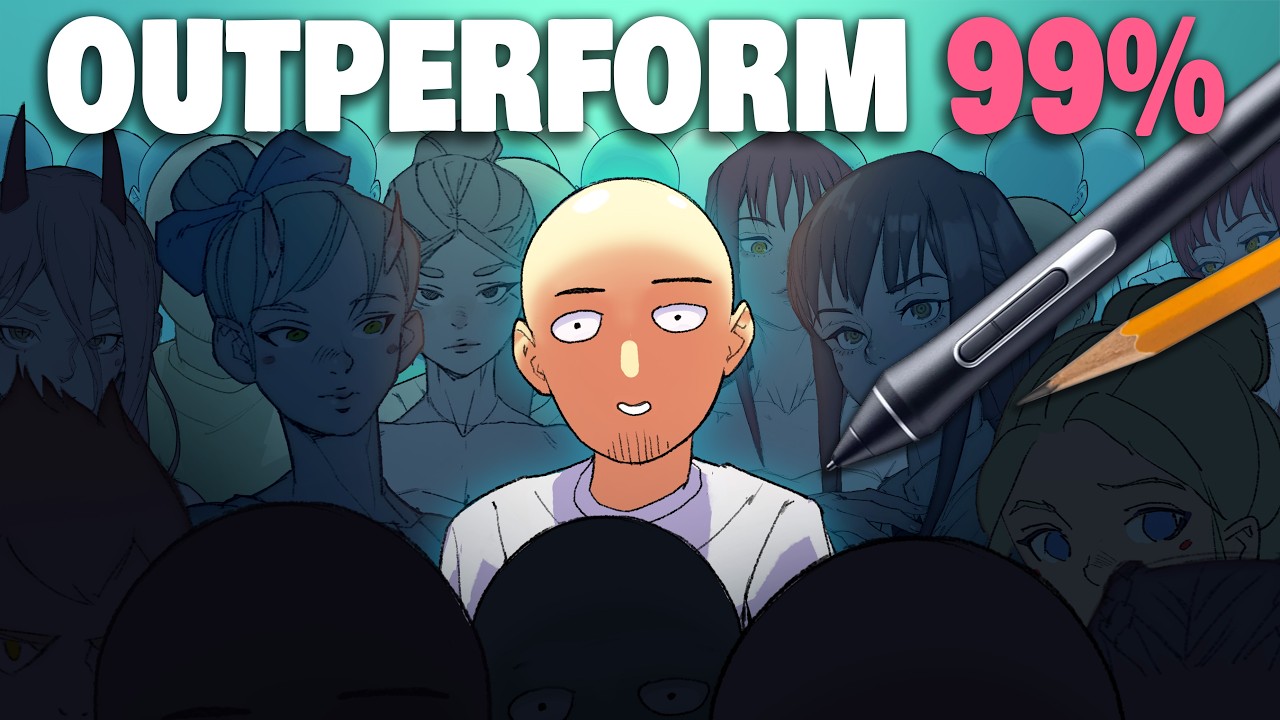
Marc Brunet · @YTartschool
Where viewers went back to watch this video again, from YouTube's public Most replayed graph, lined up with what was said at that moment.
Most replayed moment #1
10:593.2x the video's typical replay level
next level. Now, here's something kind of weird about all the top performers in almost any field. I've come to realize talking to many of them that they're not smarter than anybody else, but they do have an
Said at 10:54
Most replayed moment #2
3:432.7x the video's typical replay level
progress? And the [music] distinction here between weakness and level cap is important, right? Is it something that you've been practicing a lot, but you're making no progress? Or is it just something that you haven't really practiced? And then in third, what's the thing that people usually compliment you on? Like
Said at 3:36
Most replayed moment #3
6:502.1x the video's typical replay level
little break, their sentencing again got a little looser, a little more lenient. And those are like judges in court, like not, you know, idiots. This stuff impacts us all. All right. This next one is very interesting, I think. And it's
Said at 6:43
The graph counts replays. It does not show where viewers stopped watching.
Words
2,774
Runtime
14:51
Speaking pace
187wpm
Reading time
12min
187 words per minute, between the 181 median and the 201 75th percentile of 349 measured videos. That distribution comes from the 349-video hook study.
Opening (first 30 seconds)
So, most artists will grind for years and still end up in the same place, stuck. Like same skill level, same follower count, same rate of commissions. And meanwhile, a small handful of people will just pull ahead and keep pulling ahead. And from the outside, it just really looks like either talent or luck and something they're not sharing. But it's really not any of that. I've been doing art professionally for over 20 years now working on games like Overwatch, Heroes of the Storm, StarCraft II. And I've been teaching for well
94 words, the words spoken in the first 30 seconds at 187 words per minute.
Free, no signup. See how the first 30 seconds hold attention, with rewrites.
Sentence shape
| Measure | This transcript |
|---|---|
| Sentences | 202 |
| Average words per sentence | 13.7 |
| Longest sentence | 49 words |
| Questions asked | 17 |
| Sentences containing a number | 11 |
Most used terms
Filler phrases
111 in total: like 69 · kind of 13 · you know 12 · right? 6 · actually 5 · basically 4 · literally 1 · uh 1.
A literal whole-word count of the same phrase list the Prepublish browser extension uses, so a phrase inside another word is not counted and a phrase used in its ordinary sense still is. It is a count and not a judgement.
Run the check on the words above: where attention is likely to drop, with a rewrite for each weak line. The free check shows the scores and the one issue costing the most.
What this transcript is
Every word below is the caption track YouTube publishes for this video, pulled from the video itself and reproduced unchanged. It is not Prepublish's writing, not a summary, and not a re-transcription: it is the video's own published captions. English captions, generated automatically by YouTube, in the video’s original language. Source: the video on YouTube. A channel that would rather this page did not exist can ask for its removal through the contact page, and it is removed.
So, most artists will grind for years and still end up in the same place, stuck. Like same skill level, same follower count, same rate of commissions. And meanwhile, a small handful of people will just pull ahead and keep pulling ahead. And from the outside, it just really looks like either talent or luck and something they're not sharing. But it's really not any of that. I've been doing art professionally for over 20 years now working on games like Overwatch, Heroes of the Storm, StarCraft II.
And I've been teaching for well over a decade now with over 31,000 students going through either my program or my mentorship. And what I've noticed is that the top 1% of artists all kind of do the same four different things differently than everybody else. And none of them involve working harder. If anything, most of them are about working less in a very specific way. So, let's dig into that. So, here's the biggest lie in art advice.
If you just grind harder, you can fix anything. And that sounds motivating, right? You can do everything if you put your mind to it. But it's actually not true. There are some skills in your arsenal that I call level caps. Meaning, no matter how much XP you throw at it, they just won't level up. The status doesn't move. And obviously, the sooner you find yours, well, the better off you'll be. Now, there's a big difference, of course, between a weakness and a level cap.
A weakness is just a skill that's yet to develop, right? Like maybe if you're not good at drawing hands, well, you just got to start drawing hands often, frequently, consistently for a long period of time. And most likely, you'll get better at that. A skill level cap though, it's a little bit different. It's when you grind for years and the needle just doesn't move at all. Or like barely that it just feels like a waste of time.
Like you do all the exercises, you watch all the video tutorials, you put in the hours, but you're still stuck at the same spot. Like not far from where you started. >> Failure. And if like most people, you have one of those skills, pretty frustrating, right? Now, I would say every artist has one of these. Like in my case, well, I have a really hard time conveying emotion through my art. Some artists are really good at that, but like I'm not a very emotional person to begin with.
So, every time I try, it just feels so fake to me. My stuff just feels more commercial. It's like that skill is level capped for me. But here's what I learned over the years. Most people that just are successful don't do that. But here's what they do. Like they figure out which skill they have that's just capped. Thing their brain just does not want to understand. And then, well, they just design their entire experience, their entire career even, around that skill.
So, in the end, that level cap doesn't even matter. It's like Arnold never really bothering to fix his accent and instead just playing as the Terminator, where his skill set just is a much better fit. And he didn't try to push through his level cap. He just picked a different game where it didn't matter. And this is what you really don't see when you look at successful artists like posting their stuff online. A lot of people just assume they can do everything.
Well, they can't. Every single one of them have skills that they're pretty bad at. The only difference really is that they built their crafts going around their weaknesses, rather than just butting their head against it for years with probably very little success. Now, how do you diagnose this? Well, here are the three questions you should ask yourself. The first one is, what drains you creatively that seems effortless almost [music] for others?
Like what do you dread the most when it comes to drawing? Second is, what have you been grinding for years with basically no progress? And the [music] distinction here between weakness and level cap is important, right? Is it something that you've been practicing a lot, but you're making no progress? Or is it just something that you haven't really practiced? And then in third, what's the thing that people usually compliment you on?
Like stuff that you don't really put much work into. Well, the first two points are your level cap. So, don't bother with those. And the third one, well, that's your thing. That's your real stat. That's worth putting time into. And most people usually have this completely backwards, so it's a huge advantage to be approaching it the right way. So, stop grinding your capped stats. Like if we're talking in terms of video games, like you want to find a character build that actually matches your natural strength.
All right. So, here's the thing that most artists never really think about. When you're painting, every brush stroke, every color choice, every composition choice, all that stuff runs on your brain's very limited decision-making fuel. And that fuel, or what you would call like your focus, well, that runs out throughout the day. And that's called decision fatigue. And it's one of the most studied thing in cognitive psychology, which I find very interesting.
Basically, the more decisions you make in a row without taking a break, the worse those decisions get. Like your brain will just starts to default to the easiest option instead of the best one. You don't even notice it happening, but it definitely does happen. So, if we bring this back to art, a lot of artists, maybe those that are not as experienced, they tend to completely just ignore this fact of biology. And then they wonder, why is my art not improving?
Like skipping sleep to grind tutorials, or like working 10 hours straight without taking a break, without, you know, standing up, exercising a little bit. Basically, just abusing their bodies. And you know, I've been there. Trust me, I know. And the research on sleep is very clear. Like sleep deprivation like measurably hurts your concentration, your working memory, your judgment. Like all the mental muscles we use basically when we're drawing.
Like if you skip your sleep, your ability to spot what's wrong with your art just completely tanks. And you probably wouldn't realize it. So, here's the trick. If If you're running low, you got to find the window in the day where your brain feels the sharpest. Usually, that's going to be like early in the morning for like a two to four-hour window. So, I would put all my hardest like artistic decisions then. You know, like working on thumbnails, like figuring out your sketch, your composition, that kind of stuff.
Like the construction of your character. Anything that needs real on-point judgment. And then you can just put the like more mechanical stuff like the rendering, like cleaning up your lines, all that kind of stuff, to later when your focus might not be at its peak. But above all else, protect your sleep. Like it's the most important tool in your kit because it literally is. And this stuff kind of affects everything. Like I was reading this really interesting study where judges were way more lenient in their sentencing when it was early in the morning.
And then it got progressively harsher as lunchtime approached. And then after lunchtime, after they've kind of recovered, got a little break, their sentencing again got a little looser, a little more lenient. And those are like judges in court, like not, you know, idiots. This stuff impacts us all. All right. This next one is very interesting, I think. And it's more obvious if you're a very experienced artist, like maybe a professional artist having worked with other people.
But if not, you would really want to pay attention to this. You know how Pixar, DreamWorks, Disney Studios, uh Sony, how they make animated movies? Before the artists actually get to animating anything, before there's any colors, everything starts with storyboards. Every scene starts with just a bunch of little scribbles showing the actions in the scene. Stuff gets taken out, put back in, reiterated like dozens of times, sometimes more per shot.
And you might wonder, why do that? Like why go through the trouble? Well, it's simply because a storyboard artist spending like a day on a single scene is much cheaper than having an entire animation department animate that scene to only then figure out that, oh, they actually wanted to change a couple of things. That's brutally expensive in comparison. So, the studios figured out very early on that it pays to fail early.
And they just fail on the cheapest possible format, which is the storyboards. And only when that's solid, then they can move on to the more expensive part of the process, where things are a little bit more locked in, very hard to go back on your decisions. And the reason I'm talking about this is your drawing's kind of the same way. Like there's a couple of small moments where everything gets decided. And usually, those happen, you know, during the sketching, during the like the thumbnail part of the illustration, where it's just, you know, brainstorming different ideas, different compositions.
Or like I mentioned in last week's class, when it comes to drawing characters, starting [music] with a simple mannequin made out of simple volumes like boxes and cylinders. Like that's the equivalent to the storyboard. And most artists, and myself included like just a couple of years ago, we just don't do that, right? Like you just pick something and then you're like, oh, this is it. This is my sketch. I kind of like it.
Let's go with that. No iteration. And then most of the time what happens is you find out at the end that yeah, maybe it could have used a couple revisions. Crap. So, the top 1% of artists, they simulate ahead of time. They fail early. They'll do 10 thumbnails before picking the one. They'll do a quick value pass in grayscale before, you know, settling on a color scheme. Maybe they'll draw like three different head angles before settling on the one that they like.
Like at first, it felt like a complete waste of time for me. But working professionally for so many years, like I cannot think of a single instance where spending that little extra amount of time at the beginning of the process where everything is rough and can just be iterated through very quickly did not pay off in the end. Like it always makes the result better. Always. So, now it's pretty obvious that all the artists that always pull ahead, they're the ones that have made failing feel cheap, like a small time investment.
Now, that sounds great in theory, right? But the tricky part is always knowing what to simulate, what to study, in what order. And I think this is where most self-taught artists get really stuck. It's not because they're not willing to put in the work, it's more that nobody's put in front of them the map to get to their destination, [music] the structure in their studies. And that's exactly what I built Art School to solve.
It's my complete art education program, the sponsor of this video. It's 10 terms structured from fundamentals all the way through character design, environments, illustration, and professional work. It's everything you would possibly need to be able to draw whatever your brain can imagine. And this month we're celebrating our 9th year anniversary, and for the occasion I'm offering the entire program at the biggest discount I will have until the end of the year, and all that will be valid for just a couple more days until the end of this month.
So, links down in the video description. If you go through it, I guarantee you'll have a better map, a better structure to your education than 99% of artists online, and it will take your art to the next level. Now, here's something kind of weird about all the top performers in almost any field. I've come to realize talking to many of them that they're not smarter than anybody else, but they do have an advantage, and it's that their brain carries less clutter at any time.
It's like there's fewer competing signals for their attention. Hmm. And it's because of that that their decisions just seem to come out sharper. Cognitive load research has shown this pretty consistently. And And that's a fancy way of saying mental clutter research. And here's what happens. Like, when your memory gets crowded up with a bunch of different inputs, your performance on the actual task you're trying to do drops.
And that's even if you're objectively skilled, like, even if you know what you're doing. And honestly, artists in 2026 are probably the loudest brains individuals on the planet. You're scrolling ArtStation while watching a tutorial while talking in three different Discord servers while eyeing what that one artist just posted on X while feeling guilty about not practicing anatomy while wondering if maybe you should get that new brush back.
That's not a very creative environment, that's just noise. And the result typically is that you just freeze. You can't really start drawing. And you just need the smallest extra distraction, and then you're back to doom scrolling or like playing games. Because at least then you don't have to make any decision. Well, the ones that are actually getting somewhere, they have way fewer inputs, not more. Like, they'll focus on themselves.
If they seek information, it'll be at very specific points because they need it immediately, you know, like, so the input is very targeted. And often they let themselves get bored because that's what fosters creativity the most. So, here's something you can try this week, maybe, if that's been a problem. So, before you start any drawing session, just put your phone on Do Not Disturb, close everything, close all your browser windows, no reference boards, nothing, no Discord, no podcast playing in the background.
Just sit with the canvas for like a good minute. Just let your brain kind of settle, [music] flush out the noise, then get to work. I think you'll be honestly kind of shocked at just how sharper your brain is when it's not competing for attention, you know, with 40 other different inputs. I picked this up after reading it somewhere else, and it's made a huge difference for me, so I highly recommend. All right. One last thing.
You can do all of those four things and still not make it on the timeline that you want. And that's simply because the stuff that you can control and the stuff that's completely out of your control are two different things. And most people just kind of mash them together, and then they get completely paralyzed. Like, you don't really Well, you don't at all control when the opportunities present themselves. You don't control when an art director might see your portfolio online.
You don't control which piece of work the algorithm suddenly decides to push out to way more people than usual. All you can really control is how skilled you are on the day that this happens. So, put your energy there. Find the skills that are level capped for you, and stop investing in them. Protect the brain that you're using to do art by sleeping properly, simulate before you commit, like, you know, fail early at the stuff that is not expensive to fail at, and cut out the noise.
Do that today, bro. And then again tomorrow, and then the day after. The opportunities kind of show up on their own timeline, so your job is just to be ready when that does happen. And if this video resonated with you, I think you should definitely follow it up with this one that will appear on screen in just a second on the laziest way to improve your art. It's kind of the practical follow-up to everything we just discussed.
[music] And honestly, it'll probably save you hundreds, no, thousands of hours practicing useless stuff. So, I'll see you over there. Click the link, bro.
The words are the caption track's own and nothing is reworded or re-transcribed. Paragraph breaks are placed between sentences so the text reads as prose.
Free tools for your own script: paste a draft and see where it stands before you record it.
Paste your draft and see where viewers are likely to drop off, with a rewrite for each weak line.
Paste the first 30 seconds of your own draft for a hook score and rewrites.
Check your draft against YouTube's advertiser-friendly guidelines before you record it.
Read this channel's public videos and transcripts, and download a writing brief for it.