Getting the transcript
Reading the captions from YouTube. A video nobody has opened here before takes 10 to 30 seconds; this page fills in on its own.
Getting the transcript
Reading the captions from YouTube. A video nobody has opened here before takes 10 to 30 seconds; this page fills in on its own.
Theta Profits · @ThetaProfits
Words
9,356
Runtime
47:23
Speaking pace
197wpm
Reading time
39min
197 words per minute, between the 181 median and the 201 75th percentile of 349 measured videos. That distribution comes from the 349-video hook study.
Opening (first 30 seconds)
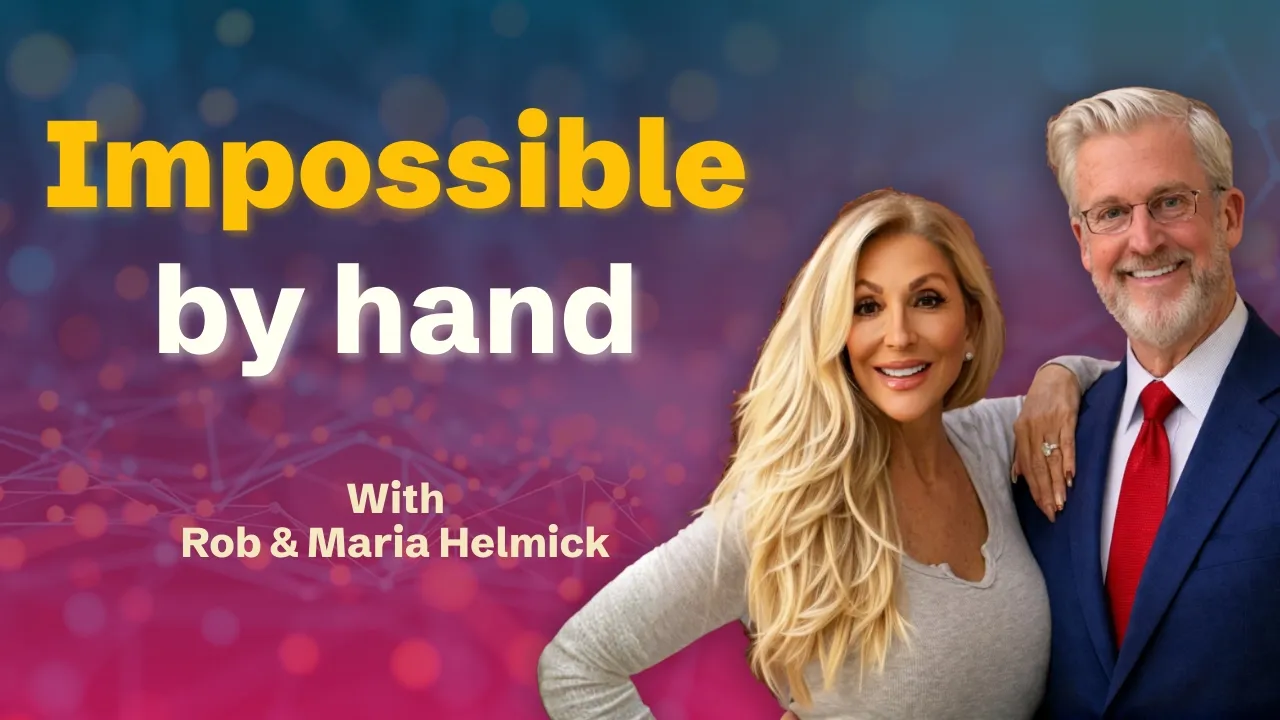
We put on about 150 trades a day. It is not possible to do that by hand. >> You can't just be not knowing how to do stocks and just upload information, expect to have somebody help you do stocks. That's not it. >> Rob and Maria Helmik trade zero DT using a custom AI they have called Vera. One of them does it with heavy back testing and bots. the other using Vera as a trading pilot. Same engine, different styles. Welcome, Maria and Rob. >> Hello. Thank you for having us today. >> Thanks, John. It is
99 words, the words spoken in the first 30 seconds at 197 words per minute.
Free, no signup. See how the first 30 seconds hold attention, with rewrites.
Sentence shape
| Measure | This transcript |
|---|---|
| Sentences | 718 |
| Average words per sentence | 13.0 |
| Longest sentence | 116 words |
| Questions asked | 39 |
| Sentences containing a number | 109 |
Most used terms
Filler phrases
225 in total: uh 68 · you know 55 · like 37 · um 23 · right? 18 · basically 13 · I mean 5 · actually 4 · kind of 2.
A literal whole-word count of the same phrase list the Prepublish browser extension uses, so a phrase inside another word is not counted and a phrase used in its ordinary sense still is. It is a count and not a judgement.
Run the check on the words above: where attention is likely to drop, with a rewrite for each weak line. The free check shows the scores and the one issue costing the most.
What this transcript is
Every word below is the caption track YouTube publishes for this video, pulled from the video itself and reproduced unchanged. It is not Prepublish's writing, not a summary, and not a re-transcription: it is the video's own published captions. English captions, generated automatically by YouTube, in the video’s original language. Source: the video on YouTube. A channel that would rather this page did not exist can ask for its removal through the contact page, and it is removed.
No Script X-ray for this video: YouTube shows a Most replayed graph only once a video has enough views.
We put on about 150 trades a day. It is not possible to do that by hand. >> You can't just be not knowing how to do stocks and just upload information, expect to have somebody help you do stocks. That's not it. >> Rob and Maria Helmik trade zero DT using a custom AI they have called Vera. One of them does it with heavy back testing and bots. the other using Vera as a trading pilot. Same engine, different styles. Welcome, Maria and Rob. >> Hello.
Thank you for having us today. >> Thanks, John. It is great to be back on your show. We love it. >> So, let's get straight to it and give us the super quick pitch about how you use AI to make money. >> I use uh Vera basically to uh give me information. She's a lot faster than I am and she's uh able to gather information for me. She analyzes it. She analyzes my portfolio. She's pretty good at that. >> And what I do is I just use uh Vera as a mathematician.
For me, John, the entire trading enterprise is just one giant math problem and all I try and do is solve that math problem every single day. >> Great. I really look forward to digging into all the details here and as you mentioned you have been on this show before but before we get started Rob tell us very briefly about Maria as an option trader. >> Maria is very very disciplined. She works all day every day with Vera working on figuring out what she's going to trade and how to manage her portfolio.
So, it's really a twoprong process. And she trades 23 hours, 5 days a week. Five days a week. And I trade five minutes a day, >> but all weekend. >> Mostly weekends. Yeah. >> And Maria the same about Rob. >> Rob is like a giant kid playing with robots. >> No, he basically is the trading. He's turned trading into a total big math equation. Math. It's all math to him, which is something he loves. And you are located in Florida, guys.
Isn't that all? >> Mhm. >> Yep. Daytona Beach. We love it. >> And I'm currently in Daang in Vietnam, which is another beach city. So, here we are from beach to beach. >> Yes. >> So, we are going to learn about your elaborate weekend process, uh, Rob, and then also about how Maria uses AI as her very knowledgeable trading buddy. But first, we need to meet Vera. Who and what is Vera? >> Vera is my trading assistant. She gathers information for me, summarizes the information, analyzing, prepares me, prepares uh pre-trade reports for me and she also analyzes my portfolio. >> She recommends trades for us, but she never actually makes the trades.
You know, we make we always hold back the final decision. We were AI curious I would say about two years ago and we started using AI with no training, no information and just started asking our questions and it just built on itself. It is amazingly easy. For anybody out there who's thinking about using AI and have some concerns about it, I would say just get on there, use the free one. We use the 21 $20 one because she remembers everything.
And um we started off what just doing a family trust and some Ria was I'm a lawyer. She's decided to do legal work herself and it was so great we just said well let's try it for trading. >> Yeah, exactly. I um started just doing a trust and I said you know this this she remembered everything. She remembered everybody's name right down. I mean if I could talk about my son she'll say oh John she knows everything. So she has memory which is good.
So, you're able to train her and she'll learn your your your trading habits. Basically, >> it's scary how she remembers all that stuff and how you trade and she even remembers your voice and the way that >> your mannerisms, >> the way you like to speak. You know, I use more legal ease and Maria chooses not to, you know, more banker talk. So, she remembers all that stuff. It's really, it's fantastic and it's super super easy.
It's just, you know, the more you use her, the better. It's garbage in, garbage out. Good stuff in, good stuff out. And Maria spends eight hours a day. I I am now up to probably eight hours a day as well, uh, working with her, just making her better. And the more you put in, the better she gets. It's great. >> But let's be a little bit more specific in technical term. This is what we call a custom GPT that you have developed.
Or what is it exactly? >> Well, I'll tell you what it is. Is we're not really AI experts. We just bought the $20 a month version and then we just keep talking to her and building it internally and you have lots of different chats and projects and stuff like that. So you just have one project that's just called, you know, Maria Trading or Rob Trading and then you just build in that. So >> in that sense, it's it's not anything unique.
It's not anything that sits on our hard drive. It's just chat GPT, but it's something that we continually are building by speaking to her and training her how to respond to us and to give us the information that we want. Think of her as an assistant that can go out and gather more information than you can and can summarize it faster and better than you can. And then she'll deliver it to you exactly the way you want it.
And that's what she can do. She can't really make I wouldn't trust her to make decisions with our money, but she will definitely give you suggestions on way to ways to go. and is a constantly learning. It's it's phenomenal. And then suggests ideas, right, for things that we didn't even think about. >> But what type of information have you uploaded her to make sure that this is relevant for your trading? >> So over time, she has learned I have asked for one is called a pre-trade report, which has presets basically on what I require in order to do a trade.
So something like that, I would just input the symbol and she would run it through all the systems that I had told her the presets and she'll give me a report with all the information that I'm looking for and I can make the determination as to whether or not I want more information or whether I can place the trade at that particular time. >> Screenshots are the best way to go with with Vera. We give her screenshots. She and I both give her screenshots every single day of our portfolio.
We tell her all about the trades we're thinking about doing, the trades we're that we're going to do, and the trades that we did. So, that part of it, she has learned exactly our trading style, the things that we look at that the areas of, you know, do we like technology stocks or do we like gold or futures or whatever. In addition, when she when Maria gives her these uh stock symbols that we we pick, she will give us a report back, right?
And then Maria will be sometimes yelling, sometimes nice. No, I just I just she knows the preset information that I'm expecting and that's the report that I get back. It's always in the same formal uh manner. >> A quick heads up from the beach in Daang Vietnam. Before we continue, if you trade options around earnings or you've tried and found it harder than it looks, I want to invite you to our next live on February 4th focused entirely on earnings rates.
We are hosting a live panel with three experienced earnings traders Daniel Nicolitis, Christopher Hail and Eric in gold range. Each of them will walk through how they trade earnings, their process, how they think about volatility and how they structure welldefined risk trades. And importantly, most of the session will be open Q&A so you can ask your own questions and dig into the details that matter to you. Scan the QR code on the screen or use the link in the description to get more info and register.
Now back to the interview. So we will go through more in detail, practical detail how each of you uh use Vera because you have very different trading styles. So we will start with you Rob because as I understand it you have a very elaborate weekend process where you back test you develop the decide the trades that you will do the next week and then the your trades next week are pretty much automated. So please let's go into your weekend process.
Please describe it for us what you do. John, my weekend process is just I'm solving trying to solve a gigantic math problem. When you're selling buying and selling options, you're just working against a counterparty. You're not working against the market maker. You're not buying a piece of a company and holding it like it's stock. All you're doing is looking for an expected value return. Someone wants to lay off some risk onto me and I want to charge them a little bit more than that risk is really worth.
That's all it is. People are buying puts and calls to eliminate some risk. I'm taking on that risk. I just want to charge more for it. So, it's just a math problem of figuring out what trades are going to have the best expected value for me. So, in order to do that, what I first do is I want to back test and see what happened in the past. So, for example, let's say you want to do a multiple entry iron condor. That's a put credit spread and a call credit spread.
Let's just do the put credit spread. Say that has four parts to it. You want to do let's say a $1 premium. You want to do it at 933. You want to do it for 50 wide and you want to do it for 100% stop-loss. Four different parts. There's 390 minutes in a trading day. So, you'd have to look at 390 trades. And then let's say that you're going to do 10 stop losses. So, 10 times 390 is 3900. And you're going to do 10 wing widths, right? 50, 60, 100, 75, whatever it might be.
So, now you're at 39,000 different particular trades. And then you're going to do different stop- losses, 5%, you know, 95%, 100%, 125, 200, 300, whatever it might be. And so now you're at 390,000 trades that you're going to have to back test. And John, you're going to have to do that every single day. So it gets worse. Now, let's suppose you're going to back test for six months. You might want to do 12 or three, but six months is about the most predictive that you can find.
There's 125 trading days in the six-month period. 125 time 390,000 is going to be somewhere in the uh I think it's 25 it's going to be somewhere in the 48 million range, right? And so you've got 48 million tests that you'd want to back test every week. But John, hold on. It gets worse. So now remember, we only did the put credit spread. Now we got to do the call credit spread. So now 5050. Now you're up at like 98 million tests.
Again, in our business, what do I call that? How many tests is that? I call that a boatload. It's a lot. But wait, John, it gets worse. Now, suppose you want to do an EMA, exponential moving average, because you want to have some uncorrelated risk. So, you're gonna have to decide uh you know, you're only going to put on a put credit spread or a call credit spread depending on whether or not the 20 or the 40 exponential moving average is higher, right?
But you you may only put on one, but you got to test both sides. So, now now you've got to add another 90 million. So, now you're in the like 180 million range. Okay? That's absurd, right? That's a lot of curve fitting. What you want to do is you want to narrow that down to something that's more manageable. So, you're going to say instead of every minute, let's go every seven minutes. Let's not go the first three minutes.
Let's not go to the last nine minutes. Let's only go eight stop losses. And let's only go five wingwits or whatever. And narrow it down to only 20 million trades. Okay. Now, now we're going to run a back test on that. and we're going to kick out a trade log that's going to show us every single trade that we want, every minute that we're going to enter, every premium that we want, every wing width that we want, and every stop-loss that we want.
We're going to find out exactly how that trade would have done every single day for the last 6 months. That's a lot of information, but we couldn't do it our in ourselves. But what we can do is teach Vera how to manage that information and how to generate a report. It took us over a year to develop this our first Vera 1.0 where we put all that data in and then she kicks back to us a report that's going to tell us not only the time and the premium that we wanted to to get.
She's going to tell us the premium we actually got, the premium that we captured. She's going to tell us the profit and loss. She's going to tell us the uh compound annual growth rate. She's going to tell us the max draw down. She's going to tell us the MAR ratio, the sharp ratio, the cortina ratio. She's also going to show us a lot of statistics and indices that we developed internally. Uh and then after all that then John it gets a little bit worse because one of the things that we started working on with our CPAs they were here for three weeks in September and we worked on the idea of of risk tolerance and by risk tolerance I mean suppose that you have $100 million in the bank and you want to invest 100 grand and I have zero in the bank except for 100 grand.
We're both investing 100 grand. Your risk tolerance is much greater than mine. You can afford to lose it all. I cannot. Right? So my risk tolerance is different. Remember Ver is looking for the best trades. So what's best for you may not be best for me. Uh and so our CPAs they were able to do some complicated queries. I forget the name of it. They were able to figure out uh ways to put that into the into Vera. So what happened was we developed Vera 2.0 and the results became well 1.0 was fantastic. 2.0 know even was even crazier or better.
So that's two steps, right? We got back testing, we've got Vera. Now step three, bots. Okay, we put on approximately what 9,200 trades the last three months, about 150 trades a day. It is not possible to do that by hand. If you think about it, you've got a multiple entry iron counter got a put credit spread and a call credit spread. They're both going to go on, let's say, for $2 for whatever your width is and whatever your stop loss is.
They have to go on at the same time, the same price, the same width, the same stop-loss. But that's not how the real world world works. If you're looking for $2 on each one of them, you're not going to get $2. It's going to be at $1.95. This one might be $185 or 250 or$ 220. And it's going to be all over the place. And when you go in, you don't get filled at the price. You don't necessarily get filled. Just because a midpoint's at 225 doesn't mean you're going to get a fill.
So you put it in and if you don't get filled in the first two or three seconds, you need to boom, change that price and you need to try and get your fill and you can't do it. But John, it gets worse, right? Because again, this is math. We are up against the big boys. If you're playing soccer, I think you guys call it the Premier League and it's you're in the Premier Leagues here. If you're in the United States playing football, it's NFL.
We're going in and trying to take little bits of money away from these big boys and they only you got to have a very very razor thin edge. So you cannot make a mistake. So when it comes to the short legs and the stop-loss, you have to put those over at the CBOE at the Chicago Board of Exchange. You need to be on the electronic book. And the problem that you've got is a lot of brokers hold your stop losses at their at their brokerage.
They don't want to send it over there because they get charged for that. They don't want to send it over there until you get stopped out. Well, that's you need you need to know how the CBOE works. Again, this is not for the faint of heart. You are playing in the big leagues. The CBOE has 1100page workbook. If you don't read that workbook and understand all the details, you're going to get slaughtered. I will beat you every single time.
Not only have I read it, I read it once a month. Mia says it puts me to sleep at night. I love that book. I've made millions off that off the rules in that book. It's critical to understand them. One of the key rules, John, is that the CBOE electronic books works this way. First of all, institutional traders go to the bottom. Retail traders go to the top. It's one of the few instances where we have an advantage in it.
And as long as you have less than 390 trades per day, you're not an institutional trader. So then you go to the top of the list. First in time, first in right. So if you you and I put in a trade at 10:00 in the morning, both of them are routed, we think, to the to the CBOE. The CBOE only accepts single leg orders. So if we put in an order to sell a put credit spread or a call credit spread, it will never go to the CBOE.
It stops at the broker. So we have to be sure we put in a single leg of stop-loss. Remember, we're trying to do all this in real time in milliseconds and you just could never do it yourself. But you want to make sure that it goes as a single order stop-loss order to the CBOE to the electronic book. Now, you need to everyone out there, you need to ask your broker, do you hold single leg stop-loss orders at the broker or do you send them to the electronic book?
And a lot of them, I would ask multiple times. IBKR sometimes will tell you that no, they they send them to the book, but that's not really true. What they do is they try and if once you get stopped out, they try and trade it against somebody within their brokerage so they don't have to pay the fees. That's not what you want because again, this is what happens, John. Suppose we put it in at the same time. We My order goes because I did it right.
It goes in at 10:00 a.m. I'm up here. Your order goes to your broker who holds it for whatever reason. Either you send it in as a two-legged order or they don't send it in the CBO CBOA until it gets triggered. So our orders are to get stopped out at $2. It's coming down $2. It goes below $2. Boom. I'm I'm tripped out at $2 one penny, right? So I'm tripped out at $21 loss. You however have got to the has to wait for the broker to say uh oh that's been triggered now I got to send John's order and John your order mine went in at 10 we didn't get tripped out till two you're four hours behind me you're a thousands of orders and people think well it's only milliseconds Rob well there's a reason why the CBOE breaks every second into 10,000 milliseconds because almost every single millisecond uh trades are happening options are trading so you need to understand this is a gigantic market this is a math problem.
And the math only works when you're selling both of these at the same time for the same stop loss for the same swing width and you are trading them. So when the stop hits, you get out as quick as you can. That little difference. If I get triggered at 2011 and you get triggered at 250, you've just lost $49. I just beat you for 49 bucks. So you got to be really, really careful. Now the same thing happens. You think about it now.
Not only now are you, that's just one trade. Now you're doing multiple trades at the same time. And John, it gets even worse, right? So now you have to do the EM trades. Well, the EM trades, you got to look over at your screen. You got to see is the 40m minute better than the 20 minute. And you got to figure out which one you're going to put on the put credit spread, call credit spread. You got the same thing. You're going to put in your order.
You're not going to get filled. You got to adjust the order. You got to send it over to the book and make sure that you're in the electronic book. So that's why I do it by robot. And this that's the long answer for why I do it right by robot. And what I've just given you in the last three minutes is exactly how we are killing it in the market because we are beating the math problem. And the reason we look every single week is because the market is like a herd of sheep, John.
They get on the internet and they hear about some trade, you know, maybe it's on your show or some other show or they see it, they say, "Oh, this is the trade of the week. It's a 112 or one 120." And the sheep move over here. We just want to stay ahead of those sheep because if they're over here, we don't want to trade over there. We want to trade over here where there's nobody else selling, right? If they're all selling over here, we don't want to be selling with them.
If they go over here, so all these trades, they all have seasonality. And so, you have to track the seasonality of the trades and figure out which ones have the highest likelihood. It's not predicting. It's not prediction. I can't tell you which ones will be the best next week, but I can tell you which ones will probably be in the top 500 out of 20 million. And that's good enough for us. That gives you the great profit. >> And to be specific, you back test using option omega as I understand it.
And the same with your automation. And then you have Vera in the middle doing the heavy analysis of your results and helping you to sort through all of it. Is that correctly understood? >> That's fair. John, I've used multiple uh bot systems and I've used multiple back testing. Uh we think that Option Omega is certainly the most robust. It's the only one that can drill down uh to the levels that we are that we require.
Um they have a great back-end system that allows us to pull all the data. We try not to pull the data very we try to be respectful of the data needs of options omega not to overstress their systems. But by the way John my dream although we back test right now every seven days my dream is to back test every day. And then my ultimate dream John the one I've challenged our CPA firm and our quants to do is to do it in real time.
I would love to do it in real time and get out of get get in front of the big boys second by second. Um, but right now Options Omega is by far the best choice. We use them for both the uh back testing and for the automation. It's highly customizable and although I only I only talk generally about two strategies, we use 14 different strategies. But the idea is that options omega also allows you to do multiple strategies.
There are other softwares out there that do back testing. Most of them are limited in the time entries, the type of of stuff you can do, the premiums that you can do, the stop- losses that you can do. And what we discover is all of that is a moving target. And so you really need to have something by option where it's 100% customizable. It does have a much higher learning curve, but the profits, you know, they speak for themselves.
It's worth it. It's absolutely worth it. And then the robots, what's great is with Options Omega, you can go right from a strategy to a robot. Um, you know, but it it takes me 14 hours a day, both Saturday and Sunday to run all the the back tests and then to run it through Vera and then to set up the bots. Yeah. And the and the bots is a lot of times I'll do that on Monday morning. I'll get up like four or five in the morning and do that. >> But again, then all I'm doing is surfing and swim.
It drives her crazy. It's like she's like, "Your computer's ringing off the hook. It's trade trade." bells and whistles going off on his desk all day long >> and I'm out I'm out surfing or laying by the pool. >> If you are curious about Optional Omega, you will get the 50% discount on their annual subscription if you use the link in the description. Rob, you said you you you're spending 14 hours Saturday and Sunday. It doesn't really sound like a life to me.
Do you have any tips for those who may want to do this in a bit simpler way and get going? >> I got a little bit of admission. I'm greedy. I'm greedy. So, I got I I love solving math problems. So, for me, it's a labor of love, but sure, it's uh first of all, if it it sounds overwhelming, right? And it is. There's a lot to it. what I do and what Maria and I decided to do. We started a YouTube channel and every Sunday at 6 PM, we give out what we call our six uh Sunday at 6, six trades for free.
We started a $30,000 account on October 1st and it's up about 11 grand in three months. So about 33% uh return in a in you know about a quarter. So that's about 121% rate of return. I don't think the math doesn't justify that. math shows us it should be between 50 and 75% should be our profits. So right now it's been performing well but this has all been this we started uh Vera on Vera 2 on September 23rd. So it's all part of the Vera 2 and I will say that our capture rate has substantially I look at capture rate that is how much premium do you sell and then how much of it do you get to keep right and before Vera we were in the five to seven range Vera 1 we were in the 7 to 10 range right now we're running 13 13.6 six and that's it's only on 62 trading days.
So, it's a small trading sample. It's only 923 9,233 trades. To do it in a smaller way, I think is very risky. As I tell people, I would caution you that the the way the math works is the more trades you can put on, it's a bell curve, right? So if it's like flipping a coin, I would hate to bet 100 grand on the flip of a coin. But if you told me that coin came up heads 57 43 53 to 57% of the time, which is what our math shows, if you come up 53 to 57, would I be willing to bet my house on 10,000 flips?
Yes, I would. Because I know if you flip at 10,000 flips, it's going to come up between 53 and 57% profit. So it it is very difficult. It it's stacked against a small trader, right? And the other problem that you're going to have is you got obviously the rules about how many trades you can do at a time or in certain periods of time. Um I would like to see somebody in the $100,000 maybe $500,000 range. You know, it depends on how much buying power you're willing to use.
It depends on your risk tolerance, right? Um, and you know, guy like you with $100 million in the bank, you, you know, you can probably do it for a much smaller amount of money because you can use 100% of your buying power. I would not recommend that. You know, even I I do about 30% of mine in in futures and only 60 65% in in zero DTE. Um, but it's very difficult really for a small person to do it in my view and beat the math unless you have a lot.
Remember the stock market, it's really built to take money away from the inpatient and give it to the patient people. So the inpatient person is going to do it three zero DTE three times, right? And then stop because I lost three days in a row. >> No, I I know the math shows that I may lose nine days in a row. And it's all well and good to look at a back test and say, "Oh, I lo I'm going to lose nine days in a row." Wait till you're in there and you got family and friends and you're six days in. you've lost six days in a row and all of a sudden Ria's serving me leftovers and I'm saying why is this going you better are you sure this math is really right you know and it it's difficult it's it's it's >> it's true >> it's and so I was a professional gambler for 50 years I've seen people go through runs you know I I was a gambler and then I worked on the other side as a bookie and running lines and I know that I always wanted a statistical advantage that's why I got kicked out of every casino because I got a statistical advantage and beat them routinely.
Um, but that's why I switched over to options because options, they don't care if you have a statistical advantage. They don't care if you win because you're just going to get one individual uh counterparty on each option. So, for me, it's it's great. It's just purely a numbers game. >> Before we move on to Maria, you have mentioned two strategies that you trade regularly, MEIC and uh your EMA uh trade. Could you just very quickly um describe those two strategies?
So we know what we are what you're talking about. >> Sure. Sure. Sure. I will. Absolutely. Multiple entry iron condor. It's an iron condor which we enter multiple times right during the day. So excuse me. Multiple iron condor means that you're going to have a put credit spread and a call credit spread. So you're going to have a short put and a short call. And then just outside of it, the wings as we call it, that's going to be the long put and the long call.
And the reason you want to put in those long puts and long calls, they're going to cost you a little bit of money. is that if you do just naked puts and calls, it's going to be about $79,000 in buying power for each one. If you put in say even 150 wide wing, it's only 15,000. If you put in a thou a 100 wing, it's only$10,000. You put in in a 50 wing, it's only 5,000 buying power. So like in the six trades a day uh account, $30,000 account, I tell people, well, let's just do a 50 wide wing.
And people say, "Oh, Rob, you're using 30,000 worth of buying power." know because as you get later in the day, the buying power actually decreases quite a bit. Um, also another nuance that I haven't really explained is that when you're doing the 150 wide, it's 150 wide or the first one you can buy for a nickel. Watch our videos. I got detailed explanations on it. Again, you can make an extra five or 10 bucks for every other trade.
That way, if you're doing 9,200 trades, it adds up. It adds, you know, maybe another, you know, $9,000 in profit. So, >> and your EMA strategy, >> EMA, exponential moving average. Okay. So, you can't it's very difficult to do it manually, but it's easy to do with options omega. And what it does is it looks at the last 20 minutes versus the last 40 minutes. And the way to how it calculates it is immaterial. Quite frankly, you don't need to know that.
All you need to know is is the market going up or is the market going down. And this is the whole theory. You say, "Well, if the market's going up, right, the market's going up. I'm going to sell a put credit spread." And that means that if the market's going up, it we're hoping that it won't just immediately turn down. It'll have momentum to the top side. And when it comes down, it won't come all the way down to our number.
And so, all we want to do is have it go, it's going up, and we want it to stay up and just finish off at the end of the day. Right now, if it's going down, we just sell it to the other side. We're going to sell a call credit spread. And so, it's going down, and we we're hoping that it doesn't come up. So that's the exponential moving average and the multiple entry iron condor. Now we also do opening range breakout, reverse iron condors, double calendars.
We do ones on the overnight volatility is a whole bunch of different types of trades. >> Now let's move to Maria. You use Vera and AI in a very different way than Rob, but first maybe you could explain your briefly your trading style. What type of strategies you trade? >> I'm primarily a naked put person. I trade basically the futures. Uh I do other uh private uh stocks as well, but it's basically all naked uh naked puts.
I do own stock as well and hold it and I do the covered wheel. So I do the the uh the the covered, you know, the wheel syndrome. >> So I do a little bit of everything basically except I don't do like strangled or iron condors or anything. This is real basic. Puts the wheel and own. >> So, Maria, tell us now how you use Vera in your daily trading. >> Well, Vera helps me in two ways. Uh, Vera helps me with the pre-trade.
Uh, she helps me find stocks to trade and she also uh oversees. I upload my portfolio and she will basically uh review it and I have a report for that as well. So maybe we should look at your pre-trade report. >> To get this report, what I've done is I preset parameters where I just go ahead have to go ahead and input a symbol. All I do is enter the symbol. And this particular one, you'll see she brought up Nvidia and she'll give me the same guidelines every time.
You'll see the she'll give me some charts or pictures of the building or whatever. And then at that point, she'll go into detail as to uh the price, the uh open range, the volume, the 52- week range, just the basic information on where Nvidia stands. And from there, she'll also go into the price structure, which gives you like the structure, rangebound, key resistance, the support, any air pockets, and you can see a big red there.
There's none. And these are the things I look for. I always need to know before I'm placing a trade, you know, are there any air pockets? Are there any dark pool? And she gives me the dark pool information here automatically. I don't have to ask. This is all preset. So, go into and give me the um analyst ratings, what they uh anticipate that the stock is going to be. She'll give me the earnings information, how they did the last three earnings.
She'll give me the technical levels. She'll go in and also give me the pre-trade risk. You know, all this information is automatic. She'll also, since I do naked puts, she will go ahead and pre-can whether or not this stock is good for a naked put. And on this here, you can specifically see a big red off. So, and for her reason is there's no support. The range was unresolved and we had earnings ahead. So, she's saying do not do a naked put in the video right now.
At this point, she knows I do leaps on naked puts for Nvidia. And she's also saying at this point to wait, that it's not good. And she gives me her reasons here and how it fits within my rules. It's too far out of the money. It's too small. And don't do it unless I'm willing to own the shares. >> And then at the end, she gives me a checklist, which for the air pockets. We had no air pockets. The dark pool was neutral.
It's bullish, which is good. earnings was coming up was was approaching uh technical trigger none and then you see the rest of it there. So the bottom line is a long-term b bullish company with short-term you know unresolved. So she just basically says wait >> and you have predefined and told over time told Vera how you want your report is that so >> that is correct and the report is always changing too because as a matter of fact after every time she gives me a report she'll always suggest something she'll say she'll see something and say hey you know do you want this information and I say sure for example one time she said to me oh do you want the darkpool information and I'm thinking Sure.
I mean, I couldn't believe that she was offering that information because normally in order to get dark uh pool information, you have to go and pay Cheddarflow or Wales and then you get their reports and you have to sit there and you have to define as to what's going on on their charts, what's going on. So, yeah, I was very very surprised to see that we can get darkpool information, which she does. And she sometimes gives it to you, but it is delayed.
It may be a day or two delayed, which is fine with me because if I'm doing an earnings trade or something, it's just giving me delayed darkpool information. It all helps. Every morning I get this email from Mly Fool and it says, "Ah, join us and we'll give you the next 10 trades and you know, you know, 62% off." And every morning I get this and try and I try and figure out who these companies are that they're talking about.
So I said, "You know what? I bet you I screenshot the whole thing and I loaded up to chat GP you know to Vera and the next thing I said can you tell me you know who these who they're hinting at she reads it she says ah mly fool oh yes I can tell you this is their normal advertising and they're talking about and she gives me all the companies that they're talking about >> all for free >> all for free I didn't have to sign up for anything and I do this every morning now >> Maria you said that you also use Vera for portfolio management.
What does that mean? >> Okay. So, what I do every morning is I take a screenshot of my whole portfolio and I will upload it to Vera and tell her to review it. I just screenshot it up, send it to her and tell her review. And I will get a report just like this and she will go through the whole portfol port portfolio and she'll review it. She'll tell me all the about the risk, all about the strikes, whether or not the buying power is being stressed, um whether or not my portfolio is behaving exactly the way I want it to.
And then she'll go line by line and I'll have these colorful little dots. And the green dots mean everything is fine, which is great for me because I can just scan through it, know everything is fine. I know that from looking at the screen on my on the on the uh the computer. But um it never help it never hurts having her also conf you know confirming >> sure >> the uh problem or the you know the account. But anyway on this particular one she's looking at NQ and she's telling me how much of it was captured, how many more days uh and she goes through each each line whether or not it's stable.
This particular one is green. The decision is to hold it. Nothing has changed. We're doing good. Just move on. And the same thing for here. This is only a fraction of my account. The same thing here for AMD. She goes through each line and tells you all decision here is same thing. It's green. Just keep going here. Amazon. Uh she's a little concerned. It's yellow. It's something we uh will have to monitor. She's saying no action yet, but just keep it watch, you know, just keep watching it.
The same thing for uh Avodgo and just hold it. Time is working. Everything is fine. We did make an adjustment and it's working. Uh CLS is fine. Corewave also we have some managing. Yeah, it's yellow. Um but it's still fine. Not exit. It requires some attention but not liquidation. Uh Robin Hood, she's a little concerned here with turning red a little bit and she wants me to monitor it closely. Uh but I'm not worried about it because I don't mind owning Robin Hoods.
That that's fine. >> My favorite stock. I know. Me, too. >> I love that. >> JP Morgan. Well, the banks had a hard day, so um yesterday it's a hold, but still monitor it. And then she'll go ahead and scan the whole portfolio. I'm only using 14% buying power. Um there's no broker problems. Um I still have my flexibility. We're good. And basically the time basically whether or not everything is working the way we want. No expirations.
There's no clustering. the theta is doing its heavy lifting, everything is fine. And then she gives you the final conclusion. So, you know, if you have a lot of uh account, a lot of uh stocks you have to look at, you know, and you just want a quick glance at everything, you just highlight your whole portfolio and send it to her and look for those dots and that help. Maria, I wonder based on your experience using AI, to what extent do you feel you can trust the facts that you get and the information uh that you get?
I I will assume there is sometimes some hallucination or wrong facts there or >> true. >> Yes, that is very true. She does make mistakes. I do watch her constantly. You have to know what you're inputting and you have to have an you can't just be not knowing how to do stocks and just upload information expect to have somebody help you do stocks. That's not it. You have I mean she there's times where you know we go into detail about hedges and rolling.
I mean we can really take this f you know far out. But if you don't if you don't know the basics uh you know you have to know because she does make mistakes. She will read screenshots wrong. She gets the numbers incorrect sometimes if they're too small. So yes, this, you know, she's evolving. You know, >> I don't know if anyone's ever been on your show and talked about AI. AI is very interesting. It has quite a few limitations that you have to be aware of.
Each chat, the way chat GPT is set up is with projects and then with chats below it. And those chats, each chat has what they call a sandbox, which is a limited amount of memory. Right. >> Right. And so you can store stuff in a project file. You can you can have a project with multiple chats in it. So like we have to do a new uh search engine report every single week. We have to start a new chat. And so what we do is we have at the end of the day we say take all the rules that you use to prepare these reports today and put them in a downloadable doc file word file.
So he downloads it. We then load it into the projects. Then next week we start off by saying take the doc file from last week and we're going to start by giving you trade logs today and we want you use that report. That's the methodology because once the sandbox runs out >> it's full. Yeah. >> And you can feel it when it you just kind of get >> down kicks you out. It starts circulating and you're like, "Oh, you're in trouble." >> We have touched on this, but let's just briefly summarize your results of trading the the ways you do.
F >> first of all, Maria has results are far superior to mine. And the the reason is because she hits some home runs with earnings plays. You've hit some gigantic home run. So having said that I can give you the numbers much more clearly on on my side is that uh and it's really clear because we started this challenge on October 1st when we switched over to Vera Zero uh 2.0 >> is that on the mil for every million and there's a million in buying power okay because it's it's not fair to say well how much is in your account and you know if I have $100 million in my account and I'm only investing a million dollars and I double it it's only a million dollars in 100 million it's only 1% rate of return.
So, it's the returns I give you are based on buying power that you use, right? And you notice, by the way, one thing I want to point out, she's only using 14% of her buying power. Uh, trade small, trade often. There's lots of reasons for that. They can change your margin without you knowing it. And it's, uh, then you're in big trouble. So, having said that, let's get back to results. >> Million-doll account. Uh, last 90 days of the year, we were up 31%.
They're 37 37%. 37. No, 317,000. Supposed to know numbers. It's late. 31.7. So that's like 120%. Again, that's not what the math tells us. We're probably going to be between 50 and 70. Last year we at 52% um without using AI. And so we're we're going to be better this year for sure, a lot better in the $30,000 account, which more most people are more interested in because only doing six trades a day. Plus, I give him a gambler special.
I always like to give them a trade at 1551, 351 with nine minutes to go. Um, basically it's because there's a lot of people on the internet say, "Oh, you can't make money in zero DTE after 3:00 or after 2 o'clock." I say, "Not only can you, it's one of the best trades ever if you back test it, it it's one of the best ever." And so we give them seven trades a day and that's up 11,900 bucks in third in 90 days. So that's like a third in 90 days.
And that's like 120, that's even more, you know, maybe 140% rate of return. Again, it's just for one quarter. This is 62 trading days. Let's hold our hats before, you know, before we get too thrilled with it. But it's it's pretty good. The capture rate, John, you've hit on it. The capture rate is what's more important because the capture rate is you can sell as much as you want. The capture rate and then you're going to have compounding. you know, that million-dollar account that went to a million3 when it it was trading, you know, with just a million dollar worth of buying power in October 1st.
By December 15th, it was trading with $1.3 million worth of buying power. So, each one of those cost about $12,000 on average, and it's going to generate about $600 in revenue. So, you know, you can you're compounding pretty significantly. >> Let's sum up. What would be your two to three best tips to traders who would would like to get into using AI in their trading in the best way? >> The best way I have found is just to basically tell her what you want.
I would go in and tell her, you know, if you want to make a report like this, you need to give her guidelines. You need to specifically tell her what you want. And again, like I said, you're going to tell her five things, and she's only going to do three. And that's an ongoing process. And and it's just going to grow over time. So if you're not sure if she can do something, just ask her. She'll do it. If it's not right, you tell her just as you would if you had a new employee coming into the office and you wanted to train them.
It's the same thing. The same. She can do anything as long as you train her. >> It's like teaching kids or grandkids or great grandkids. >> Probably easier. >> Probably easier than training them. Yeah, that's that's so true. And my advice would be get started today. Just get started. It's free. You know, just get on the free plan. I like the $20 plan because it remembers stuff. Um, you know, and take my advice. And this over time, you're going to start there's going to be a little speed coming off your fast ball.
You know, as you get older, you're going to forget things. And, uh, you know, you got to kind of treat her like that. But also, she does make mistakes. >> Um, when I was building Barry the first time, remember I got to one point, I spent five days trying to get her to do one step. I said, "F this. I'm not doing this anymore." I walked away and Ria's like, "No, come back here and just keep going." And >> I know how she is. >> Yeah.
And we finally were able to do it. But I would say just get started. It is. And it's a lot easier than you think. Um, also, you know, don't be afraid to copy stuff. I cut and paste stuff out of all kinds of websites and paste it in to Vera and say, "What do you think about this? Incorporate this into your thinking. Incorporate, I like this style." >> Well, I do the same thing. As a matter of fact, I don't like to read and read and read.
So, I will go ahead cut and paste the whole thing and I'll tell her, "Give me the facts and just make bullets." And I get that whole report and she just gives me bullets what's important. >> And now I'm going to give you a secret YouTube tip for using AI. All right. This is a secret. We only tell a few people. Go to a YouTube that you like. Go to the description and click on transcript. Highlight the whole thing. You can't do control A.
Highlight the whole thing. you know, pages and pages and pages and paste it in to Vera. She will summarize it and then you say, "Okay, remember this trading strategy and just do more and more and more of them." Right? >> That's a dirty little secret. So, you don't have to summarize it or tell her about it. She gets the word for word and it actually works. It really works. Good. Copy. Plagiarize. What's the What's the guy say?
Plagiarize. Let nobody else works. Evade your eyes. So, don't shade your eyes. Plagiarize. What would be good resources to learn more about using AI in >> I know I know I know I know a good resource I know the best resource no well yeah our YouTube channel our YouTube channel is the best resource now I you know we never read any books or got any training we never even watched any YouTubetubes about it quite frank frankly we just started >> so curious in this >> we just yeah we were AI curious that's what we say we were AI curious >> Maria and Rob thank you very much for coming on this show to share how you use uh AI and your process in uh trading.
That was very inspirational. Thank you very much to both of you and I will of course also recommend uh our viewers to watch some of the other interviews to learn more about options uh trading not only AI. Thank you very much Maria and Robert. >> Thank you John. We really appreciate love your channel. Just absolutely love it.
The words are the caption track's own and nothing is reworded or re-transcribed. Paragraph breaks are placed between sentences so the text reads as prose.
Free tools for your own script: paste a draft and see where it stands before you record it.
Paste your draft and see where viewers are likely to drop off, with a rewrite for each weak line.
Paste the first 30 seconds of your own draft for a hook score and rewrites.
Check your draft against YouTube's advertiser-friendly guidelines before you record it.
Read this channel's public videos and transcripts, and download a writing brief for it.