Getting the transcript
Reading the captions from YouTube. A video nobody has opened here before takes 10 to 30 seconds; this page fills in on its own.
Getting the transcript
Reading the captions from YouTube. A video nobody has opened here before takes 10 to 30 seconds; this page fills in on its own.
MDMEETS - Essential Talks with Mathias Döpfner · @mdmeets
This video has no Most replayed graph yet: YouTube shows one only once a video has enough views. These are the moments viewers replayed most in MDMEETS - Essential Talks with Mathias Döpfner's most watched videos.
Most replayed moment at 12:05
18.0x that video's typical replay level
not to mention their terrorist networks. There's no way that the Western free world in its in its values of democracy and freedom and human rights could ever find a cohabitation possible with this kind of a regime. That's why we say regime change is necessary. Not just
Said at 11:58
Most replayed moment at 4:10
4.0x that video's typical replay level
know, I cooperated with five chancellors of Germany and I was there. I have seen I'm a witness how the Americans pushed the Germans into that war. So don't forget that it's it was not
Said at 4:03
The graph counts replays. It does not show where viewers stopped watching.
Words
10,968
Runtime
1:05:29
Speaking pace
167wpm
Reading time
46min
167 words per minute, between the 160 25th percentile and the 181 median of 349 measured videos. That distribution comes from the 349-video hook study.
Opening (first 30 seconds)
How's funeral? Let's switch to English now. Peter, you have discussed a lot over the last years the problem that in your view the west did not deliver enough progress uh enough change in technology. Um you even spoke about stagnation. Uh that is a topic uh and a term that almost nobody would use these days. It's pretty much the opposite. People are discussing is there too much acceleration? Is AI progressing too fast? So what's what's your take? Did you change your
84 words, the words spoken in the first 30 seconds at 167 words per minute.
Free, no signup. See how the first 30 seconds hold attention, with rewrites.
Sentence shape
| Measure | This transcript |
|---|---|
| Sentences | 525 |
| Average words per sentence | 20.9 |
| Longest sentence | 225 words |
| Questions asked | 80 |
| Sentences containing a number | 57 |
Most used terms
Filler phrases
793 in total: uh 265 · um 213 · you know 198 · like 38 · sort of 38 · kind of 12 · I mean 10 · basically 10 · actually 9.
A literal whole-word count of the same phrase list the Prepublish browser extension uses, so a phrase inside another word is not counted and a phrase used in its ordinary sense still is. It is a count and not a judgement.
What this transcript is
Every word below is the caption track YouTube publishes for this video, pulled from the video itself and reproduced unchanged. It is not Prepublish's writing, not a summary, and not a re-transcription: it is the video's own published captions. English captions, generated automatically by YouTube, in the video’s original language. Source: the video on YouTube. A channel that would rather this page did not exist can ask for its removal through the contact page, and it is removed.
How's funeral? Let's switch to English now. Peter, you have discussed a lot over the last years the problem that in your view the west did not deliver enough progress uh enough change in technology. Um you even spoke about stagnation. Uh that is a topic uh and a term that almost nobody would use these days. It's pretty much the opposite. People are discussing is there too much acceleration? Is AI progressing too fast?
So what's what's your take? Did you change your mind or is it still not enough? I've changed my mind um uh to some extent. Uh let me first articulate the stagnation thesis which I started articulating 20 years ago or so. uh and is is that uh it's always very hard to measure these things because there's so so many different dimensions of progress, so many different areas of technology and science and uh the basic thesis uh was was that since the 1970s there had been a slowdown.
There had been progress in the world of bits, you know, computers, internet, mobile internet, software, but not so much in the world of atoms. And that most the you know most the engineering fields that were um related to atoms were not even successful fields for people to study. Mechanical engineering, chemical engineering, you know, aereroastro nuclear engineering was already a bad idea by the 1980s. Uh and that uh for a variety of reasons there had been this this slowdown.
Uh I thought um I I believed that this um this not total stagnation but this this broad slowdown in progress uh was an important factor driving you know um a lot of things were going wrong in our society. uh you know a lot of the po politics have become more polarized because uh you know when when there's a loser for every winner it becomes this very zero- sum game and uh you you sort of get a a much you know much worse society uh and of course there were some very deep reasons why you know I speculated this had happened but yeah big picture was that for for decades um we had something something like stagnation there was there was a way that the the internet you know was an important growth driver in the late9 90s I uh it was bigger than anything else, perhaps not big enough to to take our whole civilization to the next level.
And then I think perhaps um perhaps AI um is bigger than the internet and is at least has the potential to to reacelerate growth with all the good and bad things that that that come with that. Uh but yes, the the way I would um the way I would defend the stagnation thesis is that uh now that now that we have AI um people nobody disagrees with me that we were in stagnation for decades before. Yeah, it has been proven in retrospect definitely.
So um these days the perception of AI is swinging pretty much between euphoria and dystopia. Um and uh there was a lot of discussion over the last weeks about the collective warning that Dario Mod Alman and Elon Musk presented and that was uh the monster could get out of control. What's your take on that? Is it, as some people are saying, mainly a tactical move, a marketing move, or a move in order to drive the expectations down with regard to big multi- trillion IPOs?
Or is it truly the fear that AI could get out of control and could overrule human intelligence and mankind? Well, there there there are many many different dimensions to the AI debates and the problems and uh yes, there are there are these scenarios that are maybe science fiction, science fiction fantasy, maybe maybe they're somewhat more realistic where uh if you if you have a if you have something that in some sense is way smarter than any any human being, you know, is there some way it can escape control, you know, and and have of course all kinds of um dystopian science fiction movies, you know, Matrix, Terminator, that things like that.
And uh you know, I don't think the and I don't even know how you speak about probabilities of things like that happen. I don't think the probabilities are very high. On the other hand, if the probability is even 5 or 10%. That seems pretty bad. Uh so there's some there's something about the uh the conversation that ends up um pushing people very hard in a uh in a sort of defensive precautionary way. If it's about prob probabilities, there was recently an experiment to ask the six biggest LLMs, is there an extinction risk with regard to AI?
And the predicted percentage was between 1 and 10%. Do you think uh it's just because the LLMs are based on human fears, human pessimism, or is it a real point? Let let us let us for the sake of argument say that it is a real point. You know, I'm not you know I I think it's hard to argue that probabilities are 0% something. Uh I do think um but but you shouldn't it it doesn't necessarily follow that you should always go slower and always go in the in the precautionary direction because if you do nothing if there is no progress on any dimension uh I don't think our societies work at all.
And you know, I I I've often said, you know, the middle class um in the US, Europe, they're they're the people who expect their children to do better than themselves. And the sort of intergenerational progressive compact in our society was that um there was, you know, progress from one generation to the next, maybe economic progress, material progress, progress in health, progress, you know, all sorts of softer social kinds of dimensions.
And um and when that breaks down um yeah I I think the whole society starts to derange in very very strange ways. And so um so yes so there's there's a there's a picture that people implicitly have that the alternative to um AI let's say a zero growth world where there's no progress at all will somehow be this you know peaceful social democratic society. And I don't I don't think that's true. So I I I think uh yeah I think I think the alternative is also you know far from neutral.
Uh I I also think there's you know there's some degree to which uh you can never just turn the clock back. >> So but then slowing it down is just unrealistic or how could it work? I mean I don't get it. If America uh is slowing down and China is accelerating we are just strengthening uh China but it's not just solving anything. It's all it's all yeah like in theory you could slow it down if you had if you had genuine you know deep cooperation ac across the whole world and uh and then I but I think that would require like a you know one world government with real teeth real force and the the sort of classical liberal part of me thinks that's almost uh you know that's a frying pan into fire it's a cure that's worse than the disease and then of course yeah you can have you can have fake global government we're governant and we have a lot of conferences to discuss it you know a lot of um you know somewhat empty uh statements that get put out uh and um and then there's also of course a risk that it ends up being slowed down in the west and uh you know not in uh not in China you know the uh the pope recently issued this um AI encyclical or you know I would characterize it as an anti- yeah >> AI encyclical and um and again this is you know maybe it was too too harsh, but the rhetorical point I I have on it is that uh is that people, you know, the Communist Party of China is not going to listen to the Pope.
There's a chance people in the US will. And so, in effect, the Pope's encyclical was working for the Communist Party. I'm not saying he was an agent of the Communists, but he was at least acting as a useful idiot for uh for the CCP. I spoke to two founders of big AI platforms and both said that they have evidence that the Chinese are spreading anti-AI content particularly through American social media platforms but also elsewhere in order to turn around the American sentiment towards more AI skepticism in order to increase their advantage.
Do you see similar things? Is there any evidence for that? Do you believe that? What's your take? I haven't studied it that carefully. I'm inclined to believe it. I'm also inclined to think that that's not the main factor driving it. That it's uh it's mainly this is mainly what we're doing to ourselves. You know, there's a way there's a way um you know, there's a way I'm tempted to say that, you know, Greta is working for the Chinese communists, and maybe maybe she is, but uh she's more of a problem we've created for for ourselves in the West. >> But is Greta's influence on the American sentiment that big?
I mean, I'm surprised, I have to say. >> I think I think she's past past her prime, but but yes, it's I I think I think there are so many of these things that we're we're doing to ourselves. So we should be you know I'm I'm a very tough critic of China's uh you know I think I think we need to take the uh you know the the competition the rivalry with China very seriously. Um and then also uh it's it's often somewhat too easy to simply blame it on China. >> Yeah.
But then why is it so negative at the moment in the US? I mean I really have the uh feeling that if we are talking to our European colleagues about AI as long as they are enable to learn and participate in the journey they're actually pretty positive. In America it's very different. People are raising posters and are protesting against AI. So it is almost a very anti I mean anti- cliche of uh being American. Yeah. Usually America is perceived to be pro technology progress and in that case it is a bit the other way around. to the next election camp campaign could be to a degree even a campaign which political party is protecting their people better against AI.
Why is there such an anti-AII sentiment in America? Do they know more about it than the Europeans or has the American mentality changed? What's happening? Well, let me let me do the the pro- US version, okay? That uh this is where the US is the place where AI is happening and then uh uh Europe is we can debate how far behind it is in uh in my telling it's extremely far behind. Yeah. >> Um it's extremely hard to catch up.
It's obviously still a very fluid situation, but first order uh there's a lot happening. The US, >> China is a is a fast follower. Uh and then Europe is extremely far behind. So it is it's not felt in Europe. Uh you know it's it's not even felt on the level of corporations. Uh if I um if I uh if I look at something like um one of the businesses I' I've I've been involved with for many years, Palunteer, uh the sales to US corporations have accelerated tremendously in the last few years because there's an urgency to um to get ahead of the curve and to figure out how how companies, you know, uh need to be transformed in this new AI age.
And uh there's still much much less of that sense of urgency in in Europe where uh you know there's still this inertia we can we can wait we can you know don't don't do tomorrow what you can save for the day after. >> Do you think uh in the long run is AI going to be good for democracy or bad? >> Uh it is um that's a that's a very big very big question. I I think I think the you know I think the big um the the place where our democracies are in trouble uh are are I always for saying constitutional republics or >> you know our our our broadly liberal societies broadly free societies are are in trouble is uh is is that uh there's a way that we don't have a broad growth story of the future. there's there's a sense in which um uh people don't think things are getting better.
Things have become more more zero sum. I don't I don't think AI is the panacea for everything. Uh but I think without that, you know, uh you're you're just going to continue to have these sort of zero sum parties on the extreme right and left gain ground. Should we perhaps stop to discuss whether AI is positive or negative? I mean, I think it is almost like like a knife. Yeah. you with a knife you can prepare the most uh wonderful food and have a great dinner and with a knife you can kill a person.
So if you don't want killings uh you uh criticize murderer but you don't criticize or you don't bend the knife. Uh so why do we always moralize new technologies? I would say technologies are just neutral. You can use them for good and for bad causes and it depends on us what we human beings are doing with it. >> Yes. So, I'm going to get in trouble for what I'm about to say, but uh I I think we moralize we moralize way too much.
And uh there's always a question uh I like to ask, what is the antonyym of good? And the moral antonym is evil. The functional antonyym is bad. A Ferrari is an evil car because it doesn't get many miles per gallon. A um a Trobby is a bad car. It it works. It's less good than a golf cars. you know, the former East German car. And um and uh and so um you know, if you're um if you're evil, you're at least competent. Um and if you're evil, you're not bad and therefore you're actually maybe you're actually kind of kind of good because you're at least getting something done.
In um in in if you contrast the FA books of Marlo versus Gerta, in Marlo's FA, it was the 16th century Faustst story. Uh, Foust is a fake scientist. He's sort of like a magician, you know, sort of um a fake alchemist and um it's bad science and he goes straight to hell. in Gertus Foust he has a pact with the devil and he sort of gets his knowledge by morally dubious means but it always it still always you know works out more more for the best and uh go to spouse uh gets redeemed and I I you know so I think it's better to be good than evil I want to be very clear but uh but perhaps um but you know um I I prefer good is false tomorrow is foust and then the the moral question the moral question our society is um you we have we have all these good versus evil debates and we're just we're full of badness.
It's most of the time those things are not they're not even evil. They're not even good. They're just merely bad. And so if you're in a world where 99% of the businesses, companies, people, political leaders, business leaders are totally incompetent. Uh that's that's the problem we should actually be talking about. Very few people would say about you that you are incompetent. But there are some people uh in a very polarized discussion that say you are evil.
And if it is about you being evil, it is about democracy. And some people are portraying you as the anti-democrat. And they are basically all referring to one quote from 2009 where you wrote I stopped believing that freedom uh and democracy are compat compatible. Can you explain why you wrote it? what you mean with it and what you're thinking today is about and it's it's always you know it's always very dangerous to write things very dangerous I know what you're talking about >> it was uh you know the context was it was it was this article I quickly typed out one night I um I sent it to one of my colleagues I asked him did I write anything controversial in it that I should not have written and um no nothing controversial in here at all and then my the metal level postmortem I had was the fact that I asked someone for a second opinion told me that I had probably needed to be more careful in my wording.
I did issue a correction two weeks later. So, you can still go to the website where, you know, I make it very clear that I'm not I don't think anyone's voters are going to be taken away. I don't think the democracy will will uh go anywhere. Uh and that I was was what I was arguing for was a certain depoliticization, a de-intensification of of politics. Um the original article occurred in this in this sort of libertarian uh Kato online journal and uh the the point of it was directed against you know libertarians who put too much faith in politics and wanted to change things change the world by by winning elections and doing things like that.
And uh you know I thought you know um uh these pure libertarian pure classical liberal ideas I believe in them. I don't think they're they're easy to win in a democracy. I didn't say anything that Montescu or, you know, John Stewart Mill um or any of these people wouldn't have said, but uh but it was not, you know, it is not a claim that democracy is going to go away or anything like that. >> But isn't it that sometimes you simply have fun in being provocative and stimulate a debate? >> Uh I I I I I do I do like I I do like doing that.
I don't I don't think that one I I think that one was more deranging than stimulating. >> So So my really is your personality. I've always tried to push people. >> Yeah. But but you care a lot about democracy. So you say you're not only not an anti-democrat, you're actually a person who thinks about how to strengthen or how to save democracy. Are you worried that we are going a wrong path these days? polarizing of societies and weaker and weaker centrist leadership all around the world.
Autocratic systems are basically achieving their goals pretty successfully. An economy in China that is a kind of authoritarian uh state economy is prospering. So if we simply draw a line at the moment democracy is not doing particularly well. >> Um sure but I look I'm I'm not a I'm not a Hegelian. So we can always say there's a there's a way where history seems to be going. There's a certain trend and then it's not morally good.
In Hegel, whatever happens happens for the best. And uh and so uh yeah, I think there is a trend against democracy. There's a trend where where these things are, you know, are in some trouble. Now what went wrong in Germany in the 1920s and 30s? It was it was two anti-democratic parties. It was the Nazis and the Communists. In the 1932 election, those two parties got over 50% of the vote. And once over 50% of the people, you know, vote for parties that want to get rid of the democracy, you know, it's it's almost too late.
You're really in trouble. >> We have a situation in Germany these days where you also have very strong parties on the very left and on the very right. In Berlin, the socialists won the election in Saxon and the smaller state. The very right-wing party IFD won the last election in a landslide uh and more and more is shifting from the center to the extremes. Do you have any ideas what could be done in order to reverse that trend or is it a trend that cannot be reversed?
I I I I don't know what you would do if you ran for office. I don't think I would be a good politician. It's not what I would want to do. I', you know, uh I and so I I don't have great advice for the the political leaders, the centrist political leaders in in these countries. Um I think they systematically underestimate the scale of the problem. You know, in in Great Britain, there have been seven prime ministers in the last 10 years.
Nobody's had a plan for how to turn their societies around. They all think, you know, once I become prime minister, that's all I have to do. I have to figure out this this complicated internal intraarty you know complicated game to become prime minister and once once I do that you know um I can figure out all these problems and then there are these these deep structural problems you know in my in my uh again the the um the technological stagnationist perspective I have is that there's not been enough progress the societies have been fraying the intergenerational compact has broken down And um and this is what these things are reflections of and maybe I don't think I don't think the extreme parties will will solve things but we we need to take it seriously.
So the linka in in the Berlin elections that got 25% of the vote among 16 to 24 year old voters it got 47%. And that's you know you know eventually the young people are the people you know who will who will be um deciding deciding things in in your society. That's a very bad trend. And uh and you know you know uh I don't you I'm making the proinka argument because you you know you will not accuse me of being a sympa sympathizer of the linka or a communist. >> So what's the pro argument?
Tell me. >> Well the pro argument is um you have to at least take the issues the young people are talking about seriously. So there's there's some problem in Berlin where um the rents are too high and it's impossible to build houses or uh you know the young generation finds it very hard to get ahead. It finds it very hard to be successful. There's a way that uh that Germany is a at Europe and some of the United States these are gerontocracies. their societies run no run for old people. to take the problem seriously is definitely the right approach, but it also depends on the solutions.
And the solutions that the linker proposes here is to solve the rent problem by nationalizing real estate companies and to basically motivate society very much driven by anti-semitism, pro-Islamism and now it seems if we look to the images of the party in the election night also with the help of organized crimes clan chiefs. Uh so I think that's where taking things seriously >> well. Well well they uh they don't have solutions. >> Yeah. >> Uh but um but all they need to do to win is to they can say you know and this is all always something I often say too is you know when you ask me what to do about the tech stagnation my um my simplistic answer is always well I don't have a comprehensive solution but the first step is you have to talk about it.
And so, you know, I I don't I don't know the exact debate in Berlin, but I could imagine the link is saying, "Okay, we don't know if our solutions exactly work, but we're at least talking about the problems. Nobody else is talking about them." >> So, what's your take on the other side of the political spectrum, the IFD alternative for Deutseland, the far right-wing party? Is that an alternative for conservatism or are you worried by that development?
How do you see it? Again, I I'm I'm hesitant to to to speak too much to the to the specifics of German politics, but yes, I think it reflects uh it reflects these failures of of the centrist parties. It reflects a failure to find um to find a uh an economic future for for Germany um that somehow is inclusive and broad and works for the society as a whole. Uh I don't think I don't think they have great solutions. I don't think they know how to I don't know.
I don't think they know how to balance the budget. Either the parties of the extreme left or extreme right. You know >> whether with with the extreme right there is another issue. It is about foreign policy. The foreign policy concept is basically pro Putin pro-China understanding uh uh anti-Israelism or being anti-Israel being anti-Semitic in parts. So uh >> well my my um you know my uh my paradoxical the paradoxical thing I told you earlier today is that uh I I think it's important for us to have debates about all three of those.
And so I think there can be a reasonable debate about Ukraine, a reasonable debate about China, a reasonable debate out about Israel. And at the same time uh somehow I I do think the AFD is is wrong on all three. And that's you can't be wrong on all three. >> Let's switch to the United States. You were uh in 2016 uh supporting Donald Trump. Um 10 years later, uh how would you analyze his uh achievements? How would you analyze his failures?
Uh where do you stand today with regard to the last two years and then the first term of the president? Um man, my my my fast all answer is you should ask me in 10 years or so and uh we we'll see in 10 years how how it all works out. Uh I still think um that uh it's it in me in in many ways uh it reflected a failure of the um of the establishment to deal with these long-term problems the US had with these growth problems with um you know some of the challenges of globalization um you know with um you know with the endless entanglements the US had in the Middle East that had not really worked all that well.
Uh and uh and then and then of course uh there you know there all these all these things that uh you know you wish they'd appointed more competent people. You know the and I think the the two administrations kind of made opposite mistakes. You know the first administration um brought in all these people who couldn't agree and it was just all this internal fighting. Um the second administration um I think um uh had all these they overcorrected for the mistake of the first term with all these loyalty tests.
You got sort of um you know an administration staff by um not very smart uh but very loyal people. And so there there are all sorts of ways it's um it's uh it can it can be criticized. I don't um but but it also again it reflected a way that uh that uh things things had reached a certain exhaustion on um and certainly on the Republican side. Uh, and I I worry in the United States that um the kind of ex exhaustion with the Republican establishment that happened with the Bush family that happened in in 2016 um we're about to see with the sort of Clinton Obama center-left establishment and uh the last three elections, you know, 2016 Trump the sort of anti-establishment person won the Republican primary.
Hillary, the establishment person, you know, barely beat Bernie Sanders. Maybe and and then then again, the establishment won in 2020 and 24. I don't know if they'll be able to do it in 28. And and the Democratic Party is the more important party. That is the establishment party in the US. The Republican party is always a little bit the anti-establishment one. So, if the if if um the Democratic Socialists take over the Democratic party, that's a much bigger deal.
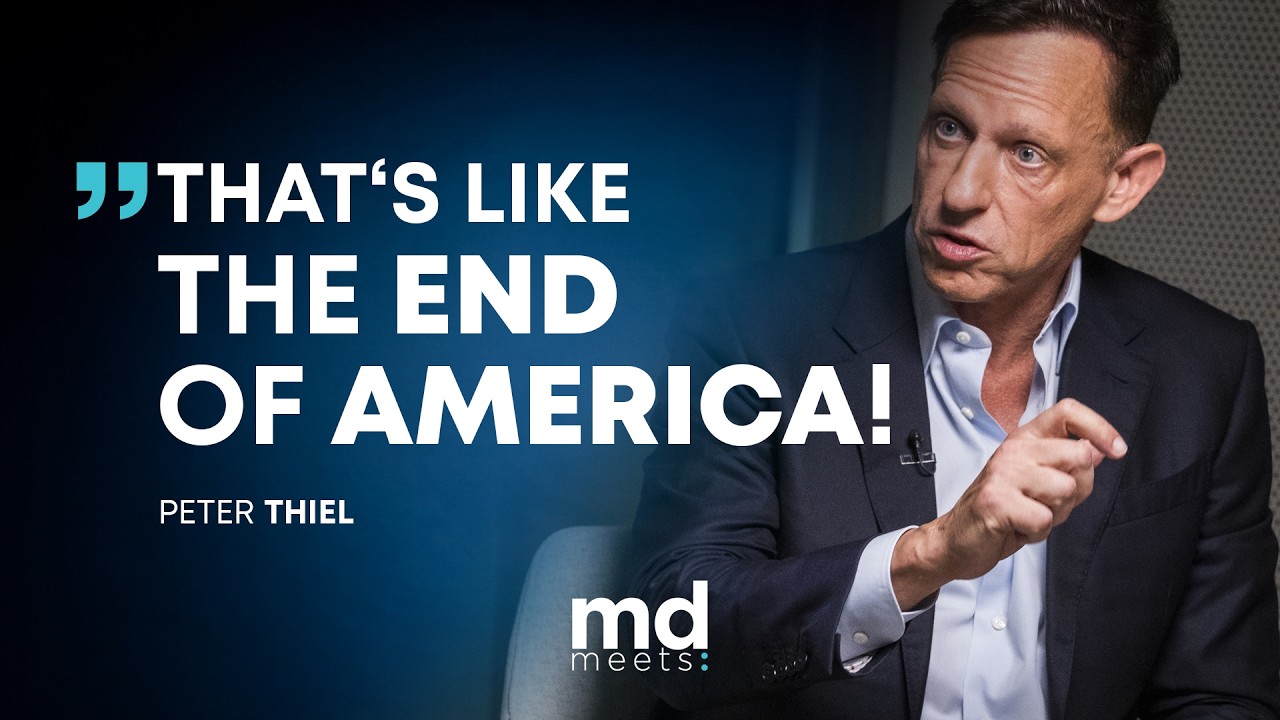
And uh that is like I don't know the end of America. I remember very well a lunch that we had in 2016 when I asked you why do you support Trump and you basically said because the existing party and the existing leadership is so dysfunctional just needs disruption and that was an interesting thing that I could understand very well. Would you say now 10 years later we need disruption again? Uh um I I well I I I I don't want disruption of the democratic socialist pariety.
That uh that seems that seems catastrophic. Um but um but I worry but again if I do it not morally not normatively just on a descriptive level. Um I worry that the estab establishment Democratic party has has failed as badly as the establishment Republicans. And so uh we are going to get this disruption and there is there's a risk that the US will shift very far to the left. That's that's that's the real disruption we're going to get.
So you belong to those who say >> I don't think it's good that the democratic socialists of America are a real option. They are a real danger. You once said it's the most kind of energetic and in a way the most successful political movement uh these days. >> And so it's it's it's you it's young, you know. It's >> it's like pop culture. The history on it was it was um I looked this up the other day, but it it was it was the democratic socialists got created in 1982 as a sort of um fusion of these very fringe socialist uh groups and sort of members paid thing was like 5,000 people was very small fringe thing.
Um and in the 2016 campaign, a legacy of the Bernie Sanders candidacy is the membership of the Democratic Socialists of the sort of cadre of the vanguard ballooned from 5,000 to 50,000. the median age went from 66 to 33. And so it was this it was this old uh socialist people thing to young uh revolutionary thing. And uh and yes, it has it has a certain amount of energy. It has it has a certain amount of charisma. You know, the uh again the the establishment Democrats, they're all lame.
They can't say anything. I mean, it's the same problem with the SPD CDU people in in Germany. You were u an early supporter of JD Vans. You worked with him. You basically saw something in him that other people didn't see then. Can you describe what it was and why you supported him? >> I I always I'm I'm always hesitant to overrate, you know, overrate my my role in these things. I um I probably always have a very soft spot for smart people.
So I thought he was thoughtful, open-minded, um charismatic and uh you know he was he was working for uh one of the venture funds I had helped start called Myithil and then wanted to write this book on the side and I I encouraged him to do that. It became this bestseller in 2016. uh and I helped him out financially when he ran for Senate in 20 2022. Uh but I think uh I I'm always hesitant to answer this question because I think it just detracts from his from his achievement in in many ways.
Now um the Republicans will make a decision sooner or later. The names about uh the potential candidates that I heard most often are JD Vance and Marco Rubio. Um, who do you think would be the better candidate in order to increase the likelihood that the Republicans would win the next election? Um, well, I I am I am still I'm still a vanced partisan. Uh, I I worry that it will be very hard for either candidate to win.
And so, um, I don't know. My my pessimistic thought is that that's the wrong question. So the right position would be is >> who's going to be the Democratic Democrats? No. Who's going to be the Democratic candidate? That's that's the right question. >> And would it be a center uh left centrist candidate of the Democrats who would provide them with a better chances or would it be uh a DSA candidate? Um well, the obviously in a close election, a center-left candidate is probably better.
Um if it's not a close election, it probably doesn't matter. And um and I think there's a decent chance that um it will not even be close. If the Republicans get wiped out in the midterms this fall, then uh the Democrats will think that they will win no matter what in 2028. And therefore, um there probably will not be, you know, as as strong a firewall against a dem you won't pull out all the stops to prevent a Democratic socialist from winning.
So, I I think the Democrats will do well enough in the midterms in uh in, you know, a month and a half that um they will be indifferent to a center-left versus far-left presidential candidate. And then it's a completely open field, completely open question. And uh yeah, I had uh you know, I had this I had this discussion debate with Fukuyama, you know, the end of history. And he, you know, he doesn't fully believe his theories anymore.
But uh but uh when when I told him that, you know, there was a good chance, you know, democratic socialist would win in 2028. He responded with absolute confidence. No way. Can never happen. And I I don't think history stuff like that. >> So you think from a today's perspective that's the most likely outcome? Not not the most likely, but let's say it's a 50% chance. >> That's pretty high. That's pretty high. >> You are uh a fan of MLE because he's a disruptor, I assume.
Can you describe a little bit what we what western societies, what America, but also what Europe could and should learn from Java? Well, I think we're I think we're all fascinated by Argentina because uh we worry that um their past is our future where you had sort of this I don't know it's not zero growth or decline but subpar growth for for a century. It's a complicated history of what went wrong was you know obviously the peronist history with this very charismatic leader who had a lot of bad ideas.
There were there were ways um you know uh and then and then there were ways that uh uh it it it took a long time you know in 1900 1920 riches in Argentine was still a common expression that's that's sort of gone out of out of usage. So the and then yeah it's an it's an open question whether Malay will will succeed in turning Argentina around you know um whether he will get reelected a year from now. uh I still think he will because people sort of understand that this is you know it's it's it's so existential and you you just can't go back.
The the problem for all of us is is there any way we can learn from the history of Argentina? So it won't won't take us you know 100 years of decline to get there. you know, the I don't you know, I I don't like I don't like the accelerationist Leninist idea, you know, which is uh Vladimir Lenon, the worse things get, the better they get because the closer you get to revolution. Uh and and then at the same time, you know, the sense I always have in the US and Europe is people are upset, pessimistic, angry.
It's it's never enough to lead to positive change. And instead we just have this drift where you know you worry things have to get a lot worse before they turn around. But if you had to make a bet today, do you think we are close to a turning point? Because what we are seeing now in America, in Europe, in the west, the stumbling centrist governments, the British successful autocrats uh that this is a healthy warning call and we will uh recover, we will reinvent ourselves or do you think that's basically the beginning of the end and the beginning of a new world order where the autocratic systems are going to break? >> You know, I I I think we should always try to think of these things much more concretely, less abstractly.
So, let me just flip it around as a question to you. >> You know, will people get rid of Mertz in Germany? It's like a complete total failure anyway you cut it and then I don't know there's there's a decent argument. Nothing will happen to him for another three years because, you know, everybody else thinks they won't do any better. And so, uh, so yes, there's there's >> So, that's an indirect answer that you think it's more likely that we're going to deteriorate further.
I'm not I'm not sure, but it's it's it's sort of an open question. It's like it's it's amazing how, you know, how robust the Merch thing seems to be relative to how bad it seems to be. So, um so I don't know. Yeah, I that's that's probably my my intuition is that uh uh things will will keep drifting for for a long way because the you know the the people who replace him don't really have you know they don't really have answers to these problems. you frame the macroeconomic problem.
This is again sort of a boring macroeconomic version is we have um we have very large welfare states. The taxes feel pretty high to me. Um and and then we have very big deficits and maybe the deficits would be sustainable if you had 0% interest rates. The interest rates are no longer zero. And so there's sort of a compounding runaway deficit problem. And um and you have basically three choices. Do you massively cut spending?
Just the Malay answer. Do you, um, do you massively hike taxes, uh, which is basically completely shut down our societies and all growth, or do you keep going with the deficits and take the can down the road? And, uh, for close to 20 years, the answer's been number three. Ever since the 2008 crisis, we've just been borrowing more and more money. And then my my intuition is we're yeah close to a point where that ends and then you're going to be pushed to a very non-entrist uh solution of either socialist levels of taxation or um or uh some really tough really tough austerity measures and uh you know the the best idea Mertz has is just borrow more. >> Why do you care so much about politics?
I well I I don't I don't know if I I don't I think about it probably too much. I uh it's I mean I'm not I'm not a politician. It's but it >> into never never I'm not 100% >> exclusive. I look, I'm not sure I'm perfectly self-aware or anything like this, but I am self-aware enough to know that I I'm not electable. And uh and um but but it permeates our society. It um it is sort of like I don't know, it's it's both toxic, but it's the air we breathe.
And so uh so I don't know, I have a schizophrenic view on it. I think about it a lot, and then I try to compartmentalize and ignore it as much as possible. What's your take on the kind of bigger geopolitical uh picture? Where should Europe be? Uh there's a discussion about European sovereignity politically, but particularly also with regard to AI and the economy. The two big players are America and China. uh basically in all areas not only with regard to AI.
One is a very autocratic authoritarian country. The other one is a democratic country. The authoritarian crunchy is pretty perfect. The democratic country is pretty imperfect. So 10 years down the road, who is going to win that race? not only the arms race in AI but in the broader context also the the the race of of systems um and where should Europe be neutral on China side as a colony or a reliable ally of America? >> Um I think it would be best for Europe to be a reliable ally.
Uh I I always want to push back very hard on these sort of uh ways that this often gets framed as a sort of moral equivalence between the US and China. But those I I always find that uh um very very offensive. Um but let me let me make the um make a slightly different point. I you know I think from an from an American perspective um more important than whether Europe is a super close ally or I don't know a somewhat allied but very independent thinking place is um it's um it's in America's interest for Europe to get its act together and for Europe to be you know to be um to be more functional um to get it economy going to be to be a part of of building the future.
Uh as it um um and uh and then the the question is how how to do that. Um there are probably in in various sectors if um if if Europe can build up its own industry uh or it can even um you know um become worldleading industry in some things uh that would be very good. If it's if it's further behind then um then probably there should be you should find ways to to work with America much more closely. So let me let me concretize with uh you know I don't know there was this um in the late60s you had the Concord program which was sort of a British French you know not exactly free market plan.
Um, you know, supersonic aviation started in the US with Chuck Joerger breaking the sound barrier in 1947, but uh, Europe was behind, but you could get your act together and you could catch up and overtake the US and, uh, and, you know, the supersonic aviation industry, you know, be was a European leading industry. Um, and so that's not a free market thing, but that's something that uh that I think the US um should be fine with, supportive of that.
I was uh you're uh doing something and then the um and then on the other hand you had something like uh the French Minuteel program of the 1990s where the internet was supposed to be French and uh it ended up you were behind and you just you know dug yourself into a deeper and deeper ditch and so uh so if you ask the question about AI in uh 2026 is it is it like the Concord or is it like Minel And um and then this is and if if we were honest, my my assessment is that it's it's further Europe's further behind than Minel was.
Unfortunately, I I agree. The question is why is that? And how likely is it that we can change it? What is your analysis? Why is it? And do you have any ideas what Europe, what Germany should do in order to get back to the map and get its act together? >> You know, the why the why questions are always overdetermined and much harder to answer. Um but let me let me on a on a very you know one of the one of the things in Germany that people always talk about in this entrepreneurship context is >> that um there's a fear of failure that um people are risk averse and things like that >> and then uh the and maybe that's true but the dimension I want to always push back on is perhaps there's also a fear of success that um if you have something that works you're not going to you know you're not going to scale it to this um extreme degree like an Elon Musk or Mark Zuckerberg and u you know at some point you'll sell the company or you'll exit or or or or some something like that and uh and so what's what's very you know striking is that uh is how few you know great new companies have been have been built um you know in in Germany um in the last in the last number of decades.
Here's here's a stat that I I I looked up and this is again it's one one particular dimension to look at but if you look at the 50 wealthiest people in the US and most and most money comes from you know particular companies um only 12 are gen x or younger people born 1965 or later so it's you know it's also pretty much dominated by old people who have had more time to compound their wealth Germany it's actually more distributed it's um they're 20 of the 50 people are Gen X or younger of the of the 50 were wealthiest people in Germany.
But here's the difference. In the US, nine out of 12 of those people made their own money. In Germany, all 20 of those 20 inherited it. Not a single person did something new, made made some new money, built built a large new scalable company. And then of course this what I'm just looking at this very extreme but you know for each of those people they created thousands of I don't know millionaires in their companies tens of thousands of other jobs they added to the economy in in lots of different ways and there's sort of there used to be you know there used to be this ability in Germany to build great new business there's a middle there were also you know much larger companies that got built in the late 19th early 20th even after 1945 period and then uh it's it's really something about that has really broken down since since 1995 and the yeah that sort of I don't have an answer to that but that that would be the kind of question I would I would I would try to think about really hard tonight you're going to receive the Axel award and when I informed you about that you said something very remarkable uh you said thank you I always tried over the last decade It's to get Germany out of my mind.
Intellectually, I did quite well, but I didn't get it out of my heart. Why not? What's still so German about you being born in Frankfurt, Armand in 1967, living now for almost all your life in America. Why is there still this emotional affiliation to Germany? Man, I I it would be strange if there weren't. I think I would be much more strange if there weren't. >> But you left Germany when you were one year old, so you don't have any memories.
You don't have >> My grand my grandparents were here. You know, I was there was sort of uh in some ways I grew up I went to Yeah. I went to English-speaking schools in America, but uh spoke German at home. So I really I grew up between fish and swan and uh and so yes there's there's there's a there's there's a um yeah there's there's a part where it's sort of understandable all these reasons things have have gone gone somewhat wrong but it's it's also very important for us to find a way to turn Germany around.
It's it's at the heart of Europe in some ways. Europe is still, you know, at the core of of of Western civilization. So there's a crisis of >> So sorry, but that is of the West. There's a crisis in Europe and and Germany. >> Yeah. But you're shifting back to intellectual analysis. We were talking about feelings. So what do you love about Germany? What what is it? I mean, the past of Germany is difficult. We spoke about the present and the future.
That's also quite difficult. So what do you love about Germany? >> It's just it's just part I I'm always bad at answering this question. It's just part part of my part of who I am. Okay. Tonight we will have two of your co-founders uh Alex Karp uh from Palunteer and Max Lechin with whom you founded PayPal. Um so Alex Karp also has this very very strong affiliation to Germany. Um with Max it's a different history. He's from Ukraine, but in any case, there's a European element in it.
Do you think that these two guys played such an important role for you in your uh business life, but also in your personal development as friends because there is this common European denominator or doesn't that play a role? It's probably a part of it. It's it's uh I don't want to overdo it. Uh I I you know I think there was sort of there there a way they're a way that um a lot of the founders of these tech companies I think of as both insiders and outsiders.
And so uh you know um Alex and I both were insiders who went to the elite Stamford Law School and then uh you know you know I was in some ways an outsider to America. Alex was um Jewish where you always have a little bit of that as as part of the background and uh and it was somehow sorry you I didn't get it he is Jewish and but it has nothing to do with your >> background but it's it's a little bit of the outsider there's an outsider part >> okay I see >> and an insider I always I always say that these found the founders have have both the outsider insider dynamic and there was you know there was a way um you know Max was this super achieving straight A student this uh incredibly um incredibly uh charismatic person but then also you know grew up on the you know um he left the Ukraine when he was 16 years old and they grew up in a poor part of Chicago and then it was you know so it was was you know just an incredible drive >> being an outsider can really be an advantage in in I think in your case.
Well, I think it's it's it's it's it's always I wouldn't say it's both though. It's it's this outsider insider combination. >> Yeah. >> People always exaggerate that they exaggerate the outsider piece because >> that's always you know in a way you're sort of playing the victim and stuff like that and there's also some part where you know I grew up in Silicon Valley very few people did that. >> Okay let's assume in this perfect mix of being an insider and an outsider you have developed an overproportional degree of contrarianism.
You love to contradict. I think for me the word no is the foundation of freedom and democracy. So I also love to say no. But I think in your case it's almost kind of an automatic uh impulse. Yeah. If there as soon as there is a consensus or people get close to a consensus, you say the opposite. >> All right. So just say no. No. I I I think that uh uh I I don't think the point is to be contrarian for its own sake. I I think uh because then you just look at the consensus and put a minus sign in front of it.
That that's not that interesting. Uh you know, I think >> I think the real goal is always to try to think for oneself. >> Mhm. >> And that's you know that's what I that's what that's what I try to do. I I I don't I I don't think of it as just this, you know, reflexively negative thing. How have you been able to develop that intrinsic strength to listen to your own compass and not being influenced so much by zeitgeist by consensus by the millure?
Do you have any explanation why you've been able to develop that superpower? you know, uh I'm always again I'm always bad at the self psychoanalysis, but I I you know, I I I'm probably like interested in a lot of different things. And so it's like big picture history and politics and economics and science fiction and the future and psychology, sort of all these different things. And uh and uh it's always um I don't know this is this is sort of not a in late modernity we're supposed to be narrow specialists.
It's the Adam It's the pin factory in Adam Smith where you have 100 people working in a pin factory and everyone's specialized in one narrow area and somehow very efficient for people to be super specialized but um you you lose sight of the the big picture and uh I've always uh I've always wondered how does everything fit together you know how how do how do we make sense of all these things um and I maybe it's just sort of a I don't know a renaissance dilotant type thing that I'm rationalizing, but uh I I tell myself there has to be room for at least one generalist in a world where everyone's hyper specialized and that in that Renaissance spirit of having many interests and many fields uh of activity, where are the areas of passion and interest that have no professional, no pragmatic, no business rationale that are purely kind of private personal uh irrational. >> Don't tell me that you don't have it at all. >> I don't I you know I I I probably still play way too much chess on the internet all the time.
M >> and this was you know this was uh you know uh was a scholastic chess player and uh it's this I don't know it's this very beautiful somewhat dangerously addictive >> um somewhat dangerously addictive game um it's probably not equivalent to all of reality which is what I at various points of delusion in my teenage years like to say that everything in the world >> um you know if you didn't play chess, you didn't understand reality.
It's probably too too extreme a thing to say. >> But uh but um I know I I don't know. There are there are all sorts of all sorts of questions that don't don't connect directly. You know, I think I think I think a lot of these political questions um you know uh they're important. Um they frustratingly feel largely outside of our power. And so you know I think they're important. I think they do somehow relate to business. >> Um, in many ways, um, it it might be healthier.
It might be more, uh, profitable not to think about them and and to just focus on on on a particular business. You have now four pretty young kids. To which degree did they change your life or is there anything that you already learned from them by watching them? It's um it's always um it's always thinking about um man it really changes your time horizons on on the future, you know, and it is um if we're in this, you know, if we're in this accelerating technological world or in this crazy world where we don't know how the world's going to make it till 2030 or 2035 you know, if you're sort of if you're in this, you know, world of only adults, um you can sort of pretend that you're just thinking about it year to year.
But I don't know, my my my um my oldest daughter will be 81 years old in 2100. And so, yeah, you you start to wonder what you know, what will the 22nd century be like? Talking about time horizons, I mean one of the areas that you're particularly interested in and also investing in is health longevity. Why is that apart from a good investment case? I mean uh I'm also having a high degree of interest because I'm hypocchondriac.
I don't know what's your motivation is uh is it only the business rationale or is there also a kind of personal motivation of something that we all have more or less a fear of death uh yeah fear of death fear of getting old all all these all these things um you know I but you know I I I always push back on it's it's it's odd to me that this is not more widely shared and that this isn't you know uh can't be articulated more widely and this was the you know I don't know the optimism of early modernity 17th 18th century was that you know science would relieve man's estate hob said you know in the state of nature life was nasty brutish and short and it would we were supposed to make it longer and maybe you know maybe indefinitely longer and uh I don't know um people like Condor Borsay or um Francis Bacon, Benjamin Franklin, they thought they thought you could cure death.
You can cure all diseases. And uh and it's it's it's just this shocking u social decline that we we we've we've given up on that. Um you know, people don't even think we can cure Alzheimer's. Why why can't we why can't we at least try to do that? >> For me, the discussion about progress has always two sides. Almost every progress in technology or wherever has a flip side and a downside. In the case of health, I just don't see it.
I think it is for me the only area where progress is only positive. For centuries, scientific progress, progress in medicine has improved not only the lifespan but the quality of our life, enjoyment of our life, everything. So in that spirit, could you share with me the most optimistic, the most visionary case about longevity? What can be achieved? Eternal life >> um 150 years. Um it's it's not it's not clear why it shouldn't be you know it's not clear there are any natural limits.
We still have not you know there are there all sorts of reasons people have become more pessimistic because you know it's it's it certain things have been very hard to cure. Nixon declared war on cancer in 71 said it would be cured in 5 years. It's now 55 years later and there's been some progress but it's you know it's it's very far from very far from >> is accelerating it no big time >> and then you know but then there's always a question um you know are um I don't know you know it's it's badly simplifying things but um if if you think of biological processes is sort of irreversible and um information computational processes as fundamentally reversible.
You know, if you could understand biology as an information science, um then um then in theory you could find a way to um traverse all these you know all these processes and uh um and that's and then that's you know like you know computers can live forever. But is it then more in this physical sense that we really reverse the process of aging of our body and with that achieve um a longer lifespan or even eternal life or is it rather in the sense that we at a certain point are able to download our brain and our consciousness?
Well, I I again I'm live in a different I have a very physical uh maybe Christian informed view where uh um I wouldn't find it acceptable to be uploaded in a computer program that simulated me. I I don't think it would be me. >> So I I tend to think our identity is very uh very wrapped up in our um in our in our physical selves. Um and then but yeah, no I think the I know the full Christian vision of this was of course that you were going to have an eternal body and um and it would also you know it would also be your soul be transformed. um you know it was uh one of my one of my um uh one of my friends is this 80-year-old mathematician and uh uh he once joked to me you know he didn't know whether there was an afterlife but he hoped that there wouldn't be because he didn't want to run to his ex-wife and um and so uh so I do think that uh you know in some ways yeah eternal eternal life is very desirable and then um Christianity always aimed for even more but the the The problem with transhumanism and Christianity is um you know it's it's not that transhumanism is too weird and too extreme from a from a real Christian point of view.
It's that it didn't go far enough. But let's assume that we would achieve eternal life. Is it really desirable or would we be extremely bored? Because everything is unlimited. Why being ambitious? >> Um I I think the answer to all those things is better than the alternative. >> Okay. Um so I I don't think I would be bored. >> Good. Yeah. Yeah. I agree. So what is then the concrete thing the concrete innovation invention or investment that you have seen over the kind of last month or or years with regard to longevity that makes you most optimistic?
Can you share the craziest thing with us? >> Yeah, I I I I I keep um I keep investing in in these biotech areas. It is it is surprisingly difficult. It's there are all sorts of reasons there there are challenges but uh but if I um if I if I wanted to focus on a single one it it would be really trying to do something about um about dementia about um you know finding a way to slow or um reverse um declines in people's brains and that would be you know that's that's the one that uh that um I'd want to find a way to tackle in the years ahead.
Peter, to conclude, I would love to ask you a question that you are asking almost uh every candidate you're talking to before you hire her or him or people that you find uh interesting. Tell me a truth that you believe in that almost nobody else agrees with. I'm giving you a lot today already. Let's see. Just give me one second. >> Take your time. In any case, it's nice that to see that it is also a tough question for you.
There's there's always a meta level version of this where there are all sorts of things that you think um uh are very that nobody believes in um and then you realize actually a lot of people almost do and so maybe it's contrarian and we can sort of debate which which which is the contrarian one. So um when I started giving these speeches about the antichrist um 3 years ago, I thought this was an extremely unconventional view that was very far outside the zone.
And so I would have said that that that's an answer. And uh now I would say um and but then yeah, most people would say, "Yeah, that's a really crazy thing to talk about." Um, I would now say that it's actually um it's not contrarian that most people think something like the Antichrist is right around the corner, that we have incipient totalitarianism throughout the world. And uh and so it was less contrarian than I thought.
But then the the metal level truth is um I think um everybody thinks everybody says that the antichrist is a crazy idea and the reality is they actually secretly agree with me. Peter, thank you very much for the conversation. >> Thank you.
The words are the caption track's own and nothing is reworded or re-transcribed. Paragraph breaks are placed between sentences so the text reads as prose.
Free tools for your own script. No signup, no login.
Paste your draft and see where viewers are likely to drop off, with a rewrite for each weak line.
Paste the first 30 seconds of your own draft for a hook score and rewrites.
Check your draft against YouTube's advertiser-friendly guidelines before you record it.
Read this channel's public videos and transcripts, and download a writing brief for it.