Getting the transcript
Reading the captions from YouTube. A video nobody has opened here before takes 10 to 30 seconds; this page fills in on its own.
Getting the transcript
Reading the captions from YouTube. A video nobody has opened here before takes 10 to 30 seconds; this page fills in on its own.
Content and Conversation · @SiegeMedia
Words
11,809
Runtime
59:31
Speaking pace
198wpm
Reading time
49min
198 words per minute, between the 181 median and the 201 75th percentile of 349 measured videos. That distribution comes from the 349-video hook study.
Opening (first 30 seconds)
Josh, you are our AI search wizard. You came on once. We talked about AEO GEO. >> It went very well. So, I figured let's juice it up with the in-person version of this. So, welcome back. >> Thanks for having me, man. Absolutely. What a pleasure. So you put out some recent research that I thought was a good place to start. There's been some studies flowing out the interwebs from various people seen it from Kevin Indeg uh who were we were speaking glowingly of right before this other people as well. How often should people be
99 words, the words spoken in the first 30 seconds at 198 words per minute.
Free, no signup. See how the first 30 seconds hold attention, with rewrites.
Sentence shape
| Measure | This transcript |
|---|---|
| Sentences | 812 |
| Average words per sentence | 14.5 |
| Longest sentence | 124 words |
| Questions asked | 64 |
| Sentences containing a number | 76 |
Most used terms
Filler phrases
576 in total: like 210 · you know 99 · um 77 · uh 50 · I mean 39 · actually 34 · kind of 28 · right? 19 · basically 12 · literally 6 · sort of 2.
A literal whole-word count of the same phrase list the Prepublish browser extension uses, so a phrase inside another word is not counted and a phrase used in its ordinary sense still is. It is a count and not a judgement.
Run the check on the words above: where attention is likely to drop, with a rewrite for each weak line. The free check shows the scores and the one issue costing the most.
What this transcript is
Every word below is the caption track YouTube publishes for this video, pulled from the video itself and reproduced unchanged. It is not Prepublish's writing, not a summary, and not a re-transcription: it is the video's own published captions. English captions, generated automatically by YouTube, in the video’s original language. Source: the video on YouTube. A channel that would rather this page did not exist can ask for its removal through the contact page, and it is removed.
No Script X-ray for this video: YouTube shows a Most replayed graph only once a video has enough views.
Josh, you are our AI search wizard. You came on once. We talked about AEO GEO. >> It went very well. So, I figured let's juice it up with the in-person version of this. So, welcome back. >> Thanks for having me, man. Absolutely. What a pleasure. So you put out some recent research that I thought was a good place to start. There's been some studies flowing out the interwebs from various people seen it from Kevin Indeg uh who were we were speaking glowingly of right before this other people as well.
How often should people be tracking these things for accuracy? What's your what's your take on that? I >> I'll put it simply and say that if you're trying to track a wide breadth of prompts, the the relative value of repetition is much lower. So if you're going wide, you don't need as much repetition. If you're trying to track a small number of prompts, repetition will help you. So it really depends on the prompt portfolio.
We did some research. We found that the difference between prompting once a day and like 10x a day was only 0.25% difference in visibility. It's a tiny that's not an actionable gap. >> And we did a second test and found that the bigger change that will actually change your visibility score dayto day or moment to moment is the prompt portfolio you're tracking. Right? If I change my prompts, my visibility score is going to change way more if I expand the prompt set or you know decrease it, right? >> That's like think about it as like as that, right?
So intellectually honestly like profound can run repetition and we do for some customers but there's tons of people out there that are paying for more repetition and more executions than they need if they have say 500 a,000 1500 unique prompts that they're tracking. Because at the end of the day, pragmatically, marketers are trying to understand a wide subset of the market. You can do that in multiple ways. Um, it's a methodology question really. >> Yeah.
No, that's great. Uh, and I appreciate the I assume you guys can charge on a model of the more you run it, the more expensive it is for, but [laughter] we try to give we're trying to go higher signal with least number of executions so that you can do more with those with those executions that you do have. You can only say you can only run a 100 executions a month. I'd much rather you you get a wider sample of your your market than having, you know, 10 little samples 10 times over. >> Right. >> It's important.
I mean, people people will do different things, though. Everyone has a right to their own opinion. >> Yeah. Makes sense. I think of um in classical SEO, there'd be people with maybe just have one head term that's just like the bulk of their their world. >> Yeah. >> That would be for that person. It sounds like run that. I guess what is what do you think the right frequency for that person with let's let's call it classical SEO had one page with 90% of the search volume. >> Wow. >> What was your gut? >> I mean my my gut there is that you should run it between five to 10 times.
If you're literally tracking yeah a day. If you're tracking literally one head term one prompt let's do it multiple times if it truly is like that for your business. But what I would say is if you're, you know, Nike and you're doing shoes, maybe there's actually many query fan outs or many prompts that you want to track. And in that case, let's be intellectually honest about the different ways our audiences are actually searching.
And if it's bigger than just what's the best shoe company, then you know, you're probably actually looking at more prompts. Even though you might think in traditional SEO, oh, that's actually [clears throat] one head term doesn't exist. That might that might actually exactly that world doesn't exist. That might actually be 200 prompts depending on how granular you want to look at it. like you should go with the prompt volume first.
So you know you see 90% of the search volume around this particular page or you're seeing 90% of your referral traffic from chat dbt on this one page. It's not enough anymore to say oh what's the keyword for that page and then that's our AI search keyword. >> Not to be this is not a plug by the way but like with our prompt volume tool we can see in the wider world we have 1.5 billion prompt volumes. We have 1.5 billion conversations.
We get the user's submission, but then we also get the model's response and with the response we see global citations. So we can see we if you put a URL into profound, we could be like your URL was cited. We can back into what prompts a URL is actually being cited for. So if you're like, "Hey Josh, nike.com/sho-men uh is our number one page by far." I could be like, "Listen, okay, there's actually like 20 main clusters that this is getting cited for.
Here are the topical clusters. Here's the distribution. If you say, "Hey, um, it is actually adidas.com/sho-women that's cited." I could be like, "Oh, you know, this is very different than anything I've ever seen. This is actually there's only two or three prompts that are really uniquely showing up. Two or three fan." So, depending on what that actually is would dictate, I think, what I would recommend for you to track, but it's cool, but it does depend. >> How about on the other side of the spectrum?
It's like a classical e-commerce portf portfolio probably. Maybe they have 200 SKs. >> Yeah. >> Uh that are major of significance. What's their recommended frequency range >> for ecommerce without being too generalistic because there's just so many shapes in that space. It depends on how often you're showing up in those shopping results. Overall, like it depends whether or not you're tracking ChattPT shopping. It depends if you're working with Etsy, Shopify, uh any of the search providers there, or if you're doing it on the web yourself.
As far as frequency goes, my perception is that the actual shopping results are more consistent than the citation results from ChatGpt's web browser or Claude's web browser for instance that when it's pulling from that API, there's something deterministic going on about how the fanouts work. And I think the APIs, the shopping APIs themselves are actually relatively limited. So the catalog of results is much smaller relative to the entire internet.
Um, my fundamental belief is that even for someone who wants to be relatively repetitive, more than five to 10, you really start to see decreased returns on investment. And I think for 90% of marketers in the world, you probably don't even need more than one or two. Two being like a pretty nice extra bonus there. I mean, you're you're doubling the number of executions from 1 to two. It's people think 1 to2 is a very small step change, but it's actually a huge change to how much analytical weight um you know you're demanding out of your provider and how much you're going to have to pay. >> Well, it's interesting.
I I curious if we go the opposite direction. You have a very measured take on this. We have some of your competitors have a an option that's basically it's either daily or weekly. >> Yeah. >> And are you would your take be weekly? Is never significant enough? No, everything's significant enough with time. >> Yeah. >> But you have got to I mean look at like SEMrush for instance. I mean they don't update their keyword ranking stuff every single day for every single keyword. >> You'll see things that update you know oh 8 days ago, 5 days ago, 14 days ago.
You can refresh them by hand of course but paying you know by credit but >> I don't know every I don't think that every SEO does that. I think a lot of people you know go with the flow and you know they're not sitting in Samrush refreshing keywords. [laughter] Um hey shout out if you are um s Um the the key is time. You'll get signal weekly. It'll just, you know, we found that to reach stats sig on daily, you've got to run your prompts for about 2 weeks. 99.99999% of marketers in AEO and go are doing it for more than two weeks at a time.
They have they have bought our software and they are tracking for more than two weeks. And if you're not doing that, just wait 2 weeks. But for for weekly, it's a little bit longer. I don't have the date. Otherwise, I would tell you the date, but I imagine it's on the scale of like months. It gets it gets more difficult. >> But it makes sense on the same same wavelength. Maybe there's some if you're looking at a portfolio view, you have a thousand SKUs e-commerce um maybe that would that would that would come down based on what you're saying.
It's basically just a >> a corpuswide analysis really. >> Yeah, of course. I think the bigger problem in the space though is still just attribution. I think the frequency debate is it's a cool debate to have, but it's hard to attribute even with frequency, even without like I almost think frequency right now is a bit of a distraction to the industry. On that, you shared something really interesting at breakfast today when I asked you about attribution.
We've talked about it at lengths uh [laughter] on this podcast. So, uh we you don't need to tell us to do um uh how did you hear about us as a drop down form, but you gave a new way that people are starting to attribute what what is that? >> Well, human and agent attention are actually analoges. Agent attention is an analog for human attention. What we're seeing for some of the more um you know radically adopted people who have really jumped into the framework of AEO and GEO um we are seeing them discount agent citations at a certain rate and kind of attribute that into clicks.
So let's just say you know one in basically you take all of the citations you've got from uh Agentic user agents. So you monitor your network logs. You see chat GBT's user agent site you let's say 20 times. You apply, okay, we're going to discount it by 95%. We're only going to keep the 5% of citations. We're going to call that one click. 20 citations is a click or 100 citations is a click because aentic attention itself is really going to um >> be downstream of it. >> It's going to be downstream of humans demanding content, right? >> Yeah. >> You know, humans are going to say something, agents are going to be downstream from that. agents are going to go downstream to the website further than that and then you're going to find out that an agent viewed your site on behalf of a human at some level there's human interest for you but it's through an intermediary and you can apply that kind of conservative reduction in the in the overall value of that let's say hey I don't I don't think a one citation is necessarily worthick >> you know a click let's be conservative right let's discount it by 95% and assume that you know 5% of people that see that citation are going to be influenced they're going to be top of mind Because with the citation share, we're not talking about clicks anymore, right?
We're talking about your appearance in the answer. We're talking about someone deciding to go to Google and, you know, search your name. We're just talking about mind share at that point. You know, if you're cited 20 times, one of those people will see you in the response. One of those people is going to think about your brand. One of those people will eventually downstream decide, hm, okay, I am going to go check out Nike.
Okay, I am going to check out Skims. >> Yeah. So, just for clarity, I'm realizing I'm thinking through this myself. It's not that you're a source URL necessarily, but that your brand was explicitly cited. >> Exactly. >> Okay. Makes sense. >> Your brand was explicitly cited by the answer in that case. >> Okay. >> But you but it is the it is the case of being a source URL. >> Yeah. Right. >> So if the answer engine visits your page, you'll see it in the network logs. >> Yeah. >> You know that you are likely to be cited in that answer.
It's visited the page. It's grabbed the content. you know the chance that you're uh visible there is quite high in the answer in the text and that's why we apply the discounting as aggressively as we do 95% discounted >> again these are these are the ways that we can start to understand the value of an agent's time and attention on your brand the value of an agent scraping your pages >> so you're determining this via server logs or what's the >> network logs >> network logs okay >> and your visibility data so understanding like for every time you're cited how often do you appear in the answer. >> Okay.
Okay. Makes sense. >> That's a secondary thing you can add on top. Like people are getting quite advanced with this too, >> right? Yeah. One of the things the logic that was going in my head was there's a there's a type of site that gets is a source URL but is not a citation often like a Yelp probably >> a source URL but not a citation. >> Maybe I'm saying that backwards but essentially a affiliate type site is influencing >> without being mentioned. >> Yes. >> Yeah.
So if that >> if that company did the click model, they're probably not getting clicked very often >> either way. >> Either way. Yeah. >> So then you have to assume basically depending on what your discount and depending on what you believe about how often you're getting clicks, you've got to factor in your referral traffic. >> So if your referral traffic is you zero from chatbt that changes how much influence you think you have or you know what that rate should be obviously for affiliates I think it should be lower than 5%.
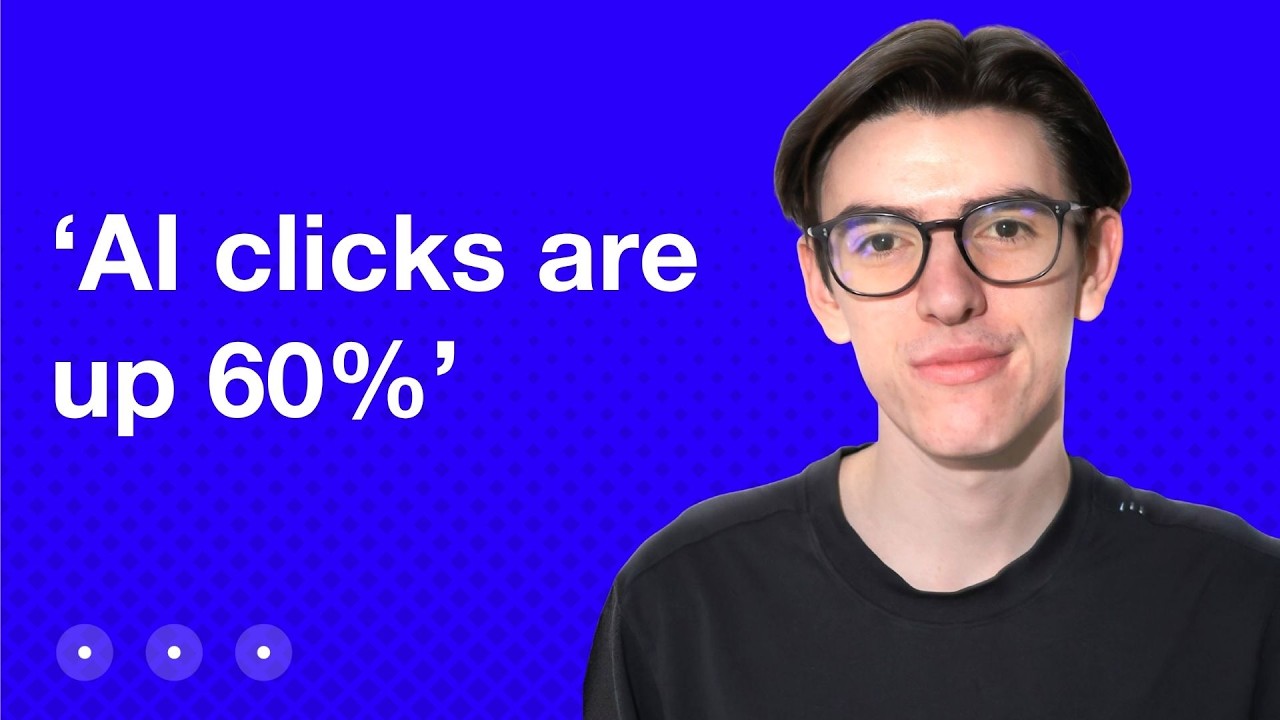
For people who are on branded content or expect their brand to be in the answer, expect people to follow up with them as a result of the search. I would expect it to be higher. But we are seeing referral traffic from chatbt up 60% since miday. It's crazy because chatbt wants to build a click model. They want to understand where people are clicking. So now they've made it easier to click and now people have started to click.
If you're I mean everybody who owns a site right now should go check. I mean it's actually very interesting to see Chad DP's referral traffic. It's almost universal of the companies that I've talked to this far. One of my favorite things to do in meetings right now is to say, "Have you since May seen an increase in your attach traffic?" Without fail, I go to Fortune 500s. I was just at a Fortune 500 um yesterday before this.
I I mentioned it to them. They said, "Yeah, we actually saw more than 60%. We saw an 80% increase." I was like, "Wow." >> Why? Because they're doing CPG. >> Um you know, customers want to immediately click B2B. I think it's a little bit harder. or if you're, you know, a distributor or if you're in, you know, industries where you're not a consumer packaged good or you're not a consumerf facing brand, I think you'll see a little less of the tailwind, but for CPG, it seems very strong. >> Yeah.
Well, yeah. I mean, we we saw that as well and saw that across our content. We were talking about the AEO sensor from HubSpot, which is great. You could look at for kind of some industry trends. >> Yes. >> On on on that side. Uh yeah, it's interesting where I'm sure there's some agencies out there who would like look at that and be like, "We're doing a great job. Look, we jumped 60%." [laughter] Of course, you need industry relevancy on this side.
One thing we talked about today that hopefully by the time we publish this will not be outdated, >> there's some contentiousness potentially or it's a negotiation stance by Reddit. >> Yes. with with with Google in particular that obviously has big implications on AI search potentially >> that it does >> what is your thought process on >> what's going on there where it may lead >> well I think at at any given time Reddit is trying to ascertain the value of what they're providing to these answer engines I think there is this kind of larger valuation problem that um Reddit has to approach everyone knows that Reddit is a cornerstone to chat at GBPT, a cornerstone to perplexity, incredibly important across many of these different search services.
What really isn't talked about is, you know, what Reddit's end in this is going to be and how Reddit's going to commercially benefit in a way that benefits their advertisers, their own model beyond just getting clicks or beyond just influencing the answers out of the goodness of their hearts. Obviously last year we saw chatb and Reddit um had some huge fluctuations which people attributed to a negotiation between the two parties uh where you know >> Oh really?
I didn't Yeah, it makes sense though. >> Reddit went from like 9%. Um >> the negotiation piece was the the light for me. Yeah. >> I mean people were like oh does ChBC dislike Reddit? I'm like, "No, I actually like it's hard for me to explain or it's hard to understate how and I I love Reddit, but unimportant it is that, you know, Reddit particularly has to own the answer. What chatbt is really indexing on here is UGC." >> Yeah. >> Right.
When when Reddit goes up in chatbt, it's not ChatBT is saying we love Reddit. We just want to, you know, crank Reddit and make Reddit more important in the answers. saying this information class the portfolio of the answer might be better if more of that pie chart is dictated by UGC and what consumers are saying so let's see what happens if what consumers are saying what conversations online are saying are larger in the answer and let's dial it back let's test it and so when Reddit goes away I don't think the need for UGC necessarily declines >> but the sources definitely have to change their landscape you'll see Kora coming in you'll even see folks like I mean Wikipedia is not a good analog for UGC but you do see like industry forums, Wikipedia, they try to find it from wherever they can.
Um, but all that to backtrack and say a year ago we saw this with um with Reddit and uh Open AI and now we're thinking about seeing it with Reddit and Google. But >> um it remains to be seen, you know, how that relationship is going to go. I think for marketers, the lesson here is that AEOG is still a relationship business at the channel level. >> Yeah. These channel strategies are not, you know, they're not a result of nature.
These are a result of partnership meetings and negotiations and discussions. And these things could change rapidly. For instance, Claude cites Reddit almost zero. Claude does not touch Reddit. That's not because Claude is incapable. It's just because the agreement isn't there. So as as professionals in the space, we've got to watch these like a hawk because this dictates how we're going to start moving for customers and clients.
We've got to know that, okay, if you're trying to win in Claude, if you're, you know, trying to market to, you know, white collar software developers and you're doing your DevOps product and you want to do a Reddit campaign, that's never going to show up in Claude. And if you think your audience is using Claude, maybe you have to rethink your Reddit strategy, not because of, like I said, not because of what's going on, you know, fundamentally with the answer engine, just because of what is accessible. >> It's a big walled garden problem. >> Yeah.
And that whole content partnership thing is is subject to change rapidly every day. >> For sure. I mean, yeah, every every everyday publishers are m I I've heard an increase in tension of as the the news publishers are getting hit. They are effective. Some of them are consider the the lack of track traffic is making them want to more be like why don't we just completely pull the plug on this thing? >> Yes. >> What do we have to lose?
Maybe it'll help our guard. Yeah. Yeah. >> Um so it'll be interesting to track. I guess one of my mind where my brain goes on UGC. One observation I had recently is that I I had this thought process that LinkedIn would become a next variant of Reddit. >> It is >> what I I mean I'm curious what you're seeing recently, but what I just just ran in the last couple weeks is it was skyrocketing in Q1. It has kind of come back down to earth as at least a Google traffic source.
Maybe I haven't ran the prompt data um for it, but obviously them like many people are seeing a glut of AI slop. >> Yeah. >> And I think that's part of the reason it's corrected in Google. But uh yeah, what's your current view on LinkedIn? >> It depends on the answer engine. It's >> like you said, it is hard to say because it's so volatile right now. You what you'll see is you'll typically see it follows this kind of like >> quite bouncy pattern where an answer engine will >> quietly test a channel like Reddit or like LinkedIn. it'll spike in citations.
Everyone's like, "Oh my goodness, here's the new channel for AI search." >> And what's going to happen is naturally the tester experiment's going to end or the partnership trial period's going to end or whatever is going to happen. And you return to like kind of a normal state. But with LinkedIn particularly, we're starting to see it pick up steam. I mean, they are the number I think it's number one source uh for B2B UGC at least across >> uh for B2B UGC.
I think right now it's like Reddit, G2, and LinkedIn are all like fighting for that crown pretty tightly, but LinkedIn was peeking up there for a little bit at least. It was quite impressive. >> Yeah. I mean, it's interesting to think about a world, a scenario world where Reddit is less influential for B2B especially like what are we're now back to Bofu firstp partyy roundups probably. [laughter] So, I don't know if Reddit I don't know if Google's going to like that one because there's not a lot of like great sources after that besides LinkedIn.
I guess they basically and then we're going to be littered with AI slop content in the search results. So, there's not a >> there's a lot of ways it's going to go. >> I mean, it still has to follow, you know, I still have faith that answer first high utility content is the content that wins in AI search content that actually adds to an understanding of an industry. Mhm. >> My my perspective is always that the opinions, biases, takes, thoughts of a piece of content are the thing that differentiates slop from not slop.
I don't care whether or not an LLM created the final piece of content. What I do care is that it has a reason or a purpose for existing. I can't tell you how many pieces of content I have read that don't rank in AI search because it's just like looking at a checkerboard and just moving pieces around aimlessly. We're getting nowhere. We're doing nothing because it's just a vague post about men's running shoes that doesn't talk about anything.
It has no perspective. >> But when you bring a perspective to the table, >> you have all these little assets. You have all these little kind of beads. You know, if you think about it like a necklace, you've got all these beads on the necklace. And the only job the LLM has is just to run the string through it and say the M's, the ors, the butts. Run the string through the beads, tie it together, boom, boom, done. You have a good piece of content.
I don't care about all those filler words. As long as I have a strong outline and I believe something >> uh and it forwards the understanding of an industry, you're doing work for an LLM. Like if you think about the LLM's work as like a pie chart >> 100. It's like you write, you press enter in the keyboard, the LLM understands 0% of the industry that you're talking. What's the best CRM? The minute you press the keyboard enter, the LLM understands 0%.
The pie chart's totally red. As the LLM starts to search, you try to fill it up with your sources, moving as much of that pie chart to like a green pie chart as possible. I want my source to basically teach the LM as much as possible. Do as much of this work of teaching the LM what the CRM industry for instance is. Okay. >> Um, in the fewest searches possible to give it the most value. That's why like listicles and stuff still work so prominently because they're doing the caloric work of contextualizing an industry, offering a framework, framing it up even if there's this like counter punishment right now with Google, the answer engines are still demanding it, which is probably I mean it's one of the most fraught conversations in the space right now. >> Yeah.
Yeah. >> So painful because I I want nothing more than to have these things in more alignment. I dislike the LLMs and Google kind of asking for different things out of both sides of their mouth. >> I mean, you kind of hinted at you, but what Yeah. What is your take on those articles? I know tools >> the tools will recommend them. I I forget if you guys do that or not that some people have had contention with. Maybe it's not you.
I don't want to speak for you, but yeah. What's your opinion on those? Still we still have I mean we still recommend them because in answer engine search if you look at the citations they are the sources that it would be dishonest for me to say chat GBT wants anything else at the moment. It would be me trying to build in other and like if you purely want to win in chat BT it is still the most viable strategy despite the pains associated and so we need to think about how to do this tastefully like the industry as a whole has to mature beyond this like self-promotional nonsense angle.
There is a point where I think we're close to reaching criticality there and we're about to crest the hill. So for everyone listening like you know write it down July 2026 this is the time where you know we need to be thinking about how we do the work of answering these questions and contextualizing these industries in a way that's copathetic both to humans and agents and in a way that's tasteful about the future of our content.
At the same time, winning today is a totally different mandate. And I hate when those things are intention, right? You don't quite know where it's going to move, >> but you know what the data is pointing to today and you know what the data is probably going to point to. If you've been in the SEO industry for any measure of time, you know what's going to happen, which is that with any strategy that people adopt, the strategy loses value and it gets deprecated and we move on. >> But we're in this in between phase of like what is the next strategy?
What does work? but does keep our content as cohesive as possible. No one wants to hemorrhage trad content and no one wants to hemorrhage those clicks. At the same time, the mandate from every board and CMO in the world is to win AI. >> Yeah. >> Um earned media is a great a great play there. >> Uh earned media is doing a lot of heavy lifting in the space right now in a place where a lot of people are very um you know wary of the own site plays.
Social is also helping tremendously. Reddit, LinkedIn couldn't be any more relevant in the time. When you say earn media, sorry to interrupt you, but uh I think that's a what I've seen a lot in citations sets is X company was named the best blank and they'll do like a press press release as a as a component. I don't even I don't even know that would be counted is earned media versus just a press release done by the PR team.
But go into more detail what kind of earned media you're you're talking about. I mean, anything where I mean, it it's a wide spectrum, right? So, anything where you're getting placed in price articles where you're generally actually going to the market with an a story, with an insight, with research, with data, with a market perspective, all the way to even just sponsoring a piece of content. I've seen them work in both contexts.
So, it can be, >> you know, relatively low lift, you know, in terms of contacting a journalist, working with them, getting included in other lists or roundups. It does tie back to eat. Look, we're all the way back to trustworthiness. Who has a right to be ranking men's running shoes? Who who has the trustworthiness? Who has the authority there? Right. >> Who does? You've covered running shoes a lot. >> Yes. Who does runre repeat.com [clears throat] now?
[laughter] >> They do. I mean, they have a lot of great citations. >> Shout out to Run Repeat. Um, by the way, you don't you don't sponsor me, but maybe you should. >> Maybe we'll give you links. We'll delete your topical authority by linking to you. I'm sorry. >> [laughter] >> Um, no. I think, um, you know, we're lucky enough to live in a time when YouTube's also tremendously important. Like for people that are like, "What do we do besides listicles?" It is time to get creative about placing on our own pages uh, things that are slightly different than just like a roundup, but also at the same time thinking about different channels, right? >> Yeah.
What I've seen is it's mostly third-party affiliateesque roundups on YouTube. Is that is that I mean I've seen exceptions where people have like created their own video where they round up other people seemingly in less competitive markets. >> You know, I see a lot of product tours and a lot like if you're in I'm talking now about like B2B and like software, but like it's a lot of like contextualization. And another good job to be done with an AI search is just simply ensuring that the information the model needs to know about your product exists in a way that it can um access regularly.
I see a lot of people jump right to listicles, which I'm like, no, you don't need to do that. What you really need to do is make sure your product pages, make sure your about pages, make sure like the fundamental facts about your business are accurately represented. And so even before you're like, "Oh, do we I hate being put in this position where we have to make these, you know, comparative pieces, maybe what we do is we actually just start working on, you know, YouTube videos about what our product does, bringing in customer testimonials, doing, you know, just the 8020 work of ensuring that when you ask when Profound was founded, the right information shows up.
What profound's [laughter] products are, the right and updated information shows up. A lot of what brands are doing today revolves around accuracy even. Yeah, >> it's quite shocking. Last year very much visibility focused. Everyone wanted the viz. Now people want accuracy sentiment comparisons. It's quite interesting. >> Yeah. You shared a data point of like beyond best sex articles. What is that second most searched for commercial query? >> So G2 um put out some insane research on this 33% of B2B commercial queries and this is B2B were best in category questions.
What's the best CRM? 31% of B2B uh commercial queries were X versus Y. >> And right now there is no, you know, strong product take yet showing how you directly compare in a competitive framing with your consumers. Profound is obviously working on this. Uh I'm not going to go into too much detail. It's a product we're um beta testing at the moment with a few customers. But the cool thing there is that your answers are going to change completely depending on the the competitor that you're framed against.
It's not as easy as just saying, "Tell me about profound." If you say, "Tell me about profound," you get one answer that kind of politely summarizes our products. But you say, "Profound versus competitor." >> You know, who's the best for um agentic marketing? You're going to get a framing that says, "Well, for this profound is great, but for this competitor is great." And if you, you know, want an ultimate choice, go with profound. and they're going to do this and this and this, right?
But knowing those battle cards is so important. I mean, think about B2B procurement. Once you're at the evaluation stage, you're going to be like, "All right, I have to buy a CRM. I'm down to my two choices. HubSpot or Zoho. HubSpot versus Zoho. Plop into Chat GBT, see the results." Every person, every CMO in a B2B business, every CMO in software knows that is what keeps them up at night. Those are queries that are maybe the most commercial, the most important to win, especially in AI search. you are mere millimeters away from capturing that conversion as long as you can show up properly in those comparisons.
That's what we're going to do. >> Yeah. Yeah. Love that. I we ran a similar study where we looked at all of our clients commercial content and then linked it against who is correlates most with with traffic. Not which content type drove the most traffic. Yeah. But >> did the client have the content and then how much AI traffic did they have? and the content type of the traditional alternatives versus invest. Surprisingly, versus had the highest spearmman correlation of actual traffic.
Yeah. So, it was really interesting when you brought that up because I was like I feel like that you're completely right and I'm with you on that and I'm glad Profound's building that product >> that this the next layer is evaluating those things and influencing them uh to to the to a massive degree where you can. >> Yes. Exactly. For sure. It's exciting. >> Yeah. So, you touched on if you want to uh optimize for chat GBT or you better have best listicles.
I'd curious if I if I framed it as a divergent generalization. You're optimizing for chat GBT or you're optimizing for Claude July 2026. What are the differences in a general fashion between those two? >> Claude dislikes UGC. Claude never cites Reddit. And Claude likes listicles more than Chad GBT. >> Okay. >> Claude is like Chad GBT on steroids. >> Oh, so it likes it even more. >> Yes, it likes it even more. Claude is perhaps the easiest model currently to market to and influence depending on how you would quantify those things. >> Okay. >> Surprising, right? >> Because how what I hear from how you just waterfalled that is there maybe a tighter corpus it pulls from.
So therefore, if you influence one of those corpus areas, >> you swing it. Is that fair to fair to say? >> Right around 70% of all claude responses and citations are basically entirely based or sorry 70% of all cloud citations are are directly from Brave's top 10 search results. So Brave browser if you've never heard of it neither have I. Uh basically [laughter] uh I love them but >> yeah I heard of it from you actually. >> They're great.
They're it's a great browser product by the way but they're not wellnown. It's an incredible It's >> Is it getting more adopted or we start hearing is it's privacy focused >> privacy focused and it's just excellent. It's very performant. It's a strong browser, but it's like it's like Opera, you know, it's one of those >> is it different from Duck Duck.Go, which sort of has a similar spiel. >> It's just like a very um you know, if if you're in the know, you know, it's a very high quality browser.
Anyway, whatever. It's it's really quite cool. Um but not well marketed. Um at least in my opinion, they could they could be so much larger than they are right now. Um but Claude's doing a really good job of bringing them anyway into fruition. But 76 7 sorry 72.6% of all GLAD citations are directly from Brave's index. And as a result you can track where Claude is pulling those results. If you track your Brave rank your Brave rank really like you don't even necessarily have to track Claude in any of these analytics tools yet.
If you want to do it scrappily you can use the Brave search index tool. There's like an API you know five bucks per thousand requests. If you really want to understand what's going on, you can gather the fan outs that are important for your prompts in Claude. By the way, the fan outs in Claude, they're also extremely consistent. ChatBTs are almost entirely inconsistent. >> Okay. >> But Claude's fan outs are roughly the same across uh like 65% of fanouts remain the same, you know, day tighter out of curiosity. >> They're very tight.
Yes. So, you can build strategies on top of those fan outs. And as a result, you take those fan outs, you can plop them into Brave, and you basically apply the same kind of clickback. Well, if I'm rank one on Brave, I'm, you know, this percent to be cited. If I rank two, I'm this percent. I'm this percent. I'm this percent. Okay, let's grab those thousand API requests. Let's be honest. I'll ask Cursor or cloud code to write me a program that grabs all the API requests and cleans it and gives me my overall percent citation share.
And you can reverse engineer it. I mean like the the key here is that with these answer engines, the strategies that apply are more often dictated by the indices, the channel agreements and the the prompted kind of biases put into the models than necessarily by the content that you might be creating. We have to approach the models with our content in the right way rather than creating general content and hoping that the models pick it up.
Claude's entire content retrieval system is different than chat GPTs is different than Google AI mode >> and respecting that as marketers is a really important step in really running a critically uh acclaimed Geo AO program. >> Yeah, you your mind makes me go to uh a conversation we had at at breakfast again. um like how you future align this thing, how you just described it, how I would think about future aligning that it's like naturally how you would have a marketing stack and you'd almost think I mean you would have a lean towards the things you know influence AI search but ideally you would operate agnostically to AI search in a way uh such that like if your audience is on Reddit you have a Reddit presence and as a byproduct when it becomes an influence up and down, you're you're there.
But if you're doing it purely for AI search influence, you may help the executive kind of conversation short term, but you're probably more ripe for volatility and like you're not building audience off those top layers because you're distracted by the bottom layers. Does that make sense? Would you push back on that? The only place I'd push back on that is the arbitrage opportunities where people find things that they wouldn't know are actually critically important for showing up in some of these search services that that don't exist in the trade media landscape don't exist in trad SEO.
I can't tell you how many times I'm working with like a Fortune 500 and I'm like these are your top 10, you know, earned media sources that are dictating your narrative. And they're like, we have never, and my job is media planning for this company. We have never heard of three of these 10 sources. The other seven, fine, cool, whatever. But like 7, 6, and three are weird individual blogs that we should work with. Or these subreddits, I would never have known that these subreddits were actually the ones dictating my conversation.
We saw um we were working with an investment company. I cannot say who because it's a little bit funny. R/poverty finance was one of the most like critical and they were in like r/ stocks, r/investing, you know, like high yield savings accounts, places where you think you would go. It was actually our poverty finance that was dictating right around like 70 to 90% depending on the type of conversations that this brand really wanted to target in Q1.
By the way, this is just Q1. They were really pushing on a new product. It's a credit product. Um, and they were like, "Oh my goodness, okay, okay." Um, this changes a little bit of how we're going to go to market with this narrative if this is what's actually being discussed and these conversations are happening. You don't often know that until you can see the zeitgeist at like a million miles out. Once you see it though, >> I think the discipline thing to do in execute like execution like executing on this >> is to approach it from first principles. >> I think if you start going to Reddit and saying >> I'm here for AI search, it's a beautiful way to get turned around and sent right out or you're going to get ejected. >> Um you have to be like all right so we know it's important but almost let me cleave my brain in half and now let me just approach Reddit like Reddit. let me just approach media like media.
Let me go make good content. Let's not try to um you know hack the system so to speak. But you have to know where you want to show up. I mean the data here is it's rapidly still changing. >> Yeah. Uh on that kind of like arbitrage thing a trend I've seen I'm curious if you have any comment on it. I I saw for a few clients for the first time there was like these arbitrage like best x software. It was kind of a legacy SEO play.
It very clearly looked like they bought a site with some domain rating, topical authority for maybe research or something. >> Yeah. >> And propped it up as a citation source. >> And it would rank probably on Brave and maybe it ranks on CHBT but not on Google just because they've figured out that kind of >> it doesn't work >> manipulation. But for a moment, we're in a period where that works for some AI search engines.
Yeah. >> Um, have you seen any of that at all? I mean, I don't know. >> I wouldn't recommend it unless you like unless you like >> I think that's one of those arbitrage probably right now. Yeah. >> It's like going to the casino, right? Like I mean, you are living on the next roll of the dice with something like that. >> You can you can win. Sure. I think there are ways to win there, >> but the more you invest there, >> the more I think deep down in your gut, you know, you're investing in quicksand with something like that.
It will be taken away from you. It really is just a question of if rather than when. I mean, everyone in the world has an incentive >> to strip that influence away from you if you put yourself in that position. >> The way to think about this is really coming at it quite self selflessly rather. The question, the thing I like to pose to marketers is think about what chat GBT, what the engineers at ChatGpt, what the engineers at Anthropic would look at and say, "Wow, I wish our answer engines had more sources like this because this makes our answer answers so good.
This makes our answers so good. This makes our product look >> genius. [laughter] This is so smart. This is so great. the customer, the user is getting such a well-reasoned answer about running shoes or about CRM. Dang, if only people could understand how our answer engines retrieve content and how they want a balanced, well-reasoned answer about this piece. Um, man, I really wish you did this. At the end of the day, if you put yourself in just like with Google, this is no, I mean, everyone in SEO is listening to me speak and they're like, "Duh, Josh, of course, align with the interest of the search engine or answer engine." But there's a lot of people coming in this industry who think it's a game of hacking.
It's a game of manipulation. It's not. It is a game of aligning with the providers and making the providers look like geniuses. The sooner you realize that, the sooner you start getting clicks delivered back to you. >> So, they're not saying expired domains in those meetings. >> No, they don't. I think we're okay. [clears throat] >> Uh yeah, >> I am I am seeing that. For what it's worth, to be very clear, profound does that, but not as citation sources.
We do something totally different. We do it to watch bot logs in certain levels. We also do it to like watch like markdown generated content to see how mark we do. We buy domains of time, but we don't do it to make a citation source about an actual industry. We write about like we write about like XGL YF153. We'll write random articles about nothing. [clears throat] >> We'll no index them on Google. We'll have one that's like markdown, one that's JavaScript just to like we have like tons of little signals out there cuz it's like we want to know the day of if um Claude can now see JavaScript.
We don't want to be lost on that. So we have like little test sites and test prompts like we do it I think it's a great way by the way to test geo and AEO but I wouldn't do it to actually change a market. I would do it as a great way to like understand the fundamental retrieval structures. There's a reason why we know as much as we know about like the idiosyncrasies of the models. It's because we have lots of little websites that you know we we do like micro tests with.
This one is all JavaScript rendered. This one uh uses no metad descriptions. This one has title tags that are like 800 characters long. You know, it's crazy stuff. We'll just see what happens. >> Um, and we're doing that constantly at a huge scale. >> How are you seeing um the different LLMs working with with video right now? Are they all >> Google does it well because of YouTube? Besides that, I think it's quite hard. >> Yeah.
The general thing that we've been nudging clients on is just thinking deeply about the description because that's very runnable text. >> Yes, it is. It's the only text. Perplexity uses the description we know. Um I I I haven't seen data on it in the last 3 months, so I'd be lying if I said I had an upto-date take, but I thought Chad GBT was not quite using it, but that might be completely wrong nowadays. But I know Perplexity was I know Google AI overviews, Gemini, AI mode, >> it it seemed that they were able to actually see the content or like the chapters of the YouTube video.
There was they were getting more or maybe the um the closed captions for whatever reason they were getting a lot more signal. They could time stamp things and say this happens here. You'd click and it would start halfway through the video exactly where the relevant section was. Very impressive. So it shows that they obviously know something about the video. Um but perplexity has no no ability to yet. >> Yeah. Yeah. Makes sense.
It obviously it's pretty easy on a lot of those affiliated listicles. They'll be like best x best CRM HubSpot or whatever quite quite simply >> and that can be relatively easy to influence. I mean, I see from our clients, >> YouTube is the most underinvested, >> super >> LM source because affiliates miss it because it's not a direct response, positive ROI generally. >> Yes. >> Because clicks are so absent. Um, so that's like most commonly like really humming affiliate programs, they'll be they'll have yeses on every core URL will have a ton of no on YouTube.
There's someone out there who knows a million most people probably listening know a million times more than this about me more than this than I do. >> Um, but YouTube is just so nent. There has to be something about like the art and science of YouTube that like I don't think we've quite enumerated across the industry yet. Like it's really hard to understand how to create YouTube content at scale that ranks um at least for the average person.
I know that you know at HubSpot they were doing some real groundbreaking stuff. They had an incredible YouTube program, by the way. Shout out to them. >> Um, but of all the customers I talked to, almost no one has that shared level of of knowledge. There's not really like a cultural set of heristics or best practices besides like, okay, let's optimize the description, you know, make sure there's chapters on the video.
There isn't like a heristic like in the first, you know, opening, you know, talk about like what you're going to cover, like do this or do that. There's not like a content framework yet. And I think it's imposing. There's so it is exponentially harder to create a YouTube video than it is to create a blog. But maybe that's the direction the answer engines want you to go in to provide, you know, defense against slob. >> Could it be? >> Yeah.
The catch 22 is like most of the creators of those best listicles are purely affiliate incentivized. >> Yes. >> So you don't get true authentic. They want true authenticity as a review. I mean we have affiliate services. I I do defend affiliate. We're obviously biased as well. I do think the best companies can continue to stand that up because they have >> yes >> strong landing page, strong conversion, users recognize them, stuff like that.
That's still a posit positive signal, but >> um but it could go maybe it goes the way to micro content. I've gone in and out of seeing Instagram and Facebook on these. Uh I know I've seen a lot of chatter on X which I'm pretty pretty um pretty high user of. >> Sure. Have you seen any movement on that recently as a influence at all or [sighs] >> only in Grock? >> Okay. [laughter] >> Literally. >> Literally. Literally.
No. I mean, um I don't see a lot of movement with X. X is also relatively restrictive with the way their content's used. There have been weird. There's just weird stuff about X. Like X was open, then it was closed. I haven't paid too much close attention. We have a few startup customers that do want to play with X, >> but it's just hard to know. Um, it's a little bit outside of my wheelhouse, just to be totally honest. >> Yeah.
Well, it's you you this chain of thought elicited back to I feel like Google had a larger content partnership at one point with Twitter and X, >> and now it's gone the way of >> they want to make it a self-contained ecosystem. >> Yeah. >> They're going they're like the anti-reddit. Well, Reddit's kind of moving into being a little more self-contained, too. But X is like >> he was on X, not on Google's choice on that. >> Oh, yeah.
I think I think X wants to shore up the I think they believe that the information on X is its own intellectual property and incredibly important and could be used um you know, annoyingly by their competitors while they're trying to build up their >> I can see on X you could get the whole tweet without visiting. >> Yeah. Which destroys the whole process. >> But you know all those like embedded tweet you know modals on websites and stuff.
I think you know X is a huge part of internet infrastructure and seeing how you never see according to X by Chhatty BBT or by you know Claude Claude and Chacht are almost never talking about what's happening on X. It's kind of a media black out there. Um very >> it's pretty uh Oh, how about Facebook and Instagram? How has that kind of wavered over time? Uh, it's up and down, you know, for Facebook's always hanging out there in like the top 20 somewhere, but it's always like individual posts.
It's not like anything systemic. It's like a one-off. Someone said something about like, you know, Texas Roadhouse is like, so the fries are so good or something random like [laughter] or it's um it's like product announcements from companies that do a lot of their business on Facebook or X, which is really interesting. We see that a lot in local. Um, but yeah, I I've never really I've never been shocked to see that Instagram is not as influential uh as like any of the other social sources.
It's in there sometimes. Where you really see Instagram and Tik Tok showing up is in different language. So, this is something to really pay attention to. Here's like the social play right now. We were working with a cosmetics brand and a and a cleaning brand. Okay. We had prompts running in uh America in Spanish and English, right? The the interesting thing there in English, social iss like 7 to 8% of all citations because there's a really healthy earned media landscape.
People are talking about it. Owned media is going like people are posting on websites. Everyone wants to talk about and contextualize their product. The Spanish prompts are pulling 40% from social, 10% from Tik Tok, 12% from Instagram. Why? Because there's a less saturated earned and owned media landscape. There's just a media black hole there. >> There's an arbitrage opportunity in language, not even in location, but in the language of the content you're creating and the market that it's being marketed to.
So as a result to work with this uh both the cleaning brand and the cosmetics brand we were like well social is absolutely interesting and you could see that it's a huge portion and you know if you want to chase you want to be like a dog chasing the moving car fine we'll do social but what we're really thinking about is that there's actually a tremendous need for earned media and owned media here. the top three earned media sources made up like 10 to 20% citation share on their own on the on their on the side of the social whereas the top earned media in uh in English was like 2 to 3%.
It was like a like basically 5xed in influence if you're in a different language >> because the relative importance of those like very few pieces uh was amplified huge play for different languages by the way and we're seeing that evolve literally right now. This is already happening and it's happening in Google by the way. So this isn't some like you know like like Microsoft co-pilot kind of strategy. This is happening on the largest search service on earth. >> You're that thinking reminds me of uh a a dynamic I've thought about with just the the spread of like citation sources, domains. there's a vanilla look at like what the percentage split is between the different content types that exist >> and level one thinking is I need to map to all these sources and have that exact spread >> not always >> but I think you hinted on the fact that Google all all these LLMs there's like an ideal state >> yes >> ephemeral there that you ideally would go to that ideal state. >> Yes. >> How do you how do you think about that? >> I think that's exactly what I think about.
I think that the answer engines have a like >> I think that's a perfect way to describe it. I mean, I'm going to try to riff on it, but like they have an ideal [laughter] state. >> Um they are trying to produce a diversified portfolio of information, >> right? They're trying to pull from, you know, UGC from social, from earned from owned. And there's probably a band of confidence for each of those. Like it's maybe it's not 14% earned 28% social like you know maybe it's like you know social should be like 10% and you know own should be between you know 5 to 15 and earn should be between 25 to 30 and then everything else can be you know in the middle there and you can kind of have some you know volatility >> but you know massive gaps where you're seeing like there's no earned media you know that um with experience in these answer engines they do want those sources of information, they will pull from them and it's just a matter of feeding it.
I mean, >> yeah, >> there's no better way to describe it than there being an ideal state. And it's always worth a test for a marketing team that sees that kind of skewedness in any sort of analytics like that. >> Yeah. Yeah. If you're like seeing 60% of a certain content type, like maybe the play is not I need%. [laughter] Yeah. Find the maybe third ranking that it's like trying to be there. >> Yes. >> But is not. Also look at like the relative share of >> look at the relationship.
Like it's one thing to say, "Oh, social's 40%." But it's even more damning if you're like social's 40%, but the relative importance of each earned media piece is amplified. That's like, okay, case closed, right? Like if each earned media piece is more important and social is also way overweighted, then you know it's trying to make up the gains, but it can't. If you saw that social was huge and the earned media pieces were each basically all still never being cited, then you'd be like, "Oh, well, like the the demand per piece isn't actually higher.
Maybe this is just something that social could solve, right?" >> Um, but you got to you got to do some testing to figure it out. >> Yeah. My the clearest place that I feel high confidence in that strategy is is often those this best listical B2B environment >> is that and I think that's because often affiliate dynamics do not exist in many of these markets to niche. >> Yes. >> So they basically got to replace that with something else.
But a thought I've had, I mean, we haven't been able to go long enough deep enough, is like if you gave an actual affiliate enough incentive to want to create an article because the economics are such that that is beneficial. I would bet you would show up pretty prominently, >> but no one's like undergone that energy because they're just like everyone else is doing best X on their own sites. [laughter] >> Yes. >> Kind of thing. >> Yeah, it's true.
Um, I mean, I think that we just need more diversification across content types, right? Like, everyone right now is chasing, everyone is thinking about what, you know, what everybody else is doing. I think we're going to start seeing hopefully the evolution of some very interesting first principled research in the space. I think it's really easy to look at the citation set and say, "Okay, this is our template." But we really haven't, we've learned how to imitate, but I don't think we've learned how to create an AEO yet.
That's the key, right? Yeah, >> that's where all these arguments about listicles and stuff really come from is like I don't think people are upset about listicles. I think people are upset about imitation. >> Makes sense. Yeah. Yeah. We all become >> we're all just imitating >> the same same shape. What's the what is the first principle best content type there? AO probably deserves its own native maybe content type. Maybe it's actually something more aligned to like MCPS.
If I asked, hey, I want a men's leather belt on sale. um can you find me one on Macy's to chatbt right now today chatbt is going to open its web browser and it's going to try to slam its head against the wall trying to scrape Macy's JavaScript rendered pages and it's going to just keep trying to do that maybe the future is actually that there is you know a server somewhere on Macy's you know computers that Chad GPT connects to with MCP and says query equals men's leather belts material equals leather price equals on sale less than $40 available in New York for pickup right now.
Um, you know, send request the server response. Here's the here are the things in my catalog that match. Here are the colorways. Here are the sizes. Here's what's in stock. Show this to the user, >> right? Without ever having to go to the web and look at the internet and try to figure out how to scrape the page. I think in 5 years we're going to see that as antiquated. Wow. Remember when answer just had to like forcibly scrape pages and they couldn't just access, you know, commerce cataloges themselves directly?
But the question then opens up the idea of okay, what if I said find me a men's leather belt for sale. Then does that MCP actually become Chat GBT saying okay let me look at an index of MCPS. So maybe in chat GPG's head it actually sees Macy's MCP query here for all blah blah blah blah and then below that J C Penney MCP and below that some like commerce affiliate like best commerce MCPs and aggregator of other commerce MCPs and then below that it is um you know the uh the Gucci MCP right >> and now you've almost gotten back to the point where you have an index of connectors and chat GBT has to pick which connector actors it will use to most properly fulfill this request.
And you've almost reinvented blue uh link search from first principles with MCPS. I'm not saying that's going to happen. I'm saying that as a provocation, I don't think there's something inherently wrong with Blue Link search. But I think that the way that Blue Link search is being used is fundamentally going to evolve into something that agents will use instead of humans. And as a result, if you want to see what it looks like right now, chatbt has an Uber connection.
You can, it's painful. You can book an Uber ride [laughter] with CatchBeT in the CHCHBT app. I have done it to get home from Union Square into Brooklyn >> and it's like, "All right, where are you at? I'm going to go here. Connect your Uber account." >> It's not that catchy is thumbming. I mean, obviously everyone knows you chat is not thumbming through the Uber app. It's servers talking to servers. >> The fundamental interactions are already happening. >> The question is how it evolves. >> Yeah, makes sense.
Uh that so at the end of the day add a llms.txt file. >> Yeah, that's what you got to do. [laughter] >> Maybe maybe that's going but uh >> no >> one what one of the overall [laughter] don't do that. do that thing things about all this and I mean I think we hinted at along the way but to put a bow on this thing there's a three there's short-term and long-term plays here like what is what it what would your summation of like we're try I want to build a strategy >> that yes drives incremental now yes >> but is around three three to five years what what would that be >> one I think the most important ass to look at right now is uh Google AI mode and Gemini and AI overviews.
Um I think these are I think people will be surprised in 2027 to see how um important those models are going to be. They're quietly quietly accumulating billions of users. I think that they are a very strong search service. I think Chad GBTs pretty much are very close second for a pure play answer engine. As far as content goes, I think you have to think about that ideal mix versus your content mix. So you have to think about where the arbitrage opportunities are both in earned birth both both in affiliates um but also with owned figure out what the demand is around your owned figure out alternative ways to play the listicles.
So I think there's still this need calorically to create understanding around your industry. Maybe that's in product roundups, maybe that's in, you know, product release, you know, notes and and diaries, maybe that's PR releases, but finding ways to give the same kind of caloric understanding in different formats. Thinking about first principles, what works um natively for answer engines, super important. Markdown is going to be a key play for content creation. creating content that's kind of native or at least kind of rhymes with markdown formatting.
You've got your headers in those places. Semantic chunks are still here. You know, summarizing with data first into extractable chunks of text that answer engines can pull and site. Very important. Um ads are going to be important as well. I don't think anyone has to worry, you know, today about their business going under because they didn't place enough chatbt ads. But I do think that JGBT ads, however nent, are going to prove to be one of the most uh important innovations in advertising in the last decade.
Um I think it is going to be the most targeted ad platform we may have ever seen in history. >> Nice. Until Google has a version of it. >> Yes. Until Google [laughter] has a version. And then we're all then we're all going to change. >> Well, that's a great mic drop. Josh, I should have led with this, but you're uh writing a chapter in our book on Gio coming up. >> So, I really appreciate you participating in that. >> It's great chapter on the technical side of of this whole thing and you did a great job on it.
And that that's publishing in >> middle of October. So excited about that. And >> yeah, you are a great follow on LinkedIn. >> Yes, sir. >> Mostly because it influences AI search. [laughter] You said it all the reason. >> Really appreciate. Thanks for having me on, man. >> Yeah. Uh, X, anything else you should people should check out for >> Follow me on LinkedIn. Follow me on LinkedIn. Follow me on LinkedIn and everything.
Great. All my research is on LinkedIn. All the best stuff. Um, really really excited. Thanks for having us. >> Thank you, Josh. >> Cheers. >> Yeah. [music]
The words are the caption track's own and nothing is reworded or re-transcribed. Paragraph breaks are placed between sentences so the text reads as prose.
Free tools for your own script: paste a draft and see where it stands before you record it.
Paste your draft and see where viewers are likely to drop off, with a rewrite for each weak line.
Paste the first 30 seconds of your own draft for a hook score and rewrites.
Check your draft against YouTube's advertiser-friendly guidelines before you record it.
Read this channel's public videos and transcripts, and download a writing brief for it.