Getting the transcript
Reading the captions from YouTube. A video nobody has opened here before takes 10 to 30 seconds; this page fills in on its own.
Getting the transcript
Reading the captions from YouTube. A video nobody has opened here before takes 10 to 30 seconds; this page fills in on its own.
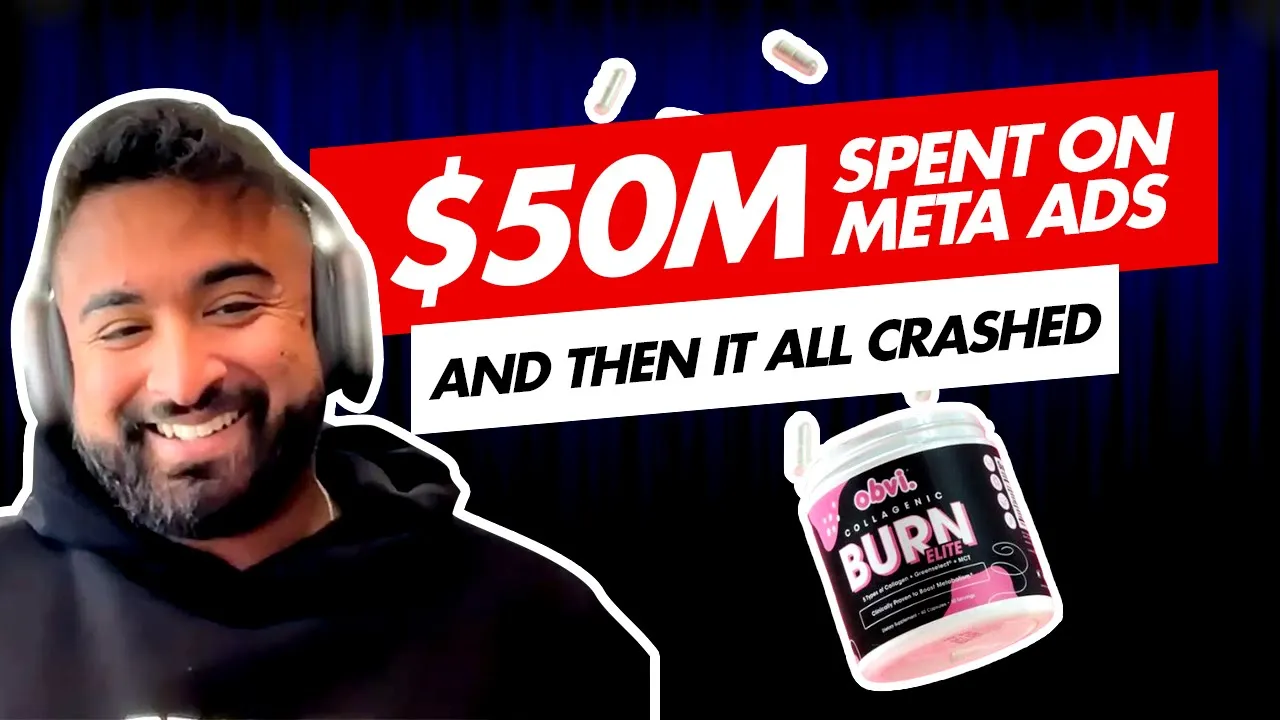
D2C Diaries · @d2cdiaries
Words
11,890
Runtime
57:12
Speaking pace
208wpm
Reading time
50min
208 words per minute, above the 201 75th percentile of 349 measured videos. That distribution comes from the 349-video hook study.
Opening (first 30 seconds)
Last year, we were we scaled 100% year-over-year with a strategy that not a lot of people focus on much. Welcome back to another episode of DC Diaries. No Ollie today. He's uh he's speaking at a conference, but I am joined by Ash, CMO and co-founder at Obi. Ash, welcome. Thanks for having me, man. I know it's been uh some time trying to get this on the books, but I'm excited to chat. Absolutely. I think it's probably been about six months we've trying to get this in in. So, um I'm glad we finally have. It's been a mad year so
104 words, the words spoken in the first 30 seconds at 208 words per minute.
Free, no signup. See how the first 30 seconds hold attention, with rewrites.
Sentence shape
| Measure | This transcript |
|---|---|
| Sentences | 675 |
| Average words per sentence | 17.6 |
| Longest sentence | 223 words |
| Questions asked | 142 |
| Sentences containing a number | 42 |
Most used terms
Filler phrases
756 in total: like 414 · you know 108 · right? 94 · um 40 · actually 27 · uh 27 · kind of 21 · I mean 17 · literally 8.
A literal whole-word count of the same phrase list the Prepublish browser extension uses, so a phrase inside another word is not counted and a phrase used in its ordinary sense still is. It is a count and not a judgement.
Run the check on the words above: where attention is likely to drop, with a rewrite for each weak line. The free check shows the scores and the one issue costing the most.
What this transcript is
Every word below is the caption track YouTube publishes for this video, pulled from the video itself and reproduced unchanged. It is not Prepublish's writing, not a summary, and not a re-transcription: it is the video's own published captions. English captions, generated automatically by YouTube, in the video’s original language. Source: the video on YouTube. A channel that would rather this page did not exist can ask for its removal through the contact page, and it is removed.
No Script X-ray for this video: YouTube shows a Most replayed graph only once a video has enough views.
Last year, we were we scaled 100% year-over-year with a strategy that not a lot of people focus on much. Welcome back to another episode of DC Diaries. No Ollie today. He's uh he's speaking at a conference, but I am joined by Ash, CMO and co-founder at Obi. Ash, welcome. Thanks for having me, man. I know it's been uh some time trying to get this on the books, but I'm excited to chat. Absolutely. I think it's probably been about six months we've trying to get this in in.
So, um I'm glad we finally have. It's been a mad year so far. Um but yeah, I guess like just a bit of context first. It's funny how we I guess got in contact and started working together through creative. I remember reaching out to you last year on Twitter just on regarding like some of your statics and we we started working together on some concepts like real big swing stuff. I think this was like early days of image generation and we did some cool stuff there and you know see we we get a lot of our ads absolutely ripped but I don't think there's ever been like an ad concept that's been ripped more than that strawberry before and after one.
Do you remember that? Yeah. Yep. Yep. Yeah. I see it everywhere now. I see it everywhere. Our our ad library is not safe. Yeah. Exactly. I know there's one thing like Yeah, obviously you it's it's it's an inspiration board for a lot of brands, which is a good thing in many ways. It shows you're doing doing [ __ ] right, but but yeah, doing something. Yeah, exactly. I agree. I agree. So, we're going to go deep today, get into like a little bit more about the you know, obvious growth engine.
I think your your growth over the last few years has been massive. made such an impact within that like DTOC Twitter space as well just through sharing that transparent journey. But I guess just to like give anyone context listening who doesn't know who you are or who obvious let's let's start there. Yeah, absolutely. So um you know started Obby 6 years ago, health and wellness brand focused on the collagen space. We've essentially wanted to take collagen and just make it fun again.
Have some really cool branding, something that stands out. apply collagen to almost every supplement that you could think of, right? You know, we have collagen powders that are flavored, which tastes amazing. Then you have collagen hydration, you have collagen greens, you have collagen colostrum, collagen for weight loss, collagen for hormonal balance, detox. Like, we've we've pretty much gone the route of saying like, hey, your body needs collagen as you age.
And so, if you're taking all these other supplements, might as well include collagen in it. and and there's there's really no limit to how much collagen you can take in a day. So, that was our our main thesis. We've been pretty vocal about, you know, our growth on on Twitter and LinkedIn. The reason the reason like I've been very vocal about what we've been doing is just because one, when I when I turned to Twitter, it was like used as a as a space to just learn from others.
I would literally search in the in the Twitter search just be like account structure for Meta, right? and just see what people are are talking about and then started joining in on the conversation. And that kind of just spiraled and launched my own thread of like certain things that we did during iOS 14 that helped and people started to resonate with that. And so, you know, fast forward to now, you know, um myself, my partners, um you know, just thinking back to the older or earlier days where you didn't really have much of a community.
You were kind of just thrown into this and you're trying to figure it out. Um, if I could like help one person just like bypass months of of learning and and and just help kind of speed up the process, then like I feel good about it, you know, selfishly I use, you know, what we do building it public to just ask for help on certain things, right? You know, I've been pretty vocal about performance this year not being great for us. you know, it's not always, you know, rainbows and dollar bills every single time, but, you know, being able to to be vocal and and, you know, ask for help and, you know, provide feedback when I can, I think, is very powerful.
I think one of your biggest strengths from from yeah, getting to know you, but also just seeing you online is, yeah, your your vulnerability and like you don't have an ego. I think people that are deemed as um a thought leader, they feel like they can't show that vulnerability and you so actively speaking about the struggles of the brand at the start of the year. That's something that every business goes through, right?
Like there's there's no upward curve um straight line even. Yeah. I think that's so important and that's something you don't see enough on Twitter is it can be really toxic. Yeah. No, it's like, hey, like, how's uh how's performance for everybody? And you can have a hundred people be like, yeah, something is definitely up. And then that one guy is like, I don't know what you're talking about. We're good. And that's fine.
Like that's that's totally fine. I I think, you know, even even just by saying like, hey, like what's everybody seeing? If it could spark a conversation around like, hey, this is what I'm seeing. You know, here's how we fixed it. Fine. It's not it's not I know a lot of people want to say that it's cope and like it's just you know people are trying to you know like oh like just do better right and that's fine we're doing better right but it doesn't mean that we can't have a conversation about what people are seeing and yeah I agree online can be toxic and that's fine I I've gotten used to it ignore the comments I block people I don't care um as long as my favorite is like there's only yeah there's only one way to test creative in an ad account when people say that one that like pisses me off but yeah Yeah.
So, yeah, let let's touch there touch on that then because we had a call towards the start of the year just around the performance side and we had a bit of a brainstorm about creative diversity, you know, some some some of the things we're seeing this year obviously with Meta Andromeda compliance tightening up. Let's just talk a bit about how your performance strategy has changed coming into this year and and since that point because I know like last year you were very very bullish on this like very heavily distributed static approach to to paid creative like how how has that changed?
Yeah. No, it's a good question. So, for for those who may not have like followed the journey uh last year, but like last year we were we scaled 100% year-over-year with a strategy that not a lot of people focus on much, which is like, hey, we're going to focus on top ofunnel brand awareness outside of the ad account. I'm not going to run reach campaigns. I'm not going to run traffic campaigns. I want organic awareness.
And that was why working with influencers and kind of bigger accounts and different theme pages on Instagram and just like trying to get Avi out there without having to pay these premium CPMs on Meta. Right. So that was that was that was step one. Our first viral moment after going all in on that happened in February. I actually moved to a very heavy cost cap structure ad account where everything was launched into cost cap.
Our testing was launching into cost cap. our scale campaigns with cost cap scaled into international cost cap and so that was a strategy where yes like if you're just using cost caps you are going to go after maybe the warmest audience possible but I am building the funnel outside and it's kind of funneling down and trickling down to the website. Facebook is starting to see that they're unlocking audiences because we're driving new audiences to the website and that is what allowed us to spend or get to a million dollars a month, right? um working with partners like you guys.
I mean, you guys, you know, helped fuel the fire for a lot of moments throughout the year where we would drop, you know, exactly that that strawberry uh static addit. And if you haven't seen it, um I'm sure it's out there somewhere, but we dropped that to the account and like Bend just flew, right? And so you're you're capitalizing on these moments where you do have this awareness. You do have an ad that just rips and it looks amazing.
It's scroll scroll stopping. And so that was just the main focus. I didn't necessarily need video to generate demand. I could just pump out a bunch of different statics, go after different angles, actual formats, this and that, and then just have, you know, cost cap kind of do its thing. This worked until the strategy quite literally stopped working, right? Like I would say October, November of 24, we didn't go viral as often as I had hoped and planned for. um the organic kind of dried up and again that just dries up you know this audience pool that you've built and so November we started to see something kind of dwindle a little bit December slower time for us but again we just assumed that it was you know holiday season and we're not really giftable right so January 1st we're like you know what let's um it should it should just pick up literally January 1st our business manager got restricted right not only do you have these updates that are happening on the back end for Andromeda but the health and wellness space was getting heavily scrutinized.
And for those who don't know what's been going on with with Meta and why this is happening, but long story short, they're facing lawsuits for privacy breaches, right? They're violating HIPPA laws, especially for like pharmaceutical companies that are sending data back to Meta that they they shouldn't get. Without all that being said, supplement brands like ourselves or even other brands that are somewhat in the wellness space are getting they're getting flagged because Meta just doesn't want to take a risk, right?
So if you're selling compression socks um to to help with the medical uh concern even though you're not violating HIPPA laws, they don't want to take the chance, right? So January 1, business manager got, you know, restricted start to the great, you know, a a good start to the to the new year and then ended up getting that appealed and then since then performance has been pretty crap, right? And so I again going back to the conversation we had earlier which is like all right, I'm gonna be vocal about it.
Hey, wherever I can help would love for you to audit my account. Tell me what I'm doing wrong. I'm not, you know, going to put my ego in the way and say like, "Hey, yeah, I know everything. Something's broken. Meta's broken, but like, hey, like maybe I'm missing something, right?" And quite literally, every single person that touched the account or, you know, responded to me on Twitter saying like, "Listen, your ad account is full of static ads, right?
You're not generating any demand." And I knew that, but then I realized and something clicked like, "Yeah, like my demand gen is slowing down outside of the ad account. I need to to actually start driving my own demand gen through paid ads. So now we went from the switch of 100% of static ads to now 50 on on videos, right? So now working with influencers, creators, we had so much content from the organic side, we just pulled that in, hired a couple video editors, made mashups, did a bunch of different clips, and as we started building that up again, we started performance started to see performance started to improve, right?
We changed up the funnel. We changed the offer. We actually increased our AOV from $60 to $100. You know, as things started to to kind of go back up, things were looking good. And then again, some issues with meta false, you know, flags for health and wellness. We had random domains being flagged on our account. So, it's all part of being an entrepreneur. It's all part of running your own business. You're going to see these issues that happen.
You know, meta is going to be meta. But it just forced us to like one level up our our creatives, level up our you know our experiences, our products and then also made us realize that hey like we shouldn't just be relying on Meta because if Meta collapses one day then we collapse. And so that was a scary thought. So as Meta is starting to perform better, how do we get away? How do we how do we spend more money on Apple?
How do we spend more money on Tik Tok shop and getting that up and running? How do we test new channels that are out there? CTV. We're actually running a test with Comcast, right? Like they they're able to actually give you the first creative for free, which is the biggest bottleneck for a lot of brands, and then give some credit to test that out. Other channels like Rocked Ads, like there's so many different channels that are kind of opening up that brand should be testing and not heavily relying on Meta.
And I'm sure Meta will get it [ __ ] together. It always does. But in the time that until that happens, you shouldn't rely on it. And you should think about how you can diversify. How can you continuously build awareness and how can you be in different channels altogether? Yeah, I completely agree. I think yeah, there's like a moment where it's it's scary just the reliance that brands have on Meta as a platform if that acquisition channel is shut off.
Yeah. Like it's we're in a difficult spot. I think the one thing we always tell brands and I completely agree with you especially you know at the scale you're at now but like the almost looking at it the flipping it on its head and looking at it through that the other lens but brands make the mistake of too early going too you know too omni channel and they're trying to do too much too quickly without actually mastering a channel so I think the caveat to all of that is like master meta first because I feel like it's always going to be your primary channel and then diversity diversify.
Yeah. No, I agree. I mean, listen, we're not we're not spending more than the top performing guys out there. Like, we're nowhere close to like what, you know, Ridge is spending or Cody spending at at Jones Road. But I do think being into the business six years in, we've we've spent a decent amount, right? Like I'm talking 40 50 million on on Facebook ads or close to that. But then you also have distribution, right? We have retail.
We're in almost 20,000 doors across the US. So, it's like you do have this retail factor that's kind of pulling you down and saying like because the minute I get a comment on my ad saying like, "Hey, I bought this at Walmart." Ad performance tanks to the point where I have to actually like filter for those keywords, which sucks because you want to advertise the fact that you're in in retail places. But you also have to figure out, okay, well, I need to continue growing DTOC to build awareness for, you know, the fact that we're on Amazon, the fact that we're in Walmart nationwide, the fact that we're in HB Sprouts, um, you know, things like that.
It's it's it's a it's a delicate balance, but then it kind of forces you to think, okay, well, how can I start being everywhere and what are the channels that allow me to do that? And so that's that's kind of where we're at, right? I completely agree with you where it's like if you're just starting out like by all means like focus on meta but before even that I I've been telling brands and I've been working with just like through consulting and stuff is like if before you launch your first ad on Facebook can you build some organic presence like whether it's on Tik Tok or Instagram or YouTube the brands that are able to establish that are the ones that are surviving throughout these volatile periods or algorithm updates because they actually have an own community right they're able to generate their own top offunnel awareness.
And so if you can start there, build the awareness, take that content or make some other content and then run it on paid, I promise you your life is going to be 10 times easier. And that's the the biggest lesson, the most expensive lesson that we've learned over the last six years. Yeah. No, I completely agree. That's is it's it's great hearing you say that because that's the journey I've gone on. when I launched my brand in February and we were completely organic until yesterday where we started running paid and just building that private community and that golden cohort really like the the value of getting that foundation first and the learnings you can take into paid as we know that organic is just such a big influence now on on paid creative will really help just drive that that when you make that transition.
I agree. I mean you see it with all these brands that are crushing on Tik Tok shop, right? I mean, if you look at the goalies of the world, the merry roots of the world, like some of these brands aren't even trying to be profitable on these channels. They're just trying to break even or they're okay with losing money because it is such a massive awareness channel. I was going to say that. Do you do you see Tik Tok shop more for you as an awareness play rather than to to, you know, drive margin and acquisition? 100%.
Right. I mean, obviously, if we can be profitable, great. If I'm not. I know that I I just know I've I've single-handedly witnessed when a creator has gone viral for us, my paid because we're on cost caps will shoot up over the weekend. My Amazon sales will shoot up. We'll see a lift in retail. And so obviously going viral like it it's it's there's a there's a there's an element of luck here, right? You can't you can't predict virality.
You can't have some level of consistency. But if you work towards building you know something on Tik Tok shop seating creators creating a community incentivizing the keep posting right if you make a baseline of impressions that you're generating you're generating every single month that's just awareness right now if you have a viral moment that's just the cherry on top that can just drive continuous growth and and I've seen the brands that when they go viral they ride that wave you know if if there's a certain creator that said a certain script in a video that did really well Okay.
Well, you should have a thousand other people trying to do the same thing, right? All that to say, I don't know where Tik Tok shop is heading. Like, it is very affiliateheavy. It is very, I guess, top brand heavy. So, like all the creators want to work with the top brands like the goalies and the the merry roots and, you know, the the Nellos of the world. But as a small brand, I definitely think there's still some opportunity to say like, "Hey, I have a good product.
I want to get it into people's hands. Let me incentivize people to post and just have something going." And I really wish we like we we had done a lot on Tik Tok shop last year and I was like ah you know what it's just a break even platform. It is what it is like I don't want to spend too much effort here and then you start to see like okay well it was generating brand awareness and now losing out on that and I really wish I kept going again another expensive lesson.
So yeah it be interesting to see that like split test against like search traffic because that's one thing that I've seen just the amount of search traffic you get when you're doing Tik Tok shot correctly. I also just love it as a as a play on like creative testing cuz like if you those and we spoke a bit about this like these almost like gray hat marketer affiliates that just understand attention and just come up with these crazy ideas just to drive engagement you know I call them like Easter eggs where they'll just have something on their screen in the background while they're talking which is just going to drive engage engagement and c and drive CPMs down.
Um, but like it's, you know, if something hits and something wins to then take that and apply that to, you know, paid on meta or recreate that is is a great testing ground. I agree. I think I I I I think one it's a lot easier to test on organic cuz like if you are able to offer you know a certain amount of commission or have some incentives that will still allow you to break even by all means like eat as much content or see as much product to creators to get as much content as possible.
Whereas if you're like just throwing [ __ ] at the wall on Meta you're like spending a budget and you don't even know if that's going to convert. Again, like I said, this is like the advice for for brands that are just starting or like they're seeing like plateau here. Like focus on awareness generation. And I think right now that is like Tik Tok, Tik Tok shop, even YouTube, like influencers on YouTube. We're we're actually testing some like midroll ads on certain like influencers, paying them on like a CPM basis.
Again, like you just have to think about the platforms like people are going to Tik Tok to watch and consume content, right? People are going to YouTube to watch and consume content. People are not going to Facebook to watch and consume content. Like they're they're there to connect with friends. They're they're going to go join communities. They'll they may see video here and there, but it doesn't drive as much impact as some of the some of these other video first platforms.
So, if I was to prioritize where brands should be driving awareness from, it would be Tik Tok, YouTube, and then Instagram. Yeah, absolutely. And I think like if you're if you're tight on resource like and I know that I wouldn't I wouldn't always recommend this but like when you're getting scrappy in the early days like a lot of that it's like there's this battle for awareness and reach on reals, YouTube shorts, Tik Tok.
So even if you're creating for one of these channels just like what have you got to lose running that as a real as a um as a YouTube short as well? What about lives? Is that um is that something you guys are doing much of? Yeah, I mean we've tested Tik Tok shop lives. I do think it's a way to further boost whatever momentum you do have, right? I don't I don't necessarily or I haven't seen a brand that has blown up because of lives in my opinion.
I think it's just like, wow, I see this everywhere. Like, oh, I see these live videos of people talking about it and selling it. Like, it's just kind of like a nice add-on. Um, and then I don't know, here's a here's a tip and trick for you, but like for those who are um trying to understand like Tik Tok shop, like go sign up for Kalo data. Um, and you can see like brands and how much money they're making on Tik Tok shop, what's the content that's working, the videos that are working.
Like if you go and see the distribution, it's quite literally like 90% affiliates, 5% from the brand, and then 5% from like live videos. Um, so it it's it's literally a spray and prey approach of getting your product into as many hands as possible, giving them the tools to create viral content, and then making sure that they're doing this over and over and over again until something hits. Yeah, it's funny because from like knowing a bit about the US market and obviously being more deeply embedded in the UK market, lives feel bigger in UK DTC than than the US, which may not be true.
It may be biased because I'm seeing more of the brands doing it here, but like in terms of those big success stories, I've seen US versus UK. Like some we've had a few of the big found big founders on the podcast that just have grown their brand entirely through Tik Tok and and Lives being that one of the biggest drivers of that. I mean, there's this I don't know if you have you heard of the brand Made by Mitchell. Yeah.
Yeah. Yeah. Yeah. Yeah. Like they did like over a million dollars in a day on Tik Tok on on a Tik Tok live. It's just like wild. But like it's not sustainable, right? That's that's that's like the pivot that a lot of the the trend that I'm always seeing with these brands that have blown up on Tik Tok. They they've then obviously had to diversify channels because it's not consistent. Yeah, I agree. I mean, I don't I don't think live shopping is not something exploring like what we've actually done live shopping on TV over the last couple months.
So, we've been partnering with this uh company called Shop LC. uh an our uh one of our co-founders will fly out to Texas. He'll hop on the it's like a live QVC almost. He'll hop on talk about the product for an hour and like we'll just sell like thousands of units and it's like this still works, right? This concept still works. I do think like to to a certain degree you do still need like awareness and like the fact that people want to tune in to like hear what you're talking about.
Like as you're scrolling on TikTok and you have no idea what Nell is, right? And you see somebody somebody on live like talking about this product, like I'm I'm going to go scroll on, right? But like if I have like an affiliate that's like talking about like, you know, you can de-stress like overnight with this product, like that quick video I can watch and just be done with it, right? So I agree. I I think there's some level of balance here.
Like I think like it works better if there's a face of the brand. I find Yeah, I agree. I agree. If you have a if you have a face of a brand or you have like a celebrity partnership or like influencer partnership, I think that could do really really well. Not to say like the brand can't do it, but if obviously you have a little bit more influence and you have a little bit more pull, then 100% I think that's smart. So let's go back to retail.
Um because it just be interesting to touch on your retail strategy there. That's pretty wild like the the volume of stores that you guys are in now. Like how have you navigated that? cuz like we've we have a few brands that we work closely with and been some horror stories there just in terms of like bidding on search terms as you mentioned. We had a situation with a brand last year at Black Friday where the it's like a big UK drugstore.
They launched their offer their Black Friday offer for the product a week earlier than Black Friday. So they had to pull their offer forward because they were losing thousands a day. So talk a bit about that and any advice you have for brands that are looking to to get into retail. Yeah, I think when you're getting into retail, there's two things that matter most before any other like marketing strategy or whatever you want to whatever you want to call it, but packaging and pricing, those are the two biggest lessons, painful lessons that we learned, right?
So, we when we launched into Walmart, we our collagen protein powders, our fruity cereal and our cocoa cereal went into Walmart nationwide. And then our collagen burn went into 1,800 stores. The burn started to do extremely well. It's a top seller now at Walmart. It's s it sits next to hydroxy cut, oxy shred, all of these like top, you know, weight management uh products, but it's more geared towards women, right? So there's there's there's definitely a lot of um attractiveness there.
When you look at the collagen space, you have Vital Proteins, which is unflavored, and then you have us, who was priced $5 higher than the top selling brand, Vital Proteins, and we weren't unflavored. Okay. Oh, un having flavors and and you know, a cool formula and cool packaging works really well on on social because you can actually talk through it. You can have eye-catching content, this and that. But when you go up against somebody on shelf, you have nothing else but your packaging and your pricing to make a distinguishable choice of all right, I'm going to pick this up versus this.
Right? So, right off the bat, we're outpriced. Okay? And this is because our margins didn't allow us to price any lower. Okay? So, we're like, okay, cool. It is what it is. It'll pick up. Maybe got to do some marketing this and that. Whatever we tried to do didn't work. And so, our buyer comes back to us and say, "Hey, this is underperforming. What do you guys want to do?" We're like, "Okay, give us one more shot. Let us come out with our own unflavored, let us come out with a packaging uh or packaging that at least when you put us next to vital." We showcase why we are better.
They have two types of collagen. We have five types of collagen. They have vitamin C, we have vitamin C, biotin, keratin, everything that you could think of in our formula. And we priced it $2 less than vital proteins. Now, now you go up to the shelf, you see, all right, this product has more in this for less. The Walmart shopper is a bargain shopper. They're looking for value. And so, if you can provide that just through packaging and pricing, you're going to win.
So, now imagine this. We took two flavors out. We went from nationwide 4,500 stores to 1,800 stores cuz they just wanted to test it. our one product now after those packaging changes and the pricing changes is selling more in a third amount of the stores than the other two were selling in 400 stores. So that's how you have to think about these things because one the burn did really well because it's it's a brand new product in the category.
There's no collagen infused weight management pro uh product that's meant and geared to women. And at a price point that's 1999 compared to hydroxy cuts $25, she shreds $30. We're primed to win. And that's why that won. Now on the more competitive side, you have to think about packaging and pricing. So that's that's 100% number one product uh packaging and pricing. The second thing here is when we launched into Walmart, all of our marketing was like we're in Walmart now.
Uh now we have storefinder on the website. All of our emails said that we're in Walmart. Great. All of our customers started shopping there and they didn't come back to the website. So our retention revenue dropped substantially. People canceled their subscriptions. They were shopping in in Walmart because they can get the product for cheaper and they can get it on a weekly basis if they need to because they're going to go to the grocery store, right?
So because of that, we saw a lower conversion rate on our website because what happens is somebody comes to the website, they're in that consideration phase, right? Day two, day three, day four, they're getting emails from us, welcome series, they're seeing ads from us. They're seeing that we're in Walmart. Where are you going to go? You're gonna go to Walmart on your next grocery trip and pick it up at the store versus waiting a week for it to come, you know, via by a post, right?
So once we figured out like we can't run DTOC and market retail at the same time, we kind of shut everything. So if you go to our website, you won't even know that we're in Walmart, right? We're treating it completely separately. The reason why is that if I can generate awareness and grow DTOC and spend a ton on marketing, I know there's a halo effect on the retail side. So, if somebody ends up going down that that health and wellness aisle in Walmart, like, hey, I saw this online.
All right, cool. Let me go check it out. Right? So, the more I spend online, the better my halo effect is. Amazon, retail, etc., etc. Now, we're at this inflection point of like, okay, we're in 20,000 doors now, right? We're not just in Walmart. We're in we're in Walmart, grocery stores, mom and pop shops. We're doing something with Dollar General for different, you know, line of products. So, like we're we're trying to be everywhere.
Now, you're at this inflection point of is DTOC the number one channel for us right now. And so now we're thinking about, okay, well, can we just turn everything to brand marketing and start running TV, connected TV, linear, talk to influencers about promoting all the products that are in, you know, the the stores and have them go to the stores and talk about the experience of the product there. Does that content look better?
Right? Can we do out of home advertising? We can we run, you know, Insta uh Instacart ads? Can we run um you know, Facebook traffic campaigns? and and just make our lives easier instead of being like, I need to be first order profitable on DTOC, but let me actually take that money and spend it on reaching way more people and tell them, hey, you can get us here, here, here, and there, which also legitimizes the brand, and then see if we can grow retail.
So, I think we're at that point now where it's like, do we go all in on DC or go all in on retail? And I think that's what we're trying to figure out this year. That's really interesting. Yeah, it's it's so difficult because there isn't a right or wrong, is there in that? I think it's I think the what it's it's interesting your perspective there coming from someone that is naturally a a direct response marketer to to actually be thinking through a completely different lens which probably is like a foreign language.
Yeah. No, it's it and that's why like again this goes back to like reaching out to mentors or or figuring out who to talk to, right? So like like I'm on Mentor Pass. People will hit me up for consulting, right? But I don't know a thing about retail marketing. So I'm going to go and hit up people that have done it, right? And so can we build a team that can help us do that? Can I help take what I've learned from from DTOC and apply it to retail marketing?
I think that's what our retail buyers want to know, right? Like that's what they they crave. They want the experience from DC and bring it to the stores, right? whether we get end caps and designing it um in a way that is direct response, right? So, understanding what's worked on our landing pages and bringing that information over to endcaps or uh just any signage that's that's in the stores, right? But also on top of that, I mean, take a look at what goal is doing right on Tik Tok shop like they're just using that channel to break even or even lose money, but their retail velocities and their Amazon velocities are skyrocketing.
So, can I maintain some director uh direct to consumer direct response maybe on Tik Tok shop? I think that's going to be my my go-to and maybe to focus on there, but I don't necessarily need to worry about all right, do I have to be first order profitable on on Meta? Like, what account structure is going to work? What are my bids at? Like I I prefer to just invest in really good content for the brand that tells a story and distribute it in as many places as possible and just have people remember us for the cool content that we can put out there and then when they are ready to buy they remember Obby when they go down that.
Yeah. Interesting. And what how I guess like sticking to that trend of out of home like how are you how bullish are you on events and you know the some of these you know cuz I I just feel like there's there's I'm seeing more and more DC brands now putting so much more of a focus on that IRL experience and building that community and connection and it's more of an LTV player I guess in in many ways and developing that cohort but it's just seeing more and more like brands that are leaning into this and almost treating it as like a fixed cost on the P&L like they would with their office space.
What are your thoughts there? Yeah, I mean it's something that we've always talked about, right? Doing like a popup somewhere bringing our collagen may like whether it's like a maybe a smoothie shop or like a deli or something like in the city, right? There's so many shops out there. Can we do a popup and just have it like an obby day, right? Can we get people to try the product? Can we get people from our community that are in the area to come meet each other?
Um, I definitely think it's something that we want to test in the future. I know a few brands that are like actually doing this. one, I think it's great for community and retention, right? Like if if you have a really good experience with a brand, you're you're most likely gonna stay with them, right? And then I think the content that comes from that is probably incredible, right? You know, being able to leverage that on organic or even in your your paid ads or, you know, whatever it is, just having these like stories to talk about these moments to distribute.
I think that that's your brand marketing, right? Like Yeah. And you can break even on these things too, right? Like it's even if you like work or partner with like I just said like a like a smoothie shop, right? You can break even on this. Like your cost isn't that high. You just go in, you know, put some bottles, talk to the owner. Hey, like we want to do a pop-up here. We're going to drive a lot of traffic here. As well is another one.
Doing that to penetrate someone else's audience that have a have a similar persona to yourself is something we're seeing a lot. Yeah. On that content piece, like something like some brands are killing it there. Like there's a brand we work with called Pure Sport that are big in terms of those like IRL activations and um they're like a running supplement brand but they create stories around the creation of the activation and they were doing a big one at the London Marathon and they couldn't do launch their new electrolyte because you know one of the one of the big brands I think it was Lucas a said that they weren't able to because it was a conflict of interest and how they got around that and it just went like mega viral.
So, if you've got the team around you to be able to like really storytell in a way that works, it can go really well. But obviously, it's it's, you know, something you can't track as easily. Yeah. No, I agree. I I think also what's what's really interesting is that if even if you don't do meetups for like your own customers, right, if you've built out like a a network of maybe influencers or affiliates and like doing days for them too, right?
Going back to like building something on Tik Tok shop, right? If you have a bunch of creators that are, you know, posting for you, can you build these like IRL events that will allow these creators to come together, put something on for them so that, hey, like I'm I'm being noticed. I'm being acknowledged. Like I love working with this brand. That's all you need. Just consistency, right? And like just having somebody vouch for your brand, I think is is very important.
Yeah, absolutely. Yeah. We we did our first event for my brand like a couple of months ago and it was it was only small probably about 50 people but it was 100% repeat customer rate of from people that were at that event and obviously that's on a much smaller scale and would change if we we were doing that at volume but it shows the power of like that golden cohort and not forgetting about that because there's just so much value that that cohort can provide if you know even in just in terms of feedback.
Yeah. No, I agree. I agree. I think it's um yeah that feedback loop is also very important right like last week we actually I think it was two weeks ago we were invited to uh an event at Shopify's office in uh New York City right they wanted us to bring some product some product we're like all right cool just kind of place it and that'll be that and they're like oh like do you want to pass it out like do you want to taste test and I was like you know what this would be a good opportunity for us to just talk to people live interaction like hey what do you think about this product how does this taste?
And so like the feedback that we got from like yeah 30 40 people that tried it was really like it was it was eye opening too. Like you have a lot of people that are like oh this is amazing. Then you had some people that are like I like it but it's too sweet. Then you have some people are like you know I just don't like it at all. Right. And so it's like taking the negative feedback understanding it going and and bringing it back to the drawing board when we have our meetings around product development.
It's like hey like we should be doing more of these right? Like just so that we can get that feedback and make the product better. I mean, you're not investing in R&D. You're not spending a ton of money to R&D, but events can be a minimal cost for you to learn how your customers are actually enjoying your product and then taking that back and implementing it into the business overall. And it'd be it'd be rude not to touch on this for a little bit being a creative myself, but talk to me about that diversification of creative piece since we last spoke from Yeah. you know that we had a chat around potential ideas new avenues for those obviously listening for context obviously meta andromeda's update it's very much shifted to this AIdriven individual level AIdriven delivery which means that that you know diversification of content at scale is so much more important and strategic volume is is more important um and you know is more more likely to work than quality I guess um so talk to me a bit about what what you're seeing working there how how that's changed since since we last spoke.
Yeah. So, I think we've always tried to be diverse in our static ad strategy. Um, you know, being able to leverage AI, being able to leverage lifestyle, photography, text, you know, UGC, right? We have different formats that we've tested. video I think is a lot harder to achieve diversity because there's only so much you can get in terms of like or sorry let me let me rephrase that. I think there's only there's only so much you can actually get because the cost associated with getting video is way higher, right?
So now with static ads, I can have a designer inhouse pump out 50 ads a week. All 50 could look completely different. Okay? I could have an agency that would do the same thing. Okay? Video content one, if I want true customerated content, I got to reach out to customers. I got to brief them. I got to tell them, hey, like go film something. Content that's going to come back. It's probably going to be [ __ ] They're not creators.
You'll get raw testimonials, which is good, which can be one set of style or ads, right? That can work and it has worked for us in the past. Then you have like the the creator generated content, right? Like sending product to a creators, giving them a script, telling them to talk through certain points, like that content can come back, right? Then you have like influencer content that people that are working with you and posting about you and talking about you, this and that.
Then you have the high production style stuff, right? Like podcast style ads, which I think is like honestly like everybody in their mother is using right I think it's on its way out at some point because not everybody in the world has a podcast, right? I think people are going to understand this. I've actually interrupt. I've just got a really funny story about this. We had the founder of Suri on the podcast, which is a toothbrush brand.
And they used a load of their content from our real podcast and made founder ads out of it. And I saw one of the top comments on the ads was like, "There's no way this is real. Why would a tooth why would they have a toothbrush salesman on a podcast?" That's like the one time that a podcast ad was actually real. Actually real. Yeah. I I mean, listen, it was a great it was a great strategy. It worked well for us. Um, at the beginning of the year, it died out.
I'm over it. That's fine. Street interviews, I think, are here to stay because that is genuine reactions from like people. You can you can ask questions to anybody all the time. It's it's authentic. It's funny. We actually tested this out. We have a team that that goes out to Central Park in New York and they're just like asking questions like hey what is your biggest craving right? People are like, "Pizza, you know, cookies, this and that." And it's like, "Well, here's a solution for that, right?" Or like, "Hey, like listen, like, you know, did you know that the reason you're losing air is because you're collagen, right?" And then people like, "Oh, I didn't know like d and so you're getting this like real feedback and it's the type of content that people are consuming and that's doing really well, right?
So creator customer generated content, creator generated content, high production style stuff, direct response style stuff. And then you have AI now, right? like you have like AI, you know, actors that are talking about your product and this and that. I I think I don't think it's great, right? I don't I don't necessarily think it's like it's scalable. I what I do think is what it's great for is if you need certain clips and like voiceovers, then by all means use AI, right?
I love the idea of using an AI to do a voice over. So when you can make mashups, you can you can leverage that. What I do think is going to happen is that this new [ __ ] with like V3, right, from Google, a lot of people are creating concepts that are obviously made by AI. I was literally going to say the exact same thing. Like I think people looking it the wrong way. They need to not how can I make this not look like AI, how can I make this look so obviously AI that entertaining, right?
That it's entertaining. Exactly. Exactly. And so like I've started to see these baby videos, like baby podcast videos. Now imagine you did street interviews with babies, right? Like just just thinking about ways that you could be creative and entertaining because that is what's going to stop somebody from scrolling, right? I don't know if you guys have seen these videos on TikTok of like these talking gorillas and like they're they're unhinged, but like every single ecstasy in the in the forest.
Yeah. Yeah. And I'm like, listen, these affiliate marketers, man, they're smart. Like, go and look at what these guys are doing. Like, they're they're building up accounts. They're generating a ton of review uh uh views. And then I I saw them marketing a hat like on the gorilla and it's like these videos are getting millions of views. You're telling me that these hats can't generate some type of sales. Like, that is the content that's going to work.
So, again, there's like a go back to the the original question, which is creative diversity. How do you how do you think about it is like you have to just go out into the wild and see every single type of format of content that's out there and try to create something for your brand using that format. And if you can feed a ton of that to Meta, you will get in front of more people than not, right? Like some people are like, "Oh, like if I give Meta like 15 ads, it's going to spend on just one, right?
That means the other 14 suck." like you have to make sure that you have enough like diversity and volume and listen if you have one ad that just spends great put that in your scaling campaign retest everything else right so I think giving Facebook as much content as possible is very important I think that volume may not necessarily be as important right now as quality and quantity of diversity so having you know instead of having 50 static ads I'm going to do 10 statics 10 creator generated content, 10 creator generated content, 10 AI videos, 10 street interviews, and then give that to Meta and let them do its thing.
I I agree and that's why like the phrasing I use is strategic volume because just just blind volume just doesn't work. Like I I've seen brands throwing hundreds of ads at the wall in a month and not not scaling, nothing h, you know, not increasing spend. And I think that idea of being strategic about how you use that is is is really important. And that's like you say down to vehicles. Also, you know, being intentional about labeling a creative within the performance funnel.
Like I'm just seeing now unaware and problem aware ads just working way better than anything else, which wasn't something that that was always the case. Like it was more lowerfunnel product aware. But like those unaware creatives not introducing the product for like 15 20 seconds stuff that were like the big no no rules like when we would on board our strategists it's like you have to introduce the product solution within two seconds or there'll be drop off like the rules in my like I'm just seeing that completely turn on its head.
Like we're seeing like 4minute ads working stitching two best performers like back to back and just running it and then becoming like top five spenders in the account like just it's it's like the wild west out there but in a in the best way possible like it's because it's you have to it's it's changed the way that we have to you know the lens we view things through and how we we have to be creative and I that's kind of how I'm looking at everything right now.
It's the same with like podcast ads. Like yes, podcast ads don't work like they used to, but we're still ripping with podcast ads because it's like it's like you're looking you that's almost the concept type, but it's it's not the it's like the spin and the way that we create those podcast ads. So, as an example, like there's this famous YouTube series in the UK where they'll get like two football fans that are like next to each other. one's one like a Chelsea fan, one's a Man United fan, and on the table there'll be like strongly agree, strongly disagree, and they've got a pint of beer either side, and there'll just be a statement like this player was the best, you know, uh, striker of all time, and it'll be like, you know, one of their teams striker, and then they'll say, strongly agree or strongly disagree, and then they'll just debate about it.
So, like we're doing podcast ads like that now, which technically on paper is a is a podcast, but it's like a different format, different way of of doing that, which creates more conflict and more controversy and curiosity. Entertainment, it's it's it's it that's all it really is. It's like how long can you get somebody to stick around for? Because, and people don't realize this, the biggest I mean there's a lot of big updates with this whole Andromeda update, but one of the biggest changes now is that engagement on these ads is very crucial, right?
If you have an engaging ad, they're going to prioritize engagement because they are losing users to Tik Tok, right? They want to have content on the platform that will keep them there. So, prioritize engagement, right? Next is conversion intent. Now, somebody gets to your landing page, that landing page has to be dialed in, right? If uh somebody spends a lot of time on that page, they don't bounce, they check around, they go around to the website, the longer they stay on that website, the better the experience is in the mind of Meta, which helps you in the auction.
Right now, when you actually go through the the conversion events, right? So, you add the car, initially check out, and you actually purchase that data that needs to be sent back to to Meta has to be clean, like extremely clean. Like we thought like using, you know, a custom solution for our Cappy was like the bare minimum. And we've been using this solution for, you know, a long time. Making sure you're actually going in and checking, right?
Like the actual health of your pixel is very, very important. I I can't stress this enough. If you see an error or you may not see an error, even though your event scores are are are great, make sure you have somebody going in and just checking everything because the minute that there's some level of data that's missing, Facebook can't optimize and then it'll drop you in the auction so much quicker. That's why that's that's this whole update.
So, Facebook is quicker to respond to signals than it's ever done or ever have been able to do in the past. So, you'll see performance drop overnight because of this. Whereas, like, oh, it'll take 3 weeks for things to kind of kick in. But, if there's like a negative signal, Facebook gets that right away and shit's going to drop. So, you got to like it's it's very finicky right now. Hopefully, it gets better. But this is why we're seeing a lot of volatility across the board because you know if you have a you have an ad that goes to a broken link by accident, right?
Like that could that could hurt your performance for a week, right? So those are the things that I've noticed over the last six months and we're starting to see better results because we're playing into that. But yeah, I I think I I think all, you know, creative diversity, feeding them the beast, making sure you have something that's engaging, making sure that your experience postclick is is top-notch, and then making sure all that event signal is getting back in a clean way back to Meta so they can optimize accordingly. 100%.
Yeah, I think yeah, one of the most underutilized things within ads and I understand why because one of the hardest things to execute well is like comedy, which converts really well. All you've got to do is look at brands like Oats Overnight like had just have mastered that style of tone and concept. Um, but isn't something that you see many brands lean leaning into. And I think I forgot what the statistic was, but in motion trend report just the the success rate of ads that had satire or comedy in in comparison to not was was massive.
But yeah, I I think like yeah, one of the one of the for me like YouTube, you know, if you look at YouTube creators and look at the kind of series that they produce, even you know, I'm now thinking like Mr. Beast, last to leave the last to leave the circle. Like how can you take that concept and apply that to an ad and there's so many ways you could do that. The product is outside of the circle. Do you see what I mean?
So, like that's kind of how I'm thinking now, like using organic as like a massive driver for inspiration to like diversify those vehicles cuz really the messaging stays the same. Like once you've nailed your messaging, um, depending on where it sits within the funnel and the persona you're speaking to, it's just about rinsing new vehicles and ways of telling that. No, I agree. I think you have to start thinking outside of the box.
And honestly, if you're like, it's fine. Go to other brands, use them as inspiration, and like test it out. But like, how can you as a brand stand out? And how can you if if your goal as a brand, right? And this should be everybody's goal, but like if your goal as a brand is to be the number one product in your category or your niche, how are you going to do that? It is not by going and copying what everybody else is doing. at forging your own way, coming up with concepts, getting the founders involved like uh An again like you know him getting on TV and talking about the product.
He knows about the products the most out of all of us. He's properly into you know health and wellness. He understands the ingredients. He understands the formulation properly and and how certain ingredients uh you know work with others. And so having him on TV and talking about it like that's engaging. So, you know, if you are a founder of a brand, get involved. Get on TikTok, get on, you know, YouTube and just like just talk about the story and like start there and then see where things can go. 100%.
Yeah. Love that. What just last few questions like I'd love just on a personal level to to ask you. There's obviously been so many of these like AI SAS platforms popping up um that do different things and very quickly become redundant because, you know, the big LLM are, you know, almost absorbing these features. I'd love to know which which AI SAS or LLM, you know, what are you most bullish on right now or use the most techwise?
Honestly, because we're going pretty heavy on like Tik Tok shop, being able to manage all of those creators, you know, having like a social listing tool set up. So, like I love working with Refunnel organizes everything. I can download it, go run ads on on Facebook, whitelisting, etc., etc. So, that's number one. Number two, I just set up like a Discord community for all of our Tik Tok creators and all of our affiliates and all of our influencers so that they're all in one place so that they could talk to each other and get ideas from one another.
So that so those are two VO3 Google, right? Like I I really think the team is like pumping out some really cool creatives. Like we just did a concept, it didn't work, but I thought it was awesome, which is like the New York City, you know how they have like Mickey Mouse and Elmo running around? It's like doing street interviews with these characters about aviolagen, right? It's funny. It's interesting. It didn't convert.
We'll figure out the next one. But playing around and coming up with these big ideas that nobody's really thought of, I think is very important, right? And then I and I do think like really leveraging and learning how to use AI for your business. So like honestly like shout out to Alex Cooper. He has this uh AI training camp going on starting tomorrow and like I had to sign up my whole team for that. So, you know, being able to learn this stuff, like there's so much out there that I I realize I don't even know.
And so, how can I expect my team to know if I don't get them the tools to do that? So, I mean, Chad, GBT, Claude, like these are all great for like building GPTs. Like, I I've built out so many different GPTs per product. So, I'm feeding it product information. I'm feeding it reviews, testimonials, post-purchase surveys, and then, you know, using that for creative strategy and, you know, coming up with headlines and angles and scripts and stuff like that.
So, I think that's very important is to use these these tools to learn about your business and just use it as a way to like, hey, like give me, you know, three reviews that I can talk about in my video or give me this, give me that. So, I I think just, you know, utilize the tools that are out there. Um, another one that I really and and also going back to like engagement signals on Meta, if you're not moderating your ad comments, like you're you're screwed, right?
The minute somebody says this is a scam, they didn't get it, like they never shipped out the product, that's going to tank results. So using something to moderate, we use brand wise. I think that's really cool. And again, uses AI to like respond to comments if you wanted to, but just make sure everybody on your team has the right tools to to get everything that you need done. Super bullet. Have you seen you seen Triple Well's like agents?
I actually have a meeting with Max on Friday to just go through the whole thing. And like just seeing Triple Well from where it started to where it's at, I think is incredible, man. I mean it's the next to Shopify it's in fact I open up triple more than I open up Shopify right and so being able to like have that data so I believe one of the things you could do is like hey take my top existing static ads and give me iterations and I'll just go and make you a ton of iterations it's yeah it's like an automated agent builder so no matter what you ask it to do it will go out and build the agent flow for that if there's a problem it will build another agent to fix and troubleshoot the problem itself.
Yeah, we're we're using it for like reporting um building out creative road maps, strat reports. So, yeah, there's it's it's crazy where it's going and and just the potential there. And this is kind of what I think it's like a race really because you you have a few of these a few of these platforms and the reason why someone like Triple Well is going to win in this game is because of the context they have, the data they have.
It's like whoever has the most data is going to win that game and they do. 100%. I agree. I agree. I'm I'm looking forward to seeing what they what they come up with next. And hopefully they don't ship a ton of features. You know, I'd rather I'd rather these companies slow down, ship one feature at a time, perfect it, and then move on to the next one. Like, I don't want 20 features that are half broken. So, please 100%.
Yeah. Cool. Um, exit is that can you see that on the on the cards longer term being truthful? Yeah. I think I think what we're trying to do with the retail side of things is that we want to get it we want to get Obby into as many doors as possible, right? And like I said, retail isn't our expertise expertise. So, if the conversation comes up with somebody says like, "Hey, we've done all the leg work for you. We've done the hardest part of getting into every single retailer you could think of.
Take it and push it." I think that is where somebody that's smart enough to actually go and do that will have a lot of opportunity. So, um, would love for that to happen at some point. Maybe in the next 18 months. That would be great. And what I really want to do after is take what I've learned building AVI and take what I've learned what not to do and start something else like and just start fresh and obviously do with a little bit more cash infused at the beginning and then do it right.
Next question. Yeah, probably probably do something else. If you had to, let's say you had to do that tomorrow, what would it be or what niche would you look at? I would probably look at something that obviously subscription focused or has a subscription element. Two, I would probably create a product that can provide instant results or instant gratification in some level, right? Like and three like being able to showcase how a product can be used I think is very important because you know for a supplement it's like oh this it's going to take 30 60 days for you to see results right I want to get out of that I want to be like all right well this product can do this right away you'll see the effects of this and I can actually demonstrate it for you this way the content in itself can be really you know engaging and just start with the organic side I would probably find a creator maybe partner up with an influencer celebrity and just like do something that way cuz that in itself is like probably the biggest cheat code and then really investing in like R&D like product is king like people say creative is king product is king if that's not dialed down you've seen it with David man they blew up because quite literally they are the best product on the market and it shows so something around there crazy story yeah exactly so can you can you take you know I I mean you see what Chad did with bronze it was a white space ag was the only one doing what they were doing and he turned into gummy form.
It's a reason why he's worth half a billion now, right? So again, take what we learned, go start something else, start with organic, and really invest in product. Nice. Love that. Well, Ash, thank you so much for joining us today. This been Yeah, mega insightful. Feel like we could go for another hour here, but know you're a busy man. So, we'll uh we'll end it here, but if you enjoyed this episode, please give this a like.
You can find us on YouTube and Spotify at DTC Diaries. And yeah, we'll make sure to put all your links down below, but appreciate you coming on, man. Likewise. Thank you for having me. Cool. I'll speak to you in a bit.
The words are the caption track's own and nothing is reworded or re-transcribed. Paragraph breaks are placed between sentences so the text reads as prose.
Free tools for your own script: paste a draft and see where it stands before you record it.
Paste your draft and see where viewers are likely to drop off, with a rewrite for each weak line.
Paste the first 30 seconds of your own draft for a hook score and rewrites.
Check your draft against YouTube's advertiser-friendly guidelines before you record it.
Read this channel's public videos and transcripts, and download a writing brief for it.