Getting the transcript
Reading the captions from YouTube. A video nobody has opened here before takes 10 to 30 seconds; this page fills in on its own.
Getting the transcript
Reading the captions from YouTube. A video nobody has opened here before takes 10 to 30 seconds; this page fills in on its own.
Sahas Pokhrel · @Sahas_Project_Management
Words
6,544
Runtime
38:06
Speaking pace
172wpm
Reading time
27min
172 words per minute, between the 160 25th percentile and the 181 median of 349 measured videos. That distribution comes from the 349-video hook study.
Opening (first 30 seconds)
Hello there. Now by the end of this topic you'll be able to validate all of your research work, all of your assumption and the requirements from your client using the discovery worksheet that we prepared earlier. Okay. Now in this module I will teach you how you can go with your client, sit with them and validate all of your findings in a discovery meeting. Now it's very important to remember like different people different personality have one of the approaches on extracting the requirements
86 words, the words spoken in the first 30 seconds at 172 words per minute.
Free, no signup. See how the first 30 seconds hold attention, with rewrites.
Sentence shape
| Measure | This transcript |
|---|---|
| Sentences | 315 |
| Average words per sentence | 20.8 |
| Longest sentence | 277 words |
| Questions asked | 19 |
| Sentences containing a number | 11 |
Most used terms
Filler phrases
422 in total: uh 215 · um 107 · like 38 · you know 26 · kind of 11 · actually 10 · I mean 7 · literally 3 · right? 3 · sort of 2.
A literal whole-word count of the same phrase list the Prepublish browser extension uses, so a phrase inside another word is not counted and a phrase used in its ordinary sense still is. It is a count and not a judgement.
Run the check on the words above: where attention is likely to drop, with a rewrite for each weak line. The free check shows the scores and the one issue costing the most.
What this transcript is
Every word below is the caption track YouTube publishes for this video, pulled from the video itself and reproduced unchanged. It is not Prepublish's writing, not a summary, and not a re-transcription: it is the video's own published captions. English captions, generated automatically by YouTube, in the video’s original language. Source: the video on YouTube. A channel that would rather this page did not exist can ask for its removal through the contact page, and it is removed.
No Script X-ray for this video: YouTube shows a Most replayed graph only once a video has enough views.
Hello there. Now by the end of this topic you'll be able to validate all of your research work, all of your assumption and the requirements from your client using the discovery worksheet that we prepared earlier. Okay. Now in this module I will teach you how you can go with your client, sit with them and validate all of your findings in a discovery meeting. Now it's very important to remember like different people different personality have one of the approaches on extracting the requirements out of their clients and the approach uh that we going to use would be based on my specific experience and I typically follow these six principle steps before I go into any discovery meeting and do the meeting with the client.
So what I mean by that is first thing is whenever I go to meeting okay first thing I would always ensure on myself is to make sure I am emotionally intelligent enough so that I first connect with my client. Now connecting with client is really important at the starting of meeting so that they feel good about you. They feel uh easy to let the guts down and share the thoughts with you. So that is the first thing that I ensure.
The second thing I do to ensure uh my principles are well followed is by making sure my client knows how the meeting is going to be structured and how I am going to utilize every minutes of a meeting in a particular structure. So that gives a confidence and that gives him idea of okay how the meeting would progress with time. The third thing or third principle that I would deploy is with active listening. I always make sure when whenever I do most of the talkingings but I always ensure that my client also feel like they have been heard.
Okay, it's not just me talking but uh their opinions and their thoughts are also heard. Okay, this is the third principle that I always deploy. Going to the fourth, I would also ensure to make sure my client is collaborating with me rather than uh just feeling passive in the meeting. Okay. So whenever you make your client collaborating with you on the problem now they would also share the crucial aspect of a business or crucial piece of a project that might come handy to you in the later on in the project.
Now collaboration is a fundamental thing while leading this kind of meeting and with time what happens is with requirement validation while you and your client are collaborating a lot you should always also ensure that if there's any doubt in your mind or if there's any uh query in your mind rather than keeping it in mind for long just validate it with your client. Okay, that's that's a best approach to do. And uh the last thing is once the meeting is done, make sure client knows what's going to happen the next and you end the meeting with clear set of action items on both of your end.
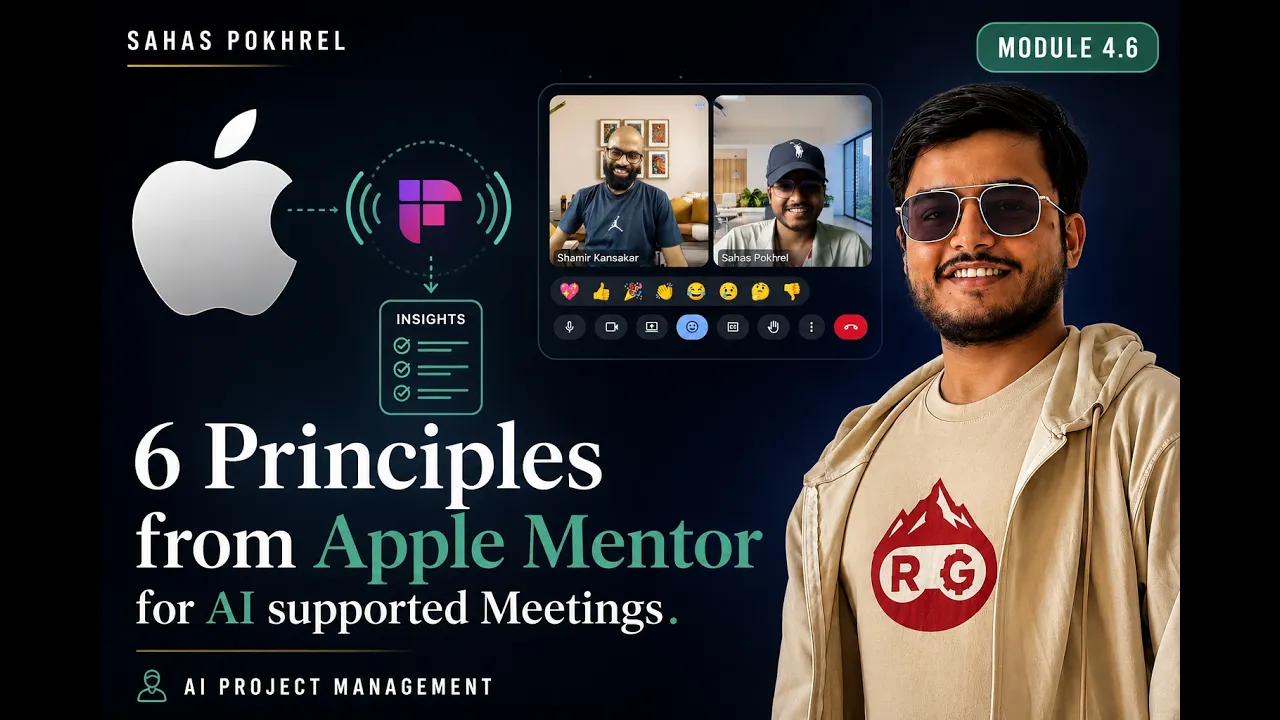
Okay. Now these are the principles that I opt for. Now I am going to showcase how I actually run through meeting by inviting one of the stakeholders into into this uh module. So Somi is going to join us in a meeting and I'm really thankful for Somi for making his time to attend the meeting. Uh I'll connect you with now how I follow all these principles in running a discovery meeting. >> Hi Sam, how are you? How have you been? >> Very good.
Very good. Sash, thank you for taking this time out. Yeah, it's really so nice seeing you in person. >> Same here. Likewise. >> Ah, so how's been the weather there? >> It's uh it's it's pretty wild. Uh uh season's picking up for sure. Yes. Uh but it's pretty nice. >> Ah uh yeah, that's good. Even for us like the wind is getting literally busier these days. Uh we are having a lot of string winds coming in. So I don't know what's going on here though. >> Yeah.
Okay. So yeah, last time uh I talked with JL and I got a lot of brief about the business and the problems. Uh I have gone through all of those details and I just wanted to carry on from there. >> Uh unfortunately I did send the discovery questionnaire but it it looks like you got uh really occupied and I couldn't find any responses over the documents. Yeah, sorry about that. >> Uh but it's fine. Let's go through them together.
Uh so Sam to summarize everything, what I would do is uh in this meeting at first we would go through the discovery questionnaire together. Uh so there are some specific set of findings that I have done I'll present with you and I'll also expect your thoughts feedback on those and based on your opinions we can then collectively decide on next steps from there. Sure, that sounds like a good plan. Yeah. >> Okay, that's all.
Okay, let me share my screen. Uh by the way, how is the business doing? How how are the sales these days? >> Uh it is it is picking up. Uh but but definitely and with the sales as well, it's the bottleneck that we are facing with the customer service. Um so uh greater the number with the sales uh the the the situation this you know the problem compounds. So yes uh yeah true true okay no worries. So so what I did was I identified uh there were some competitors um around the business.
I found Wolsworth uh I found Meyer and I found the Bunnings as well. So in this findings I would share what I really observed from this business who are who have been your competitors and how they are solving the problems that exist in your business. Um my findings are saying that they have already actually implemented some sort of measures in the system already and I already feel like we are behind but again it's not a thing that we need to fear for but it's more about like we need to really take some actions very quick.
Okay. So uh whenever I studied uh the market over there uh what I found was in terms of data entrance on how user are interacting with this product returning issue. >> Mhm. >> Most of the companies in Australia even so they are trying to leverage the AI tries at first >> and only after the AI did the categorization of the problem human were involved >> and even Gartner's reported saying that 62% of the retail customers service cases are first captured by the EI.
They are categorized and only then pass to human representatives if needed. >> Oh, I see. Okay. >> So that's how the market is uh going these days. The second thing was Australians people are more firstly using their mobile device on dealing with these issues. They're not using computers or any other device. But mobile has always been a priority for them. So the first point of contact has been a mobile initiating and having discussion on this on this kind of issues and sum the problem statement that you mentioned was about the customer satisfaction score >> but the market is saying about the deflection rate that means the number of issues if business is solving them without actual human being a primary point of contact.
These businesses were successing really well. >> And the other finding that I made was live chat versus inapp messaging are generally replacing the email taking email intake from the user. So rather than you sending me an email and we're talking over to it, user are finding more value out of live chat or like inapp messaging they talk about it. Uh while these are some exciting part of course in terms of market and trends but again Australian government is also being cautious whenever the customer data has been handled. >> Exactly. >> Because uh that is something that we also need to be aware of. >> Okay.
So these were my key findings and do you >> mind if I ask a question like so earlier when you mentioned where the first point of contact was AI uh do you know and you also suggested that uh live chats were taking over emails like when when they're interacting are they u are the other other options where they're talking over a phone or um like what is their point of contact in terms of being uh sorted out through AI first?
That's a very good question. Uh in fact uh whenever I did a background research on this one. So my general understanding for the channel of communication were mostly with email and then inapp messaging while you are very much valid about the phone calls. Uh let me get back to you after I just get into the data. So I would also check okay what about the status on phone calls? Well definitely yes uh there are no more phone calls being initiated by the customers themselves but whenever the service hours were over at those point of time again uh relying on chatbot and inapp messaging was again the compulsory right but I'll get back to you with a better response after >> because I was also concerned about some of the older customers who are not very good with emails and phone and they would rather just prefer calling uh than um than write something on a phone or device.
Ah, beautiful cash. Yeah, makes sense. Um, I think I need to do a bit of research on that aspect especially whenever we are treating the customers who are not into this new technology era but they are still opting for the phone calls and those channels. >> Yeah, that's what they're used to, right? Yeah. >> Yeah. Yeah. Perfectly. Yes. Yes, it does. It does. Thank you so much for this insight. I'll definitely give a look at and get back to you on that one.
Uh, is there anything else other than that? Sam, should I move? Yeah, very good so far. Yes. >> Okay. Now, uh the second thing was with uh I actually started using the system from Wsworth and Meer. Uh although because of privacy issue, I wouldn't be sharing it in this video, but what I would do is I'll share my findings. So with Wsworth, so they had a chatbot and it was named Olive. with Olive. Um I was able to do some conversation with him. >> Mhm. >> But the issue with Olive was uh whenever I did some discussion about returning the product, he was uh typical pointing me out to the random FAQ pages. >> Oh, okay. >> FAQ links.
But the way we started to solve this problem was to make our system autonomous and be the first point of leverage. Right? Mayer was one of the other platform which experience was really great for me. >> So with Maya as well whenever you visit the website you can find a chatboard of it and whenever you start talking about returning the product. Now it provided me two specific ways. If I wanted to return my product via in store visit >> Mhm. >> or via the email. >> Mhm.
And I think the best win for us at this with this two competitors is we still want to reduce the email intercom communication rather than make it more like inapp messaging. So we can just play a trick around and add a feature so that user can still be able to return the product via the live chat itself. >> Okay. >> So that is just my finding. That's how I'm thinking out loud for now. >> Mhm. >> Okay. Okay. So these are some findings that I made and I also let you know the industry trends.
Uh now let's go over to some of the questioners uh that I would be asking you so that I can understand more about the actual requirement because uh you have been in the business and I definitely know you have more idea on what works well in the business. Right. Okay. Well, I'll just share the experience based on um based on my um observations for sure. Yeah. >> Yeah. Sure. Uh okay. So, let me go down. Okay. Now, I'll start the tough question.
Okay. Now, since we realized with our competitors Wsworth and Maya, uh now they already have something ready. Uh now what I was thinking is summary like we have two different parts from here. One thing is we can build a customuilt solution like we can start building something from scratch >> right or there are already some chatboard app existing in the market. >> Mhm. >> We can just buy the service from them. >> Mhm. >> And start rolling out features from them. >> Mhm.
Now, what specific requirements or strategic reasons would prevent us from leveraging an existing market solution and going live faster? >> I mean, if from a business perspective, if uh using an already built system uh gets this product up to speed, uh I would prefer that whereas my biggest concern is again the the data privacy, how my customer data is being handled. And now I don't know much about the technical aspect of it, but I can um like I I I'm concerned if the uh the chat bots that are already out in the market is tailored and personalized um according to our business need and if they're you know if uh if we can actually uh ensure that um you know our business values are you know our branding values are reflected in how these chat bots interact with the customers because we do at the end of the day from my end uh the outcome that I'm aiming at is for the customers to be extremely happy to feel helped uh to feel that they are their problems are being solved because as you said earlier I I I even I know from the u my interaction with customers where people visit websites and they end up at a link but you know customers have they've already visited those website but if the chatbot point them to the same link that only add up to their frustration.
So yeah. >> Yeah. Very very valid. True. And sure. Now I can see a lot of things. Yeah. I can understand that anxiety somewhere. I can really really see that. But uh the the chatbot if we can scale it to the way the meer is doing rather than just sharing a link of our FAQ I think yeah that would definitely be of a great help for us. Yeah that that makes sense. A lot of things. Okay. Now is there anything did I answer my question?
Uh so did answer your question earlier? >> Yeah. Yeah. Perfectly. Now is there anything other than that that I need to capture? So what I understood was yes we can use the out of the box solution if they exist in the market. >> Mhm. >> Just we need to ensure the privacy is well respected of the users. >> Mhm. >> Our brand value is well represented to our customers >> and the customers are then should be happy. >> Right.
And I would say that for the technical uh and for from delivery perspective as well, one of the biggest factor is also the budget. Uh maybe you should uh help me understand eventually what are the budgeting pros and cons of using out of the box solution versus to actually build it from scratch. Yeah. >> Yeah. that >> and what makes me curious is also um from you as a technical um uh individual uh what is the advantage of building it from scratch if uh if we have the other already in place. >> Yeah, that's a very true points.
Uh so I would go with two different approaches. So if we if our goal if I understood you correctly our goal is to ship the functionality as soon as possible to the market. >> We have around 3 months time. Yeah. Yeah, we have three months of time and a USD $25,000 is the budget that we can actually a lot >> but S trust me if we start everything from scratch >> finding the customer data fine-tuning all our data making sure we are using the right piece of tool and things and such with just rough estimates I'm saying it's going to take us more than 8 months of time for sure and that is going to cost us more than the budget that we for now. >> Mhm. >> But on the other hand, if I see one of the most popular tools like Claude, their subscription starts from $20 per month.
And if it's too much of use, it's $200 per month. >> Right. >> And seeing the volume of users that we're trying to serve around 18,000 to 20,000 users per month at max. >> Mhm. >> The worst thing we can consume is about $400 of subscription. >> Okay. So I would still say let's leverage the thing that we have and uh I just want to say about budget so that we can work more with other aspect of integration like building an interface making sure user are able to land into the interface.
Now the interface works very smooth on mobile device and things as such. >> Yeah of course I I'm I'm totally with you. uh what I would like to point out is you know while budget is a very critical factor uh but what's non-negotiable for me is you know for the customer experience because at the end of the day uh you know protecting customer data and those are non-negotiables um and if you know the existing solutions for using other out of the box solutions uh kind of creeps into these non-negotiables then I would be concerned you know I'd be kind of happy to kind of jump the train and get into uh building something inhouse as Yeah. >> Yeah.
Valid good on that side then yes um yeah time is money. >> Yeah very true or what we can do is yeah I also want to respect how you are thinking and how that could also mean like okay you want to own those data into your own facilities. I can see that. So what if I suggest for the first phase of MVP let's opt for this out ofthe-box solution. Okay. So we leverage these tools once we start addressing our customer queries and once we start uh making sure the customer satisfaction score is improving what if we then start building things from scratch doing that what I would do is at first I would take care of the customer and your team will reduce a load on them and improve the customer satisfaction score. >> Sure. >> And then we can begin building things from scratch if we want that. >> Sure. because that would at least also be a test of our hypothesis that the system works.
Um, sure. >> Yeah, definitely. And I think that if if the business makes better with the solution that we implemented first, I think we can drive the profit revenue from there and invest in the second project, right? >> How um would you consider that a lot of the work that's been done in this MVP would also be transferred to the uh other other work? Uh I mean if you have to um >> I see your point. So yes Sam how I would see it is there would be few of the components that we would be using from the third party service provider >> but there would be some uh services or tools that we would be building as well.
So for the services and tools that we would be building yeah that would be reusable. It's just that whatever service we are buying from our third party that is something that we need to build from scratch. >> For sure. Okay. >> Okay. But we can come back to that later on because uh at that point of time we can have an in-depth discussion on that one. >> Yes. >> Okay. Now this is something uh that would literally make us more creative.
Okay. >> Now let's just set all the uh constraints apart budget constants everything apart. Now if if I allow you to imagine the ideal complaint management system for the system you want to intend can you imagine like how your system is looking like starting from the first touch point to the issue being resolving by itself for what I mean by that is like let's just imagine how should customer be able to reach out to your business to report the issue about the product and how business should be able to present the product and what would be the touch point interaction that customer can feel throughout the journey.
If is there any picture that is on your mind like okay they will open a mobile app they'll find a section to open the chatbot they'll just upload the data of the product they'll say okay this is not working this is not working then now then our AI captures the product details checks if that is from our store or not and if if that's a valid concern then it helps the user to return the product anything as such what you can imagine >> so um let's start with you know what happens in the store um so just so that you get an idea.
And also what we try to focus with our uh employee training is to make sure that uh doing in the customer success department we want them to come in and uh so the really hear them hear the problems out properly um where they there's an acknowledgement for if there's any issue that or any problem that they have happened. So they have all a very use respectful language to acknowledge their problem and then they ensure all their um documents are in place.
So it's brought from the bot from a one of their either from the same store or from a store from a different location within uh uh from other franchises as well. So they ensure all the documents are in place and then they would look into their the issue that's at hand. Um if uh if this issue is something that's carried um is it falls under the warranty or their uh their guarantee period of the of the product. um as long as all the documents are in place and the product is um and the and the issue is a is a genuine one and we would uh uh if if it's solvable within the store this is this is I'm kind of repeating in this instant where they actually visit the store.
So uh uh we have we have a small help desk at the uh behind every store um on the back side of the store. So our repair uh tech guys would take have a look at the um u the u the issue and if it's repairable at the same at the same uh moment they would have uh the customer wait out and and then then then the uh the tech guys would uh uh you know like take care of everything else if it if it's an issue with an because there could be other issues where it's not about a repair but an exchange um then uh given all the documents are in place um So uh the the customer uh would be um would be entitled for another uh exchange product uh in that uh uh exchange in uh kind or even a refund in that sense you know um which would be uh uh taken back uh with with in using the same transaction details that that was being used.
Yeah. >> Okay. So, I would imagine that if if anyone were to be using this in an app, um being able to first report uh the report the issue. Um, ideally, um, um, I would also prefer if they can use their if they can just record, uh, record their voice, uh, and be able to talk to someone or if it's a chat, then, um, using some helpful, uh, tools to, uh, first report um, and maybe uh, allow them to add pictures just so that uh, they can add pictures of um, the the issue at hand.
And uh they might even need to add pictures of the receipt um or upload the receipt um u some of those might include uh links that they used from an online uh store uh that they have some verification um details uh with their order order ID. Um and so getting some feedback about um that the issue has been um in has been under consideration. Um so so the customers should get some kind of feedback that the issue is being taken care of at at least uh within the uh concerned attention of the uh the tech guys and uh then I uh then I would imagine within 24 hours have some kind of followup in message or phone calls um and yeah send and then take it from there.
Now, now all of the work that happens during you know the verification of the object, verification of the issue at hand, all the um you know the purchase receipt uh now that takes a lot of time for our staff and if this could be done by the system and and the system already verify uh the the degree of the severity of the problem um so that they can kind of triage the issue to a certain department. Um uh it could literally be um to our warehouse where the new product has to be shipped or it could be to our health tech guys for for the issue to be resolved like for the repair work to be done.
So um uh doing all of that um and definitely uh tracking all along and giving uh updates. Now if this would happen within um 24 hours or within a short period of time um giving an at least at least one update but if this is going to take multiple days if uh a new product has to be shipped uh even the shipping would factor in shipping duration would factor in. So uh getting all those details uh to the to the uh customer because um um then uh then the customers will be informed enough to know that what what stage their um their complaint is in.
Uh and um um there might be a case where some of the uh shipping uh we might need to ask the customer to ship the product. So we might need to uh give them uh a shipping uh label that the customers can print out um um uh from at home. Um so at least being able to generate those shipping labels that the customers can use to ship it for free. Um um uh and yeah so that's what I can imagine in terms of uh the the issues being validated um uh the whole process being tracked for for ourselves and also for the customer and um yeah it'd be great to have some kind of feedback at the end for sure um like after the entire process is uh completed and having some feedback as to how the process went and that also help our sales team to grow.
So yeah, this as um does give you some idea but definitely please feel free to ask questions so that that I can elaborate. No, sorry. Trust me, I'm so happy that you brought everything out. Uh in fact, whatever I was also thinking around I got the loud answer away on that one. Thank you so much and sorry if I pushed your creative jone and asked you to solve. >> No, not at all. Yes. >> But I think 247. Yes. >> Yeah. But what I believe is the way you understand the business while um I have seen how the system work and what could be the best way to for the system to work but you know how the business better works right everything sounds perfect for me Sami just one question on a followup so I would give you a specific use case I'm a user I got a product from your store I realized it was faulty okay now since I took the product to my home I don't want to come to your store again and I just want to make sure okay I read the document I I read every criteria I'm not asking for refund but I would say replace my product but I don't want to come to store >> so at that point of time uh what would be a ideal use case so just imagining with what you have said I'll raise an issue I'll make sure to reach out to the respective department that would be with I think shells or something that would familiar with that one >> and then I'll request for the uh new product and if I want to have a new product without visiting the store if I can just give the details from the website itself.
Okay, this is the product I want to replace it with. So we'll we allow that customer to place the order and ship that product on behalf of them. But we need to make sure that we are also receiving the faulty product from them. Right. >> Right. So at first uh are we like sending a vehicle or the shipping uh service to the customer's address picking that product verifying if that whatever claims he has done is valid or not >> and then sending back him with a new parcel if he does not want to visit the store.
How would that work? So ideally I would um so uh in this case we would send them a shipping label that is already paid for from the from our company so that the customer just has to print the shipping label out past it on a box or put put all their original receipt. So this would be part of their uh their refund or replacement policy itself where they have to include all the original receipt documents u include the object in the uh in the item in the in the same original box.
If all of that is in place and and the and the system and then the customer puts the the label that is already paid for, then the customer only has to visit uh the nearest post office uh in their locality and then we'll receive it. So that is how it goes where we send them a paid uh shipping label and the customer uses that label to um ship the product to us and uh we would know the status of the um the the product shipment and based on once the product is being shipped out of the it's already shown in the in the in the system um we know from the postal office then we uh we actually first uh take I mean um uh you know assess the situation at our store and only then we release the next product out. >> So, >> so we we do verify the issue is genuine um uh I mean we we trust uh the system but at the same time uh yeah uh we also want to double check um that uh you know the issue is genuine uh and so so if I answer uh if I would answer the any replacement or exchange it happens only after the old one is accounted for.
Yeah. >> Ah yeah it makes a lot of sense. uh also coming back the way I solve this issue is okay customer repost the issue it escalates first thing we would check for the documents within our policy and see if that claim by the user for return or like requesting for new item validated not and if that is validated then we will send a free shipping label for the customer to print out then we will see the product once it comes store, verify it again and if it meets with all of our policy documents, then we would ship the new item based on customer preference that if they want to personally visit the store or we they want this item to be shipped to the respective address. >> Sure.
Um yeah we could so so it does save uh the initial screening um right >> um we we do um even in the previous example that I shared we would have uh our customer service representative like talk to the to the to the person in u over the phone at least um and >> and um so verify uh uh at least like uh over the phone verify the issue uh but uh I mean the it would only be verified in system once um um you know the the product is at the at the storefront once it's returned and once it is assessed physically yeah >> ah yeah valid valid thing makes sense yeah I think I have captured the entire essence of the useful and I'm really happy that you have shared all of those things uh that's a really productive discussion that we did now the next step what I would do is samir uh we would go through don't worry about having all the system ready within few iterations like first I would say the design of the system how it looks like these points these use case example in the system architecture design and we will just review them together later in this project and collectively we'll decide if that makes sense or if we need any further meetings to explain those things are we on the same page or not and then make the decision so yeah everything's fine I have captured the highle overview and I know how should I think from here. >> Okay. >> Okay.
Now, uh there's a last question I'm going to ask you. Uh definitely I'm going to make this video sort of for the audience. Uh I know we can have a lot of discussion under this. uh but as as far as now I have uh brought my research industry trends and I have asked uh the specific question but is there anything uh that is inside your mind and that I have not covered or like I did not capture it much so did I miss anything important that is in your head but I did not capture it well >> uh so far so good um it's a I it I I I was very curious in terms of um um you know if I were to do only chat bots versus if we could also include phone call if you could somehow in um entertain phone calls as well that'd be great um because um I I can assure you that although a lot of the younger demographics are fine with emails and um um the older folks would definitely prefer um some someone talking um over the Um, now I don't know if you guys can automate the system even over the phone or have um someone sound as as real as humans. >> That's a very yes >> beautiful question.
Thank you so much because yes um at the beginning only I realized okay that was a part that I I did not touch >> uh by the way. >> Mhm. Because you know then then that way we could uh recapture the entire customer base. Uh the young and old are fine with devices and also who are not very comfortable with devices but just uh can at least have a you know uh a very productive >> it does and it makes a lot of sense for me.
Uh just a question that I that came in my mind while we were discussing this like do we have any data like in terms of how many customer complaints are actually coming from phone calls versus how much are coming via the other channels be it email be it like uh any other sources right uh >> yeah so u for a for a um for a top level view um so far um we've almost um 60% um I no I would say it's an it's a it's almost uh half of most of the complaints are handled uh over the phone or they now now the store visit has increased even more but so the they they're handled over the phone so far otherwise it's through email so it's almost um so phone is pretty significant in terms of how people are talking to the the customer sales representative yeah but the other thing that I would I feel hopeful about the system is that you know a lot of the issues that people face over the phone are pretty repetitive and um so maybe and and from the employees perspective uh that will save them you know having to kind of parrot the same thing over and over again uh versus if the system can handle it uh that would also really help >> makes a lot of sense and thank you for bringing in light >> I have really realized the important aspect that I was going to miss if I did not ask you this one now it has entirely changed my understanding on how important the phone calls she was.
Okay. Yeah, that that's a really uh nice insight. Samir, thank you so much for sharing this. >> Uh yeah, I think we have covered pretty much of uh topic for today. Uh before we end the call, is there anything that you want to share with me in terms of feedback, in terms of like uh anything that's in your mind? >> Actually, working together like having this conversation, it gives me better context and u again I apologize for not um responding to the questioner earlier, but I think doing this together was even more fruitful. >> Yeah, absolutely.
Thank you so much for your time. S have a lovely day. Bye-bye. Take care. YouTube. Take care.
The words are the caption track's own and nothing is reworded or re-transcribed. Paragraph breaks are placed between sentences so the text reads as prose.
Free tools for your own script: paste a draft and see where it stands before you record it.
Paste your draft and see where viewers are likely to drop off, with a rewrite for each weak line.
Paste the first 30 seconds of your own draft for a hook score and rewrites.
Check your draft against YouTube's advertiser-friendly guidelines before you record it.
Read this channel's public videos and transcripts, and download a writing brief for it.