Getting the transcript
Reading the captions from YouTube. A video nobody has opened here before takes 10 to 30 seconds; this page fills in on its own.
Getting the transcript
Reading the captions from YouTube. A video nobody has opened here before takes 10 to 30 seconds; this page fills in on its own.
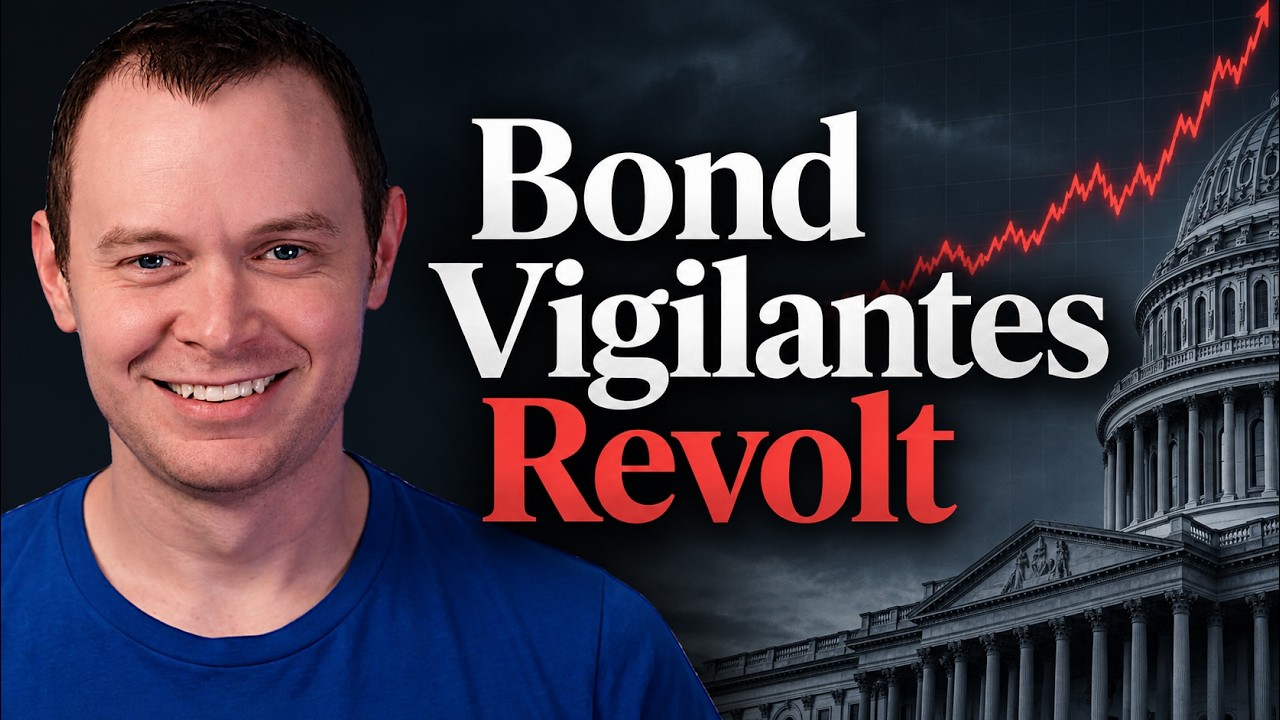
Benjamin Cowen · @benjaminjcowen
This video has no Most replayed graph yet: YouTube shows one only once a video has enough views. These are the moments viewers replayed most in Benjamin Cowen's most watched videos.
Most replayed moment at 15:25
3.2x that video's typical replay level
take profits. And again, my strategy back then was I I'd bought Bitcoin and a lot of altcoins over here. As Bitcoin started to climb this thing, I started taking Bitcoin out and and DCA'ing Bitcoin for altcoins, then letting the altcoins run, and then taking profits
Said at 15:18
The graph counts replays. It does not show where viewers stopped watching.
Words
4,633
Runtime
29:13
Speaking pace
159wpm
Reading time
19min
159 words per minute, below the 160 25th percentile of 349 measured videos. That distribution comes from the 349-video hook study.
Opening (first 30 seconds)
Hey everyone and thanks for jumping back into the macroverse. Today we're going to talk about the soaring yields that are occurring right now and what that likely means. If you guys like the content, make sure you subscribe to the channel, give the video a thumbs up, and check out the sale on into the cryptoverse premium at intothecryptoverse.com. As a reminder to get your ticket to the first investing through the cycles conference uh taking place, main conference
80 words, the words spoken in the first 30 seconds at 159 words per minute.
Free, no signup. See how the first 30 seconds hold attention, with rewrites.
Sentence shape
| Measure | This transcript |
|---|---|
| Sentences | 290 |
| Average words per sentence | 16.0 |
| Longest sentence | 89 words |
| Questions asked | 53 |
| Sentences containing a number | 56 |
Most used terms
Filler phrases
124 in total: like 36 · right? 34 · you know 13 · I mean 10 · uh 10 · um 6 · basically 5 · actually 4 · sort of 4 · kind of 2.
A literal whole-word count of the same phrase list the Prepublish browser extension uses, so a phrase inside another word is not counted and a phrase used in its ordinary sense still is. It is a count and not a judgement.
What this transcript is
Every word below is the caption track YouTube publishes for this video, pulled from the video itself and reproduced unchanged. It is not Prepublish's writing, not a summary, and not a re-transcription: it is the video's own published captions. English captions, generated automatically by YouTube, in the video’s original language. Source: the video on YouTube. A channel that would rather this page did not exist can ask for its removal through the contact page, and it is removed.
Hey everyone and thanks for jumping back into the macroverse. Today we're going to talk about the soaring yields that are occurring right now and what that likely means. If you guys like the content, make sure you subscribe to the channel, give the video a thumbs up, and check out the sale on into the cryptoverse premium at intothecryptoverse.com. As a reminder to get your ticket to the first investing through the cycles conference uh taking place, main conference day is November 21st.
We'll have some stuff uh Friday night of that before the Saturday as well. We've got a lot of great speakers coming. So, I hope to see you guys there. Let's go ahead and jump in. So, yields are absolutely soaring right now and we've been discussing this move for a long time, right? So the macro the macro views actually continue to pan out in the sense that the 10-year is now approaching 5.2%. And the 30-year is nearing 5 12%.
So the long end of the yield curve is sending a message to the Federal Reserve that yields are simply not high enough. They are not. And when you're in an inflationary environment, right, where inflation has been an issue for years and years and years and years, it does not take much for inflation to start moving up again because a lot of it is a mentality, right? If if everyone thinks that inflation's going to go up, then a lot of businesses just simply raise their prices, which then of course continues to lead to more and more inflation.
So expectations of inflation going higher can often be one of the reasons that inflation goes higher because a lot of businesses don't want to get don't want to feel like they're getting left behind on earnings. So they raise prices. Now with the 10-year as it stands right now 5 point almost 5.2% at some point this is going to put downward pressure on earnings. Now, this has happened many times over the last several years, and I I want to sort of communicate what happens and what you would expect to see happen with, for instance, the 10-year yield or the 30-year yield.
There's a there's a common saying, and I I think that it's worth remembering, and it is the solution to high rates is high rates, just like the solution to high oil prices is just more high oil prices. That might sound counterintuitive, but it actually makes a lot of sense. In order for yields to come down, oftentimes they have to go up first. It It's kind of this like weird relationship, but this is what happens. Okay, yields go up, right?
They go up and then while they're going up, they will occasionally invoke a growth scare, right? something will happen and people will get more concerned about the labor market than inflation. Now, so far all of those labor market concerns were short-lived. But even though they were short-lived, what happens is that you'll see the yields spike and then come down when there's sort of a scare in the market, right? You'll notice that yields went up uh into 2022, like late 2022, and as they were going up, the market started to go down, right?
But it it it wasn't necessarily immediate. But then yields bottomed here around uh the the banking crisis, sort of the Silicon Valley bank stuff back in 2023 when people were getting more worried about, you know, the the not inflation but other issues in in the markets. But then yields went up again, right? And then they came back down as people became more concerned about the labor market. And if you guys remember back in back then there was concerns about um you know the unemployment rate heading higher and and that would often send the yields back down.
So what you're seeing right now, you're seeing the 10-year and the 30-year, they're going up. And so what will likely happen within a, you know, within a few months is that there could be some type of a scare because of this. because when when yields go up, it pressures long duration assets the most. Now, historically, it would affect the riskier stuff the most and therefore you would argue that things like Bitcoin should not do as well under that environment.
Now, one of the things that you're probably thinking is, well, hold on a second. Bitcoin's at $84,000. So, like what's been talking about? How could how does this make sense? If if yields going up are bad for Bitcoin, why is Bitcoin up? Well, first of all, I got that wrong, right? I you know, I I thought that Bitcoin wouldn't go up, and I am still perplexed by this to be completely honest, and I'm trying to, you know, not be as deterministic.
But when you think about what has Bitcoin accomplished over the last many, many years. Now, when you look at Bitcoin's valuation against the S&P 500, what you'll see is that it's basically at the same level it was at in 2021, right? Like it hasn't gone anywhere really. And that is likely an artifact of this higher interest rate environment, a higher, you know, with with the 10-year and the 30-year soaring. If you were to overlay that onto this chart, like if you just look at the 30-year overlaid with the Bitcoin price divided by the S&P 500, what you'll see is that ever since yields started really moving up, Bitcoin has often underperformed just buying an index fund.
Now, if you buy the exact low of Bitcoin and sell the exact high, then you outperform the S&P. But if you're just dollar cost averaging, you know, you're probably not really outperforming the S&P over the last four to 5 years. As you can see, the valuation of Bitcoin against the S&P is at the same valuation it was at in 2024 and, you know, earlier in 2026 and then also in early 2024 and early 2022 and then late 2021 and also at the same valuation as in early 2021 in January.
So that's what I mean. Sometimes you have to compare this stuff not against the US dollar but against other risk assets and crypto is going to be affected the amongst the most from rising yields and that's one of the reasons why you've seen altcoins underperform the last four to five years right like that's why if you look at the valuation of altcoins against the S&P like if you look at total three divided by the S&P 500 like altcoins are are haven't really done much of anything for many many years.
But the reason is because yields are so high, right? I mean, you could argue that a lot of altcoins are just a zero interest rate environment phenomenon. That doesn't mean all of them are, and it doesn't mean that some can't survive, but what it means is that a lot of them only existed when money was free. When money is more expensive, when the price to borrow is more expensive, then frothier assets underperform. And this is the reason why in general altcoins have underperformed.
Not only they've underperformed the S&P, but they've also underperformed Bitcoin for many, many years, right? I mean, look at all Bitcoin pairs. They've underperformed. Now, some of you might be thinking, well, at some point this thing could shoot back up. But if you look at liquidity conditions, if you look at liquidity conditions, you'll notice that the major alt seasons of the past in 2017 and 2021 occurred where this when this liquidity risk metric was much lower.
When it's tight, which is what it is right now, when liquidity conditions are tighter, it's much harder to see that durable rotation. That doesn't mean you can't have rallies, right? and we're seeing, you know, we've been seeing one recently. So what, right? I mean, we've seen that many, many times. And and so I think one of the things to to consider with with crypto is that yields going up essentially cause crypto to underperform a lot of the markets that it previously outperformed.
And so if you've been sitting here since like late 2021 scratching your head and wondering why a lot of the altcoins, I'm not talking about your alt obviously, but if you're wondering why a lot of the altcoins haven't really done what you saw them do in 2017 and 2021, it's because yields just keep going higher. And when yields go higher, it affects it affects long duration assets the most, which includes cryptocurrencies.
So, when you look at the 10-year yield and you see it going up, why why is it going up? Well, there's several reasons, right? First of all, there were tariffs. And it doesn't really matter, you know, what your political view is. Like, I don't really frankly care about this channel is not for political views. But when you artificially introduce a tax that's going to raise prices, it just does. And of course, it affects the consumer.
And now I know there's arguments that other people are paying for the tariffs, but then why what was the reason for the celebration when some of these tariffs were removed if other people were paying for them, right? So arguably the US consumer uh was was paying for that. And so the problem now is you have tariffs and then you also have a war in the Middle East which is causing oil prices to continue to go up. So if you look at oil prices, they have done nothing but basically go up for a while now.
And Trump has said that he has really no intention of dealing with this until after the midterms. Well, if oil prices continue to go up like this, I mean, you know, it's not going to take many more weeks for these for oil prices to just continue to climb, and then that's really going to force their hand to come to a a decision. So you have the tariffs, you have the crisis in the Middle East, and then the last thing that probably gets ignored too much is AI.
Artificial intelligence over a long period of time is disinflationary. Why? Because it allows companies to not hire as many workers to to do the same thing, right? They don't have to do as much. um like it it workers are more productive. When you have productivity waves, it makes the economy more efficient, earnings go up. But when you have a major technological revolution that's driving that increase in productivity, what happens is in the short term it's inflationary because there's all this demand for the buildout of the technology.
So if you think about it, while artificial intelligence may be software, the buildout from artificial intelligence is not. If you require chips for to for AI, that requires data centers, okay? And that requires energy, which requires an expanding power grid, which then filters into the larger economy. So that is all inflationary. So the forces from AI in the short term are inflationary, but in the long term are disinflationary.
They're deflationary, but we're still on sort of the up move of it being inflationary. We haven't reached the point where AI has become more of a deflationary thing. So, what's interesting about that is that the same forces that are inflationary today and causing the Fed to raise rates in terms of AI will be the same forces that eventually cause the Fed to lower rates in the future. But because we're on this side of the buildout, it's inflationary now.
So, you have tariffs, you have the war in the Middle East, and then you have inflationary pressures coming from the buildout of AI and all the demand. And you add that all together and you get inflicky inflation. And when you have inflation that is sticky and the market is more worried about inflation than a than the labor market, yields have to go up, right? They're they're going to go up or down. The market's either more worried about inflation or and growth or and and too much growth, right? where things are getting too hot or it's worried about things slowing down.
So, it's either going to go up or down and right and for months, for a while now, I mean, really, really, ever since February of 2026, yields been going up. What happened in early 2026 that kickstarted this? That is a great question and I'm glad that you asked it, okay? Because what happened back then if you overlay interest rates onto the chart, right? You might look at this and say, "Well, interest rates really didn't do anything." So why why did why did this change?
Like what what actually happened? So what I want you to look at is we're going to add interest rates minus the 2-year yield. Okay? Interest rates minus the 2-year yield. So look at this. Right now policy is no longer restrictive if you assume the 2-year yield is approximately equivalent to the neutral rate. Now the neutral rate means that when the when the Fed funds rate is above the neutral rate, the economy should contract.
When it's below the neutral rate, the economy should expand. The Fed funds rate didn't go anywhere. But the 2-year yield went up for months. And if you draw a line at zero, you can see that for years, policy was restrictive. If it's above the white line, policy is restrictive. If it's below the white line, policy is more accommodative. You see it? It's more accommodative. And so what's what's happening is that the neutral rate theoretically changed, but Fed funds rate did not change commensurate with the neutral rate.
If you look at if we go to the to the workbench on the website, I think I saved it, maybe not. We can add on here a couple of things and it'll help kind of showcase what I'm talking about. What we're going to look at is we're going to look at interest rates by the Fed and then we're going to look at the the 2-year yield. And what we're going to do is we're just simply going to overlay them. So, let's change this to the 2-year yield.
We're going to overlay these two things. And what you'll notice is that the Fed follows the 2-year yield. That's what it does. You see how the the blue line, which is the Fed funds rate, will follow the 2-year yield. But look at what happened back in 2026, early 2026. The 2-year yield went above the Fed funds rate. And when that happened, look at the 10ear. When did the 10ear start going up? In early around March of 2026, the 10ear started going up at the exact same time at the exact same time that the Fed funds rate crossed above the 2-year yield.
So from that point, from March of 2026, the market has been more worried about inflation than a recession. And this is more clear when you simply look at the unemployment rate, right? If you look at the unemployment rate, it's been trending down all year, basically. So, why should the market be worried about a recession when the unemployment rate is trending down and the Fed funds rate is not keeping up with the 2-year yield?
So what normally happens is the solution to high yield is high yield. The solution to high oil prices is high oil prices. So when the long end goes up eventually it will force a growth scare because the long end going up again affects long duration assets the most. It can hurt earnings. That doesn't mean it's going to immediately push us into push us into a recession, right? I'm not saying that. What I'm saying is that it hurts earnings when that happens and that can lead to a growth scare and that's where you see yields dropping.
So sometimes in order for yields to drop, you got to go up first, right? You go up and then they drop back down. We're in the up phase of yields right now because the market is saying, look, the 2-year yield is at 4.9%. Right? It's at 4.9, but the Fed funds rate is at 4%. So, we are 90 basis points short of restrictive policy, 90 basis points. And assuming that the Fed funds rate, assuming that the 2-year yield does not change, which it likely will, but if you assume that it doesn't, it's going to take until mid2027 for the Fed to get to a more restrictive policy.
Okay, till mid 2027. Ray hikes in of themselves are not intrinsically bearish. If anything, what they mean is the economy is fine. That doesn't mean you can't have corrections in the stock market. we have, but we went from pricing in basically no rate hikes in 2026 to now pricing in three because we already had one and we're probably going to have two more. And we talked about those for a while that the Fed would likely raise rates in September.
And I would argue they should probably go ahead and raise rates again because if they don't, if the Fed does not raise rates in October, the bond vigilantes will just continue to revolt, which will pressure risk assets even more. So these are the things to consider as it relates to yields. Now, when I say pressure risk assets, again, that doesn't always immediately have to have an effect, right? the the stock market and and and Bitcoin don't always respond like the second that yields start to go up.
Sometimes it takes a while, right, until it starts to really show up and people become more worried about growth uh about the labor market rather than inflation. But we have we clearly haven't reached that point yet, but if yields continue to go up at the pace that they're going, it could it could certainly be something that that happens. So, I think the Fed's in a tough spot. And I know that the president wants them to cut rates, but how can you cut rates?
Inflation's back, right? I mean, inflation's coming back. It really never left, but now it's starting to pick back up. And the yield curve is telling you that policy is accommodative. I don't think they're going to do it, but at some point, you got to wonder why not go ahead and raise 50 basis points rather than have because if what did they do last month? the Fed raised 25 basis points, yields went up anyways. Now, some people will misinterpret that and think that yields are going up that the long end's going up because the short end's going up because the Fed raised rates.
That is not true. The long end does not go up because the Fed raises rates. The long end goes up because the Fed's not raising rates enough. If the Fed were to raise rates 200 basis points, I can practically guarantee you the long would go down. But they're not going to do that right now, right? So to bring the long end down, the Fed has to raise rates. In September, a 25 basis point rate hike did nothing to calm the long end.
Do you think if the 2-year yield is approaching 5%, then getting the Fed funds rate to 4% is going to make people less worried about inflation? No. If anything, we're looking at this and saying it's going to take them half a year, more than half a year, almost a full year, like n 3/4 to get back to where the 2-year yield is now. Now, the 2-year yield will likely change. And if the 2-year yield comes back down some in a growth scare, then maybe the Fed does not have to go all the way back up to 5%.
But the point is is as it stands right now, you could argue that monetary policy is too accommodative for the environment that we're in. And until the Fed actually means business, the long end will likely continue to go up. That is the the path of least resistance until there's a growth scare. We've had them, we've had plenty over the last several years, but until there's a growth scare, the long end will likely go up, which will pressure riskier assets, right?
Like that puts pressure on risk assets. And that's what lead that can help lead to uh uh corrections in the market. Not necessarily like, you know, massive draw downs, but it can lead to corrections in the market when the long end gets away, which is what's been happening uh for a while. So, I'm perplexed, too. like honestly about about what Bitcoin has done here. I'm not going to pretend like I'm not. I am in the short term.
Like absolutely I am. And from a technical perspective, like all the TA guys, if you're looking at the golden cross and and and all that stuff, it's textbook, right? Like it's textbook. All I would say is this. It is textbook for now. And any good trader has to be willing to pivot. If at any point over the next week or two, you see the close back below the May high, that would be a a um a bearish reversal, like a really bearish reversal.
That's not what we're seeing now. Like I want to be clear, like we're still above it. But if that were to happen, the reason it would be happening would likely be due to the long end continuing to scream higher and the Fed not being willing to do what they need to do. I don't know if this is a fake out or not. All I know is I was wrong because we took out the May high. And even if it is a fake out, it doesn't mean you got to go put in a new low, right?
I want to be clear. But this has certainly humbled me. I'm just trying to communicate to you guys what how all this macro stuff fits in, why crypto has underperformed the market for so many years. And when you look at, as we showed earlier, if you look at the liquidity risk metric, the reason you don't have durable rotations into higher risk assets is because liquidity is too tight. And there's a difference between liquidity and monetary policy.
Okay? There's there's a there's a big difference there. So I I don't I hope people don't get confused by that because sometimes they'll say well monetary policy is accommodative but liquidity conditions are still somewhat tight. If you look at global net liquidity you'll see what I'm talking about. So global net liquidity is current if it's an approximation right it's currently at around 25 trillion if you sum up central bank balance sheets the ones we have written down here in 2021 this was at like 30 trillion.
So when you wonder like why crypto has underperformed is because there's not nearly as much liquidity as there was back in 2021. And crypto has gone through this before. It went through it in 2018 2019. What you're seeing now was just a larger version of what we saw back then. The problem is in order for this thing to really go up, you need a crisis, right? You need a crisis. Last last time it was the pandemic. The crisis led to money printing.
But you can't have money printing in the same way we had back then without a crisis first. And if you don't have a crisis, there's just no reason for liquidity to change. And it hasn't changed for years, right? Like I mean, it's been this way since 2023. Liquidity conditions haven't really changed. That's why crypto has underperformed every like a lot of other markets since then. In order for this to change, there has to be a reason for it to.
But with the AI buildout, it's made it so that it's hard, right? Like it's hard. AI the capital expenditure over there, the demand, it's it's continue to be bullish for the stock market. And until that changes, you just don't have a reason to for the markets to be rescued. And if you don't have the reasons for the market to be rescued, then crypto underperforms other markets. So, I know that this this should have sounded controversial when I made these statements four years ago in 2022 because I'm sure everyone will looked at this and been like, well, you know, we're going to Bitcoin's still going to go up.
And it did, right? I mean, Bitcoin went into a normal bull market. But that's not the issue. The the problem is that it underperformed other things over the last 5 years. That's that's the issue. It's not that it can't go up. You can still have bull markets. It's just that there's something called opportunity cost, right? If you're going to put a dollar into Bitcoin and it's going to give you the same return as putting in the S&P over 5 years, there will be some people that question why they take on the extra risk.
I'm not saying that you should do that. But I'm saying there will be people that question it, especially with some of the hacks that you've seen and and the concerns with some of that stuff. So, in order for Bitcoin to durably outperform, you need losser policy. You can't have loser policy until there's a crisis. There's not a crisis yet. And frankly, yields going up, while it might lead to a a short-term growth scare, I don't think it's yet going to lead to a crisis that that really allows for money printing just yet.
We'll see if that changes. Be flexible on that. But as it stands right now, I mean, as it stands right now, the S&P is basically still at all-time highs. So, um, again, there's no reason for for liquidity conditions to change when stocks just continue to put in new all-time highs after new all-time highs. So, watch the yields. Watch the yields. They're screaming higher. They're demanding rate hikes. They're demanding accountability for inflation, and they're just not getting it.
So, until they get it, the bond vigilantes will continue to revolt. If you guys like the content, make sure you subscribe to the channel, give the video a thumbs up, and again, check out the sale on ITC premium at the cryptoverse.com. Make sure you guys get your ticket to the ITC conference. We'll be talking about where in the cycle are we? That'll be one of the main themes of the conference. We'll be talking about a lot of different markets.
Check it out. We got a lot of great speakers coming including Michael Sailor, Grant Cardone. Um, we got Carson coming, Yusco, Allesio, Rastani, James Czech, Mike Mclo, the list goes on. Guy, Rob, Gareth Sal, David Lynn, a lot of great people coming. Jason Pazino as well. Um, and and more. So, I hope I hope that uh to see you at the conference and I hope that it's a a good discussion as to where in the cycle are we. Thank you guys for tuning in and I will see you next time.
Bye.
The words are the caption track's own and nothing is reworded or re-transcribed. Paragraph breaks are placed between sentences so the text reads as prose.
Free tools for your own script. No signup, no login.
Paste your draft and see where viewers are likely to drop off, with a rewrite for each weak line.
Paste the first 30 seconds of your own draft for a hook score and rewrites.
Check your draft against YouTube's advertiser-friendly guidelines before you record it.
Read this channel's public videos and transcripts, and download a writing brief for it.