Getting the transcript
Reading the captions from YouTube. A video nobody has opened here before takes 10 to 30 seconds; this page fills in on its own.
Getting the transcript
Reading the captions from YouTube. A video nobody has opened here before takes 10 to 30 seconds; this page fills in on its own.
Philip Anders · @PhilipAnders
Words
6,535
Runtime
37:43
Speaking pace
173wpm
Reading time
27min
173 words per minute, between the 160 25th percentile and the 181 median of 349 measured videos. That distribution comes from the 349-video hook study.
Opening (first 30 seconds)
It's 2026 now. Print on demand isn't really new anymore. So many people are doing it. We've got AI now. Is it even worth it still starting to sell t-shirts? Yes. I think 100%. When you look at the industry, so not only are is print on demand, you know, a well-known, I don't like to call it a business model, but like a well-known fulfillment model for people, the industry is still growing. So there's tons of charts and data out there showing that print on
87 words, the words spoken in the first 30 seconds at 173 words per minute.
Free, no signup. See how the first 30 seconds hold attention, with rewrites.
Sentence shape
| Measure | This transcript |
|---|---|
| Sentences | 376 |
| Average words per sentence | 17.4 |
| Longest sentence | 85 words |
| Questions asked | 29 |
| Sentences containing a number | 36 |
Most used terms
Filler phrases
469 in total: like 229 · um 102 · kind of 63 · you know 40 · uh 18 · I mean 4 · literally 4 · right? 4 · actually 2 · basically 2 · sort of 1.
A literal whole-word count of the same phrase list the Prepublish browser extension uses, so a phrase inside another word is not counted and a phrase used in its ordinary sense still is. It is a count and not a judgement.
Run the check on the words above: where attention is likely to drop, with a rewrite for each weak line. The free check shows the scores and the one issue costing the most.
What this transcript is
Every word below is the caption track YouTube publishes for this video, pulled from the video itself and reproduced unchanged. It is not Prepublish's writing, not a summary, and not a re-transcription: it is the video's own published captions. English captions, generated automatically by YouTube, in the video’s original language. Source: the video on YouTube. A channel that would rather this page did not exist can ask for its removal through the contact page, and it is removed.
No Script X-ray for this video: YouTube shows a Most replayed graph only once a video has enough views.
It's 2026 now. Print on demand isn't really new anymore. So many people are doing it. We've got AI now. Is it even worth it still starting to sell t-shirts? Yes. I think 100%. When you look at the industry, so not only are is print on demand, you know, a well-known, I don't like to call it a business model, but like a well-known fulfillment model for people, the industry is still growing. So there's tons of charts and data out there showing that print on demand is growing at 24% year over year.
So that's a huge number. You know, with an industry growing at that rate definitely people can still come in. You can still stand out. You can still sell t-shirts. And I think just specifically for Shopify and selling on your own brand t-shirts are a great place to start for print on demand. Everybody owns, I think the average is everybody owns seven to 13 t-shirts in their like wardrobe. So there's plenty of buyers out there.
You always need to be, you know, dressed in clothes in public at least. So it's a great thing to start with. And, you know, clothing and t-shirts that's something that AI is not going to be able to replace. So I think it's a great a great product to still sell and start selling in 2026. Do you think it's gotten harder like if someone was to start 10 years ago in this kind of the the early days of people sharing it on YouTube, AI wasn't a thing yet?
Do you think back then it would have been way easier to succeed? No. I think I think the market has definitely changed. I think it's easier now than ever before to start a print on demand brand. Um just with all of the tools, the resources. I mean, just ChatGPT alone asking questions when you hit a roadblock. Like it's going to be able to answer stuff that like 10 years ago you had to go completely searching for down rabbit holes like maybe in Reddit threads to figure out like how am I going to get past this like roadblock that has come up.
So I think it's easier now than ever before to get started. Um and I think with that has come with well then how do I stand out if there's all these tools that everybody has access to? Um and I think it mostly just comes down to the way that you are able to separate yourself from everybody else in the industry. So it was funny our team this past year in [clears throat] 20 all of 2025 we started a brand new brand in one of the most what people claim is the most saturated niche that they think is the hardest niche to stand out in and that's like outdoors hiking.
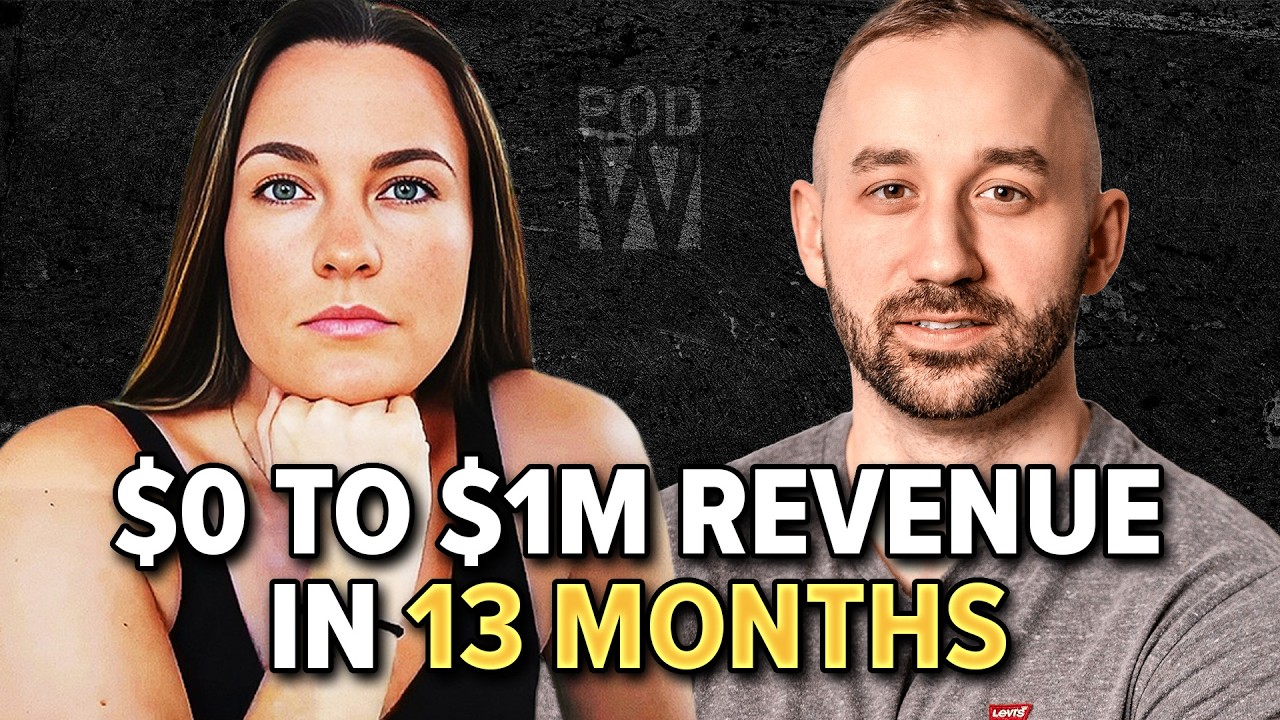
Um and so we were like, let's do it. Let's just create a hiking store and we'll see what happens. And in 13 months we were able to get the revenue to over a million dollars in sales. And it just kind of showed even in the most saturated print on demand niche you can still stand out. You can still build a seven-figure business, a six, seven-figure business, whatever your goal is with print on demand. It's just coming up with your creative angle, the way that you're going to stand out amongst the other hiking stores that are out there or whatever niche that you're in.
And I think as a beginner obviously doing that without any of the knowledge that you have is going to take longer, but that would have been the same 10 years ago too. I don't I don't think 10 years ago a beginner would have, you know, had any other experience in terms of the learning curve and and taking way longer to build up to to those kind of numbers. It's just that the tools back then and the the educational material was less or less powerful.
Correct. Yeah. Um I think specifically for print on demand for Shopify was kind of in this weird spot in the market. Um because when you think back to, you know, 5 to 10 years ago, the marketplaces that's where primarily print on demand was the biggest area like the biggest market was right there on the marketplaces. But at the same time that print on demand was on the rise in the marketplaces, you had drop shippers on Shopify who were, you know, creating standalone stores um finding these viral products.
But the problem was those products were essentially they were just going for virality and it would fizzle out. So like fidget spinners. I feel like that was the biggest like drop shipping thing for forever. Fidget spinners lasted for what? Maybe 6 months and after that everybody had a fidget spinner or you had multiple and, you know, when their sales dipped it was like, okay, time to find the next viral product that I can put on, you know, TikTok or Instagram to sell through all the inventory.
So Shopify print on demand was kind of in this like space that not many people were creating a ton of, you know, courses or education. It was kind of more like angled towards drop shipping, creating these, you know, fun videos to sell the product. And then you had, you know, the print on demand model on the marketplaces. So it was kind of figuring out a way like how do we combine these two to have, you know, no inventory with print on demand and going for evergreen so that it's not going to fizzle out and we're recreating a store like every three three months.
So it was just a lot of I think trial and error and figuring things out along the way cuz there wasn't a ton of education out there. Um and that's been kind of the biggest reason for Chris and I creating any content around print on demand. It was like let's share this with people because there's not a ton of education about this out there for everybody. You mentioned that that AI tools have made things a lot easier. Um what are some of your favorites right now?
Probably Gemini for like Nano Banana for creating designs. I think they're the strongest image generator um out there. So if you're somebody who's looking to create designs, definitely playing around with Nano Banana. Um ChatGPT is usually for like little one-off questions. Um sometimes I'll do some designing on there. Typically if like Nano Banana is just not getting it. I don't know why. I feel like uh Nano Banana day to day they're chain they're like trying so much stuff within their like AI platform that sometimes like your output you're just kind of like, it was giving me great outputs yesterday.
What is happening today? And so I'll plug it into ChatGPT and sometimes ChatGPT will perform a little bit better. So from day to day I'm typically like switching between those two. And then whenever I'm doing anything writing wise or um writing like ad copy or anything for the brand, I'm using Claude. Mhm. >> [clears throat] >> Mhm. Why are you using that for copy? Is it better than ChatGPT and Gemini? What do you say?
I think so. We like joke Claude like doesn't feel like you're talking to an AI. It kind of feels like you're just talking to like a normal person. And so like the outputs that I feel like it gives you sound like more human. And so when you're doing anything branding wise like it's all about connecting with your customer. So any way that I can get kind of more of a natural human-like response um I think that's just going to help your brand stand out more.
So um yeah, Claude's been been great in that kind of aspect. Not strong as an image generator um at this point. But just a definitely a strong AI tool that I think people should try out if they haven't yet. I've not even tried it, but I don't I don't write any branding copy, so that's probably why. But I I think it's probably a good idea if you've run into these kind of issues where the tool just uh doesn't seem to work as well or you run into limits to have two platforms, right?
I'm guessing if you throw with Gemini with something you just switch to ChatGPT and vice versa. Um because it it does definitely happen. I feel I almost feel like when new models drop they have everything polished and and set to the max where it like gives you the best results possible, but then with time they kind of tune them down a little bit, water them down a little bit and then things just start deteriorating because Gemini >> Yeah. and the new Nano Banana models they were perfect when they launched, but now you'll also get it like repeating the same mistakes over and over again like ChatGPT does.
So yeah, I I feel like that's always going to happen. Do you get like you give it a command and it doesn't change anything and you say, "Hey, you didn't do anything. You didn't listen to my prompt." And then it's like, "Okay, sorry. [laughter] I'll do it again." And then it's still the same result. You're like, "Come on." >> [laughter] >> Yep. No, it happens all all the time. And it's like day to day. So yeah, I think it's just great to have a few tools.
Like if you're somebody who can afford multiple subscriptions, it's great to be able like to kind of bounce around between the different image models or get a tool that allows you to connect into some of those different models. Um like a Higgs Field um that's kind of like the biggest bulk generator that I'm aware of that like you can plug into Nano Banana or one of the other um one of the other models. That way like if you're not getting the output that you want, you can kind of play around and get close to what you were you were aiming for.
Mhm. What's that called? [clears throat and snorts] Say that again. Higgs Field. Higgs Field. Oh, never heard of that. That is a generating book. Yeah, it allows you to um I think you can generate up to 10 images at a time. Um and it'll create like different angles of the the image and everything. We like to use it for um I haven't tried it specifically for just like t-shirt designs. Um most of it has been for creating like lifestyle um ads and ad creative to kind of just stand out in an Andromeda world on Facebook.
And one word that gets thrown around a lot these days is AI slop. Yeah. >> How do you First of all, how would you describe AI slop and then how would you avoid it when it comes to your design, your research, all that stuff? Yeah, AI slop to me I kind of view it more of there there are certain times like I'll go a student will ask me for feedback on their Shopify store. So, I'll go to their site, take a look at everything and it almost feels like every single design looks the same.
Like they're different but it's like the same style or similar colors consistently and it's just to me not having enough differentiation between your designs. Um like when I come to a store like I kind of want to have a a little bit of everything, you know, I want to have some really sleek minimalistic designs and then some that you know, maybe it's just plain typography. Um you want that variety especially at the beginning because you don't know necessarily what's going to resonate with your customer.
So, you want to have a plethora of different design styles as well as different angles of your niche. That way when you're either driving traffic or if you're on a marketplace, you're able to stand out amongst like all the other listings. So, to me AI slop is just more of like the repetitiveness that if you like keep generating in the same chat and you're like, oh that design looks great and it's like, okay, cool. You liked that design.
So, I'm just going to keep like making that design but tweak the angle that like you're asking for. Um that to me is the biggest kind of AI slop and so I like to avoid it by doing just really rock-solid niche research before I ever sit down to create anything. Um So, I'll take screenshots on Etsy, on Amazon. I'll try to find other brands that are in like a similar niche. Um and just kind of pull inspiration of things that that I like.
Um even from like big brands that aren't in my my niche. Um there are times like I'll go to like North Face and look at their graphic t-shirts or I'll go look at PacSun and yeah, they're angled for like skateboarding or surfing and hiking but there's certain aspects to their designs and their art styles that you can pick out and you can have AI completely dissect it and then basically take those principles and just put it into your niche.
So, I think when you start with rock-solid research, you're going to completely avoid the like AI slop and just rushing through and just getting designs up and out there to just see. Do you also feel that sometimes has to do with the the phrases or the puns, the jokes? Cuz that's something that I see a lot. Um I know I do marketplace, you do Shopify, so it's slightly different but I feel like a lot of people relying too much on letting AI come up with phrases and it just it it's not really that funny.
Like it might seem like it works for the niche but there's way better ideas out there. Do you know what I mean? Yeah. I think Yeah, I definitely agree. I think the important part of Demand is being a part of the niche that you are going to be selling to. Um cuz I think that just will naturally allow you to stand out and know the language that your niche is speaking. So, that was something that we kind of found with History Teas.
Like we were able to completely stand out because Chris and I worked with another business partner who was a huge history buff and so all their ideas that they were coming from like Chris and I would have never came up with those ideas on our on our own. Cuz yes, I like history but I don't like read history books all the time. Like our business partner was literally like he would sit at the dinner table and read a his a historical book.
So, he was able to pull on these references that only true history buffs would know about. So, I think in order to really stand out specifically with like the sayings and those kind of typography like designs just talk to a niche that you're truly passionate about. It could be running, you know, they're going to have their completely different language versus somebody who's I don't I I guess really into makeup. Um and so speaking to that customer in the way that like they're already communicating online.
And so like you can do this by joining Facebook groups or going through Reddit threads and picking out some of the language that they use and then make sure that you're like incorporating that into into your designs. Yeah, I think it it all comes down back to the research, right? If you don't understand the niche in depth yourself, then then understanding it properly in the language through research >> Yeah. really helps with that.
And if you like if you say you couldn't have come up with any of those funny ideas for History Teas um even though you you like history and you know a little bit about it, then AI won't be able to either. Like that that's the thing, I think. Yeah. >> Um that some some sellers are missing. Anyway, what's kind of the biggest mistake that you see people um making that's killing their sales with POD? I think it comes down to the 80/20 principle of not focusing on designs enough especially in the beginning.
Um you know, I think no matter where you're selling, it's overwhelming. There's a lot of things that you just like don't know and you'll watch videos uh you know, talking about Facebook ads or you'll watch videos talking about SEO and like tweaking your listing to get more views and get the traffic there and I think beginners will typically focus on those things that they think are going to just drive traffic and worry about that more than necessarily like worrying about the designs that they're going to be putting out there to their customer.
So, I think the 80/20 principle at the beginning typically is like flipped where it should be 80% focusing on like solid research and design and the other 20% is just like stuff that we have to do to get like the store live or you know, get people to your your site or your listing. Um and I think it's sometimes flipped. I think people will rush through creating their designs and they're like, yep, they look good. Now I'm going to focus on either creating the website or making all these like ads that I can put out to the world or really diving into these listings to make sure like I'm going to get traffic to them.
But I think naturally if it's a really good design the traffic is going to come. So, if you focus on the design, like we we say this at least for Facebook and for advertising it's really easy to sell, to market a excellent product. So, great design. It's very easy for you know, Facebook to pick up like, oh people are clicking this ad, they're buying it. It's very easy to then, you know, spend more money on that ad and get that out to more and more people.
It's really hard to sell a bad product even with world-class marketing. Like you could have the best marketer trying to sell like a turd of a shirt and it you're not going to get sales. So, focus on the design, focus on the research, focus on connecting with your customer at the beginning because the rest like the other 20% like all that can be tweaked and it's not going to play as much of an effect as you think if you're just focusing on those designs.
And if if you were kind of brand new to to Shopify, if you had to start from scratch again, which I guess you did do kind of a year ago with the new hiking brand. Um but having having done that, if you had to go back to zero today, what would be your kind of 30-day action plan? Well, we're kind of doing this right now on uh my channel and Chris's channel. We're live streaming um on Saturdays typically of building a brand from scratch.
Just kind of showing people live like through the entire process together. Um it's kind of just like a more raw way of showing it than like the polished uh building that like we've done in our our courses. Um So, if people are interested in learning, definitely check out the live stream cuz we're just kind of going through the motions that a beginner would go through but I would typically start with having some sort of conversation with ChatGPT, Claude, whatever AI that you're using to help you come up with rock-solid ideas for a niche that you want to approach.
Um I think that's [clears throat] going to be the biggest starting point for people and then from there, once you've kind of solidified a niche that you're passionate about, start just doing really good research. Um go out on Facebook, go out on Reddit, read through threads, figure out who exactly you're talking to. Um what designs you think are going to resonate with them. And then from there, just get cranking on on your 100 designs.
Um that's going to take the the most time. Um but you can chunk it down. Even if you're designing, if it's like 20 designs per day with with AI, it's definitely doable. Like you could essentially have a store up and running in 2 weeks. I think that's like plenty of of time for people. Um just with all the tools that are now at your your fingertips. And then from there, running a catalog ad through Facebook. Um just to start testing through through those designs.
So, 30-day blueprint would be start with a niche, do some really good research, get designing. Um And then start running some ads and and see what happens. So, I know from having tested Shopify as well that in those first 30 days, once you have your store set up, there is definitely a lot of testing different ads and different designs. Um so, I'm wondering that from your experience working with so many students, how likely is it that within those first 30 days that you see some kind of results, like maybe um getting your first sales or maybe even making some profit?
Yeah, I mean, I can't guarantee anything. That's the hard part. I wish I I could. I wish it was like a definitive, you know, oh, if you put this amount of time and this amount of effort in, like you know, $100 will happen in 2 days. You just can't. Um everybody's journey is a little bit different because it depends one on your niche, two on like the designs that you're putting out there. Three, a lot of times is like not necessary like effort's a part of it because you do need to kind of embrace just like the learning curve.
Um because it's not, I would say like common sense. So, like you are learning a brand new skill. Like you're learning a lot of brand new skills. So, you need to give your time yourself time to like actually learn them. Um but during those first 30 days, like once you have ads running, we should be getting like at least a sale or two. Um just because it all depends on like the amount of money that you're spending on your ads.
And majority of people don't want to spend a lot, and I don't blame them for that at all. Um but like a beginner's approach who's on a tight budget would look a little bit different than my approach cuz I'd be completely okay with saying like, I'm going to put, you know, 1,500 bucks into testing ads just to get a lot of data back really quickly so I can make iterations on my designs, make these fast changes. And I'm completely okay with like we call it like burning burning that money.
Um but for most beginners, they're not they're not familiar with Facebook ads. So, they like to take kind of a more conservative approach. Um they want to go with kind of more of our we call it like a balling on a budget advertising playbook. Um I guess that's the best way to explain it. Um and it's where we've run those ads in a 4-day cycle. So, on pretty much the days that we typically see the best performance on Facebook, which is Thursday, Friday, Saturday, Sunday.
So, they'll run a one catalog ad, which is essentially kind of like an electronic billboard. So, your designs are, you know, Facebook's kind of testing through all of your different designs that you have, showing them to the public and getting as much data as it can on a very small budget of $12.50 per day. So, that's where most beginners feel pretty comfortable with starting. We're getting some data, but you're not, you know, wasting hundreds of thousands of dollars on ads for no return.
Um I think that's one of the biggest misconceptions about running ads. Um because you'll watch a Facebook ad video and it's kind of geared more towards somebody who has an idea of of advertising. So, it'd be kind of more of like the approach I would have because I'm comfortable with advertising. I've I've done it a few times, so I'm okay with I'm just going to put, you know, 2,000 bucks towards this, get as much information, and go from there.
Um so, I think it just kind of spreads this misinformation of like that's what you have to do. And you absolutely do not. There is conservative ways where you are not just spending thousands and thousands of dollars on ads and getting nothing in return. Our goal is getting you to a profitable not profitability necessarily. Like guess profitability, but our goal is break even as quickly as possible. Um cuz once we're break even, every dollar then that you're putting into ads, it's not necessarily costing you because it's getting sales, you're getting money back.
You're just kind of like at this like zero. You're not losing money, but you're not necessarily making money yet. Like that's that's the goal that we try to hit first because then there's a lot of different moves that we can do to get you to profitability at that point. Mhm. You're kind of getting free data at that point or like free progress through the through the ads and sales that you're getting, I guess. Exactly.
In those first 30 days, one thing that's obviously important as well is is the branding. Um so, what would you tell people is the important part of of building a brand uh for a POD store? I would say have a loose idea of what you'd like your brand to look like. Um but your brand is going to evolve over time. So, my favorite example is um like History Tease. We had never sold anything in that niche before. Like nor had I felt like there were a lot of designs out there in history where it was kind of giving you this idea of like, okay, like if we went with this angle, I think like we'd be able to stand out.
So, our approach for that brand was simply like just literally take designs from at all areas of the niche. Like let's try US history. Let's try funny like president drinking shirts. Let's try really serious like battlefield shirts and just kind of see what sticks. Um and so, if we had started right off the bat of like, okay, we're going to be really serious like battle maps, that we would have totally missed our customer with with that brand.
But if it's kind of just more open and more general at the beginning, you get an idea of like the designs that are connecting with people, and that kind of leads you into shaping what your brand is truly going to become. And that's exactly how History Tease became this like sarcastic, funny humor with a history twist. Um but we didn't know that right off the bat going into it. So, I would just completely be open. Like you don't have to have everything figured out on day one.
And you can make these tweaks to your branding over time um as your your store naturally grows. I think that's good to know because one of the first steps is is kind of setting up the branding of the site and and the logo and and making it look good and in a way that you hope people are going to like and buy shirts from, but then you might feel kind of paralyzed with that cuz you think, oh no, this is going to be what everyone sees.
It has to be perfect. Um but since your brands have evolved over the time as well, it it doesn't matter probably as much as you think at the beginning, right? Yeah. I think people in their mind think like, when I have my logo, like that's my logo. I can't possibly change it. You can change whatever you want. Like that's the beauty of of of a brand. Um you know, like you can look at some of these big brands, too. Like look at Google.
Google's changed if you look at the history of their logo. They've changed their logo like six times over the course of, I don't know, I guess like 30 years now at this point, maybe a little bit more. Um so, you're not stuck. I think a lot of people think like if I once I make this decision, like that's it. There's no turning back. You can change anything that that you want to change, whether it's the logo, whether it's the colors on your site, or the, you know, images that people are seeing on your site.
Um and just kind of look at it as more of a creative process rather than like this black and white type of um like decision that you have to make. Mhm. Mhm. When it comes to your success with Shopify, if you had to kind of give weight to it or or percentages, how much of your success do you think comes down to research, how much to design, how much to running the ads? I would say research 50%, designs 25 cuz the research is going to basically create your beautiful like designs that are going to connect with people.
Maybe even more. Maybe I'd do I would do 50% research, Mhm. 30% design, and then 20% ads. Okay. Okay. So, ads is third place, even though I I feel like Shopify is associated with you have to like put all your money, your energy in ads, otherwise you fail. Yeah, I put it third cuz if the research is off and if the designs are not connecting, like you're going to have a tough time with the ads. And if that's where you're just trying to focus and you're trying to fix the ads and get them get them to work without fixing the research or creating, you know, designs that are connecting with people, you're always going to have a hard time.
So, put your energy into the things that are actually going to move the dial and move the brand forward and that's going to be ultimately really good research and then really great designs. Um if you had to think about some of your most successful students from from your school group, um what do you think they all have in common? I would say mindset and that's I don't mean that in like, oh, like they just never had a bad day or like they've never gone through a rough patch.
They absolutely have, but it was just like a learning mentality going into it knowing like I don't know what I'm doing at all. Um but I'm going to figure it out. Um and I know it's going to be hard. It's not going to be this super easy like, you know, creating all this passive income that I think was a a kind of like a pipe dream that was sold to so many people. Um and so I feel like it's we're trying to like, I'm sure you feel it too with with Amazon like you're trying to completely convey like all the work that does go into building a brand and being like upfront and honest with people so they know what they're getting themselves into.
It's that mentality to just keep pushing forward and allowing them time to learn, time to get through the learning curve and understand, you know, the things that are truly going to build your brand and help it move forward. I think that's that's true for for Amazon, Etsy, Shopify, for all of the models and then that's why I asked that question about 30 days as well because you're not going to be starting fresh in the next 30 days be making lots of passive income.
It's just it's not realistic with any of the models. So, Yeah. Um yeah, definitely uh from my experience as well that the most successful people are the ones that that have the right mindset, that are positive, that stay consistent and um that are realistic as well and don't just expect their sales to to blow up overnight. What's something about Shopify that um you think YouTubers don't talk about often cuz it's not very sexy to say on YouTube?
Hm. What Shopify specific? Probably site optimization. It's just kind of making these like little tiny tweaks to your site to improve your conversion rate. It's helpful. Um and, you know, anybody on Shopify you have to be thinking about that, but it's not this like really glamorous flashy topic that I think gets a lot of people to, >> [laughter] >> you know, watch your your video. Um but it's definitely something that's that's important.
Yeah, it sounds to me like checking trademarks. It's like, yeah, you should talk about it, but nobody wants to watch a video about trademarks. Yeah. Uh it just doesn't happen very much. Now, one thing I wanted to ask you about as well because you you run this business with uh Chris, your husband, is for anyone who's kind of thinking or contemplating this as well as uh taking their partner on board to help with the business, how do you navigate that without kind of affecting the the relationship negatively with all the the stress and constantly working together closely?
Yeah, I think at least for myself and Chris, we complement each other like within the business. So, we kind of lucked out because we both enjoy completely different areas. So, it's like you re like Chris loves ads, he loves marketing. Like he could spend all day in the ads manager and be com like completely happy and I you know, I look at ads are kind of a means to an end. Like you need to know how to do that and like you need to know how to connect with your customer in that kind of way.
Um but it's not my favorite part of the business. Um my passions have definitely been more on like the creative side of creating like the brand voice, um working on like the mock-ups, working on designs, um and kind of handling more of just like the back end stuff on Shopify like making sure orders are flowing through and, you know, handling things with Printify if something's like not functioning the way that it should be.
Um and Chris is definitely more marketing and like technical um of like fi- we were just talking about like conversion rate optimization. He can literally pull up any site and just start saying like they should move this and this button should be changed and, you know, over here and they shouldn't have used this color, it should be red. He's got a real attention to detail when it comes to that. So, we kind of have complementing complemented each other um as business partners because we're not like in each other's like space in that part of the business.
It's like, okay, you own that part and I own this part. And so it's like a true kind of teamwork effort. So, it definitely helps if if, you know, you you enjoy different parts of the business. I'm sure I would have a different answer if it was like we both just really love design and we hate running ads >> [laughter] >> our our brand would look very different. Yeah, yeah. But this I mean a a good lesson out that is if if you do want to try to get there is try and find different areas of the business to focus on and then then you can have your separate offices.
You don't have to sit next to each other all day and talk to each other. You have a break in a sense and it almost almost feels like you're working two different jobs, right? Exactly. And now finally, the the most important question that everyone's waiting for. Uh what's what's it like living with a dachshund? Oh, Frankie. Um it's fun. I wish he was out here. I would have picked him up, but >> [laughter] >> Just just for context, uh I I've got Milo, dachshund, wiener doggy as as a lot of people say in America, sausage dog in the UK.
Um some of you might have seen it on the channel. Uh and Megan Chris now have a dachshund as well since like a few few months. Yeah, we got him in November. Mhm. And his name is Frank or Frank fur. Yep. Yeah. >> Yeah, he's he's fun. He's very cute. He keeps us on our on our toes. Um but he's a good reminder I think of uh being present. I think a lot of times Chris and I could just like sit at our computers and just like work all day every day.
Um and so he's like a great reminder of like taking a step back and just like kind of enjoying the day-to-day stuff. And he he makes us laugh literally every single day. He's got an attitude and spunk. Um so, he's been a a fun addition. Awesome. Cool. Like your your new little mascot. You have to >> [laughter] >> Yeah. You have to start showing it more in the videos. Yeah. I I will I'll have to, but um it's funny that's he is shaping our live stream brand.
Our brand is going to be a a dachshund dog brand. So, Nice. Yeah. >> Love it. All right, thanks a lot, Meg, for uh sharing all that uh all that info with us. Um if if people want to learn more from you, where's the best place or the best places to do that? Uh probably right here on YouTube. If you just go to uh type it in the search bar Meg Heckman, you'll find my channel and yeah, all of my resources are all all linked there from from YouTube.
Okay, cool. Thanks a lot, Meg. Yeah, thanks, Philip.
The words are the caption track's own and nothing is reworded or re-transcribed. Paragraph breaks are placed between sentences so the text reads as prose.
Free tools for your own script: paste a draft and see where it stands before you record it.
Paste your draft and see where viewers are likely to drop off, with a rewrite for each weak line.
Paste the first 30 seconds of your own draft for a hook score and rewrites.
Check your draft against YouTube's advertiser-friendly guidelines before you record it.
Read this channel's public videos and transcripts, and download a writing brief for it.