Getting the transcript
Reading the captions from YouTube. A video nobody has opened here before takes 10 to 30 seconds; this page fills in on its own.
Getting the transcript
Reading the captions from YouTube. A video nobody has opened here before takes 10 to 30 seconds; this page fills in on its own.
Thomas DeLauer · @ThomasDeLauerOfficial
Words
3,824
Runtime
18:11
Speaking pace
210wpm
Reading time
16min
210 words per minute, above the 201 75th percentile of 349 measured videos. That distribution comes from the 349-video hook study.
Opening (first 30 seconds)
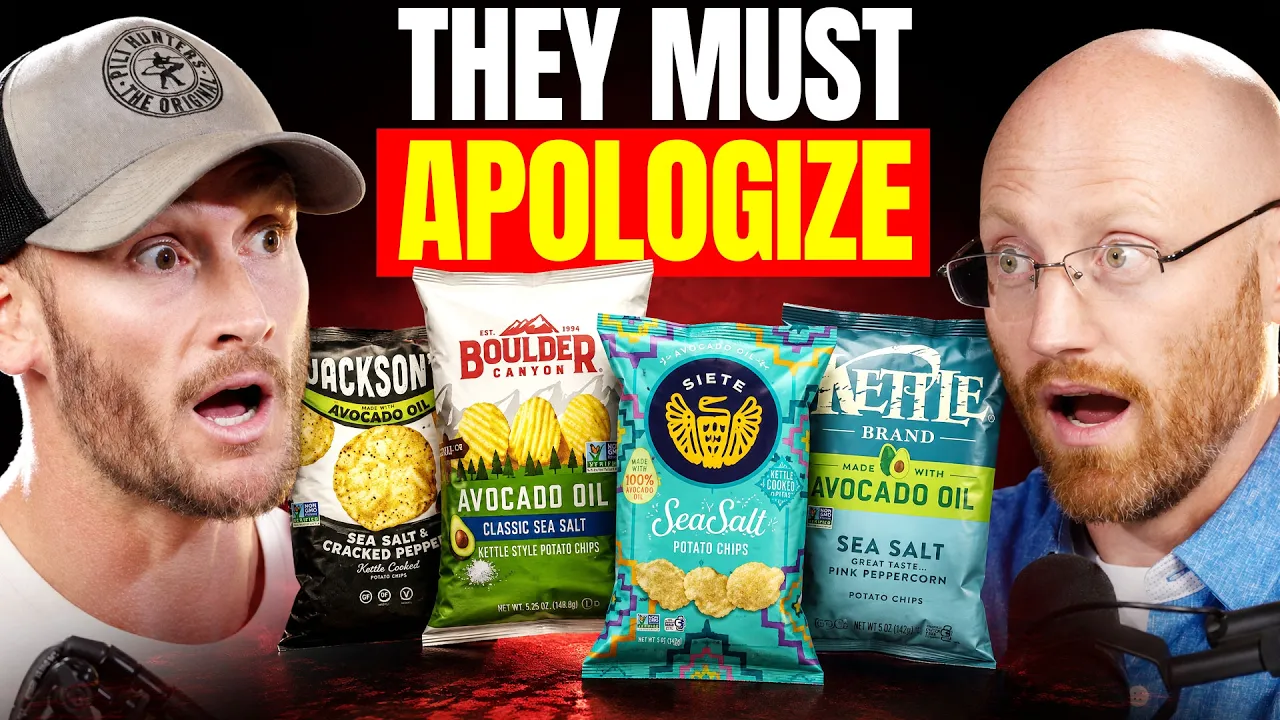
Dr. Jay, I want to get a scientist's perspective on this because this UC Davis thing is quite the scandal. They tested 54 avocado oil based products. They looked at like mayonnaise. They looked at chips fried in avocado oil. They looked at salad dressings. They found that 48 out of these 54 basically adulterated oils in them. They didn't have avocado oil. What did the study do? What were they looking at like when we're actually looking under the microscope here? Yeah, they were looking at gas chromatograph. So they're running these fats through uh you know a separator basically so they can analyze
105 words, the words spoken in the first 30 seconds at 210 words per minute.
Free, no signup. See how the first 30 seconds hold attention, with rewrites.
Sentence shape
| Measure | This transcript |
|---|---|
| Sentences | 256 |
| Average words per sentence | 14.9 |
| Longest sentence | 125 words |
| Questions asked | 30 |
| Sentences containing a number | 18 |
Most used terms
Filler phrases
189 in total: like 105 · you know 22 · right? 12 · uh 11 · um 11 · actually 10 · I mean 8 · kind of 5 · basically 3 · literally 2.
A literal whole-word count of the same phrase list the Prepublish browser extension uses, so a phrase inside another word is not counted and a phrase used in its ordinary sense still is. It is a count and not a judgement.
Run the check on the words above: where attention is likely to drop, with a rewrite for each weak line. The free check shows the scores and the one issue costing the most.
What this transcript is
Every word below is the caption track YouTube publishes for this video, pulled from the video itself and reproduced unchanged. It is not Prepublish's writing, not a summary, and not a re-transcription: it is the video's own published captions. English captions, generated automatically by YouTube, in the video’s original language. Source: the video on YouTube. A channel that would rather this page did not exist can ask for its removal through the contact page, and it is removed.
No Script X-ray for this video: YouTube shows a Most replayed graph only once a video has enough views.
Dr. Jay, I want to get a scientist's perspective on this because this UC Davis thing is quite the scandal. They tested 54 avocado oil based products. They looked at like mayonnaise. They looked at chips fried in avocado oil. They looked at salad dressings. They found that 48 out of these 54 basically adulterated oils in them. They didn't have avocado oil. What did the study do? What were they looking at like when we're actually looking under the microscope here?
Yeah, they were looking at gas chromatograph. So they're running these fats through uh you know a separator basically so they can analyze the different components. It's like a fingerprint, right? Um or maybe like a better analogy would be an animal track or something. So like you know if if you're good at tracking animals, you look down, you see a deer track and then you look down, you see a wolf track or something. It's very obvious, right?
But that's what they were doing. They're running these gas chromatographs on these different food on the fats. They're isolating the fats and and just running them through and looking at the differences. So, you can actually see the fingerprint of seed oils, for example, versus olive oil versus avocado oil, right? And they're finding that basically these companies were cheating uh and and adulterating their products with seed oils because it's cheaper presumably, right?
And it had to be more than 10%. I mean, they specifically said in the study that it had to be, you know, more than 10% variance. uh in the direction of seed oils. So, it wasn't like, oh, it was a 1% cheat. It wasn't 5% cheat. It was more than 10%. And they didn't quantify the upper limits, but I'm sure some of them were 80 90% seed oils. Right. There >> there's one they haven't disclosed which brand it is that was ended up being 100% soybean oil. >> Yeah. >> The thing that's the thing that's driving me crazy is that there's people probably that have paid interest working with some of these companies, right? like they're just maybe it's probably just like influencers like, "Oh, they're one of my sponsors, so I want to make sure that I protect them." Like they're literally out there saying that this study design was flawed and that like UC Davis did something wrong and that these and then you see I mean this is what's really getting me and I get heated about this is like Boulder Canyon like charges an arm and a leg for their chips fried in avocado oil.
They were an offender. they didn't have avocado oil or as much avocado oil, but their blanket boilerplate responses to people in their comments. We stand behind 100% avocado oil. We stand and then also these levels of mental gymnastics I've been seeing from these brands just like word salad to make it sound like well we choose yeah you choose but you're not acknowledging what's happening further up the food chain. Anyway, before I get too pissed off like [snorts] what were they look so they look at they looked at the fatty acid profile and then they were also looking at steriles.
Yeah. >> So steriles is like really the smoking gun. Like what does that mean when they're looking at >> steriles? >> Well, you can do a blood test for steriles. You know, there's different plant steriles. So like humans have cholesterol >> and not LDL and HDL. I'm not talking about LDL particles. I'm talking about the actual cholesterol molecule. Plants also have cholesterol, but it's not called cholesterol. It's called cytosteriles.
Right? So there's like betacytosterile and alphascytosterile and campfest and there's all these different cytosteriles and they're very unique. Um so you know some people even have genetic mutations where they don't clear plant cholesterols very well. So this is relevant to human health in a lot of ways if you're having the wrong types of plant cholesterols. Um, soybeans for example, because they're seeds, they're going to have widely diverse types of plant cholesterol compared to avocados, for example, or olives, for example.
Right. >> Comes from a pulp with avocado and olive. It's different. >> Yeah. Well, and not to mention, they're just squeezing a avocados and they're squeezing the olives to get the oil. It's not that hard. I mean, here in California, like I see these olive trees and you give them a squeeze and you get hands get all oily. It's kind of cool cuz I'm not from here, so it's unique to me. But then these seeds, you don't get that. like you have to use a bunch of chemicals and hyperprocessing to extract oils out of seeds.
So, it's more different than people think. People think that this, you know, the study results were kind of flawed or whatever. Well, yeah, maybe it's a preliminary study, meaning it's the first one on this exact topic, but you got to have somebody do something, right, to to identify these things. It's actually very thorough. I like Selena Wang. She's the one that kind of was the principal investigator on this, and she's been really good in the past.
Um, [snorts] and so, you know, it's ironic, right, when you get studies that are funded by big food and big pharma, you always have this like pro pro big food, big pharma crowd behind it saying how good the studies are, but then when you have good studies like this one, it's a very good study. Um, you get the exact same crowd saying suddenly those are bad studies and they're perfectly good studies. So, I think there's a lot of bias and influence with that.
But but the act in terms of the actual plant cholesterols again they're a very unique fingerprint. You can identify them and I think the pattern that was most frustrating to me cuz I've personally you know when I when I was on Mark Sison's podcast back when he owned the primal blueprint company he used to send me olive oil or the he used to send me the avocado mayo and it wouldn't separate. It was in glass jars whatever.
Um, now I used to I I've bought it in the past and it's like all separated and weird and it looks different. So, I know there's something different. I know they changed it just from my own experience. I don't even need a study to tell me like they did something different even though they claimed there was no differences. And then you look at the other companies involved with this study. They were bought out by Hershey.
One of them was bought by the UTS UTZ uh potato chip company there. I mean, I went through it on my YouTube video just because it was so astonishing how many of these used to be small companies that were family based and then they be they got boughten out by these large corporations. >> Something that might help you out is having your pantry stocked, having your refrigerator stocked ahead of time. Thrive Market makes that super easy, and I put a link down below for $20 off for your first three orders with Thrive Market, plus a free $60 gift.
So, what Thrive Market is is it's an online membershipbased grocery store. So, think the coolest grocery store that you could imagine with all kinds of foods that are essentially Thomas approved. All kinds of foods that have already been vetted in terms of ingredient quality, in terms of sourcing, in terms of like not having preservatives, and it's all right there. And then it gets delivered to your doorstep in just a couple of days.
So, super easy, super convenient. But the thing that I like about it is it makes it super easy to stock my pantry, to stock my fridge, to stock just my house with the appropriate things. And one thing that I've learned is you never go to the grocery store hungry. When you shop at Thrive Market, it makes it easy because you're not like tempted to just grab a bunch of things you don't need because the food that's already there is already something that would probably be okay to have in your pantry or in your fridge.
So, that link down below gets you $20 off for not your first order, but your first three orders. So, no matter what size your cart is at that point in time. So, that link is down below in the top line of the description. So, check them out after this interview. I think another one that's been pointed out, people are saying, well, they like maybe when you I think the the biggest claim that people are saying is that the the database or the data set or the codecs that they were using uh haven't been updated and that it doesn't account for newer varieties of avoc avocados or older varieties of avocados.
So, they're trying to say like, oh, well, maybe it's the algorithm isn't actually detecting. So there it could be skewed which what I want to underscore here with you is just like these are steriles. These cannot like an avocado is an avocado. There's only a few breeds of avocado and they're going to have the same steriles. They're ultimately going to have the same palmic acid. They're going to have the same fatty acid profile.
This isn't something it doesn't matter if it's an avocado from 1961 or an avocado from you know 2026. Right. Like I mean correct am I I'm not incorrect in that assumption. Right. >> No. Exactly. I had the same problem as you. I, you know, I felt like people that were writing those articles, I've read the same articles as you, you know, against this study and I felt like they were just off base. You know, again, it's it's pretty obvious.
I think, you know, for research, I used to do a lot of lipid research. You know, I used to use a technique called surface plasma and resonance and I would flow these fats across these surfaces with oxidized LDLs and all types of different fats, palmitic acid, oleic acids. Um, it's, you know, again, this Selena Wong who who was the directing this study, she's an expert on this. You know, I think if there was some database problem, she would have pointed out in the study, right?
Um, these authors are were very honest and they had integrity. I think, you know, again, the people that are writing these articles are probably less educated than she was. >> And usually that comes up in the discussion of the paper. If if somebody sees a bunch of flaws, the peer reviewers will pick it up or she'll pick it up and actually admit that in the paper. So, it's a good place to look, go to the direct source instead of going to other people's articles that are written on this.
When they looked at the fatty acid profile, avocados signature fatty acids went down and things like stic acid went up. And then when they looked at the steriles, some of the signatures like betacytosterol went down and other things went up. They essentially ran two very different tests and both tests drifted away from avocado oil in the same direction. That's what makes this very compelling and hard to really dispute.
It's exactly the kind of thing that you would see if seed oil was blended in. Now, UC Davis did not specifically say they added seed oils and they did not say who did this, but they did raise a pretty serious red flag and I think it highlights some things we need to look at. But now, let's go deeper into the science because get pretty passionate about this. I think what's even interesting, there's two other parts of this study that I think people need to know because they might just be looking at, you know, their Instagram feed and getting a short blur on it.
But >> they also took one portion of the study and they took avocado oil that was tested in confirmed avocado oil, >> heated it to the nth degree >> and then tested it to see if it would change at all. Because they actually even wanted to give them the benefit of the doubt that maybe, just maybe, when you're testing uh chips that have been fried in avocado oil, maybe the high heating changed the structure. So they took regular avocado oil, heated it at the whizo, stayed the same, stayed avocado oil.
So it's like, okay, even when we So that's section number one. But then they tested olive oil brands. They tested olive oil uh I think chips or not really olive oil, yeah, mayo and stuff like that. And no issues. They didn't have an issue with olive oil >> not passing or or failing the test. >> And it's so simple when you look at the regulations. It's like olive oil is regulated. Avocado oil, not really. And just a little bit in the last couple of years. >> Yep.
Yeah, I'm with you, man. It's a problem. >> Where do you think this comes from? Where do you think it's happening to you? Is it >> I think it's just Well, I think it just comes from people. It's just cheat cheating, right? It's just people cheating the system because they can get away with it. I think it's an ethics problem or a morality problem. Um, I mean that's what I said on my YouTube channel because you know it's pretty obvious if you're going to say you're using 100% avocado oil and you're cutting it with seed oils that's just unethical.
But people are doing things if they can get away with it they're doing it a lot of times in the food industry. >> How are they not in jail? Like that's like isn't that false advertising? Or can they say like I didn't know that the supplier is giving me this? I mean I know you're not a food industry expert but how on earth is that legal? >> I don't think it should be. Yeah, >> it's I think what I mean is I don't know again from the avocado oil world like maybe there's only a few suppliers and they're all just getting it from the same you know two or three >> could be and remember when they did the ch the consumer reports tested chocolate cacao >> and most of them had lead and cadmium >> above the safety limits and and then that's exactly what they found is they went back to the source and found there was only a couple suppliers and they were all getting their cacao from the same source first and somehow they had contaminated it when they were isolating it with a bunch of heavy metals.
So certainly possible they're cheating at the at that level, right, at the early stages and then everybody's buying it from them. >> Yeah. But >> and there's such a demand for it, right? There's such like a I was at Sprouts yesterday and I like looked and I'm like, well, first of all, I found it. This sounds bad, but I I I shouldn't have laughed because it sucks because like I don't want this to happen to the people and what it represents, but like every avocado oil chip 75% off. >> Exactly.
I saw [laughter] that too. >> Crazy. I was like, "Oh my god." Costco I saw pulled a bunch of them. Like people are taking it serious. You still have >> like I'm are they shills? Like what the heck? Like defending this. It's like how long are we how far are we going to take this? And like people >> it's uh but yeah they were all buy one get one free or it's like they're clearly trying to clear them out. I just >> that's the that's the reason we're trying to raise awareness on this because like remember when the Subway sandwiches had the the bread material had yoga yoga mat material it had a dicarbonomide >> and uh I think what's her name Yanni Yannihari she was the one that put together a petition raised a bunch of awareness and they pulled it out of there and they made a big public scene about it because they had to.
So that's the good thing about this study and about raising awareness in general is it makes it it's the best way to force these giant companies to make changes. >> U molecularly speaking what's the difference between because they they tested the two things they tested. They tested the um you know the actual like fatty acids and then >> the the steriles. So like >> what what's just just for people that are listening like what is the what's kind of the difference in those two things that they test? >> Yeah, huge difference.
Right. So fatty acids, they have a caroxile group and a tail. >> Okay? >> Right? So it's like a couple oxygens and a carbon and then this long tail. And the tail gets very diverse. The caroxile group is pretty much the same. It would be like this water bottle. This would be a caroxile group, this cap. And this actual glass part is the tail. >> Okay? >> This part changes a lot between different fatty acids, right? Like you've heard of short chain fatty acids, mediumchain triglycerides, MCTs.
That's all the tail. All of those have the same cap on them. They have the same caroxile group, but some of them have kinks in them. And the kinks are very different and unique. So between olive olives and avocados and seed oils, you're going to find a lot of variation here. Just like with coconuts, if they would have tested coconut oil, they'd be looking for 12 carbon chains. They'd be looking for eight carbons, 10 carbons, 12.
They're always in odd numbers almost. Most of them found in nature, found in odd numbers just the way the enzyme makes them. >> So unique fingerprint right here. With cholesterol, it would be more like this placemat. It's a huge molecule relative to a fatty acid. It's a big it's got big benzene rings. It's got like five of them. So, they're like completely structurally different. And then there's a difference between the different types of steriles.
The different cholesterols have unique fingerprints usually on the tail. And they actually have fats connected to them sometimes. So, you'll have the cholesterol molecule which is called a cytosterile, but then you'll actually have a fat attached to that too. So there's multiple layers of differences between the the cyto the steriles and the fatty acids and each individual one again they have differences between themselves too. >> Okay.
So it's not like it's just like a broad fingerprint. It is like when you say you say fingerprint it is almost like a fingerprint like it's just like because you've got these different tails that come off of that. You've got the correct Okay. Yeah. That is the part that nobody's really talking about when people because it's so easy like oh we just test you stick a like a little like strip in there and it tells you what fat it is and like oh like UC Davis yeah you're just manipulating like this is like real it's like going to a crime scene and it's as close as you can get >> what gas chromatograph does I've run a whole bunch of gas chromat chromatography >> they have copper tubing it's cool you can open up the machine you look at it because there it's always breaking down so you got to open it up all the time um it's got miles of copper tubing, just thin line.
It looks like fishing line, but it's actually hollow copper tubing. And it's all wound up like this in a spool. And you actually fire these fats through that stuff. And through the process of going through all of those miles of copper tubing, they come out at the different end at different times. So, it's super easy. You just fire it in on one end and then you just pick it up on the next end and you'll see a fingerprint on the next end.
It'll be boom, here comes one. Boom, boom, boom, boom. And then you can compare that to a different type of fat and it'll come out and give you a different fingerprint. It's literally a fingerprint. That is so wild. Well, man, I just I appreciate this. I just thought it was good to have a someone that's study lipids and and understands this whole process to describe this. And I think the takeaway from this is like in my opinion like brands if they're going to say this, they need to be consistently doing third-party testing and they need to publish the damn results because like they can say that they do third party testing and that means nothing because when did you what batch did you >> and show me the results, >> show us >> like show us and I just love >> sometimes Instagram is funny because like it irks me because people are so like bingeful and they're so but this is one of those cases where I'm like yes you know what demand this stuff because like like we need to take our food back.
Like this is ridiculous. Like how long have we been eating this stuff? It pisses me off because I think of like my wife. I think of like my wife's friends with like their little kids. They're trying to do the right thing, right? They're like, "My kids want chips." Maybe like they're like really they can't afford this, but they're going they're spending $10 on a bag of chips because they're trying to do something right to get >> and it's not >> it's not like avocado oil.
Like avocado oil is significantly different from seed oils because yes, you can fry in it. It's going to be much more stable. Not as stable as tallow, but anyway. >> Yeah, >> before I have an aneurysm. Any Where can everyone find you, man? >> Uh, aj consulting company.com. [laughter] And where where can everyone find your books? >> Uh, just Amazon. Just check Amazon. I'm also on Instagram. >> Right on, man. I appreciate it, brother. >> Appreciate it. >> [laughter]
The words are the caption track's own and nothing is reworded or re-transcribed. Paragraph breaks are placed between sentences so the text reads as prose.
Free tools for your own script: paste a draft and see where it stands before you record it.
Paste your draft and see where viewers are likely to drop off, with a rewrite for each weak line.
Paste the first 30 seconds of your own draft for a hook score and rewrites.
Check your draft against YouTube's advertiser-friendly guidelines before you record it.
Read this channel's public videos and transcripts, and download a writing brief for it.