Getting the transcript
Reading the captions from YouTube. A video nobody has opened here before takes 10 to 30 seconds; this page fills in on its own.
Getting the transcript
Reading the captions from YouTube. A video nobody has opened here before takes 10 to 30 seconds; this page fills in on its own.
HT_Yvaliott · @HT_Yvaliott
Words
2,675
Runtime
20:36
Speaking pace
130wpm
Reading time
11min
130 words per minute, below the 160 25th percentile of 349 measured videos. That distribution comes from the 349-video hook study.
Opening (first 30 seconds)
You have a youth player who needs winger. Defending is also part of the plan. So, you choose a combo that touches both. On the setup screen, it looks compatible. That looks reassuring. But, the screen only tells you where training can meet. It does not tell you how much useful training your player receives. If you read only the setup, you can spend two
65 words, the words spoken in the first 30 seconds at 130 words per minute.
Free, no signup. See how the first 30 seconds hold attention, with rewrites.
Sentence shape
| Measure | This transcript |
|---|---|
| Sentences | 295 |
| Average words per sentence | 9.1 |
| Longest sentence | 28 words |
| Questions asked | 25 |
| Sentences containing a number | 24 |
Most used terms
Filler phrases
2 in total: like 2.
A literal whole-word count of the same phrase list the Prepublish browser extension uses, so a phrase inside another word is not counted and a phrase used in its ordinary sense still is. It is a count and not a judgement.
Run the check on the words above: where attention is likely to drop, with a rewrite for each weak line. The free check shows the scores and the one issue costing the most.
What this transcript is
Every word below is the caption track YouTube publishes for this video, pulled from the video itself and reproduced unchanged. It is not Prepublish's writing, not a summary, and not a re-transcription: it is the video's own published captions. English captions, generated automatically by YouTube, in the video’s original language. Source: the video on YouTube. A channel that would rather this page did not exist can ask for its removal through the contact page, and it is removed.
No Script X-ray for this video: YouTube shows a Most replayed graph only once a video has enough views.
You have a youth player who needs winger. Defending is also part of the plan. So, you choose a combo that touches both. On the setup screen, it looks compatible. That looks reassuring. But, the screen only tells you where training can meet. It does not tell you how much useful training your player receives. If you read only the setup, you can spend two matches pushing the wrong side of the player. One plan may give him a huge winger push and only light defending support.
Another plan may give him less winger, but enough defending to keep the player usable. Same time cost, different distribution, different player outcome. By the end of this video, you will know how to compare training combos with data. And check whether a combo serves your academy plan. The match setup is useful. It shows which positions are touched. It shows where two trainings can overlap, and it helps you see whether a combo is possible.
But, the setup is not the decision. It does not show intensity. It does not show opportunity cost. And it does not show whether the player you care about receives enough training in the skill that drives the decision. A clean combo can start misleading you at that point. A plan can look clean on the screen, then give your target player too little training in the skill you need. You may finish the match with a legal combo, a clean setup, and still a player who did not move in the direction you expected.
The setup gives the contact point. The numbers give the training load. Your academy situation decides whether the load is useful. Training combos are worth comparing because academy time is limited. If every useful skill could be completed, combo choices would be simple. You would train every skill, wait until every current level reaches its potential, and promote the complete player. But, the academy does not work like that.
Players age. Training absorption gets weaker as they get older. Promotion timing changes the plan. Every match carries a cost. Choosing one training pair delays another. Pushing one skill can leave another skill incomplete. Opening one reveal can leave another one hidden. That is the manager cost behind combo selection. A weak reading can cost training weeks. Reveal opportunities or the flexibility to change direction before promotion.
So, a combo is more than an efficiency problem. A combo gives a measurable effect. That effect only counts when it reaches the right player in the right skill for the right decision you need to make. Before comparing combos, start with the structure of the match. Primary training gives the main direction. Secondary training has a second effect. They are not equal. For the same training type, normal secondary training gives about 2/3 of the primary efficiency.
And when the same training is used twice, the secondary side is reduced again. So, the combo name is too vague for itself. Primary training gives the main push. Secondary training changes the shape of the match. It can reinforce the same plan. It can push a second skill. It can open a potential reveal. Or it can spread useful training across more players. A clean-looking combo only starts the analysis. The match still has to answer a practical test.
What does it send to your target player? And what would another plan send instead? This is the situation managers face all the time. A player needs two skills. For example, winger and defending. You can combine both needs in one plan. Or you can split them into focus blocks. The comparison has to be fair. Same number of matches, good placement for each plan, same target player, same purpose. Do not compare one match with two matches.
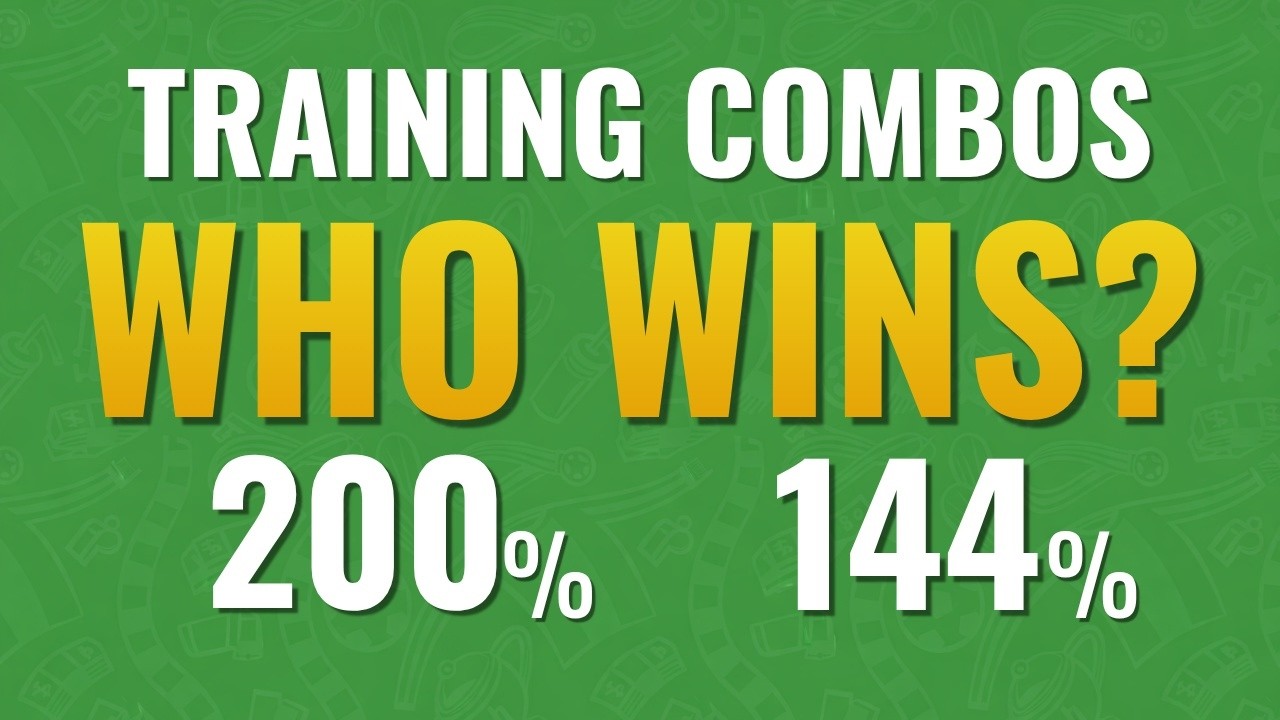
Do not compare ideal placement with poor placement. Do not compare a mixed plan with a badly placed focus plan. So, let's compare two matches. Option A, split focus. Match one, winger plus winger extended. The player plays as winger. Match two, defending plus defending extended. The player plays as defender. Across those two matches, the player receives around 144% winger, 134% defending, with a total combined effect of 276%.
That is the split plan. One match pushes winger. One match pushes defending. Now, compare it with a mixed plan. Option B, mixed training. Two matches of winger plus defending extended. The player plays as winger both times. Across those two matches, the player receives 200% winger, 64% defending. That means 264% combined effect. The total effect is close. 276% again 264%. But the distribution is completely different.
The split plan gives less winger, but much more defending. The mixed plan gives a much stronger winger push with only light defending support. Those two plans solve different academy problems. If winger is urgent, the mixed plan may fit better. If defending needs a serious progress, 64% may leave too much work for later. If the defending potential is still hidden, the reveal can outweigh the bigger winger push. The data does not choose for you.
It exposes the trade-off before the match is spent. Same time cost, different distribution, different player outcome. Without the numbers, it is easy to call one plan balanced and the other focused. That sounds clear. But it can hide a real cost. The mixed plan is winger heavy with defending support. The split plan protects defending much better. But gives away part of the winger push. That difference can decide the next training block.
A player close to promotion may not have enough matches left to repair the weaker side later. A player already close to his winger ceiling may waste part of the stronger winger push. So, the useful reading is not the biggest number. It is the distribution that fits the player situation. The same issue can appear inside one combo. A player can be touched by training without receiving the effect you expect. Take winger plus winger extended.
On the setup screen, the overlap looks useful, but the effect is not the same for every position. A winger will receive 144% total winger effect. A wing-back receives 50%. A forward, 44%. So, yes, the forward is touched, but the forward is not receiving the main training load. If you were trying to develop the forward as the priority, the match may feel active without serving the real plan. The screen gives the contact point.
The table gives the intensity. The player role decides how you should read the combo. Touched does not mean served. The comparison now becomes a practical reading method. Before choosing a combo, check four things. First, the target player. Who is the match really about? Second, the useful skill. Which skill are you trying to train or reveal? Third, the useful effect. How much effect does that player receive? Fourth, the match decision.
What should this match help you decide? In practice, that means naming the player, naming the skill, checking the percentage, and knowing the purpose of the match before it is played. When those four elements point in the same direction, the combo has a clear reason to exist. When they do not, the combo may still work in the system. It may still train someone. It may still look compatible, but the useful training may be going somewhere else.
That separates selecting a combo from comparing a plan. Start with the player. Leave the combo name for later. A A can have a high combined effect and still be a poor fit for the target player. If you have one clear prospect, the first data point is simple. How much does that player receive? In the winger plus winger extended example, a winger receiving 144% is one situation. A forward receiving 44% is another one. >> [music] >> Same combo, different target outcome.
Without this check, you may train the squad while barely moving the player you care about. Before calling a combo strong, attach it to a player. Strong for whom? Then look at the skill. The number only helps if it applies to the skill you need. A player may receive training, but not in the skill that changes your decision. For example, a forward may receive a strong winger effect. That can be useful if winger is also part of the development plan.
But if the current decision is his current potential, winger effect does not answer that. A high combined effect can hide the wrong distribution. A lower combined effect can be more useful if it reaches the skill that drives your current decision. Without this check, you may spend a match improving a side skill while the decisive skill remains hidden or untrained. Read the number through the skill, not through the combo label.
Then check the amount. Percentages become practical at that point. Instead of saying the combo feels strong, you can see how much effect the target player receives. For one player, 144% may be a strong push. For another, 44% may only be a background support. That does not make 44% useless. It gives the effect a different role. 44% can support a secondary need. It should not be treated as the main training load if the player needs a serious push.
Without this check, a touched player can look trained enough while the actual effect is too light for the purpose of the match. The amount must fit the match purpose. The last check is the decision. What should this match help you learn or improve? Development? A current reveal? A potential reveal? A training priority? Or keeping several players alive because the squad is still unclear? Each purpose changes how you read the same numbers.
For development, you can care about training intensity. For a reveal, you care about whether the right training type can reveal the right information. For flexibility, you may care about coverage across several players. The boundary stays the same. A reveal answers one question. A high effect pushes one skill. A high combined effect can be useful, but none of them completes the full player profile. Without this check, the match can become busy without answering the decision you had before kickoff.
You are not trying to force certainty. You are trying to make the match support the decision you need. A table is useful when it helps you compare plans. Mix the training versus split focus. Target effect versus team coverage. Pure development versus secondary reveal. But the table becomes weaker when it turns into a ranking. The same number can lead to different choices. 200% winger is strong if winger is the main priority. 132% defending is valuable if defending needs serious progress. 64% defending can be acceptable if defending is only support.
It can be too low if defending decides the player future role. So, use player to compare the effects. Then, use the value check to read them through your academy. Double training needs a separate check. At first, it looks like cleanest option. Same skill, same direction, more focus. But, the trade-off can be weaker than it looks. Take defending. With defending plus defending extended, a defender can receive around 132% defending effect.
With defending plus defending, a defender can receive around 133% defending effect. The training gain is tiny, about 1%. The information cost is not tiny. With defending plus defending extended, the match can still give you a current reveal from primary training, a potential reveal from secondary training, and a random potential reveal. With defending plus defending, you keep a current reveal from primary training and a random potential reveal.
But, you lose the secondary potential reveal. So, the trade-off is simple. Plus 1% training effect, minus one reveal option. For most academy situation, that is hard to justify. Worth it? Double training is therefore not automatically the best focus plan. When a training has a natural extended partner, the extended version can keep almost the same training effect while preserving more information. Defending has defending extended.
Winger has winger extended. >> [music] >> Passing has passing extended. Scoring has scoring and set pieces as a combined partner. Keeper and play making are different. They do not have a natural extended version. So, double training can make more sense there because the alternative is not almost the same focus plus one more reveal option. Over a longer block, double training can push a smaller number of players slightly harder.
But, in the youth academy, extra focus is never free. You have to compare the small gain in training with what the match stops revealing before choosing a combo. Do not start with the words best. Start with the comparison. First, define the player need. For example, winger plus defending. Second, compare plans over the same number of matches. Do not compare one match with two matches. Do not compare ideal placement with poor placement.
Compare fair plans. Third, write the distribution. For example, split focus 144% winger, 132% defending, 276% combined effect. Mixed plan, 200% winger, 64% defending, 264% combined effect. Fourth, read the trade off. The split plan protects defending. The mixed plan pushes winger harder. Fifth, apply the value check. Which player, which skill, how much effect, which decision. That sequence keep the data useful. It prevents the table from becoming a recipe.
And it keeps the method attached to the match. Before choosing a combo, use the same sequence. Player need. Which skill are you trying to move forward? Plan comparison. Which plans can you compare over the same number of matches? Data distribution. How much effect does each plan give to each useful skill? Target player. Is the player receiving the full effect? Useful skill. Is the effect going to the skill that drives the decision?
Useful effect. Is the amount strong enough for the purpose of the match? Match decision. What should this match help you decide? If the numbers and the decision point in the same direction, the combo has a clear reason to exist. If they do not, the combo may still be compatible, but the compatibility is only contact. A useful combo needs the player, skill, effect, and match purpose to point in the same direction. A training combo has three layers.
The setup shows where effects can meet. The table shows how strong those effects are. The value check shows whether they support your academy decision. Before trusting a combo, connect four things. Player, skill, effect, and decision. The clean setup is only the first signal. The high combined effect is only evidence. The plan becomes strong when the numbers support the decision your match is supposed to make. Which training combo gives you the hardest value check right now?
A combo that looks compatible, but gives too little effect for your target player? A split plan that feels slower, but protects two skills better? A high effect combo where the reveal still drives the choice. Leave one example in the comments. The useful part is the comparison behind the combo. That comparison is what made the combo make sense. Before the next match, do not stop at the setup. It tells you where the effect can meet.
It does not tell you whether the useful effect reaches the target player and useful skill. A mixed plan can push one skill harder. A split plan can protect a second skill better. A high combined effect can still miss the real need. A lower combined effect can be better when it reaches the right skill at the right time. So, compare the plan before kickoff. Same time cost, same target player, useful skills separated, effect written down, decision made explicit.
At that point, combination becomes more than a setup. They become a decision tool. And once the distribution is clear, the next decision is whether your match should mainly develop the player, reveal missing information, or keep several academy options alive. Also, you are welcome to join our Hattrick Federation and forum called the Youth Academy. Everyone is welcome.
The words are the caption track's own and nothing is reworded or re-transcribed. Paragraph breaks are placed between sentences so the text reads as prose.
Free tools for your own script: paste a draft and see where it stands before you record it.
Paste your draft and see where viewers are likely to drop off, with a rewrite for each weak line.
Paste the first 30 seconds of your own draft for a hook score and rewrites.
Check your draft against YouTube's advertiser-friendly guidelines before you record it.
Read this channel's public videos and transcripts, and download a writing brief for it.