Getting the transcript
Reading the captions from YouTube. A video nobody has opened here before takes 10 to 30 seconds; this page fills in on its own.
Getting the transcript
Reading the captions from YouTube. A video nobody has opened here before takes 10 to 30 seconds; this page fills in on its own.
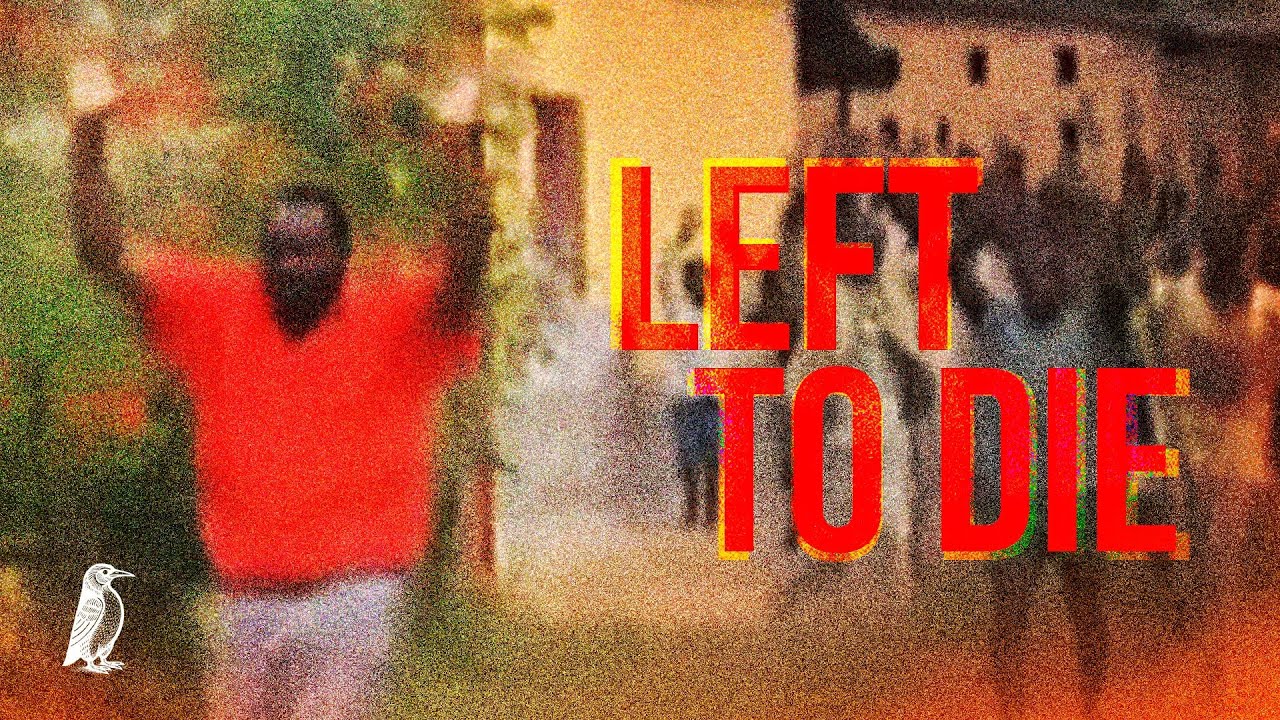
Penguin History · @penguinhistorymedia
Where viewers went back to watch this video again, from YouTube's public Most replayed graph, lined up with what was said at that moment.
Most replayed moment #1
9:034.4x the video's typical replay level
of the UN peacekeepers are credited with saving [music] an estimated 30,000 Rwans. Around the middle of July, the Tootszie rebels managed to take Kaggali. The Rwanda genocide is over. For the
Said at 8:57
Most replayed moment #2
0:513.1x the video's typical replay level
murdered. The people hiding in the hospital are tootssis, an ethnic minority in Rwanda. [music] The people outside are Hutus, the ethnic majority. For decades, the Totsis have been persecuted in Rwanda.
Said at 0:43
Most replayed moment #3
3:232.8x the video's typical replay level
Hallelujah. The propaganda works.
Said at 3:28
The graph counts replays. It does not show where viewers stopped watching.
Words
1,562
Runtime
12:03
Speaking pace
130wpm
Reading time
7min
130 words per minute, below the 160 25th percentile of 349 measured videos. That distribution comes from the 349-video hook study.
Opening (first 30 seconds)
We're on our way to a local hospital in Kaggali in 1994. In the cars are around 90 Belgian paratroopers and a handful of foreign journalists. Further up the road, they can see men armed with machetes in front of them. They let them pass. A moment later, they reach the hospital. As they approach, people start running out towards them with their hands raised.
65 words, the words spoken in the first 30 seconds at 130 words per minute.
Free, no signup. See how the first 30 seconds hold attention, with rewrites.
Sentence shape
| Measure | This transcript |
|---|---|
| Sentences | 98 |
| Average words per sentence | 15.9 |
| Longest sentence | 41 words |
| Questions asked | 1 |
| Sentences containing a number | 16 |
Most used terms
Filler phrases
12 in total: uh 6 · like 3 · you know 2 · um 1.
A literal whole-word count of the same phrase list the Prepublish browser extension uses, so a phrase inside another word is not counted and a phrase used in its ordinary sense still is. It is a count and not a judgement.
Run the check on the words above: where attention is likely to drop, with a rewrite for each weak line. The free check shows the scores and the one issue costing the most.
What this transcript is
Every word below is the caption track YouTube publishes for this video, pulled from the video itself and reproduced unchanged. It is not Prepublish's writing, not a summary, and not a re-transcription: it is the video's own published captions. English captions, generated automatically by YouTube, in the video’s original language. Source: the video on YouTube. A channel that would rather this page did not exist can ask for its removal through the contact page, and it is removed.
We're on our way to a local hospital in Kaggali in 1994. In the cars are around 90 Belgian paratroopers and a handful of foreign journalists. Further up the road, they can see men armed with machetes in front of them. They let them pass. A moment later, they reach the hospital. As they approach, people start running out towards them with their hands raised. [music] >> They explain to the soldiers that the men with machetes have surrounded them and that some of them have been murdered.
The people hiding in the hospital are tootssis, an ethnic minority in Rwanda. [music] The people outside are Hutus, the ethnic majority. For decades, the Totsis have been persecuted in Rwanda. And when the Hoou president was killed a few days ago, Hoou extremists put the blame on the Tootszis. >> The massacre sparked by the death of Rwanda's president, Juvenile Habya Ramana, a hoou in a suspicious plane crash. >> Now, the president's successor, Jang Kamba, wants to purge Kaggali of tootssis, and he's already begun.
The tootsies here though have been saved. They've been hiding here for 3 days and now finally it's over. But the soldiers aren't here to help any Rwans. Instead they walk past the crowd and bring out the westerners also hiding at the hospital. And then they leave. As the soldiers and journalists reach their trucks, they hear gunfire from behind them. The Hoous from outside have started killing the people at the hospital.
The Rwan genocide has begun. For the past few days, HOU extremists have been searching homes, workplaces, and schools in Kaggali for tootssis to execute for no other reason than them being tootssie. Already more than 20,000 Rwans [music] have been killed. And now the extremist Hoou leaders have started the next phase of their plan to spread the killing across all of Rwanda. Through radio broadcasts and local newspapers, they tell Hoous that the Totsis are foreign invaders who want to turn them into slaves.
Their propaganda reminds them that the Totsis had once ruled them for centuries and had viewed Hoous as an inferior people. unit. Hallelujah. The propaganda works. Hutu civilians from villages across Rwanda start joining local militias by the thousands. Afraid of being seen as protecting tootssis, families even begin pointing out their neighbors to the killers. The punishment for sheltering tootssis, men, women, or children, is death.
Some Hoou extremists have even started referring to Tootsie survivors as those not yet finished off. In northern Rwanda, Tootszie rebels have started to push back, but progress is slow. As they move down, they find evidence of massacres of entire families in village after village. In the first 2 weeks of the genocide, more than 100,000 Rwans are killed. By the end of the first month, that number is closer to 300,000.
But despite getting daily reports on the thousands of massacres happening [music] across the country each day, the UN Security Council has decided to implement a non-intervention policy. >> We're going to go now to Moadishu, Somalia, where there is a new story unfolding of a very different kind, a US soldier apparently taken prisoner or hostage. >> 6 months ago, during a mission in Somalia, 18 American soldiers were on patrol in Moadishu when they were killed by Somalian rebels.
[music] Pictures of their bodies being dragged through the streets ran for days on American TV. Another disaster in Africa could make it seem like President [music] Clinton's out of his depth on his foreign policy. And so the US along with the rest of the UN Security Council votes to withdraw 90% of its peacekeeping force in Rwanda. The few hundred peacekeepers still left will need to defend thousands of refugees. is hiding at the safe havens in Kaggali.
Some posts have a dozen soldiers, others have as little as two. Most of them are unarmed. If the Hoous that now control most of Rwanda should decide to attack one of their shelters, the peacekeepers would be defenseless. >> Comment on that or a view uh as to whether or not what is happening could be genocide. >> [snorts] >> Well, as I think you know, the the use of the term genocide has a a very precise uh legal meaning.
Although it's not uh strictly a a legal determination, [music] there are there are other factors in there as well. Um when in in looking at a situation to make a determination about that, uh before we we begin to use that term, uh we have to know some uh as much as possible about the the facts of the situation. 6 weeks into the genocide with more than half a million tootsis dead, the US refuses to acknowledge it. [music] Doing so would oblige them along with all other UN members to prevent [music] it according to the 1948 genocide convention.
Instead, [music] the US administration introduces Presidential Decision Directive 25, a policy that makes it even harder for the US to support UN missions that don't serve vital national interests. [applause] The question of our security in this era still ultimately depends upon our decisions about where to bring our military power to bear. The end of the superpower standoff lifted the lid from a cauldron of long simmering hatreds.
Now the entire global terrain is bloody with such conflicts from Rwanda to Georgia. Whether we get involved in any of the world's ethnic conflicts in the end must depend on the cumulative weight of the American interests at stake. >> Rwanda is of no interest to America. It is in every sense a conflict with no strategic value. Only after the Tootszie rebels take most of eastern Rwanda and after weeks of daily reports from journalists, aid workers, and the Red Cross does it become impossible for the UN Security Council to ignore the genocide.
In the middle of May, it authorizes an expanded mission of 5 and a half thousand peacekeepers, but the decision comes without troops, equipment, or transport ready to deploy. And when a US adviser suggests jamming the extremist radio broadcasts, a lawyer in the Pentagon argues that it would violate the US constitutional principle of freedom of speech. The only real effort to stop the killing comes from inside Rwanda.
Here, UN Commander Romeo Delair has managed to keep thousands of Tootszie civilians alive with the few peacekeepers he has left. Among them is Captain Embay. On his own and with his jeep, he drives through the streets of Kegali to pick up tootssie refugees still hiding in the city. Like many of his peacekeeping colleagues, Mumbai is unarmed. So to get past the many hoou roadblocks in the city, he manages to talk his way through on charisma alone.
In late May, on his way back from delivering messages from the Rwanda UN headquarters, Ambai drives through a junction in central Kaggali when a mortar shell lands beside the jeep. He's killed instantly. During the genocide, Mumbay and the rest of the UN peacekeepers are credited with saving [music] an estimated 30,000 Rwans. Around the middle of July, the Tootszie rebels managed to take Kaggali. The Rwanda genocide is over.
For the hundred days it lasted, more than 800,000 people were killed. Not once were the peacekeepers given the manpower, equipment, or political backing they needed to protect the people in Rwanda. In the following years, world leaders who stood by and watched as the genocide happened come to Rwanda. In March of 1998, 4 years after the genocide, President Clinton too flies into Kaggali for the first time in his presidency.
During his stay in which he never leaves the airport, he meets with survivors and officials and addresses the Rwanda people. >> And so I say to you, though the road is hard and uncertain and there are many difficulties ahead, there are things we can do. And if we set about the business of doing them together, you can overcome the awful burden that you have endured. Thank you and God bless you. >> In his speech of more than 2,000 words, he acknowledges that the US failed to respond but never offers an apology.
And then he leaves. In his memoir, President Clinton would call the failure of intervening in the Rwanda genocide one of the greatest regrets of his presidency. Similar expressions of regret would appear in several of the memoirs and biographies released by other world leaders in the years following the end of their careers. But I would like to ask you about your feelings. You're in your heart, in your soul, not in your brain.
When you see the piles of corpses, you know, strewn throughout Rwanda coming down the rivers and the lakes, how do you respond to that on an emotional level? >> I will try not to be emotional. Let us recognize that it is a failure. It is a failure not only for the United Nations, but it is a failure for the international community and all of us are responsible of this failure. It is a genocide which have been committed.
Unfortunately, let us say with great humility, I failed. It is a scandal. I am the first one to say it and I'm ready to repeat it. Nigerian news agency [music]
The words are the caption track's own and nothing is reworded or re-transcribed. Paragraph breaks are placed between sentences so the text reads as prose.
Free tools for your own script: paste a draft and see where it stands before you record it.
Paste your draft and see where viewers are likely to drop off, with a rewrite for each weak line.
Paste the first 30 seconds of your own draft for a hook score and rewrites.
Check your draft against YouTube's advertiser-friendly guidelines before you record it.
Read this channel's public videos and transcripts, and download a writing brief for it.