Getting the transcript
Reading the captions from YouTube. A video nobody has opened here before takes 10 to 30 seconds; this page fills in on its own.
Getting the transcript
Reading the captions from YouTube. A video nobody has opened here before takes 10 to 30 seconds; this page fills in on its own.
Riley Brown · @rileybrownai
This video has no Most replayed graph yet: YouTube shows one only once a video has enough views. These are the moments viewers replayed most in Riley Brown's most watched videos.
Most replayed moment at 9:23
3.8x that video's typical replay level
add spinning up new sessions under use cases under background research? >> Adding that now. I'm adding spinning up new sessions under background research now.
Said at 9:16
Most replayed moment at 16:04
3.3x that video's typical replay level
is my app idea. Create a markdown file called my idea and have exactly this." So, what I want to do is I just want to store my idea in this folder, right? If we were to go like this, open this in
Said at 15:57
The graph counts replays. It does not show where viewers stopped watching.
Words
4,353
Runtime
24:06
Speaking pace
181wpm
Reading time
18min
181 words per minute, the same as the 181 median of 349 measured videos. That distribution comes from the 349-video hook study.
Opening (first 30 seconds)
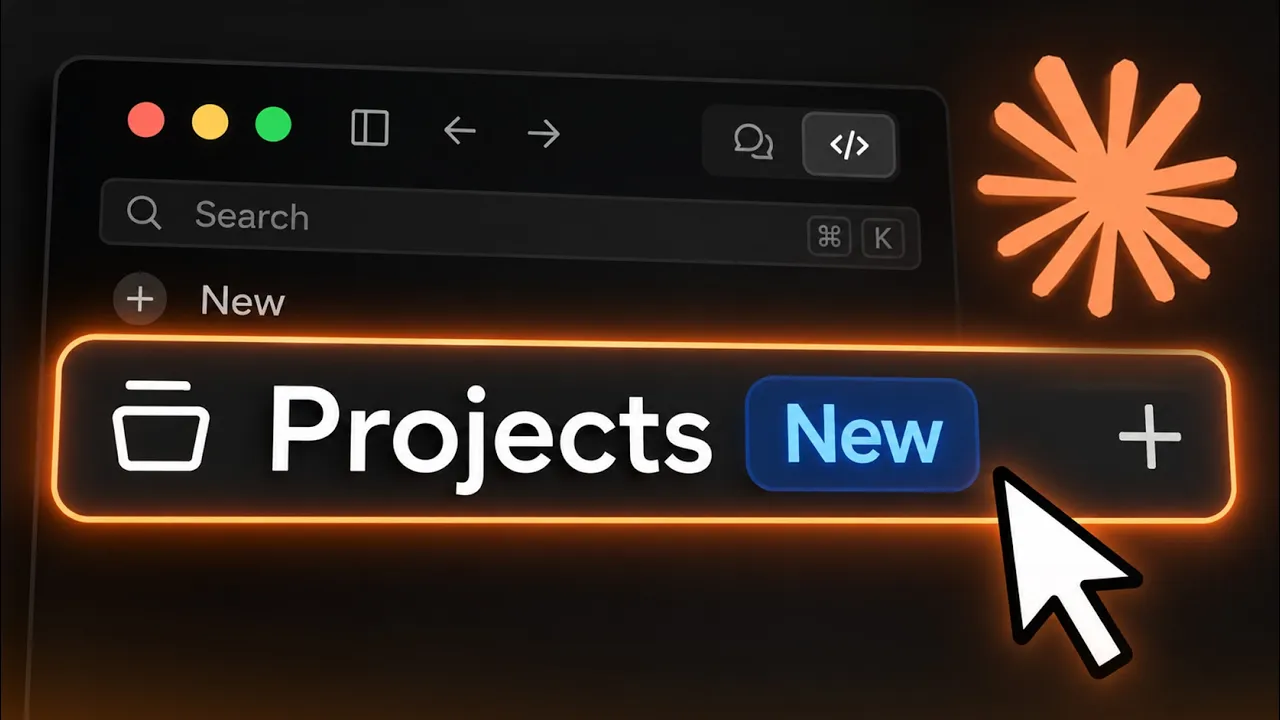
You might have already noticed, but Claude just added a new feature to the Claude app. And I'm going to be honest with you, I think this is one of the best updates they've shipped all year. And this new feature is called Claude Code Projects, and it's way cooler than the name makes it sound. And I've been using this new feature for the past 48 hours straight, and I genuinely hope OpenAI releases the same exact feature inside Codex, because it's simply that good. Now, this is not the
91 words, the words spoken in the first 30 seconds at 181 words per minute.
Free, no signup. See how the first 30 seconds hold attention, with rewrites.
Sentence shape
| Measure | This transcript |
|---|---|
| Sentences | 283 |
| Average words per sentence | 15.4 |
| Longest sentence | 61 words |
| Questions asked | 22 |
| Sentences containing a number | 16 |
Most used terms
Filler phrases
90 in total: actually 25 · right? 19 · like 18 · kind of 15 · uh 7 · basically 4 · um 1 · you know 1.
A literal whole-word count of the same phrase list the Prepublish browser extension uses, so a phrase inside another word is not counted and a phrase used in its ordinary sense still is. It is a count and not a judgement.
Run the check on the words above: where attention is likely to drop, with a rewrite for each weak line. The free check shows the scores and the one issue costing the most.
What this transcript is
Every word below is the caption track YouTube publishes for this video, pulled from the video itself and reproduced unchanged. It is not Prepublish's writing, not a summary, and not a re-transcription: it is the video's own published captions. English captions, generated automatically by YouTube, in the video’s original language. Source: the video on YouTube. A channel that would rather this page did not exist can ask for its removal through the contact page, and it is removed.
You might have already noticed, but Claude just added a new feature to the Claude app. And I'm going to be honest with you, I think this is one of the best updates they've shipped all year. And this new feature is called Claude Code Projects, and it's way cooler than the name makes it sound. And I've been using this new feature for the past 48 hours straight, and I genuinely hope OpenAI releases the same exact feature inside Codex, because it's simply that good.
Now, this is not the old Claude Projects feature that's been around for a couple of years. You can think of this version of Claude Code Projects as an organized agent orchestrator. And in order to understand it, you just need to see it. So, here we are in the Claude desktop app, and the feature we're talking about today, which is brand new, is their updated Projects feature. And down here you'll see these three icons.
Here are my three projects that I've created over the last 24 hours that I use for my business, two of which are working. I have one project for long-form content, and one to fully manage my Agent Native website. If we click into my Site Manager project, you can see that my agent is working, how to give access to the site. But you will notice here that it's actually not working here. It's working in a thread right here.
What Projects does is it separates your main orchestrator agent from the threads within it. Let's look at the long-form expert as an example here. Right now, I'm my agent is working on Meta Muse article, but this is just the orchestrator agent. In order to see the thread where this work is actually happening, I'm going to click here, and this thread right here is where the work is happening. This is where Claude with Opus 5 is doing the work to create this Meta Muse article.
Now, if we click on threads, here we can see all of the threads that this orchestrator agent has created. I want to create another article on how I'm using Composio to centrally store my skills so that I can use them with Muse, Claude, Code, Codex, and Grok Bot. Make a new thread that uses the article with diagrams skill. And so, I just sent this prompt to my long-form expert. This is the name of the project, and you can see here it just created this Composio skills article thread, and you can see one of which is working.
If we click on this right here, we can see the prompt that was sent to this sub-agent, which they call threads. We have one thread that is working, which is creating this Composio skills article, and we also have one that's waiting on me. This one is blocked. Okay, the Composio skills article is done. I asked my main agent in the long-form expert project, it created this skills article thread, and within this thread, it generated this artifact.
And here it is, one skill every agent. And so, this is just a skill that I love to use to outline any idea so that I'm able to get a grasp of how it all visually works together. I'm very visual, and that's why I really like this skill, and it's really fun to work with this agent that can delegate and create all of these different threads. For the rest of this video, we're going to be diving deep into Claude projects, and we're going to cover it all.
We're going to start off with an initial demo of actually how to start a new project and the basics of doing that. Then we're going to talk about the seven things that you need to know about Claude projects so that you can apply it to your business, and then we're actually going to do work inside the project that we create and do some really cool workflows. Okay, so let's go ahead and create our first project and I'm on the Claude desktop app and I can hit plus to create a new project.
This is going to be called short form plus Twitter and my goal for the project and I always set a goal for the project because it kind of sets the focus for this specific project. Here I'm going to put to help me (Riley Brown) grow on Instagram, TikTok, Twitter, Threads and I'm just going to include LinkedIn. Now, we could add context. We don't need to do that now. We can do that later and we're just going to create the project.
You'll notice here, whenever you create one of these projects and this is a new Claude project, you'll see it pop up over here on the left side and it is kind of pinned to the top. You can change the name of your project very easily right up here and you can also change what it looks like. And I'm going to pick an icon that kind of matches this vibe. I think this heart plus something that kind of looks like Instagram.
So now we have a new project created along with my long form, my site manager and this is kind of just a general agent that I was using to kind of learn the platform. So now I'm going to just say create two new threads and then I'm just going to say one, do some in-depth research on Riley Brown uh regarding his best performing short form content on Instagram. Use scrape creators to get the transcripts for his top 15.
Make sure they're ones that are not sponsored videos so that we can look at his best organic videos. And uh I want you to look into the best ways to script short form videos and just do some in-depth research in general on short the modern strategies of short form content creation. So, we can fire this off in our agent and our agent is going to spin up two new threads here. Okay, there you go. It just spun up two threads here.
And so, if this was closed, we can very easily open up this thread. We can also open up this thread and you can see all of the threads right here. And since they both just started, they're both working. So, now we have this project. It's organized around a common goal, which is to grow my short-form and Twitter. I can interact with this agent and this agent can spin up threads and then these threads can actually do the work.
And so, both of those threads were created and they are done working within the threads. And so, I can see that each one of these actually ended with an artifact. And so, these are all of the top videos and the transcripts of my videos for my top Instagram posts. And here you go. You can see that both of them are done. When you open a thread, right? You can see here, like if we just open this thread, it created this artifact.
All artifacts you can now open up and you can actually edit the artifact directly here by typing or you can actually leave a comment on a specific part and that's how you how easy it is to edit these artifacts. So, we've created a new project, right? We set a goal. We went through the initial setup. We talked to our main agent that then delegated to sub agents. Now, let's go over some questions and other things that you should know.
So, this is a new projects feature. What exactly is it? So, here's how I think of Claude projects. And I actually gave it an alternative name, which is a F F O A O or a folder for organized agent orchestration. When you create a project, which we did, short-form plus Twitter, it creates this folder and the kind of the top of the hierarchy is your chatting with this agent that can spin up other chats. Every project that you create is kind of like this folder, and within this project you only have one chat or one main agent that can spin up many different threads, and then within this entire folder they all contain the same memory, artifacts, and routines.
As you can see here, we are in the short form plus Twitter project, right? Which is kind of like a folder with a name. There's only one chat, and you can see here we have all of these sessions. You can create as many sessions or threads as you want. There's also a library, which has all the artifacts and any files that get created stay in this pane right here. So, it has these artifacts, and then also, as we'll get to later, it has routines that live within the project rather than living outside of the project and operate globally in this scheduled tab.
They now live within the project, which is completely new. So, if there's one takeaway here, this new projects feature is just a folder for organized agent orchestration. And so, the second thing that you need to understand about this new projects feature is it's different than the previous projects feature. The old Claude projects feature was kind of useless, in my opinion. And that's actually why my next most recent uh project that I've created before this new projects feature was in 2024.
Uh it's called debugging, and this is actually what it looked like. All it was was a folder of chats with a system instructions and actually contacts, right? You could upload files, and ChatGPT, I think, copied this feature a little bit, but again, I think it was relatively useless, right? You could upload files here. It had memory, and you could also add instructions. And it was basically just like a folder of chats that you could use inside Claude.
That is not what this project is. This is much deeper than that. So, before we get to all of the fun things that Claude projects can do, I want to talk about something that you need to be aware of. And that is token cost. For those of you who've tried Astra or Fable 5.1, you know how expensive these models can be. And if you click on this little button right here, you can actually see your 5-hour limit, right? Once you reach the 5-hour limit, they will cut you off.
There's also a weekly limit. And then there's a weekly Fable limit. And then you have your backup usage credits that you can use if you hit any of your limits. And since Claude projects is an agent orchestrator, meaning you have an agent that can spin up many different chats, all of which use different models, right? This is This chat right here is using Fable 5.1, which is really expensive. And you can imagine if your agent is spinning up three or four different chat sessions, the token usage can add up very quickly.
But one thing they added that's really cool if you want to conserve tokens is you can press this little usage button right here. And you can see see full project usage. And this gives you the full breakdown of the project, right? We have one agent chat session that we're messaging, and that agent has spun up seven different threads. Total 87.1 million tokens. And you can see here that the coordinator 17% and there you go.
We can see all of it broken down by thread. This thread used the most tokens. And here, if we click on this, it takes us directly to the thread. And you can see here we've actually created a lot. We created this project here, and I've asked it a ton of different questions. We've created a few skills, and that's why this one has taken more usage. Because, as you can see here, it has 28.7 million tokens. And what's cool is you can actually see the model that this one's using.
So, this one's using Fable, and all of these are using Opus. So, this is something that, as you start using Claude projects, definitely keep an eye on this, and you can actually keep track of what types of threads or use cases of Claude take up the most tokens. And speaking of using a lot of tokens, I want to talk about the coolest feature of Claude projects, which does use a lot of tokens, and that is design mode. And so, design mode used to be this little tucked away feature.
If you go over to more on the web app, and you click design, you could create designs. You could create slides, mobile app designs, design in a code base. You could create a design system. And this is a really cool feature that was pretty underrated. But, as you can see here in my site manager project for my Agent Native site, I had it make a redesign, right? So, I wanted it to create a redesign, and I said, "Make a new thread, and figure out what we can do to redesign Claude design to propose something better." And I basically wanted it to do it in the style of Japandi.
So, Japandi is the style, and it created this thread, and then it made a redesign of my site. And rather than giving me a link to an artifact, it just created it in Claude design. Look at this. This is basically Figma, right? We have this board that I can look at here, and I can actually make edits to it. And so, just like Figma, it's this board. I can reference them. It names all of them, and I can come down here, and I can select this, and I could change this color to white.
I actually don't like that. I can very easily make changes to this. So, I can very say I can say "Hey, on the phone view on light mode, I just don't think the font looks good on the design board." Not only can you ask it to create these design boards for you and edit them, you can ask your AI directly in projects to edit the board that it gives you. And there you go. And I did want it to be Japandi style, but you can see that it made some edits.
And remember, I can do this like comment thing. I actually don't not the biggest fan of this. Make one more change. Make it cooler. I don't like this circle vibe. And look at that. I can send that straight to Claude. And here it said, "Comment." It's actually sending it to Claude. And now Claude is working on this. And you kind of see the animation directly on the board right here, which is really cool. And you can do multiple things at once.
I could come here. I could say, "This should be centered along with the subtitle." And I can fire that prompt as well. And now there's two comments, and it should make both of those changes. And remember, you can access this all from your phone on the Claude app. And so, you can see here, it is done with the board edits. And I can actually open them on my phone. As you can see here, if I hit back, I can see the entire board, and then I can click directly on this home design.
And here you go. It is the mobile design right here. We can either fill, and I can scroll down on it, or I can fit it. This is actually pretty solid. And so, that is design mode. Design mode used to be this separate feature of Claude and now it is simply an artifact that you can use. So that brings me to the next thing that you need to know about Claude projects are that you can create so many different types of artifacts.
And so if you are in your project, right? We've created this long form expert project and we see all of our chats and we click artifacts or actually it's called library, we can see this drop down called artifacts. And then we see the name for all of them. And so in this chat session today, I've created 1 2 3 4 5 6 7 8 of these artifacts. And to open any of these artifacts, I can click on this and it will actually open it up and I can very easily edit this artifact right here.
And so this one is a an artifact like a web page and whenever you create an artifact, right? These are artifacts with a link, you can come up here and press share and I can invite people or I could make this available with anyone with the link. So I can share this publicly and then I can copy this link and send it to anyone. And if you don't want it as an artifact, which looks more like a web page, you can actually just say, "Please, can you turn this into a slide deck that I can edit, add images to this, find them on the internet for logos to include, to make graphics better." And then it can create a slide deck that will also show up in that library.
And there you go. It is done and we can open this up and this is different than the web artifacts. This is a slide deck and you can see here, we have these different slides and it went out and found the logos for all of these and placed it in, which I really appreciate. I think that's really cool. You can create slide decks, documents, spreadsheets, all those types of things. So, what I want to talk about is the sixth thing that you need to understand about Claude projects is that its iOS app works amazing, and so does its web app.
So, here is the Claude app that you guys have probably have already seen. This looks very familiar, but if you hit this back button, and then you press this top left button, here you can see that we have access to Claude code, and then Claude projects. And here, just like on the desktop app, right? You see all of these pinned projects right here, same as the iOS app. So, I was just working in my long form export project.
So, I can open this up, and you can view all of your threads by pressing this button right here, and we were just working on this article for Compozio, and I had it create a slide deck. Now, I can open it on my phone, as you can see right here, and I can go to the next page, I can zoom in, I can see how the slide looks, which is really cool. Notice here that we're on slide three of 11. And how would I make an edit most easily?
So, one thing I could do to make an edit is I could press this button right here, and I could just add a comment on slide three, make this slide better. One other way that you can make edits, watch what I do here. I can start a voice chat, and then open up the slide deck, and I can just speak my changes out loud from my phone. So, this is what I do while walking. This is what I did this morning when I was editing um my slide deck, is I just turn this on.
Okay, I really like slide four, keep it the way it is. Slide five, which is two of five, the fix. I think we could make a better graphic here. I want this to be a better graphic. Please make that change to slide number five. Slide 10 is great, and then again, slide 11 is a little boring. Please make changes to the ones that I've just suggested. I can fire that prompt. You see that? You start a voice message, open an artifact from your phone while you're anywhere, ask for the changes to be made just like that.
It really is that easy. And then again, within each project, you can also see the library. Here's all the artifacts that we've created on this in this project and we can come back here and I can press this up here and I can see the context, the goal, and the name and I can make changes. And I can even view the usage directly from my phone as you can see here. And so that's the world we're going into, right? This is one of the most powerful agent paradigms I've ever used and it's available directly on the phone, which is amazing.
And so the final thing that I want to talk about regarding Claude projects is that threads use tools, not the main agent. Throughout this video, within this project, I've used a lot of tools, right? We've created presentations, it's done a lot of different artifacts. use certain skills. That will all happen within the thread. This main chat, what this is meant to do is just delegate things to other agents in the thread.
And so remember, there's only one main chat, which this is the main chat. You can talk to the main chat and you can talk to a thread. Yes and yes. It holds the project memory and sees everything. Yes. And whenever you start a new thread, it has its own memory or it has the memory of the project up until when you started it. Which is very interesting, which is why you should use the main chat as kind of the project manager, right?
It's managing all the different threads. This agent can start other threads, whereas if you're talking to the agent within the thread, it cannot spin up new threads. But the thread has connectors, it has it can create artifacts, slide decks, spreadsheets and more. It can run code, browse the web and open pull requests and it can create routines that run on a schedule, whereas the main chat can do none of those things.
And so, that is kind of a summary between this main chat and then the threads that this main chat can spawn. So, in summary, today we talked about how this projects feature is different than the old projects feature in that it can be more thought of as a folder for organized agent orchestration where each project has a single chat session or a main chat session that can spin out threads that has way more tool use than the main chat.
So, this is all of the work is done here, the orchestration is done by this chat, and all of it lives within this folder, right? This organized folder where these agents can work together. And if they all share memory, artifacts, and routines in a very interesting and novel way. So, I think this is the best thing that Claude has released in a while. Remember to beware of token usage. You're using these agents in parallel, so try and use Obelus or even Sonnet whenever you can if it's an easy task.
Remember that you can create any type of artifact, and now design mode is built into projects, which is so underrated it's unbelievable. You can use it from your iOS app because all of these are Claude agents. You can't create local Claude code sessions within a project yet. I heard they're adding that soon, which will be really cool. I'll talk about that. And then, threads use the tools, not the main agent. The work is done in the threads, the orchestration is done by the main agent or what they call the chat.
I hope you got a ton from this video. I'm going to do a much more in-depth demo and guide and more of a tutorial-style video as I use this more. I want to use this for a week or two before I make a super long tutorial video. I have to do a lot more testing, and my team is going to do a lot more testing as well. I'm here in my studio. We are about to be I don't know if I can move this, but we're painting this wall back here.
We're doing some painting. This is going to become the new studio, right? Uh and I'm super excited. It's going to be amazing. This whole wall is going to have cool hardware projects on the back. Basically going to be my Agent Native studio. I'm going to run a ton of experiments in here, and that's why I'm kind of in this weird makeshift studio is because I'm in between sets. And we are going to get into all kinds of fun things over the next few years, right?
Obviously AI agents and stuff, which I love, my biggest passion. But my new passion is hardware. We're going to get into 3D printing. We're going to get into robotics. We're going to get into smart at-home devices. We're going to get into uh smart glasses. We're going to get into all of these different things that kind of blend hardware and AI agents. I'm I'm obsessed with that uh intersection between those two things.
So, that's why I'm in this makeshift studio. Thank you guys so much for watching. Please like and subscribe. We're about to create so much more content. It's going to get more polished. It's going to get better. It's going to be a lot more fun. And thank you guys for watching. I'll see you here for the next one.
The words are the caption track's own and nothing is reworded or re-transcribed. Paragraph breaks are placed between sentences so the text reads as prose.
Free tools for your own script: paste a draft and see where it stands before you record it.
Paste your draft and see where viewers are likely to drop off, with a rewrite for each weak line.
Paste the first 30 seconds of your own draft for a hook score and rewrites.
Check your draft against YouTube's advertiser-friendly guidelines before you record it.
Read this channel's public videos and transcripts, and download a writing brief for it.