Getting the transcript
Reading the captions from YouTube. A video nobody has opened here before takes 10 to 30 seconds; this page fills in on its own.
Getting the transcript
Reading the captions from YouTube. A video nobody has opened here before takes 10 to 30 seconds; this page fills in on its own.
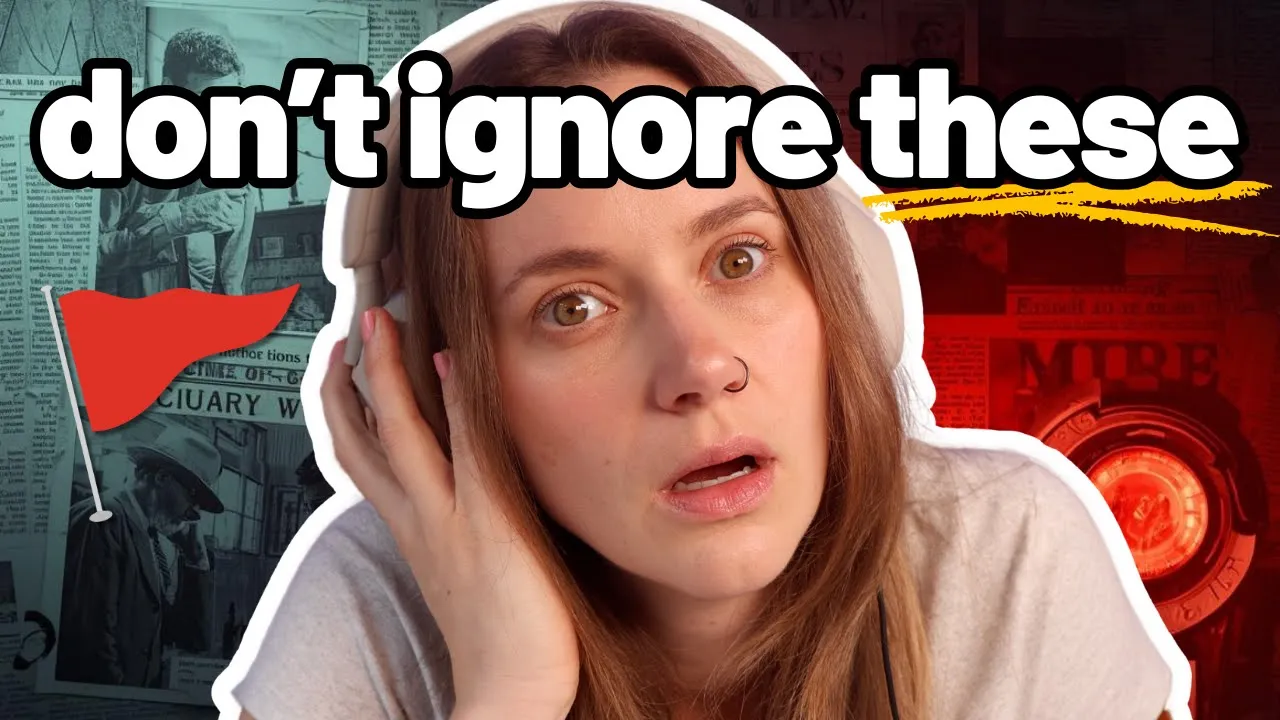
Danielle Ryan · @itsdanielleryan
Words
3,059
Runtime
15:27
Speaking pace
198wpm
Reading time
13min
198 words per minute, between the 181 median and the 201 75th percentile of 349 measured videos. That distribution comes from the 349-video hook study.
Opening (first 30 seconds)
Okay, so you're scrolling Instagram and you see another coach promising to teach you how to transform your life in the next 90 days. Here's the thing that most people miss. You can actually spot a predatory coach in under 60 seconds. And today, I'm going to show you exactly how to do that. I've been watching coaching content from a research perspective for the last 3 years or so. And prior to that, I was actually willingly consuming this content for about four or five years. So, I've kind of seen this industry from both sides of the
99 words, the words spoken in the first 30 seconds at 198 words per minute.
Free, no signup. See how the first 30 seconds hold attention, with rewrites.
Sentence shape
| Measure | This transcript |
|---|---|
| Sentences | 133 |
| Average words per sentence | 23.0 |
| Longest sentence | 87 words |
| Questions asked | 4 |
| Sentences containing a number | 15 |
Most used terms
Filler phrases
43 in total: like 23 · actually 6 · sort of 5 · kind of 3 · basically 2 · you know 2 · I mean 1 · literally 1.
A literal whole-word count of the same phrase list the Prepublish browser extension uses, so a phrase inside another word is not counted and a phrase used in its ordinary sense still is. It is a count and not a judgement.
Run the check on the words above: where attention is likely to drop, with a rewrite for each weak line. The free check shows the scores and the one issue costing the most.
What this transcript is
Every word below is the caption track YouTube publishes for this video, pulled from the video itself and reproduced unchanged. It is not Prepublish's writing, not a summary, and not a re-transcription: it is the video's own published captions. English captions, generated automatically by YouTube, in the video’s original language. Source: the video on YouTube. A channel that would rather this page did not exist can ask for its removal through the contact page, and it is removed.
No Script X-ray for this video: YouTube shows a Most replayed graph only once a video has enough views.
Okay, so you're scrolling Instagram and you see another coach promising to teach you how to transform your life in the next 90 days. Here's the thing that most people miss. You can actually spot a predatory coach in under 60 seconds. And today, I'm going to show you exactly how to do that. I've been watching coaching content from a research perspective for the last 3 years or so. And prior to that, I was actually willingly consuming this content for about four or five years.
So, I've kind of seen this industry from both sides of the coin. And as a result, over time, I've really started to notice that allegedly, in my opinion, a lot of the more unethical coaches tend to follow the same playbook. For the sake of this video, let's call it the how to scam blueprint. And today, I'm going to walk you through exactly what that looks like. So, welcome to day 10 of the 12 days of coach. Let's go ahead and jump right in.
My goal for today is to really make this content as easily digestible as possible. So for each of the red flags, I'm not only going to describe what they look like, but I'm also going to show you real life examples of what they look like in the real world. Because once you start to learn how to identify these patterns, you truly cannot unsee them. And while I have over the past few years received quite a lot of criticism actually for not always naming people by name or showing people's faces, I truly stand by the belief that once you learn the rhetoric, the way these people talk, the behaviors that they use, who they are kind of becomes irrelevant because they're all just copying each other and doing the exact same things.
Learning how to identify the patterns is what's going to keep you safe regardless of who it is that's trying to use those behaviors on you to get your money. So, that being said, let's go ahead and jump right into red flag number one. Now, regular viewers of my content are going to know this one right off the bat. It is something we have seen so so many times. And it is coaches who center their entire credibility around this like rags to riches, broke to $100,000 storyline, often compressed into what I would consider to be a very unrealistic timeline.
So, here's an example from one of these celebrity coaches. It says, "At the age of 23, I invested $300 in a Craigslist camera. Little did I know that camera would be my one-way ticket out of my windowless office corporate job. That single investment led me to the 7 figureure empire that I'm running today and best-selling book that tells the whole story. Today, you can find me snuggled up in my cozy Minnesota craftsman with my pup or basking on the beaches of Lake Superior with my dreamboat husband and our beautiful girls." You see, the narrative in stories like this are usually pretty light on verifiable facts, unless you happen to know the personally, but they're very heavy on the contrast that they provide.
In that every single story that we've ever read on this channel always paints this picture of either being broke, having some sort of struggle, feeling really burnt out, hating their job, etc., to suddenly shifting into becoming wealthy, aligned, and free. But what I've found consistently is often missing from pretty much every single story we've looked at on this channel is things like context, privilege, prior experience, access to resources, external support, market timing, or my personal favorite, which I noted in day seven specifically in the video about content creator coaches, is that I have found that many of these people fail to want to address the fact that their income took the largest jump after they started started selling the story of their success itself.
And while I'm sure all of us, you watching this video, me, whether you're an entrepreneur or you're not, we've all had to overcome some sort of hardship at some point in our lives. Some of us multiple times. And throughout those journeys, we've all had to make difficult decisions. And those decisions led us from point A to point B. So, I'm not contesting the fact that we all go through What I'm arguing against is leveraging that rags to riches narrative as a marketing asset specifically intended to make other people feel like the success that you've achieved is now duplicatable by them as well.
Because what this means is that when people then buy into whatever it is you're selling and they inevitably don't get the same results that you did, you're able to then turn the failure around onto them as the consumer, saying things like, >> "Oh, you just didn't believe hard enough. you didn't invest enough time or money, you didn't work hard enough, >> blah blah blah blah blah. We've heard the story a million times.
And the problem with this is that it leaves no room to question whether or not this rags to rich's story was ever truly repeatable in the first place. So, we're going to go ahead and we're going to add that one to our list. And this leads me into red flag number two. So, if you've ever seen any of the discourse online that essentially says coaching only works if you put in the work, such as this post right here where it says, >> "I am a coach for the 0.1% of women, not cryb babies, not excuse makers, not victims, not woe is me liners, the 0.1% of women who are meant for the top of the top.
If that triggers you, you're not meant for my world. And if it activates the fork out of you, welcome to heaven. I can't wait to help you make millions." or my personal favorite ones that suggest that your mindset is the block to your success. Such as this post here where it says, >> "I don't know who needs to hear this, but downplaying your wins is exactly why you're not at the income level you want to be at. >> If you see things like this, I really want you to pay attention because what I'm hearing here actually in the subtext is that these coaches don't want to take accountability.
And when nothing, especially your results as the client is ever the coach's responsibility and everything gets framed as your failure, that in itself is a massive red flag. I want you to go ahead and watch coach miss day six if you did not watch that because it is like a glaring example of exactly this. And I'm going to go ahead and add this one to the list. It just blows my mind that there are coaches out here who will publicly say things like this where their clients are going to be able to see it.
Scary times. Okay, the next one is something that we see more often on sales pages, but I will say I have also seen it in social media content, captions, etc. And that's really language that goes something like, you know, three spots left or limited time offer with the stupid countdown timers on people's websites or when they tell you this is the lowest price I'm ever going to be offering this thing at only to then turn around and offer essentially the exact same sale 12 months from now when it's Black Friday again.
Honestly, my advice to you in these cases is to screenshot whatever the offer is, wait a couple weeks, wait a month, and then go back and see whether or not it truly was a one-time thing. Because if the urgency resets 3 weeks later, then I guess it was never real in the first place. And we see this a lot. To me, that feels really unethical. It feels very misleading. And for that reason, I'm going to add it to our list.
Okay, next up, and this one might be a little bit harder to notice when it's actually happening, but it's what I would call trauma dump marketing. And basically, it's when the content that these people are sharing starts with some sort of sub story or some sort of deeply personal overshare with the intent of selling you something. And so, I just want to be clear here that I'm not saying it's not appropriate for people to talk about things that they've been through online, cuz that's not the point I'm trying to make.
I'm always going to be an advocate for people being transparent and sharing their experiences openly if they so choose to do so. But there is something so icky to me when we leverage those past negative experiences that we've overcome to then turn around and sell people something. And when I say this, I'm thinking about one particular reaction video I did maybe a year or two ago that hit particularly close to home. I think because it was so close to a lived personal experience that I had which I share in that video but basically it's this woman whose sibling passed away and then she leveraged that opportunity to try and sell her online course or coaching or whatever it was.
I really encourage you to go watch that video because it is truly so insane. But when the emotional weight of someone's pain is then strategically positioned to soften an audience, lower their skepticism, because who's going to question the fact that I've experienced trauma, and then used to funnel them into a sales pitch? To me, that feels a lot less like transparency and way more like straight up manipulation. So, in this case, as you're consuming content online, particularly from coaches, just be mindful of trying to understand their intention behind that share. or are they doing it simply to connect or are they merely treating their past experience as a marketable asset in order to lead you to their payment link?
All that to say, I'm going to go ahead and add this one to the list. Okay, next up is another one that might not be as obvious until you're inside these coaches communities, or at least maybe I'm just projecting my own experience where I didn't really notice this was happening until I was inside the coaching container. But that's really this situation that tends to happen where the professional boundaries essentially dissolve and the coach starts treating you more like a friend than a coach.
And I mean, there was a scam story that I read out on the channel where I remember this being so so so evident, but not until the client had handed over I think it was like $10,000 to the coach. And so I'm curious if those of you watching can maybe share examples in the chat of signals that you could look out for to notice that this is happening before you spend the money. And I guess top of mind, I think love bombing or oversharing of personal stories and experiences could be two examples, but if you have anything else, please add it down below.
Nonetheless, we're going to go ahead and we're going to add this one to our list. Okay. Okay, next up we have what I would consider to be probably one of the most obvious red flags. And it is particularly infamous amongst the coaches who coach other coaches on how to coach, specifically because I believe that their businesses are primarily built on selling aspiration and the idea of success versus something tangible.
And what better way to exude or showcase your success than to share your luxury travel, your designer bags, your fancy cars, your income screenshots. We're talking luxury lifestyle flexes. And in my opinion, all of these markers are often used to prove the coach's expertise without ever actually having to explain what the business is. And in my opinion, a true expert should have tangible client results beyond their income or your personal income as a reflection of the work that they do.
Like I would love for one single second to sit down with one of these coaches and have them explain their business to me without making note of their income, their lifestyle, or their possessions because I can explain to you what my business is without ever having to tell you how much money I make. And I am confident in saying that some of these coaches could not do the same. So I think I'll be waiting a while for that day to come.
But in the meantime, I'm going to go ahead and add this one to the list. Okay, next up is another fan favorite amongst the coaches who coach coaches on how to coach coaches. And in some cases, it's also illegal as per the FTC's requirements, and that is emotional or egregious testimonials with no data, no context, and no disclaimers. And I know you know what I'm talking about. It's these pages and pages of I made $10,000 thanks to Jane Doe with no caveat that those results are not typical.
And listen, as a business owner myself, I am all for collecting feedback from your clients, leveraging those reviews to validate your products or services. I literally do this myself and it would be very hypocritical of me to say that you should not have testimonials posted on your website. But if the reviews that you're using are all cherrypicked out of context. And when I say that, I'm specifically thinking of the countless screenshots I've seen from Slack channels and text messages where the messages before and after have both been deleted.
And it's just like a random sentence where a person says something about how much money they made and then they're using that as proof that the program works, but there's no context as to whether or not that money was made in that specific program and it all just kind of feels manufactured and fake. I'm just really of the belief that overwhelmingly positive reviews that don't share the timeline or the offer or the input that was necessary to achieve those results and are often solely just presented to impress you and get you to give your money away.
I feel like those just aren't telling the whole story and they should be taken with an air of skepticism perhaps, especially given the price point that they're trying to get you to pay. So, we'll go ahead and add that one to the list and move on to the next red flag. I truly think this last one could be a category of its own. Also, like an entire video of its own, if I'm being honest, and that's the narrative that you have to invest in yourself in order to be successful, specifically in the context of coaching.
And I say this because in business, again, I've been in business for 7 years. I understand that you do need to spend money in order to make money. That statement is objectively true. But when I say that, I more so am referring to operational costs. So maybe things like inventory, different softwares or tools that you use in your business, equipment maybe that you need to purchase in order to be able to operate. Maybe you're paying for financial advice or legal advice, website fees, etc.
Those sort of things that you need to spend money on in order to operate your business. All too often though, what I see in the coaching industry specifically is coaches conflating the cost of doing business with the need for coaching or mentorship in order to be successful. And can that be true in some cases? Is coaching or mentorship helpful in order to move the needle in your business? Sure. But I would argue that more often than not, especially when this sentiment is coming from a coach whose entire business is built on the premise of teaching you how to build the same business, this invest in yourself narrative is less about genuinely wanting to help you grow as a business owner and more so about continuing to create pressure and interest in the things that they're selling.
There is a time and a place to outsource help and seek guidance from people. Again, I'm not contesting that. But in my experience, success as a business owner more often comes from action, from learning, persistence, and not endlessly just paying more and more and more for someone to be your personal cheerleader. Like I genuinely believe as a business owner it is so important to give yourself time to breathe on your own to implement and to test and to try things out versus just constantly consuming information from someone outside of you.
And anyone trying to convince you otherwise is probably looking out for their own interests, not yours. So let's go ahead and add that one to the list. So there you have it, the how to scam blueprint, which unfortunately shows up all too often in the coaching industry. Please let me know in the comments if there's anything you would like to add to the list, anything that you think perhaps I missed. And as you review these red flags, I want you to remember that they're part of a pattern designed to keep you hooked emotionally, pressure you financially, and keep you chasing results that might never come.
If you take anything from today's video, let it be this. Trust your instincts, do your homework, and please do not join the coaches coaching coaches pyramid. That said, I do want to shout out my own pyramid. So, thank you so much to the channel Mastermind VIPs as well as Tom, Emily, Suzanne, Harrison, and my very own Jane Doe in the billionaire tier. Thank you so much for watching day 10 of the 12 days of Coach Miss.
Take care. Comb your hair and I'll see you tomorrow for day 11. Bye.
The words are the caption track's own and nothing is reworded or re-transcribed. Paragraph breaks are placed between sentences so the text reads as prose.
Free tools for your own script: paste a draft and see where it stands before you record it.
Paste your draft and see where viewers are likely to drop off, with a rewrite for each weak line.
Paste the first 30 seconds of your own draft for a hook score and rewrites.
Check your draft against YouTube's advertiser-friendly guidelines before you record it.
Read this channel's public videos and transcripts, and download a writing brief for it.