Getting the transcript
Reading the captions from YouTube. A video nobody has opened here before takes 10 to 30 seconds; this page fills in on its own.
Getting the transcript
Reading the captions from YouTube. A video nobody has opened here before takes 10 to 30 seconds; this page fills in on its own.
Greg Gottfried · @GregGottfried
This video has no Most replayed graph yet: YouTube shows one only once a video has enough views. These are the moments viewers replayed most in Greg Gottfried's most watched videos.
Most replayed moment at 3:18
6.8x that video's typical replay level
And the way that Amazon KDP works is, all we have to do is upload this cover file, the front and the back, which this one is just blank on the back, and then what's going to go inside the book, which is just lined pages in this instance. And then once we've uploaded those ARC files to Amazon, Amazon creates a virtual
Said at 3:12
The graph counts replays. It does not show where viewers stopped watching.
Words
1,898
Runtime
8:29
Speaking pace
224wpm
Reading time
8min
224 words per minute, above the 201 75th percentile of 349 measured videos. That distribution comes from the 349-video hook study.
Opening (first 30 seconds)
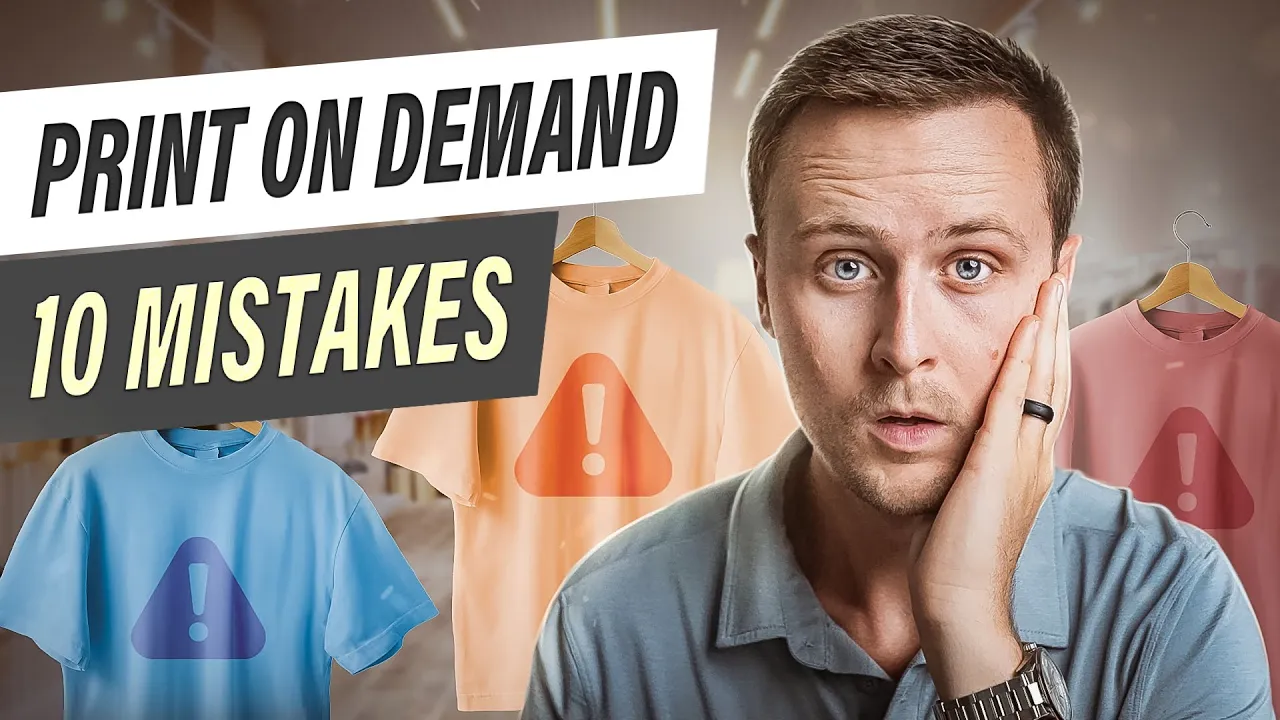
Hey everyone, welcome back to another video. In today's video, I'm going to be sharing with you the 10 mistakes to avoid in a print on demand t-shirt business. Now, in this video, I kept it to just 10 mistakes that you really want to avoid. The ones that are on this list are the 10 absolute things that you don't wanna do for print on demand. Now, some of these things came from my personal experience of doing print on demand for years. Others on this list have come from me talking to people in the comments, and I've seen that they are doing things that are really hurting them in
112 words, the words spoken in the first 30 seconds at 224 words per minute.
Free, no signup. See how the first 30 seconds hold attention, with rewrites.
Sentence shape
| Measure | This transcript |
|---|---|
| Sentences | 90 |
| Average words per sentence | 21.1 |
| Longest sentence | 64 words |
| Questions asked | 1 |
| Sentences containing a number | 6 |
Most used terms
Filler phrases
9 in total: kind of 3 · like 3 · basically 2 · literally 1.
A literal whole-word count of the same phrase list the Prepublish browser extension uses, so a phrase inside another word is not counted and a phrase used in its ordinary sense still is. It is a count and not a judgement.
Run the check on the words above: where attention is likely to drop, with a rewrite for each weak line. The free check shows the scores and the one issue costing the most.
What this transcript is
Every word below is the caption track YouTube publishes for this video, pulled from the video itself and reproduced unchanged. It is not Prepublish's writing, not a summary, and not a re-transcription: it is the video's own published captions. English captions, published by the channel, in the video’s original language. Source: the video on YouTube. A channel that would rather this page did not exist can ask for its removal through the contact page, and it is removed.
Hey everyone, welcome back to another video. In today's video, I'm going to be sharing with you the 10 mistakes to avoid in a print on demand t-shirt business. Now, in this video, I kept it to just 10 mistakes that you really want to avoid. The ones that are on this list are the 10 absolute things that you don't wanna do for print on demand. Now, some of these things came from my personal experience of doing print on demand for years.
Others on this list have come from me talking to people in the comments, and I've seen that they are doing things that are really hurting them in this business. Now, these 10 are in no particular order, but all of them are very important and I've deemed them worthy of being on this list. So without further ado, let's go ahead and get started with the first mistake that you really want to avoid as a print on demand seller.
Now, the first mistake is probably the most common mistake in print on demand, and that is going too general with your niches. Now, what I see all the time talking to print on demand sellers is that they're creating designs in topics that are just simply oversaturated. They are the big, general, popular topics, and everyone's creating designs in them. You don't want to be creating designs in those super popular niches.
You want to find sub-niches or places where there is very little competition. People don't think to create designs in those. That's where you're going to see success. Now, for those of you who don't know how to find these sub-niches and you want to learn, I'll link up a quick video that walks through on screen recording how to do that step-by-step. Now, the second mistake is another very common one with new print on demand sellers, and this is not creating enough designs, and then secondly, not uploading them to multiple different print on-demand websites.
So starting with the first half of this, if you've only just created a couple designs, you really can't expect to have success in print on demand. It is somewhat of a numbers game, so you really do need to create a lot of good designs in a lot of good niches. That's when you're really going to see success. Now, the second part of this, I just rolled it into the same mistake here, is not uploading those designs to multiple different websites.
In print on demand, for the most part, you can upload the same design to multiple different platforms just to get all of their organic traffic to see your same listing. The third mistake that I have made in the past and I see a lot of new people making is color clashing. So essentially what this one is, is if you create a design that is black, you don't want to have that on a black t-shirt. Now, when people start out in print on demand, typically they just select as many different color options to be available in the listing, but what you really should do is make sure that the design or the color of the font or graphic that you're putting on that shirt looks okay on the different color options that you're making available for that listing.
A dark font on a dark shirt or a light font on a light shirt is not always going to work, so leave those color options out. Now, the fourth mistake that I see is by far the biggest mistake. This is not checking your slogans for trademarks. I've talked about this in other videos, but I'll keep it really short. When you come up with text or a slogan to put on a shirt, you have to make sure that someone hasn't formally trademarked that text or the slogan on apparel.
If you just come up with this text or you see it somewhere else, you put it into your design and you upload it to these platforms, the person who owns that copyright or that trademark can have your design taken down, then you get a copyright strike. What happens if you get too many of these copyright strikes is the print on demand platform just closes your account. Now, there's two ways that you can really check for these trademarks.
First is you can go to the government database. You can search through the trademarks for the slogan and see if it is copyrighted or trademarked on apparel. This is kind of a lengthy process, so the alternative is you can use a tool that just checks the database for you, so you can just enter in as many slogans as you want to check, hit enter. That's going to say, yes, you can use it, or no, it's protected. So take this one seriously.
This is a really important one that you don't wanna make the mistake of. Moving on to the fifth mistake, and that is not using copyright-free fonts or graphics in your designs. Now, there are a million different design tools out there that you can use to create t-shirt designs for print on demand. The big catch here is that not all of them are copyright-free. So you may be using a tool thinking everything is great, you upload that to a print on demand platform, and either right away or down the road, it gets removed for copyright.
You're wondering why. It's because the font or the graphic may have been copyrighted, and that tool that you used to create the design didn't say anything about it. So this is another one like the trademarks that you really want to be careful with because it comes into the legal issues. So if you're interested in that aspect of this, I'll link up a video that goes through step-by-step how to create those designs so that they are copyright-free.
The sixth mistake that I see people making in print on demand is people are confusing active and passive print on demand websites. I personally love the passive print on demand websites. These are websites like Amazon Merch on Demand, RedBubble, Teepublic. Essentially, all you do is create the designs, upload them to the website. They do everything else for you. They bring you the buyers. They have organic traffic coming.
They print, they ship the items, they do all of the customer service, refunds, exchanges, everything. That's a passive print on demand website. New print on demand sellers who are just coming into the space are starting print on demand on Shopify or Printful or Printify. Those are all active print on demand websites. Essentially on those types of websites, you have to create your own website and bring your own traffic.
The buyers will not be brought for you, and you also have to do the customer service. So make sure that you're not using those active style websites and thinking that the buyers are just going to come for you. That distinction is something that you really need to know the difference between. The seventh mistake to avoid in a print on-demand t-shirt business is not following the file upload requirements. Now, most of the passive print on-demand websites, they don't really have file upload requirements.
They just wanna make sure that the quality of the file you're uploading is high enough quality that it can be printed. However, if you're using Amazon Merch on Demand, which you should be, because it's a really good website, they have specific upload requirements, and what that is, is basically your file that you're uploading for a standard t-shirt needs to be 4500 pixels by 5400 pixels. If you're trying to upload a design file that's not sized like that, it's not going to upload properly.
So for those of you running into that problem, I'll link up a quick video that shows you how to size properly so you can alleviate that issue. The eighth mistake that I kind of learned the hard way here is pricing your listings too high or too low. This is something that I did rigorous testing on a few years ago and put it on this channel, that was testing low prices to try to get a high volume of sales and testing high prices to try to get a large profit margin and not as many sales.
What I learned from all of this testing is that going with the suggested pricing or a dollar or two below it always yielded me the most profit. It wasn't necessarily the most sales at the end of the day, but it turned out to be the most profit. That little bit of information took me a lot of time to learn, so hopefully that's really helpful for you. The ninth mistake to avoid for print on demand is not optimizing your listings with keywords.
Now, a keyword is basically the name of a niche, and the way that you optimize it is you find sub-niches and you use those keywords in your titles and descriptions of your listing. The kicker here is that as you're doing your research to find those sub-niches, you're going to find ones that are related or very similar. So what you wanna do is use those similar keywords in your titles and descriptions as well. What this is going to do for you is twofold.
First, by having those proper keywords in the title and description, the print on demand platforms are going to know what to show your shirt for, where to rank it, and when to show it to people. Secondly, by putting all of those related keywords in there, you're going to pull far more search traffic and show up for more things because you're showing up for all of those other sub-niches as well. And lastly, the 10th mistake to avoid in print on demand is simply not getting started.
I can't tell you how many people that I talked to in the comments that have a lot of doubts about print on demand, asking how long it will take to make money, how much money they will make, and every question in between. I really don't blame people for asking those kind of questions, because there are so many scammy or spammy business models out there. Why should this one be any different? Well, all I can say is that this business model is tried, it's true, it works, but it really takes hard work.
Nothing is guaranteed in business, but these are the best pieces of advice that I can share with you for what's personally worked for me. Now, with that being said, for those of you who are looking for a full step-by-step print on demand tutorial, I recently put out a fully updated one that goes through every step of my process from just starting out to literally hitting publish and posting your designs on print on demand platforms.
I'll link up that video on the side and down in the description, along with other helpful videos that you may want to watch. So guys, that's it for this one. If you enjoyed it, please give it a thumbs up, and I'll see you guys all in the next video.
The words are the caption track's own and nothing is reworded or re-transcribed. Paragraph breaks are placed between sentences so the text reads as prose.
Free tools for your own script: paste a draft and see where it stands before you record it.
Paste your draft and see where viewers are likely to drop off, with a rewrite for each weak line.
Paste the first 30 seconds of your own draft for a hook score and rewrites.
Check your draft against YouTube's advertiser-friendly guidelines before you record it.
Read this channel's public videos and transcripts, and download a writing brief for it.