Getting the transcript
Reading the captions from YouTube. A video nobody has opened here before takes 10 to 30 seconds; this page fills in on its own.
Getting the transcript
Reading the captions from YouTube. A video nobody has opened here before takes 10 to 30 seconds; this page fills in on its own.
Jason Fladlien · @jasonfladlien
Words
2,643
Runtime
13:51
Speaking pace
191wpm
Reading time
11min
191 words per minute, between the 181 median and the 201 75th percentile of 349 measured videos. That distribution comes from the 349-video hook study.
Opening (first 30 seconds)
A serious shift has happened the last few years when it comes to making money online. Funnels, pitches, direct response style marketing, it's lost its edge and in its place education, teaching, a certain specific type of teaching is quietly turning the marketing world on its head. Now, I get to see it from both sides. I get paid 5K an hour to consult with the top brands in their respective industries and I've helped many update their old marketing techniques to continue to make millions of dollars in 2026 and I've taken the new bloods
96 words, the words spoken in the first 30 seconds at 191 words per minute.
Free, no signup. See how the first 30 seconds hold attention, with rewrites.
Sentence shape
| Measure | This transcript |
|---|---|
| Sentences | 167 |
| Average words per sentence | 15.8 |
| Longest sentence | 63 words |
| Questions asked | 4 |
| Sentences containing a number | 12 |
Most used terms
Filler phrases
11 in total: like 4 · kind of 3 · actually 2 · I mean 1 · basically 1.
A literal whole-word count of the same phrase list the Prepublish browser extension uses, so a phrase inside another word is not counted and a phrase used in its ordinary sense still is. It is a count and not a judgement.
Run the check on the words above: where attention is likely to drop, with a rewrite for each weak line. The free check shows the scores and the one issue costing the most.
What this transcript is
Every word below is the caption track YouTube publishes for this video, pulled from the video itself and reproduced unchanged. It is not Prepublish's writing, not a summary, and not a re-transcription: it is the video's own published captions. English captions, generated automatically by YouTube, in the video’s original language. Source: the video on YouTube. A channel that would rather this page did not exist can ask for its removal through the contact page, and it is removed.
No Script X-ray for this video: YouTube shows a Most replayed graph only once a video has enough views.
A serious shift has happened the last few years when it comes to making money online. Funnels, pitches, direct response style marketing, it's lost its edge and in its place education, teaching, a certain specific type of teaching is quietly turning the marketing world on its head. Now, I get to see it from both sides. I get paid 5K an hour to consult with the top brands in their respective industries and I've helped many update their old marketing techniques to continue to make millions of dollars in 2026 and I've taken the new bloods as I call them and help them enhance this new style of marketing to make in some instances over $10 million per month.
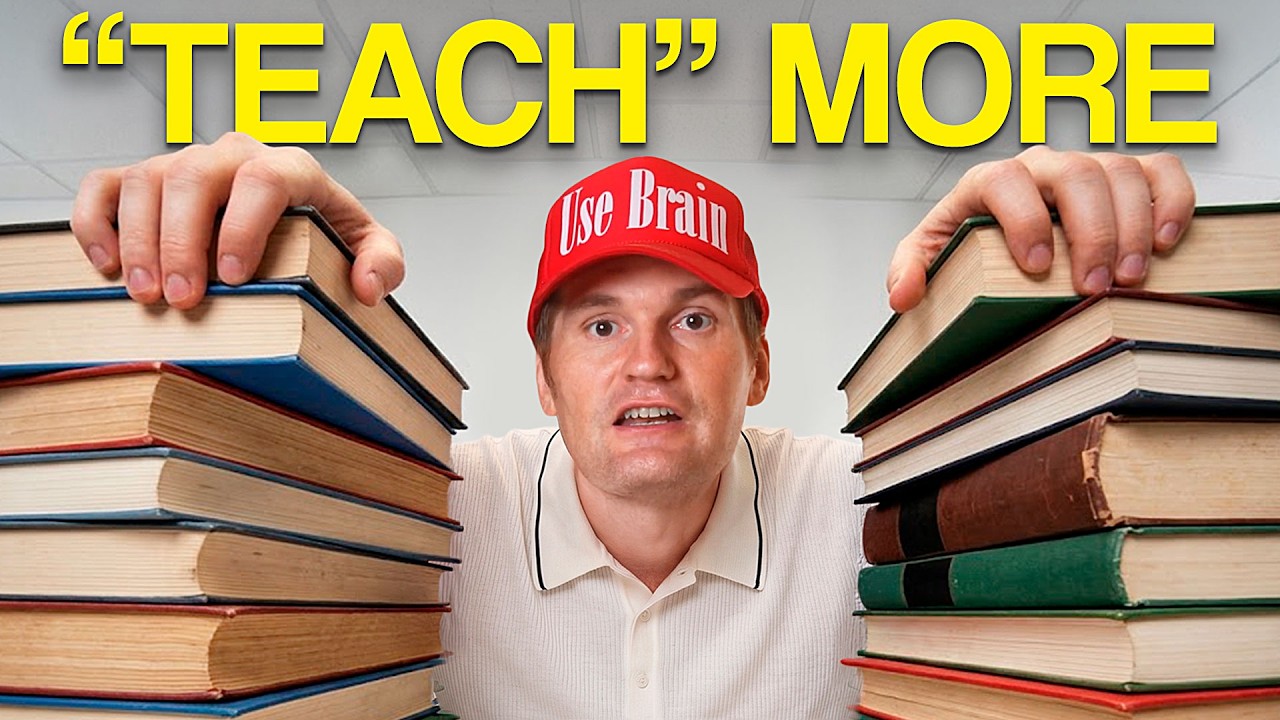
Damn. Now, for the first time in history, education in a specific manner, in a certain context, with the proper structure behind it, has exceeded marketing. The thing has now become more valuable than the perception of the thing. But, if you don't get the nuance of it, then you'll never be able to capitalize on it. So, let me help you. Today, I'm going to show you the proper content strategies that you can use in your marketing, how the world and definition of providing value has shifted, and the challenges that you must overcome to properly unlock the full profit available with this new model.
At its heart, there are four important points you must understand. One, a more informed consumer makes a better purchasing decision. Two, the more you help to create independence, the more you will get dependence. Three, the less you need the sale, the easier it is to get the sale. And fourth and most importantly is 1% of the market represents 50% of its total value. The key to this market, the 1%, is empowerment and referral.
Education is the most effective way to accomplish this, but you have to educate in the right way and we do it by shifting from selling as teaching to teaching as selling. Let me show you how. The challenges that you're going to face with this new model, instead of selling to teach, we're now teaching to sell. They're subtle and they can catch you and they can make you want to default to the old guru way and only that way.
Again, we merge the best of both worlds. We use teaching as a primary mechanism to sell now and then once we get all this attention that we've earned, if we wish to at any point in time, we can still do launches, challenges, funnels and we still do webinars. Basically, the webinar now becomes because you trust me, because you understand me, now I can solve this specific problem for you when you're ready to have it solved.
And we reach 100 times the market, we reach the 1% of the market that spends 49% of its money and then we own the market. But here's the challenges that are going to get in your way. So, and I see this everywhere I go. This has been an issue since I started teaching this in 2007 and still an issue in 2026. When we say teach in this particular context, a lot of people think this means give people information, educate people, teach them a specific strategy, process, so forth.
What we really need to master, and this is true if you're selling or not selling. This should be your go-to no matter what you do. What we're really doing is creating transformation. And the way more than any that you create transformation is least info needed to change behavior. So, the measuring stick on if you're really providing value is if a person can no longer operate in a limited capacity. So, if before they're like, "Oh my god, I can't focus.
I'm procrastinating all the time and I get distracted easily." And then you teach them one thing and now they are focused, that's a behavioral shift. And oftentimes, what you can do to help somebody is not to give them more things to do, it is remove things for them that they were doing that don't serve them. And so, this is actually possible to teach less and get more out of it. We just have to be purposeful with it.
So, we don't inform, we transform. The And then the next thing you got to master here, and this is so counterintuitive, and this is why I get paid the big bucks, and this is why I've spent 19 years obsessing over this, is we got to shift from focus of content to context. Content just gives insight or information or education. Context says, "Move away from this and move toward that." Context is more important than content.
Context makes it subjective. This is what I personally need to do specifically with the objective information that I've been given. I consult with all the biggest names in the industry, and I always tell my clients the same thing. You're teaching the objective best strategy here. You need to change it to the subjective best strategy. It kind of looks like this. This is the thought exercise that I always give them, too.
Imagine that you had five ways to do something. And in order, this was the best, and this was the least best way in order to accomplish a result. And so, you go out there, genius that you are, and you say, "I'm going to teach people the objective best way in order to do it, cuz it's got the most proof, the most validation, I got the most resources behind it, and therefore, because it's the best, I'm going to force it on my audience." But, this has a high compliance threshold.
What I mean by that is, it's very difficult for people to follow it and execute upon it and get a result. It's beyond their capabilities. The third best objective option has a lower compliance threshold, meaning while it's not the most mathematically effective way in order to do something, and it has flaws in it, and it has issues with it, people can adopt it more, aka change their behavior and get a better result from it.
It is almost never the case where the objective best option in teaching is the thing you should teach them. You have to teach it contextually to the market based upon the consciousness that the market is currently in. And this is a dance, and we play the dance, and we get an unlimited number of chances on social media to attempt to find objective reality through the lens of subjective responsiveness to the reality. This is why A+ students work for C- bosses because C- bosses are better at being in touch with what's subjective and not what is objective.
In the past, we focused on quantity of information, and now we need to focus on clarity and insight of information. So, we don't need a lot of different concepts. We need a few concepts repeated in a lot of different ways. And this is so fun because think how much better you get at communicating something if every single day you get up and you say, "How can I communicate the same thing in a slightly different way?" And this is so powerful because that communication leads to the insight, that insight leads to the connection, that connection creates buyers at a rate that is never seen before.
The other challenge people get into, if you can shift this one, just this one little shift will make you so much money, is they teach in a singular modality. So, if they're a why-based teacher, cuz they look at the world through why, then they teach based on why. Why this is important, why you should do this, why you shouldn't do that. And a why is valuable. It helps make you make sense of things. Other people are what-based teachers.
Here's what's important, here's what's not important, here's what's involved. And so, they teach in the model of reality that they see the world in. But, markets are composed of all different models of reality. And so, we have to be modal to that market. So, whenever I teach anything to sell, I teach the why of it, the what of it, the how of it, and the what if of it. So, this is a good model for you to do with anything that you want to communicate to an audience.
Here's why this is important. Here's what's involved. Here's how to use it. And here's what could happen if it goes well for you. And here's what you can adjust if it doesn't go well for you. And so, when we teach, we are teaching the composite of the entire market to hit the four different major perspectives that every market has. And when you put them all together, not only does it reach individuals in the market better, but when they can combine all the different perspectives, they get deeper understanding.
Hey, real quick, we do these in-person five at a time masterminds. I do one full day for 12 hours training five entrepreneurs in person here in Los Angeles once a month. 10,000 a person. If you are interested in you make a decent amount of money, at least high six figures a year. Information is in the bio if you want to attend one of these in-person seminars that I run. The other challenge with teaching in the context here is a lot of people want to default to logic.
Cut and dry. First, do this, then do that. Take the emotion out of it completely. And I get it cuz that's kind of how you were taught when you were a kid. But this isn't the kind of teaching that sells. What we need to teach is through wisdom. And wisdom is the combination of the right amount of logic with the right amount of emotion seasoned on top of it. We got to get them in the heart and in the head. Not just in the head.
Not just in the heart. Getting them in the heart will motivate them and will get you a lot of praise, but no buyers. Getting them in the head can empower them, but won't get them to change their behavior cuz all behavior has an emotional component attached to it. So, what we do is we combine the emotion and the logic when we teach. Everybody is prejudiced one way or another way. You have more logic and less emotion in you by default or more emotion in you and less logic when you go to communicate.
Your goal is to bring in and integrate both spheres. So, when you're creating content, look at it and say, "If I'm too logical here, let me add some emotion to it. If I'm too emotional here, let me validate it and back it up with logic." Good teaching is instructional. You say, "First, do this, then do that." But, great teaching, teaching that sells, is instructional plus gets commitment. So, I do this all the time. I say, "I'm going to show you this thing.
If I show it to you and it resonates with you, then commit to me that you are make a go of it and take it out for a walk and see where it takes you. Is that fair?" And then the audience says, "Yes, Jason. Whatever you teach me, I'm committed to doing if it makes sense to me." And then I teach them. And then after I teach them, I said, "Now I've taught you this. Can you see how this can help you in this way? And will you commit to me to actually making this show up in your life?" And then again, they say, "Yes, Jason.
I will." Teaching is a two-way street. It's an interactive process. It's not you one directionally pushing it on something. It's you interacting. It's not presentation, it's conversation. And this is where the value really lies when it comes to selling via teaching, not just teaching and not just selling. Real good teaching is mostly fundamentals. There's a saying that if you want a new idea, read an old book. And there's so much value to that.
And the nuance here is you get the idea from the old book and then you right-size it to the new world. You add your flavor, your touch, your insight, your novelty to it. Now, novelty can work in a couple different ways. Novel can be adding a new idea to an old idea. But, novel can be teaching an old idea in a new way or a new format. Ultimately, what is going to help people the most is the oldest concepts that have ever existed.
We call this antifragility, robustness. So, the things that have existed for 500 years are more likely to exist in the next 500 years. The things that have existed in the last 5 years are unlikely to exist in the next 5 years. So, the printing press keeps pushing out physical books, but I don't even know if tweeting is going to be a thing in the next 5 years. So, we want to focus on the fundamentals cuz that's what changes markets, but fundamentals are not very fun.
And so, we make them fun through novelty. The other trap we have to escape is the trap of theory. We teach based on theoretical concepts, which are abstract, and we need to put more of the focus on application. Here's how you specifically use this, which is a concrete concept. You got to give people operations to perform. You got to make it so a third party could look at the person who's executing the information and know whether they did it or didn't do it.
This is called the third-party theory. So, if you are teaching in a way where a third-party auditor can't look upon your students, your audience, and see if they complied or didn't comply to your instructions, then you have a problem. And lastly, we don't teach anymore and then sell, we teach as we sell. We don't have to hide the fact that we're selling. We don't have to hide the fact that we have solutions. If you study how I work with my clients, one of the greatest things I help them do is get comfortable with the concept of selling.
So, we design teaching systems that make it obvious to the end users. If you want to do it on your own, this is what it looks like and I will give you the very best lesson on how to do it on your own. And if at any point in time you want help, we have resources that you can purchase and here's what they look like. And nobody has a problem with that. Everybody's cool with this, so we can simultaneously let people know more aggressively and more assertively that we have things for sale and they can become aware of those and repetitively be reminded of those in a way that they're totally cool with because it comes as selling for service, not selling to extract money from a market.
So, the more you teach, the more you earn the right to sell, but selling in 2026 through teaching is different than it's ever been, and it has more upside if you do it right. So, commit to me. I will follow this process to create more value in the marketplace and therefore be rewarded for the value I create. I've given you the map to create the value. Now, go apply it, my friend.
The words are the caption track's own and nothing is reworded or re-transcribed. Paragraph breaks are placed between sentences so the text reads as prose.
Free tools for your own script: paste a draft and see where it stands before you record it.
Paste your draft and see where viewers are likely to drop off, with a rewrite for each weak line.
Paste the first 30 seconds of your own draft for a hook score and rewrites.
Check your draft against YouTube's advertiser-friendly guidelines before you record it.
Read this channel's public videos and transcripts, and download a writing brief for it.