Getting the transcript
Reading the captions from YouTube. A video nobody has opened here before takes 10 to 30 seconds; this page fills in on its own.
Getting the transcript
Reading the captions from YouTube. A video nobody has opened here before takes 10 to 30 seconds; this page fills in on its own.
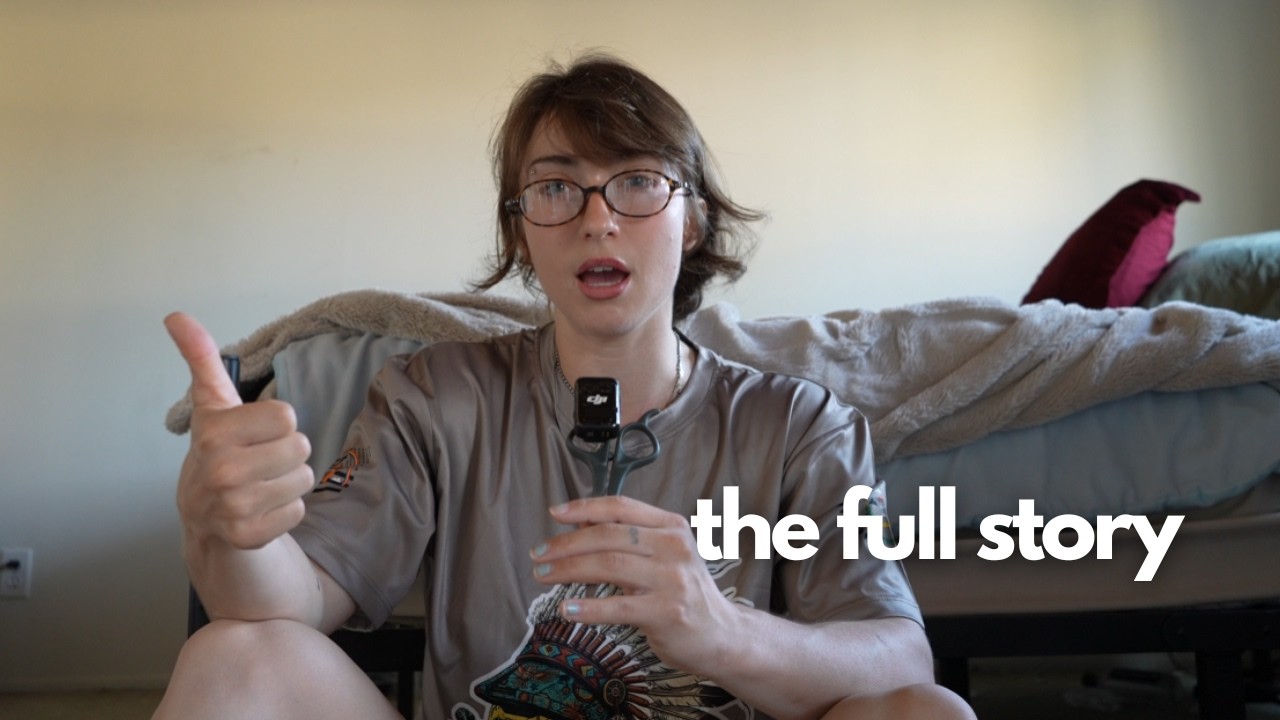
LeanBeefPatty · @theleanbeefpatty
Words
4,152
Runtime
24:44
Speaking pace
168wpm
Reading time
17min
168 words per minute, between the 160 25th percentile and the 181 median of 349 measured videos. That distribution comes from the 349-video hook study.
Opening (first 30 seconds)
This video is going to be about my full experience with food issues and overcoming that. This has been a requested video. Actually, I was hesitant to make it before because it can be a very touchy subject, but I think it is important to shed light on and maybe it can help someone. Also, the one other time I made a video kind of like this, I think it was last year or two years ago, it was overcoming food anxiety during the
84 words, the words spoken in the first 30 seconds at 168 words per minute.
Free, no signup. See how the first 30 seconds hold attention, with rewrites.
Sentence shape
| Measure | This transcript |
|---|---|
| Sentences | 289 |
| Average words per sentence | 14.4 |
| Longest sentence | 59 words |
| Questions asked | 13 |
| Sentences containing a number | 6 |
Most used terms
Filler phrases
131 in total: like 85 · you know 14 · kind of 13 · basically 5 · sort of 5 · uh 4 · I mean 2 · actually 2 · um 1.
A literal whole-word count of the same phrase list the Prepublish browser extension uses, so a phrase inside another word is not counted and a phrase used in its ordinary sense still is. It is a count and not a judgement.
Run the check on the words above: where attention is likely to drop, with a rewrite for each weak line. The free check shows the scores and the one issue costing the most.
What this transcript is
Every word below is the caption track YouTube publishes for this video, pulled from the video itself and reproduced unchanged. It is not Prepublish's writing, not a summary, and not a re-transcription: it is the video's own published captions. English captions, generated automatically by YouTube, in the video’s original language. Source: the video on YouTube. A channel that would rather this page did not exist can ask for its removal through the contact page, and it is removed.
No Script X-ray for this video: YouTube shows a Most replayed graph only once a video has enough views.
This video is going to be about my full experience with food issues and overcoming that. This has been a requested video. Actually, I was hesitant to make it before because it can be a very touchy subject, but I think it is important to shed light on and maybe it can help someone. Also, the one other time I made a video kind of like this, I think it was last year or two years ago, it was overcoming food anxiety during the holidays because that can be a particularly difficult time for people.
And my video got age restricted. And I'm not sure exactly why, but probably some of the terminology that I used, which was frustrating, not because I was like, "Oh my god, my video is not getting reach." It was more like, "I know the people who are now restricted from potentially being able to see that video might need it." Because when I was underage, that's when I really would have needed this. That's not to say these things don't affect everybody.
I've known people through every stage of life who have struggled with these things, but additional trigger warning because also people really don't like when you censor your terminology online. Please don't be upset with me. I will probably be censoring some things or not saying them extremely directly just because I don't really want that to happen again. Anyway, I'm going to start from the beginning. When I was a child, starting as a toddler, I did gymnastics.
My mom was always an athlete. My mom did gymnastics, so she wanted me to do that, too. She taught me as a toddler and then when I got a little bit older, I joined like a private competitive team. And that was a huge part of my life, especially my childhood, huge part of my childhood. So, when it came time for me to quit, pretty much, I was a preteen. I had no other sense of identity whatsoever in my mind, pretty much.
Maybe I had some other identity things, but being a gymnast was a really big one for me. Particularly being like kind of scrawny, muscular, smaller build looking child, but also muscular, was really part of my identity. Because growing up, and I'm not blaming them for this now, but I did have adults in my life really emphasizing like my muscle build or like uh you're lean. They wouldn't use those words, but pretty much like that.
And that really stuck with me because I was like, "Oh my gosh, I'm getting praised for this. Like, this is awesome." I didn't really know how to eat. Like, I didn't really eat intuitively because that's something that isn't normally taught, and it makes sense that it's not taught because people don't think about teaching that. To survive, you have to eat. Unfortunately, a lot of people can be influenced by different social or familial whatever sort of aspects that will actively encourage you to neglect your hunger and fullness cues.
What I did know was food is fuel. However, I stopped being active at that point. From gymnastics, I was, you know, in the gym there like 5 days a week, 2 and 1/2, 3 and 1/2 hours a day, so I was very active. And when I quit, I didn't really do anything. So, that was hard. I felt like a failure. Not that anybody told me I was a failure, but I just felt like that because I had basically just surrendered this huge part of my identity.
And because of that, I felt like I should punish myself. So, what I had going on was a mixture of wanting a sense of control and self-punishment. Even though I was quite young, 12, 13, I knew exactly what I was doing. Anyway, quit gymnastics. Immediately, immediately start restricting. I didn't want to gain weight, okay? I had also, in addition to being praised for being this thin muscular type build, I had also witnessed other little girls getting degraded for not being that.
I didn't want that to happen to me. So, combination, fear, basically self-hatred, and wanting a sense of control over something when I felt so out of control. For me, it started out very you know, there's a few different categories we consider like I guess like the more common disorders around food, which is restrictive, binge restrict, binge, and then you get rid of it somehow. This, that, over exercising, binging, which back then I didn't see a lot of people talking about their struggles with binging, and I see it a lot more now online, which I love.
I don't love that people are struggling with that, but I do like that people are open to sharing their experiences because that can be very helpful, and I know there's a ton of people that benefit from that, and if anything, just not feeling alone. And hopefully this video might make someone feel like that a little bit, too, and I can reassure you that recovery does get and feel better. So, anyway, I'm restricting. I'm restricting for, honestly, not even like that long of a period of time in my mind, like a few months, but I started to visually change a lot, and my parents could tell in my behavior, like my personality, and my physicality.
Bless them, they went and they found a therapist. It was like outpatient. I went to go talk to this therapist. Uh she's talking to me, she talks to my parents. She's like, "Nah, dude, she needs to freaking go somewhere more intense. Like, you got to get her You got to get her. Me, being well, like 13 now, did not want to hear that. I was not happy and I was willing to do anything to stop that from happening. I go to a residential facility for the first time.
I did not want to be there. I did not want to be there. I'm crying to my parents. I'm like, "Please, please, I'll be better if you let me out. I'll be better if you let me out." Knowing damn well I'm in there like freaking rubbing my sweaty palms together like, "I'm going to go right back to my behaviors when they get me out of here." I did get out of there probably sooner than I should have. And what did I do? Boom, you guessed it.
Right back to my behaviors because I did not want to get better. And I knew exactly what I was doing. So, I got sneakier. I hid things more. I got smarter with the things that I would do and my strategies. You know, smarter. When I get out, I'm sent to like an outpatient facility where after school I have to go to this other place and we do group sessions, talk to a therapist, talk to a dietitian. And I'll get into this, but the dietitian was probably one of the most helpful things that has benefited my life up until this point.
But, boom. They're like, "You're not doing the dang thing. You get your ass back in there." So, I go back. I go back to inpatient for the second time, a residential. And at that point, I was kind of over it. I did kind of want to change. I got a little bit better. I got a little bit better that second time. But then, I got out and the temptation of re-engaging in my behaviors, which are simultaneously very painful and also very comforting because again, at least for me, the sense of control.
These things don't affect everybody in the same way, so I'm not saying like everybody who does this is trying to do it for the reasons that I did it, but for me, I wanted that. And then I was like, "Eh, maybe if I just take a little bit off there, a little bit off there, I can change these things around. I'll make some adjustments." Some time does go by. A good amount of time goes by. I'm out of school now. I move away for a little bit.
Moving away doesn't go quite as well as I thought it would go. I don't regret doing it because it taught me a lot about myself. It taught me I'm not really good at making friends, and I am not very social. So, I was more or less very isolated. I was quite isolated, and I really started to miss my parents. I was isolated. I started hating myself more again. I didn't like my body. I wanted to punish myself, so I started engaging in some other behaviors as well.
I started engaging in being pretty restrictive, but not nearly as much as I was because that was so tiring. Like as addictive or as good as feeling the control of that can be, it also really sucks. Like it really sucks. So, when I see people online talking about, you know, there's someone posting something, and it kind of looks like they might be struggling, can't really prove it necessarily, but you know, there's there's some signs.
There's some signs. It looks like they're struggling, and people in the comments are always like maybe saying something along the lines of, "This is so bad for you. Blah blah blah. Get help. Uh, they know what they're doing." And I'm not saying don't say that, but it's probably not going to help them, unfortunately. The lesson that I learned that [laughter] I'll cover after the next time I got treatment was you really can't help someone who doesn't want to receive help.
And that was a really big thing that I learned. So, I started engaging in other behaviors on top of being somewhat restrictive, binging. So, I started eating a lot and then dispelling of that. That went on for a little bit. I tried to stop doing that cuz that also feels bad. Parts of it did feel good, but overall I understood it was not good. I spiraled super hard and it was more so with the eating a lot and then dispelling one.
That was really rough. There was a summer there where it was almost like I was blacked out. Sometimes I'll just remember some of the things that I would do and how I felt and it feels like a completely different life. Enter residential round three. God bless my parents, okay? And my dad's insurance because residential for me so helpful. Obviously, when I didn't want to be there, it was ass and I didn't want to be there.
But once I kind of accepted like I want help. I want to be helped, which is, in my opinion, the most important thing is wanting to get better, I liked it. Maybe it's just my personality or something, but having somebody else tell you what to do all the time just, you know, this is when you wake up, this is when you have breakfast, go to group therapy, eat lunch, have individual therapy, eat dinner, play a game. I liked it.
So, after round three, it definitely started to get a lot better for me. But I did not completely stop. I was not completely better. It'd be like I'd stop for a while, I'd be able to handle it for a while, and then I would just fall back into my behaviors and they felt comfortable and yada yada yada. The one thing that was like a light switch for me and I stop thinking about food basically. Unfortunately, it's something I can't directly recommend to anybody and might not be repeatable.
I wish that it was so it could be more helpful, but this is just what happened for me. I was in this relationship. I was in this situation. And my partner was stressing me out so much. My partner was stressing me out that I basically forgot about everything else in my life, and I was so hyper fixated on that situation. It like wiped my mind. And then by the time that relationship was over, I thought about it. I was like, "Hey, I haven't engaged in a behavior in a really long time.
And I don't really feel like it." And unfortunately, not everybody has like a one, "Okay, that's the last day" situation. I have known people that have that, but every person's experience is their experience. I don't think I'm not sure if that would have been the case if I hadn't had so much treatment, which I am extraordinarily grateful for. And when people ask me, "Hey, how How do you get over this? Like what can I do?" My first recommendation is if it is possible for you, check your insurance.
If it's possible, get treatment at a facility. Residential was the best for me. There's also inpatient, outpatient, you know, you can see just a therapist, you can see just a dietitian. The treatment was so turning point for my life. The number one biggest thing that it taught me was during work with a dietitian. She structured for me a meal plan. We did not use macros or count calories in the traditional sense, but we used this thing called the diabetic exchange system.
Maybe you have diabetes or just familiar with that system, you know what I'm talking about, but more or less, it kind of takes the calories and the nutritional content of different macros and compresses them into one macro. For example, the one that I always remember, I don't even know why because I don't even eat pancakes that much, is pancakes. A pancake the size of a CD and maybe like an inch half an inch thick, something like that, would count as one carb, one fat.
So, I had x amount of carbs, x amount of protein, x amount of fat, and x amount of fruit and vegetables, and also x amount of milk. >> [laughter] >> I'm pretty sure that I would eat every day. So, those were like the exchanges that we had. She initially set it up that like this is exactly what you're eating. I got used to eating exactly that. As I was eating exactly that, before and after each mealtime, we'd fill out a sheet, which you don't have to fill out a sheet, you can just take mental note, but we filled out a sheet about how we're feeling right now, what are our emotions, and on a scale of 1 to 10, how hungry are we?
We eat our meal after, same sheet, how are you feeling, scale of 1 to 10, how hungry are you? This in particular was so useful because most people aren't taught how to listen to their hunger and satiety cues, or you know, be be intuitive. I definitely didn't know how, and I had gone so long actively denying myself of when I was hungry, you know, eat, or when I was full, stop eating. So, I kind of really I kind of freaked that up.
And doing that consistently and tracking that and making note really helped me. There are many different types of issues people might have around food or eating. Probably most people I know have one or two behaviors, thoughts, something that would be considered disordered. However, there is like certain criteria you have to meet for it to be a clinical diagnosis. I think if you're struggling and your life is really you know, this is affecting you a lot, it would be wise to maybe take steps to help yourself with that and not necessarily being like, "Ah, you don't hit the freaking clinical definition." Like, no, if it sucks, it sucks.
That being said, it's super common. It's super common to have some sort of maybe not great thought around food or your body etc. During that entire period of time, pretty much, I was still working out. When I was very restrictive, I was working out. When I was doing a combo, I was working out. When I was kind of okay I was working out, but I was never really eating right. And for a good period of time, even after I had gotten the treatment, I still wasn't eating right.
I knew what I was supposed to do but I willingly chose not to do it. It was really that little aha ding-dong moment that changed it for me and I I changed. I would like to highlight for you watching that your experiences don't necessarily need to look like my experiences or anybody else's experiences in order for them to be valid and or concerning. A point of concern? Hopefully this part isn't triggering, but potential trigger warning.
When I was my smallest, I was never considered like really underweight. And every time after that, I was always in the BMI normal range. And I think that's important to highlight, especially when we use things like BMI to gauge if someone's healthy or not. It is oversimplified and honestly ineffective in a lot of cases because it doesn't take everything into account. It can feel weird. Either it feels invalidating or maybe it feels validating.
I'm not sure the way people might look at it. To be struggling so immensely with something and feeling so cruddy physically and mentally and then be told, "No, you're normal, you know, you're in a range, you're healthy, you're fine." Not every struggle with food looks the same. Telling someone they don't look like they have an eating disorder is crazy, particularly if they've been vulnerable and open enough to say like, "Hey, I'm really struggling with these things." And be like, "Oh, but you look great.
Oh, but you don't, you know, I wouldn't have guessed that. You don't look like that." Some of those things might mean well, but they can really be damaging. Additionally, actual behaviors can look very different. Even now if you're watching this, like maybe something I say will help you, but it might not because you are you and you might benefit from something different than I benefited from. However, I would encourage like seeking the professional treatment.
What do things look like for me now? Luckily, I have not experienced what I would consider like a real relapse in any sort of behaviors. Every once in a while, I might get a thought. It's more just like a self-conscious thought about myself, which I think is very normal and not to be discouraging for anyone struggling, but just a PSA, you might have thoughts about things for a while. They do get quieter and they do become easier to manage, especially once you get skills to manage them.
Some skills that I used at the time, journaling. I particularly, and obviously don't abuse this, but I really, even to this day, if I'm feeling frazzled or something is wrong, benefit from just going outside and going for a walk. That almost always calms me down. And there's a ton of other things. Uh we'd make big lists just basically Googling like coping skills. So, there's a billion of them. You might find one that you really like.
I know when I was in the facility, a lot of people like crocheting. I think that's a big thing in recovery centers in general, doing arts. There are normally other support groups, too, if you are unable to get more intensive treatment at the moment, because I know unfortunately that's not possible for everybody. There's meetings almost kind of like AA, but for EDs, not the erectile ones. Maybe that, too. Maybe that, too.
But, um you know, for the eating ones. And finding a sense of community can be really helpful for people so they don't feel so alone. Now, I still track my food prior to working with a dietitian, never ever tracked my food. Low-key because I was kind of lazy. I knew about calories, and if you eat less calories, you lose weight. So, my reasoning was, "Great, eat no calories, lose a lot of weight." Not how that works. Not how that works.
Don't do that. And then I was doing the exchange system, and then after that I started learning about just macros and counting them like that. So, now I do that. And I use macro factor. You can use an app. You can use a notebook. Just being aware of that was very helpful for me, and now it's still very helpful because I have a tendency, even now, to not eat super balanced unless I'm super aware of what it is. Like, I I don't want to just eat meat.
I want to just eat a cookie. Now, after years, eating more balanced and actually tracking my macros and knowing what makes me feel good, makes me feel my best, makes me feel my strongest, I know that it's okay to have the cookie. I still have the cookie, but I also need the other things cuz if I don't have the other things, I will feel like crap. And I went much of my life eating very unbalanced and maybe didn't feel great and didn't connect the dots and didn't recognize why.
Tracking for me personally, very helpful. Can I recommend it to every single person? Honestly, no cuz I don't know. For some people they track and that triggers something for them and they that's not a good place for them. Without that though, for me personally, if I hadn't started the tracking, which was under the guidance of a dietitian, I would have never been able to eat intuitively because I wouldn't have been thinking about how hungry, how full am I.
I ate this much, now I feel like this. That's sort of stuff. And I do still eat intuitively a lot and there was many years where I where I only ate intuitively. Personally, right now, I find a lot of benefit in keeping a slightly closer eye on my intake. Some things that I wish I had known, a big thing for me was wanting to be smaller and feeling in control. I was not satisfied. I know we hear this all the time, but it's not going to hurt to tell you one more time.
I did not feel all that more in control. Like I kind of felt in control, but I also knew what I was doing was wrong and it felt like I'm not going to be able to do this and it didn't feel sustainable and all that. The idea of eating again and recovering was very scary to me. I didn't want to lose this thing that I thought that I had, but it got better. And it was 100% one of the best things that has ever happened to me.
I would not be the person I am today without experiencing all of those things. And if you're struggling, totally validating that it's hard, it's scary, it gets better. If I'm being brutally honest, for some people, probably thoughts don't go away, or at least not for a long time, but you are capable of managing them. And having people in your corner to help you will assist in doing that. And I know that this video probably I mean, it is vulnerable, it's probably coming off very vulnerable, but I'm a pretty private person, and I have people in my life all the time tell me like, "Why are you private like this?
Why are you private like that? But you talk about this thing." And it's mostly because I mean, it can be helpful for people. Sometimes I doubt that it's that helpful, only because I know it can be very individualized. So, I'm like, "Ah, is it?" Hopefully it is. And also, this isn't something that controls my life anymore. So, I'm very open to sharing about it in the prospect that it can provide some sort of benefit. Lastly, I would like to say, thank you to my parents for helping me through all of that.
They are incredible. I love them. >> [laughter] >> Thank you to you watching this, especially if you made it this far. I super appreciate that. If you're struggling, I want you to know you're not alone. It is possible to change if you want to change. You can. Life is better without that toxic cloud controlling you, and you can break free from its shackles. So, thank you for watching. Take care of yourself, and I hope to see you in the next one.
Adios.
The words are the caption track's own and nothing is reworded or re-transcribed. Paragraph breaks are placed between sentences so the text reads as prose.
Free tools for your own script: paste a draft and see where it stands before you record it.
Paste your draft and see where viewers are likely to drop off, with a rewrite for each weak line.
Paste the first 30 seconds of your own draft for a hook score and rewrites.
Check your draft against YouTube's advertiser-friendly guidelines before you record it.
Read this channel's public videos and transcripts, and download a writing brief for it.